Peugeot 205 GTi: history, 1.6 vs 1.9, values and buying guide
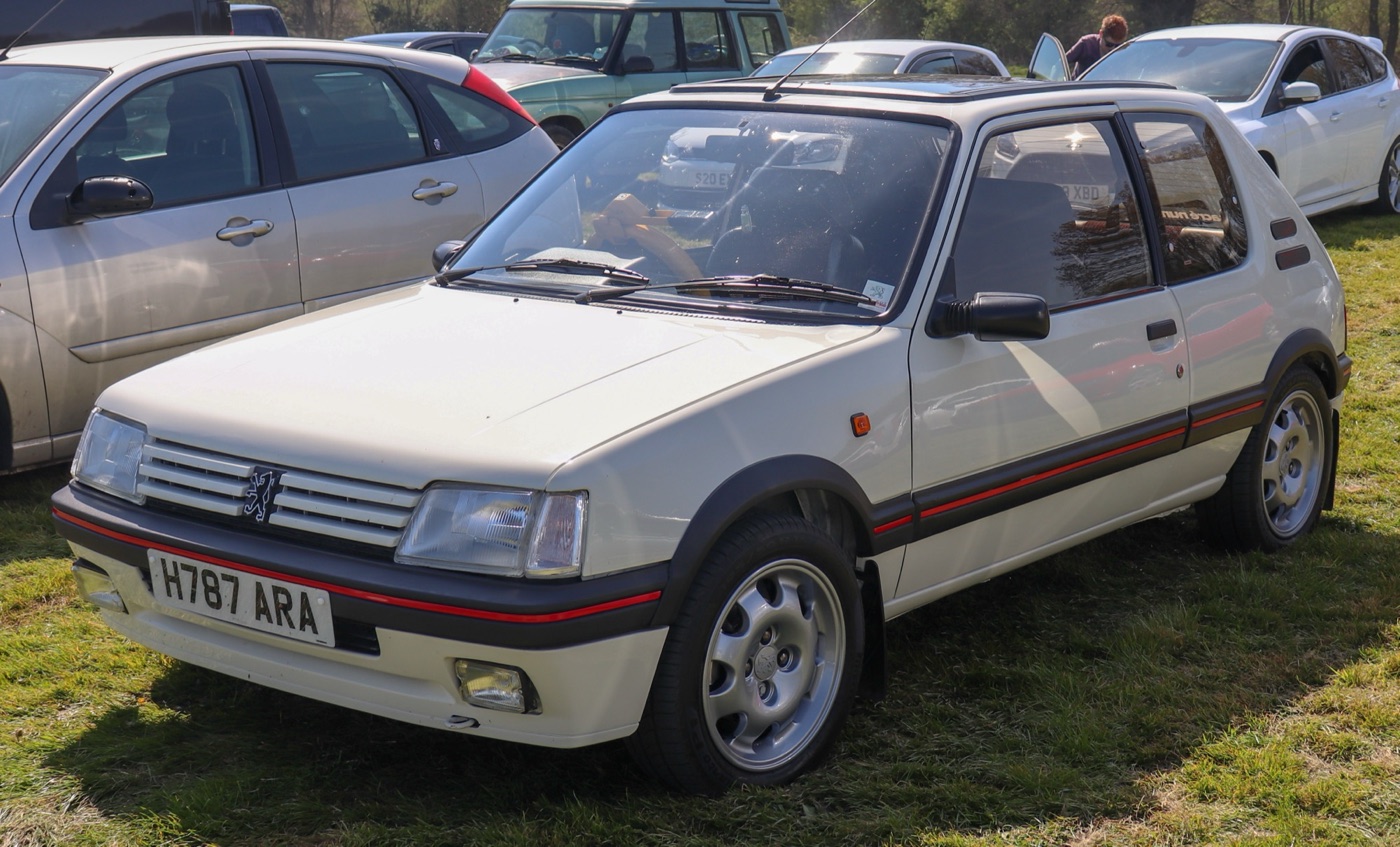
The Peugeot 205 GTi is the hot hatchback version of Peugeot’s 205 supermini, built from 1984 to 1994 with fuel injection and either a 1.6-litre engine of 105 bhp (115 bhp from 1986) or, from late 1986, a 1.9 of 130 bhp. About 295,000 were made. The Peugeot 205 GTi cost £6,295 when it reached the UK in April 1984, weighed under 900 kg, and tightened its line in a corner when the driver lifted off the throttle. Road testers measured Peugeot’s later GTi models against it, and low-mileage originals have sold at auction for more than £40,000.
History of the Peugeot 205 GTi
The 205 GTi grew out of Projet M24, the supermini that Peugeot launched officially by internal memo on 28 July 1978, according to the chronology published by L’Automobile Sportive. The style was frozen at the end of 1979, the first running prototype was built at La Garenne-Colombes early in 1981, and the 205 went on sale on 24 February 1983, a day after Peugeot showed the 205 Turbo 16 rally car.
Projet M24 and the 205
The 205 was styled in-house under Gérard Welter, although it is often credited to Pininfarina, which designed only the cabriolet, according to the Lane Motor Museum in Nashville, which owns a 1986 GTi 1.6. The museum notes that the 205 was What Car?’s Car of the Year for 1984 and Car magazine’s “Car of the Decade” in 1990. The rear suspension, with trailing arms and transverse torsion bars, resembled that of the 305 estate and stood only 8.5 in high, which left a flat boot floor, Car reported in its first British test of the GTi in 1984.
The 1.6 GTi of 1984
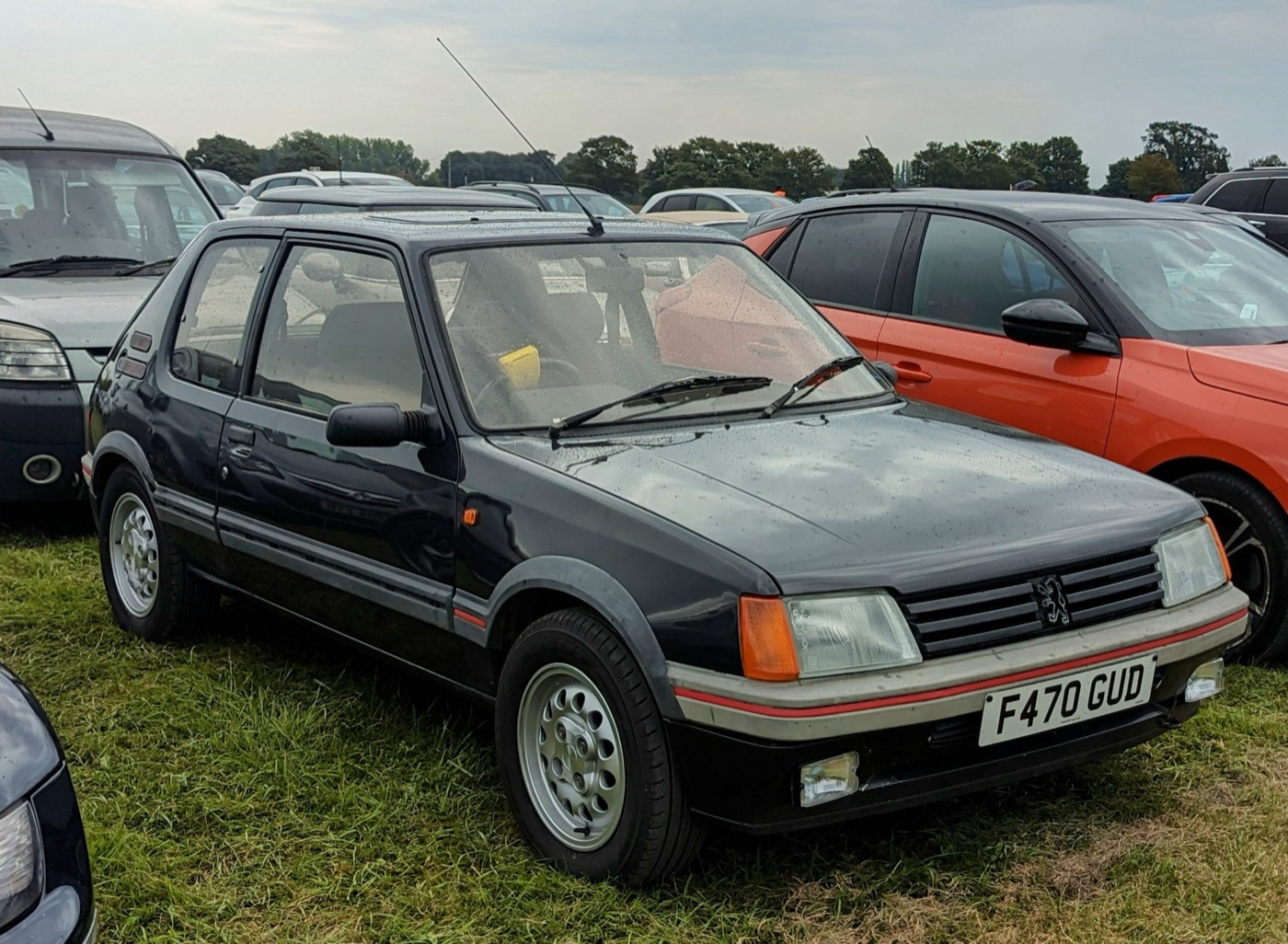
Peugeot put the 205 GTi 1.6 on sale in France in February 1984 (L’Automobile Sportive gives 16 February in its chronology and 1 March in its text) and in Britain that April. Motor Sport reported in May 1984 that it had “reached the British market last month” at £6,295, against £7,867 for the new Golf GTI, and that Peugeot put the British market for such cars at 100,000 a year, or 5.5 per cent of all registrations. The engine was the 1,580 cc unit of the 305 GT with Bosch L-Jetronic injection, giving 105 bhp; an air dam with built-in driving lamps cut the drag coefficient to 0.34, and alloy wheels were standard.
Peugeot had announced the plan the year before. Testing the five-door 205 GT in December 1983, Motor Sport wrote that “there will be a 205GTi with a 107 bhp 1,600 cc engine capable of over 110 mph”, and that limited numbers of the Turbo 16 would go on sale in 1984 at about £25,000.
The 1.9 GTi and the 115 bhp 1.6 in 1986
In 1986 the 1.6 gained 10 bhp, reaching 115 bhp, with softer suspension and the column stalks of the 309; Peugeot staff called it the “Mk 2”, Motor Sport reported in August 1986. The 1.9 was shown at the Paris Motor Show that autumn (L’Automobile Sportive) and reached British buyers in December 1986, according to the Classic Cars buying guide of November 2020. Its XU9JA engine, a 1,905 cc unit with an 88 mm stroke, gave 130 bhp at 6,000 rpm and 115 lb ft at 4,750 rpm, and the brakes became discs all round, ventilated at the front, Motor Sport wrote in November 1986, expecting a price of about £9,000.
Phase 1.5 and Phase 2 updates
L’Automobile Sportive records a new dashboard, new mirrors and, on the GTi, a tailgate spoiler for the 205 range from July 1987. Owners call these cars Phase 1.5. GTis were built at Peugeot’s Mulhouse factory; Silverstone Auctions’ 2018 catalogue dates its 1988 1.9 to the Mulhouse line on 24 May 1988. Classic Cars lists optional power steering and new “Monaco” seat trim for 1988, and the BE3 gearbox from August 1989, with reverse moved to sit opposite fifth. The Phase 2 update, dated July 1990 by L’Automobile Sportive and September 1990 by Classic Cars, brought clear front indicator lenses, smoked rear lamps, black dashboard plastics and optional anti-lock brakes, and L’Automobile Sportive adds that air conditioning became available at the same time.
Why the 205 GTi ended in 1994
Insurance and emissions rules ended the 205 GTi. In September 1993 Motor Sport wrote that “sales of GTi hatchback models have been decimated because of rocketing insurance premiums”, which it blamed on car theft and joyriding. A catalytic converter became compulsory on every new petrol car from 1 January 1993 (L’Automobile Sportive): the 1.6 GTi was dropped, its production ending in September 1992 (Classic Cars), and the catalysed 1.9 fell from 130 to 122 bhp. The end came in January 1994, when Peugeot stopped building the 205 GTi, the CTI and the Gentry; the ordinary 205 went on until 1998.
Design and engineering
The Peugeot 205 GTi kept the three-door hatchback shell of the 205, with longer doors than the five-door, plastic wheel-arch extensions, a lower front spoiler and a red stripe in the bumpers and side mouldings. Car counted the dimensions in 1984: against a Golf GTI the Peugeot was 4.0 in narrower, 2.0 in lower and 2.0 in shorter in the wheelbase, and weighed 170 lb less at the kerb.
Body and interior
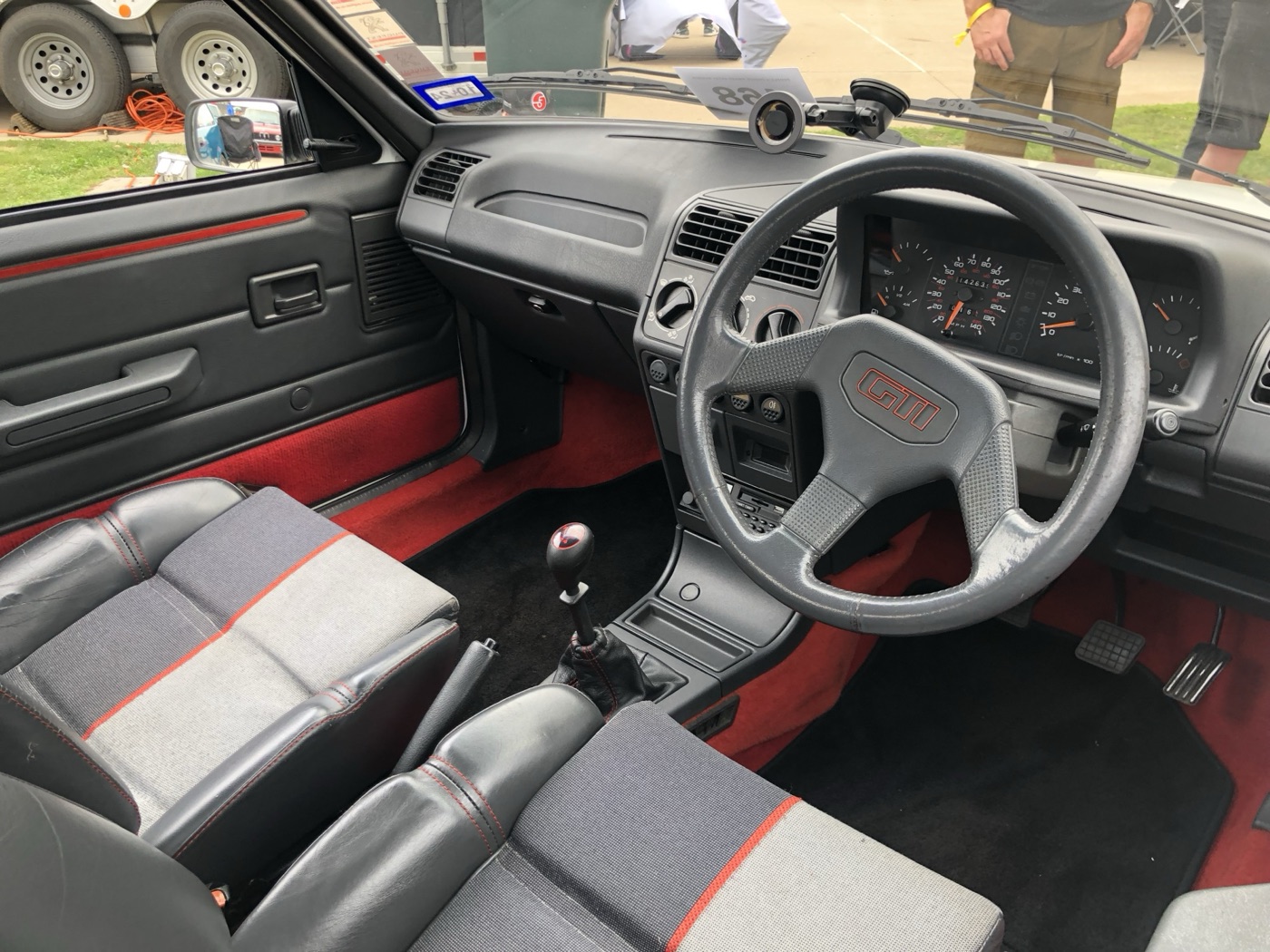
The first cars had red carpet and Recaro-style sports seats; Car praised the space and the support of the seats but found the trim “poor”, the instrument graphics cheap “by current Japanese standards” and the seating position too high for its taller testers. The first 1.6s had red and black velour seats (Classic Cars); the 1.9 had half-leather, and from July 1989 its buyers could no longer choose all-cloth trim (L’Automobile Sportive). Bill Boddy, testing a red 1.6 for Motor Sport in September 1984, liked the full set of gauges, including oil temperature and oil pressure, and the front seats that tipped forward for access to the back seat and returned to their setting.
Suspension and lift-off oversteer
Peugeot re-rated the springs, dampers and anti-roll bars of the ordinary 205 and reinforced some mounting points; the front has MacPherson struts and the rear the 305’s trailing arms and torsion bars (Car, 1984). Lifting off the throttle in a corner tightens the GTi’s line, which Car called “a tingle of throttle-off oversteer, the most stable kind”. Bill Boddy wrote that on the limit “the rear-end becomes over-light, leading maybe to a spin-off”, though not in ordinary fast road driving. The ride of the earliest cars drew complaints: L. J. K. Setright wrote in Car in 1984 of “an absolutely appalling ride”, and Peugeot’s engineers admitted that the rear dampers did not control the firm rear springs over small bumps.
The XU engines
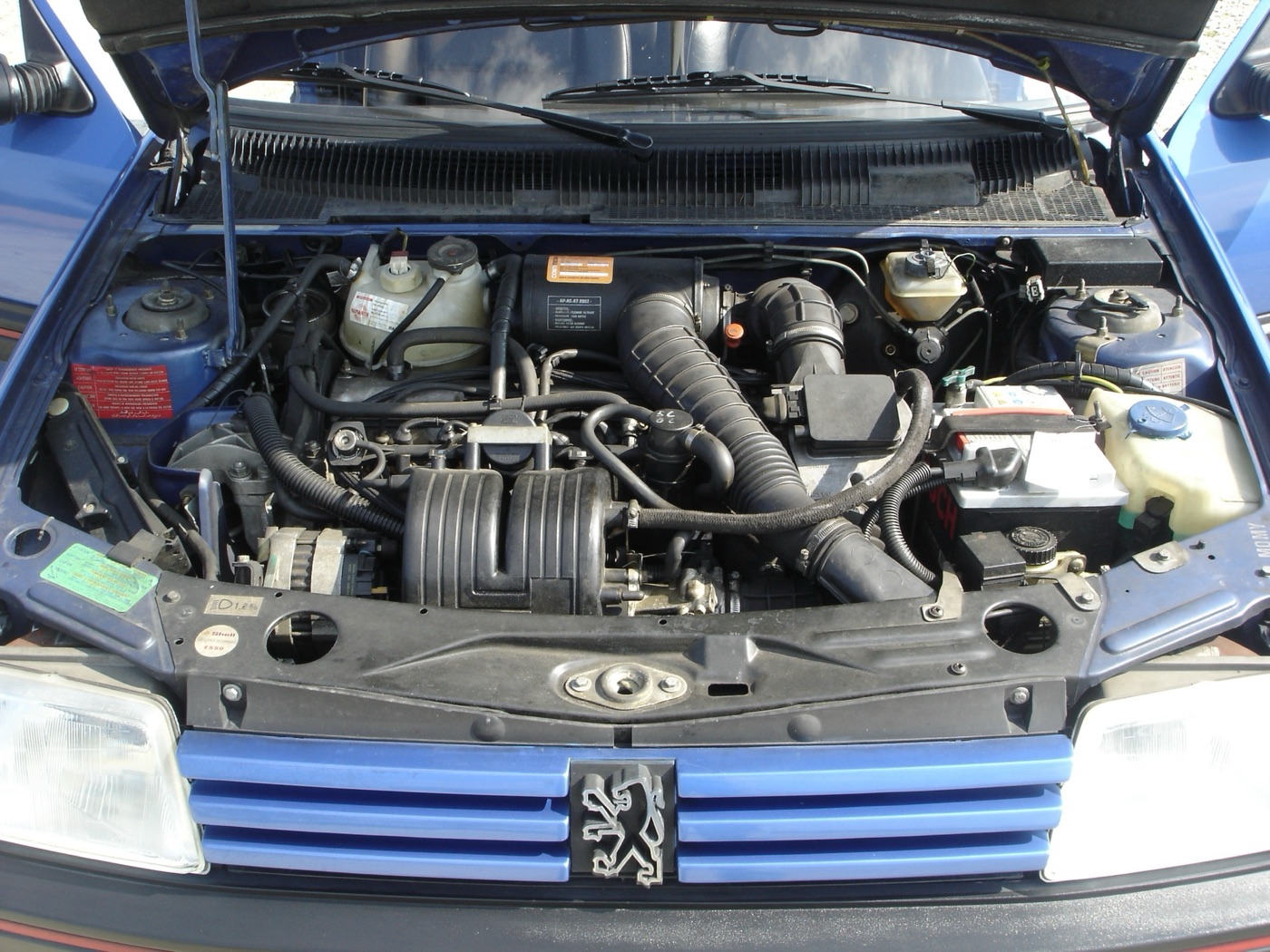
Both engines are XU-series four-cylinders with an aluminium block, wet liners, a belt-driven overhead camshaft and two valves per cylinder, canted 30 degrees backwards in the car (Car, 1984). The 1.6 has an 83 × 73 mm bore and stroke and a fuel cut-out at 6,600 rpm; the 1.9 shares the 83 mm bore with an 88 mm stroke (Motor Sport, November 1986). The Lane Motor Museum notes that the GTi engine had an oil cooler but was otherwise the ordinary 205’s unit.
Specifications and performance
The Peugeot 205 GTi 1.6 has 105 or 115 bhp and the 1.9 has 130 bhp, or 122 bhp with a catalyst; all have Bosch fuel injection and front-wheel drive, and all but the 1992 Automatic have a five-speed manual gearbox. As for weight, Peugeot gives 875 kg for the 130 bhp 1.9 and 905 kg for the catalysed car, according to the GtiPowers club, and Car found the 1.6 170 lb lighter than a Golf GTI.
| Version | Years | Engine | Power | Torque | Top speed (claimed) | 0–60 mph | Wheels and tyres | Rear brakes |
|---|---|---|---|---|---|---|---|---|
| GTi 1.6 | 1984–86 | 1,580 cc, 83 × 73 mm | 105 bhp at 6,250 rpm | 99 lb ft at 4,000 rpm | 118 mph | 9.2 sec (estimate) | 185/60 HR14 on alloys | Drums |
| GTi 1.6 (115) | 1986–92 | 1,580 cc | 115 bhp | Not given | 121 mph | 9.1 sec | 14 in pepperpot alloys | Drums |
| GTi 1.9 | 1986–92 | 1,905 cc, 83 × 88 mm | 130 bhp at 6,000 rpm | 115 lb ft (Motor Sport) or 165 Nm, 122 lb ft (Peugeot) at 4,750 rpm | 205 km/h (127 mph) | 8.2 sec (0–100 km/h) | 185/55 VR15 on 6J15 alloys | Discs |
| GTi 1.9 catalysed | 1992–94 | 1,905 cc | 122 bhp at 6,000 rpm | 150 Nm (111 lb ft) at 3,000 rpm | 202 km/h (126 mph) | 8.3 sec (0–100 km/h) | 15 in alloys | Discs |
Sources: Motor Sport, May and September 1984, August and November 1986; Car, 1984; Peugeot’s figures for the 1.9 as published by the GtiPowers club.
How fast is the Peugeot 205 GTi?
A 1.6 does about 116 to 118 mph and a 1.9 about 127 mph. Bill Boddy, testing for Motor Sport in September 1984, gave the 1.6 116 mph flat out, 2 mph faster than the Golf GTI he tested alongside it, and found it matched the Golf from 0 to 60 mph. Car’s pre-production car reached 60 mph in 9.3 sec, needing third gear where the Golf did 60 in second, and 100 mph in 23 sec. Fuel consumption was 37.4 mpg on Boddy’s fast runs and close to 34 mpg over Car’s 2,000 miles; the tank holds 11 gallons.
Peugeot 205 GTi 1.6 or 1.9: which is better?
The 1.9 is faster and stronger in the mid-range, and the 1.6 cost less new. In November 1986 Motor Sport called the 1.9 “a beautifully balanced car, just like the 1.6” and “a strong contender for being the best performance hatchback available”, then added that the 1.6 “need not feel over-shadowed” and that “in real, A to B motoring, terms there must be little between them”. In Britain the 1.9 outsold the 1.6: of about 10,000 GTis Peugeot sold in Britain a year in 1991, it accounted for more than 60 per cent, Motor Sport reported that September.
The hardware differs in more than the engine. The 1.9 has rear discs, 15-inch Speedline wheels with nine holes instead of the 1.6’s 14-inch “pepperpot” design, a 10 mm narrower front track and different gear ratios; the 1.6 has rear drums (Motor Sport, November 1986; Classic Cars). Motor Sport’s 2021 buying guide put the choice down to personal preference, “the more peaky 1.6 or the extra torque of the 1.9”, and noted that some owners swapped gearboxes between the two.
Variants and special editions
Peugeot sold a cabriolet GTi, a stripped-out Rallye and several limited editions, and its competition arm sold tuning kits through dealers.
205 CTI cabriolet
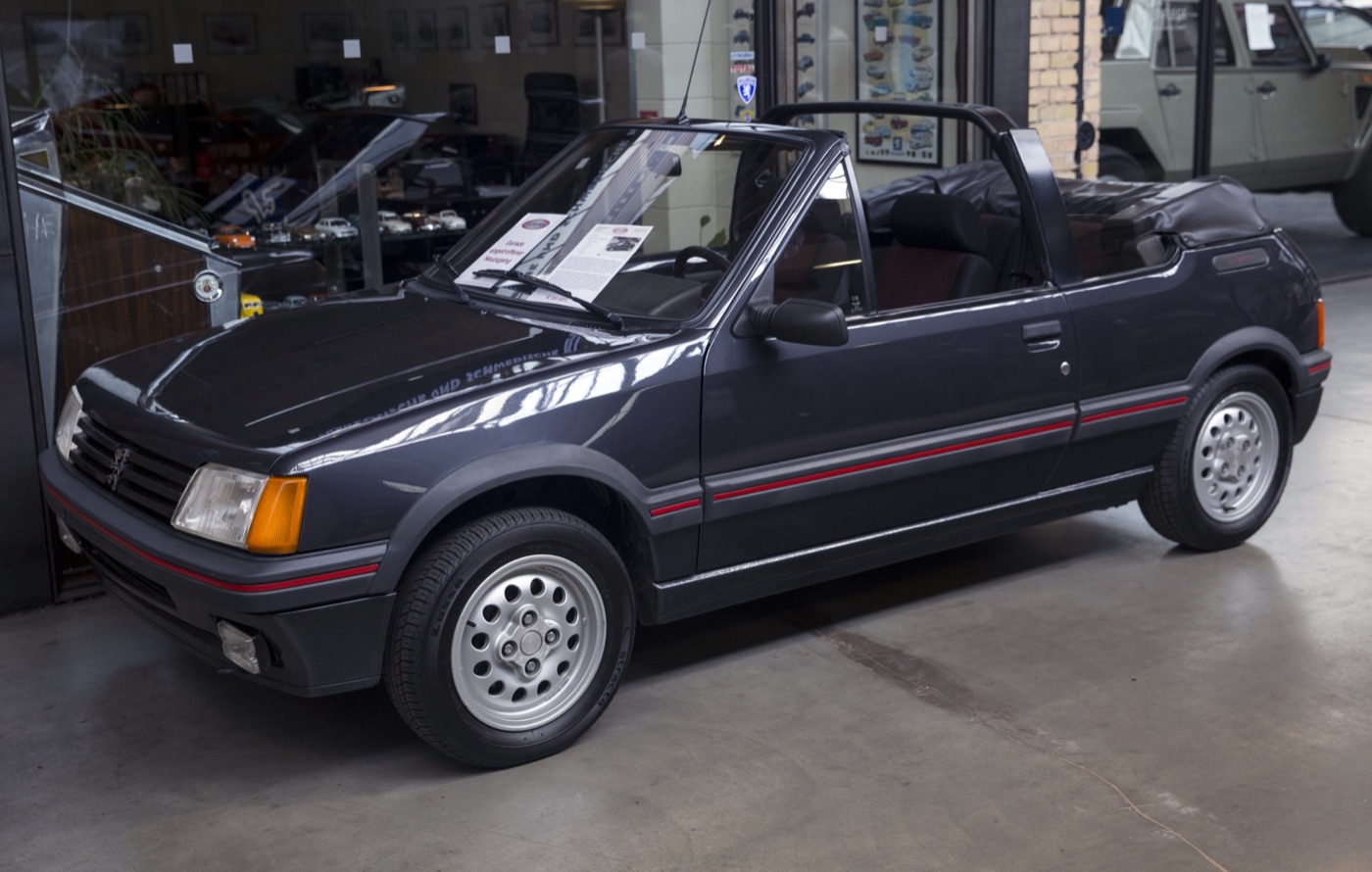
L’Automobile Sportive dates the CTI’s first showing to 6 March 1986. Bare 205 shells went to Pininfarina in Italy for the conversion, which added about 200 lb of stiffening and a T-shaped roll bar; Peugeot claimed 118 mph and 9.6 sec to 60 mph with the 115 bhp engine, and planned to build 6,700 cabriolets that year, about 600 of them for Britain (Motor Sport, August 1986). From late 1992 the CTI took a catalysed 1.9 of 105 bhp. L’Automobile Sportive counts 27,999 CTIs built.
205 Rallye
The Rallye, on sale from March 1988, was a stripped-out, cheaper 205 with a small engine on two twin-choke carburettors giving 103 PS (L’Automobile Sportive). Production reached 30,111 between 1987 and 1992.
UK limited editions: Miami Blue, Sorrento Green and Radio 1FM
In 1990 Peugeot UK sold GTis in Miami Blue and Sorrento Green; Iconic Auctioneers’ 2024 catalogue describes its Miami Blue 1.9 as one of 300 such cars, with grey leather and red stitching. The rarest is the Radio 1FM of 1992, 25 black cars marking the BBC station’s 25th year, with a Clarion stereo and CD autochanger (Classic Cars).
Griffe, Gentry and the automatic
The Griffe, shown at the Paris Motor Show in 1990, was a 130 bhp GTi in Fluorite Green with anthracite wheels and grey leather, inspired by the 205 GTi that Jean Todt drove himself; Peugeot’s Rétromobile press release of January 2026 gives 3,000 cars, while L’Automobile Sportive gives about 4,000, 1,000 of them for France. The Gentry was a luxury 205 on the GTi body with a 105 bhp 1.9, on sale from November 1991 according to L’Automobile Sportive. Classic Cars describes a 1992 Automatic, a 1.6 GTi with the catalysed 1.9, a four-speed automatic gearbox and air conditioning, first built for a cancelled Japanese order, and says the Gentry replaced it.
Factory and dealer tuning
Peugeot Talbot Sport sold a 125 bhp kit for the 1.6 from December 1984 (L’Automobile Sportive), with bigger valves and a new camshaft. Motor Sport tested it in October 1985 at 125.4 mph at Bruntingthorpe, about 5 mph more than a standard car, but found it lost pulling power below 3,500 rpm; it preferred the Cheetah 1.9 from Charters of Aldershot, a stroked 1.6 costing about £1,200 plus VAT. By 1989 Richard Longman of Christchurch was fitting the 16-valve Mi16 engine to the 205, with 198 bhp at 7,500 rpm.
The 205 GTi in rallying and the 205 T16
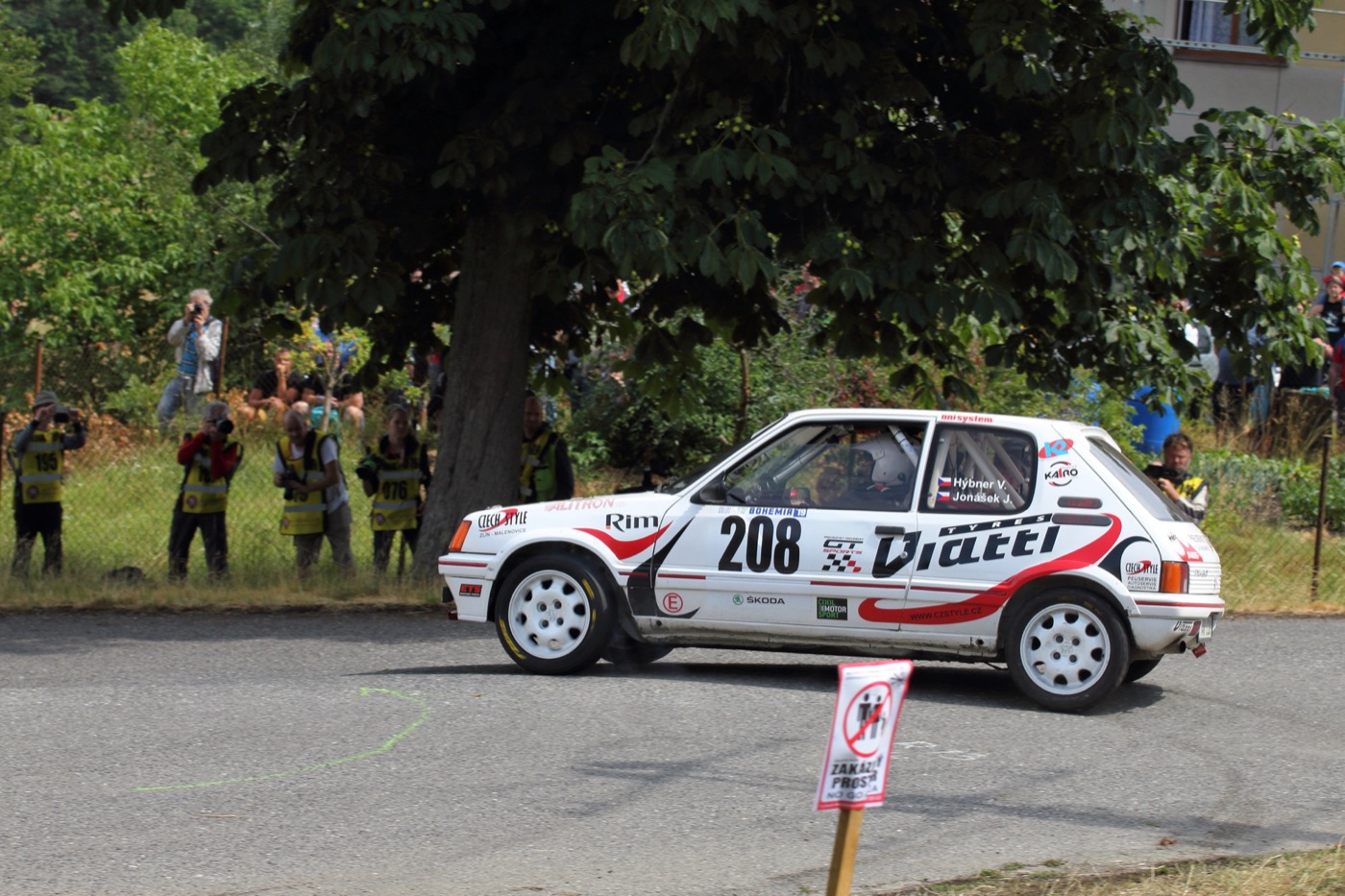
The GTi had a one-make rally series from its first year, and the four-wheel-drive 205 Turbo 16, built to look like it, won the World Rally Championship in 1985 and 1986. Peugeot Talbot Sport set up a Group N challenge for the 205 GTi in 1984 (L’Automobile Sportive), and 205 GTis still run in historic rallies.
The 205 Turbo 16
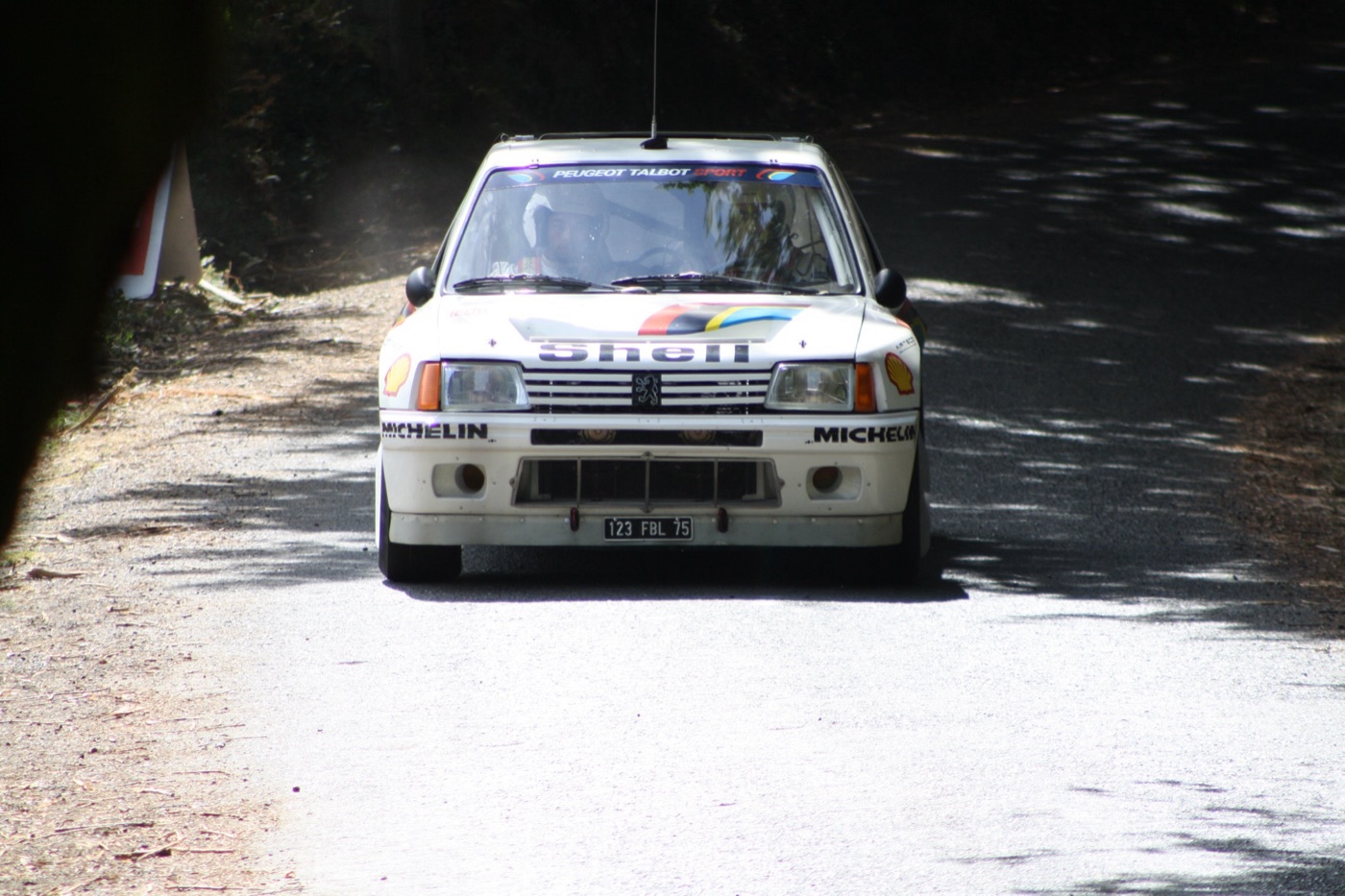
The 205 T16 shared little with the GTi beyond its shape. It had a 1,775 cc turbocharged 16-valve engine mounted behind the seats and four-wheel drive, and the subcontractor Heuliez built the 200 road cars needed to approve it for Group B, Motor Sport recorded in 2016. The FIA approved it on 2 April 1984 under Group B form number 262, according to the FIA Historic Database. It won 16 world championship rallies, and Peugeot took the makes’ title in 1985 and 1986, with Timo Salonen and Juha Kankkunen the drivers’ champions, according to the juwra.com championship tables. Motor Sport wrote in 1986 that the rally wins helped make the GTi “one of those rare classless cars like the Mini Cooper”.
How many Peugeot 205 GTis were made?
About 294,500 205 GTis were built, by the yearly count L’Automobile Sportive publishes, which totals 294,514; the Lane Motor Museum gives a higher figure, 332,942. Output peaked in 1987 and fell from 40,753 in 1990 to 390 in 1994.
| Year | GTi | CTI | Rallye |
|---|---|---|---|
| 1985 | 49,429 | 49 | 0 |
| 1986 | 45,920 | 5,872 | 0 |
| 1987 | 49,483 | 3,169 | 46 |
| 1988 | 43,238 | 3,023 | 11,323 |
| 1989 | 37,387 | 3,116 | 8,731 |
| 1990 | 40,753 | 4,048 | 6,087 |
| 1991 | 18,214 | 4,687 | 2,883 |
| 1992 | 7,711 | 3,198 | 1,041 |
| 1993 | 1,989 | 820 | 0 |
| 1994 | 390 | 17 | 0 |
| Total | 294,514 | 27,999 | 30,111 |
Source: L’Automobile Sportive, “205 GTI saga”. Its table starts at 1985 and has no separate 1984 line.
How many 205 GTis are left in the UK?
At the end of 2025, 815 cars registered under the DVLA model name “205 GTI” were taxed for the road in the UK and about 5,800 were declared off the road (SORN), according to DVLA figures compiled by How Many Left?. The figures count only cars filed under that model name, so GTis recorded under another name are not in them. The number licensed has fallen from 50,000 at the end of 1994 to 815; the number on SORN has risen from 3,900 in 2007 to 5,800.
| Date | Licensed | SORN |
|---|---|---|
| End of 1994 | 50,000 | Not recorded |
| End of 1999 | 35,000 | Not recorded |
| End of 2004 | 10,000 | Not recorded |
| End of 2007 | 4,600 | 3,900 |
| March 2012 | 2,100 | 3,700 |
| End of 2019 | 1,000 | 5,500 |
| End of 2025 | 815 | 5,800 |
Source: How Many Left?, DVLA licensing statistics, figures rounded by the site; SORN counts start in late 2007. Licensed numbers peak each summer: 1,200 in the middle quarters of 2025.
Prices new and rivals
The 205 GTi undercut most of its rivals when new. In May 1984 Motor Sport listed the high-performance small cars on sale in Britain, and only the MG Metro Turbo and the 1.6-litre Lancia Delta GT were cheaper.
| Car | Price |
|---|---|
| MG Metro Turbo | £6,025 |
| Lancia Delta GT, 1.6 litres | £6,250 |
| Peugeot 205 GTi | £6,295 |
| Ford Escort XR3i | £6,777 |
| Vauxhall Astra GTE | £6,999 |
| Volkswagen Golf GTI (Mk 2) | £7,867 |
Source: Motor Sport, “Battle of the super-minis”, May 1984. The same report gave the Peugeot a claimed 118 mph and the Golf 119 mph; the Golf’s 1.8 had 112 bhp to the Peugeot’s 105 (Motor Sport, September 1984).
Motor Sport noted in August 1986 that the GTi’s price had risen “more than can be easily explained by either inflation or the franc against sterling”, because Peugeot could sell every car it built. By June 1991 the 1.6 cost £11,496 and the 1.9 £12,941, Motor Sport recorded in its test of the Ford Escort S, which it found less enjoyable than “the aged but chic” Peugeot. Volkswagen had sold 16,890 Mk 1 Golf GTIs in Britain between 1979 and 1984 (Motor Sport, May 1984). Motor Sport’s 2021 buying guide names the Renault 5 GT Turbo as the other French hot hatchback of the 1980s with a strong claim to be the best.
Reception
Road tests rated the 205 GTi among the best small performance cars from its launch, with the ride of the first cars the main complaint. Car’s 1984 test called it “raunchy, rapid and in some ways indecently refined”; one of its writers called it “Right First Time” after Peugeot’s launch in Spain, while Setright, a dissenter, called its suspension the worst he had encountered in a decade. Bill Boddy in Motor Sport still rated the Golf GTI the better car in 1984, but called the Peugeot “a fun-car all right, responsive, safe, very quick about the place”.
Motor Sport’s August 1986 test said the car “informs the driver what is going on”, and the Lane Motor Museum quotes Car: “The finest-handling front-drive sports hatchback we have ever driven.” Reviewing the 306 GTi-6 in 1997, Motor Sport’s Andrew Frankel wrote that “since the launch of the 205GTI in 1984, Peugeot has defined the state of the hot hatchback art”.
Peugeot 205 GTi values today
In March 2022 Hagerty’s UK Price Guide put the value of a Peugeot 205 GTi 1.9 at £7,300 in fair condition and £27,400 in concours condition; the best low-mileage originals have sold for more than £40,000, and in August 2025 an 82,183-mile 1988 1.9 sold for £10,688 at Iconic Auctioneers’ Silverstone Festival sale. Hagerty, the classic car insurer, reported at the same time that it had seen only three 205 GTis sell at British public auction for more than £20,000 in the previous two years.
| Date | Auction | Car | Mileage | Price |
|---|---|---|---|---|
| 2016 | Silverstone Auctions | 1.9 | 7,986 | £31,625 |
| 30 July 2017 | Silverstone Auctions, Silverstone Circuit | 1988 1.9, Alpine White | 5,726 | £38,480 |
| 24 February 2018 | Silverstone Auctions, Stoneleigh | 1988 1.9 | 73,000 | £19,688 |
| September 2021 | Aguttes, France | 1.9 | Not given | €48,300 |
| 2022 | Artcurial, Rétromobile, Paris | 1991 1.9, one owner | 14,500 km | €48,872 (about £40,869) |
| 24 February 2024 | Iconic Auctioneers, Silverstone | 1990 1.9, Miami Blue edition | About 6,300 | £42,500 |
| 24 August 2025 | Iconic Auctioneers, Silverstone Festival | 1988 1.9, Alpine White | 82,183 | £10,688 |
Sources: Iconic Auctioneers (formerly Silverstone Auctions) lot pages for 2017, which also gives the 2016 record, and 2018, and for 2024 and 2025 as linked above; Hagerty UK for the 2021 and 2022 French sales.
The 2017 car was registered to the Peugeot Talbot Motor Company in November 1988, given away in a competition with the catalogue retailer Grattan and won by a woman from Ipswich who could not drive; the couple kept it garaged and rarely used it, and it still had its factory distributor bag in place when Silverstone Auctions sold it.
Buying a Peugeot 205 GTi: what to check
Check a 205 GTi above all for rust in the floor and rear quarters, worn rear axle bearings, coolant leaks and missing trim. The points below come from the Classic Cars guide of November 2020, written with the restorer Pug1Off, the Bourne Citroën Centre and Classic Peugeot Spares.
Bodywork and rust
All 205 GTis were galvanised, but the commonest rust is in the floor in front of the fuel tank, where the brake pipes run; the tank has to come out before welding, at a cost of about £500. Look also at the rear quarter panel ahead of the rear wheel arch (water gets in once the bump stops fall out), the seams behind the jack and screenwash bottle, the bulkhead under the brake servo, and the rear bumper mounts, which are worst on cars with sunroofs. A full restoration costs £20,000 to £30,000, of which about £10,000 is paint, seals and exterior trim.
Suspension and steering
The rear trailing-arm bearings wear and seize; negative camber on the rear wheels warns of a rebuild of about £500. Clonks at the front point to worn wishbone bushes, drop links or strut top mounts; a wishbone replacement is about £250.
Engine and gearbox
The aluminium block can crack if the wrong coolant has been used, and an engine rebuild costs £2,000 to £3,000. Blue smoke once warm means worn valve stem seals and guides; an oil drip between engine and gearbox points to the rear main seal. On the 1.9, one cylinder-head locating bolt needs a spacer to clear the water pump. Cambelts are due every 72,000 miles or five years. Gearboxes are strong, though worn synchromesh on second and third is common.
Interior, wheels and originality
Trim is scarce, seat frames can break their welds, and central locking often fails. Two makes of nine-hole wheel were used on the 1.9, Speedline and SMR, which look alike but the SMR is about a kilogram heavier; many 1.9 wheels have ended up on 1.6s, the GtiPowers club notes. Many cars have a factory glass sunroof whose seal is released by vacuum: it should hiss when the handle is turned, and a rebuild costs £60 to £70, or about £300 if the mechanism is broken. The CTI is the cheapest way in, but a new hood costs about £1,500.
Parts and factory restoration
Mechanical parts are easy to find and trim is not, one owner told Classic Cars. In October 2020 Peugeot’s heritage department, L’Aventure Peugeot, began restoring a 205 GTi to as-new condition, making unavailable parts on 3D printers and certifying the result, and said the work would expand in 2021, AutoWeek in the Netherlands reported. A Peugeot poll had just voted the 205 GTi the most highly rated car Peugeot had made.
Why later Peugeot GTis failed to match the 205
Later GTis from Peugeot were more powerful but heavier and, by the testers’ verdicts, less involving. The 306 GTi-6 of 1997 came closest: Andrew Frankel called it the best hot hatch on sale, with a 167 bhp 2.0-litre engine and six-speed gearbox, but noted its claimed 8.5 sec to 62 mph was slower than a 205 GTi 1.9 and its price, £16,675, put it among BMWs.
Frankel later called the GTi versions of the 206 and 207 “such poor driver’s cars”. evo tested the 207 GTi in June 2007: 172 bhp (Peugeot quoted 175) from a 1.6 turbo shared with the Mini Cooper S, 1,250 kg and £14,995, with steering that left it feeling “like you’re driving a pillow”. Autocar gave Peugeot’s expected 0–62 mph time as 7.1 sec, the same as the Mini’s.
The 208 GTi
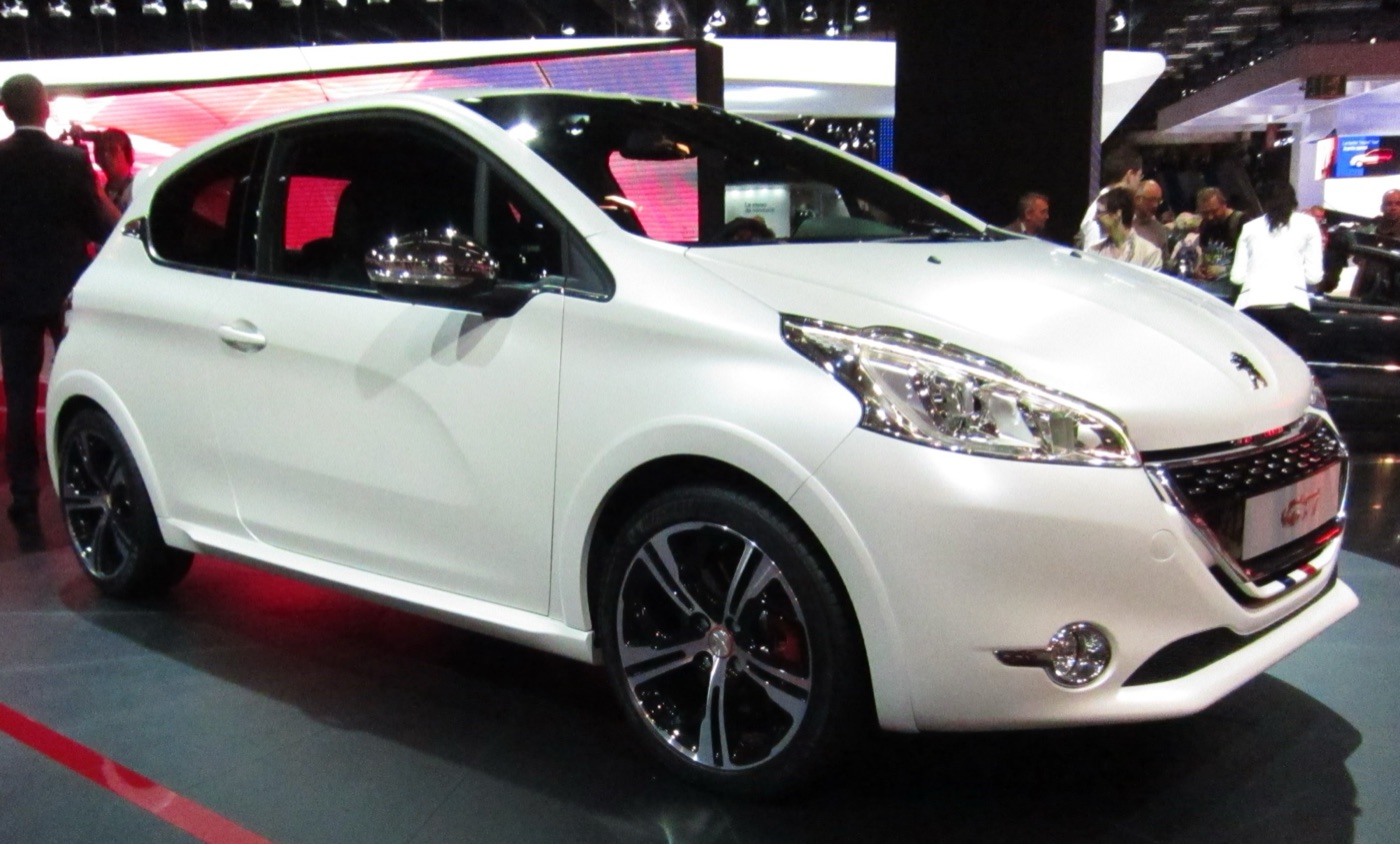
Peugeot brought back the GTi name with the 208 GTi Concept at the Geneva show of March 2012. A SkiddMark report of 17 February 2012, “Peugeot attempts to reinvent the GTi”, recorded its 1.6 THP 200 engine from the RCZ coupé, six-speed manual gearbox, tracks 36 mm wider than the ordinary 208 and brake discs of 302 mm at the front and 249 mm at the rear, and noted that Peugeot’s description began with the “chequered-flag motifs on the front grille” with the chassis left to its last paragraphs. By September 2012 Peugeot gave the production car a kerb weight of 1,160 kg, which SkiddMark set against 1,240 kg for the Renault Clio Renaultsport, with 275 Nm of torque and 0–62 mph in under 7.0 sec, SkiddMark reported; Peugeot’s 208 GTi dynamics manager, Marie Beaumont, said the team had “worked with particular attention on the steering response, the chassis dynamics and the rigidity of the suspension”.
When Motor Sport tested the 208 GTi in July 2013 at £18,895, Frankel, who had bought a 205 GTi new in 1985 and still kept one, found it “not as much fun as the 205 GTI” and “massively heavier”, but called it the best-handling Peugeot since the 306 GTi and grouped it with Renault’s new Clio and the Fiesta ST as “the first new wave of credible, affordable performance hatchbacks in more than a decade”; at £1,900 more than a Ford Fiesta ST, he judged the Ford the better buy.
The 308 GTi and the E-208 GTi
The 308 GTi had 266 bhp from a 1.6 turbo, a Torsen limited-slip differential and 0–62 mph in 6.0 sec, and Motor Sport judged it in April 2016 the best fast Peugeot “of at least the past 15 years”, though its steering was “overly assisted and devoid of any feel”. Peugeot showed the electric E-208 GTi, with 280 hp, at Rétromobile in Paris in January 2026 beside the 205 GTi, painted in the white of the first 1984 cars; its sales were due to start in the second half of the year (Peugeot press release).
Questions
Is the Peugeot 205 GTi front-wheel drive?
Yes. The engine sits across the car and drives the front wheels through a five-speed manual gearbox (a four-speed automatic on the 1992 Automatic). Only the rally-bred 205 Turbo 16 had four-wheel drive, with its engine behind the seats.
Who designed the Peugeot 205?
Peugeot’s own design studio under Gérard Welter. Pininfarina is often credited, but it designed only the cabriolet, and it built the CTI bodies from shells shipped to Italy.
Does the 205 GTi 1.6 have rear disc brakes?
No. The 1.6 has discs at the front and drums at the rear. The 1.9 has discs all round, ventilated at the front.
What is the difference between the 205 GTi and the 205 T16?
The T16 was a separate car built to approve Peugeot’s Group B rally car: a 1,775 cc turbocharged 16-valve engine behind the seats and four-wheel drive. Heuliez built the 200 road cars; the GTi is a front-engined, front-wheel-drive 205.
Was the Peugeot 205 GTi sold in America?
No. Peugeot never sold the 205 in the United States and left the US market in 1991, according to the Lane Motor Museum in Nashville, which owns a 1986 GTi 1.6.
How many Peugeot 205 GTi Radio 1FM editions were made?
Twenty-five, all black, built in 1992 for the 25th year of BBC Radio 1, with a Clarion stereo and CD autochanger.
Have Peugeot 205 GTi prices gone up?
Yes, for the best cars. Silverstone Auctions’ record was £31,625 in 2016 and £38,480 in 2017; Iconic Auctioneers sold a 6,300-mile Miami Blue 1.9 for £42,500 in February 2024. Hagerty’s 2022 guide put a 1.9 in fair condition at £7,300.
Sources
- Motor Sport, “Peugeot 205GT”, December 1983, p. 29: the GTi plan and the Turbo 16 price.
- Motor Sport, “Battle of the super-minis”, May 1984, p. 25: UK launch, price, rival prices, 1.6 specification, Golf GTI UK sales.
- Motor Sport, “Two great GTIs from VW and Peugeot”, W. Boddy, September 1984, p. 43: road test, top speed, power and torque, handling, fuel consumption.
- Car, “Moving right along: 2,000 miles in a Peugeot 205 GTi”, 1984: dimensions, engine and suspension details, ride, acceleration, testers’ verdicts including L. J. K. Setright’s.
- Motor Sport, “Two tuned 205s”, October 1985, p. 49: the PTS kit and the Cheetah 1.9.
- Motor Sport, “Peugeot 205 CTI”, August 1986, p. 34: the 115 bhp 1.6, the CTI, prices.
- Motor Sport, “New cars: additions from Peugeot”, November 1986, p. 39: the 1.9 GTi specification and verdict.
- Motor Sport, “Pocket supercar”, May 1989, p. 36: Richard Longman’s Mi16 conversion.
- Motor Sport, “New cars: Ford Escort S”, June 1991, p. 46: 205 GTi prices in 1991.
- Motor Sport, “Track test: Peugeot 309 GTI 16V”, September 1991, p. 32: UK sales of the 205 GTi and the 1.9’s share.
- Motor Sport, “Canned heat”, September 1993, p. 58: insurance premiums and hot hatch sales.
- Motor Sport, “Sixth gear makes new Peugeot even better”, A. Frankel, February 1997, p. 40: the 306 GTi-6.
- Motor Sport, “Peugeot 208 GTI”, A. Frankel, July 2013, p. 44: the 208 GTi against the 205, and the 206 and 207 GTis.
- Motor Sport, “Peugeot 308GTI”, A. Frankel, April 2016, p. 56: the 308 GTi.
- Motor Sport, “How to make a monster”, December 2016, p. 70: the 205 T16’s engine, homologation and wins.
- Motor Sport, “Peugeot 205 GTI: road car buying guide”, R. Ladbrook, December 2021, p. 169: the 1.6 or 1.9 choice.
- L’Automobile Sportive, “205 GTI saga”: chronology from 1977 to 1994, production by year of the GTi, CTI and Rallye, special editions.
- Lane Motor Museum, “Peugeot 205 GTi 1.6, 1986”: design credit, awards, engine details, production total.
- Club GtiPowers, “Fiche technique Peugeot 205 GTI”: Peugeot’s weights and performance figures for the 1.9.
- Peugeot (Stellantis Media), “GTi passion: Peugeot celebrates its iconic GTi label at the Rétromobile show”, 23 January 2026: the Griffe, the T16 and the E-208 GTi.
- FIA Historic Database, “Peugeot 205 Turbo 16”: Group B homologation number 262, 2 April 1984.
- juwra.com, World Rally Championship points, 1985 and 1986: drivers’ and makes’ champions.
- How Many Left?, “Peugeot 205 GTI”, DVLA licensing data to the fourth quarter of 2025: cars licensed and on SORN in the UK.
- Iconic Auctioneers, 1988 Peugeot 205 GTi 1.9, Silverstone Classic sale, 30 July 2017: result, the car’s history and the 2016 record.
- Iconic Auctioneers, 1988 Peugeot 205 1.9 GTi, Stoneleigh, 24 February 2018: result and mileage.
- Iconic Auctioneers, 1990 Peugeot 205 GTi 1.9 Special Edition, 24 February 2024: result and the 300 Miami Blue cars.
- Iconic Auctioneers, 1988 Peugeot 205 1.9 GTi, Classic Sale at Silverstone Festival, 24 August 2025: result and mileage.
- Hagerty UK, “Quite a number: Peugeot 205 GTI 1.9 breaks the £40,000 barrier”, 29 March 2022: the Artcurial and Aguttes results and the price guide values.
- Classic Cars, “Buying guide: Peugeot 205 GTi”, 3 November 2020: model changes, special editions, faults and repair costs.
- AutoWeek (Netherlands), “Peugeot gaat zelf 205 GTI’s restaureren”, 16 October 2020: L’Aventure Peugeot’s restoration programme.
- evo, “Peugeot 207 GTI THP 175”, 20 June 2007: the 207 GTi’s specification and verdict.
- Autocar, “Full fat 207 GTi is go”, 2007: the 207 GTi’s engine and expected performance.
- SkiddMark, “Peugeot attempts to reinvent the GTi”, 17 February 2012 (the archived news story this page replaces): the 208 GTi Concept.
- SkiddMark, “Peugeot reveals details of the new 208 GTi due in spring 2013”, 3 September 2012: the production 208 GTi’s figures and Marie Beaumont’s comment.