Porsche 917: the Le Mans winner, its variants, drivers and prices
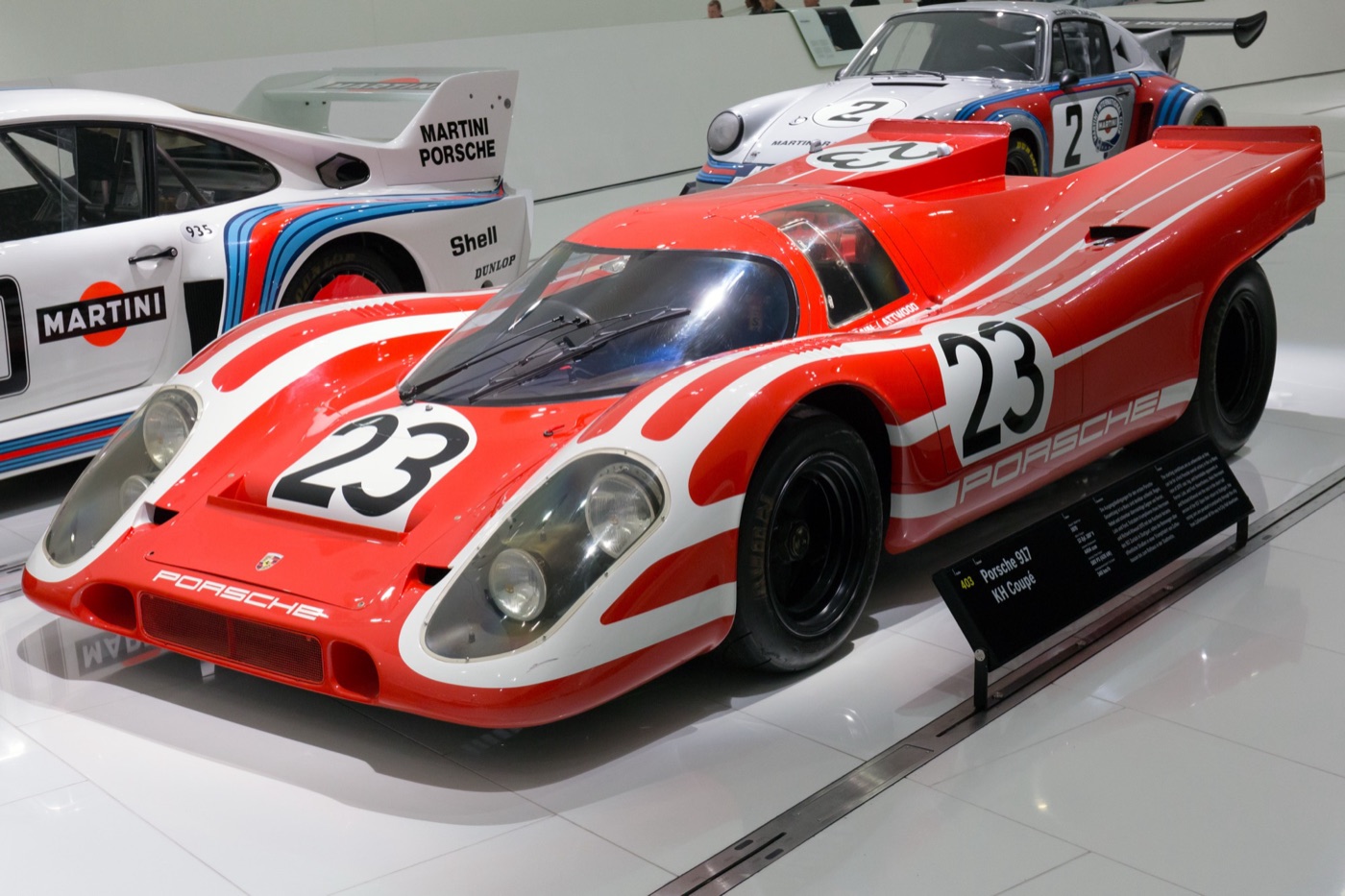
The Porsche 917 is the racing car that gave Porsche its first overall wins at the 24 Hours of Le Mans, in 1970 and 1971. Built in 1969 to a five-litre sports-car rule, it had an air-cooled 4.5-litre twelve-cylinder engine of 580 PS in a car of about 800 kg, and it won 15 rounds of the World Sportscar Championship before the rules retired it; turbocharged, it then took the Can-Am title in 1972 and 1973. People look it up for its two Le Mans wins, its Gulf livery and Steve McQueen’s film Le Mans, and its prices: a 917K made $14,080,000 at auction in 2017.
Why Porsche built the 917
Porsche built the 917 because new regulations let it chase outright victory with a bigger engine, and its goal was the first overall win for Porsche at the 24 Hours of Le Mans. For 1968 the sporting commission (the CSI) capped prototypes at three litres and created a Group 4 class for sports cars with engines of up to five litres, provided manufacturers built 50 of them; the number was later cut to 25, says the Porsche Museum’s 2019 history of the car’s development. Porsche had raced at Le Mans since 1951 and won its class many times, but never the race outright.
Ferdinand Piëch, head of development, asked chief engineer Hans Mezger for a twelve-cylinder five-litre car, and the design took shape by spring 1968. Building the 25 cars began in December 1968: 13 working groups and 45 race mechanics assembled them at plant 1 in Stuttgart-Zuffenhausen, with the aluminium frames made by Baur in Stuttgart and the plastic bodies by Waggonfabrik Rastatt. The first car, chassis 917-001, was finished on 10 March 1969, the night before it left for Geneva.
It was shown at the Geneva Motor Show on 12 March 1969, priced at DM 140,000 ex works. On 21 April 1969 the inspectors, the FIA’s delegate Dean Delamont and Herbert Schmitz of the German ONS, examined the 25 cars lined up at Zuffenhausen in Stuttgart, Germany, and the 917 was homologated as a sports car from 1 May 1969.
Design and engineering
The 917 was the 908 prototype scaled up to take a much bigger engine. It kept the 908’s 2,300 mm wheelbase by moving the cockpit and driver’s seat forward, and it sat on an aluminium tube frame that weighed 45 kg, with a glass-fibre body bonded to the frame, according to the Porsche Museum. The car was built for right-hand drive and to the class’s 800 kg minimum weight.
The Type 912 flat-twelve engine
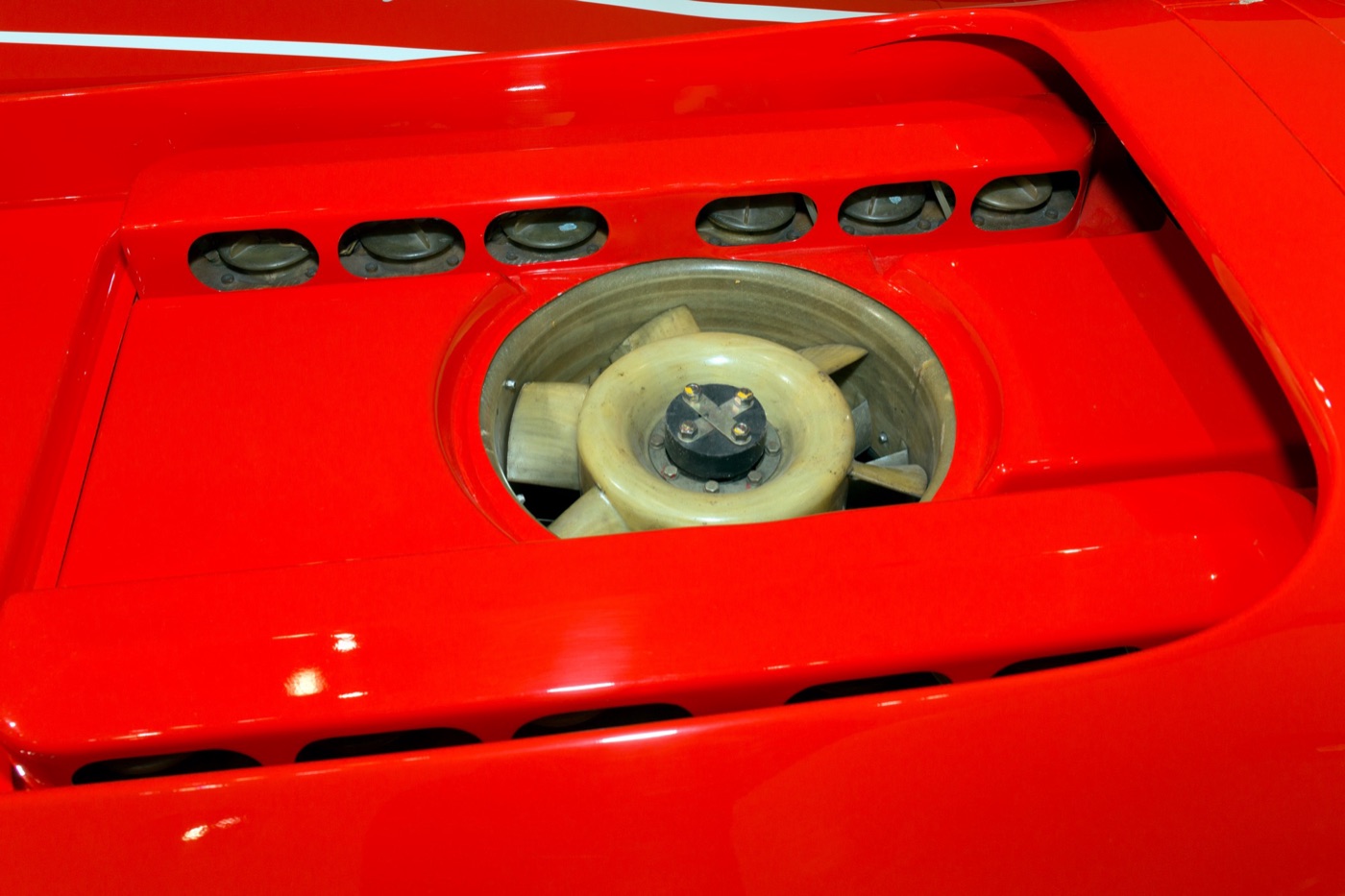
Mezger’s engine is a twelve-cylinder with its cylinders laid flat; Porsche calls it a V engine with a 180-degree bank angle, because it is not a true boxer, and that layout made it shorter and needed fewer main bearings. It used the pistons, cylinders and valves of the three-litre 908 engine, a magnesium crankcase, gear-driven overhead camshafts taken from the middle of the crankshaft, dry-sump lubrication, Bosch mechanical fuel injection and, like every Porsche engine of the time, air cooling with a horizontal fan. It is called the 912; the car with its five-speed gearbox is the 917. Mezger had already designed the six-cylinder engine of the Porsche 911.
The first engine’s power was 542 PS on its first run and about 580 PS by April 1969, from 4,494 cc. The press figures for Geneva, 520 PS at 8,000 rpm, were worked out from a 2.25-litre six-cylinder test engine, the museum says. By 1971 the engine had grown to 4,907 cc (600 PS) and then 4,999 cc (630 PS).
Chassis, brakes and aerodynamics
The suspension used double wishbones with uniball joints, titanium coil springs and gas-filled dampers, and the 15-inch wheels were cast magnesium on titanium hubs. The brakes had three-part four-piston callipers with titanium centre sections and ventilated cast-iron discs, two circuits and a balance adjuster. Movable flaps at the front and rear were linked to the suspension, so that they tilted up to add downforce when the car began to lift; lift at speed was the problem that dogged the first cars. The body was designed in Porsche’s studio and tested in the University of Stuttgart’s wind tunnel, with help from Charles Deutsch’s SERA institute in Paris.
Porsche 917 specifications
The 917 changed every season, so its figures depend on the version. The table gives the Porsche Museum’s own data for each type, with outputs in PS, the metric horsepower Porsche quotes.
| Type | Year | Engine | Capacity | Output | Weight | Top speed |
|---|---|---|---|---|---|---|
| 917 (homologation car) | 1969 | Flat-12 | 4,494 cc | 580 PS | 800 kg | 320 km/h (short tail) |
| 917 PA Spyder with 16-cylinder test engine | 1969–71 | Flat-16 | 6,543 cc | 755 PS | 841 kg | 360 km/h |
| 917 KH (short tail) | 1970 | Flat-12 | 4,494 cc | 580 PS | 800 kg | 360 km/h |
| 917 KH (short tail) | 1971 | Flat-12 | 4,999 cc | 630 PS | 800 kg | 360 km/h |
| 917 LH (long tail) | 1971 | Flat-12 | 4,907 cc | 600 PS | 800 kg | 386 km/h |
| 917/20 | 1971 | Flat-12 | 4,907 cc | 600 PS | 813 kg | 360 km/h |
| 917/10 | 1972 | Flat-12, twin turbo | 5,374 cc | 1,150 PS | 837 kg | 360 km/h |
| 917/30 | 1973 | Flat-12, twin turbo | 5,374 cc | 1,200 PS | 850 kg | 375 km/h |
The 917/10 row is Porsche’s data sheet for the car in its final 5.4-litre form; Porsche’s own text says it began the 1972 season with a five-litre turbo engine of 1,000 PS.
How fast is a Porsche 917?
The fastest Le Mans 917, the 1971 long-tail, is rated at 386 km/h (240 mph) by Porsche, and the turbocharged 917/30 at 375 km/h. The museum says the 1971 917 LH could take the right-hand kink at the end of the Mulsanne Straight flat out at 380 km/h.
Denis Jenkinson’s Le Mans report in Motor Sport, July 1970 records Vic Elford’s long-tail timed at 331 km/h (205 mph) on the Mulsanne Straight in the opening hour. Elford’s pole lap that year, 3:19.8, was the first Le Mans lap above an average of 240 km/h (242.685 km/h), the race organiser, the ACO, records. The ACO’s record book for the 917 gives its fastest Le Mans pole as 3:13.9 and its fastest lap as 3:13.6.
The 917/30 could reach 200 km/h in 5.4 seconds and 300 km/h in about 11 seconds. In 1975 Mark Donohue drove a sister car of the 917/30 at Talladega Superspeedway in Alabama at an average of 355.848 km/h (221.1 mph), a world closed-course record, with the engine raised to 1,230 PS for the attempt.
Porsche 917 variants
Porsche counts ten types of 917 in its 2019 anniversary list, from the 1969 homologation car to the 917/30. They split into the coupé racing cars of the World Sportscar Championship and the open Spyders built for Can-Am and the European Interserie.
917 (1969)
The homologation car was a coupé with a detachable long-tail section, so one car could race in long-tail or short-tail form, and suspension-linked flaps front and rear. Chassis number 917-001 never raced. Porsche used it for testing, with Rolf Stommelen driving it on the Nürburgring’s South Loop on 14 May 1969, and for shows, rebuilt it in autumn 1970 as a replica of the Le Mans winner and, from 2018, restored it to its Geneva state, white with a green nose, for the car’s 50th birthday. Its roof, windscreen and doors were still original.
917K (Kurzheck, short tail)
The 917K was the cure for the original car’s poor handling and instability at speed, which drivers criticised so much that they preferred the older 908. Its shorter, upswept tail, which gave the car stability, came out of a development programme with John Wyer’s team and its engineer John Horsman, Motor Sport recorded in 2011. The 917K became the usual bodywork from 1970, and both Le Mans winners were 917Ks. The museum lists the 1971 short-tail with side fins on the tail as a type of its own.
917 LH (Langheck, long tail)
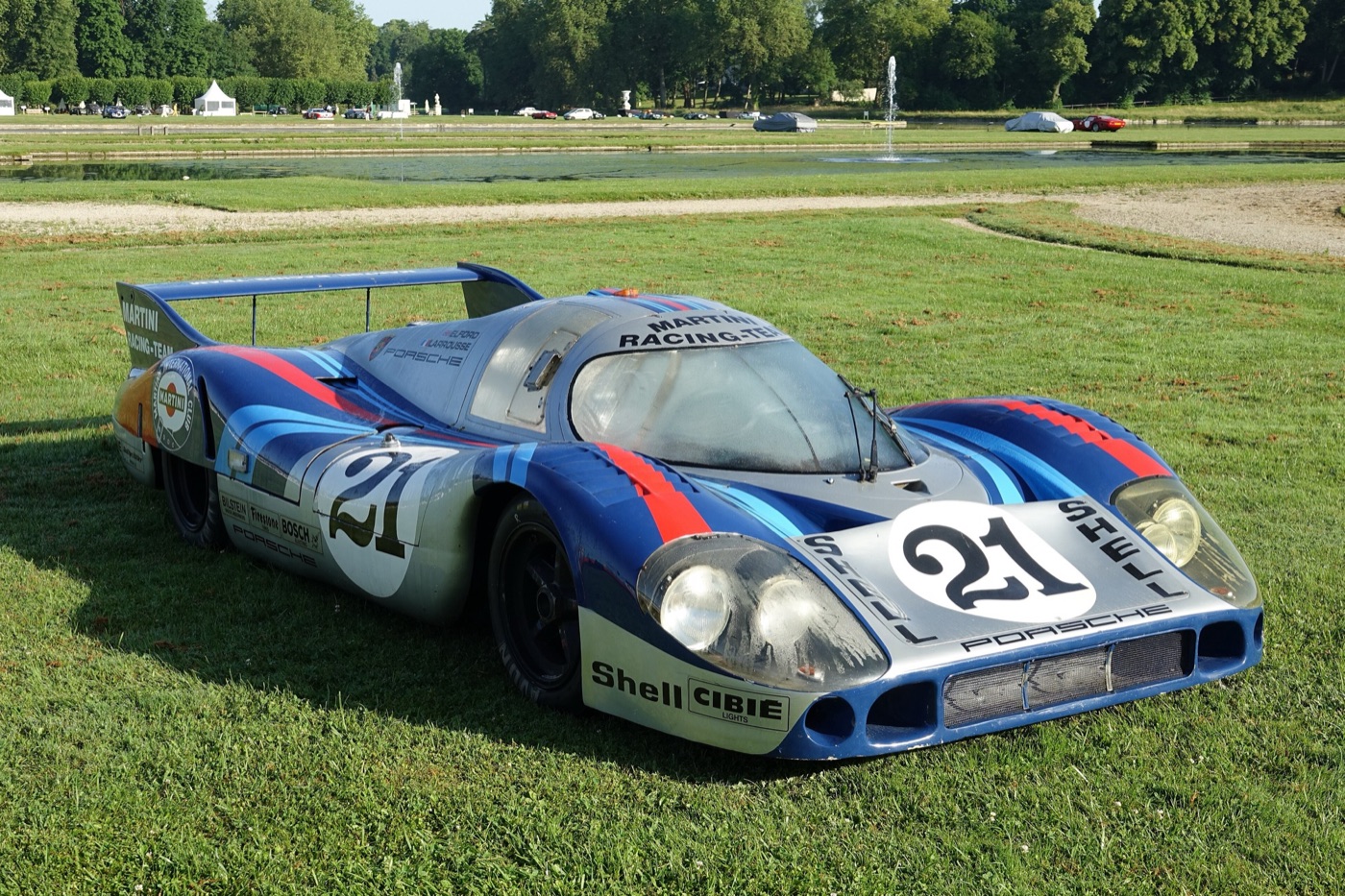
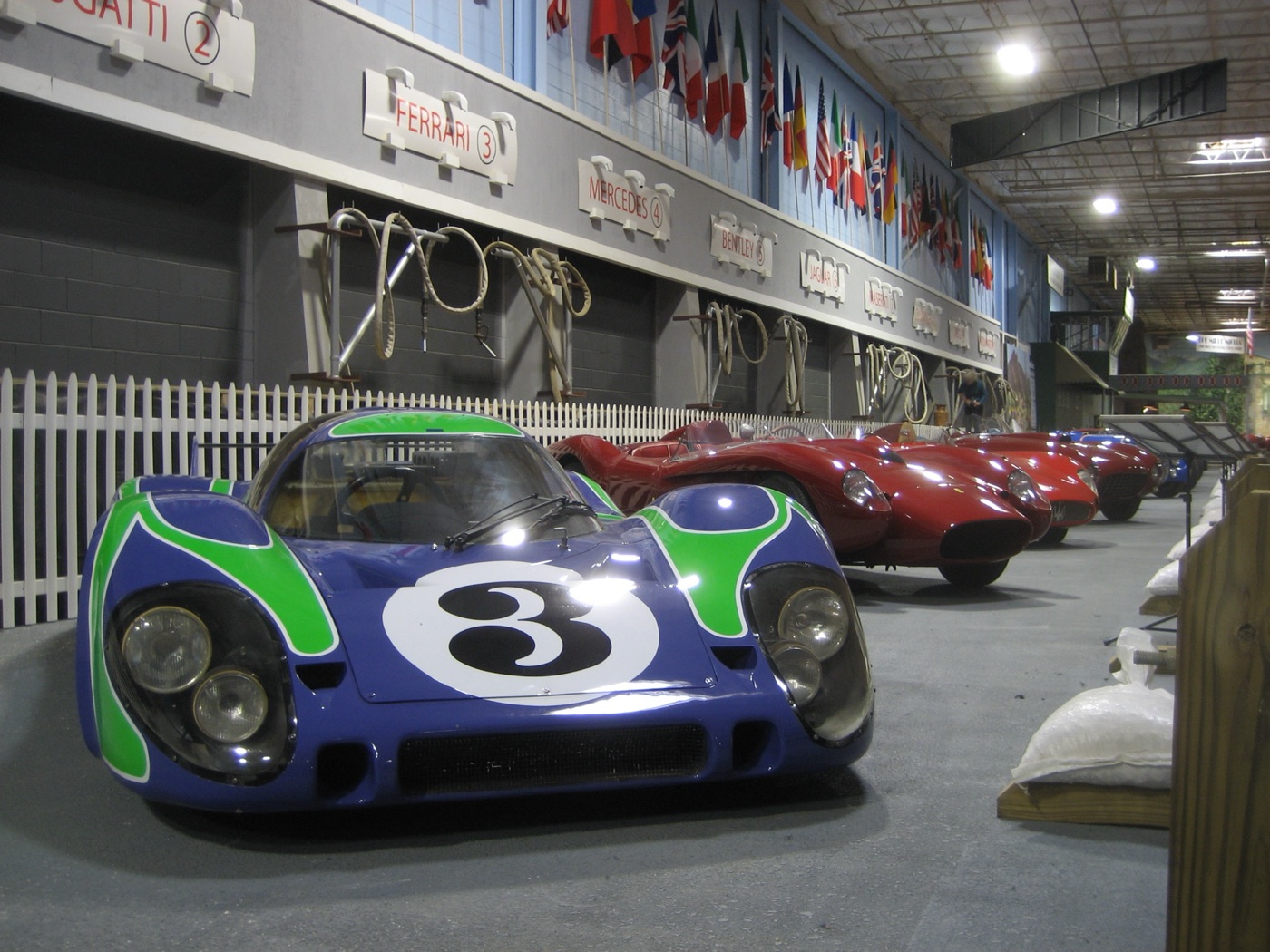
The long-tail was built for the long straights of Le Mans, where it ran in 1969, 1970 and 1971; the factory developed the 1970 version with the French designer Robert Choulet, Motor Sport noted. It never won there. Its best result was second place in 1970 for the Martini car of Gérard Larrousse and Willi Kauhsen, painted, in Jenkinson’s words, in a “vulgar paint scheme of purple with green”. For 1971 wind-tunnel work gave it covered rear wheels.
917/20, the “Pink Pig”
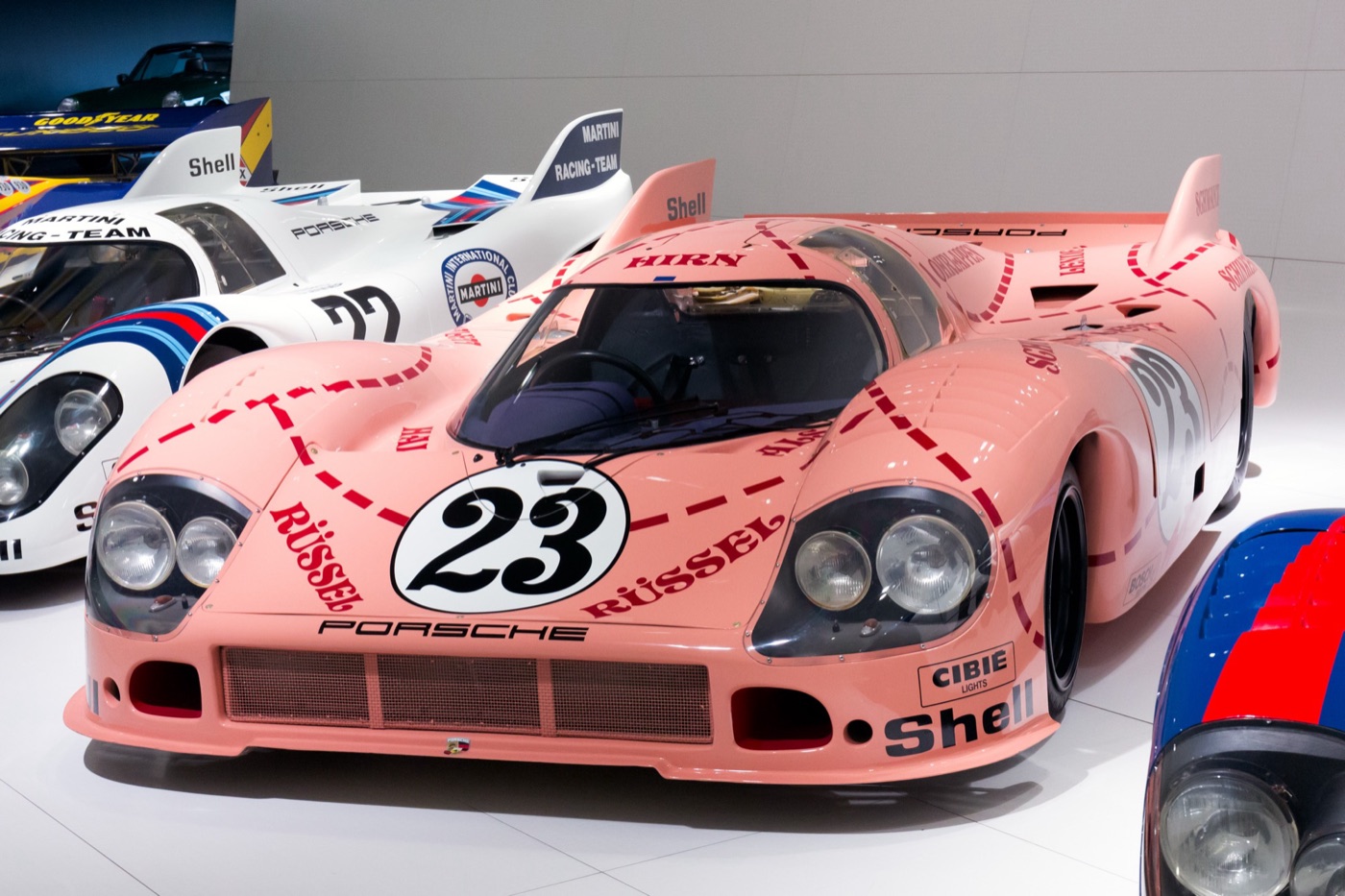
The 917/20 was a one-off built to have less drag than the short tail with the same downforce. At 2.21 m across it was nearly 24 cm wider than the normal 917 body. Porsche’s design studio painted it pink and marked it out like a butcher’s chart of pork cuts, and it ran at Le Mans in 1971 only, driven by Willi Kauhsen and Reinhold Joest, reaching sixth before an accident at 3.19 a.m.
917 PA Spyder and the 16-cylinder car
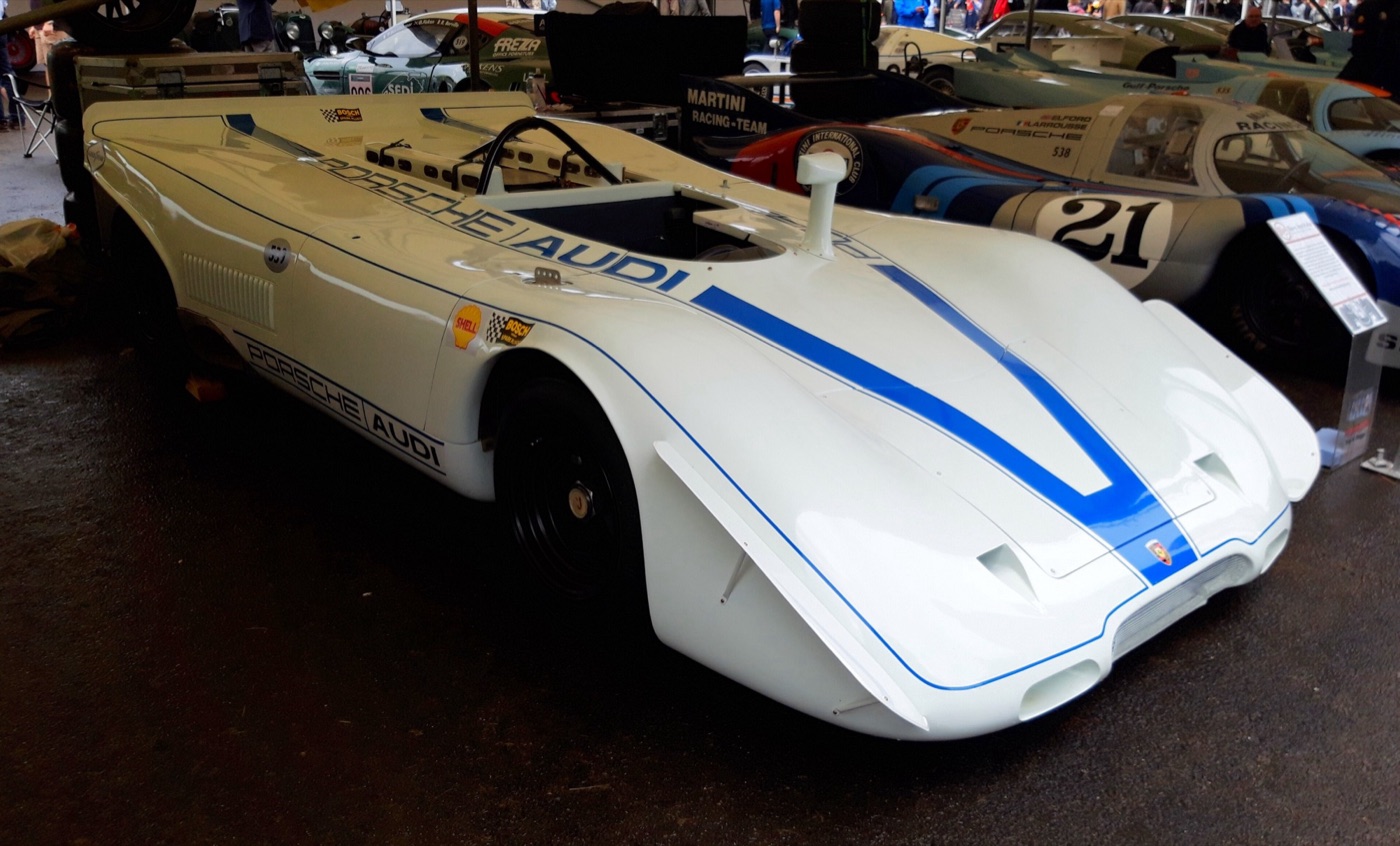
Two open 917 PA Spyders were built in 1969 for Can-Am, “PA” standing for Porsche + Audi, the two American sales companies. Jo Siffert finished fourth in the 1969 series with one. The other became the test bed in 1971 for a 6.5-litre sixteen-cylinder engine of 755 PS, the most powerful naturally aspirated racing engine Porsche had built; a turbocharged twelve made 850 PS from 4.5 litres and was 50 kg lighter, so the sixteen went to the museum.
917/10 and 917/30
The 917/10 was the open turbocharged car for Can-Am from 1972, and the 917/30 its 1973 successor with a 5.4-litre engine and a wheelbase 184 mm longer, at 2.5 m.
The 917 in the World Sportscar Championship
From its first win in August 1969 to the end of the five-litre rules in 1971, the 917 won 15 championship rounds. In 1969 it won once; in 1970 it won seven of the ten rounds and in 1971 seven of eleven. Porsche won the makes title in 1969, 1970 and 1971.
| Date | Race | Drivers | Entrant |
|---|---|---|---|
| 10 Aug 1969 | Zeltweg 1000 km | Jo Siffert, Kurt Ahrens | Karl Freiherr von Wendt |
| 1 Feb 1970 | Daytona 24 Hours | Pedro Rodríguez, Leo Kinnunen, Brian Redman | JW Automotive (Gulf) |
| 12 Apr 1970 | Brands Hatch 1000 km | Rodríguez, Kinnunen | JW Automotive (Gulf) |
| 25 Apr 1970 | Monza 1000 km | Rodríguez, Kinnunen | JW Automotive (Gulf) |
| 17 May 1970 | Spa 1000 km | Siffert, Redman | JW Automotive (Gulf) |
| 14 Jun 1970 | Le Mans 24 Hours | Hans Herrmann, Richard Attwood | Porsche Salzburg |
| 11 Jul 1970 | Watkins Glen 6 Hours | Rodríguez, Kinnunen | JW Automotive (Gulf) |
| 11 Oct 1970 | Zeltweg 1000 km | Siffert, Redman | JW Automotive (Gulf) |
| 10 Jan 1971 | Buenos Aires 1000 km | Siffert, Derek Bell | JW Automotive (Gulf) |
| 31 Jan 1971 | Daytona 24 Hours | Rodríguez, Jackie Oliver | JW Automotive (Gulf) |
| 20 Mar 1971 | Sebring 12 Hours | Vic Elford, Gérard Larrousse | Martini |
| 25 Apr 1971 | Monza 1000 km | Rodríguez, Oliver | JW Automotive (Gulf) |
| 9 May 1971 | Spa 1000 km | Rodríguez, Oliver | JW Automotive (Gulf) |
| 13 Jun 1971 | Le Mans 24 Hours | Helmut Marko, Gijs van Lennep | Martini |
| 27 Jun 1971 | Zeltweg 1000 km | Rodríguez, Attwood | JW Automotive (Gulf) |
1969: a hard first season
The 917 first raced at the Spa 1000 km on 11 May 1969, where Gerhard Mitter stopped after one lap with a broken valve spring. At the Nürburgring 1000 km on 1 June, David Piper and Frank Gardner brought one home eighth, its first finish. After Le Mans, race engineer Peter Falk led a programme of tests at the Nürburgring, Weissach and Hockenheim to improve its stability. The first win came at the season’s last round, the opening race of the new Österreichring at Zeltweg, where Siffert and Ahrens won in a 917 entered privately by Karl von Wendt, with Redman and Attwood third in David Piper’s 917.
1970: Gulf, Salzburg and the Ferrari 512S
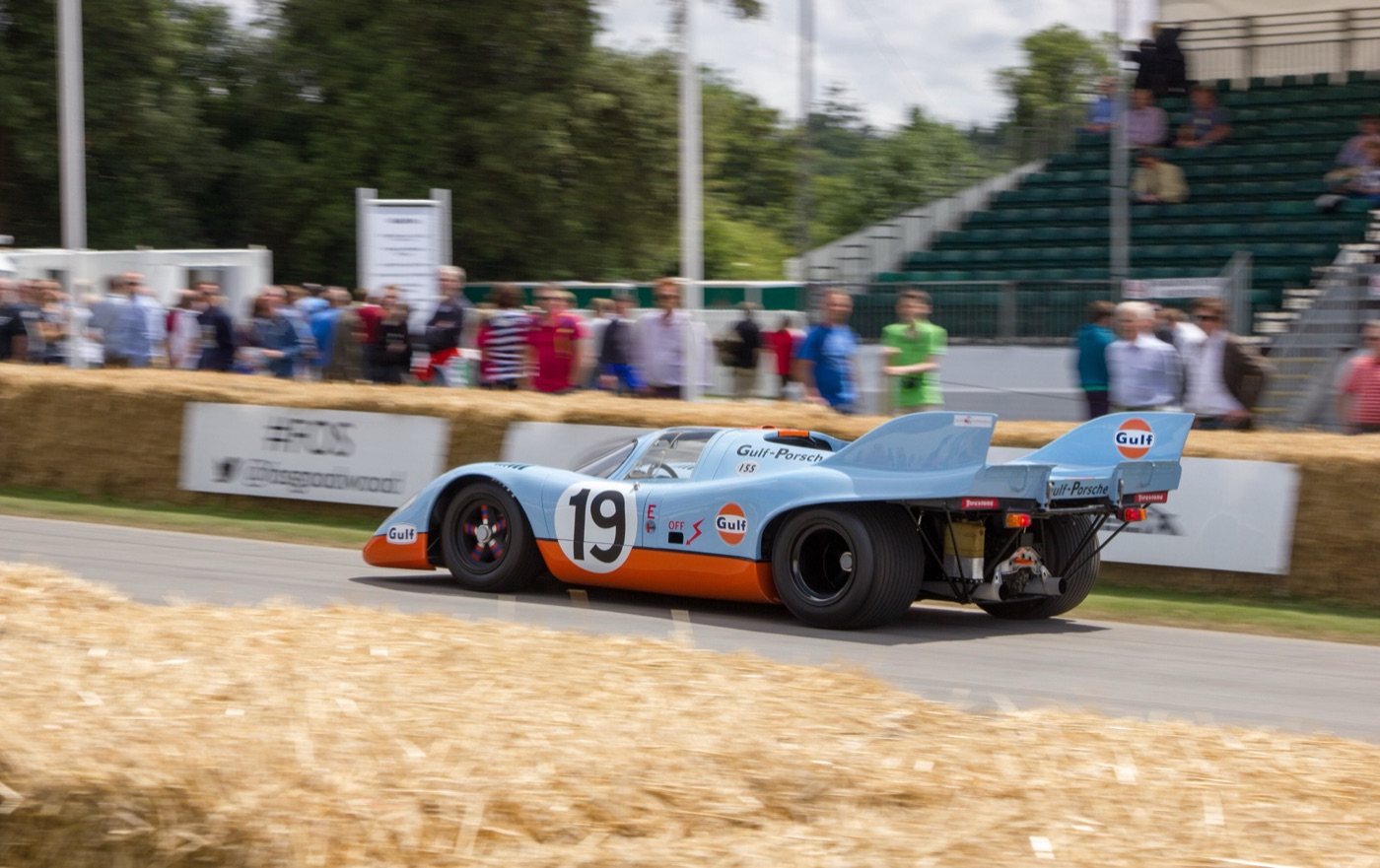
For 1970 Porsche handed its works effort to John Wyer’s JW Automotive, the team that had won Le Mans with Ford GT40s in 1968 and 1969, running in the light blue and orange of the American oil company Gulf; Porsche announced the deal at the London Motor Show on 30 September 1969, according to Porsche’s 2019 account of the 917-001 restoration. A second team, Porsche Salzburg, also ran works-supported cars, so the factory had two teams racing each other. The opposition was Ferrari’s five-litre 512S.
The 917 lost only three rounds: Sebring went to a Ferrari 512S, and Porsche entered its smaller 908/03 instead on the twisty Targa Florio and Nürburgring tracks, and won both.
Spa 1970: faster than Formula One
At the Spa 1000 km on 17 May 1970, on the old 14.1 km Spa-Francorchamps circuit, Pedro Rodríguez set a lap record of 3 min 16.5 sec, 258.320 km/h (about 160 mph), Denis Jenkinson reported in Motor Sport, June 1970, with the cars passing “at close on 200 m.p.h. down the Masta straight”. Siffert and Redman won by 2 min 34.5 sec from the Ferrari 512S of Jacky Ickx and John Surtees, at a race average of 240.46 km/h, and the first eight places were split evenly between four 917s and four 512S. Jenkinson doubted whether any three-litre Grand Prix car would beat Rodríguez’s lap. None did: at the Belgian Grand Prix in June, with a chicane added at Malmedy, Chris Amon’s fastest lap averaged 152 mph and Rodríguez won in a BRM, Motor Sport recalls.
1971: the last five-litre season
The FIA limited the championship to three-litre cars from 1972, so 1971 was the 917’s last year. Gulf won five of its seven victories, with Rodríguez and Jackie Oliver taking Daytona, Monza and Spa. At Spa, the museum says, Siffert set a practice average of 260.8 km/h, and Siffert and Bell let Rodríguez and Oliver win by four tenths of a second under team orders. The other four rounds went to Alfa Romeo at Brands Hatch, the Targa Florio and Watkins Glen and to the 908/03 at the Nürburgring.
Porsche 917 at Le Mans
The 917 raced at Le Mans three times in period, from 1969 to 1971, and won twice; Kremer Racing’s 917 K-81 ran there once more in 1981. The first visit, in 1969, ended without a finisher.
| Year | No. | Drivers | Type | Entrant | Result |
|---|---|---|---|---|---|
| 1969 | 12 | Vic Elford, Richard Attwood | 917 LH | Porsche System Engineering | Retired, 327 laps (gearbox, clutch) |
| 1969 | 14 | Rolf Stommelen, Kurt Ahrens | 917 LH | Porsche System Engineering | Retired, 148 laps (slipping clutch) |
| 1969 | 10 | John Woolfe, Herbert Linge | 917 LH | John Woolfe Racing | Fatal accident, lap 1 |
| 1970 | 23 | Hans Herrmann, Richard Attwood | 917 K | Porsche Salzburg | 1st, 343 laps |
| 1970 | 3 | Gérard Larrousse, Willi Kauhsen | 917 LH | Martini | 2nd, 338 laps |
| 1970 | 25 | Vic Elford, Kurt Ahrens | 917 LH | Porsche Salzburg | Retired, 225 laps (engine) |
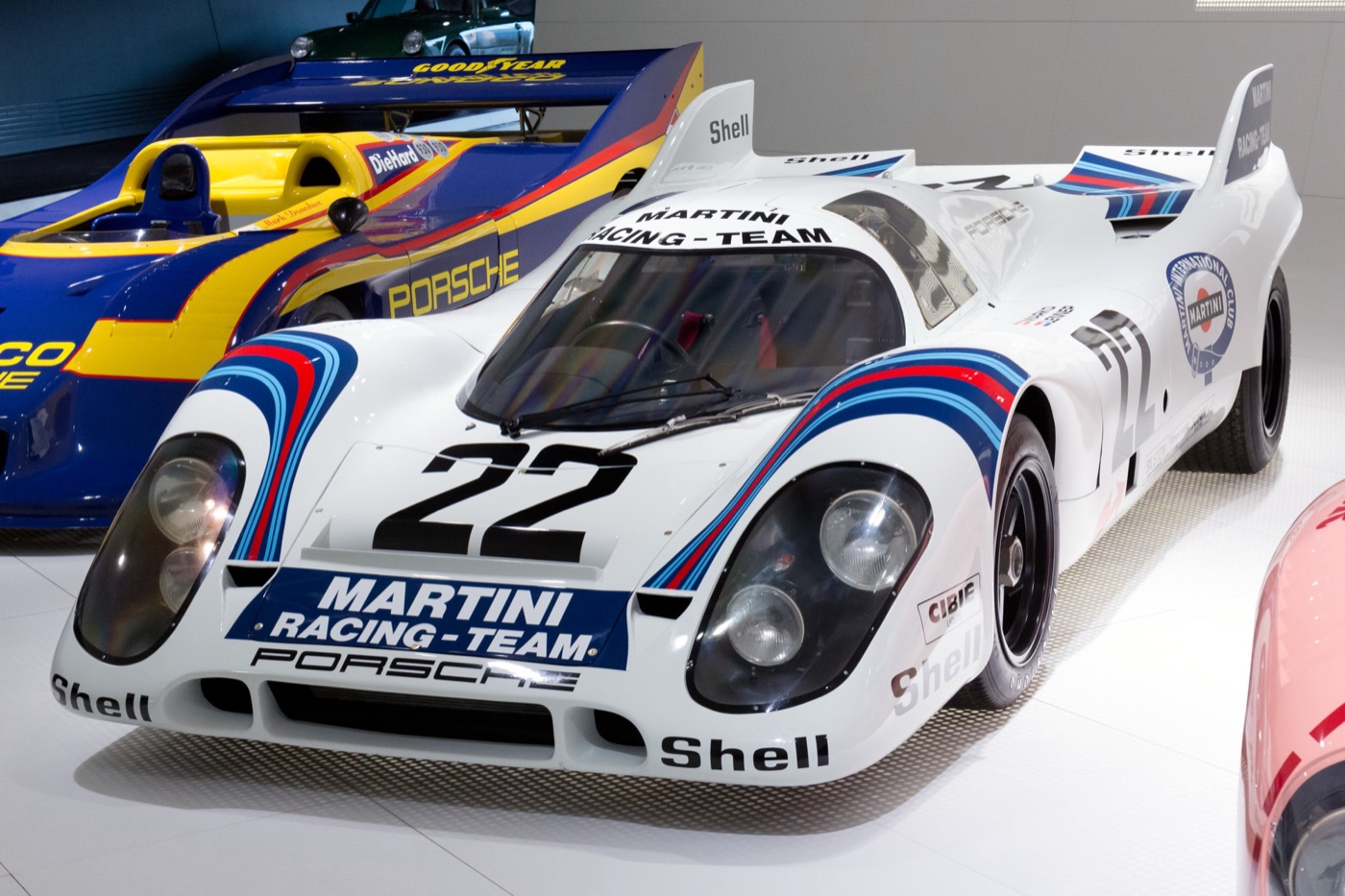
| 1971 | 22 | Helmut Marko, Gijs van Lennep | 917 K | Martini | 1st, 397 laps |
| 1971 | 19 | Richard Attwood, Herbert Müller | 917 K | JW Automotive (Gulf) | 2nd, 395 laps |
| 1971 | 23 | Willi Kauhsen, Reinhold Joest | 917/20 | Martini | Retired (accident) |
The table lists the leading 917s; four other 917s retired in each year. For 1969 the body types and the clutch failure of car 14 follow the museum’s account; racingsportscars.com lists car 10 as a 917 and car 14’s retirement as an oil leak. It also gives the Salzburg team’s entrant name as Porsche Konstruktionen KG.
1969: the lead lost in the 21st hour
Porsche brought four long-tail 917s to Le Mans in 1969: two works cars, a spare for practice and one for the private John Woolfe Racing team. Woolfe crashed on the first lap and was killed. The Elford and Attwood car led by six laps after 21 hours, the museum says, until its gearbox cracked; “The engine was running like clockwork until that point,” Mezger recalled. The race went to Ickx and Oliver’s Ford GT40, which beat Hans Herrmann’s Porsche 908 by about 100 metres.
1970: Porsche’s first overall win
Porsche entered seven 917s in 1970, against eleven Ferrari 512S. The race began with drivers already strapped in, the first year without the running Le Mans start, and rain started about half an hour in. Elford’s long-tail took pole and was timed at 205 mph, but it, the Siffert and Rodríguez Gulf cars and most of the Ferraris dropped out; four Ferraris were eliminated in one crash, and Ickx crashed his before the Ford chicane. Herrmann and Attwood, who had qualified 15th with the older 4.5-litre engine in a red and white short-tail, won by five laps from the Martini long-tail, with a 908 third; a Porsche 914/6 and a 911 S were sixth and seventh, and Porsche also took the prototype and GT categories and the Index of Performance, Jenkinson noted. Only seven of the 51 starters were classified.
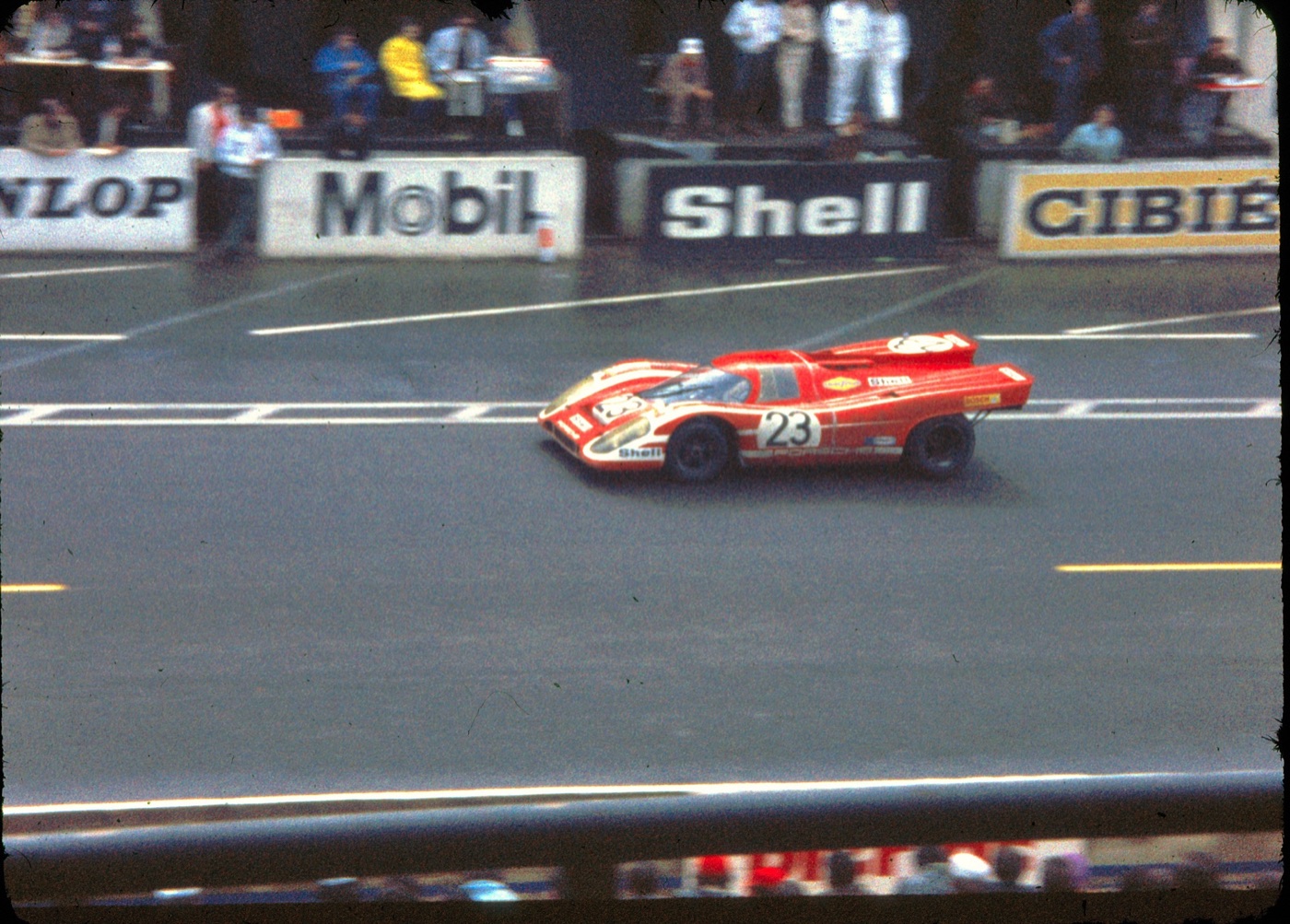
“There was no euphoria, I was absolutely drained,” Attwood told Motor Sport in 2020. Herrmann had promised his wife he would stop racing when he won, Porsche’s 2010 anniversary release recalled, and he retired after the race. The winners were paraded through Stuttgart to the market square.
1971: the magnesium-framed winner
In 1971 the Gulf long-tails led until shortly before half-distance, when the Rodríguez and Oliver car had a seized hub and then a split oil pipe. Marko and van Lennep took the lead at five on Sunday morning in a Martini 917K with a magnesium frame and won by two laps from the Gulf car of Attwood and Müller. “We were a bit lucky that the Gulf cars had problems,” van Lennep told Motor Sport, “because unlike us they were running long-tail configuration and were thus about 20kph quicker down the straight.” He learned only years later that the frame was magnesium: “When they tested it at Weissach, I gather it never lasted more than three or four hours without something breaking.”
They covered 397 laps, 5,335.313 km, at 222.304 km/h. That distance record stood until an Audi beat it in 2010, the ACO’s history of the distance record says.
1981: the Kremer 917 K-81
Ten years after the last works 917 raced there, Kremer Racing entered a 917 of its own, the 917 K-81, at Le Mans in 1981. Bob Wollek, Xavier Lapeyre and Guy Chasseuil drove it, and it retired after 82 laps with a broken engine mount, the results for 14 June 1981 record.
Can-Am and the Interserie
Ruled out of the World Championship, the 917 went to the Canadian American Challenge Cup, the North American Can-Am series, as a turbocharged open car and won it twice. The 917/10 first raced at Mosport Park on 11 June 1972, and Porsche says it won six of the nine rounds that year; George Follmer took the title in Roger Penske’s car.
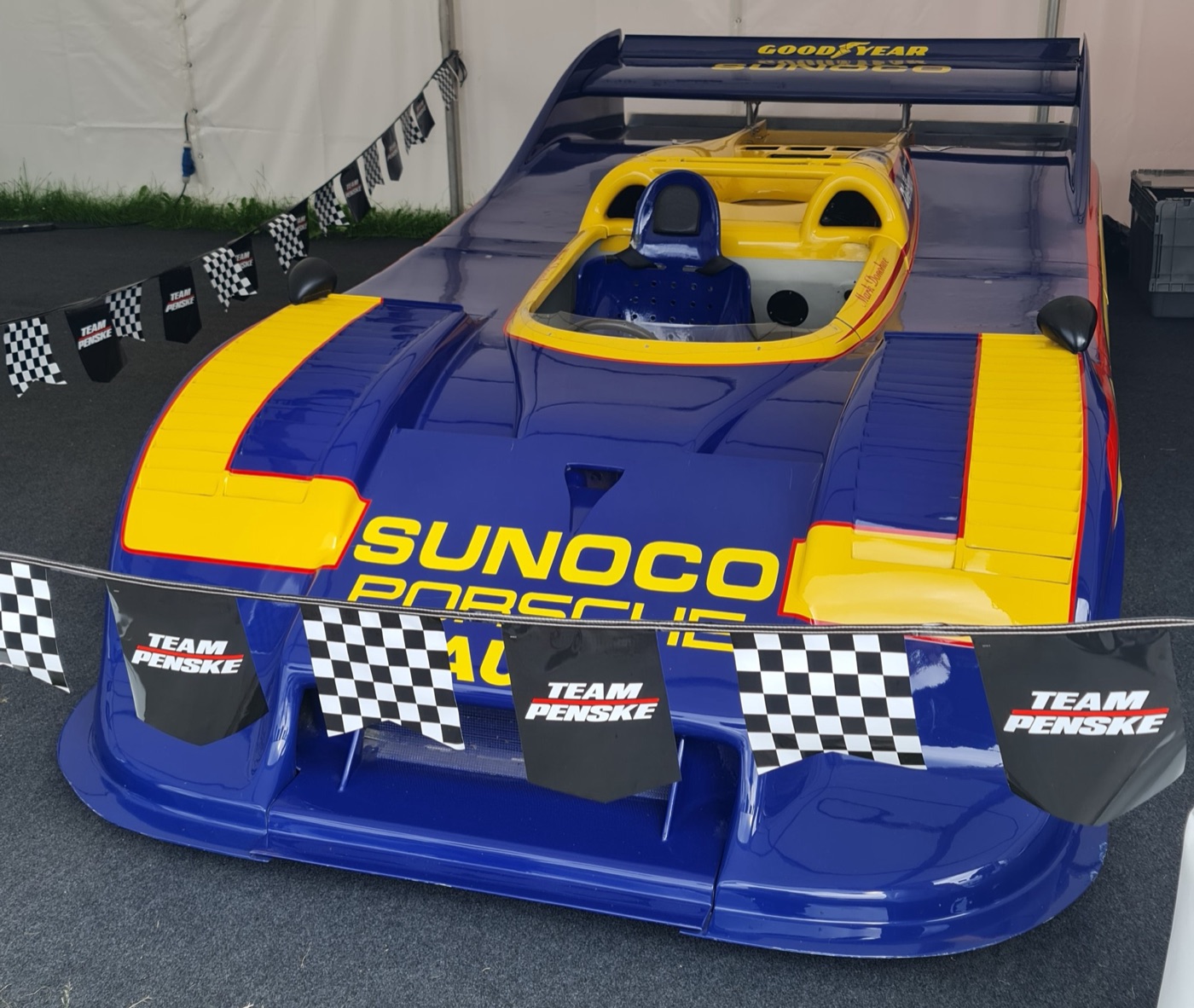
In 1973 Porsches won all eight rounds. Motor Sport’s review of the 1973 season records Mark Donohue winning six of them in the 917/30 that Roger Penske’s team ran with Sunoco sponsorship, qualifying fastest for all eight, with the other two won by 917/10s. Donohue took the title with 139 points to Follmer’s 62. In the European Interserie, the 917/10 won the title in 1972 and 1973 with Leo Kinnunen.
The turbocharging learned on these cars reached the road in the 911 Turbo of 1974, and its four-piston light-alloy brake callipers of the 1978 model year were also developed from the 917’s, the Porsche Museum’s 2019 exhibition release says.
The 917 in Steve McQueen’s film Le Mans
The 917 is the car that wins in Le Mans (1971), Steve McQueen’s film of the race, painted in Gulf colours. McQueen had planned to race a 917 at the 1970 race with Jackie Stewart, then the Formula One world champion, until his insurers refused, the ACO’s account of the filming says. His company, Solar Productions, ran a camera-carrying Porsche 908 in the real race, and filming at Le Mans lasted from 7 June to 10 November 1970.
The production used 41 drivers, and Porsche lent the 1970 pole-winning 917 LH for two weeks, with only works driver Herbert Linge allowed to drive it. In reality the best Gulf 917 result at Le Mans was Attwood and Müller’s second place in 1971. Ferrari would not help, so the 512s in the film came from the Belgian importer Jacques Swaters. Director John Sturges left over the script and Lee H. Katzin finished the film, which had a tepid reception in 1971, the ACO says.
How many Porsche 917s were made?
Porsche built 65 Porsche 917s: 44 coupés in short-tail and long-tail form, two PA Spyders and 19 Can-Am and Interserie Spyders, according to Porsche’s March 2009 press release for the car’s 40th anniversary, as reprinted by Serious Wheels. The first 25 were the homologation batch of spring 1969.
Porsche 917 prices today
On 18 August 2017 Gooding & Company sold a 1970 917K at Pebble Beach for $14,080,000, the highest price paid for a Porsche at auction at the time. That car, chassis 917-024, ran in the 1970 Le Mans test with Brian Redman and Mike Hailwood, was sold to Jo Siffert and leased to Solar Productions as a camera car for Le Mans, and spent about 25 years hidden in a warehouse near Paris before it re-emerged in 2001, Gooding’s catalogue release says.
In January 2025 chassis 917-022, bought new by McQueen and the star car of the film, later owned by Jerry Seinfeld, was bid to $25 million at Mecum’s Kissimmee sale without reaching its reserve, The Drive reported.
Where to see a Porsche 917
The Porsche Museum in Stuttgart-Zuffenhausen has the largest group: both Le Mans winners, 917-001 and, in its 2019 exhibition “50 Years of the Porsche 917: Colours of Speed”, seven more 917s including the 16-cylinder PA Spyder, a long-tail and the turbo cars, ten 917s with a combined 7,490 PS. Porsche’s 2009 anniversary release counted seven 917s on show there, the 917/30 among them. Other 917s are in private collections and run at historic events such as the Goodwood Festival of Speed.
Questions
Who designed the Porsche 917?
Hans Mezger, the engineer who had headed Porsche’s motorsport development department since 1965, designed the 917 and its twelve-cylinder engine under Ferdinand Piëch, the head of development who ordered the car in 1968. The body was shaped in Porsche’s design department and tested in the University of Stuttgart’s wind tunnel.
How much did a Porsche 917 cost new?
Porsche priced the 917 at DM 140,000 ex works when it showed the car at Geneva on 12 March 1969.
What do the K and LH in 917K and 917 LH mean?
K is for Kurzheck, short tail, the body the 917 used at most races from 1970. LH is for Langheck, long tail, the low-drag body built for the straights of Le Mans.
Why did the Porsche 917 stop racing?
The rules changed twice. The world championship was limited to three-litre cars from 1972, which ended the 917’s European career, and Can-Am changed its rules for 1974 in a way that shut out the 917/30, Porsche’s 2009 anniversary release says.
Did Steve McQueen race a Porsche 917?
No. He planned to share a 917 with Jackie Stewart at Le Mans in 1970, but his insurers would not allow it. He did race a Porsche 908 that year, finishing second at the Sebring 12 Hours with Peter Revson.
Who were the best-known Porsche 917 drivers?
In the World Championship, Jo Siffert, Pedro Rodríguez, Brian Redman and Leo Kinnunen won most of the 917’s races for John Wyer’s Gulf team, and Hans Herrmann, Richard Attwood, Helmut Marko and Gijs van Lennep won Le Mans. In Can-Am, George Follmer (1972) and Mark Donohue (1973) took the titles.
What liveries did the Porsche 917 race in?
The best known are the red and white of Porsche Salzburg on the 1970 Le Mans winner, Gulf’s light blue and orange on John Wyer’s cars, the white, blue and red of Martini on the 1971 winner, the pink butcher’s chart of the 917/20 and the dark blue and yellow of Sunoco on the 917/30 run by Roger Penske’s team.
Sources
- Porsche Museum press kit, “Porsche 917: development, technology and racing in 1969”, 2019 (archived 2022): the rules, Mezger’s engine, construction, Geneva, homologation, the 1969 season and Le Mans.
- Porsche Museum press kit, “Porsche 917: 10 types and their successes”, 2019 (archived 2022), an index page linking the ten type data sheets: the figures in the specifications table, the 16-cylinder car, 917/20, 917/10, 917/30 and the Talladega record.
- Porsche Museum press kit, “Hans Mezger: the Porsche 917 chief engineer”, 2019 (archived 2022): Mezger and the 1969 gearbox failure.
- Porsche Newsroom, “The trailblazer returns”, 29 April 2019: 917-001, the Wyer deal of 30 September 1969 and the restoration.
- Porsche Newsroom, “New special exhibition ‘50 Years of the Porsche 917: Colours of Speed’”, 14 May 2019: the exhibition, the 1971 record and the 911 Turbo.
- Serious Wheels, reprint of Porsche’s March 2009 40th-anniversary press release: 65 cars built and their breakdown.
- Automobile Club de l’Ouest, “24 Hours of Le Mans 1970 (2/6): Porsche and Ferrari drivers”, 2020: Elford’s pole and fastest lap, Herrmann’s retirement.
- Automobile Club de l’Ouest, “Winning Porsches at the 24 Hours of Le Mans (1): the 917”: the 917’s Le Mans records.
- Automobile Club de l’Ouest, “The distance record 1923–1971”, 2023: the 1971 distance record and Audi’s in 2010.
- Automobile Club de l’Ouest, “Steve McQueen in 1970: filming at the 24 Hours of Le Mans (1)”, 2019 and “24 Hours of Le Mans 1970 (5/6): from the track to the big screen”, 2020: the film.
- Racing Sports Cars, race results for Le Mans 1969, 1970, 1971 and 1981 and the championship rounds in the wins table.
- Denis Jenkinson, “The 1,000 kms of Francorchamps”, Motor Sport, June 1970: Spa 1970.
- Denis Jenkinson, “Le Mans 1970: a dead loss”, Motor Sport, July 1970: the 1970 race, the 205 mph timing and the 51 starters.
- “1,000 Kilometres of Austria”, Motor Sport, November 1970: the Siffert and Redman win.
- “Can-Am ’73”, Motor Sport, December 1973: the 1973 season.
- Dominic Tobin, “There was no euphoria, I was absolutely drained”, Motor Sport, 14 June 2020: Attwood on 1970.
- Motor Sport, “1971: Porsche’s 917 lights up a ‘boring’ Le Mans entry”: van Lennep on 1971.
- Motor Sport, “1970 Belgian GP: Rodríguez wins fierce fight with Amon on ‘old’ Spa”: the Grand Prix comparison.
- “Creating a winner”, Motor Sport, November 2011: the 917K’s short tail and the 917 LH’s development.
- Gooding & Company, press release, 22 June 2017 and results release, 20 August 2017: 917-024 and its price.
- Chris Tsui, “Jerry Seinfeld turns down $25M for his 1969 Porsche 917K”, The Drive, 21 January 2025: 917-022 at Mecum.
- SkiddMark, “Porsche celebrates 40 years since its first victory at Le Mans”, June 2010, carrying Porsche’s anniversary release: Porsche’s class wins at Le Mans since 1951, Herrmann’s promise and the four Ferraris lost in one crash in 1970.