Porsche 918 Spyder: history, Nürburgring record, Weissach and values
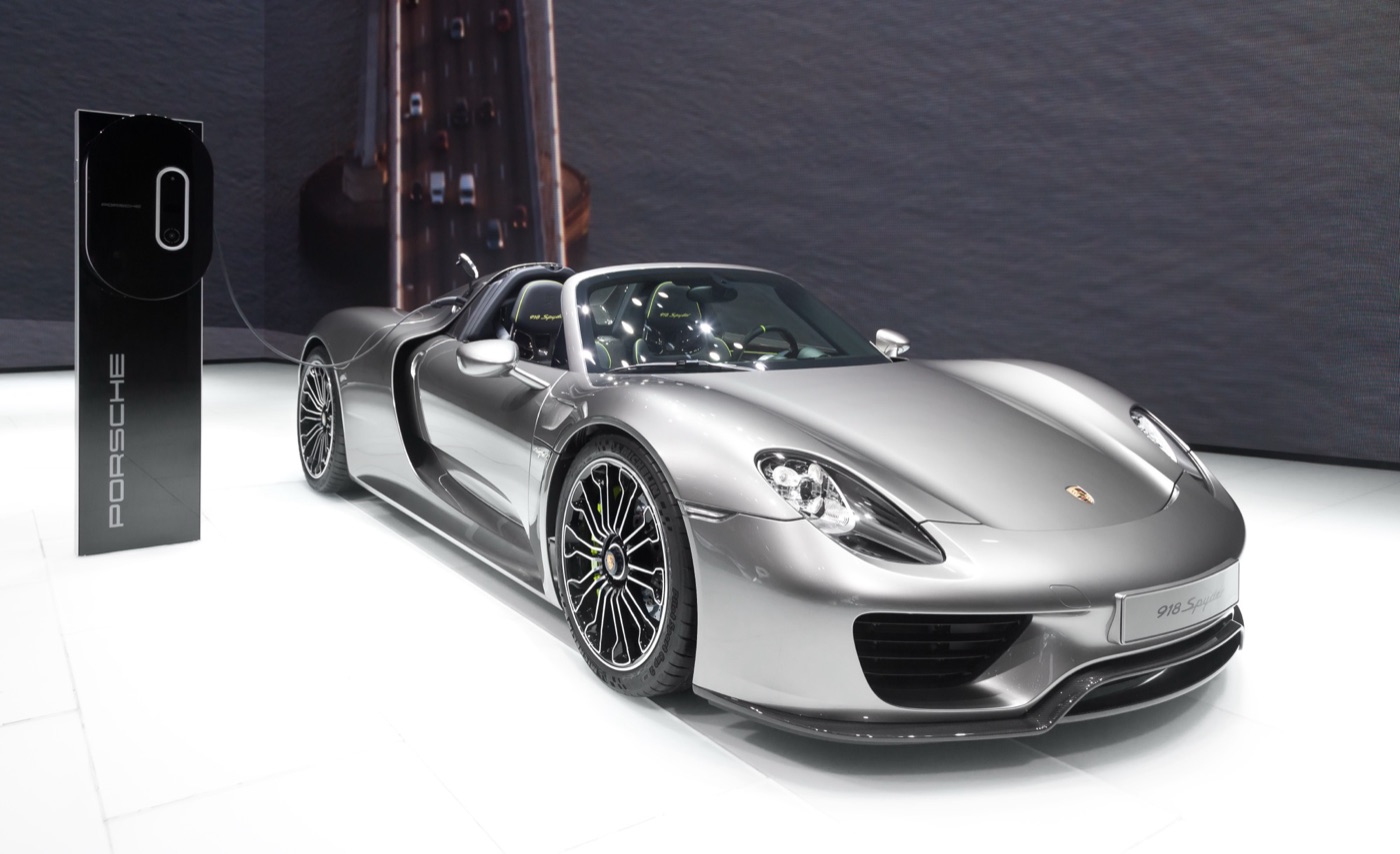
The Porsche 918 Spyder is a mid-engined, two-seat plug-in hybrid hypercar that Porsche built by hand at Zuffenhausen from September 2013 to June 2015, limited to 918 cars. A 4.6-litre V8 of 608 PS and two electric motors give 887 PS (875bhp) in all, and on 4 September 2013 a 918 Spyder lapped the Nürburgring Nordschleife in 6 minutes 57 seconds, which Porsche called the first lap under seven minutes by a road-homologated car.
It began as a concept at the 2010 Geneva motor show and was trialled as the 918 RSR racing laboratory in 2011. Prices started at $845,000 in the US. With the McLaren P1 and LaFerrari it makes up the "Holy Trinity" of hybrid hypercars, and the best-specified cars have sold at auction for between $3.9 million and $6.05 million since 2023.
History of the Porsche 918 Spyder
The 918 Spyder went from a show car to a production car in three and a half years: shown in March 2010, approved for production that July, on sale from 2011, built from September 2013 and sold out in December 2014. Porsche places it in a line of one flagship sports car per decade, after the 550 Spyder, 904 Carrera GTS, 911 Turbo, 959, 911 GT1 and Carrera GT, according to its November 2013 press kit for the 918 Spyder.
The 2010 Geneva concept
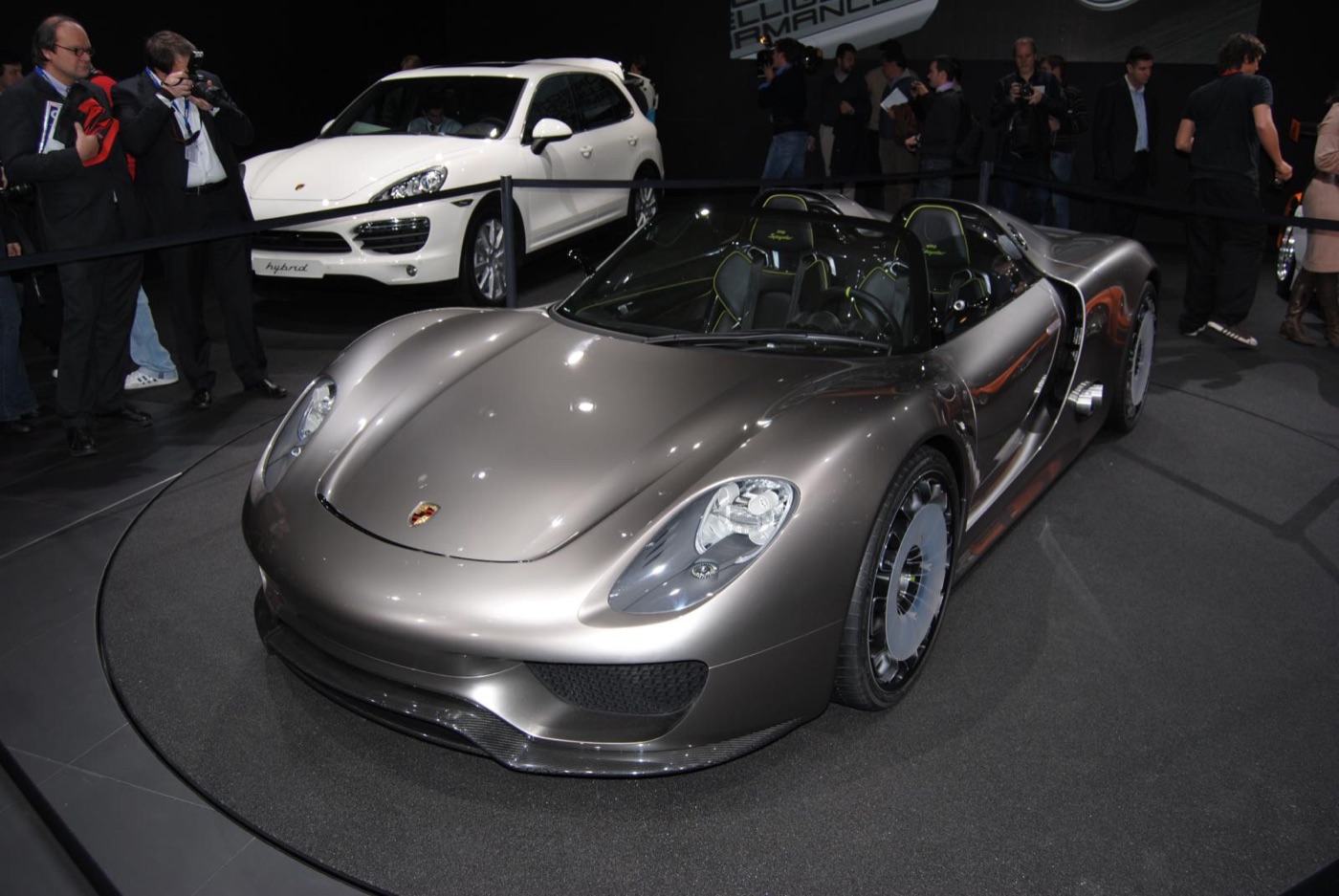
Porsche unveiled the 918 Spyder concept at the Geneva motor show on 2 March 2010, one of three hybrids on its stand with the Cayenne S Hybrid and the 911 GT3 R Hybrid racing car. Porsche's launch release, as printed by New Atlas, described a V8 of more than 500 bhp running to 9,200rpm, developed from the 3.4-litre engine of the RS Spyder racing car, with electric motors on both axles adding 218 bhp (160 kW). The targets were 3.0 litres per 100km (94mpg) and 70g/km of CO2 on the European test cycle, 0–100km/h in just under 3.2 seconds, 320km/h and a Nordschleife lap under 7 minutes 30 seconds, quicker than the Carrera GT. The carbon-fibre concept weighed less than 1,490kg.
Approval for production
Porsche AG's supervisory board gave the green light for series development on 28 July 2010, after the concept had also been shown at Auto China in Beijing. Michael Macht, then chairman of the board of management, said in the approval release reproduced by Autoblog: "We will develop the 918 Spyder in Weissach and assemble it in Zuffenhausen." A March 2011 SkiddMark report recorded the car going on sale that month, with production due to start on 18 September 2013 (9/18 in the American way of writing dates).
Buyers were also offered a 911 Turbo S "Edition 918 Spyder", coupé or cabriolet, with acid-green trim on the upholstery, instrument needles and door sills. Each carried the same production number as its owner's 918 Spyder, and 918 were offered, according to the same SkiddMark report.
Prototypes and the Martini livery
Working prototypes began road trials in May 2012, wearing camouflage in the pattern of the 917 racing cars. Wolfgang Hatz, Porsche's head of research and development, said in Porsche's announcement that month that the software controlling the engine and the two electric motors was "a critical component in this vehicle". In July 2012 Porsche agreed with Bacardi to use the Martini Racing livery on the prototypes and to offer it to customers; Martini had been the official partner of the Porsche works team from 1973 to 1978, SkiddMark reported at the time.
Launch at Frankfurt and the sell-out
The production version made its public debut at the Frankfurt motor show (IAA) on 10 September 2013, six days after its Nürburgring record. The first series car began assembly on 18 September 2013. On 10 December 2014 Porsche announced that the last of the 918 cars had been sold, in its November sales release, and the final car left the line on 19 June 2015.
The 918 RSR racing laboratory
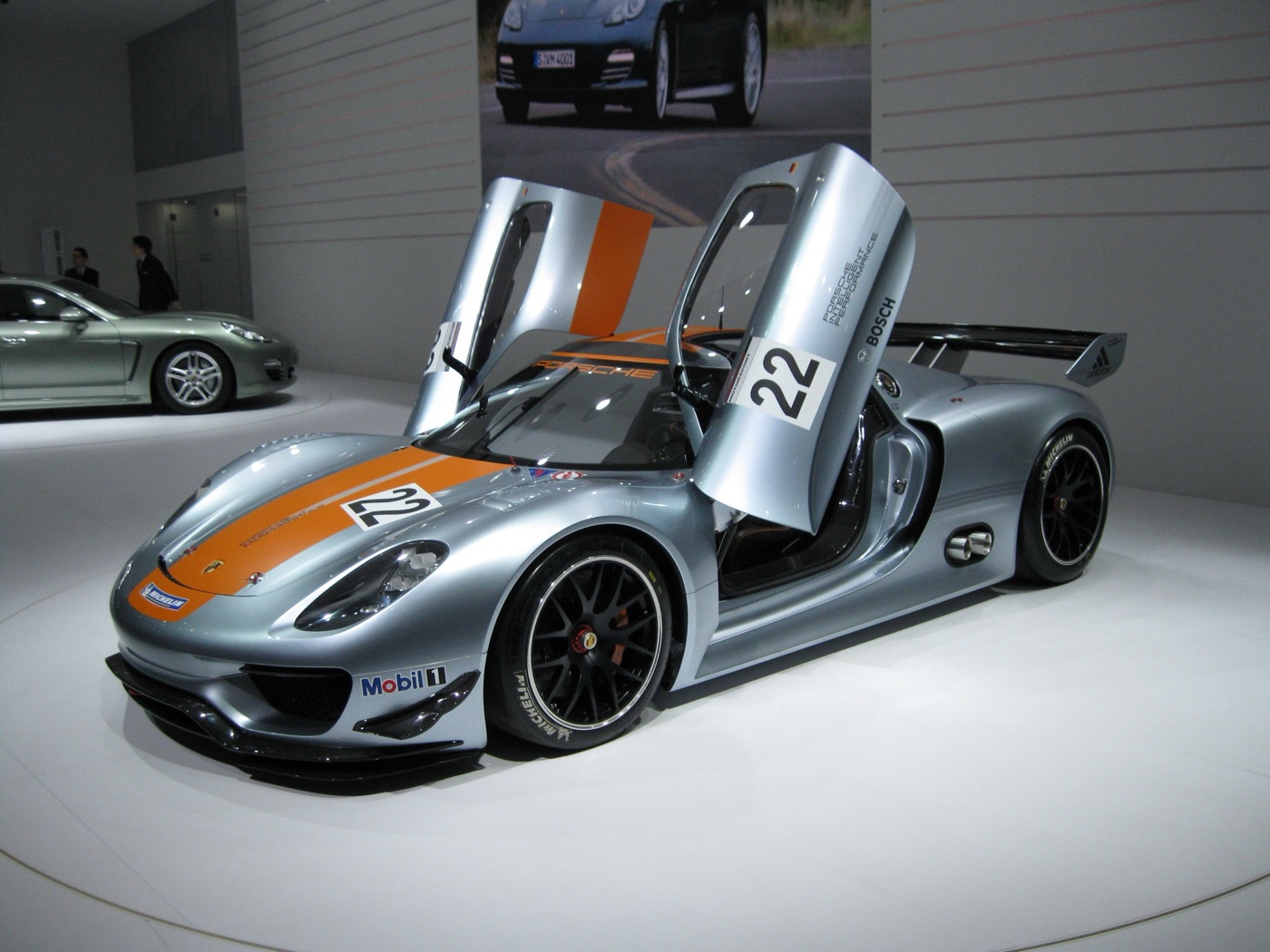
The 918 RSR was a racing coupé that Porsche built as a hybrid test bed, not a model for sale: it put the flywheel hybrid of the 911 GT3 R Hybrid racer into a mid-engined body styled on the 918 Spyder concept. Porsche unveiled it at the North American International Auto Show in Detroit on 10 January 2011 and showed it at Geneva that March. Porsche said at the launch that the car was purely a test bed and that it had no plans for a motorsport programme, a January 2011 SkiddMark report recorded.
From the 911 GT3 R Hybrid
The 911 GT3 R Hybrid, which Porsche called its "Race Lab", ran in 2010 on the Nürburgring Nordschleife, in the American Le Mans Series at Road Atlanta and in the Intercontinental Le Mans Cup at Zhuhai in China. It stored braking energy in a flywheel and fed it to electric motors on the front axle. Porsche's 918 RSR release, reproduced by Autoblog, said the same system was being moved into "the motor sports version of the 918 Spyder concept car".
Engine, motors and flywheel
The RSR's V8 was a development of the RS Spyder's direct-injection engine and gave 563 PS (555 bhp) at 10,300rpm. Two electric motors, one at each front wheel, added 75 kW each, for a peak of 767 PS (756 bhp), and could split torque between the front wheels for torque vectoring. In place of a passenger seat sat the flywheel accumulator, an electric motor whose rotor spun at up to 36,000rpm; on a button press it gave up to 150 kW for about eight seconds when fully charged. The gearbox was a six-speed constant-mesh unit with straight-cut gears, also developed from the RS Spyder's.
Why number 22?
The RSR was painted liquid metal chrome blue with Porsche's hybrid orange on the stripes and brake calipers, and carried the number 22. That was the number of the Martini 917 short-tail in which Helmut Marko and Gijs van Lennep won Le Mans in 1971, covering 5,335.313km at an average of 222.304km/h, a distance record that stood until 2010. The RSR had doors that opened obliquely upwards, an air intake in the roof, two roof aerials for pit radio and telemetry, 19-inch centre-lock wheels on slicks, and a brown leather bucket seat.
Design and engineering
The Porsche 918 Spyder is built around a carbon-fibre monocoque with a carbon unit carrier at the back, a construction Porsche took from its racing cars. The monocoque holds the front electric motor, the traction battery and the 70-litre fuel tank; the carrier holds the V8, the rear motor and the gearbox. Heavy parts sit low and central, giving a 43:57 front-to-rear weight split and a centre of gravity at about the height of the wheel hubs.
Body and roof
The body panels and doors are almost all carbon fibre, and the bumpers are flexible polyurethane. The two roof panels, also carbon, lift out and stow in the front luggage compartment, which holds about 110 litres. The press kit names the 917 and the RS Spyder as the design's starting points, the 935 for the rear wings and B-pillars that wrap round the cabin, and the 906 for the lip across the tail. Two optional liquid-metal finishes, silver and chrome blue, were the first paints Porsche could apply directly to carbon fibre, in nine layers, three of them by hand; the November 2013 press kit lists ten standard colours alongside them.
Top pipes
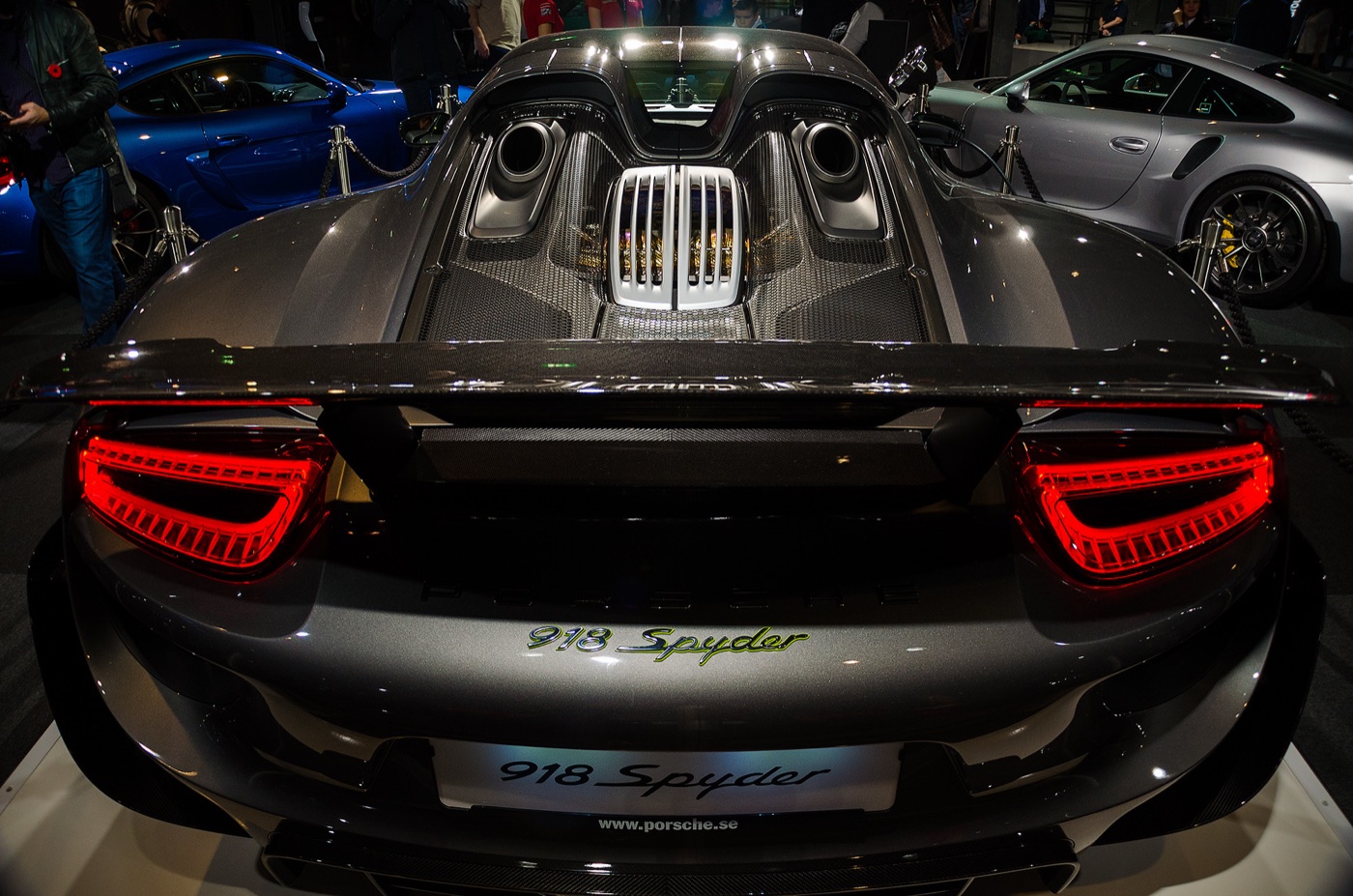
The exhausts leave through the engine cover, just behind the headrests, which Porsche called "top pipes". The press kit says no other series production car used the layout; it carries the hot gases out by the shortest route, keeps back pressure low and keeps the engine bay cooler for the battery, which works best between 20 and 40°C.
Chassis, steering and braking
Suspension is by double wishbones at the front and a multi-link axle at the rear, with forged aluminium arms, metal "unibal" joints and adaptive dampers. Electromechanical actuators steer the rear wheels by up to three degrees: in the opposite direction to the fronts below 50km/h, which works like a wheelbase 25cm shorter, and in the same direction from 80km/h, like one 50cm longer. Under braking the electric motors can slow the car by up to 0.5g and return up to 230 kW to the battery before the carbon-ceramic brakes (410mm front discs, 390mm rear) take over. Wheels are 20-inch at the front and 21-inch at the rear, on Michelin Pilot Sport Cup 2 tyres developed for the car. A front lift that raises the nose about 30mm was an option.
Active aerodynamics
Porsche Active Aerodynamics has three settings. In Start the rear wing and spoiler stay down and the underbody flaps closed; in Speed the wing rises 120mm at an 8-degree angle; in Performance it tilts to 14 degrees and two flaps open under the nose to give ground effect at the front axle. Adjustable intakes under the headlights close in the economy modes to cut drag.
Engine, powertrain and drive modes
The hybrid powertrain of the Porsche 918 Spyder has three power units: a 4.6-litre V8 and a 115 kW electric motor at the rear, driving the rear wheels through a seven-speed PDK gearbox, and a 95 kW motor driving the front wheels. Porsche says the 918 Spyder was the first production car with three independently controlled power units, and its second plug-in hybrid after the Panamera S E-Hybrid.
The V8 engine from the RS Spyder
The V8 comes from the engine of the RS Spyder Le Mans prototype, with a flat-plane crankshaft weighing 13kg, titanium connecting rods, dry-sump lubrication and no belt drives for ancillaries. It has 4,593cc, a 13.5:1 compression ratio and 608 PS (447 kW) at 8,700rpm, revs to 9,150rpm and weighs 135kg. At 132 PS per litre, Porsche claimed the highest specific output of any naturally aspirated road-car engine, and the lightest naturally aspirated production V8. The gearbox is mounted upside down to lower the centre of gravity.
Electric motors and battery
The rear motor (156 PS, 375Nm) sits between the engine and the gearbox and also works as a generator; Porsche cooled its stator with water and its magnets with air, a first for a hybrid motor. The front motor (129 PS, 210Nm) drives through a single-speed gearbox and uncouples at about 265km/h, when it reaches 16,000rpm. Together they give 286 PS (210 kW). The 6.8kWh lithium-ion battery of 312 cells sits behind the seats, weighs 138kg and delivers up to 230 kW. On a 230-volt, 10-amp socket it charges in 3.8 hours; Porsche's optional 20 kW DC station takes 25 minutes. Porsche covered the battery for seven years or 100,000km.
The five drive modes
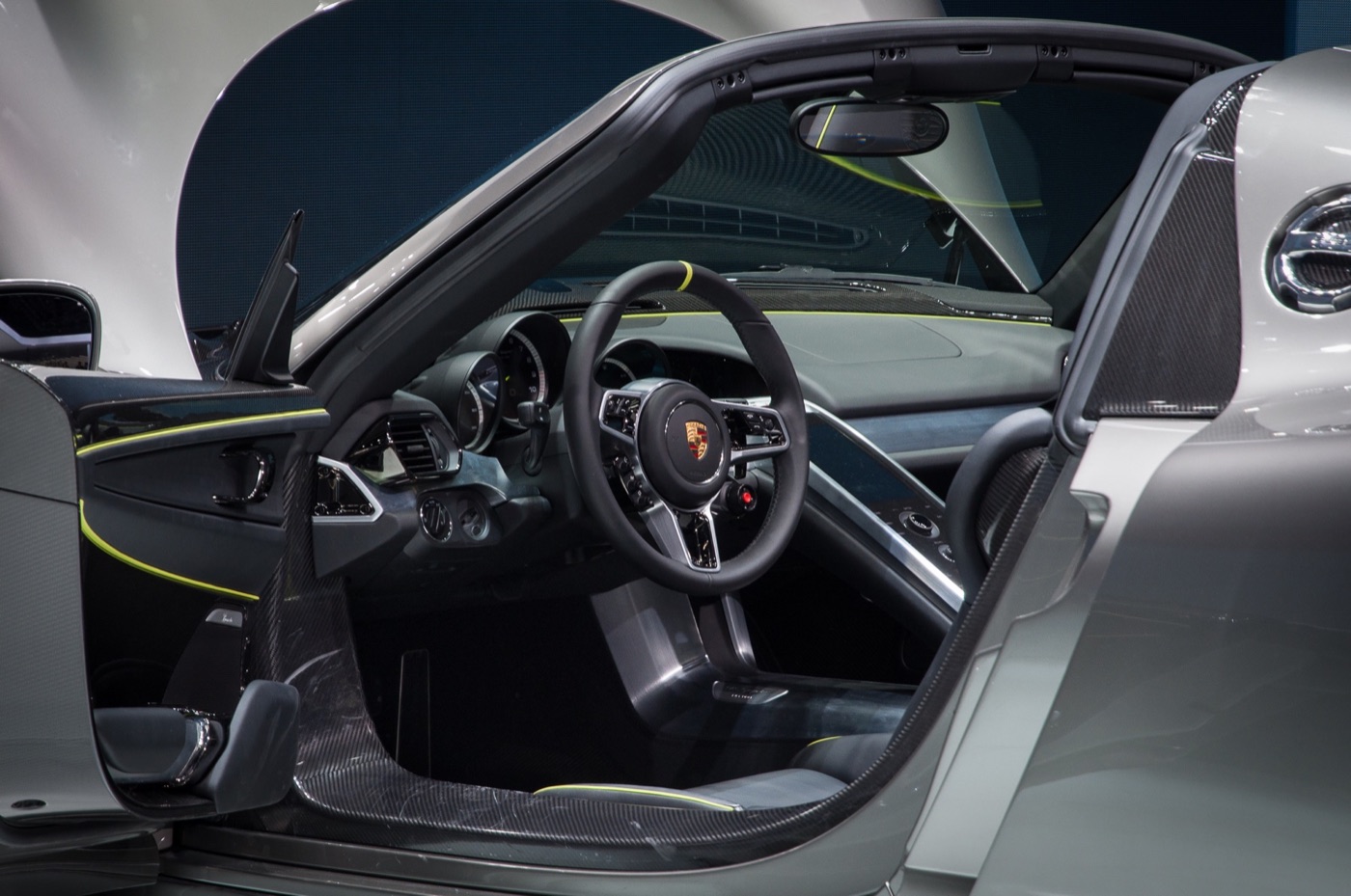
A rotary "map switch" on the steering wheel chooses the mode, and the mode also sets the gearchanges, the aerodynamics and the headlights.
- E-Power is the default at start-up: electric only, up to 150km/h and, in ideal conditions, more than 30km.
- Hybrid alternates engine and motors for the lowest consumption.
- Sport Hybrid keeps the V8 running, with the motors adding boost.
- Race Hybrid runs the motors to their limit for short bursts and uses spare engine power to recharge; Porsche says a flat battery can be recharged in under 20 minutes this way.
- Hot Lap, a red button in the middle of the switch, works only in Race Hybrid and uses all the battery's energy for a few fast laps. Porsche puts it at about four seconds on a Nordschleife lap, SkiddMark reported in 2016.
Porsche 918 Spyder specs and performance
The Porsche 918 Spyder has 887 PS (652 kW, 875bhp) and between 917 and 1,280Nm of torque depending on the gear, reaches 345km/h (214mph) and accelerates from 0–100km/h in 2.6 seconds. These are Porsche's final figures from November 2013, for the standard car; the Weissach package figures are in its own section.
| Item | 918 Spyder |
|---|---|
| Engine | 4,593cc 90-degree V8, naturally aspirated, dry sump |
| Engine output | 608 PS (447 kW) at 8,700rpm; 540Nm at 6,700rpm |
| Electric motors | Rear 156 PS (115 kW), front 129 PS (95 kW); 286 PS (210 kW) together |
| System output | 887 PS (652 kW); 917–1,280Nm depending on gear |
| Drivetrain | Seven-speed PDK to the rear wheels; front motor drives front wheels up to 265km/h |
| Battery | 6.8kWh lithium-ion, 385V, 230 kW, 138kg |
| Weight (DIN, empty) | 1,674kg |
| Length, width, height | 4,643mm, 1,940mm, 1,167mm |
| Wheelbase | 2,730mm |
| Top speed | 345km/h (214mph); 150km/h on electric power |
| 0–100km/h (0–60mph) | 2.6 seconds (2.5 seconds) |
| 0–200km/h | 7.3 seconds |
| 0–300km/h | 20.9 seconds |
| Quarter mile | 10.0 seconds |
| Fuel (NEDC) | 3.1 l/100km and 72g/km CO2 |
| Electric range (NEDC) | 16–31km |
How fast is the Porsche 918 Spyder?
Porsche's published times came from a late update: in November 2013, shortly before the first deliveries, Porsche cut the Weissach car's 0–100km/h time by 0.2 seconds, 0–200km/h by 0.5 seconds to 7.2 seconds and 0–300km/h by 2.1 seconds to 19.9 seconds, and the electric-only 0–100km/h time by 0.7 seconds to 6.2 seconds, SkiddMark reported at the time. In SkiddMark's own timed runs at Bruntingthorpe in October 2015, a 918 Spyder reached 60mph in 2.85 seconds, 100mph in 5.52 seconds and covered the quarter mile in 10.32 seconds at 143.48mph.
How far can it go on electricity?
Porsche claimed 16 to 31km on the European cycle. The US Environmental Protection Agency rated the 2015 car at 12 miles of electric range, 22mpg (US) on petrol alone and 420 miles in total with a full tank and a charged battery.
The Nürburgring lap record
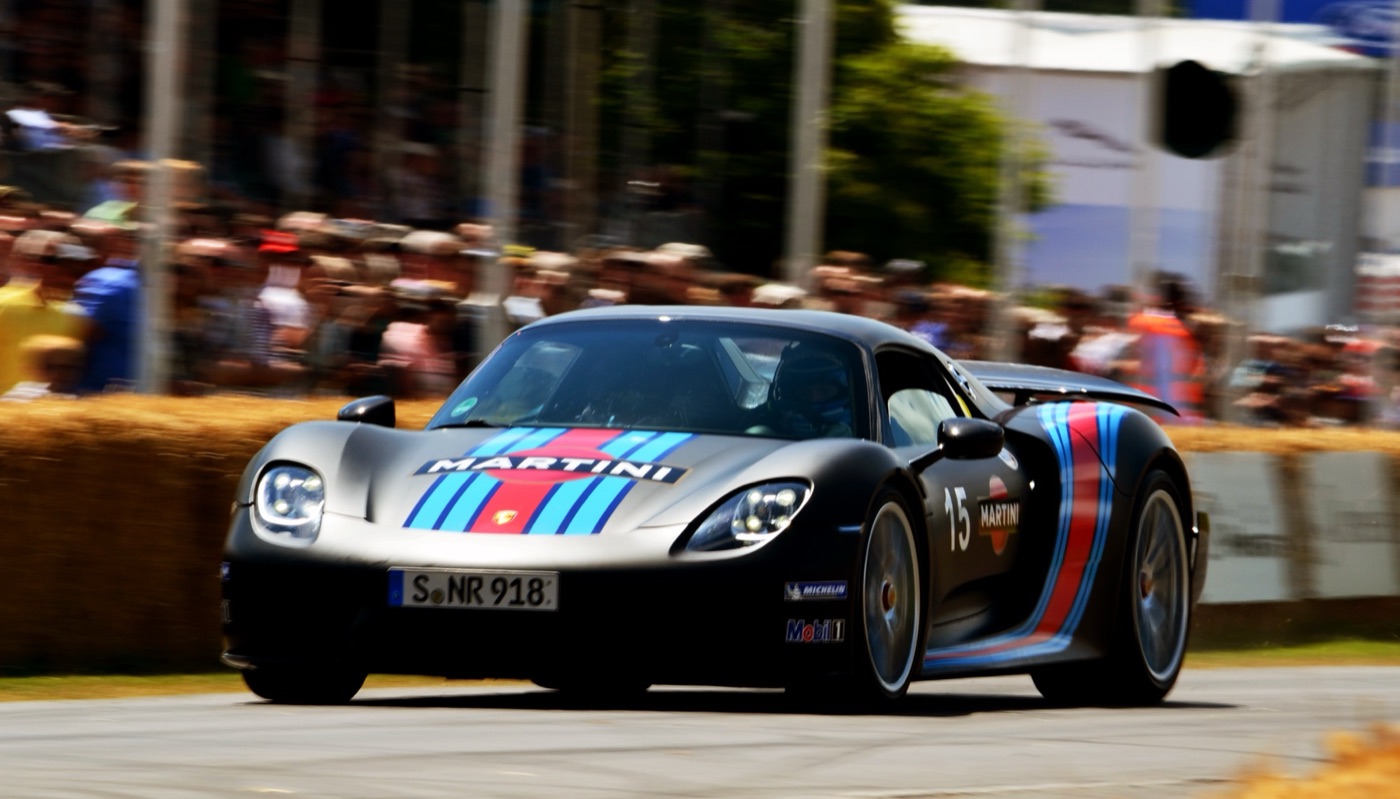
A 918 Spyder with the Weissach package lapped the 20.6km Nürburgring Nordschleife in 6 minutes 57 seconds on 4 September 2013, 14 seconds faster than the previous record for a road-legal car. Porsche's release of 10 September 2013 says works driver Marc Lieb set the time at an average of 179.5km/h on the first attempt that morning; Walter Röhrl and test driver Timo Kluck also went under the old record in two different cars. Wige Solutions timed the laps and Marcus Schurig, editor of Sport Auto, watched as an independent observer.
The prototype's 7:14 in 2012
A prototype first beat the concept's target on 18 September 2012, when Röhrl lapped in 7 minutes 14 seconds on production Michelin road tyres with the Weissach package fitted. Frank Walliser, the 918 project leader, said the time "fully confirmed the viability of its future concept after just a few months on the road", a September 2012 SkiddMark report recorded. Porsche's own figure for the Carrera GT, its previous supercar, is 7:33 in 2004.
Which record did it beat?
The record it broke had stood for four years. CAR magazine's report on the lap names the earlier benchmarks as the Gumpert Apollo Sport (7:11.57), the Dodge Viper ACR (7:12.13) and the Lexus LFA Nürburgring Package (7:14.64). A Radical SR8 LM had lapped in 6:48 in 2009, but it was road legal only through single-vehicle approval, and manufacturers counted only fully type-approved cars. The tyres were standard Michelin Pilot Sport Cup 2s; Michelin's account of the record, reported by SkiddMark that month, put the temperature inside the tyre above 100°C and at the contact patch above 200°C.
The Weissach package and liveries
The Weissach package (Weissach is where Porsche developed the car) was a factory option that cut 41kg from the 918 Spyder and added aerodynamic parts; in the US it cost $84,000, taking the list price to $929,000, according to Porsche's January 2013 US price list as reported by Autoblog.
What the Weissach package changes
The roof, rear wing, mirrors and windscreen frame are exposed carbon fibre, and Alcantara replaces leather on parts of the interior, with less sound insulation and fire-resistant seat fabric. Forged magnesium wheels save about 14kg; the wheel bearings have ceramic balls, the chassis bolts and brake-pad backing plates are titanium, and both seats get six-point harnesses. Aeroflaps at the front wheel-arch vents add downforce and blades behind the rear wheels cut drag. Owners could have a lighter film wrap in place of paint.
| Figure | Standard | Weissach package |
|---|---|---|
| DIN weight, empty | 1,674kg | 1,634kg |
| Wheels | Standard 918 Spyder wheels | Forged magnesium |
| 0–200km/h | 7.3 seconds | 7.2 seconds |
| 0–300km/h | 20.9 seconds | 19.9 seconds |
| Quarter mile | 10.0 seconds | 9.9 seconds |
| Fuel and CO2 (NEDC) | 3.1 l/100km, 72g/km | 3.0 l/100km, 70g/km |
| US list price, 2013 | $845,000 | $929,000 |
Martini and Salzburg designs
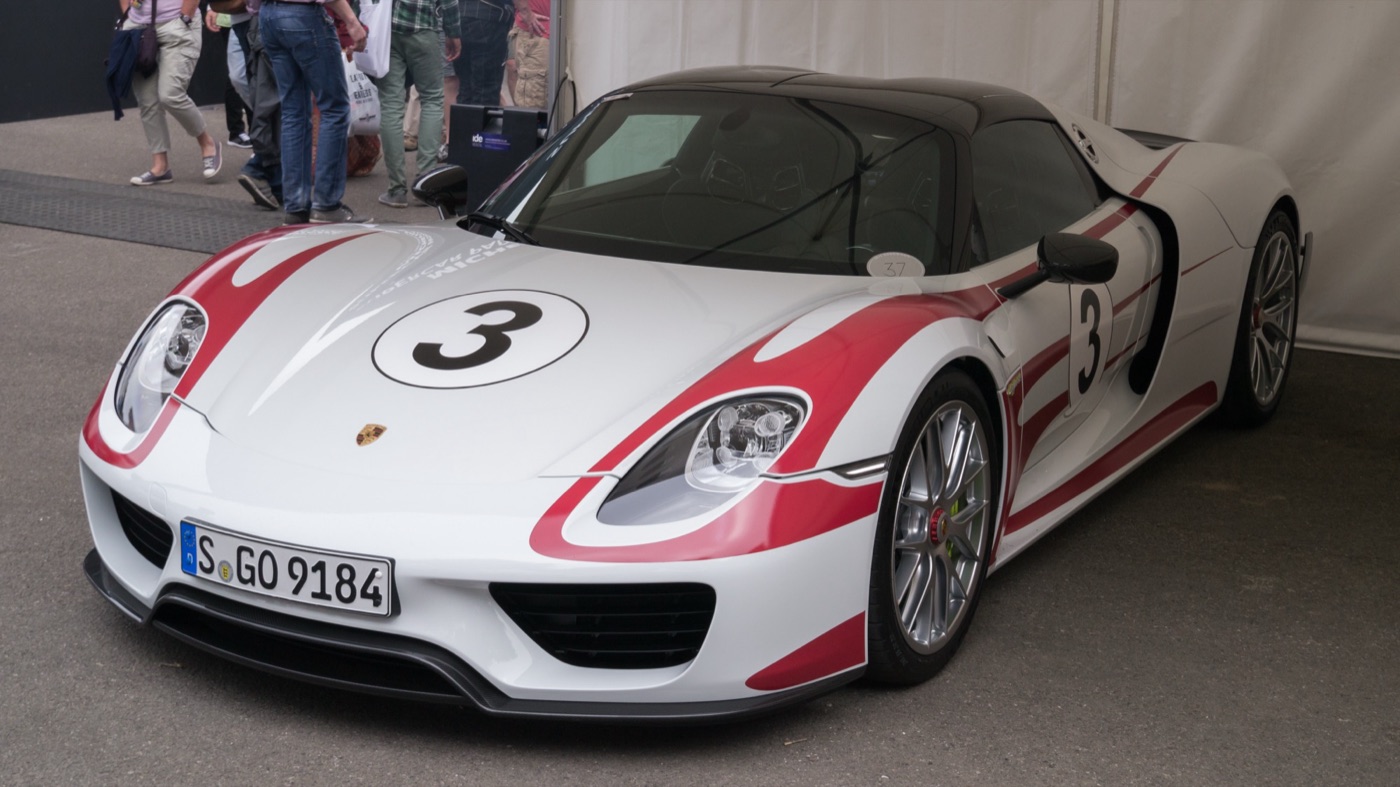
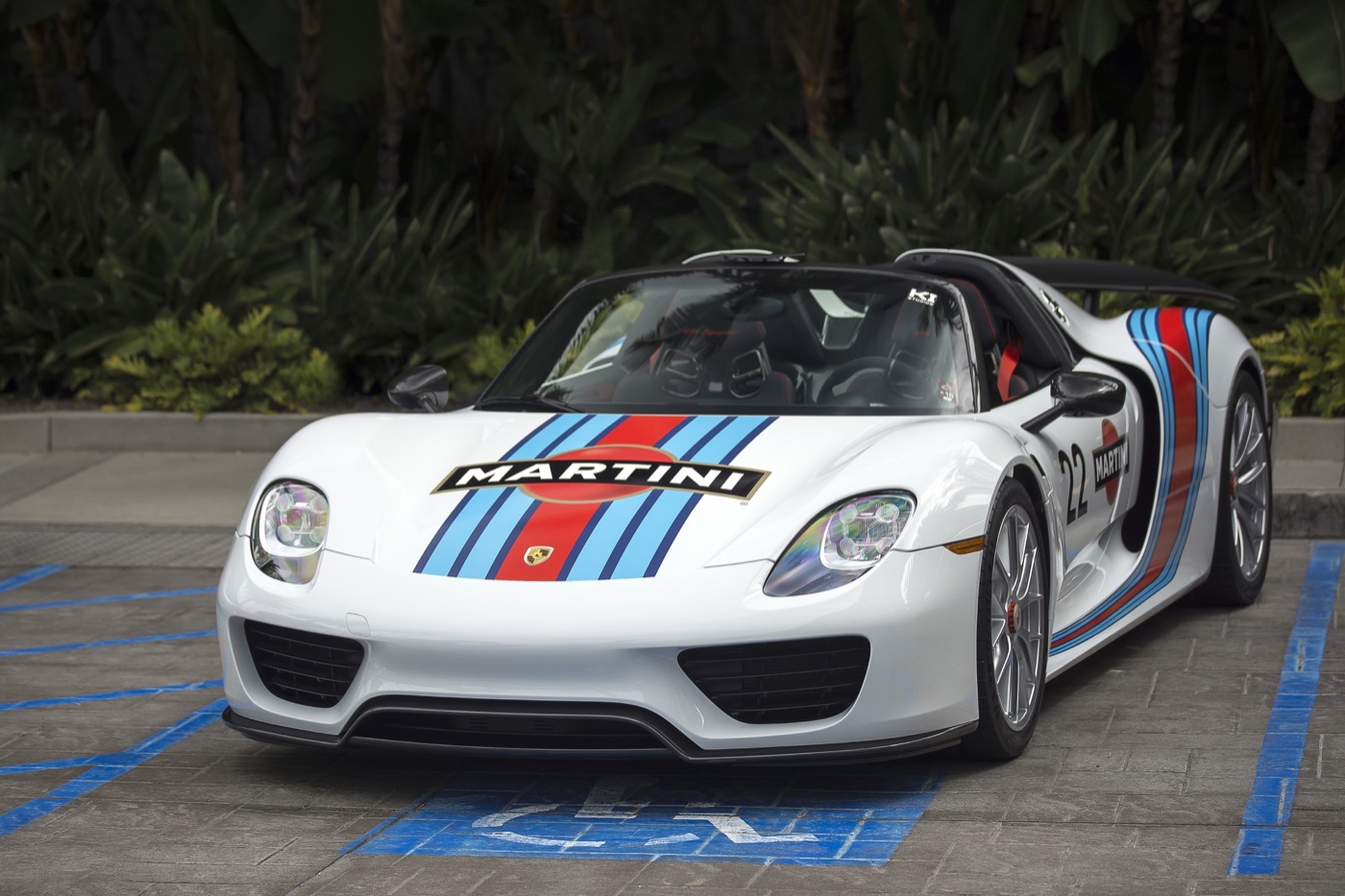
With the Weissach package, Porsche offered two historic film liveries: Martini Racing Design and Salzburg Racing Design, the red-and-white scheme. Plain colours with carbon contrasts were also available. The standard paint list, a 2012 SkiddMark report recorded, ran to White, Black, Racing Yellow and Guards Red, six metallics and the two liquid-metal finishes.
How many Porsche 918 Spyders were made?
Porsche built exactly 918 customer cars between 18 September 2013 and 19 June 2015, a production run of 21 months, according to Porsche's end-of-production release. Before that, a team of 25 had built 25 prototypes and eight pilot cars. The November 2013 press kit planned for the last car to leave by the end of February 2015.
The Zuffenhausen manufactory
The cars were assembled in a 4,000 square-metre workshop in the former paint shop of Plant 2 at Zuffenhausen, by about 100 staff drawn from the 911 line. Each car passed through ten stations in about 100 hours, then drove down in electric mode to the test area two floors below. One technician built each engine, over seven stations and 20 hours, and all tools were cordless, including Bluetooth screwdrivers that logged every torque value.
Where the cars went
The US took the most: 297 cars, Porsche said in December 2014, with around 100 each delivered in Germany and China. PistonHeads reported in 2022 that 47 UK cars were covered by the 2015 recall for the radiator fan wiring, which applied to cars built between February 2014 and April 2015.
Porsche 918 Spyder price new and values today
The Porsche 918 Spyder cost $845,000 in the US in 2013 and, according to PistonHeads' January 2022 buying guide, £653,000 in the UK and €781,000 in Europe, before options. The liquid-metal paint was £38,400 and the front-axle lift £7,150, and one Houston car had $96,000 of Porsche Exclusive work for a list price of $1,028,200.
PistonHeads found UK asking prices from £1.1 million in January 2022, and reported a Weissach car with 20,000km selling at auction for €990,000.
| Date | Sale | Car | Price |
|---|---|---|---|
| 1–2 December 2023 | RM Sotheby's, The White Collection, Houston | 2015 Weissach, paint-to-sample Grand Prix White, 12 miles | $3,937,500 |
| January 2026 | Mecum, Kissimmee | 2015 Weissach, the only one in paint-to-sample Pure Orange | $6,050,000 |
| 25 April 2026 | Broad Arrow, Air|Water, Costa Mesa | 2015 Weissach, paint-to-sample Riviera Blue | $4,680,000 |
Sources: RM Sotheby's lot page; auto motor und sport on the Mecum sale, which notes the orange paint was a $21,000 option; Octane on the Broad Arrow sale.
Owning a Porsche 918 Spyder: recalls, battery and costs
The US safety regulator lists five recalls for the 918 Spyder, three of them for suspension arms. The table lists them from the US National Highway Traffic Safety Administration's recall records for the 2015 model year.
| Campaign | Reported | Cars built | Fault |
|---|---|---|---|
| 14V-457 | July 2014 | 7 May to 18 June 2014 | Rear-axle control arms may break |
| 15V-335 | June 2015 | 25 February 2014 to 29 April 2015 | Left rear radiator fan wiring may touch an engine heat shield |
| 16V-520 | July 2016 | 2 February to 1 July 2015 | Wrong screws may have been used on seat-belt mounts |
| 16V-885 | December 2016 | 6 November 2013 to 27 July 2015 | Front lower control arms may crack at the ball joint |
| 18V-287 | May 2018 | 2015 model year | Rear control-arm connecting shafts may crack from stress corrosion |
PistonHeads, in its 2022 guide, notes that many 918 owners drive fewer than 500 miles a year and that Porsche designed the 138kg battery to tolerate that. It found that a replacement V8 cost $265,000 in the US in 2017, and that one car had its engine changed under warranty in February 2015. The White Collection car sold by RM Sotheby's in 2023 had received both control-arm recalls, a sealant update for the transmission control unit, revised fixings for the rear drive shafts and new seat-belt fasteners, and a new battery bought from a Porsche dealer in July 2023 for about $9,500, according to the auction listing.
Rivals: McLaren P1 and LaFerrari
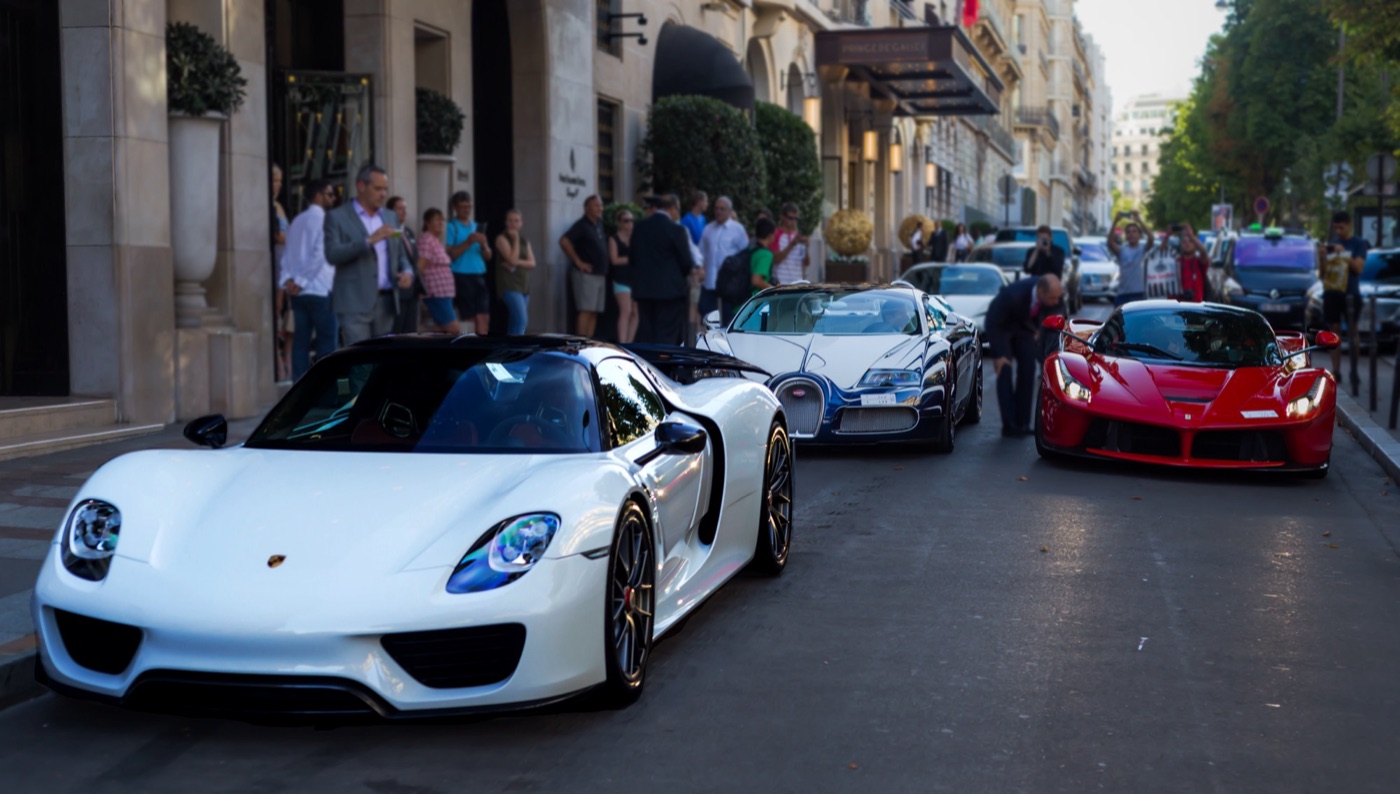
The 918 Spyder's rivals were the McLaren P1 and LaFerrari, the two other hybrid hypercars launched in 2013. The Porsche is the only one of the three with four-wheel drive and has two electric motors to the others' one, with a 6.8kWh battery that PistonHeads notes is twice the size of either rival's. It is also the heaviest, carrying an extra 120kg by SkiddMark's reckoning, and was built in the largest numbers.
A test reported by SkiddMark in September 2015 and January 2016 timed the three back-to-back, with the same driver on the same day, and the report called it the first time this had been done; Racelogic's Video VBox recorded the times. All three cars came from one private collection, with a second, non-Weissach 918 used for the straight-line runs. The report says the test ran "without the sanction or involvement of any car maker", though each maker was asked for advice on getting the best from its car and McLaren delivered the P1 after a routine service. At Silverstone's 1.64-mile National circuit on 18 September 2015, BTCC driver Mat Jackson lapped the P1 in 58.25 seconds on Pirelli Trofeo R tyres, the 918 two-tenths slower on Michelin Pilot Sport Cup 2s, and the LaFerrari in 58.58 seconds on Pirelli Corsas. "Woodcote was easy-flat, whereas in the other two your bum is twitching a little bit," Jackson said of the Porsche.
| Figure | Porsche 918 Spyder | McLaren P1 | LaFerrari |
|---|---|---|---|
| Engine | 4.6-litre V8, two motors | 3.8-litre twin-turbo V8, one motor | 6.3-litre V12, one motor |
| Maximum output | 887 PS | 916 PS | 963cv |
| Driven wheels | All four | Rear | Rear |
| Number built | 918 | 375 | 499 coupés |
| 0–60mph, measured | 2.85 seconds | 3.22 seconds | 3.68 seconds |
| 0–100mph, measured | 5.52 seconds | 5.93 seconds | 6.48 seconds |
| 0–186mph, measured | 22.95 seconds | 20.11 seconds | 21.99 seconds |
| Quarter mile, measured | 10.32 seconds at 143.48mph | 10.64 seconds at 146.05mph | 11.03 seconds at 141.75mph |
Makers' figures: Porsche press kit (November 2013); McLaren's P1 performance release (21 October 2013); Ferrari's LaFerrari specification page (6,262cc V12 of 800cv, 120 kW electric motor, 963cv in all) and Ferrari's launch release (5 March 2013) for the 499 cars.
The 918 led past 100mph, but the P1 was ahead by 150mph; the Porsche's front motor uncoupled at 163.4mph, and the LaFerrari passed it at about 180mph. At Santa Pod the same afternoon, on a damp strip at 7°C, the 918 was quickest over the quarter mile in 10.65 seconds. The test's verdict was that for covering ground quickly "there's nothing that can match the effortless talents of the 918".
Reviews and driving experience
Autocar's Matt Prior gave the 918 Spyder five stars in October 2014, though he wrote that "most of our testers would prefer to drive a P1 hard". Autocar's road test found the ride "more 911 GT3 than Cayman-on-tall-sidewalls", with adaptive dampers taking the edge off the worst surfaces; it measured 1.21g of lateral grip and a stop from 70mph in 37.8m, 3.1m shorter than a P1.
Top Gear's review calls it "quite possibly the most complete hypercar there has ever been": it "dawdles through town silently", will average 30mpg, and is "knife-edge sharp on a track". Its one complaint is a grabby brake pedal. In evo, Jethro Bovingdon drove it against the P1 at Anglesey and found the Porsche heavier, with more steering effort and a little more understeer on turn-in, but more mechanical grip in slow corners; with the electric boost, he wrote, the V8 "feels like a 10 litre in the mid-range".
Jackson found it "a little heavier" and "a little less track focused" than the P1 and LaFerrari, "but it's still a phenomenal piece of kit and gives you a lot of confidence". Early drives of pre-production cars in May 2013 drew mixed responses, a SkiddMark report of the time recorded, and several remarked on the grip from the driven front axle.
Is there a successor to the 918 Spyder?
The nearest thing is the Mission X, an electric two-seat hypercar concept that Porsche showed on 8 June 2023 and presented as following the 959, Carrera GT and 918 Spyder. Porsche's Mission X release says that if the car went into production it should be the fastest road-legal car on the Nürburgring Nordschleife, the claim the 918 Spyder made with its 6:57 in 2013. Porsche's 2015 end-of-production release notes that the 918's adaptive aerodynamics and rear-axle steering had already reached the 911 Turbo, GT3 and GT3 RS, and that a similar form of its energy recovery was used in the 919 Hybrid, which had just finished first and second at Le Mans in June 2015.
Questions
Is the Porsche 918 Spyder a convertible?
Yes. It is an open two-seater with two carbon-fibre roof panels that lift out separately and stow in the front luggage compartment; a fixed roll-over structure stays behind the seats.
How long does a 918 Spyder take to charge?
Porsche quotes 3.8 hours from a 230-volt, 10-amp socket, 2.3 hours from an industrial socket and 25 minutes from its optional 20 kW DC charging station. The engine can also recharge the battery on the move.
How much horsepower does the Porsche 918 Spyder have?
887 PS (652 kW), or 875 bhp: 608 PS from the V8 and 286 PS from the two electric motors. Maximum torque is 1,280Nm (944lb ft) in seventh gear.
What tyres does the 918 Spyder use?
Michelin developed the Pilot Sport Cup 2 for it, in 265/35 ZR20 at the front and 325/30 ZR21 at the rear. The 6:57 Nürburgring lap was set on these standard tyres.
What was the 911 Turbo S Edition 918 Spyder?
A 911 Turbo S coupé or cabriolet offered only to 918 Spyder buyers from 2011, with acid-green details on the upholstery, instrument needles and door sills. Each carried the same production number as its owner's 918 Spyder.
Was the 918 RSR built to race?
Porsche presented the 918 RSR in January 2011 as a racing laboratory and test bed and said it had no plans for a motorsport programme. Its flywheel hybrid came from the 911 GT3 R Hybrid, which did race in 2010.
What is the Holy Trinity of hypercars?
The name for the three hybrid hypercars launched in 2013: the Porsche 918 Spyder, the McLaren P1 and LaFerrari. Porsche built 918, McLaren 375 and Ferrari 499 coupés.
Sources
- Porsche AG, "918 Spyder" press information, November 2013: design, drivetrain, modes, chassis, aerodynamics, Weissach package, production and specifications (pages 1–37).
- Porsche AG, "Number 918 comes off the line", press release 61/15, 19 June 2015: end of production, 21 months, technology passed on.
- Porsche Cars North America, "Porsche 918 Spyder Tops Global Debut with New Nurburgring Record", 10 September 2013: the 6:57 lap, drivers, timing and observer.
- Porsche Cars North America, "Porsche exceeds previous year's sales by November: last unit of the 918 Spyder sold", 10 December 2014: sell-out and markets.
- Porsche AG, "Porsche Mission X" (German), 8 June 2023: forerunners and Nordschleife aim.
- Porsche AG launch releases reproduced: New Atlas, 918 Spyder concept, March 2010; Autoblog, production approval, 28 July 2010; Autoblog, 918 RSR, 10 January 2011; Autoblog, US prices, 23 January 2013.
- US EPA and Department of Energy, 2015 Porsche 918 Spyder: electric range, fuel economy and total range.
- US National Highway Traffic Safety Administration, recalls for the 2015 Porsche 918 Spyder: campaigns 14V-457, 15V-335, 16V-520, 16V-885 and 18V-287.
- CAR, "Porsche 918 Spyder sets Nürburgring lap record", September 2013: earlier benchmarks and the Radical SR8 LM.
- Tony Middlehurst, PistonHeads, "Porsche 918 Spyder: PH used buying guide", 3 January 2022: UK prices, recalls, engine cost, asking prices.
- RM Sotheby's, 2015 Porsche 918 "Weissach" Spyder, The White Collection, December 2023: result, specification, list price and service history.
- auto motor und sport, "Porsche 918 Spyder: heute Millionen wert", 2026: the Mecum Kissimmee sale.
- Octane, "Paint-to-sample 918 Spyder leads $20m Broad Arrow Porsche Air|Water Auction", April 2026.
- McLaren Automotive, "Performance figures for the McLaren P1 confirmed as the first customer car is delivered", 21 October 2013. Ferrari, "The LaFerrari unveiled at Geneva", 5 March 2013: 499 cars. Ferrari, LaFerrari specifications: engine, motor and output.
- SkiddMark reports: "Porsche's 918 Spyder gets green light for production" (July 2010); "Introducing the Porsche 918 RSR" (January 2011); "Porsche puts 918 Spyder Hybrid on sale" (March 2011); working prototypes (15 May 2012); Martini Racing livery (31 July 2012); the 7:14 prototype lap (20 September and 9 October 2012); "Need to know: Porsche 918 Spyder" (16 May 2013); the Michelin tyre story (26 September 2013); "The Porsche 918 Spyder is now even faster" (18 November 2013); "Judgement Day for the Holy Trinity" (26 January 2016), with its Silverstone, Bruntingthorpe and Santa Pod times.
- Reviews quoted: Top Gear, Porsche 918 Spyder review (2020); Matt Prior, Autocar, Porsche 918 Spyder review.