Porsche 956: the Group C racer, its Le Mans wins, specs and values
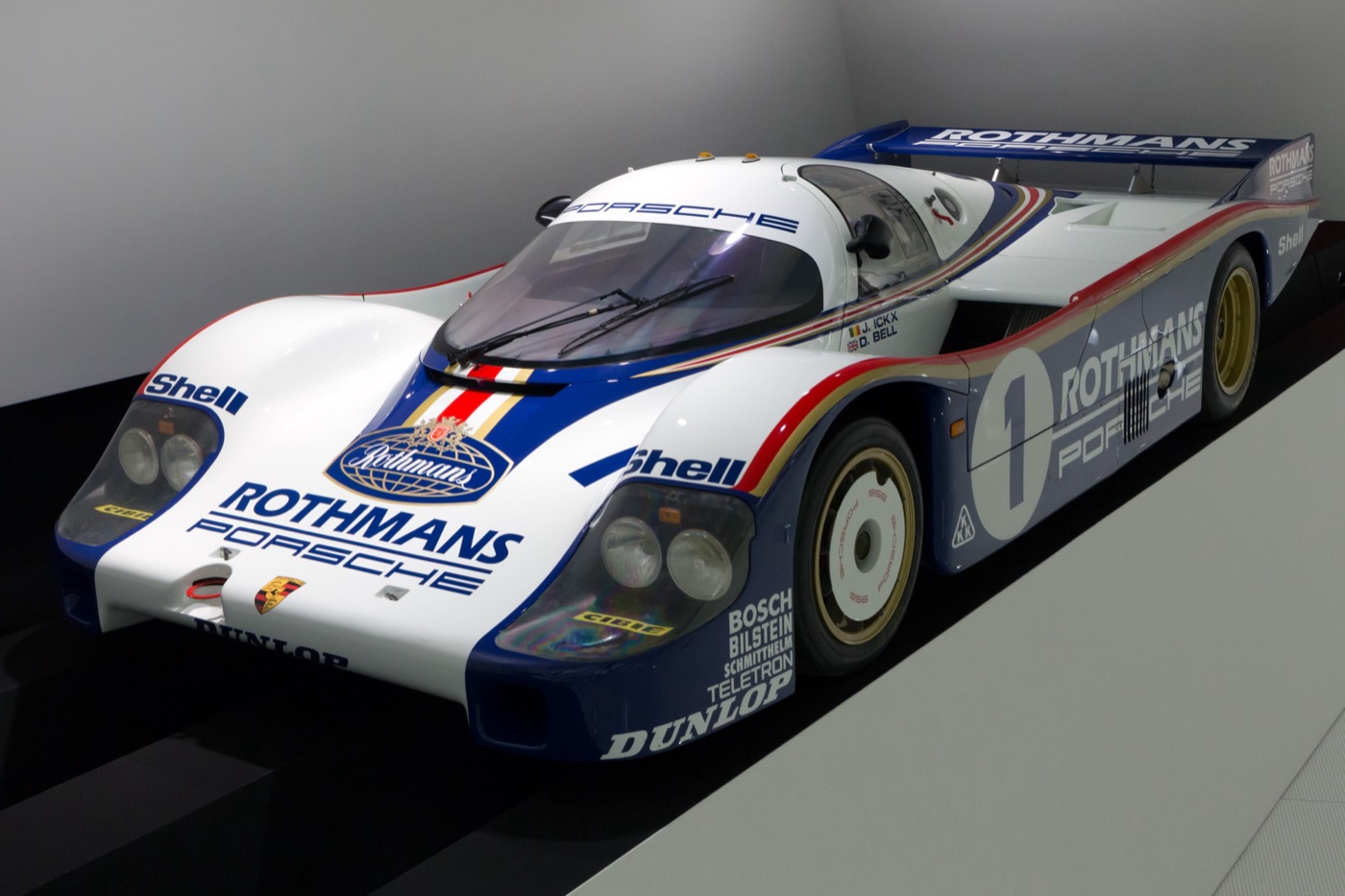
The Porsche 956 is the Group C sports-prototype built for the 1982 World Endurance Championship, and it won the 24 Hours of Le Mans four years running, from 1982 to 1985. The 956 was Porsche’s first racing car with an aluminium monocoque and the first it raced with ground-effect aerodynamics, and it carried a 2.65-litre twin-turbo flat-six. People look it up for those Le Mans wins, for the 6:11.13 lap of the Nürburgring Nordschleife that a 956 set in 1983, a record for 35 years, and for its price: the 1983 Le Mans winner sold for $10,120,000 in 2015.
Porsche 956 history and development
The 956 was built for Group C, the new prototype category that the governing body, FISA, brought into the World Endurance Championship for 1982, with a limit on the fuel each car could use. The Porsche board signed off the programme at the end of June 1981, but Norbert Singer, who led the design, could not start spending until August, when Porsche’s financial year began, he told Autosport in 2022. The final Group C rules were not issued until October 1981.
Singer’s project team had never built a monocoque or a ground-effect car. “We had no idea how to build monocoques and sought help from the aircraft manufacturer Dornier,” he said at Porsche’s 40th-anniversary reunion for Group C in Leipzig, reported by the Le Mans organiser, the ACO. He began with a 1:5-scale model; Ferry Porsche looked at it and said, “I wish you good luck.” Jürgen Barth, Porsche’s customer racing manager, went to the company museum and measured the cockpit of a 917 coupé to help set the windscreen dimensions in the new rules.
Barth gave the first prototype, chassis 001, its first run at Porsche’s Weissach test track on 27 March 1982, according to the history of the car that SkiddMark carried in March 2009. “I did two laps to make sure there were no fluids leaking and then did another 10 to 15 laps,” Barth told Autosport. “You know if a car is good straight away, and I got out with a big smile on my face.” Two of the three works cars for Le Mans were finished only two weeks before the race, and the third with days to spare.
Porsche 956 design and engineering
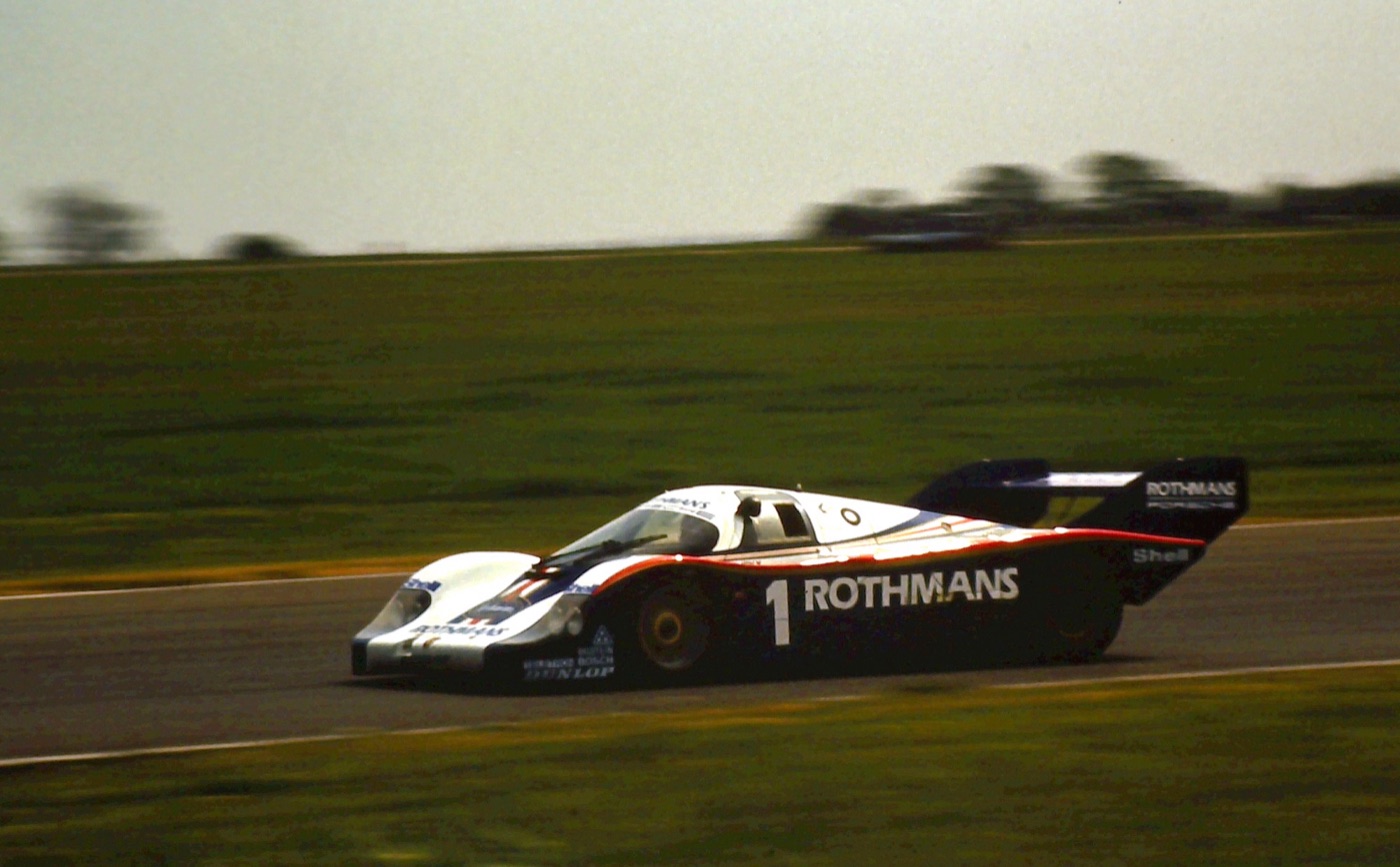
The 956 combined three things Porsche had not raced before: a sheet-aluminium monocoque, an underbody shaped to suck the car to the track, and a gearbox designed for the car. The engine was the one part carried over. Singer was sure of it, he told Motor Sport in 2025, “because it had won the race the year before, but the gearbox was new along with almost everything else.”
Aluminium monocoque
Ground effect loads a car far harder than wings alone, and the chassis had to be much stiffer than anything Porsche had built. “It was also clear from the beginning that we had to build a monocoque,” Singer said. “There were certain safety requirements and a level of stiffness we needed to achieve that would not have been possible with a spaceframe.” The tub was riveted aluminium with an integrated roll bar, under a Kevlar body reinforced with carbon fibre. Singer added in Leipzig that the team had thought about a carbon monocoque as early as 1982 but was too small to develop both at once.
Ground effects and aerodynamics
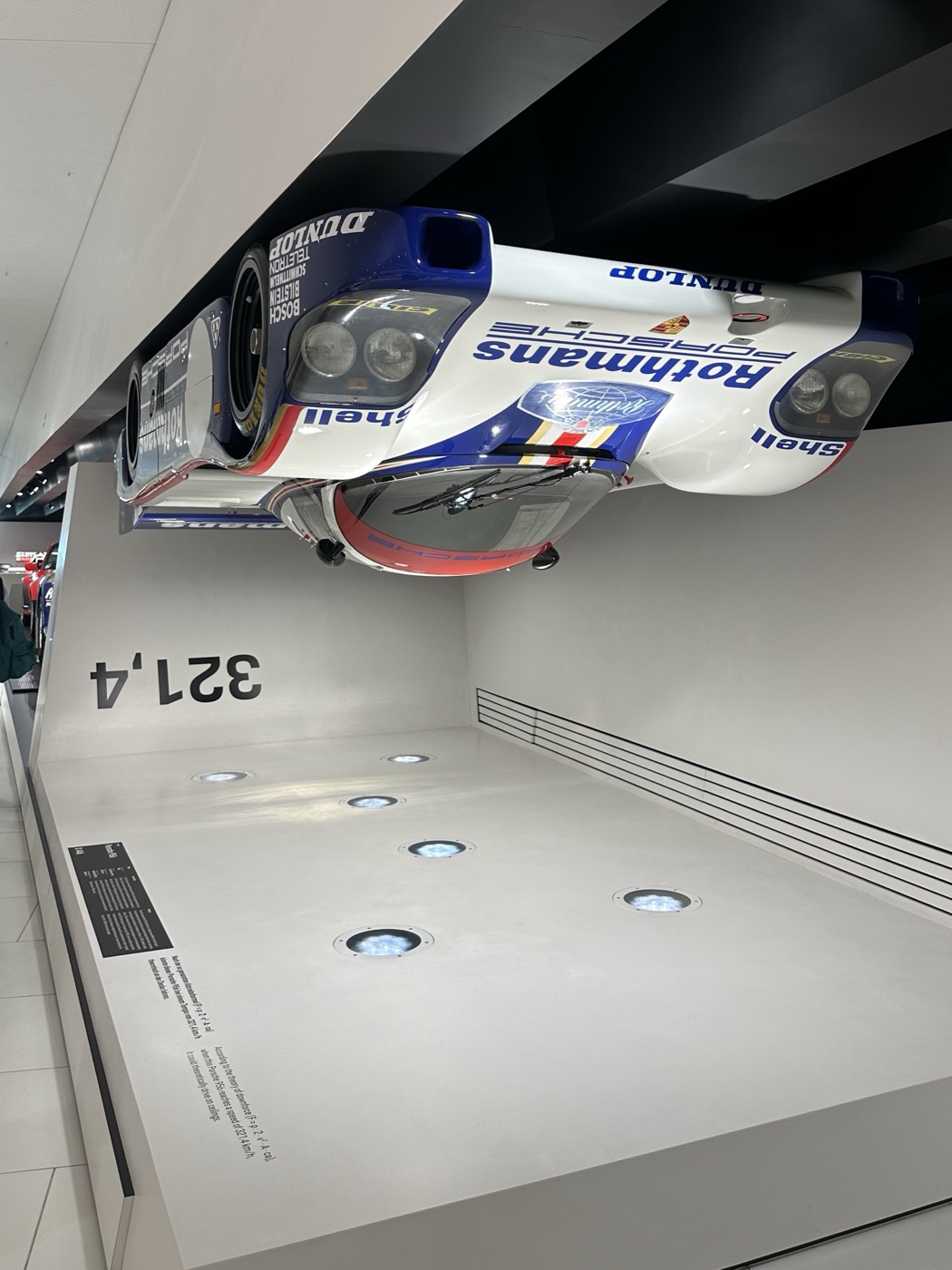
The first model in the wind tunnel copied photographs of Formula 1 cars, with a high nose and sidepods. It failed, because a two-seater tub left too little room for sidepods, and skirts, which Group C did not allow, cut the downforce when the team tried them in the tunnel. “We realised that we needed to take air under the car from the sides,” Singer told Autosport. The shaped underbody that came out of it gave the 956 cornering speeds that, Porsche wrote, no sports car had reached before.
The Type 935 flat-six engine
The 2.65-litre (2,649 cc) six-cylinder boxer engine had been built for an Indianapolis 500 programme that Porsche abandoned, then converted to run on petrol instead of methanol and put into the 936, in the 936/81 form that won Le Mans in 1981, the ACO and Autosport record. It has two KKK turbochargers and a dry sump. Evo and Elferspot say the 1982 engines had Bosch mechanical injection and that the works cars changed to Bosch Motronic electronic fuel injection in 1983, with customer cars following in 1984; the Revs Institute’s history by Karl Ludvigsen dates the works cars’ Motronic to 1982.
Racing on a fuel ration
Group C gave each car a fixed amount of fuel. “You could have a maximum of 100 litres on board and you had to do five pit stops,” Singer said in Leipzig; 600 litres had to last a 1,000 km race. Le Mans allowed 2,600 litres for 24 hours. Hans-Joachim Stuck described how the drivers cut fuel consumption: at the end of the Mulsanne Straight, where the drivers normally braked 200 metres before the corner, they lifted off 400 metres before it and let the car roll, and did the same at about ten other corners.
Porsche 956 specifications
The table gives the factory figures as published in Porsche’s history of the car that SkiddMark carried in 2009, which does not say which year’s car it describes. Porsche’s own output figure varies by source: 640 bhp in that history, 620 bhp in Porsche’s 2018 release on the Nürburgring record, and an estimated 630 hp at 8,200 rpm in Gooding & Company’s 2015 catalogue for chassis 003.
| Item | Specification |
|---|---|
| Engine | Six-cylinder horizontally opposed (boxer), twin KKK turbochargers, dry sump |
| Capacity | 2,649 cc |
| Power | 640 bhp at 8,200 rpm (620 bhp in Porsche’s 2018 figure) |
| Fuel system | Bosch Motronic electronic injection, “Motronic Sport” (works cars from 1983 and customer cars from 1984, per Evo; Revs dates it to 1982), 99-litre safety fuel tank |
| Transmission | Five-speed, fully synchronised, oil-cooled |
| Clutch | Single-plate dry |
| Chassis | Riveted aluminium monocoque with integrated roll bar |
| Bodywork | Kevlar reinforced with carbon fibre |
| Tyres | Dunlop (works cars, as Racing Sports Cars records) |
| Front suspension | Double wishbones, titanium springs, Bilstein dampers mounted outboard |
| Rear suspension | Double wishbones, titanium springs, Bilstein dampers mounted inboard |
| Brakes | Hydraulic dual-circuit ventilated discs |
| Wheelbase | 2,650 mm |
| Length | 4,800 mm |
| Width | 2,000 mm |
| Weight | 820 kg |
| Top speed | Over 350 km/h (217.5 mph) |
How fast was the Porsche 956?
Porsche calculated a top speed of 350 km/h (217.5 mph) for the 956 on the Mulsanne Straight at Le Mans. The car’s cornering was the bigger step: Jochen Mass said in Leipzig that “with the 956, so many corners just weren’t there anymore,” because the car could take them at full throttle.
On a lap, the measure is Bellof’s Nordschleife record: an average of 202 km/h for 20.835 km in 1983, the first lap of the circuit at more than 200 km/h.
The Porsche 956 Nürburgring lap record
Stefan Bellof lapped the Nürburgring Nordschleife in 6 minutes 11.13 seconds in a works Porsche 956 on 28 May 1983, in the final qualifying session for the Nürburgring 1000 km. The Grand Prix circuit was being rebuilt, so the race used the Nordschleife alone, shortened to 20.835 km (12.946 miles) by a link to temporary pits, Porsche’s customer magazine Christophorus records.
Bellof was 25 and in his first season with the works team. His car, chassis 007, was the first 956 to run 13-inch front wheels, with more camber and modified steering arms to sharpen its turn-in. He was five seconds faster than his team-mate Mass, who did 6:16.85, and half a minute faster than the reigning Formula 1 world champion, Keke Rosberg. “When the time appeared on the display, I thought, ‘That can’t be right, there must be something wrong with the clock,’” said Rainer Braun, the circuit’s spokesman and Bellof’s manager. His own verdict: “I could have gone even faster. But I made two mistakes. And a 911 briefly got in my way.”
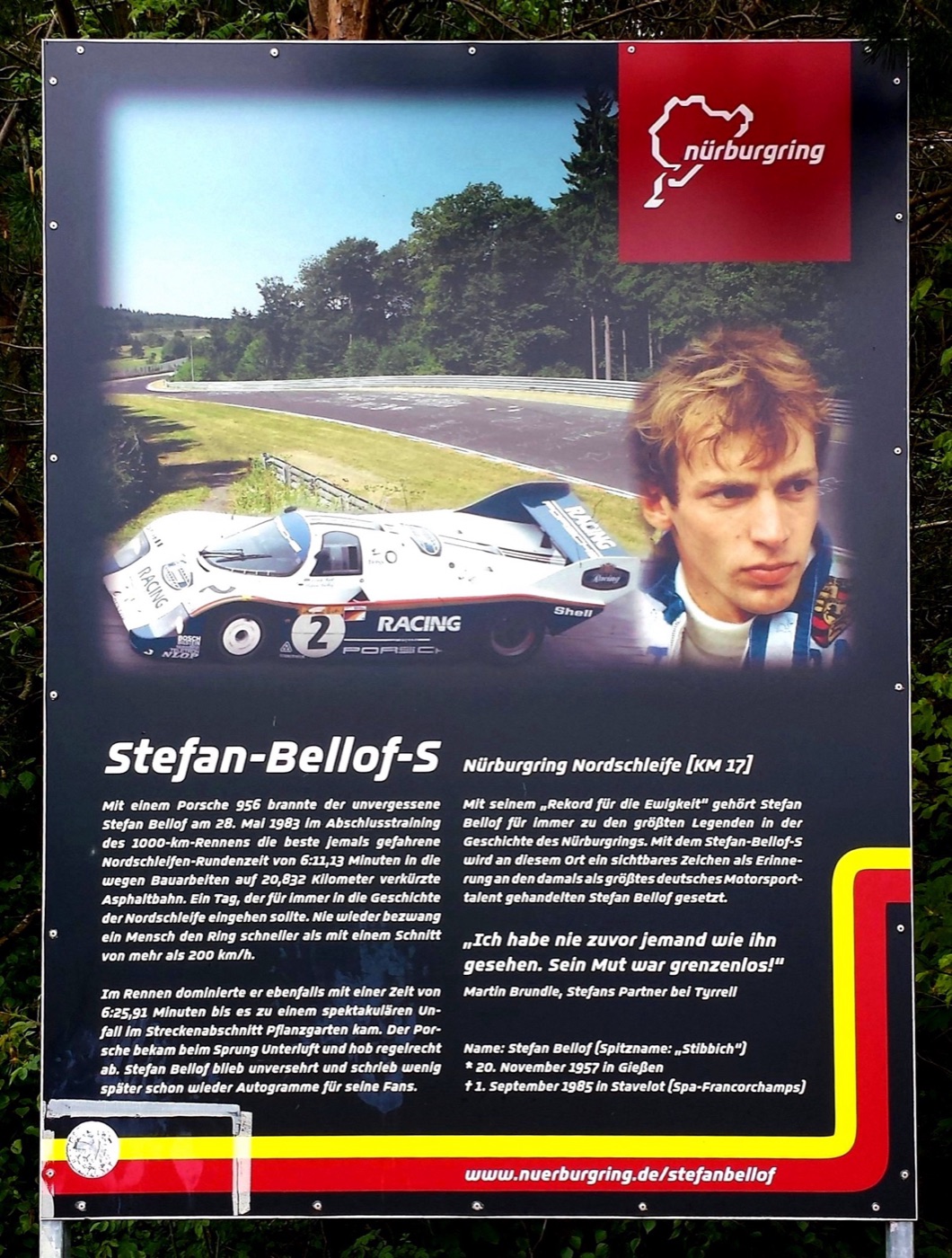
In the race on 29 May Bellof led and set the fastest lap, 6:25.91, before his 956 took off over the crest at Pflanzgarten and crashed on lap 19, stefan-bellof.de’s account of the record lap records; the Nürburgring’s board at the corner says he was unhurt. Ickx and Mass won in chassis 005, Racing Sports Cars’ archive shows. Christophorus calls it the last great race on the Nordschleife.
The record stood for 35 years and 31 days. On 29 June 2018 Timo Bernhard lapped the 20.832 km Nordschleife in 5:19.55 in a Porsche 919 Hybrid Evo freed from the racing rules, 51.58 seconds faster, Porsche said. Since 2013 the bends between the Pflanzgarten jump and the Schwalbenschwanz have been called the Stefan-Bellof-S, stefan-bellof.de notes.
The Porsche 956 in competition
The 956 won the World Endurance Championship for Porsche, the drivers’ championship and Le Mans in each of its first three seasons of Group C racing, and customer teams kept winning with it until 1986. Porsche counts five manufacturers’ and teams’ titles, five drivers’ titles and 43 World Endurance Championship wins for the 956 and its successor, the 962, in its 2022 Group C anniversary report.
1982: second on debut, then a Le Mans one-two-three
The 956 first raced at the Silverstone Six Hours in May 1982, the second round of the world championship. Ickx put it on pole, but the fuel table treated six-hour and 1,000 km races alike, and six hours at Silverstone was well over 1,000 km. Ickx and Bell finished second on their 600 litres, “droning around and hardly using any revs” in Bell’s words, behind a Martini Lancia LC1 that ran under the old Group 6 rules without a fuel limit.
At Le Mans in June the three factory team cars filled the podium, a one-two-three finish in the order of their race numbers: Ickx and Bell in number 1 (chassis 002), Mass and Vern Schuppan in number 2, and Al Holbert, Hurley Haywood and Barth in number 3. It was Ickx’s sixth and last Le Mans win, the ACO’s history of the car notes. “Let’s get to 12 hours and then 18 hours, and see if we are still running,” Singer had said before the start; the 956 had done no 24-hour test.
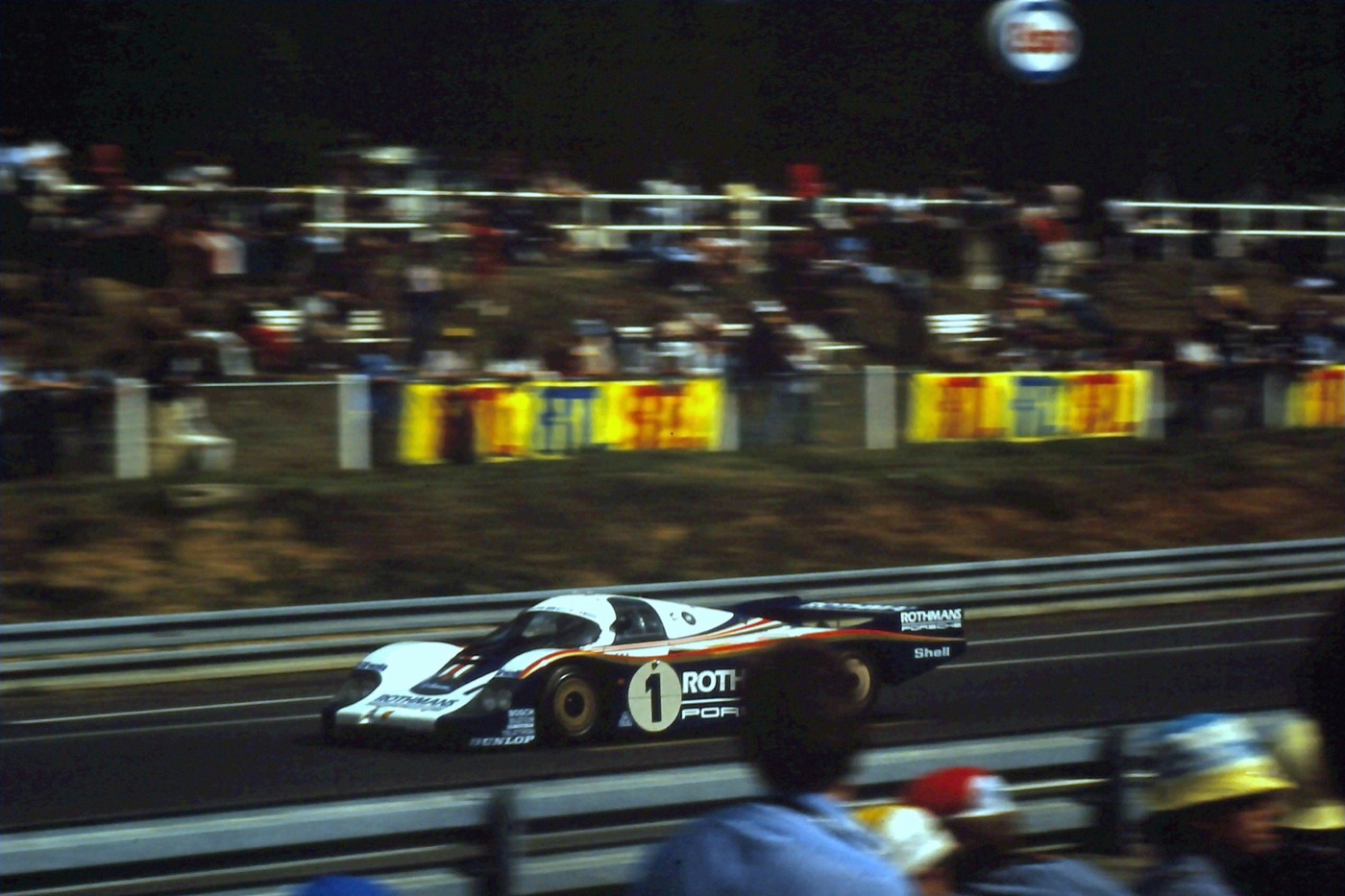
Chassis 003 then won at Spa, Fuji, Brands Hatch and Kyalami. At Brands Hatch Ickx caught Riccardo Patrese’s Lancia, which had led by almost a lap, in the final hour, and the win made him the world endurance champion. Porsche won the manufacturers’ championship.
1983: the customer cars arrive
Porsche sold 956s to private teams from 1983, and a customer could buy one off the peg and race it against the factory team, as Autosport puts it. That season 956s won at Monza (the German team Joest Racing, with its own engines), Silverstone, the Nürburgring, Le Mans, Spa, Fuji and Kyalami. Richard Lloyd, whose Canon-backed team bought one of the first, described collecting it: “I was led down a ramp into a cellar, a light switch was flicked and there was a line of 956s, covered in dust. I was told which one was mine, handed a key and told to drive it away.”
Le Mans in 1983 had eleven 956s, and they took the first eight places. The winners, Holbert, Haywood and Schuppan in chassis 003, lost a door on Sunday morning, and the replacement upset the airflow to the radiator, which sits in the door. With a lap to go Holbert felt the engine seize in the Ford Chicane, banged it into first gear, stood on the throttle and it freed. Bell, chasing on cracked front discs, finished second with Ickx, 65 seconds behind by the official margin (Gooding gives 63). Mario and Michael Andretti were third with Philippe Alliot in Kremer Racing’s 956. Ickx won his second drivers’ title.
1984: the factory stays away from Le Mans
The customer cars of 1984 were 956Bs. The works team boycotted Le Mans over proposed rule changes that, it said, broke the FIA’s promise of stable regulations. Private 956s filled the first seven places, and Joest Racing won with Henri Pescarolo and Klaus Ludwig in the New Man-sponsored 956B, chassis 117. It was Pescarolo’s fourth win and Reinhold Joest’s first as a team owner.
One of the 956s in that race was Richard Lloyd’s Canon car, chassis 007, the car of the 1983 record lap, rebuilt after its Nürburgring crash. Lloyd shared it with René Metge and Nick Mason, Pink Floyd’s drummer. Racing Sports Cars records it as disqualified for outside assistance. He drove the same car, entered by the works Rothmans team, at Mosport that August with Schuppan, Racing Sports Cars records.
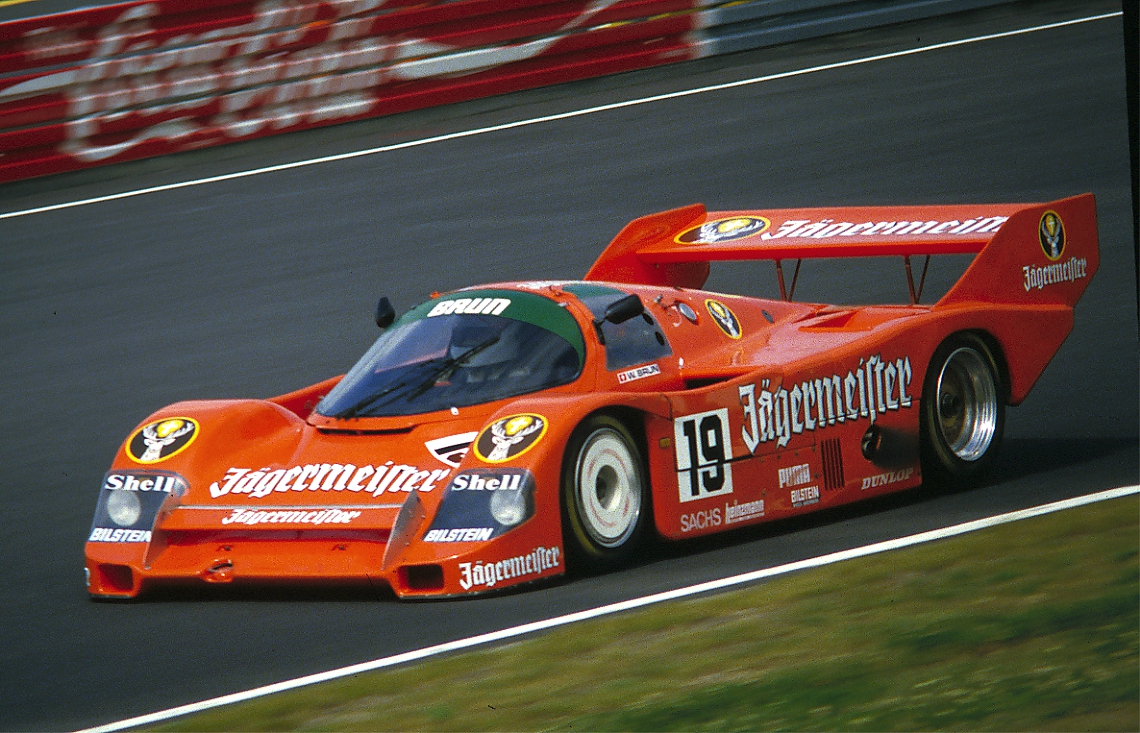
Bellof won the drivers’ title, winning five rounds in chassis 009 (Monza, the Nürburgring, Spa and Sandown Park with Bell, Fuji with John Watson) and a sixth at Imola with Stuck in Walter Brun’s 956B. Lloyd’s team won the Brands Hatch 1000 km, a race the factory team missed, with a front wing made from a Formula 3 rear wing, and then rebuilt its car around a honeycomb aluminium chassis designed by Nigel Stroud: the first 956 changed wholesale by a privateer, Autosport says.
1985 and 1986: Joest beats the works
The works team moved to the 962C for 1985, but Joest won Le Mans again with the same chassis, 117, driven by Ludwig, Paolo Barilla and “John Winter” (the gentleman driver Louis Krages). It was Porsche’s tenth Le Mans win, one more than Ferrari. Lloyd’s 956 was second, and the best works car third. Joest’s car was quicker than the factory’s and used less fuel; Joest built his own engines, tuned the electronics and made his own underfloors. So many officials and rivals came to read its fuel meter that team manager Domingos Piedade put a sheet of paper over it with a single finger drawn on it, pointing up.
Seven 956s started Le Mans in 1985 and seven in 1986, the ACO counts. In 1986 Joest’s chassis 117 retired at Le Mans, was second at Brands Hatch with Stuck, Bell and Ludwig and won the Fuji 1000 km with Barilla and Piercarlo Ghinzani, then the Kyalami 500 km with Ghinzani in November, Racing Sports Cars’ results show.
| Year | Chassis | Drivers | Entrant |
|---|---|---|---|
| 1982 | 956-002 | Jacky Ickx, Derek Bell | Porsche factory team (Rothmans) |
| 1983 | 956-003 | Al Holbert, Hurley Haywood, Vern Schuppan | Porsche factory team (Rothmans) |
| 1984 | 956B-117 | Henri Pescarolo, Klaus Ludwig | New Man Joest Racing |
| 1985 | 956B-117 | Klaus Ludwig, Paolo Barilla, “John Winter” | New Man Joest Racing |
Stefan Bellof’s death at Spa in 1985
Stefan Bellof, born in Giessen on 20 November 1957, died at Spa-Francorchamps on 1 September 1985, aged 27, when his Brun Motorsport 956B hit Jacky Ickx’s works 962C at Eau Rouge in the 1000 km race. Bellof, the reigning world endurance champion, shared the car (chassis 116) of Walter Brun’s team, Brun Motorsport, with Thierry Boutsen. Bellof and Ickx, former team-mates, were fighting for second place, 30 seconds behind Barilla’s Joest 956, with the race close to its three-hour mark.
Motor Sport’s October 1985 report describes the race and the crash. In the first hour the magazine found the leading Lancia, the factory 962Cs and the Brun 956 using about 57 litres of fuel per 100 km, too much to finish easily. On their 78th lap the Brun 956 was a few feet behind Ickx down the hill to Eau Rouge; as Ickx turned into the left-right, Bellof’s car hit the back of his and spun it, Ickx slid backwards into the guardrail, and the Brun car turned sharp left and hit the barrier about 20 metres further on. Both cars caught fire briefly. Ickx was helped out, shocked, with a sore neck; nothing could be done for Bellof. The organisers stopped the race at the five-hour mark, and Lancia’s victory went uncelebrated.
The magazine put the accident down to a driving error, “challenging Jacky Ickx too hard at the wrong place”, and made no criticism of the car: an impact head-on at more than 130 mph was not survivable, and the armco was backed by a concrete wall. It was the third serious accident in as many weeks: Manfred Winkelhock had died after crashing a Kremer Porsche at Mosport, and in practice at Spa Jonathan Palmer broke a leg in a Silverstone-built 956B whose honeycomb chassis, the magazine wrote, crushed more progressively than sheet aluminium and saved his life. In Germany the safety of Group C itself was being questioned.
When Bernhard drove the WEC race at Spa in 2015, thirty years on, he wore a copy of Bellof’s black, red and gold helmet.
Porsche 956B and team specials
The Porsche 956B is the 1984 customer version, built to the works specification of 1983. For 1983 the works cars had lighter Kevlar composite bodywork and revised front suspension geometry, Autosport records, and Evo says they also changed to Bosch Motronic injection, which customers got for 1984; Evo adds that the gain in power and economy took work to perfect, and the factory lost races to its customers while it did. Racing Sports Cars lists the 1984 cars of Joest (chassis 117) and Brun (116) as 956Bs.
Two teams went further, as the racing record below shows: Joest with its own engines and underfloors, and Richard Lloyd with the 956 GTi, built on Nigel Stroud’s honeycomb chassis, for which the designer Peter Stevens worked on the aerodynamics in the wind tunnels at MIRA and Imperial College, Evo reported. Later customer 956s also took the 2.8-litre engine that Porsche developed for the 962C.
Porsche 956 vs 962: what is the difference?
The 962 is the 956’s long-wheelbase sister, as Autosport calls it: an evolution of the 956, built so that the driver’s pedals sit behind the front axle, as the American series IMSA GTP required. Porsche built it first for IMSA, where a 962 took the fastest qualifying time at Daytona in 1984, Porsche’s 2022 report notes, and the works team switched to the European version, the 962C, in 1985, the ACO records. “The 962 now simply had more space for the driver’s legs, which ensured that the driver’s limbs were somewhat better protected in case of an accident,” Mass said. The 962C won Le Mans in 1986 and 1987, and the Dauer 962 LM, a road-going conversion, won it again in 1994; with those three, the design won Le Mans seven times.
How many Porsche 956s were made?
Porsche built 28 956s in total from 1982 to 1984, according to its history of the car. Ten were works cars, says Gooding & Company, with chassis numbers from 956-001; the customer cars were numbered from 956-101, and Racing Sports Cars lists them as high as 956B-117, Joest’s twice Le Mans-winning car. Teams also built their own replacement tubs, such as Richard Lloyd’s 956 GTi, and Autosport counts about 80 monocoques built or ordered by privateers for the 956 and 962 together, on top of the 120 956 and 962 chassis that left Porsche’s Weissach motorsport centre.
Where the works cars are now
Chassis 002, the 1982 Le Mans winner, was at Porsche’s Leipzig reunion in 2022, where Bell drove it again, alongside chassis 005, the 1983 Nürburgring and Spa winner, which the Porsche Museum has restored to its 1983 livery. When Porsche retired chassis 003, it sold the car to Vern Schuppan, who kept it for more than a decade; it has had four private owners since.
Porsche 956 prices and values
Chassis 003, the 1983 Le Mans winner, sold for $10,120,000 at Gooding & Company’s Pebble Beach sale on 16 August 2015, against an estimate of $7–9 million. At the time it was the highest price paid for any Porsche at auction, beating a 1972 917 sold at Pebble Beach three years before, the ACO reported. Gooding’s catalogue counted five overall wins for the car.
The ACO put the gap down to the car’s record. Chassis 004, third at Le Mans in 1982 with Holbert, Haywood and Barth, had sold at the Rétromobile sale in Paris in 2014 for no more than €2,350,000, and an earlier attempt to sell 003 had failed.
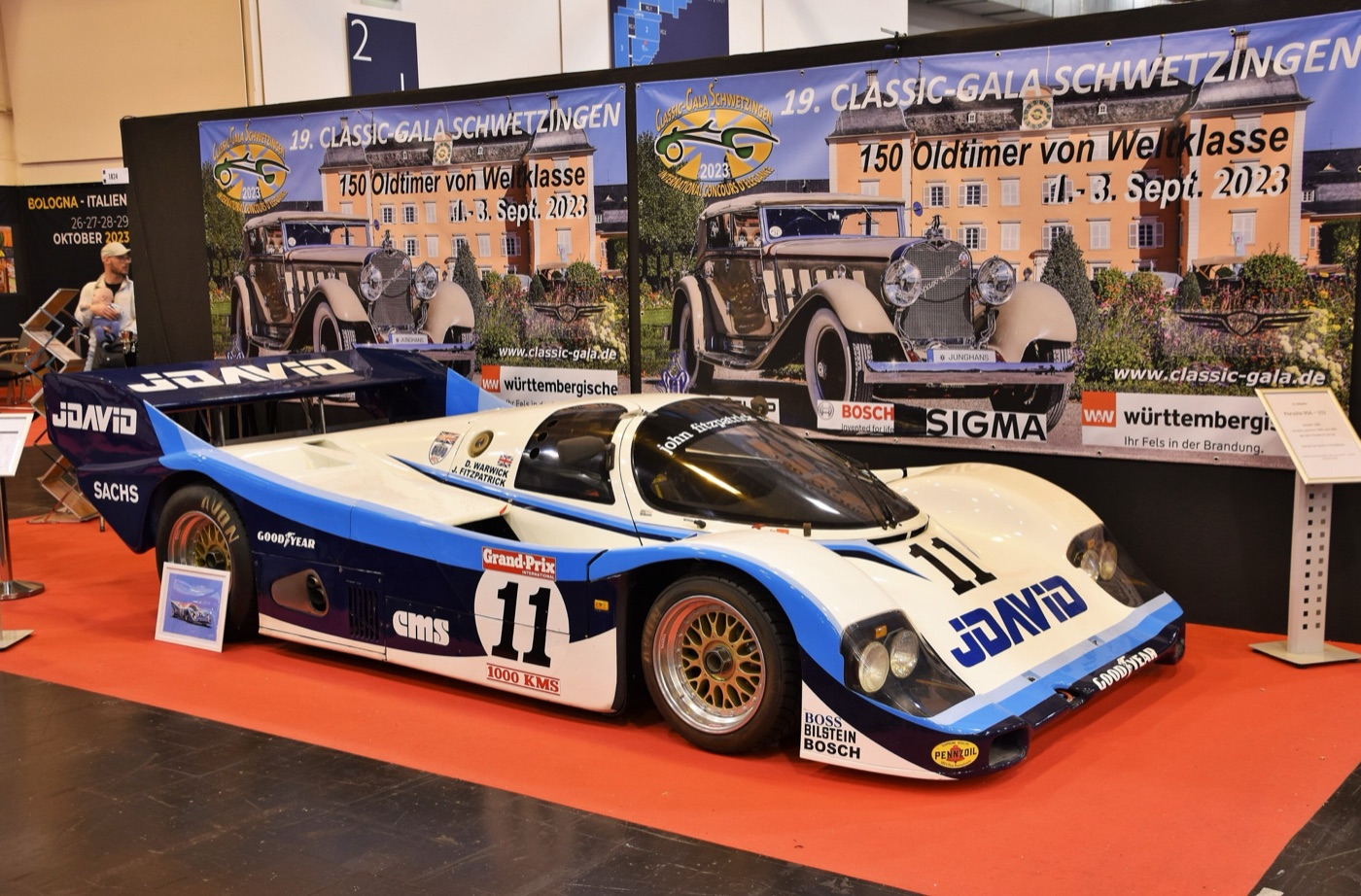
Evo reported in December 2024 that a typical customer 956 or 962C could be bought for under £200,000 twenty years earlier, and a Rothmans works car for £300,000, according to the restorer Patrick Morgan. Now “upwards of a million” is needed, and a car with famous race history might cost ten times that. New, Richard Lloyd’s chassis 106 cost DM640,000 in 1983, Evo found, with a spare engine at £33,750.
Running a Porsche 956 today
A 956 needs an engine rebuild after at least 24 hours of running, and about 36 in practice, Patrick Morgan of Dawn Treader Engineering told Evo in 2024, after a 12-year restoration of Lloyd’s chassis 106. “Reduce the boost and revs and you’re going to help yourself,” he said. His car runs on 260 GTX, a 104-octane racing fuel. Parts are “relatively straightforward”: master and slave cylinders “down to nuts and bolts” are Porsche road-car stock, and he found the engine “typically Porsche, so anyone who’s rebuilt a 911 would recognise it.” His team has the wishbones and uprights crack-tested and X-rayed, as they can rust inside.
What drivers said about the 956
“It wasn’t like a sportscar of old: it didn’t roll and the nose didn’t come up when you accelerated,” Bell told Autosport. “It was such an easy car to drive. You just jumped in it and drove.” Stuck: “You were never worried that something was going to break. It did what it was supposed to and let you worry about going fast.” The late Bob Wollek said that “sportscar racing changed with the 956. You didn’t have to nurse the car through the race.”
Mass added in 2022 that it was comfortable on long stints “because the seats were cushioned and you sat well in them”. Nigel Stroud, who designed Lloyd’s replacement chassis, said the standard car “had no vices” and “was actually better balanced” than his.
Questions
Who designed the Porsche 956?
Norbert Singer led the design at Porsche’s Weissach motorsport centre, starting in August 1981. The aluminium monocoque was built with help from the aircraft maker Dornier.
What engine does the Porsche 956 have?
A 2,649 cc six-cylinder boxer with two KKK turbochargers, the Type 935 engine first raced in the 936/81 that won Le Mans in 1981. Porsche quoted 620 to 640 bhp for it.
How many times did the Porsche 956 win Le Mans?
Four times in a row: the works team in 1982 and 1983, and Joest Racing’s privately entered 956B in 1984 and 1985. With the 962 the design won Le Mans seven times.
Who won Le Mans in 1983 in a Porsche 956?
Al Holbert, Hurley Haywood and Vern Schuppan, in the works Rothmans 956 number 3, chassis 003. They finished 65 seconds ahead of Jacky Ickx and Derek Bell in the other works car.
Did Nick Mason race a Porsche 956?
Yes. At Le Mans in 1984 he shared Richard Lloyd’s Canon 956, chassis 007, with Lloyd and René Metge; the car was disqualified for outside assistance. That August he raced 007 again, entered by the works Rothmans team, at Mosport with Vern Schuppan.
Is Stefan Bellof’s Nürburgring record still standing?
No. His 6:11.13 from 1983 stood for 35 years until Timo Bernhard lapped the Nordschleife in 5:19.55 in a Porsche 919 Hybrid Evo on 29 June 2018.
Was the Porsche 956 sold to private teams?
Yes. From 1983 Porsche sold 956s to teams such as Joest, Kremer, Brun and Richard Lloyd’s GTi Engineering, and customer cars won Le Mans in 1984 and 1985.
Sources
- Gary Watkins, “The Porsche icon that forged sportscar racing’s greatest era”, Autosport, 2022: the go-ahead and design, Barth’s first run, Silverstone 1982, the drivers’ verdicts, Lloyd, Stroud and the chassis counts.
- ACO, “Porsche celebrates 40th anniversary of Group C”, 2022: Singer, Dornier, the fuel rules, Stuck, Mass and the build timetable.
- Porsche Newsroom, “40 years of Group C: a reunion in Leipzig”, 2022: chassis 002 and 005 and the 956/962 record.
- ACO, “The 936, 956, 962 C and 919: Porsche’s Fantastic Four”, 2022: the engine’s Indianapolis origin, the Le Mans results 1982–85 and the 962.
- ACO, “30 cars and 90 years: the Porsche 956”, 2012: Ickx’s last win and the 956 entries at Le Mans by year.
- ACO, “The victorious Porsches at the 24 Hours of Le Mans (4): the 956”, 2013: the 1983–85 wins and Porsche’s tenth.
- Gary Watkins, “Pivotal Porsche: the 956/962 years”, Motor Sport, 2025: Le Mans 1982–85, the 1984 boycott and Joest.
- “Spa 1,000 Kms”, Motor Sport, October 1985: Bellof’s accident and the race.
- Porsche, “Legendary lap at Nürburgring: 6:11.13 minutes”, Christophorus 377: the record lap.
- Porsche Newsroom, “5:19.55 minutes: Porsche 919 Hybrid Evo takes record”, 29 June 2018: the record’s end, the record car’s 620 bhp and Bernhard’s helmet.
- Nürburgring, Stefan-Bellof-S information board, Nordschleife kilometre 17 (photographed May 2019): the race lap and the Pflanzgarten crash.
- Racing Sports Cars, chassis archives and results for 956-002, 003, 005, 007, 009, 116 and 117: results, drivers and the 1984 Le Mans disqualification.
- Gooding & Company, lot 50, Pebble Beach, 2015 and press release, 19 June 2015: chassis 003, its price and history.
- ACO, “More than 10 million dollars for the Porsche that won at Le Mans in 1983”, 2015: the auction record and chassis 004.
- ACO, Nick Mason’s Le Mans record: the 1984 Canon 956 crew.
- stefan-bellof.de, “Record lap”: the lap-19 crash and the naming of the Stefan-Bellof-S.
- Adam Towler, “Porsche 956: the anatomy of an endurance racing icon”, Evo, 1 December 2024: Motronic dates, the 956B, chassis 106, running costs and values today.
- Karl Ludvigsen, “Dream debut for Porsche’s 956”, Revs Institute: the 1982 Motronic date.
- Elferspot, listing for chassis 956-103: the injection dates.
- SkiddMark, “Porsche 956 Nurburgring”, March 2009, carrying Porsche’s history of the 956: the first run, the specification and the number built.