Radical Sportscars: the Peterborough maker of the SR3 and SR8
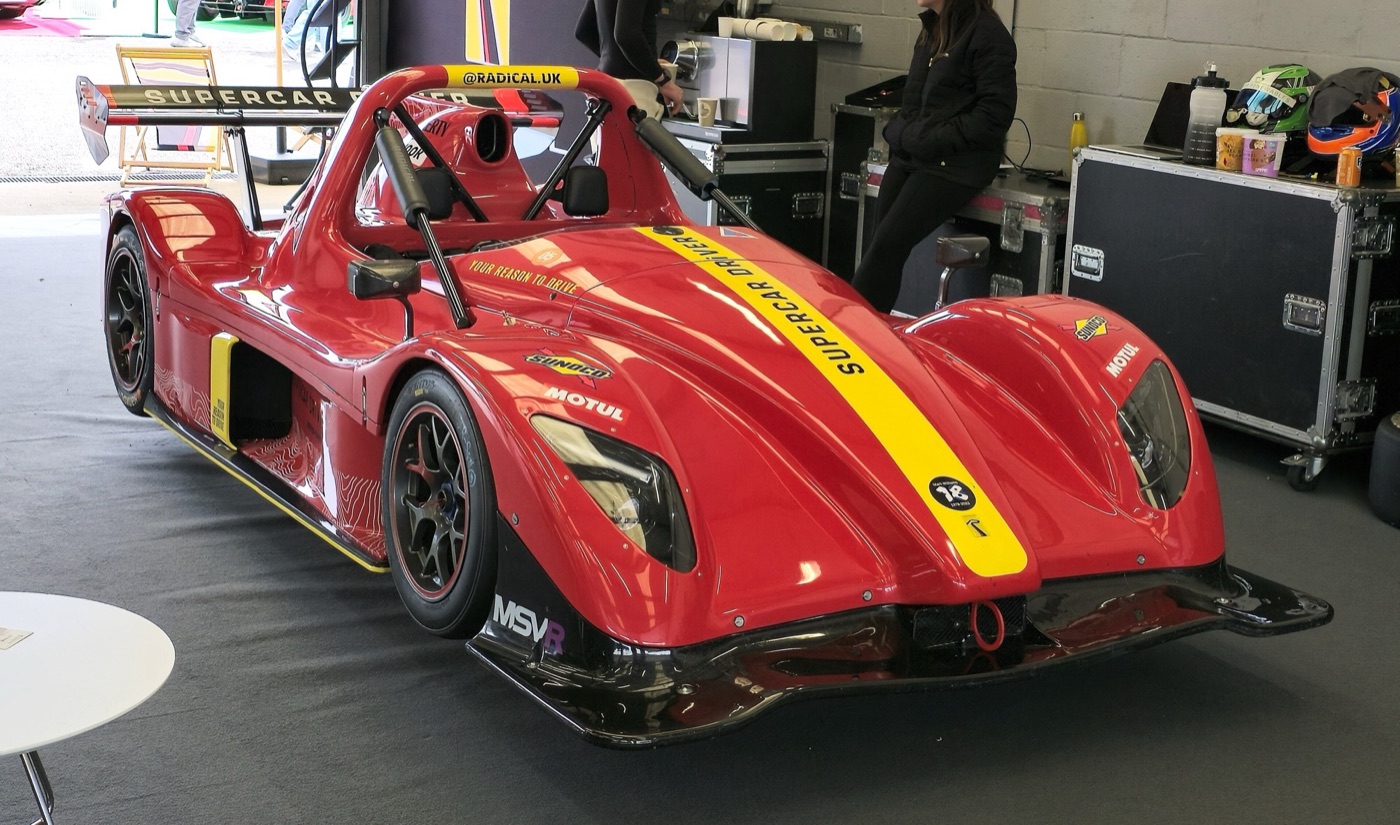
Radical Sportscars is the British maker of small, prototype-shaped track and race cars that two amateur racers, Phil Abbott and Mick Hyde, founded in Peterborough in January 1997. Its SR3 is its best-selling car, its SR8LM lapped the Nürburgring Nordschleife in 6min 48sec in 2009, and on 28 January 2025 it finished its 3,000th car, most of them raced in its own one-make Radical Cup championships on four continents. The company has traded as Radical Motorsport since 2022 and still builds every car in Peterborough, where it was founded.
Radical Sportscars history
Radical Sportscars grew from one motorcycle-engined club racer in 1996–97 into what its 2026 World Finals announcement calls Britain’s largest race car manufacturer. Its January 2025 3,000th-car release gave its dealer network as more than 30 dealers in over 20 countries. The milestones below come from Radical’s own history timeline unless another source is named.
How Phil Abbott and Mick Hyde started Radical
Phil Abbott, an engineer and club racer, wanted to put light, powerful motorcycle engines into an affordable sports-racing chassis. Sports Car Digest’s history of the marque dates the pitch to the summer of 1995, when Abbott took the idea to Mick Hyde, a TVR Tuscan Challenge racer who ran an advertising agency. The name came from a tanning lotion made by Abbott’s company, and Hyde’s agency drew the logo. Radical Motorsport Limited was incorporated on 28 January 1997, with Abbott and Hyde as its first directors, according to the Companies House register.
Two more men joined early and stayed for years: Ted Hurrell, a motorcycle sidecar racer who tuned the engines, and Nick Walford, the designer. A 2012 SkiddMark report on the factory names the same four (Abbott, Hyde, Walford and Hurrell) as the team behind the company’s growth.
From Clubsport to SR3
The first car, the Radical 1100 Clubsport, used an 1100cc Kawasaki engine in a small open-cockpit chassis built for the 750 Motor Club’s Sports 2000-based races. Sources differ on its first race. Sports Car Digest says the prototype was finished in spring 1996, that Hyde qualified sixth and finished 11th on its debut at Brands Hatch, and that Abbott took Radical’s first win at Pembrey later that year; Radical’s 3,000th-car announcement puts the Clubsport’s Brands Hatch debut later in 1997, after the company was founded. In 1998 nine Clubsports raced at Silverstone, and Hyde won from pole with Abbott second.
By 1999 there were enough Clubsport owners for a one-make championship, and the same year brought the 1300 Prosport with Suzuki’s new 1300cc Hayabusa engine, F3-size slick tyres and an adjustable rear wing. The two-seat SR3 (“SR” for Sports Racer) followed: Radical dates it to 2001, while Sports Car Digest says the Radical SR3 was launched in Barcelona, Spain, in 2002. Its engines came from Radical’s own tuning business, then called Powertec.
The SR8, Le Mans and the Nürburgring
The SR8 of 2005 put a V8 into the SR3’s layout. Powertec built it from two 1300cc Suzuki four-cylinder engines on a common crankcase, set at 72 degrees, for 2.6 litres and 360bhp. The SR8 went to the Nürburgring that September and took the lap record for road-legal cars (see the Nürburgring section below), and in 2006 Radical went to the 24 Hours of Le Mans with the SR9, its first carbon-fibre monocoque. In 2009 the SR8LM cut the Nordschleife record to 6min 48sec, and in 2010 Radical built its 1,000th car.
Road cars and the SR1
The SR3 SL of 2011 was Radical’s first car with an engine from a car, Ford’s 2.0-litre EcoBoost, and its first with European type approval for road use. Hyde stood down as a director in April 2011, and a 2012 SkiddMark report recorded his retirement, the arrival of Radical’s German distributor Christian Droop as financial partner, and the appointment of the former evo writer Roger Green as marketing manager. The entry-level SR1 followed in 2012, the RXC coupé in 2013, the road-going Rapture in 2019, and the turbocharged SR10 in 2020.
Radical Motorsport: the rename and Donington Park
For its 25th anniversary in 2022 the company changed its trading name from Radical Sportscars to Radical Motorsport, which its timeline links to a focus on track-only cars. The same year it held the first Radical World Finals, at Spring Mountain Motor Resort near Las Vegas. In 2023 the SR range moved to “XXR” specification, and the sales, marketing and motorsport teams moved into a new corporate headquarters at the main entrance of Donington Park; Professional Motorsport World reported that all manufacturing stayed in Peterborough. From March 2025 Radical sold cars to UK customers itself, from the Donington showroom, ending the sales agency Performance Time had held since 2021, according to Radical’s UK sales announcement.
Who owns Radical Sportscars?
Radical is controlled by two German investors through a holding company. Radical Motorsport Limited (company 03308491) is more than 75% owned by Radical Sportscars Limited (07563023), a holding company incorporated on 14 March 2011. Companies House’s register of persons with significant control lists Dr Jan Martin Osterloh with more than 50% but less than 75% of the holding company’s shares, and Dr Andreas Ernst Zielke with more than 25% but not more than 50%, both recorded since 15 April 2016.
Neither founder is still involved. Mick Hyde resigned as a director of Radical Motorsport in April 2011 and Phil Abbott in October 2016. Christian Droop was a director from November 2009 to November 2014, and Tim Greaves, who drove SR9s at Le Mans in 2007 and 2009, from 1999 to 2009.
| Person | Role | Dates |
|---|---|---|
| Phil Abbott | Co-founder, director | January 1997 to October 2016 |
| Mick Hyde | Co-founder, director | January 1997 to April 2011 |
| Tim Greaves | Director | November 1999 to October 2009 |
| Christian Droop | Director | November 2009 to November 2014 |
| Jan Osterloh | Director and majority shareholder of the holding company | Director since November 2014 |
| Joe Anwyll | Chief executive | Appointed 2016, by Radical’s account; director May 2018 to June 2023 |
| Kevin Gaskell | Non-executive director, then chairman | Joined October 2021; chairman from October 2022 |
| Dan Redpath | Sales director, then chief commercial officer | Joined January 2020; director since June 2023 |
Anwyll arrived with what Radical’s announcement of Gaskell as chairman calls a five-year turnaround plan, ending in 2022, the year the company said it built and sold more cars than ever before. Gaskell ran Porsche Cars Great Britain from 1991 and was later group chief executive of BMW in the UK. Redpath came from Aston Martin, according to Radical’s board announcement of 1 October 2021.
Where are Radical cars made?
Every Radical Sportscars car is built at 24–26 Ivatt Way, on the Westwood business park in Peterborough, Cambridgeshire, which Hagerty UK describes as the same industrial estate where the company was founded in 1997. When Hagerty toured the factory for the company’s 25th anniversary (published January 2023), Radical had 110 employees with an average age of 29, half a dozen apprentices, and no production line: each car is built by a couple of technicians from start to finish. Radical makes as much as it can in-house, from CNC-machined hubs and uprights to its own body patterns and moulds, and its composites shop makes about 30% more body panels than the cars need, as spares for racers. Head of engineering James Scott told Hagerty the factory would build 197 cars in 2022, a record.
The bodywork is mostly glassfibre. Scott told Hagerty that an SR1 front body section cost about £700 and could often be repaired at the track, where carbon fibre would cost more to make and to mend.
Radical Performance Engines
Radical Performance Engines (RPE), called Powertec until 2011, builds and rebuilds every Radical engine. A 2012 SkiddMark report put its output at about 800 engines a year, new builds and refreshes together, including all the engines for Argentina’s TC2000 touring car series. Radical’s own guide to engine rebuilds lists the current family: 1340cc and 1500cc engines derived from the Suzuki Hayabusa, Radical’s V8s, a 2.3-litre turbocharged four from Ford and a 3.5-litre twin-turbo V6.
A separate business on the same site, Radical Precision Engineering, machines parts for outside customers in marine, agriculture, oil and gas and aerospace work from a 10,000 sq ft factory, according to Radical’s description of the division. In 2012 SkiddMark reported that about 70% of its earnings came from outside the Radical group.
Radical Sportscars models
Radical Sportscars’ range in 2026 has five cars: the SR1 XXR, SR3 XXR and SR10 XXR open sports-racers, and the RXC and RXC Spyder. Over three decades it has also built the Clubsport, Prosport, SR4, SR5, PR6, SR8, SR9, SR3 SL and Rapture.
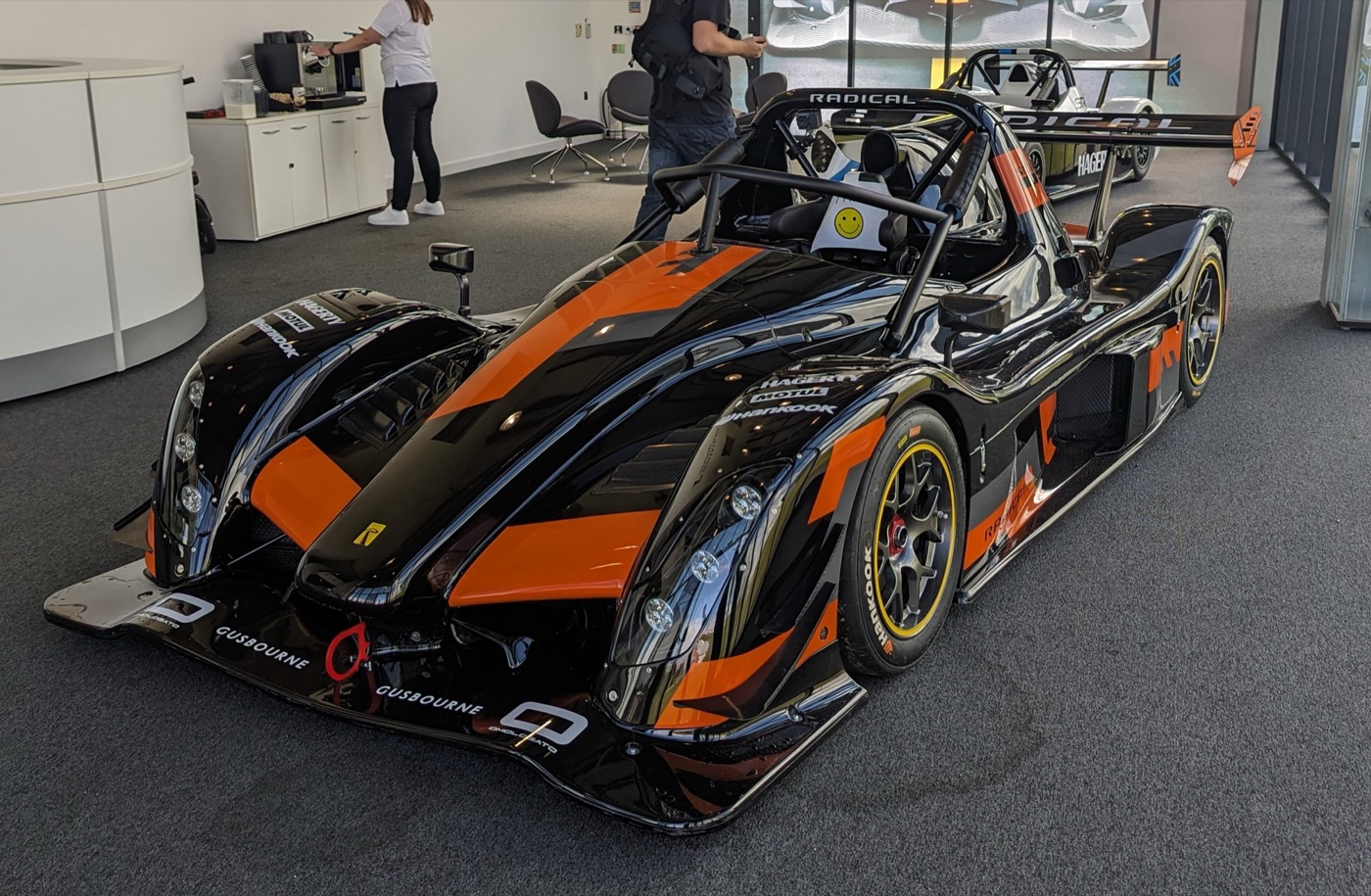
Current Radical range compared
| Model | Engine | Power | Weight | Silverstone lap |
|---|---|---|---|---|
| SR1 XXR | 1340cc four (Hayabusa-derived) | 188bhp | 510kg | 2min 11sec |
| SR3 XXR | 1500cc four (Hayabusa-derived) | 232bhp | 620kg | 2min 02sec |
| SR10 XXR | 2.3-litre turbo four (Ford EcoBoost-based) | 425bhp | 725kg | 1min 58sec |
| RXC Spyder | Twin-turbo V6 | 654bhp | 1,010kg | 1min 59sec |
| RXC | Twin-turbo V6 | 719bhp | 1,130kg | 1min 59sec |
The engine column for the SR models comes from the Radical model pages, evo and Hagerty; Radical does not list the RXC engines by name on that page.
1100 Clubsport and Prosport
The 1100 Clubsport (1997) had a 1100cc Kawasaki motorcycle engine and was the car the first Radical championship was built around. The 1300 Prosport (1999) switched to Suzuki’s 1300cc Hayabusa, which Radical has used in one form or another ever since. Phil Abbott has told the Radical Sportscar Registry that chassis number 1 was built by an outside firm, Spyder Engineering,.
Radical SR3
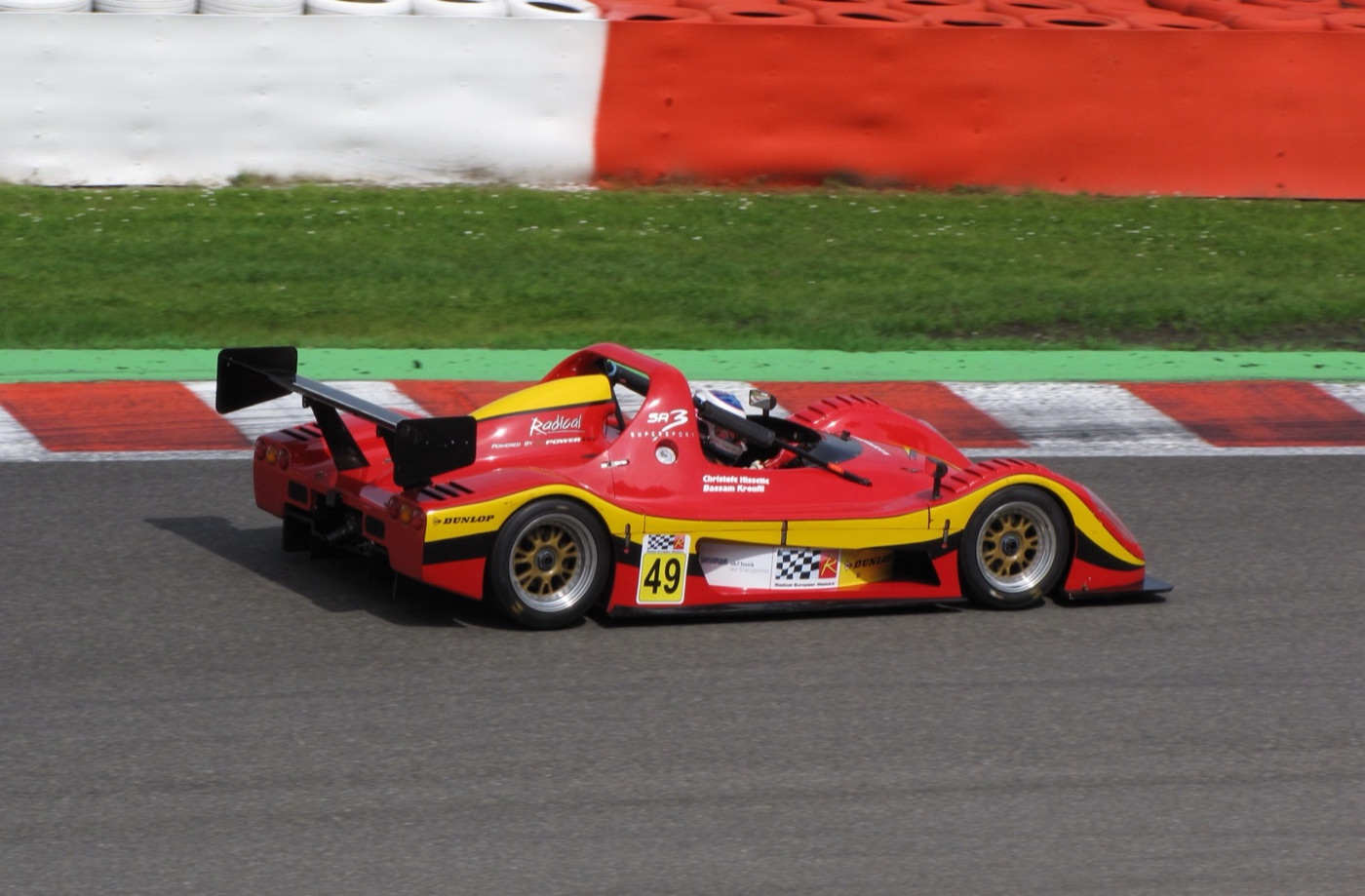
The Radical SR3 is a two-seat sports-racer with a steel spaceframe chassis, glassfibre bodywork and a Hayabusa-derived engine driving through a sequential gearbox. By 2016 Radical had delivered 1,000 SR3s, and its 2022 launch release for the SR3 XXR said more than 1,500 had been sold and that SR3s made up most of the grids in the 12 Radical Cup championships of the time. The 3,000th Radical, delivered in January 2025 with a bronze powder-coated chassis, was an SR3.
SR3 SL
The SR3 SL was the road-legal SR3, first shown at Autosport International in January 2011 and launched at the Frankfurt motor show that September. It used a 2.0-litre Ford EcoBoost turbo engine mounted lengthways with the SR8’s Quaife sequential gearbox, and AutoGuide’s December 2010 report gave it 300hp; PistonHeads’ 2012 test listed 240hp as standard, with 300hp in the Race Pack. When PistonHeads drove one in April 2012 it cost £69,850, with a £4,000 Race Pack that included the 300hp power upgrade. The type approval rules forced higher front wings, slats over the side-pod intakes and a narrower rear wing. PistonHeads put the cost of European approval at £1.2m and said 70% of the cars leaving Peterborough went abroad.
SR3 XX and SR3 XXR
The SR3 XX arrived in May 2020 with a steering-wheel display and more data logging. The SR3 XXR, announced in 2022 for production from February 2023, has the fifth-generation 1500cc RPE engine with 232bhp, able to run on E85 biofuel, plus a pit-lane speed limiter, a central “shark fin” on the tail and AP Racing brakes, according to Radical’s launch release as published by Racecar.com. evo lists a 1.3-litre, 201bhp version as well.
SR4, SR5 and PR6
The SR4 was a revised SR3 meant to replace the Clubsport. The SR5 was built for endurance racing, did not use its engine as a stressed member, and took Ford and Honda engines. The PR6 replaced the Prosport as a single-seater, aimed largely at the American SCCA rules, according to Sports Car Digest.
Radical SR8 and SR8LM
The SR8 was a £60,000 road-legal V8 sports-racer when evo reported its Nürburgring record in October 2005: 2.6 litres, 360bhp at 10,500rpm, and two and a half times the downforce of the SR3. Later SR8 Supersports had 380bhp, and the SR8LM, introduced in 2007, had a 2.8-litre V8 of about 455–460bhp. Car magazine reported that SR8 production took four years to reach 50 cars.
Radical SR9
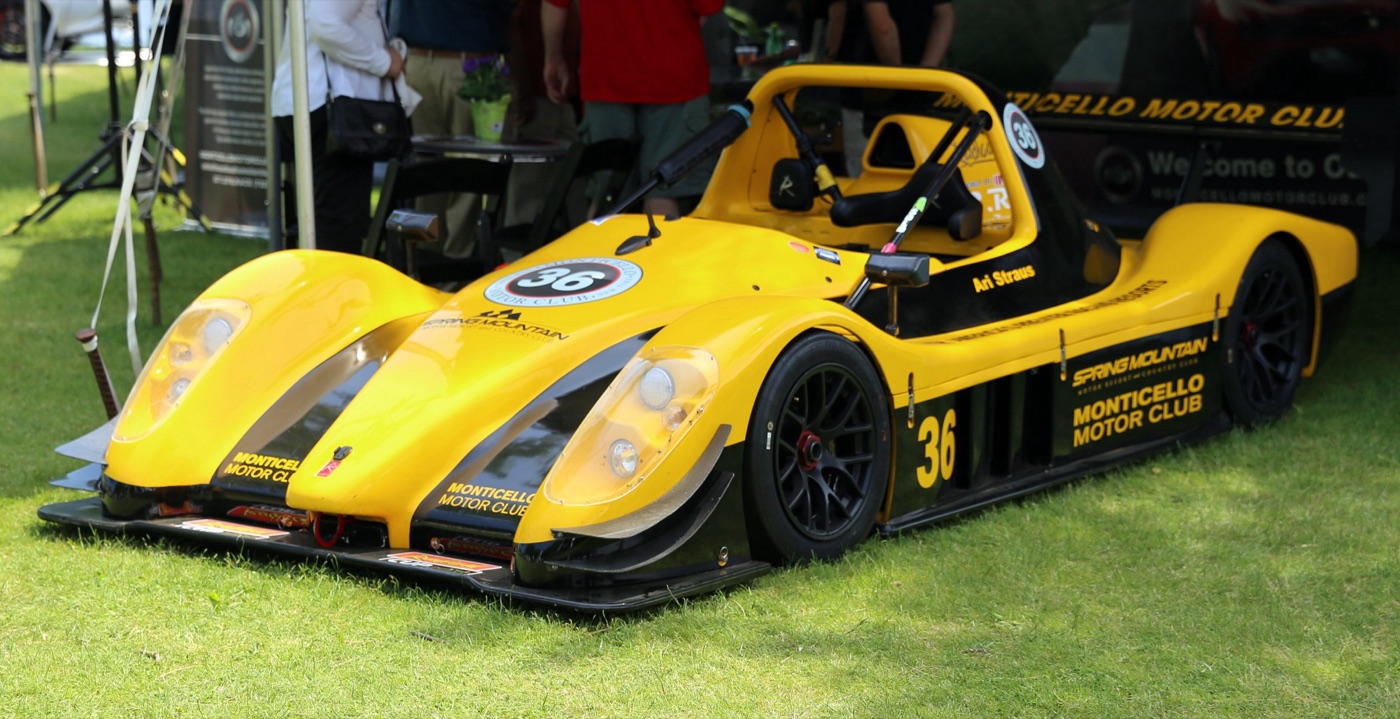
The SR9 was Radical’s Le Mans prototype for the LMP2 class, with a carbon-fibre monocoque and either a Judd V8 or an AER turbocharged four. Radical brought in the Le Mans-winning designer Peter Elleray and went from concept to the Le Mans grid in 12 months; only six chassis were built, according to Radical’s 2025 account of the project, which also says the cost and engineering load sent the company back to its core track cars.
Radical SR1
The SR1 was unveiled as a prototype in 2012 as Radical’s entry-level racer, with a 182bhp engine. Hagerty’s 2023 factory visit explains that the SR1 uses the 1340cc Hayabusa engine in standard form, converted to dry-sump lubrication, while the SR3’s is stroked to 1500cc with Arrow connecting rods and a gas-flowed head for 226bhp. Hagerty gave its price as £46,995 in January 2023, and the current SR1 XXR has 188bhp.
Radical RXC
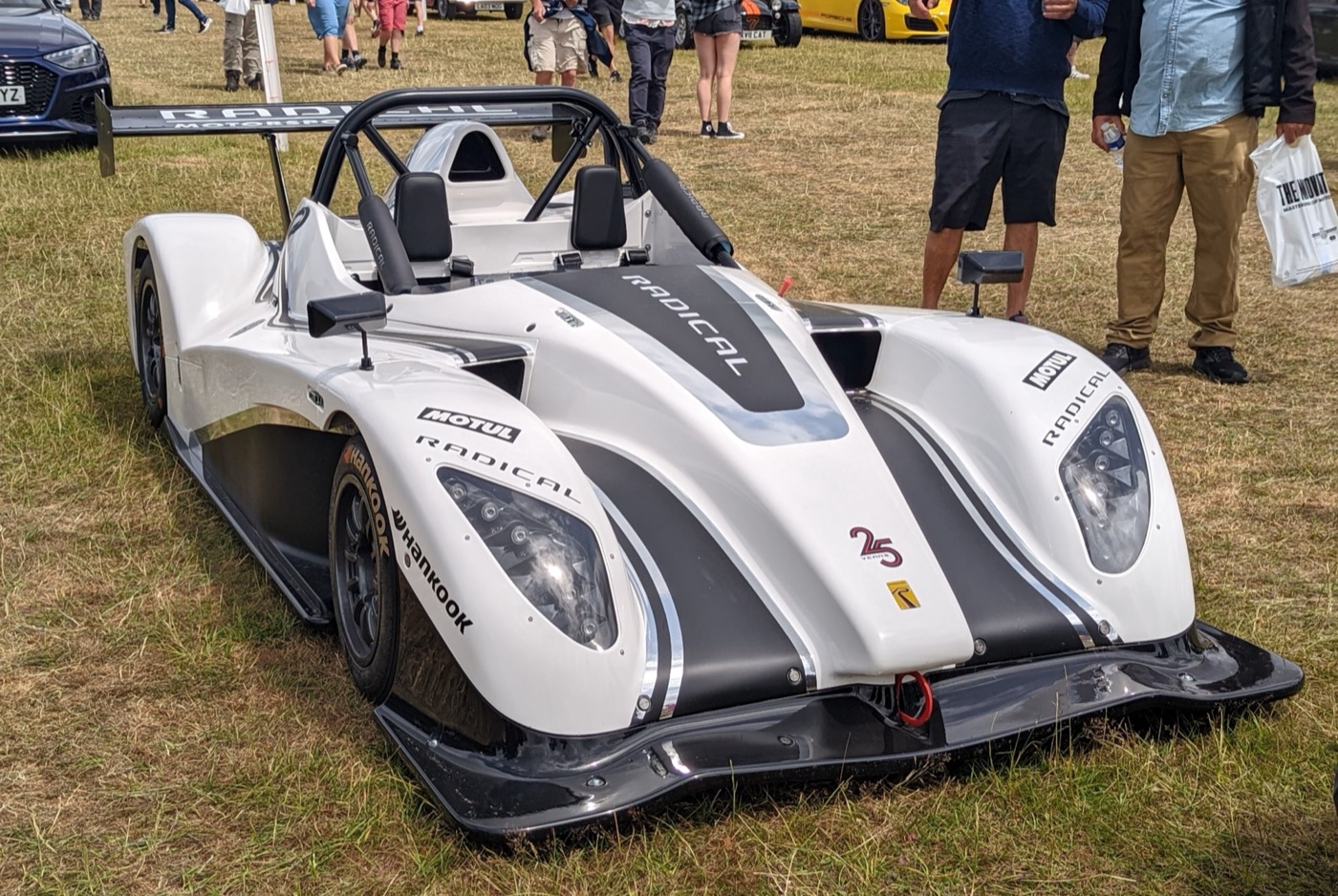
The RXC (Radical Xtreme Coupé) was announced in December 2012 as Radical’s first closed car, with gullwing doors, a 380bhp 3.7-litre Ford V6, a seven-speed Quaife paddle-shift gearbox and a 900kg kerb weight. Top Gear quoted £89,500, while Car said road and race versions would both start at £107,400. Radical claimed 900kg of downforce at 175mph, equal to the car’s weight, and fitted air conditioning, a heated windscreen and electric power steering. The RXC gained European type approval for road use in 2015; later versions included the RXC Turbo 500, a carbon-bodied RXC GT shown at the 2017 Goodwood Festival of Speed, the RXC 600R and the RXC GT3.
Radical Rapture
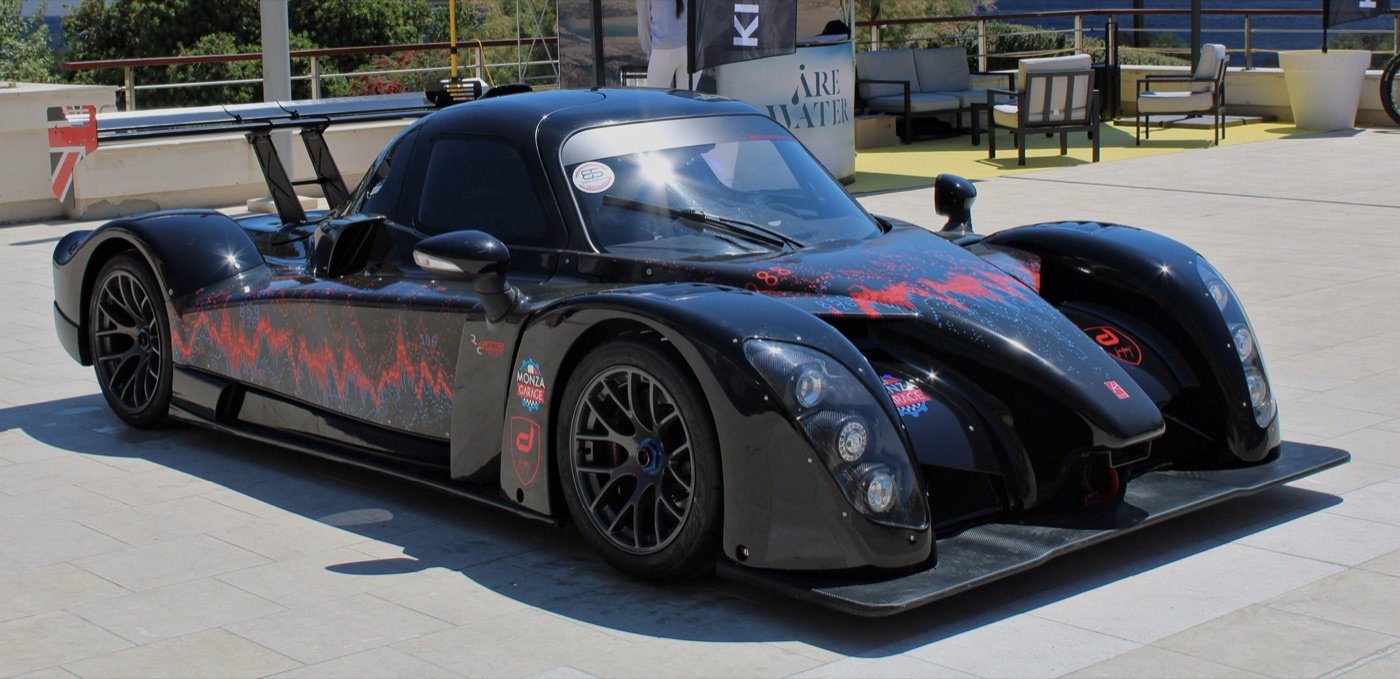
The Rapture, revealed at the Goodwood Festival of Speed in July 2019, is a road-legal open car built around an FIA-compliant safety cell and aluminium spaceframe. PistonHeads’ launch report gave it a reworked 2.3-litre Ford EcoBoost with 350hp and 320lb ft, a six-speed sequential transaxle with a Quaife limited-slip differential, a 765kg weight, acceleration from 0–60mph in 3.0sec and a gearing-limited 165mph, at £89,500. Heated seats and electric folding mirrors were standard. PistonHeads’ December 2019 test listed 360hp and £107,400, and found that the Rapture shares its splitter, underbody and much of its body with the SR8.
Radical SR10
The SR10, launched on 17 September 2020, is the turbocharged top of the SR range: a 2.3-litre Ford EcoBoost reworked by RPE with a Garrett G-Series turbocharger, forged pistons and rods and dry-sump lubrication, giving 425bhp and 380lb ft, driving through a Hewland TMT transaxle first developed for FIA Formula 2. Radical’s launch release said the lower-revving engine was chosen for longer life and lower running costs than the SR8’s V8. The first customer car was built in December 2020; Car reported 50 built and ten more sold within nine months, and Radical said in October 2022 that it had delivered the 100th. The SR10 is a track and race car only, with no road-legal version.
Project 25
For its 25th anniversary Radical previewed “Project 25” to customers at the first World Finals in November 2022: a closed track car limited to 25 examples, with a twin-turbo V6 of about 850hp tuned by RPE and deliveries promised before the end of 2023, according to PistonHeads.
Cars built on Radical chassis
Toyota Motorsport GmbH’s electric TMG EV P001 was built on a Radical chassis, a 2012 SkiddMark report recorded. In August 2011 Jochen Krumbach drove it round the Nordschleife in 7min 47.794sec, the electric-car lap record, beating the Peugeot EX1’s 9min 1.338sec, as Car magazine reported. Its two motors came from Evo Electric of Woking and gave 590lb ft.
Radical Sportscars at the Nürburgring
Radical Sportscars set the Nürburgring Nordschleife lap record for road-legal cars three times: in 2003 with an SR3 Turbo, in 2005 with an SR8 and in 2009 with an SR8LM, whose 6min 48sec was the fastest of the three.
| Date | Car | Driver | Lap time | Notes |
|---|---|---|---|---|
| 2003 | SR3 Turbo | Phil Bennett | 7min 19sec | Set on Bennett’s first lap in the car |
| September 2005 | SR8 | Michael Vergers | 6min 55sec | Timed by Sport Auto; Dunlop Direzza trackday tyres; more than 20sec inside the previous record |
| August 2009 | SR8LM | Michael Vergers | 6min 48sec | Overseen by Sport Auto, confirmed by evo; car driven from England the day before |
Sources disagree on what the 2005 lap beat. evo said the previous record belonged to Donkervoort, while Autoblog’s report of 27 October 2005, which dates the lap to September, said it was a Porsche 996 GT2’s. They also disagree on the 2009 margin: Radical’s press release, as published by Autoblog, says eight seconds and PistonHeads says seven. Mick Hyde said in the release that one set of Dunlop trackday tyres had been used both to drive to the circuit and to set the time.
The 2009 run came a day after Gumpert announced its own Nürburgring time for the Apollo, and evo’s report of 20 August 2009 noted that Gumpert had not acknowledged Radical’s earlier 6min 55sec.
Was the SR8LM a production car record?
The SR8LM’s status was argued over from the start: Radicals of the time were not type-approved production cars, and SkiddMark reported in 2012 that the SR3 SL of 2011 was Radical’s first. Hagerty’s writer, who rode with Bennett in 2003, recalls a row over whether the SR3 Turbo counted as road legal; driving the SR8 from Peterborough to the circuit in 2005 and the SR8LM in 2009 was Radical’s answer.
When Porsche’s 911 GT2 RS lapped in 6min 47.3sec on 20 September 2017, Porsche’s press release called it a record for road-approved sports cars and gave the previous record as 6min 52.01sec, leaving Radical out. Radical’s timeline says the SR8LM’s time was not beaten for 12 years; City AM wrote in 2024 that it stood for eight.
Radical Sportscars at Le Mans
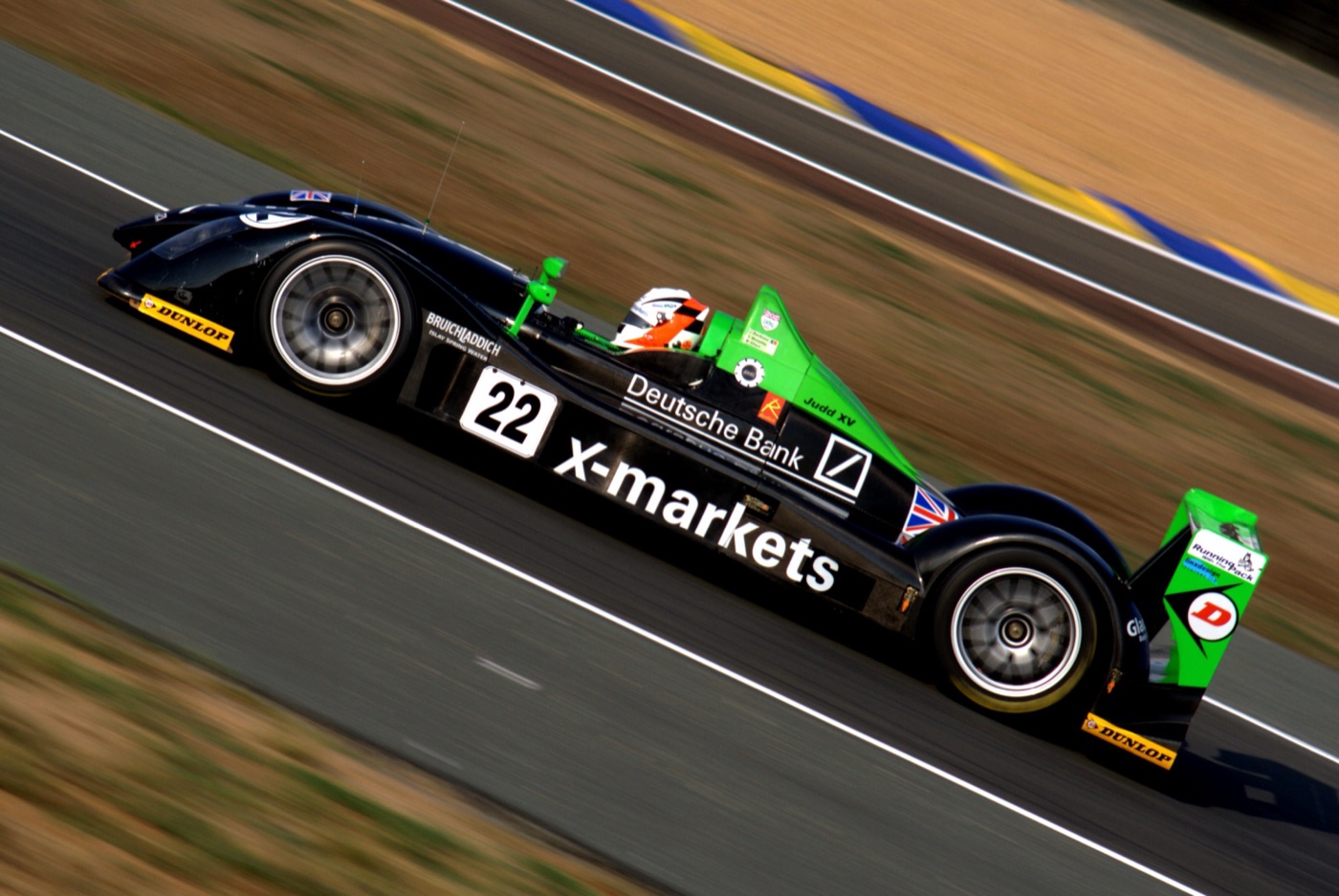
Radical SR9s started the 24 Hours of Le Mans five times between 2006 and 2010, and the best results were fifth in LMP2 in 2006 and sixth in LMP2 in 2008 and 2010.
| Year | Team | Drivers | Engine | Result |
|---|---|---|---|---|
| 2006 | Rollcentre Racing | Martin Short, João Barbosa, Stuart Moseley | Judd | 20th overall, 5th in LMP2, 294 laps |
| 2007 | Team Bruichladdich Radical | Stuart Moseley, Tim Greaves, Robin Liddell | AER | Retired after an accident, 16 laps |
| 2008 | Team Bruichladdich Radical | Marc Rostan, Gunnar Jeannette, Ben Devlin | AER | 31st overall, 6th in LMP2, 297 laps |
| 2009 | Bruichladdich Bruneau | Marc Rostan, Pierre Bruneau, Tim Greaves | AER | Retired, 91 laps |
| 2010 | Race Performance AG | Marc Rostan, Ralph Meichtry, Pierre Bruneau | Judd | 18th overall, 6th in LMP2, 321 laps |
The full classifications are in the Racing Sports Cars archive for 2006, 2007, 2008, 2009 and 2010. Sports Car Digest adds that the Rollcentre SR9 finished eighth in the 2006 1000km of the Nürburgring.
Radical Cup and other Radical race series
Radical supports 14 single-make Radical Cup championships around the world, with a 15th, Radical Cup Japan, due to start in 2027. Radical’s October 2022 announcement of its new chairman says Radical was the first maker to bring long-format, double-header endurance racing to club-level racing, with spares and technical support provided.
Radical Cup UK, the SR1 Cup and the Radical Club Challenge
The UK championship, run in 2026 as the Finecut Radical Cup UK, ended at Donington Park with Gordie Mutch and Andy Lowe as champions, according to Radical’s report of the finale. The SR1 Cup for novices was announced in 2012: a 2012 SkiddMark report described compulsory training, professional support allowed, published costs, and performance limits on the cars that could be removed for a driver’s second season, and quoted Roger Green saying deposits for half a grid had arrived just over a week after the launch.
Older Radicals race in the 750 Motor Club’s Bikesports championship, renamed the Radical Club Challenge for 2025 with its own class for the SR1, according to Radical’s September 2024 announcement. Its grids are mostly SR3, PR6, Clubsport and Prosport models.
Radical Cup North America
Radical Cup North America supports IndyCar at Road America, and its 2026 season ended alongside the FIA World Endurance Championship at the Circuit of the Americas with a 33-car, four-class field. Jonas Axboe won the overall title, as Radical’s COTA report records. Regional Radical Cup series in the US and Canada feed into it, and many of its drivers began at private motorsport country clubs such as Spring Mountain in Nevada and Autobahn Country Club near Chicago.
Radical Cup Europe
Radical ran the Radical European Masters from 2008 to 2018. Radical Cup Europe brought one-make Radical racing back to mainland Europe in 2026, run with Creventic, organiser of the 24H Series, over five rounds from Mugello to Barcelona with classes for the SR3 and SR10, according to Radical’s announcement. Marcus Littlewood won the first SR3 title.
Gulf Radical Cup and Radical Cup Japan
The Gulf Radical Cup, owned by the Dubai dealer GulfSport Racing, held its first race on 11 December 2005 and is the only series in the region to have run in every season since, according to Radical’s 2025–26 season preview. Radical Cup Japan plans an eight-race first season in 2027 at Tsukuba, Sportsland SUGO, Motegi and Okayama, for the SR3 XXR and eligible SR3 XX cars.
Radical World Finals
The Radical World Finals bring champions from the national series to one race meeting each year. They were held at Spring Mountain near Las Vegas in 2022, Portimão in 2023, Yas Marina in Abu Dhabi in 2024, Virginia International Raceway in 2025 and Barcelona in September 2026, where Marcus Littlewood won the 30-minute final from a grid of 23 cars and 12 nationalities, according to Radical’s race report.
Radical drivers who raced at Le Mans
Five drivers on the 2026 Le Mans entry had raced Radicals, according to Radical’s list: George Kurtz, who started in SR3s at Spring Mountain and won LMP2 Pro-Am at Le Mans in 2023; PJ Hyett; Bijoy Garg, who won LMP2 on his Le Mans debut in 2024; Ian Aguilera, the 2024 Radical World Champion in the Pro 1500 class; and Peter Dempsey, who won the 2019 NASA 25 Hours of Thunderhill outright in an SR3. Radical also counts David Heinemeier Hansson, who first drove an SR3 at Autobahn Country Club and won GTE-Am at Le Mans in 2015.
How many cars has Radical Sportscars built?
Radical Sportscars built its 3,000th car on 28 January 2025, its 28th anniversary. It built 197 cars in 2022, and City AM put its output at 150 to 200 cars a year in 2024.
| Year | Milestone |
|---|---|
| 1997 | Company founded; first 1100 Clubsport completed |
| 1999 | Enough Clubsport owners for a one-make grid |
| 2010 | 1,000th Radical |
| 2012 | About 1,500 cars, rising by almost 250 a year (SkiddMark) |
| 2016 | 1,000th SR3 |
| 2017 | 2,000th Radical, in the company’s 20th year |
| 2021 | 50 SR10s built in nine months; more cars built and sold than in any earlier year |
| 2022 | More than 2,800 cars in total; more than 1,500 SR3s sold; 197 cars built in the year |
| 2025 | 3,000th Radical, an SR3 for UK racer John Hewitt |
The 2012 SkiddMark report also gave Radical’s revenue as about £20m, nearly £15m of it from overseas, with a £4m profit the previous year and a staff of 120. It quoted the company’s claim that only Porsche had built more racing cars, and Radical still describes itself as the second-largest race car constructor in the world.
How much does a Radical cost?
A new Radical cost from about £47,000 for an SR1 to about £126,000 for an SR10 in 2023; the table gives the prices reported at the time.
| Date | Model | Price | Source |
|---|---|---|---|
| October 2005 | SR8 | £60,000 | evo |
| April 2012 | SR3 SL | £69,850, plus £4,000 for the Race Pack | PistonHeads |
| December 2012 | RXC | £89,500 (Top Gear) or from £107,400 (Car) | Top Gear, Car |
| July 2019 | Rapture | £89,500 | PistonHeads |
| December 2019 | Rapture | £107,400 | PistonHeads |
| January 2023 | SR1 | £46,995 | Hagerty UK |
| January 2023 | SR10 | £125,900 | Hagerty UK |
| March 2024 | SR10 XXR | £132,200 | City AM |
For the 2025 model year Radical let customers order at 2024 prices, and evo reported in September 2024 that prices of the updated SR3 XXR and SR10 XXR were not expected to change.
Are Radicals road legal?
Some Radicals are road legal and most are not: the SR3 SL, RXC and Rapture were approved for the road, the SR8 that lapped the Nürburgring in 2005 ran in what evo called road-legal trim, and the current SR1, SR3 and SR10 are track and race cars. PistonHeads wrote in 2012 that “you can make Radicals road legal if you want to”. In 2012 SkiddMark described the SR3 SL as Radical’s first fully type-approved road car, approved under the European Community Small Series Type Approval rules, and Radical’s timeline says the RXC gained European type approval in 2015.
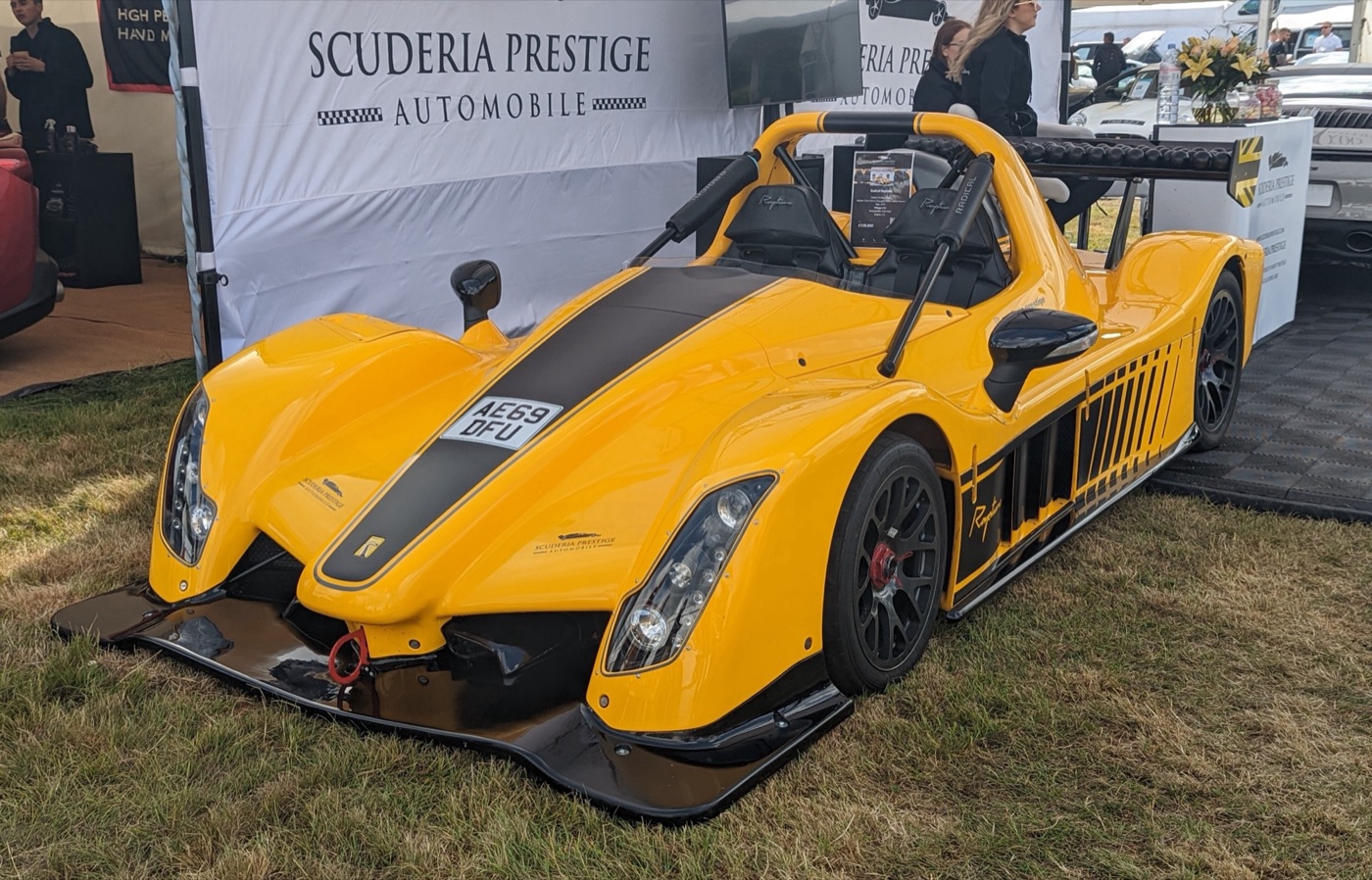
PistonHeads found in 2019 that the Rapture could be insured and taxed like any other road car, though it stalled easily, bobbed over bumps and had unassisted steering that was very heavy at parking speeds. When Radical renamed itself Radical Motorsport in 2022, its timeline says, it was to focus on track-only cars.
Running a Radical: engines, rebuilds and parts
Radical engines need rebuilding every 40 to 80 hours of running, depending on the engine, and the factory keeps every engine’s rebuild history and ECU data so that a car’s provenance passes to its next owner. Radical’s rebuild guide says many internal parts last more than 100 hours: connecting-rod bolts are measured for stretch, bearings are always replaced, pistons are crack-tested, and ECU records of over-revving decide which other parts are changed. RPE’s engineers name temperature as the main cause of wear and recommend an oil-tank heater pad before start-up in cold weather.
In 2012 SkiddMark reported that every new Radical engine came with a warranty that was renewed each time the engine was rebuilt at the factory. The American racer Tony Adamowicz, quoted by Sports Car Digest, called the cars fast but fragile: “It is fragile, and requires close scrutiny in maintenance procedures.” Glassfibre bodywork keeps crash repairs cheap, at about £700 for an SR1 front section in 2023.
Radical’s dealers offer servicing, support, storage and driver coaching as well as sales, according to the company’s 2022 chairman announcement.
Radical’s rivals
Radical’s rivals depend on the car. For novice racing, the 2012 SkiddMark report noted that the SR1 Cup was compared with Caterham’s Academy series, which also takes first-time racers. For road-legal track cars, PistonHeads set the SR3 SL against the KTM X-Bow and Ariel Atom in 2012 and the Rapture against a new BAC revealed at the same Goodwood Festival of Speed, a £191,000 car limited to 30 examples, in 2019. At the Nürburgring, Radical’s record laps were set against Donkervoort and the Gumpert Apollo, and in 2017 Porsche’s 911 GT2 RS lapped faster.
Questions
Why is it called Radical?
The name came from a tanning lotion made by Phil Abbott’s company, and Mick Hyde’s advertising agency designed the logo, according to Sports Car Digest’s history of the marque.
Who founded Radical Sportscars?
Phil Abbott, an engineer, and Mick Hyde, a TVR Tuscan Challenge racer who ran an advertising agency, founded the company in Peterborough; Companies House records its incorporation on 28 January 1997. Hyde left the board in 2011 and Abbott in 2016.
Is Radical Sportscars the same company as Radical Motorsport?
Yes. The operating company is Radical Motorsport Limited, incorporated in 1997; the cars and the business were marketed as Radical Sportscars until the 2022 rename. Its holding company is still called Radical Sportscars Limited.
What engine does a Radical SR3 use?
The SR3 XXR uses a 1500cc four-cylinder engine derived from the Suzuki Hayabusa motorcycle engine and built by Radical Performance Engines, with 232bhp; a 1.3-litre version has 201bhp.
How fast is a Radical SR3?
Radical lists the SR3 XXR at 232bhp and 620kg, with a Silverstone lap of 2min 02sec. PistonHeads reported in 2025 that an SR3 can lap the Donington Park GP circuit in about 1min 30sec.
Can you race a Radical with no racing experience?
Yes. The SR1 Cup, announced in 2012, was open to drivers who had never held a race licence or were still novices, with compulsory training, and the 750 Motor Club’s Radical Club Challenge has had its own SR1 class since 2025.
Where is the Radical factory?
The factory is at 24–26 Ivatt Way on the Westwood business park in Peterborough, Cambridgeshire. Sales, marketing and motorsport staff moved to an office at Donington Park in 2023.
What happened to the Radical SR8?
Radical’s 2026 range no longer lists the SR8. The turbocharged SR10 of 2020 sits at the top of the SR range, and Radical’s chief executive said at its launch that it gave the SR8’s performance in a longer-lasting package.
Sources
- Radical Motorsport, “History & Milestones”, read 28 October 2026: founding, model launch years, production milestones, the 2022 rename and the Donington move.
- Radical Motorsport, “Our cars”, read 28 October 2026: power, weight and Silverstone lap times of the current range.
- Companies House, Radical Motorsport Limited (03308491), officers, read 28 October 2026: incorporation date, directors and their dates.
- Companies House, Radical Sportscars Limited (07563023), persons with significant control, read 28 October 2026: the shareholders; with the company’s officer and overview pages and the parent entry on 03308491’s register.
- Sports Car Digest, Will Silk, “Radical: vintage racing car for tomorrow” (about 2011): founding story, the tanning-lotion name, early races, Powertec V8, SR4, SR5, PR6, SR9 results and the Adamowicz quote.
- Hagerty UK, “Hard Craft: 25 years of perfecting speed at Radical Sportscars”, 6 January 2023: the factory, staff, engines, prices, 2022 output and the 2003 SR3 Turbo lap.
- SkiddMark, “The Great and The British: Part 1: The Importance of Being Radical”, 14 August 2012: the TMG EV P001’s Radical chassis, Hyde’s retirement, Droop, Roger Green, RPE output, revenue and staff, the SR3 SL’s type approval, the SR1 Cup and the engine warranty.
- evo, “Radical SR8 smashes Nürburgring lap record”, 31 October 2005: the 6min 55sec lap, the SR8’s engine and price.
- Autoblog, “Nurburgring lap record on video”, 27 October 2005: the September 2005 date and the Porsche 996 GT2 as the previous record holder.
- evo, “Radical ring record”, 20 August 2009: the 6min 48sec lap and Gumpert.
- PistonHeads, “Radical smashes Nordschleife record”, 20 August 2009: the seven-second margin.
- Autoblog, “Radical SR8LM sets new Nürburgring record at 6:48”, 20 August 2009, with Radical’s press release: timing, tyres and Hyde’s quote.
- Porsche, “GT2 RS is the fastest Porsche 911 of all time at 6 minutes, 47.3 seconds”, 27 September 2017: the 2017 record and the 6min 52.01sec it beat.
- Racing Sports Cars, 24 Hours of Le Mans results, 2006–2010: SR9 entries, drivers and finishing positions.
- Radical Motorsport, “Radical Cup North America to support the FIA WEC at COTA in 2026”, 2025: the SR9 project and Radical alumni at Le Mans.
- Radical Motorsport, “Five Radical alumni to tackle ’26 Le Mans”, June 2026: the five drivers and the SR9’s 2006 and 2010 results.
- Radical Motorsport, “Milestone 3,000th car achievement”, 28 January 2025: the 3,000th car, dealers and series.
- PistonHeads, “Radical delivers 3,000th car”, January 2025: Dan Redpath’s title.
- Radical Sportscars, “New board appointments”, 1 October 2021: Gaskell and Redpath.
- Radical Motorsport, “Radical appoint Kevin Gaskell as Chairman”, October 2022: the turnaround plan, double-header endurance racing, dealers, staff and 2,800 cars.
- Professional Motorsport World, “Radical Motorsport opens new corporate headquarters at Donington Park”, 2023.
- Radical Motorsport, “Radical UK sales announcement”, 19 March 2025.
- Radical Motorsport, “In the right hands: engines (RPE)”, read 28 October 2026: engine family, refresh intervals and rebuild checks.
- Radical Motorsport, “Radical Precision Engineering: from start to finish”, read 28 October 2026.
- AutoGuide, “Radical SR3 gets 300-hp Ford EcoBoost engine”, December 2010.
- PistonHeads, “Driven: Radical SR3 SL”, 13 April 2012: price, type-approval cost and exports.
- Racecar.com, “New Radical SR3 XXR launched with more power and precision”, 2022 (Radical’s release).
- evo, “Radical SR3 XXR and SR10 XXR upgraded for 2025”, 17 September 2024.
- Car, “Radical SR10 becomes fastest-selling model”, 1 September 2021: SR10 and SR8 production.
- Radical Sportscars, “The new Radical SR10”, 17 September 2020.
- Top Gear, “2013 Radical RXC”, 12 December 2012.
- Car, “Radical RXC supercar (2013) first picture”, 12 December 2012.
- PistonHeads, “Radical Rapture revealed with 350hp four-pot”, 4 July 2019.
- PistonHeads, “Radical Rapture driven”, 9 December 2019.
- PistonHeads, “Radical previews 850hp Project 25”, November 2022.
- Car, “Toyota smashes the electric car lap record of the Nürburgring”, 31 August 2011.
- City AM, Radical SR10 XXR review, 25 March 2024: price, output per year and the record’s duration.
- Radical Motorsport, Radical Cup Europe announcement, 2025: the European Masters and the new series.
- Radical Motorsport, Radical Club Challenge announcement, 18 September 2024.
- Radical Motorsport, “Gulf Radical Cup 2025–26 season”.
- Radical Motorsport, “Radical Cup Japan to become 15th Radical Cup worldwide in 2027”, 2026.
- Radical Motorsport, 2026 Radical Cup UK finale report; 2026 Radical Cup North America finale report; 2026 Radical Cup Europe finale report.
- Radical Motorsport, 2026 World Finals announcement and race report: venues 2022–2026 and the 2026 result.
- Radical Sportscar Registry (radicalsportscarregistry.com), read 28 October 2026: Phil Abbott on chassis number 1 and Spyder Engineering.