Range Rover L405 SUV: history, engines, faults and buying guide
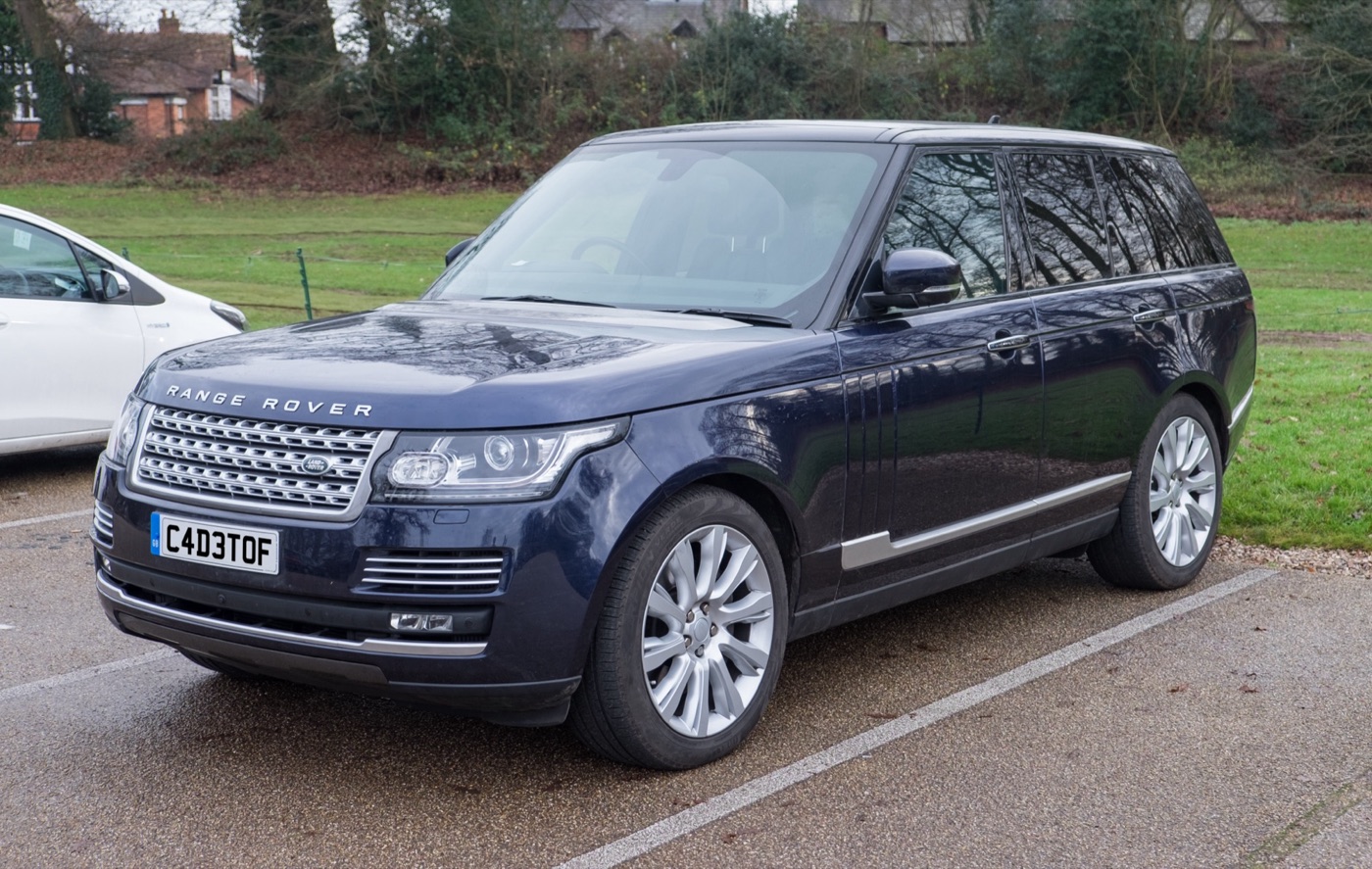
The Range Rover L405 is the fourth-generation Range Rover, the full-size luxury SUV that Land Rover revealed in September 2012 and built at Solihull until the fifth-generation L460, revealed in October 2021, replaced it. Land Rover says it was the first SUV, or sport utility vehicle, with an all-aluminium monocoque body, up to 420kg lighter than the steel L322 before it, and it was on sale with diesel, petrol, hybrid and plug-in hybrid engines from 258PS to 565PS in Britain in standard and long-wheelbase forms, with permanent four-wheel drive, air suspension and a 900mm wading depth. In October 2026 a used L405 on PistonHeads asked from about £11,000 for a high-mileage 2013 or 2014 diesel to more than £50,000 for a late V8.
History of the Range Rover L405
The L405 was revealed in London on 6 September 2012, made its public debut at the Paris Motor Show three weeks later, was facelifted for the 2018 model year and gave way to the L460, revealed on 26 October 2021. Land Rover built it in a new body plant at Solihull: its launch release says more than £370 million went into what it called the world's largest aluminium body shop, and that the car would be sold in 170 markets.
The 2012 reveal at the Royal Ballet School
Land Rover called it the All-New Range Rover. The first showing was an evening event at White Lodge, home of the Royal Ballet School in Richmond Park. In Land Rover's account of the night, the car drove through a pool of water almost a metre deep and up a rocky causeway before stopping in front of the house, and Mark Knopfler, a long-time Range Rover driver, played seven songs afterwards. American customers saw the car the following week at a private house on the former Frick estate in Alpine, New Jersey, where Land Rover North America announced a starting price of $83,500 and a weight saving of about 700lb.
The Paris Motor Show and the Paris Opera
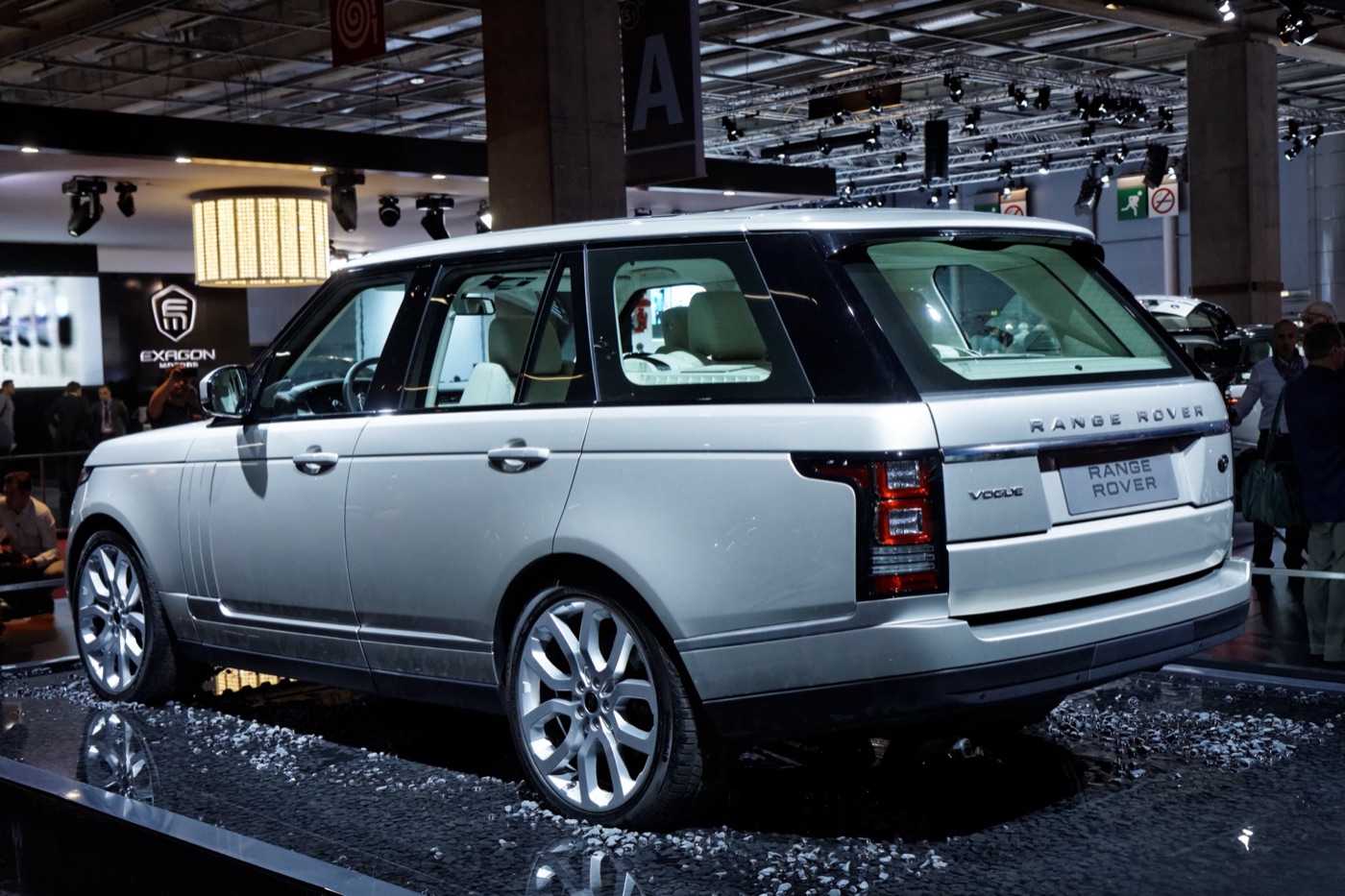
The public debut came at the Paris Motor Show on 27 September 2012. Land Rover's report from the show says the stand carried the full line-up in Vogue and Autobiography trim with all three launch engines, including the first 3.0 TDV6 diesel offered in a Range Rover, next to the rare 1990 Range Rover CSK, a two-door special edition named after Charles Spencer King, the engineer behind the 1970 original. That evening the new car was shown outside the Paris Opera with earlier generations. A SkiddMark report from Paris the next day listed the CSK and the outgoing Range Rover Vogue among them, and gave the target for the diesel hybrid promised for 2013 as 169g/km of CO2.
UK prices and the launch line-up
UK order books opened at the reveal, with prices from £71,295 for the Range Rover Vogue 3.0 TDV6 to £98,395 for the Autobiography 5.0 Supercharged, according to Land Rover UK's Paris release of 27 September 2012. Britain got three engines at first: the 258PS 3.0 TDV6 and 339PS 4.4 SDV8 diesels and the 510PS 5.0 supercharged V8 petrol, all with an eight-speed automatic transmission. Sales began in late 2012 as 2013 models.
Updates from 2013 to 2017
The first change was the diesel hybrid. Land Rover's hybrid release of 21 August 2013 opened UK orders on 10 September 2013 for first deliveries in early 2014. Before sign-off, three Range Rover Hybrid prototypes drove from Solihull to Mumbai on the Silk Trail 2013 expedition, leaving on 22 August and due in Mumbai on 15 October through 12 countries; a progress report of 11 September had them at Astrakhan in Russia after 6,800km in 15 days. For 2014 the model-year update added a Black Design Pack, powered upper seat articulation in front and larger 10.2-inch rear entertainment screens.
The long-wheelbase car followed in 2014, and the SVAutobiography, built by Special Vehicle Operations, in 2015 (both are under variants below). The 2016 model year brought stop-start to the SDV8, All-Terrain Progress Control on SDV8 cars, a hands-free Gesture Tailgate and Automatic Access Height, which lowers a parked car to its access height for getting in; Land Rover UK priced that line-up from £74,950.
The 2018 facelift
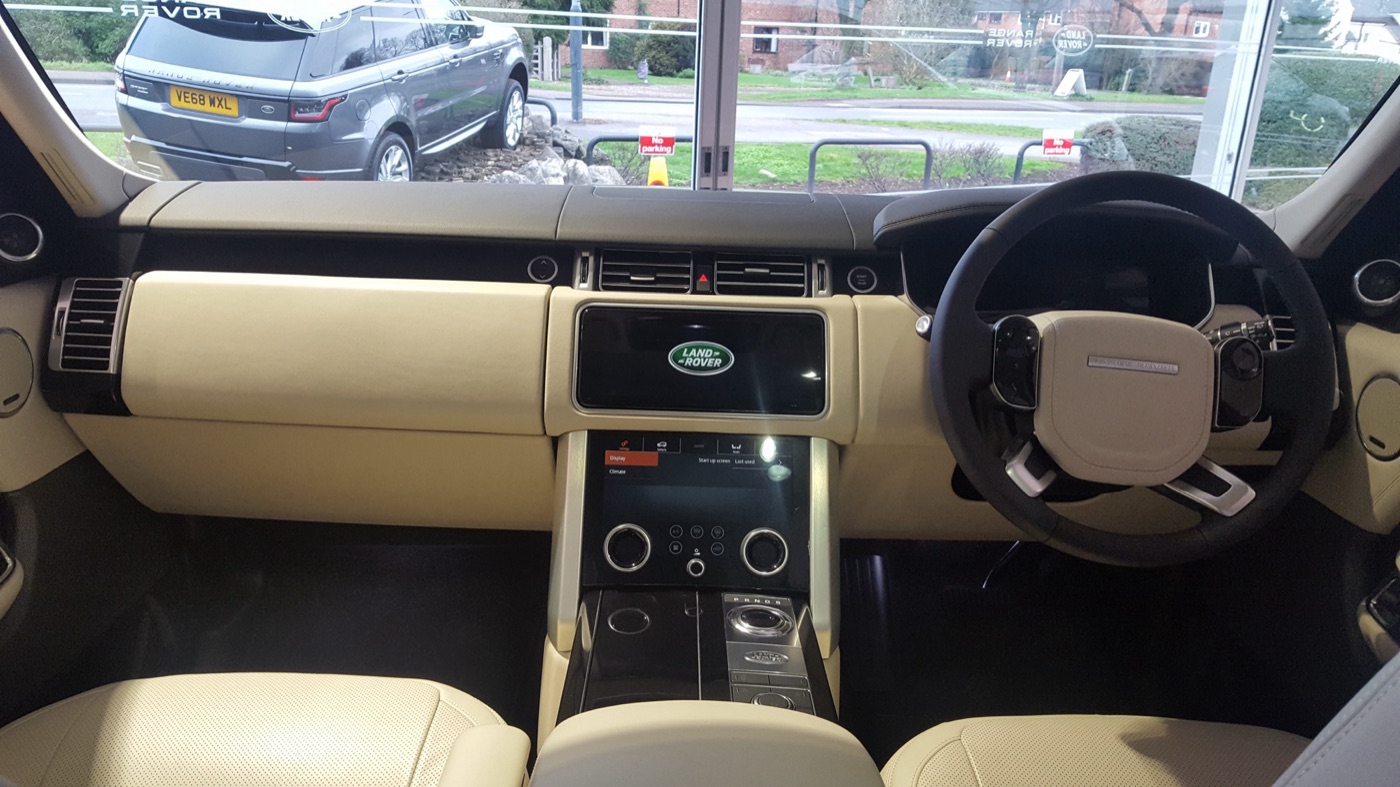
The facelift was announced on 10 October 2017 for the 2018 model year, with first deliveries from the end of that year. Land Rover North America's release lists new LED headlights, the Touch Pro Duo system of two 10-inch touchscreens in the centre console, front seats with up to 24-way adjustment and hot-stone massage, rear seats that recline up to 40 degrees, up to 17 power and data points, a gesture-controlled sunblind and Cabin Air Ionisation. It also announced the P400e plug-in hybrid as a 2019 model, with its 85kW electric motor housed in the transmission. Gerry McGovern, Land Rover's Chief Design Officer, said customers had told the company "Don't change it, just make it better".
Special editions and the end of production
In April 2019 a 3.0 straight-six Ingenium petrol engine with 48-volt mild-hybrid assistance arrived, in July 2020 a family of straight-six Ingenium diesels replaced the V6 and V8 diesels, and the Range Rover Fifty marked the model's 50th birthday on 17 June 2020. On 26 October 2021 Land Rover revealed the fifth-generation Range Rover at the Royal Opera House in London, built on the new MLA-Flex architecture on a new production line at Solihull.
Design and engineering
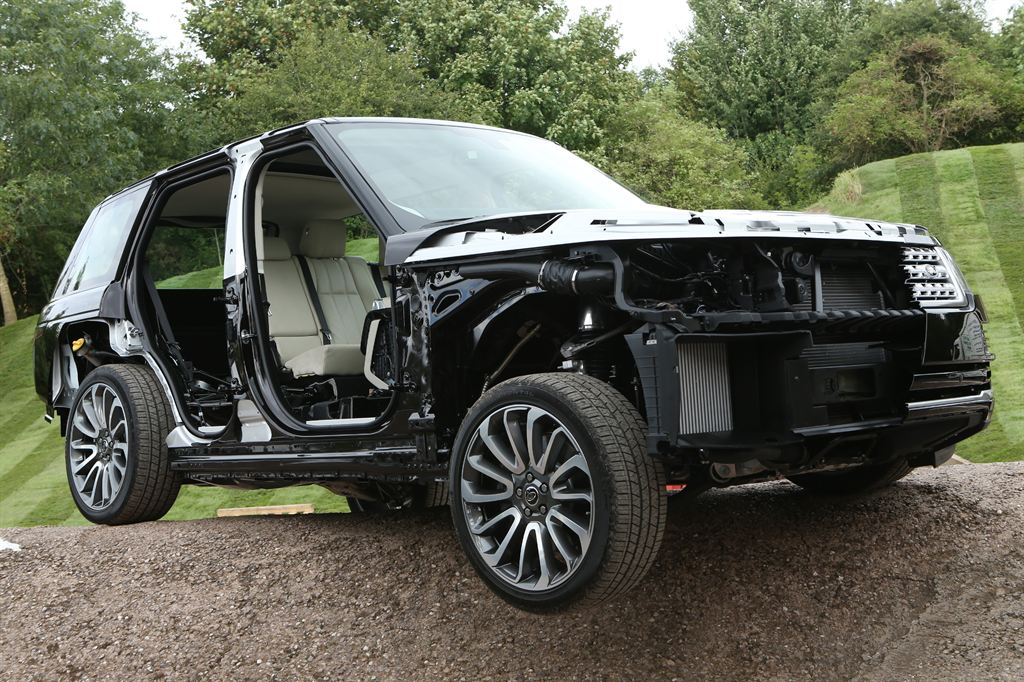
The main engineering change in the L405 is its body: an aluminium monocoque in place of the steel unibody of the L322. Its design kept the Range Rover cues of the clamshell bonnet, floating roof, split tailgate and wing vents in a smoother shape that Land Rover called the most aerodynamic Range Rover yet, at just under 5m long.
The aluminium body and the 420kg weight saving
Land Rover says the aluminium body is 39 per cent lighter than the steel body of its predecessor, and that with savings in the chassis and driveline the new car weighed up to 350kg less model for model. Fitting the lighter 3.0 TDV6 in place of the old 4.4 TDV8 took the weight reduction to 420kg and cut fuel consumption and CO2 by 22 per cent, to 37.7mpg and 196g/km; the supercharged V8 reached 60mph in 5.1 seconds, 0.8 seconds sooner than before, on 9 per cent less fuel. Even so, GoAuto's February 2013 road test put an SDV8 Vogue at 2,360kg.
Air suspension, four-wheel drive and Terrain Response 2
The L405 has permanent four-wheel drive with a two-speed transfer box and Terrain Response 2, the second version of Land Rover's Terrain Response system, which reads the surface and chooses the vehicle settings itself, according to the launch release, and What Car? notes that its cross-linked air suspension is standard on every car. GoAuto gives the suspension's travel as 260mm at the front and 310mm at the rear, ground clearance of up to 303mm (17mm more than the L322) and a 50:50 front-to-rear torque split. Land Rover rated the wading depth at 900mm, 200mm more than before, and the towing limit at 3,500kg; its 2020 technical data lowers the towing limit to 2,500kg for the P400e plug-in hybrid. Two-channel Dynamic Response active anti-roll control and Adaptive Dynamics continuously variable dampers were among the launch chassis features.
Interior, seating and technology
The launch car had 118mm more rear legroom than the L322, an optional two-seat Executive Class rear package, a digital instrument cluster, an 8-inch Dual-View touchscreen that shows the driver and passenger different pictures, Meridian audio and four-zone climate control. Land Rover put the Command Driving Position typically more than 90mm higher than in other premium SUVs. GoAuto gives the boot space as 909 litres, with a full-size spare under the floor, and its test car had options including a heated wood-and-leather steering wheel. The 2018 facelift replaced most of the switches with the two screens of the Touch Pro Duo infotainment system.
Is the Range Rover L405 safe?
Euro NCAP gave the L405 five stars in 2012. Its datasheet, for a left-hand-drive 3.0 TD Vogue, scores adult occupant protection at 91 per cent, child occupant protection at 84 per cent, pedestrian protection at 63 per cent and safety assist at 86 per cent. The tested car had frontal, side body and side head airbags; the passenger airbag can be switched off for a rear-facing child seat, but Euro NCAP gave no points for that because the labelling of the airbag's status was inconsistent, and the front edge of the bonnet scored nothing for pedestrians.
Range Rover L405 engines, specs and performance
The L405 had more than a dozen engines over ten years: V6, V8 and later straight-six diesels, supercharged V6 and V8 petrol engines, a straight-six mild-hybrid petrol, a diesel hybrid and a four-cylinder plug-in hybrid. Every one drove all four wheels through a ZF eight-speed automatic transmission.
| Engine | Introduced | Power | Land Rover's figures |
|---|---|---|---|
| 3.0 TDV6 diesel | 2012 | 258PS | 37.7mpg, 196g/km (2012) |
| 4.4 SDV8 diesel | 2012 | 339PS | 700Nm; 0–100km/h 6.9sec |
| 5.0 V8 Supercharged petrol | 2012 | 510PS | 625Nm; 0–60mph 5.1sec |
| 3.0 V6 Supercharged petrol (US) | 2013, for the 2014 model year | 340hp | 0–60mph 7.1sec (US) |
| 3.0 SDV6 Hybrid diesel | 2013 | 340PS | 700Nm; 0–62mph 6.9sec; 135mph; 169g/km |
| 5.0 V8 Supercharged, SVAutobiography | 2015 | 550PS | 680Nm |
| 5.0 V8 Supercharged, SVAutobiography Dynamic (P565) | 2017 | 565PS | 700Nm; 0–60mph 5.1sec, 0–100km/h 5.4sec (US release, 557hp) |
| 5.0 V8 Supercharged, P525 | 2017 | 525PS | 625Nm |
| 2.0 P400e plug-in hybrid petrol | 2017 | 404PS | 640Nm; 0–60mph 6.0sec, 0–62mph 6.4sec; 137mph; 25 miles on electricity (WLTP) |
| 3.0 P400 straight-six mild hybrid petrol | 2019 | 400PS | 550Nm; 0–60mph 5.9sec, 0–62mph 6.3sec |
| 3.0 D250 straight-six mild hybrid diesel (Italy only) | 2020 | 249PS | 600Nm |
| 3.0 D300 straight-six mild hybrid diesel | 2020 | 300PS | 650Nm; 0–60mph 7.1sec, 0–62mph 7.4sec; 130mph; 33.0mpg (WLTP) |
| 3.0 D350 straight-six mild hybrid diesel | 2020 | 350PS | 700Nm; 0–60mph 6.8sec, 0–62mph 7.1sec; 140mph; 30.8mpg (WLTP) |
Sources: Land Rover releases of 6 and 27 September 2012, 19 February 2013 (US), 21 August 2013, 30 March 2015, 10 October 2017 (US), 30 April 2019 (US) and 15 July 2020, and Land Rover's 2020 technical data for the 21.5 model year, which gives the P400e, P400, D300 and D350 figures; SDV8 torque and acceleration from GoAuto's 2013 test, which quotes Land Rover's claim. The 625Nm of the 2012 V8 follows from the SVAutobiography release, which gives that car's 680Nm as 55Nm more than the other supercharged V8s. "Introduced" is the year of the release that announced each engine. Land Rover's July 2020 release says the 249PS D250 was sold in the Range Rover in Italy only, so the outputs on sale in Britain ran from 258PS to 565PS.
How fast is the Range Rover L405?
The fastest four-door L405 is the 565PS SVAutobiography Dynamic, which Land Rover North America timed at 5.1 seconds to 60mph (5.4 seconds to 100km/h). The launch 5.0 Supercharged matched its 0–60mph time in 2012. The two-door SV Coupé, which never went into production, was claimed to reach 60mph in 5.0 seconds and 165mph.
Diesel engines
The TDV6 was new to the Range Rover in the L405, and the 4.4 SDV8 gave 700Nm from 1,750rpm to 3,000rpm. In July 2020 Land Rover replaced them with 3.0 straight-six Ingenium diesels of 249PS (in Italy only), 300PS and 350PS with 48-volt mild-hybrid assistance; the D300 is rated at 33.0mpg and 225g/km on the WLTP cycle and the D350 at 30.8mpg and 241g/km.
Petrol engines
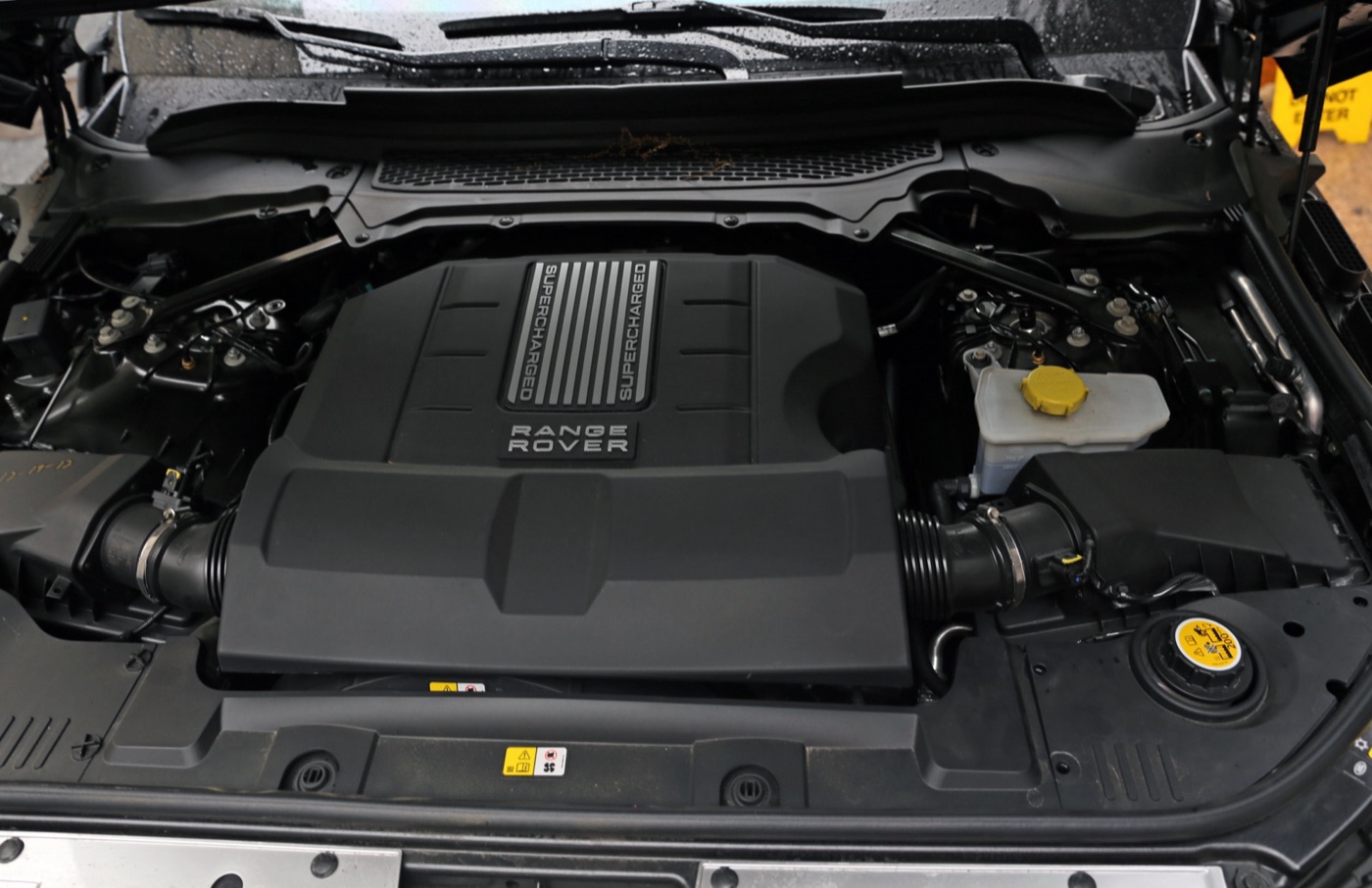
The supercharged 5.0 V8 ran through the whole L405 era, rising from 510PS to 525PS (badged P525) at the facelift, with SV versions at 550PS and then 565PS. From the 2014 model year US buyers could also have a 340hp supercharged 3.0 V6, which Land Rover North America announced in February 2013 as a replacement for the naturally aspirated 5.0 V8 there, and by the 2018 model year it came in 340hp and 380hp forms. From 2019 a 3.0 straight-six Ingenium petrol with electric boost and a 48-volt mild hybrid came in 355hp P360 and 395hp P400 forms.
Hybrid and plug-in hybrid
The Range Rover Hybrid paired the SDV6 diesel with a 35kW electric motor built into the eight-speed transmission; the whole hybrid system weighed less than 120kg, its battery sat under the floor in a boron-steel cradle, and it could run on electricity alone at speeds of up to 30mph for up to a mile. Land Rover rated it at 169g/km and 44.1mpg. The P400e plug-in hybrid, announced in October 2017, combines a 2.0 four-cylinder Ingenium petrol engine with an electric motor and a 13.1kWh battery under the boot floor. Land Rover North America's 2017 release gives the US car 398hp from a 296hp engine and an 85kW (114hp) motor, 0–60mph in 6.4 seconds and up to 31 miles (51km) on electricity. Land Rover's July 2020 release gives the European car 404PS from a 300PS engine and a 105kW (143PS) motor, 25 miles (40km) on electricity, 84.8mpg and 75g/km on the WLTP test.
Range Rover L405 variants and special editions
Besides the standard car in Vogue, Vogue SE and Autobiography trim, the L405 came as a long-wheelbase model, as SVAutobiography models built by Special Vehicle Operations, and in several special editions; a two-door SV Coupé was shown but cancelled.
Long wheelbase and Autobiography Black
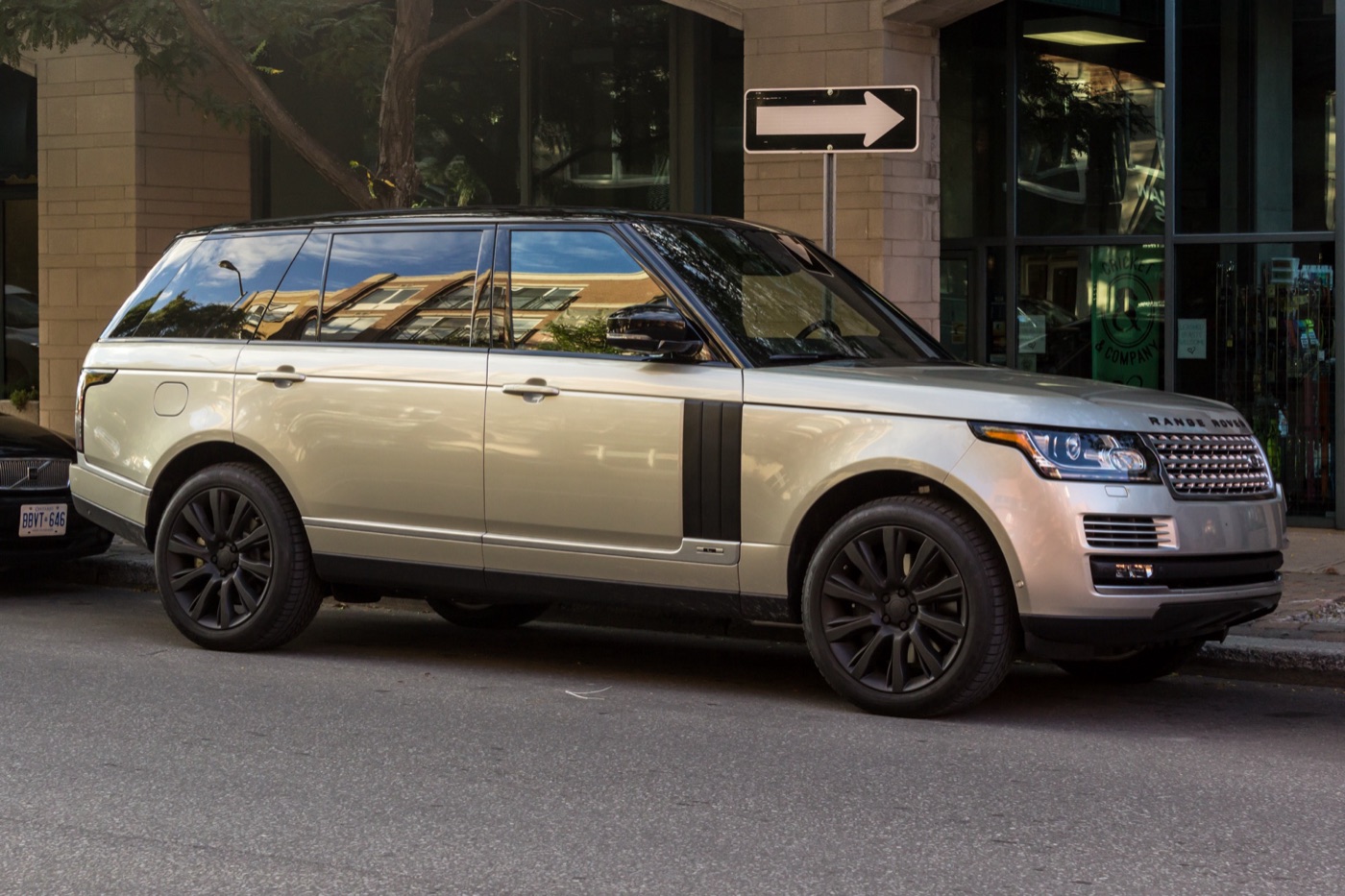
The long-wheelbase Range Rover made its debut at the Los Angeles Auto Show on 20 November 2013 as the Autobiography Black. Land Rover's release gives 186mm more rear legroom and a seat recline of up to 17 degrees, eight more than the standard car, with the Executive Class rear seats; the Autobiography Black was developed by the Engineered To Order division and first deliveries were due in March 2014. In the US market the Autobiography Black came only as a long-wheelbase car. Land Rover's 2020 technical data gives the long-wheelbase car an overall length of 5,200mm on a 3,122mm wheelbase, against 5,000mm and 2,922mm for the standard car.
SVAutobiography and SVAutobiography Dynamic
The SVAutobiography replaced the Autobiography Black as the most expensive Range Rover at the 2015 New York show, priced from £148,900 in the UK. It had the first two-tone paint on a Range Rover (a Santorini Black upper body over nine lower colours), machined aluminium switchgear, a sliding aluminium loadspace floor, leather "Event Seating" for the lowered tailgate and the 550PS V8. The SVAutobiography Dynamic was the sportier version with a lower ride height; at the 2018 facelift it gained 565PS and a Graphite Atlas mesh grille.
Range Rover SV Coupé
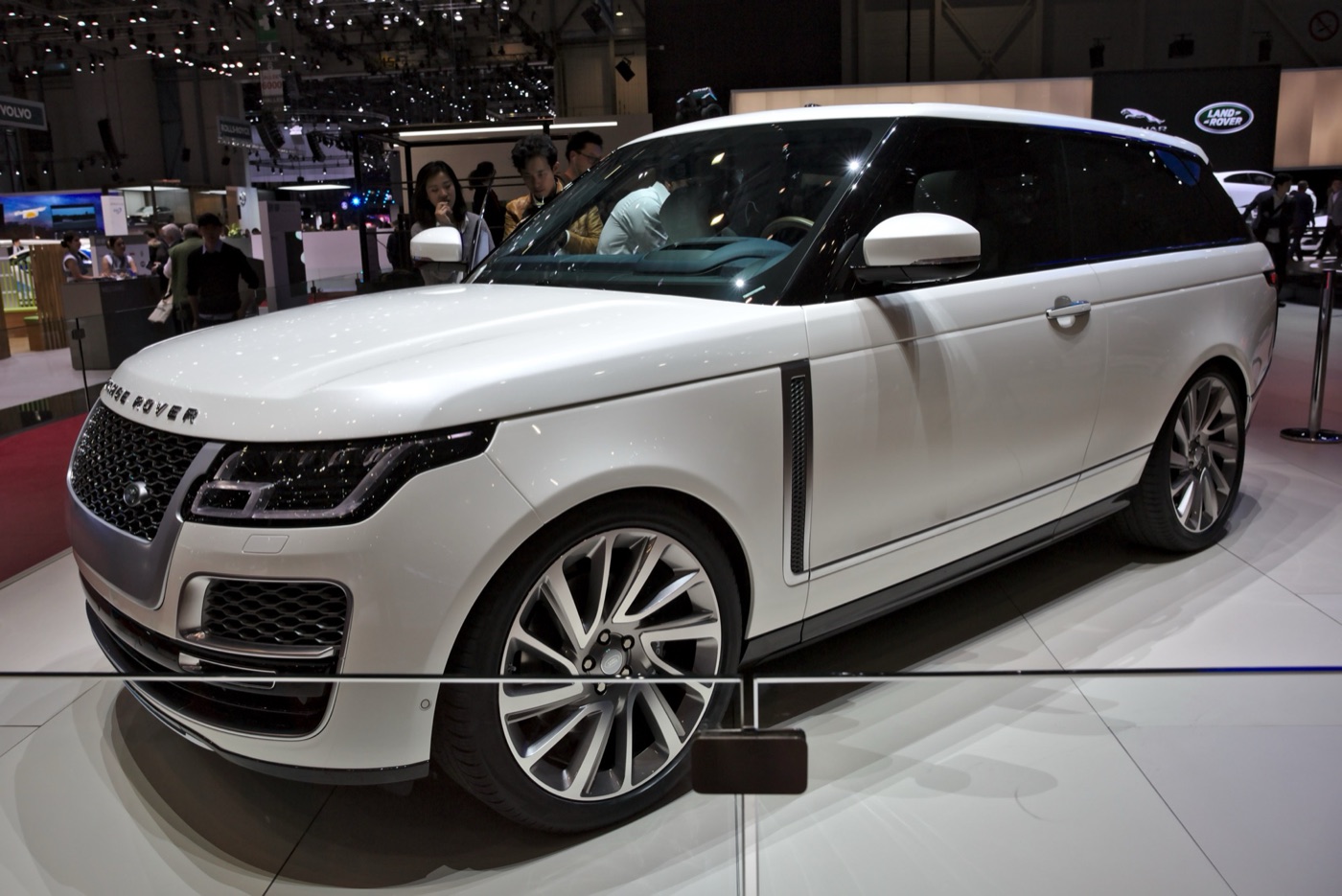
The SV Coupé was a two-door L405 shown at the Geneva Motor Show in March 2018, to be limited to 999 cars hand-built at the SVO Technical Centre in Warwickshire with the 557hp V8. Car and Driver reported its US price as $295,995 and that only the bonnet and lower tailgate came from the four-door car. In January 2019 Land Rover cancelled it and all orders, saying it was "focusing its resources and investment on the next generation of world-class products".
Range Rover Fifty, Westminster and SVAutobiography Dynamic Black
The Range Rover Fifty was limited to 1,970 cars for the year of the original's launch. Land Rover's release of 17 June 2020 describes an Autobiography with Auric Atlas trim, two 22-inch wheel designs and a "1 of 1970" plaque, in standard or long wheelbase, with a choice of four colours (Carpathian Grey, Rosello Red, Aruba and Santorini Black) and petrol, diesel or P400e power; Special Vehicle Operations offered a few in Tuscan Blue, Bahama Gold or Davos White from the 1970 palette. A month later the Vogue-based Westminster and Westminster Black and the SVAutobiography Dynamic Black joined the range.
Range Rover L405 vs L322 and L460
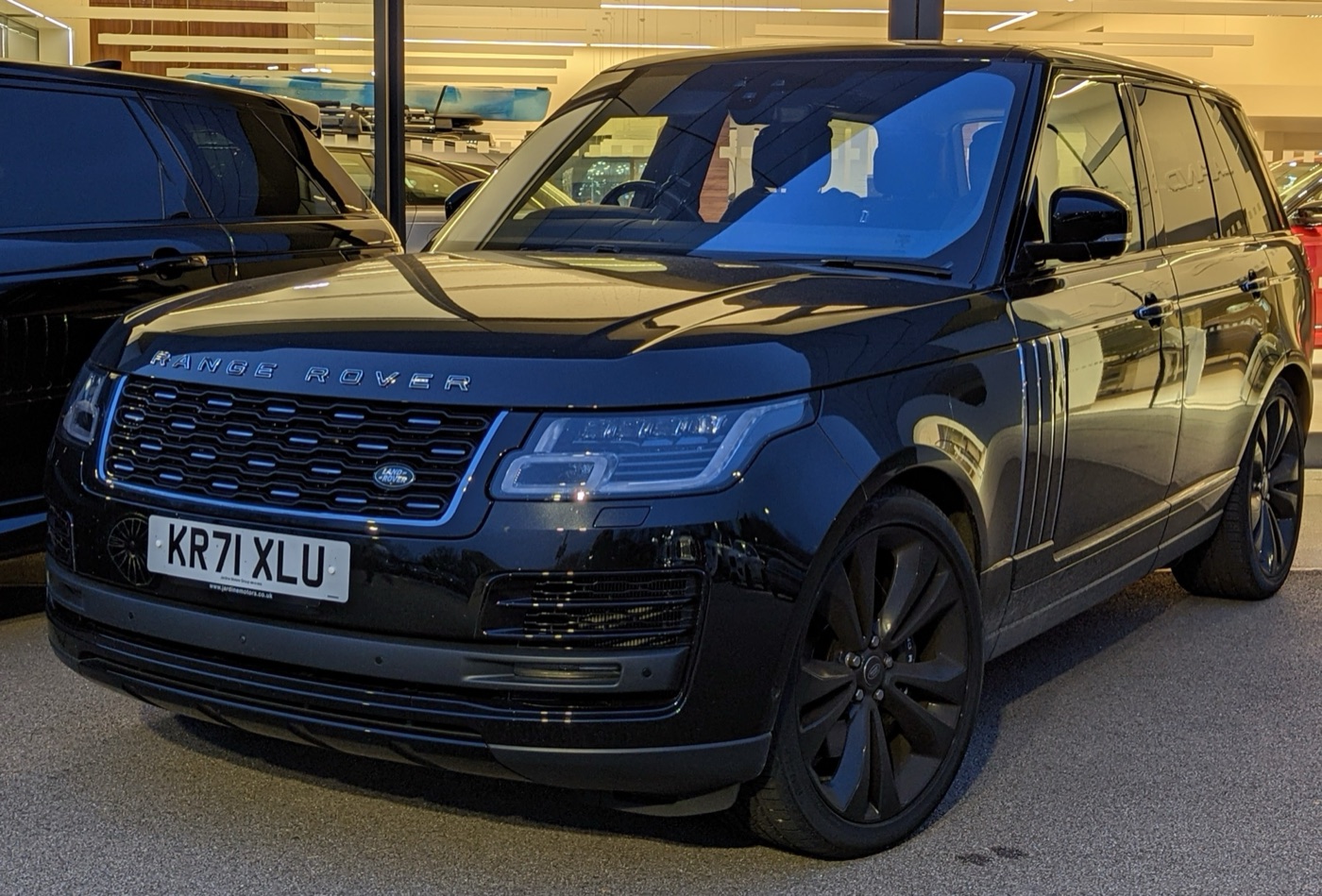
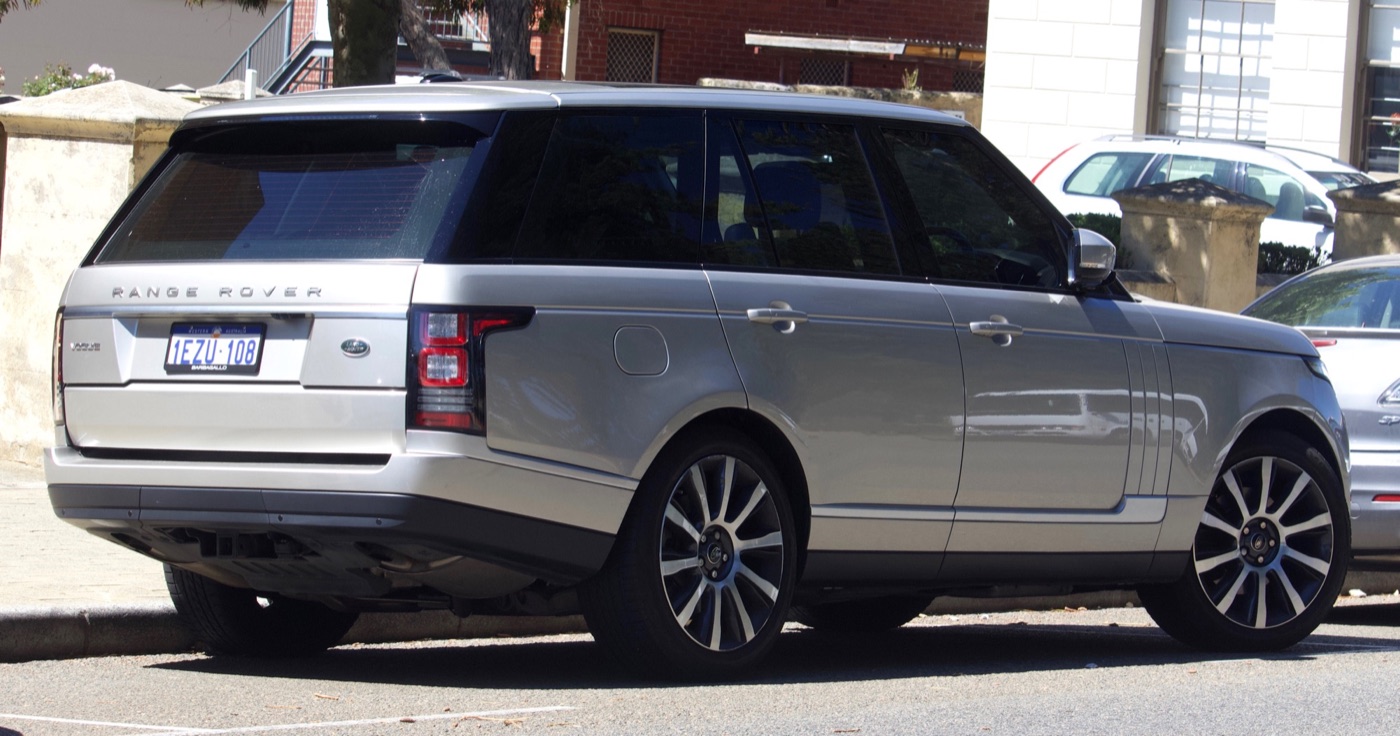
The L405 sits between the steel-bodied L322 of 2002 to 2012 and the L460 of 2022 on. Against the L322 it is up to 420kg lighter and has 118mm more rear legroom, by Land Rover's figures, and GoAuto gives it as 27mm longer with a 20mm lower roof and a longer wheelbase, and found that it kept the off-road ability of its predecessor. L322s were still being registered in 2013, so PistonHeads advises making sure an early L405 is not a late L322: the L405 has a tail-light repeater that runs up into the rear wing, a lower fuel filler and a "hockey stick" trim line above the sill that turns up into three vertical bands behind the front wheel. Against the L460, the L405 has no seven-seat option (the L460 was the first Range Rover with one) and a plug-in hybrid range of up to 25 miles, where Land Rover gave the L460's plug-in hybrids up to 100km (62 miles) on the WLTP test.
Range Rover L405 prices today
In October 2026, used L405s advertised on PistonHeads ranged from about £11,000 for a 2013 or 2014 diesel with more than 100,000 miles to £57,975 for a 2021 SVAutobiography Dynamic. The medians of the sampled adverts rise from about £15,000 to £18,000 for 2013 to 2016 cars to about £34,000 for 2020 and 2021 cars.
| Registered | Range Rovers listed | Cars sampled | Price range of cars sampled | Median of cars sampled |
|---|---|---|---|---|
| 2013 | 21 | 16 | £10,995 to £21,995 | £16,724 |
| 2014 | 43 | 18 | £10,995 to £20,995 | £14,997 |
| 2015 | 66 | 19 | £12,950 to £25,999 | £16,000 |
| 2016 | 44 | 19 | £14,495 to £32,950 | £17,995 |
| 2017 | 54 | 18 | £12,995 to £34,990 | £23,645 |
| 2018 | 107 | 20 | £18,795 to £35,995 | £28,140 |
| 2019 | 77 | 19 | £21,995 to £44,749 | £25,995 |
| 2020 | 51 | 19 | £22,950 to £49,975 | £33,995 |
| 2021 | 53 | 17 | £24,995 to £57,975 | £33,850 |
Source: PistonHeads Range Rover adverts by registration year, fetched 28 October 2026. Each page shows its first 16 to 20 adverts in PistonHeads' default order, so the figures describe those cars, not all adverts. Asking prices, not sale prices. Left out: one 2013 third-generation car, one 2021 fifth-generation car and one 2021 advert that did not show which generation it was; the "listed" counts include such cars.
Range Rover L405 reliability and common problems
What Car?'s used review (updated April 2024) says "reliability is a big issue" with the L405 and that its faults "span a wide range of areas, centring on the air suspension, engine, engine electrics, air conditioning, sat-nav, electrics inside the car, gearbox, drivetrain and bodywork", with leaks from the engine, sunroof and around the tailgate, and some cars off the road for weeks.
How reliable is the Range Rover L405?
In What Car?'s 2017 Reliability Survey of large SUVs up to three years old, the Range Rover diesel of 2013 on scored 55.8 per cent and came 22nd of 27. In the 2026 survey of luxury cars (updated 9 May 2026) the 2013–2022 Range Rover scored 94.1 per cent, sixth in its class: 27 per cent of cars had a fault, mostly bodywork and non-engine electrics; half of those were off the road for more than a week; and Land Rover met the cost of every repair. What Car?'s used review quotes an earlier survey in which 14 per cent of owners reported a fault and the car scored 95.6 per cent.
Known faults by engine and system
The L405's known faults are in the air suspension and chassis, the electrics and body fit, the engines, and the front suspension knuckle, which has its own recalls (below). Most of the detail comes from the used buying guides of PistonHeads (2020) and Auto Express, and from 363 owner complaints to NHTSA, the US safety regulator.
Air suspension, axles and wheels
PistonHeads' used buying guide lists failed compressors and blown air springs as known faults, says a knocking noise usually means worn front track control arms and rear lower arms (about £700 to replace together at a Land Rover dealer, labour and VAT included), and warns that the 22in wheels buckle on potholes. Auto Express's used buyer's guide puts judder at low speed down to dirty oil in the transfer box, which it says should be changed every 30,000 miles, and vibration at high speed to failing rear differentials or buckled wheels.
TDV6, SDV8 and V8 engines
PistonHeads reports crankshaft bearing problems on the 3.0 TDV6, and Auto Express says it is the only L405 engine with a cambelt, to be replaced every seven years or 112,000 miles. PistonHeads calls the 4.4 SDV8 "a good and reliable engine" whose faults are EGR valves, oil leaks from the turbo breather (up to £850 for the modified pipe) and fuel tank sensors. Owner complaints to NHTSA include a 2016 5.0 Supercharged whose timing chain failed at about 88,000 miles and a 2016 diesel whose crankshaft seized at 45mph.
Electrics, body and trim
PistonHeads says most of the L405's problems were on cars built before 2015, mainly electrical faults and body fit: rear doors, tailgate and bonnet, whose sensor can show a false "not closed" warning on a slope, plus tarnished bonnet lettering and interior door releases that play up. Auto Express says electronic faults are common and advises checking that the multimedia system, windows, seats and switchgear all work. NHTSA held 363 owner complaints about Range Rovers of the 2013 to 2021 model years on 28 October 2026. Of those, 96 are filed under steering, 66 under suspension, 63 under the electrical system and 46 under the engine; 55 mention the front knuckle and 43 a door.
Recalls
The DVSA's recall file lists 39 Range Rover campaigns for cars built wholly or partly between August 2012 and March 2022, the L405's production years; a few of the earliest and latest also cover the third- and fifth-generation cars. The main ones are below; owners can check a car's outstanding recalls on the DVSA's recall checker.
| DVSA number | Launched | Range Rovers built | Vehicles | Problem |
|---|---|---|---|---|
| R/2012/154 | December 2012 | August to September 2012 | 182 | Steering rack mounting bolts may not be tight |
| R/2014/091 | November 2014 | March 2012 to January 2013 | 1,331* | Cooling fan control module can short-circuit; fire risk |
| R/2015/013 | February 2015 | August 2012 to January 2014 | 1,575* | Brake servo vacuum hose can chafe on a pulley |
| R/2015/036 | April 2015 | January 2015 | 926* | Wheel nuts can crack and detach |
| R/2015/119 | August 2015 | March 2012 to May 2015 | 35,250* | Doors can be unlatched with no warning and open while driving |
| R/2016/098 | June 2016 | April 2012 to May 2013 | 11,290* | Crank position sensor can make the engine cut out |
| R/2016/303 | December 2016 | July to October 2016 | 8,628* | Seat belt pretensioners may not fire in a crash |
| R/2016/307 | December 2016 | July to October 2016 | 452* | Front passenger airbag may not deploy |
| R/2017/288 | November 2017 | September 2016 to August 2017 | 14,932* | Instrument cluster can go blank (software) |
| R/2018/160 | June 2018 | March 2017 to May 2018 | 1,000* | P400e fuel gauge shows about 30 per cent when the tank is empty |
| R/2022/341 | August 2023 | October 2014 to March 2015, November 2015 to March 2016 | 7,303 | Front suspension upper knuckle can crack |
| R/2023/087 | May 2023 | April 2017 to December 2021 | 18,151* | Water pump pulley belt can fail and stop the coolant flow |
Source: DVSA recalls file, downloaded 28 October 2026. *Campaign total shared with other Land Rover models: the Range Rover Sport (all starred campaigns), the Discovery (R/2015/036, R/2016/098, R/2016/307), the Discovery Sport (R/2016/303), the Range Rover Evoque (R/2016/307), and the Defender and Velar (R/2023/087).
Front suspension knuckles
The knuckle recall, R/2022/341, covers 2014 to 2016 model-year cars whose front upper knuckle joint "could develop a crack", which in extreme cases "may lead to detachment of the upper suspension arm". Two follow-up campaigns show the first repair was not always done right: in R/2025/302 (August 2025) Land Rover found 42 cars whose knuckles had not been replaced where the instructions said they should be, and in R/2026/329 (August 2026) four cars that had been given knuckles of the wrong type.
Theft and keyless security
Early L405s have been a target for thieves in Britain. In R/2025/149 (May 2025) Jaguar Land Rover told the DVSA it was aware of "the increase in thefts of vehicles in specific geographical locations within the United Kingdom" and wrote to the keepers of 14,179 Range Rovers built from January 2013 to June 2015 with security advice, saying there was no fault in its systems. Cars built from February 2015 to November 2017, 16,299 of them, received a security software update under R/2024/146, and cars built from September 2020 (late L405s and the first L460s) another under R/2024/147.
Which Range Rover L405 to buy, and what to check
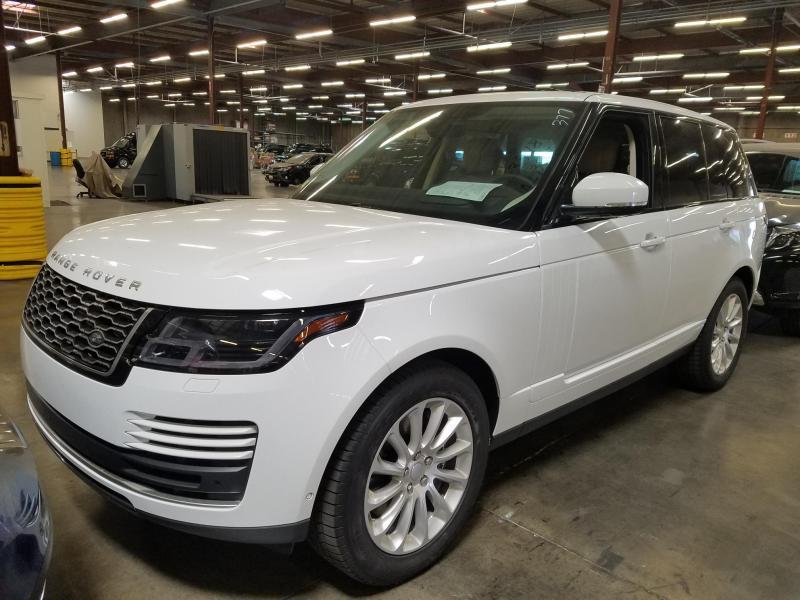
For a buyer choosing an L405 Range Rover, What Car? picks the 3.0 TDV6 diesel in Vogue SE trim. It advises checking the body, wheels and bumpers for damage, the underside for signs of off-road use, and that every seat and the tailgate work. Before buying, run the registration through the DVSA checker and ask for proof that each recall was done (above all the knuckle campaigns on 2014–2016 cars); check that the air suspension rises and lowers through each height and holds it overnight; and ask what security has been added since the theft campaigns.
Range Rover L405 running costs
An L405 registered before April 2017 costs £325 to £790 a year to tax, by its CO2 band, and a later car £640 a year in years two to six. GOV.UK's vehicle tax rate tables charge a car registered before 1 April 2017 by its CO2 band: £325 for 166 to 175g/km (the 169g/km SDV6 Hybrid), £410 for 186 to 200g/km (the 196g/km TDV6 of 2012), £445 for 201 to 225g/km (the 219g/km SDV8 with stop-start from the 2016 model year), £760 for 226 to 255g/km (the 229g/km SDV8 of 2012 to 2015, by Car Enthusiast's first drive) and £790 over 255g/km (the 5.0 Supercharged V8, rated at 299g/km in CAR's 2015 review). A car registered from 1 April 2017 pays the standard £200 plus the £440 supplement for cars that cost more than £40,000 new, which every L405 did. What Car? says even the V6 diesels are in insurance group 50, and that many Land Rover dealers sell fixed-price service plans of two to five years. Auto Express gives the service interval as 12 months or 16,000 miles, with a TDV6 service from £425 and the tenth service at more than £1,600; the 4.4 V8 diesel, 3.0 V6 and 5.0 V8 cost more, and hybrids start at £448. GoAuto gave the service interval as 12 months or 26,000km, with a three-year or 100,000km warranty in Australia.
GoAuto's SDV8 test car averaged 13.0 litres per 100km (about 22mpg) over a week of mixed driving against Land Rover's claimed 8.7, What Car? measured more than 33mpg from the TDV6 in its True MPG test, and the P400e's official 84.8mpg is a weighted figure that assumes the battery is charged from the mains, according to Land Rover's technical data.
Range Rover L405 rivals
The L405's rivals were the large luxury SUVs and, in long-wheelbase form, chauffeur saloons. What Car? sets the used car against the Bentley Bentayga, which it calls faster and "substantially better made" but less roomy and less able off road, and Audi's SQ7. GoAuto found the L405 less agile than its German rivals the Porsche Cayenne and BMW X6, and Land Rover pitched the long-wheelbase car as "the ultimate SUV alternative to traditional long wheelbase saloon cars". Within Land Rover, the Range Rover Sport L494 of 2013 was built on the same Premium Lightweight Architecture and had the same SDV6 Hybrid powertrain, according to Land Rover's hybrid release.
Reception
The L405 was named Luxury Car of the Year by What Car? in January 2013, when the magazine's editor-in-chief, Chas Hallett, said it "combines all the merits of a 4x4 with those of the finest luxury limos in the world", according to Land Rover's account of the award. In October 2013 the Northern Group of Motoring Writers made it their Car of the Year, the first Land Rover to win in the award's nine years, and its secretary, Alan Domville, said it had "no equal" (Land Rover, 28 October 2013).
GoAuto praised the "sumptuous cabin, refinement, hardcore off-road credentials, improved handling and braking" and found that "gone is the head-shake of the previous model", and agreed with Land Rover's claim to have raised the quality of the materials "to a new level", but listed no standard adaptive cruise control, rear legroom "not quite limo-like", a Bluetooth link that needed re-pairing and a "finicky electric tailgate". What Car?'s used review calls the ride "first class" and the car "a worthy alternative to a luxury saloon and brilliant off-road", adding that "reliability is a big issue".
Questions
What does L405 mean on a Range Rover?
L405 is Land Rover's internal code for the fourth-generation Range Rover, and Land Rover uses it in its own recall notices, such as DVSA campaign R/2025/302, "Range Rover (L405) Front Suspension Knuckle Crack". The third generation was the L322 and the fifth is the L460.
Is the Range Rover L405 a seven-seater?
No. The L405 seats five, or four with the Executive Class rear seats, and What Car? points buyers who need seven seats to the Range Rover Sport. Land Rover says the L460 of 2022 was the first Range Rover offered with seven seats.
How much can a Range Rover L405 tow?
Land Rover rated the L405 to tow 3,500kg with a braked trailer, and 2,500kg for the P400e plug-in hybrid in its 2020 technical data.
How deep can a Range Rover L405 wade?
Land Rover gives a maximum wading depth of 900mm, 200mm more than the L322.
Where was the Range Rover L405 built?
At Land Rover's Solihull plant near Birmingham, where Land Rover invested more than £370 million in a new aluminium body shop for the car.
When was the Range Rover L405 facelifted?
The facelift was announced on 10 October 2017 for the 2018 model year. It brought new LED headlights, the twin 10-inch Touch Pro Duo screens, new front and rear seats and, as a 2019 model, the P400e plug-in hybrid.
Is the Range Rover L405 body made of aluminium?
Yes. Land Rover says it was the first SUV with an all-aluminium monocoque body, 39 per cent lighter than the steel body of the L322.
How many Range Rover Fifty models were made?
Land Rover limited the Range Rover Fifty to 1,970 cars worldwide, a number chosen for 1970, the year the original Range Rover was launched.
Sources
- Land Rover, "All-New Range Rover Is Revealed", 6 September 2012: aluminium body, weight savings, launch engines, Solihull investment, specification, UK prices.
- Land Rover, "All-New Range Rover Revealed At The Royal Ballet School", 6 September 2012: the reveal event.
- Land Rover North America, "Land Rover Reveals All-New Range Rover For The First Time In The U.S.", 13 September 2012: US reveal and price.
- Land Rover UK, "All-new Range Rover revealed at Paris Motor Show", 27 September 2012: public debut, UK prices.
- Land Rover, "Land Rover Celebrates The Best Of British In The Heart Of Paris", 28 September 2012: the Paris stand, the CSK and the Paris Opera evening.
- SkiddMark, report from the Paris Motor Show, 28 September 2012: the cars outside the Paris Opera, the hybrid's CO2 target.
- Land Rover North America, "2014 Range Rover Now Available For Order With a Choice of Supercharged V6 & V8 Engines", 19 February 2013: the US supercharged V6.
- Land Rover, "Land Rover Launches Its First Hybrid Range Rover Models", 21 August 2013: the SDV6 Hybrid and the Silk Trail plan.
- Land Rover, "Off-Road Capabilities of Range Rover Hybrids Put To Test As Silk Trail Expedition Progresses Towards Mumbai", 11 September 2013.
- Land Rover, "New Technology and Enhanced Customer Choice for Range Rover and Range Rover Sport", September 2013: 2014 model-year changes.
- Land Rover, "Land Rover Showcases Long Wheelbase Autobiography Black Range Rover At Los Angeles International Auto Show", 20 November 2013.
- Land Rover UK, "Range Rover SVAutobiography Takes Luxury To New Heights", 30 March 2015: SVAutobiography, 2016 model-year changes and prices.
- Land Rover North America, "New Range Rover to feature significant cabin, technology and design updates in 2018MY", 10 October 2017 (copy hosted by Motorshow.me): the facelift, SVAutobiography Dynamic and P400e.
- Land Rover North America, "2020 Range Rover Offers Straight-Six Performance and Efficient Mild Hybrid Refinement", 30 April 2019.
- Land Rover, "Range Rover Marks 50 Years of All-Terrain Innovation and Luxury With Exclusive New Limited Edition", 17 June 2020: the Range Rover Fifty.
- Land Rover, "New 48V Mild Hybrid Diesel Joins Plug-in Electric Range Rover", 15 July 2020: Ingenium diesels, P400e figures, Westminster and SVAutobiography Dynamic Black.
- Land Rover, Range Rover 21.5MY technical specifications, standard wheelbase and long wheelbase, 15 July 2020: dimensions, towing, power and torque.
- Land Rover, "New Range Rover World Premiere", 26 October 2021: the L460.
- Car and Driver, "The 2019 Range Rover SV Coupe Is Dead", updated 29 January 2019: the SV Coupé and its cancellation.
- GoAuto, Range Rover Vogue SDV8 road test, 19 February 2013: weight, dimensions, suspension, fuel consumption, verdict.
- Euro NCAP, Land Rover Range Rover datasheet, 2012.
- Land Rover UK, "All-new Range Rover hailed as Luxury Car of the Year by What Car?", 10 January 2013.
- Land Rover UK, "Land Rover Wins Northern Group of Motoring Writers' Car of the Year Award", 28 October 2013.
- What Car?, "Used Land Rover Range Rover 2013-2022 review", updated 2 April 2024: faults, buying advice, running costs, rivals.
- What Car?, "2017 What Car? Reliability Survey", 2017: large SUVs aged up to three years.
- What Car?, "Most reliable luxury cars", updated 9 May 2026.
- PistonHeads, "Range Rover (L405) PH used buying guide", 2020: air suspension, axles, wheels, engines, body fit, telling an L405 from an L322.
- Auto Express, "Used Range Rover (Mk4, 2012-2021) review and buyer's guide": transfer box and differentials, electronics, cambelt interval, servicing interval and costs.
- NHTSA, owner complaints for the Land Rover Range Rover, model years 2013 to 2021 (link: model year 2016), read 28 October 2026: 363 complaints whose product is the Range Rover.
- Car Enthusiast, "First drive: 2013 Range Rover", 26 October 2012 (SDV8 Autobiography): the early SDV8's 229g/km and 32.5mpg.
- CAR, "Range Rover 5.0 V8 supercharged Autobiography (2015) review", updated 9 June 2015: the V8's 299g/km.
- DVSA, vehicle recalls file, downloaded 28 October 2026: recall campaigns, build dates and numbers.
- GOV.UK, "Vehicle tax rate tables", read 28 October 2026.
- PistonHeads, Range Rover adverts by registration year, 2013 to 2021, fetched 28 October 2026: asking prices.