Ruf CTR Yellowbird: the 211mph 911, the Faszination film and values
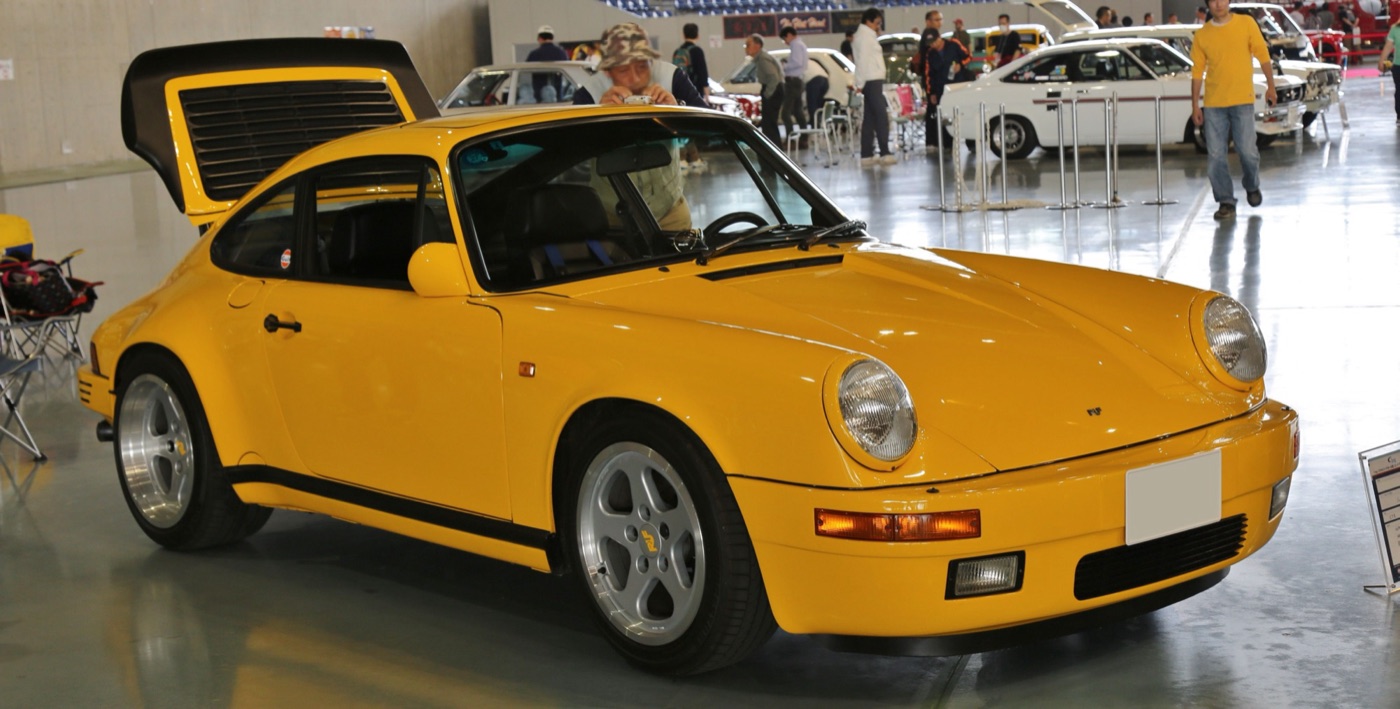
The Ruf CTR Yellowbird is a twin-turbocharged Porsche 911 Carrera 3.2, rebuilt from 1987 by Ruf, a small car maker in Pfaffenhausen, Germany. In a Road & Track test at Volkswagen's Ehra-Lessien track in the spring of 1987 it reached 211mph, faster than the Porsche 959, Ferrari 288 GTO and Lamborghini Countach on the same day, and Ruf built 29 of them on new bodies. People still look it up for that speed, for Faszination on the Nürburgring, the 1989 film of test driver Stefan Roser sliding it round the Nordschleife in a T-shirt and jeans, and for what the cars fetch now: one sold for $6,055,000 in March 2025.
History of the Ruf CTR Yellowbird
The Ruf CTR Yellowbird grew out of a family garage that had turned to tuning Porsche 911s, and it was finished in 1987 for Road & Track's top-speed test. Its name stands for Group C Turbo Ruf. The firm behind it began in 1939, when Alois Ruf Sr opened a garage in Pfaffenhausen, and his son, also called Alois, took it over after his father's death in 1974, Top Gear's 2023 interview with the son records. By then the business serviced Porsches, and the son turned it towards modified 911s.
From Porsche tuner to car maker
In 1981 the German government recognised Ruf as a manufacturer, the Petersen Automotive Museum's entry for the car notes, so its cars carry Ruf's own chassis numbers. The same year Ruf began selling a five-speed gearbox for the 911 Turbo, which Porsche then offered only with four speeds, according to evo's "Birth of an icon" feature. A Ruf had already won Road & Track's previous "World's Fastest Cars" test, in 1984, at 186mph.
Built for the 1987 top-speed test
The first Yellowbird was finished just in time for Road & Track's next test in 1987 and arrived "with only dyno time and the mileage to our hotel on its engine", Peter Egan wrote in the magazine's July 1987 issue. Ruf Jr told Top Gear the engine went into the car a few days before the event: "The dyno numbers were very convincing, and we knew it would last because we really tried to break it on the dyno!" New, a CTR cost 328,000 Deutschmarks, against 420,000 for a Porsche 959 and 440,000 for a Ferrari F40, Auto Motor und Sport recorded in 2025. The Petersen Automotive Museum in Los Angeles now shows that car, which it describes as both the first CTR and the car used to set the record.
Why is it called the Yellowbird?
The Ruf CTR got its Yellowbird nickname because its yellow paintwork made it the only yellow car at the 1987 test, and the name stuck from the day it went 211mph. The accounts differ on who used the nickname first. Egan's report for Road & Track, republished in 2016, says the Ruf staff had already "taken to calling it" the Yellow Bird; Ruf's own history says the Road & Track editors gave it the name; evo credits the photographers at the test, because the paint stood out in dull weather. Egan described it in the hotel car park that morning as "standing out from the other cars like a yellow raincoat on a dark and rainy day".
The colour is Blutengelb (Blossom Yellow). Only nine CTRs were first painted in it, according to Gooding & Company's 2025 sale catalogue; Auto Motor und Sport's report of the same sale says six. Either way most Yellowbirds are not yellow: chassis 10, sold in 2018, is black, and chassis 9 is a red car its owners call "Redbird".
Ruf CTR Yellowbird design and engineering
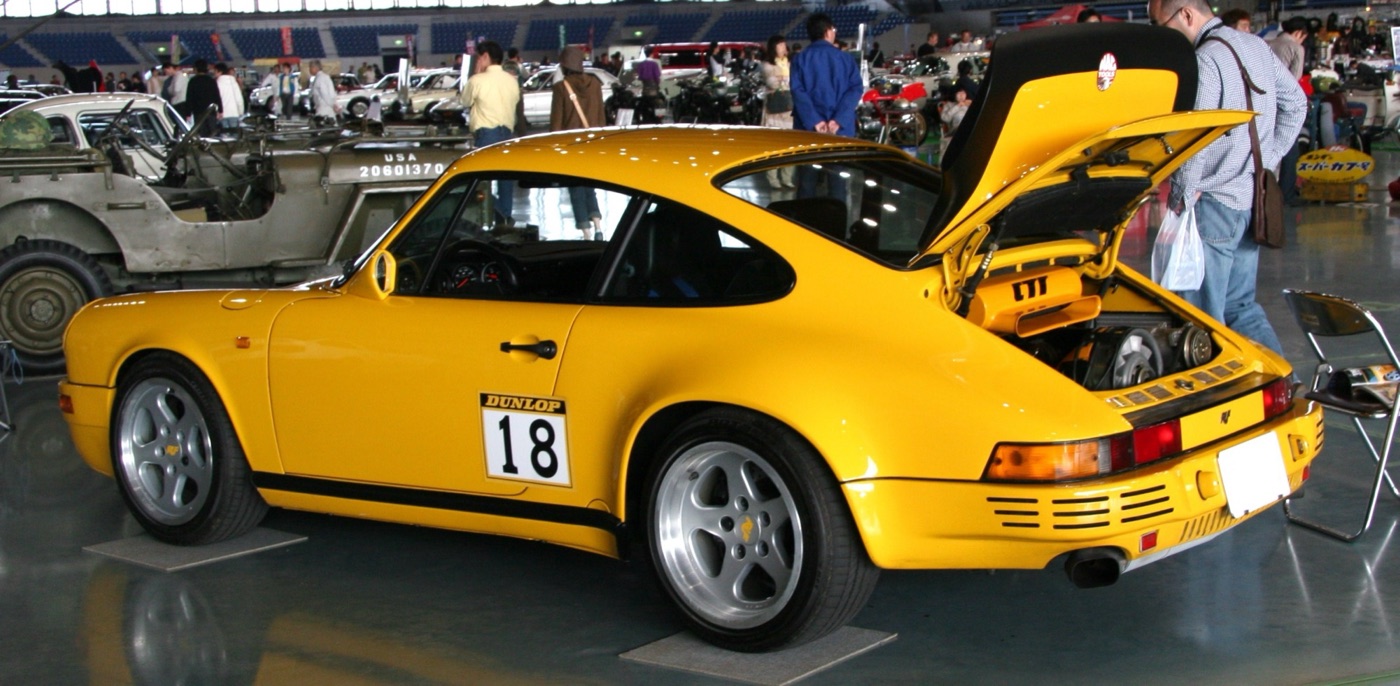
The Ruf CTR Yellowbird is a 911 Carrera 3.2 rebuilt around a 3.4-litre twin-turbo flat-six, with the body made smoother for top speed. Ruf chose the slim Carrera body over the wide-arched 930 Turbo for its lower drag coefficient, evo explains, and then removed the rain gutters and fitted smaller door mirrors.
Body and chassis
The Carrera shell kept its shape and gained air intakes at the rear; Ruf's own model history lists the narrow body, the rear intakes and the instruments among the features its 2017 car copied. A roll cage was built into the body, which Egan held on to during his ride; RM Sotheby's notes that Ruf's integrated cages are what let it remove the rain gutters, which are part of the structure on an air-cooled 911. The engine cover was aluminium. Brakes were 330mm cross-drilled and ventilated Brembo discs at both ends, and the 17in Speedline wheels wore Dunlop tyres of the Denloc type, developed for the Porsche 959 to stay on the rim after a high-speed puncture.
Engine
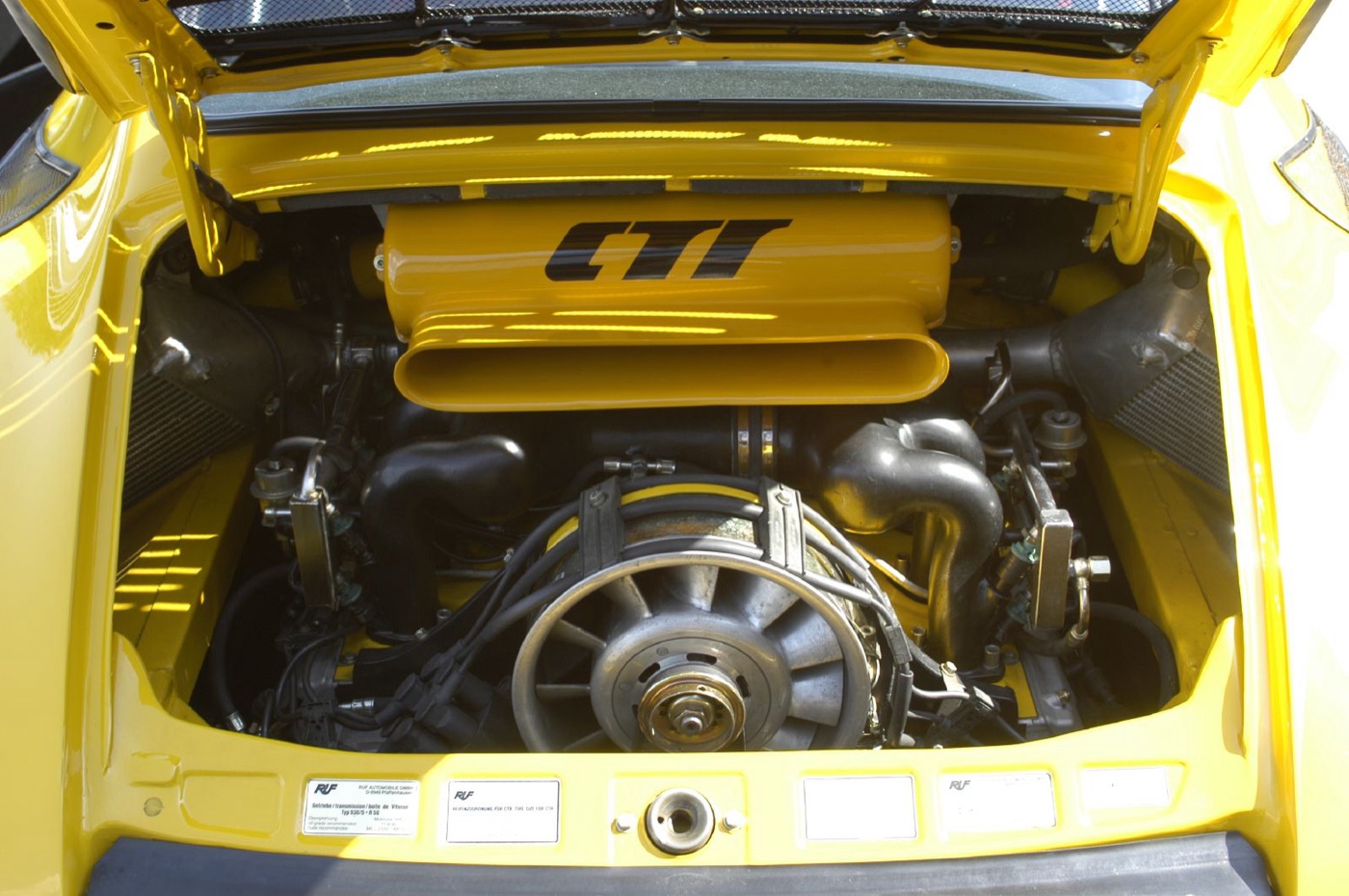
Ruf bored Porsche's 3.2-litre flat-six out to 3,367cc, fitted a pair of KKK turbochargers and two intercoolers, and ran it on Bosch Motronic fuel injection first developed for the Porsche 962 Group C racer. Ruf rated the Yellowbird's engine at 469bhp at 5,950rpm, evo reports; Gooding's catalogue gives 463bhp, and Road & Track called it a 470bhp car. evo quotes Ruf as later admitting that "we use very big horses in Pfaffenhausen". The car sold in 2025 carries engine number CTR 1039.
Transmission and cabin
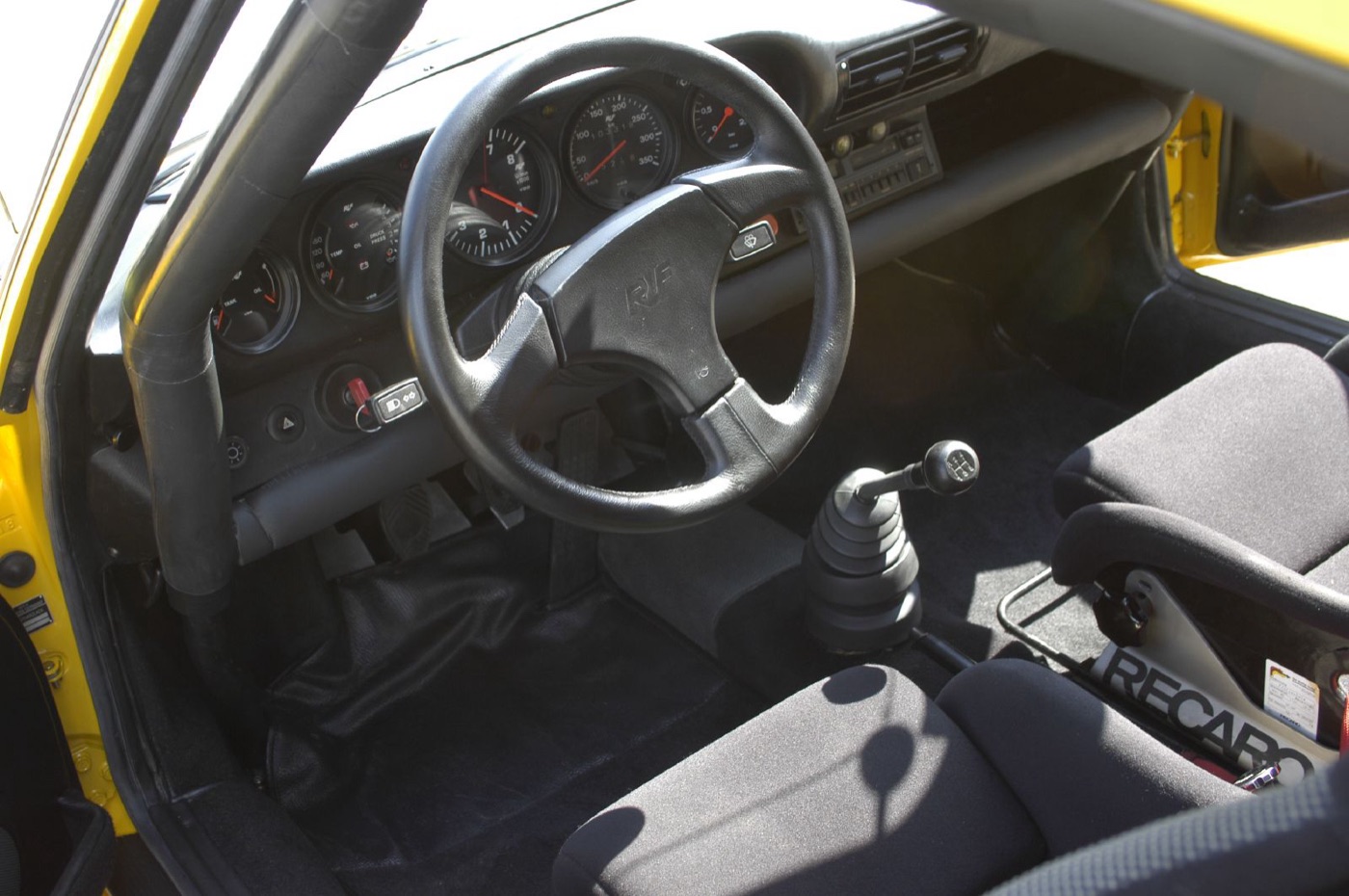
Where Porsche's 911 Turbo had a four-speed gearbox, the Yellowbird had a five-speed manual transmission of Ruf's own design, and Gooding lists a Ruf six-speed as an option. Inside, the cars have Recaro bucket seats and Ruf instruments with a 350km/h speedometer, which the record car pegged at Ehra-Lessien.
Ruf CTR Yellowbird specification and performance
The Ruf CTR Yellowbird weighs about 1,150kg, 185kg less than the 930 Turbo of its day, and Ruf rated its engine at 469bhp.
| Item | Figure | Source |
|---|---|---|
| Base car | Porsche 911 Carrera 3.2 body (narrow body) | evo; Petersen museum |
| Engine | 3,367cc air-cooled flat-six, SOHC, twin KKK turbochargers, twin intercoolers | Gooding & Company |
| Fuel injection | Bosch Motronic, from the Porsche 962 | Gooding & Company; evo |
| Rated power | 469bhp at 5,950rpm (Gooding: 463bhp) | evo; Gooding & Company |
| Torque | 408lb ft | Car and Driver, November 2013 |
| Weight | 1,150kg (Ruf's claim: 2,579lb, 1,170kg) | Auto Motor und Sport, 2025; Car and Driver, 2013 |
| Gearbox | Ruf five-speed manual; six-speed optional | evo; Gooding & Company |
| Brakes | 330mm cross-drilled, ventilated Brembo discs | evo |
| Wheels and tyres | 17in Speedline wheels, Dunlop Denloc tyres | evo |
| 0–100km/h | 4.1sec | sport auto, 1987 |
| 0–200km/h | 11.4sec | sport auto, 1987 |
| Top speed | 211mph (339.8km/h) at Ehra-Lessien, 1987; 213mph at Nardò, 1988 | Road & Track; Ruf; Petersen museum |
Sources disagree on the cubic capacity: evo gives 3,366cc, Gooding & Company and RM Sotheby's 3,367cc. They also differ on the Ehra-Lessien speed: Auto Motor und Sport gives 337.6km/h against Road & Track's 339.8km/h.
How fast is the Ruf CTR Yellowbird?
The Ruf CTR Yellowbird reached 211mph (339.8km/h) in Road & Track's 1987 test, the fastest of the day, and 342km/h (212.5mph) at Nardò in Italy a year later.
Road & Track's World's Fastest Cars, 1987
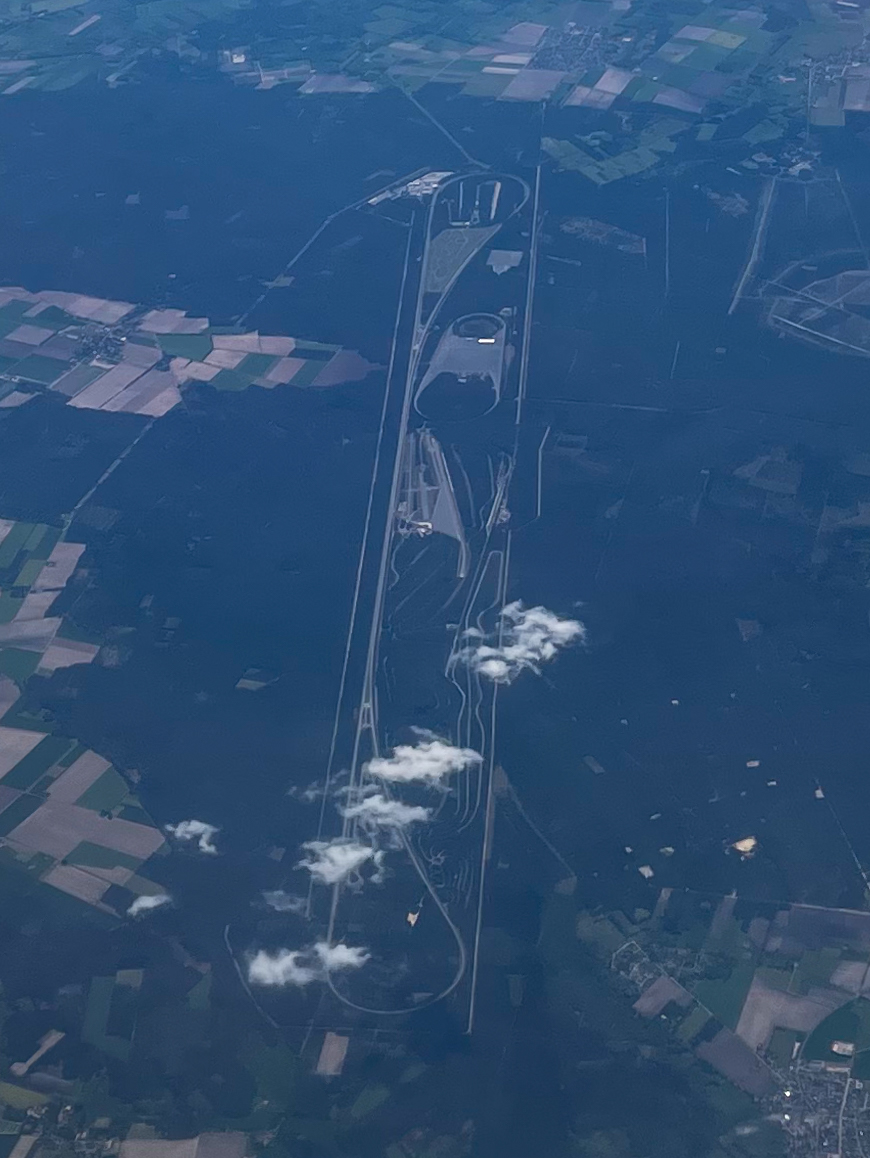
Road & Track ran the test on Volkswagen's Ehra-Lessien track near Wolfsburg, with Phil Hill and Paul Frère driving; Egan described it as a loop with two high-banked turns, long straights and photoelectric timing with digital boards that flashed each speed to the driver. The day began in pouring rain. With Egan beside him, Frère's first run in the Ruf passed the timing board at 336.1km/h, 209mph, and he shouted over the noise, "This is faster than I've ever gone in my life!" On the last run of the afternoon, on a dry track, Hill took photographer John Lamm round and recorded 339.8km/h, or 211mph.
| Car | Top speed |
|---|---|
| Ruf CTR (Yellowbird) | 211mph |
| Koenig/RS Turbo Porsche (one lap before a fan belt broke) | 201mph |
| Porsche 959 Sport | 198mph |
| Porsche 959 Deluxe | 197mph |
| Ruf turbo, the 1984 winner (Wolf Gregor's car) | 187mph |
| AMG Hammer (Mercedes-Benz 300E) | 183mph |
| Ferrari 288 GTO (one lap before its ignition cut a bank of cylinders) | 179mph |
| Isdera Imperator 108i | 176mph |
| Audi Quattro | 154mph |
Source: Road & Track, July 1987 (Peter Egan); the Isdera figure and the Koenig's broken fan belt are from evo (Egan says only that the two Koenig cars had a broken fan belt and a blown base gasket between them). Ruf's history gives the 959 as second fastest at 317km/h. The test also had a Ferrari Testarossa and a Lamborghini Countach.
Hill, Frère and Ruf himself all agreed the car was undergeared. "We could make it go faster," Ruf told Egan, "but there's not much purpose in a road car going very much faster than 300 kilometers per hour… And in the U.S., 200 miles per hour is the important number, so we tried to go faster than that." Later, at Hockenheim, the Yellowbird ran the quarter mile in 11.7sec at 133.5mph and 0–60mph in 4.0sec; the 959 Sport was quicker to 60mph, at 3.6sec.
The same year, Ruf's history adds, the firm won approval from the US National Highway Traffic Safety Administration and the Environmental Protection Agency to sell and register its cars in America.
sport auto's road test, 1987
The German magazine sport auto measured 0–100km/h in 4.1sec and 0–200km/h in 11.4sec in 1987, Auto Motor und Sport recorded in 2025; a standard 911 Turbo took 19.7sec to reach 200km/h, and a Porsche 959 also needed longer than the CTR. The tester, Norbert Haug, wrote that no road-legal car in a sport auto test had ever come out of corners so grandly ("Nie zuvor stürmte ein straßentaugliches Auto im sport auto-Test so grandios aus den Ecken").
Auto Motor und Sport at Nardò, 1988
In 1988 the German magazine Auto Motor und Sport took a Yellowbird to the Nardò ring in southern Italy, where Bernd Ostmann drove it at 212.5mph, evo reports. Auto Motor und Sport's own figure is 342km/h, faster than the Ferrari F40 and Porsche 959; the Petersen museum and CAR round the run to 213mph.
Faszination: the Ruf CTR Yellowbird at the Nürburgring
Faszination on the Nürburgring is a film of about 20 minutes that Ruf made in 1989, in which test driver Stefan Roser drives the Ruf CTR Yellowbird flat out and mostly sideways for two laps of the Nordschleife. It went out on VHS and later on YouTube, and Ruf's official YouTube channel has since posted the full track session, The Drive reported.
How the film was made
It began as a company presentation. "We wanted to make a presentation of our company," Ruf Jr told Top Gear, "and Stefan said 'oh we should maybe go to the Nürburgring and make a few shots'." With a helicopter and a camera crew on hand, Roser suggested filming a whole lap for people "crazy enough" to want one. The film that came out of it has two laps of Roser driving, and evo notes that the in-car footage of the first is occasionally edited.
The lap and the driver
CAR magazine's visit to Ruf, made in 2018 and published in 2019, gives the lap as 8min 5sec, and RM Sotheby's calls it a production-car record for the Nordschleife that stood until the Bugatti EB110 beat it in the following decade. Roser drove without a helmet, gloves or harness, in a T-shirt, stonewashed jeans, fluffy white socks and leather slip-on shoes. A reader quoted by SkiddMark in March 2009 called it "cold as ice (no helmet, 80s style short sleeve shirt) driving". Ruf Jr told Top Gear that Roser "knows the Nürburgring like his back pocket".
The dates differ in the press. Ruf, CAR and evo put the filming in 1989; The Drive calls it "the 1987 video" in a November 2015 piece on Ruf's upload of the full session, and its writer, Chris Cantle, says it "invented a genre".
The later Faszination 2 film
A SkiddMark post of March 2009 ran a clip titled "Faszination 2 – Ruf R Turbo", which a reader had sent in as "the later version" of the original film. On that post's account it features the Ruf Turbo R, a car CAR dates to 1998, in the Yellowbird's place.
How many Ruf CTR Yellowbirds were made?
Ruf built 29 CTR Yellowbirds on new bodies, the figure given by RM Sotheby's and Gooding & Company, and converted further customer cars to CTR specification; its UK importer gives 30 Ruf-numbered cars. The 29 carry Ruf chassis numbers beginning W09: Gooding's car is W09BT0343KPR06026, the 26th, and RM's chassis 10 is W09BT034XKPR06010.
Lightweight (Leichtbau) cars
Only six customers ordered the Lightweight, or Leichtbau, version, RM Sotheby's 2025 catalogue says: several body panels in aluminium instead of steel, lighter foam, no centre console, no power brakes, no sunroof, no radio and Clubsport seats, and no roll cage, though most owners had one put back. Chassis 9, "Redbird", the only CTR painted Bordeaux Red, is one of the six; it was finished on 8 September 1989 and was kept at Alois Ruf's home and used as his own car until 2005.
Conversions of customer cars
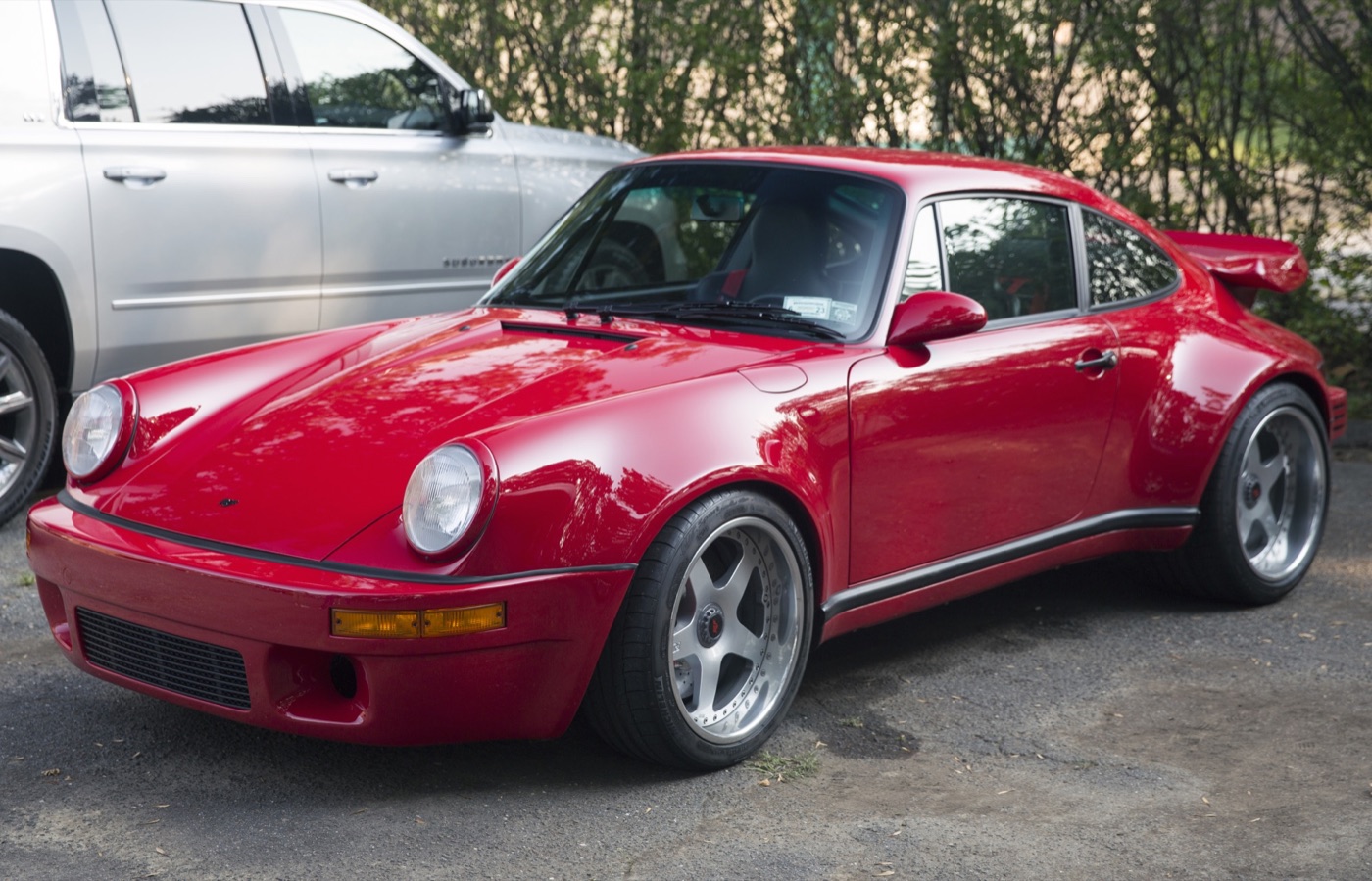
Ruf also brought existing 911s up to CTR specification. One such car, sold by RM Sotheby's in Monaco in 2016, left Porsche as a 911 Turbo in 1988, went straight to Ruf for the 375bhp BTR conversion and returned in 1992 for the six-speed CTR specification. RM catalogued it as a "1988 Porsche 911 Turbo 'Ruf CTR'", with 51,000km on the odometer and two registered owners.
Later CTRs: CTR2, CTR3 and the CTR Anniversary
Ruf has used the CTR name again for its fastest cars: the CTR2 of the mid-1990s, the mid-engined CTR3 of 2007 and the 2017 CTR Anniversary, which CAR calls the new CTR Yellowbird.
Ruf CTR2
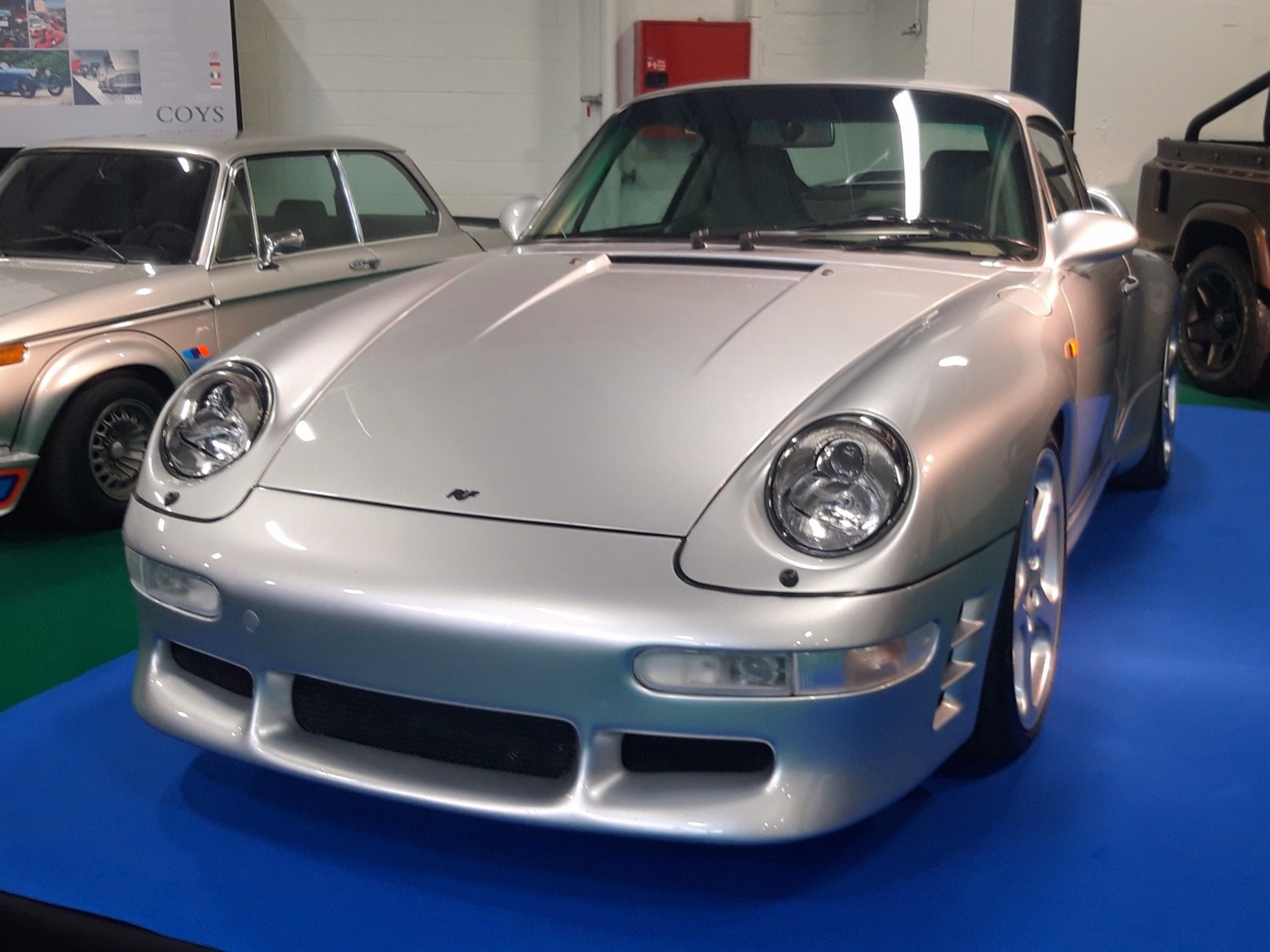
The CTR2 was built on the 993-generation 911 and had 520hp at first, later 580hp, with all-wheel drive as an option for the first time on a CTR and a Ruf six-speed gearbox, according to RM Sotheby's 2019 catalogue for a CTR2 Sport. Kevlar panels kept a rear-drive car to about 3,000lb. Ruf entered two cars in the 1997 Pikes Peak International Hill Climb, which finished second and fourth, and used them to develop the CTR2 Sport. Ruf built fewer than 30 CTR2s, slightly over half of them Sports.
Ruf CTR3 (2007)
The CTR3, announced in April 2007, moved the engine to the middle of the car. PistonHeads, publishing Ruf's specification on 13 April 2007, reported that it was built on the front structure and floor pan of a 997 911, with a roll cage joined to the A-pillars and sills, aluminium doors and bonnet from the 997 Turbo and GT3, and Ruf's own carbon-composite panels elsewhere; only the rear lights came from the Cayman, against early reports that it was Cayman-based. Its 3,746cc twin-turbo flat-six had 700hp at 7,000rpm and 890Nm, driving the rear wheels through a sequential six-speed gearbox mounted across the car. Ruf gave 375km/h (235mph), 0–100km/h in 3.2sec, 1,400kg empty (DIN) and a price of €380,000 plus VAT. Its successor in Ruf's current range, the CTR3 Evo, has an 800hp 3.8-litre twin-turbo flat-six, a seven-speed double-clutch gearbox and a top speed of 236mph, Ruf's model page says.
Ruf CTR Anniversary (2017)
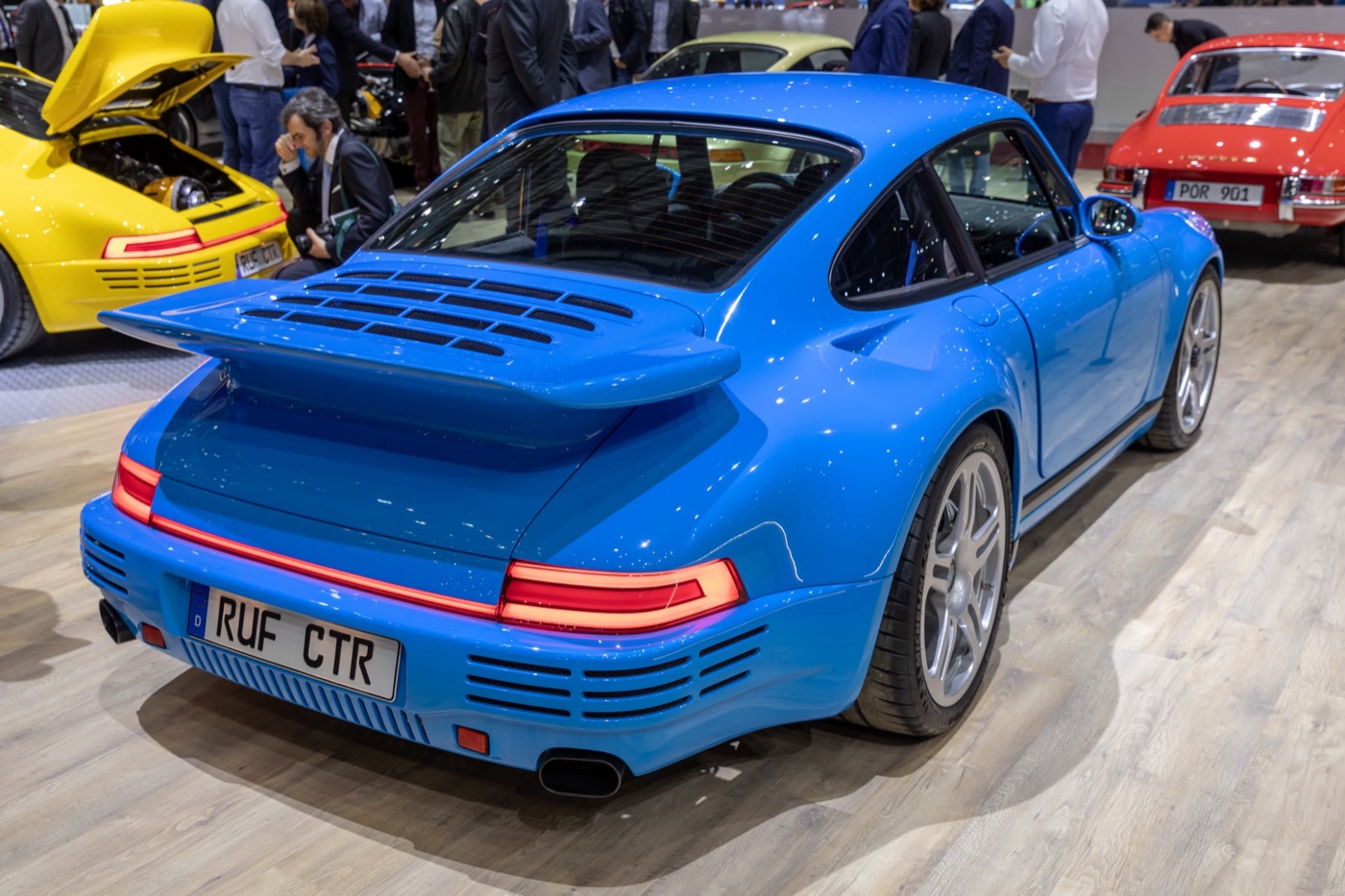
Ruf showed the CTR Anniversary at the 87th Geneva Motor Show in March 2017, thirty years after the first CTR. It is the first car Ruf designed and built entirely itself: a carbon-fibre monocoque made by Ruf, a carbon-fibre body shaped like the original's, and a 3.6-litre twin-turbo flat-six with dry-sump lubrication with 710PS at 6,750rpm and 880Nm. Ruf gives its dry weight as 1,250kg, 0–100km/h in under 3.5sec and a top speed of more than 360km/h, with a manual gearbox of its own. The sources differ on numbers: Ruf's 2017 announcement planned 50 cars, not counting the Geneva prototype, with production from 2018, while CAR wrote after its 2018 visit that all 29 had been sold within a fortnight of the launch, at €750,000 plus taxes.
Estonia Ruf, Alois Ruf's wife, said they had started designing it five years earlier: "We reduced all otherwise digitally controlled functions and combined the fascinatingly original, unadulterated way of driving with an astonishingly low power-to-weight ratio, a manual gearbox and modern racing technology."
Ruf CTR Yellowbird values and auction prices
An original Ruf CTR Yellowbird is now a car of several million dollars: the record is $6,055,000, paid at Gooding & Company's Amelia Island sale in March 2025. In 2016 a car converted to CTR specification sold for €224,000.
| Date | Car | Auction | Price |
|---|---|---|---|
| 2016 | 1988 Porsche 911 Turbo converted to CTR by Ruf in 1992, 51,000km | RM Sotheby's, Monaco | €224,000 |
| August 2018 | 1989 CTR, chassis 10, black, 52,200km, never restored | RM Sotheby's, Monterey | $1,022,500 |
| August 2019 | 1998 CTR2 Sport, all-wheel drive | RM Sotheby's, Monterey | $736,500 |
| March 2025 | 1989 CTR, chassis 26, Blutengelb, Leichtbau, six-speed, under 1,700km, two owners | Gooding & Company, Amelia Island | $6,055,000 |
| August 2025 | 1989 CTR Lightweight, chassis 9 "Redbird", Bordeaux Red | RM Sotheby's, Monterey | $4,295,000 |
Sources: the auction houses' own lot pages, read October 2026; prices include buyer's premium as the houses publish them.
Gooding's catalogue for the 2025 car lists the original colour, the Leichtbau specification with the optional six-speed gearbox, two owners and less than 1,700km from new, with Ruf's certificate of authenticity (Zertifikat), a copy of the first invoice, books and tools. RM's 2018 car was black and had covered 52,200km, which Ruf confirmed as the original mileage; it went to Switzerland new on 10 February 1989 for Ruf's distributor and was sold instead to a German who had his own CTR on order and kept both.
Buying and owning a Ruf CTR Yellowbird
A buyer's first check is which kind of CTR it is: one of the 29 Ruf-numbered cars, or a Ruf conversion of a customer's Porsche. A W09 chassis number marks a Ruf-built car, and the two most expensive sales came with Ruf's own paperwork, a Zertifikat in Gooding's case and a Ruf certificate, build sheet and factory letters with RM's Redbird.
Ruf's factory service and restoration
Ruf still services and restores its own cars in Pfaffenhausen. Its head of sales and marketing, Marc-André Pfeifer, told CAR during its 2018 visit that restoration was 50 to 60 per cent of the firm's work, that an average restoration took about 12 months and cost €250,000–300,000, and that "we are now restoring cars that we sold new". Redbird went back to Ruf in the 2000s for a Ruf-modified G50 gearbox, a brake servo and adjustable brake balance, RM records, and the CTR2 Sport sold in 2019 had a mechanical and cosmetic refresh at the factory.
What is a Ruf CTR like to drive?
Off boost the CTR is as easy to drive as any 3.2 Carrera, but lighter and more nimble, and the roll cage makes the chassis much more solid, Car and Driver found when it drove the record car in November 2013. The five-speed gearbox has long throws and a dogleg pattern, and when the KKK turbos come in they arrive "with all the subtlety of an IED". The magazine added that "insiders admit that 550 horsepower might be more accurate" than Ruf's 469hp.
How reliable were they in 1987?
Road & Track went to Ehra-Lessien "expecting good things" of the new car because Ruf, Egan wrote, "is widely respected for the quality and reliability of his cars". The CTR was driven to the hotel and then on public roads to the track with the rest of the field. Wolf Gregor, owner of the Ruf that won the 1984 test, told the magazine in 1987 he had covered 211,000 trouble-free miles, changing engines every 50,000km and having the spare rebuilt by Ruf.
Questions
What does CTR stand for on the Ruf CTR?
CTR stands for Group C Turbo Ruf. Its Bosch Motronic fuel injection came from the Porsche 962, Porsche's Group C racing car.
Is the Ruf CTR a Porsche?
It is built on a Porsche 911 Carrera 3.2 body, but Ruf has been a recognised manufacturer in Germany since 1981, so the 29 cars built on new bodies carry Ruf chassis numbers beginning W09. RM Sotheby's catalogued a customer car converted to CTR specification as a 1988 Porsche 911 Turbo.
Where is the original Ruf CTR Yellowbird now?
The car that reached 211mph for Road & Track in 1987 is displayed at the Petersen Automotive Museum in Los Angeles, which describes it as the first CTR and the car used to set the record.
How much horsepower does the Ruf CTR Yellowbird have?
Ruf rated it at 469bhp at 5,950rpm. evo quotes Ruf as later admitting that "we use very big horses in Pfaffenhausen", and Road & Track described the 1987 car as a 470bhp twin-turbo.
Who drove the Yellowbird in Faszination on the Nürburgring?
Ruf's test driver Stefan Roser. He drove it in 1989 without a helmet, gloves or harness, in a T-shirt, jeans, white socks and leather slip-on shoes, and CAR gives his lap as 8min 5sec.
Who drove the Ruf CTR to 211mph?
Phil Hill, the former Formula One world champion, with photographer John Lamm beside him, on the last run of Road & Track's 1987 test at Ehra-Lessien. Paul Frère had earlier reached 209mph in the same car.
How much did a Ruf CTR cost new?
328,000 Deutschmarks, according to Auto Motor und Sport. A Porsche 959 cost 420,000 Deutschmarks and a Ferrari F40 440,000 at the time.
Sources
- Peter Egan, Road & Track, "In 1987, The World's Fastest Cars Couldn't Catch A 211-mph Twin-Turbo Ruf", July 1987 issue, republished 2016: the Ehra-Lessien test, speeds, the Yellow Bird name, quotes from Frère and Ruf, Hockenheim acceleration figures.
- Ruf Automobile, "CTR Anniversary" model history, read October 2026: the 2017 car's specification and production plan; the 1987 speed, nickname and US approval.
- evo, "Birth of an icon: 1987 Ruf CTR 'Yellow bird'": body, engine, gearbox, brakes, tyres, the 1988 Nardò run, Roser's clothes.
- Top Gear, "The best car video ever – Faszination – started out as a company presentation", 2023: Alois Ruf Jr on the firm's history, the engine and the film.
- CAR magazine, "Inside RUF: more than a Porsche tuner", online 13 March 2019 (written after a 2018 visit): the 8min 5sec lap, Roser's clothes, the 1988 run, restoration work and costs, the CTR Anniversary's price and sales.
- Petersen Automotive Museum, "1989 Ruf CTR Yellowbird", read October 2026: manufacturer status in 1981, the first CTR and record car on display, the 213mph run.
- Gooding & Company, Amelia Island 2025, lot 118, 1989 Ruf CTR 'Yellowbird': sale price, chassis and engine numbers, specification, nine Blutengelb cars.
- RM Sotheby's lot pages: Monterey 2018, 1989 Ruf CTR 'Yellowbird' (chassis 10); Monterey 2025, 1989 Ruf CTR1 'Yellowbird' Lightweight (Redbird, six Lightweights); Monaco 2016, 1988 Porsche 911 Turbo 'Ruf CTR' (a conversion, the Nordschleife record); Monterey 2019, 1998 Ruf CTR2 Sport (CTR2 specification, Pikes Peak, numbers built). Prices read October 2026.
- Chris Cantle, The Drive, "Yellowbird: The Extended Cut of Ruf's CTR Nürburgring Video": Ruf's upload of the full session, the date given for the film.
- PistonHeads, "Ruf CTR3: official details and spec", 13 April 2007: CTR3 construction and Ruf's specification.
- Ruf Automobile, "CTR3 Evo", read October 2026: engine, gearbox, top speed.
- Auto Motor und Sport, "Ruf CTR Yellowbird: 342 km/h für 6 Millionen", 2025 (not linked; it ranks for the main term): price new, weight, six Blütengelb cars, the sport auto 1987 test and Norbert Haug's verdict, 342km/h at Nardò, 337.6km/h at Ehra-Lessien.
- Car and Driver, November 2013, drive of the record CTR, as reproduced by Ruf's UK importer (not linked; it ranks for the main term): torque, Ruf's weight claim, driving impressions.
- SkiddMark, "RUF CTR – Faszination Nurburgring" and "Faszination 2 – Ruf R Turbo", March 2009: the reader's comment on Faszination and the Faszination 2 clip.