Rush film: the true story of Hunt, Lauda and the 1976 season
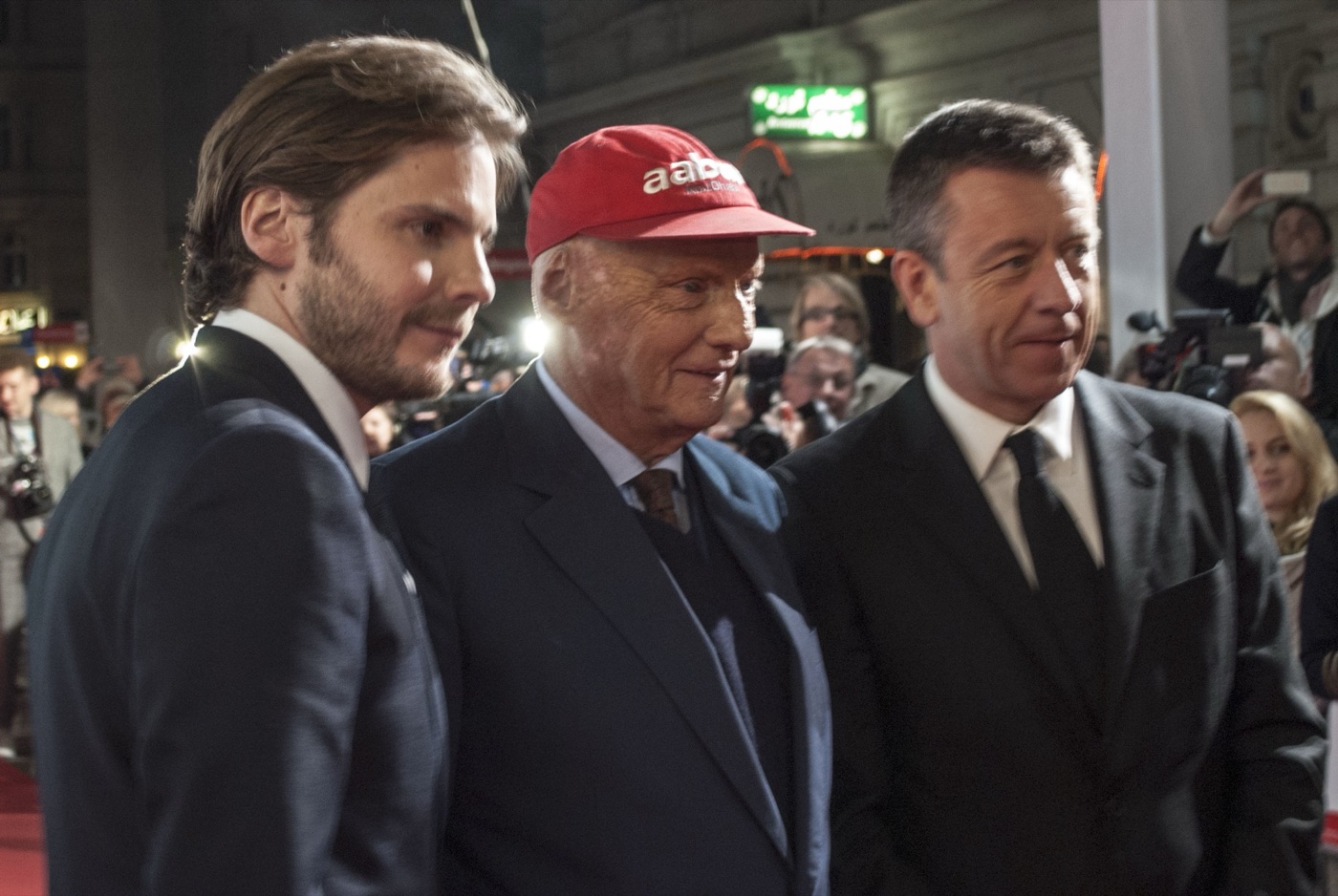
Rush is Ron Howard’s 2013 film of the 1976 Formula One season, written by Peter Morgan, in which the British driver James Hunt (Chris Hemsworth) in a McLaren and the Austrian Niki Lauda (Daniel Brühl) in a Ferrari fight for the world championship. The story is true in outline: Lauda was badly burned at the Nürburgring on 1 August 1976, raced again six weeks later at Monza, and lost the title to Hunt by one point, 69 to 68, after pulling out of the rain-soaked final race in Japan. Much of what passes between the two men away from the track was invented or sharpened for the screen, and the trailers said as much: the film is “based on a true story”.
Rush opened in British cinemas on 13 September 2013 and runs for 123 minutes. The BBFC rated it 15 for “strong language, sex and bloody injury detail”; in America The Numbers records an R rating. Universal Pictures released the official Rush trailer on 8 April 2013, after Ron Howard had posted an image diary of his trips to the locations in England, Germany and Austria on Twitter, a SkiddMark report of that day noted.
What happens in Rush
Rush follows Hunt and Lauda from Formula Three in 1970 to the last race of 1976, with Lauda narrating. It opens on the grid at the Nürburgring in 1976, then goes back to a Formula Three race at Crystal Palace where the two first clash. Lauda borrows money to buy his way into the BRM team and moves on to Ferrari, where he wins the 1975 title; Hunt makes his name with Lord Hesketh’s team and joins McLaren when Hesketh runs out of money. Hunt marries Suzy Miller and Lauda marries Marlene.
The second half is the 1976 season: Lauda’s early wins, Hunt’s disqualification in Spain, the drivers’ meeting before the German Grand Prix, Lauda’s crash and his weeks in hospital while Hunt closes the gap, the return at Monza and the deciding race in the rain at Fuji. It ends with Lauda’s voiceover on Hunt’s later life and archive footage of the real men.
How the Rush film was made
Rush began as Peter Morgan’s own project in 2010, passed to Ron Howard when the first director left, and was shot in Britain, Germany and Austria between 22 February and 22 May 2012, according to Adam Cooper’s account of the production in Motor Sport, September 2013.
Peter Morgan’s script
An American producer rang Morgan’s agent in 2010 asking for a story about Formula One in the 1970s. “My initial instinct was not really, because I’m not an F1 fan,” Morgan told McLaren’s heritage history of the film. He found the Hunt and Lauda story within a couple of days; the producer then said they wanted Jackie Stewart. “I said, ‘I don’t want to do Jackie Stewart, I want to do this.’”
The link was personal. Morgan lives in Vienna, and his Austrian wife knew Lauda. She rang him, and Lauda, on holiday in Ibiza and bored, gave Morgan three hours one afternoon. For Hunt, who died in 1993, Morgan talked to Alexander Hesketh, Anthony “Bubbles” Horsley and the McLaren team manager Alastair Caldwell. He wrote the script without taking anyone’s money: “If the script had been a disaster, I wouldn’t have let anyone down apart from wasting my own time.”
Ron Howard takes over
Paul Greengrass, director of two Bourne films, was the first director attached. Over breakfast in Los Angeles Howard told Morgan, “If Paul blinks, I’d love to read that script.” Greengrass left to make Captain Phillips with Tom Hanks, and Howard committed in under 48 hours. He had been to the 2008 Monaco Grand Prix with George Lucas but knew little about the sport. Asked on set at Crystal Palace whether that made the job harder, he told Motor Sport’s Ed Foster: “I’d never been to the moon and I did OK with Apollo 13.”
Universal backed it, but Rush was an independent British film, an Anglo-German production with German finance. Howard brought only his second-unit director Todd Hallowell and his editors Dan Hanley and Mike Hill. The crew list carried several Oscar winners besides Howard: Hanley, the composer Hans Zimmer, who wrote the score, and the cinematographer Anthony Dod Mantle, who had won for Slumdog Millionaire. Hunt’s family were wary at first. “They felt burned by a lot that had been written,” Howard said of a tense dinner with them, “always feeling that it was mono-dimensional.”
Where Rush was filmed
Howard filmed a historic Formula One race at the Nürburgring in August 2011, six months before the main shoot, and asked some owners to run on the Nordschleife on the Monday after. It showed him how much he could film for real: “a lot of our budget shifted out of digital, into practical,” he told McLaren.
The production’s base was Blackbushe Airport in Hampshire, where a pit lane, grid and grandstands were built with pit buildings that could be re-faced overnight. The journalist Simon Taylor, who played the British radio commentator, watched a crew of 400 turn it from Monza into the Nürburgring and then Fuji. Lauda’s accident was restaged at Bergwerk on the Nürburgring itself. The other racing was filmed at Brands Hatch, Donington Park, Snetterton and Cadwell Park, sometimes with the cars running the wrong way round to copy a 1976 corner, and the visual effects company Double Negative turned Donington and Snetterton into Monza and Fuji. Rain was never a problem: “when it rained, the action immediately became Fuji,” Cooper wrote.
The opening Formula Three scenes were shot at the old Crystal Palace circuit in south London. At Brands Hatch a hospitality suite put up for a DTM touring car weekend was dressed as the Nürburgring drivers’ briefing room, and Rush was Cadwell Park’s first screen appearance, according to The Location Guide, 13 September 2013. On one day 35 cameras were running at once, some fixed to the cars. Because Rush cuts in real archive footage of Brands Hatch, Monaco and the Nürburgring, Howard told RaceFans (then F1 Fanatic) on 15 September 2013, the costumes and sets “would also have to sit alongside” it. The sound was mixed in Berlin.
Rush film cast: who plays who
Chris Hemsworth plays James Hunt and Daniel Brühl plays Niki Lauda; the main supporting parts are their wives and the team people around them.
| Actor | Plays |
|---|---|
| Chris Hemsworth | James Hunt, Hesketh then McLaren driver |
| Daniel Brühl | Niki Lauda, Ferrari driver and 1975 world champion |
| Olivia Wilde | Suzy Miller, Hunt’s wife |
| Alexandra Maria Lara | Marlene Lauda, Lauda’s wife |
| Pierfrancesco Favino | Clay Regazzoni, Lauda’s Ferrari team-mate |
| Christian McKay | Lord Hesketh |
| Julian Rhind-Tutt | Anthony “Bubbles” Horsley |
| Stephen Mangan | Alastair Caldwell, McLaren team manager |
| Colin Stinton | Teddy Mayer, McLaren team boss |
| David Calder | Louis Stanley |
| Augusto Dall’Ara | Enzo Ferrari |
| Alistair Petrie | Stirling Moss |
| Natalie Dormer | Nurse Gemma |
| Simon Taylor | English race commentator |
Casting Daniel Brühl as Lauda
Brühl, a German-Spanish actor, had the part from the early days, and went to the 2011 Brazilian Grand Prix with Lauda as research. “Peter nominated Daniel early on, and he was right,” Howard said. “I met him and made the decision that hour.” The German investors were less sure: they “wished we would get an American movie star to play Niki Lauda and just do a bad German accent,” Howard told RaceFans.
When Brühl rang Lauda to ask if he could visit, Lauda told him to bring hand luggage only. “I asked why and he replied, ‘So if I don’t like you, you can fly straight home’,” Brühl told Ed Foster at Crystal Palace. They got on, and Lauda took him to the next Grand Prix in his jet, flying it himself. The burn scars Brühl wears after the crash were made by Mark Coulier, who won an Oscar for The Iron Lady as filming began.
Casting Chris Hemsworth as Hunt
Finding a Hunt took longer. Hemsworth, an Australian then known as Marvel’s Thor, sent Howard and Morgan a video of himself reading a Hunt speech from the script in an English accent. Howard worried about his size, and Hemsworth wrote to him: “By the way, Thor couldn’t get into a Formula One car, but I’m the same height as James and I’ll be his build, if that’s what it takes.”
A SkiddMark report of 8 April 2013 was not convinced. It called an Australian as the “British Bulldog” “a little tenuous”, and worried that Hunt “might be remembered as some blue-eyed Adonis”.
The cars used in Rush
Rush used real 1976 Formula One cars from historic racing wherever it could, including the McLaren M23 in which Hunt won the title, and built replicas for close racing, crashes and circuits with noise limits where a Cosworth DFV or a Ferrari flat-12 could not run.
Real cars from historic Formula One
The owners Howard met at the Nürburgring in 2011 filled out most of the grids. “When I heard about these people who owned the historic Formula One cars I thought they were just hobbyists,” he told RaceFans. “But they race! They compete, they spin out, they crash, all of that.” The original cars were always driven by their owners or someone they chose.
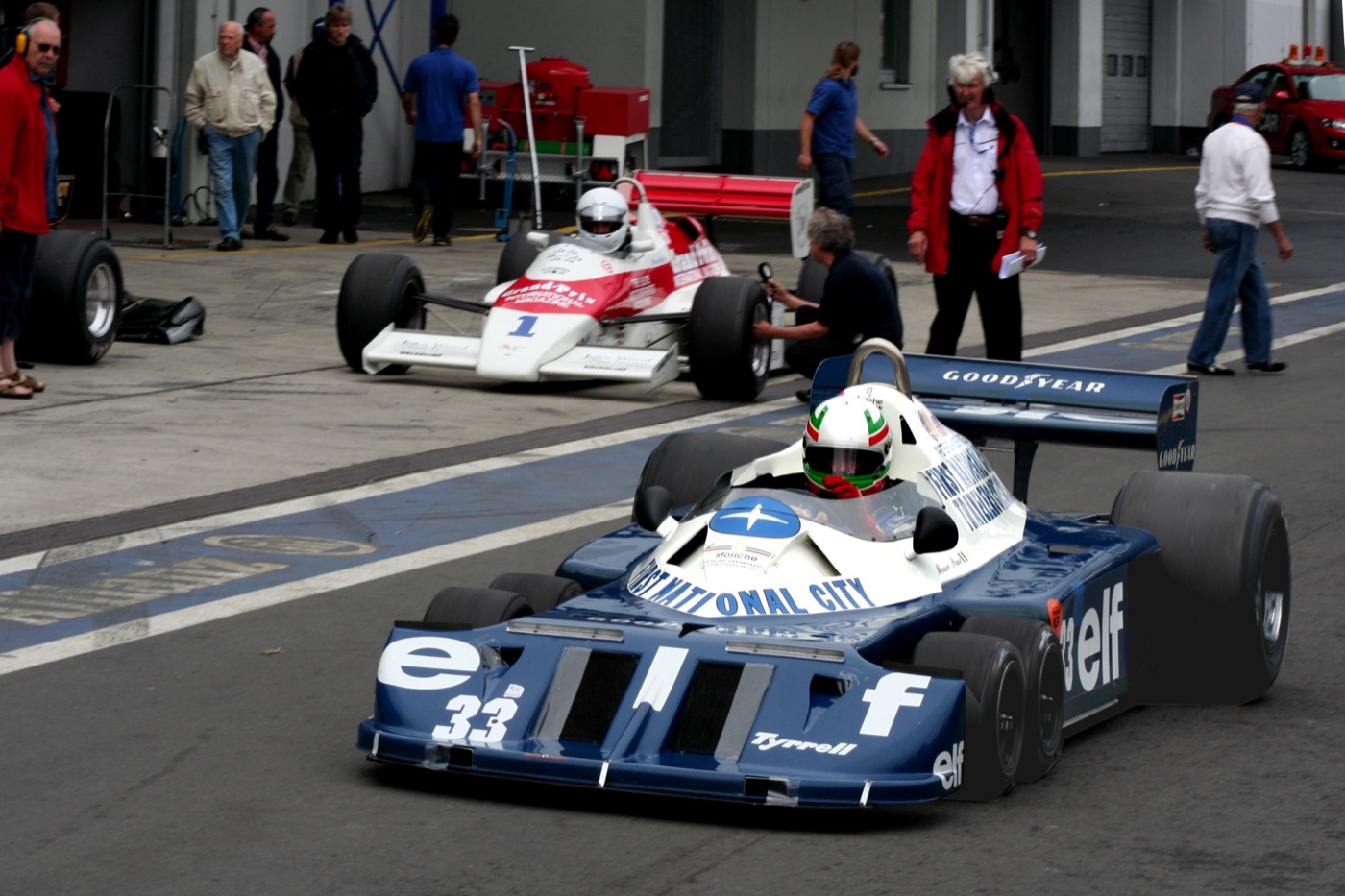
Among them was Hunt’s championship car, chassis M23-8. Some cars had to be altered for the period: the two Tyrrell P34 six-wheelers were converted back from their usual 1977 form, the real Ferraris played both the 312T and the 312T2, and cars for the early-season races needed the tall airboxes banned from the Spanish Grand Prix in May. A Lotus 77, Tyrrell 007, March 761, Shadow DN5, Hesketh 308D, Surtees TS19, Penske PC3 and Wolf-Williams FW05 filled out the grids, and Howard found genuine Lotus and Tyrrell transporters for the paddock scenes.
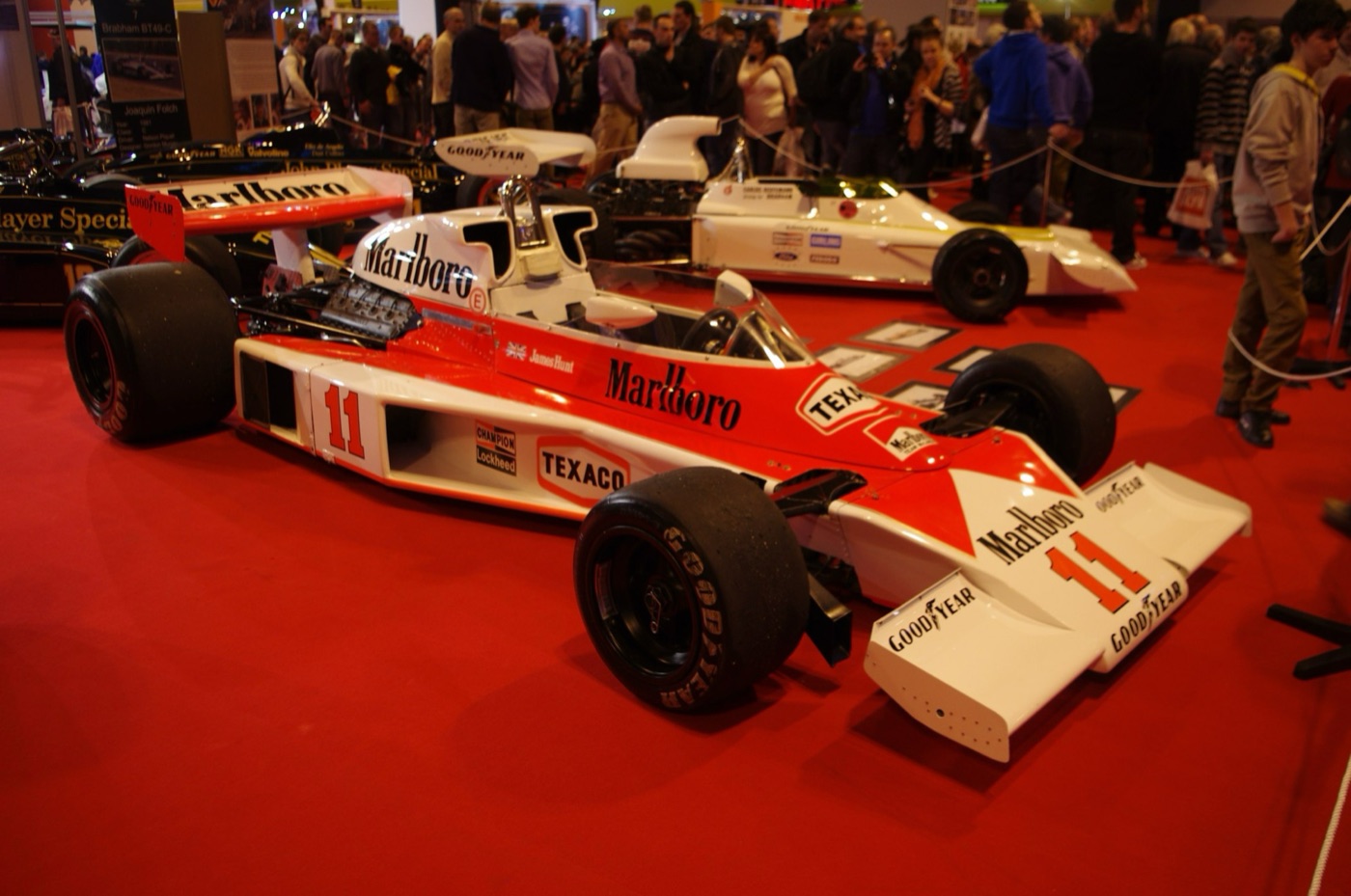
Two drivers from the real 1976 field took part. Jochen Mass, Hunt’s McLaren team-mate that year, was reunited with an M23 for a couple of days. Sean Edwards drove the Penthouse-liveried Hesketh his father Guy had raced, and Guy Edwards was one of the four drivers who stopped at Bergwerk to pull Lauda from his burning Ferrari.
The replica cars
The replicas were built by teams that run cars in historic Formula One, as Ed Foster reported in Motor Sport in June 2012 and Adam Cooper in September 2013.
| Car | Raced in period by | Replicas | Builder |
|---|---|---|---|
| McLaren M23 | James Hunt, 1976 | 2 | WDK Motorsport |
| Ferrari 312T and 312T2 | Niki Lauda and Clay Regazzoni, 1976 | 3 | Rob Austin |
| BRM P160 | Niki Lauda, 1973 | 2 | Mirage Engineering |
| Hesketh 308B and 308D | Hesketh Racing | Not stated | WDK Motorsport |
The BRMs had bodies that could be swapped, so the same chassis also played a Ligier JS5, Shadow DN5 and March 761; with four people Mirage could turn a BRM into a Ligier or a Shadow in half a day. A Brabham BT45 was made the same way, since no original was available. Mirage’s Darren Stone had three months to build his pair from scratch, starting with a tape measure and a camera at the Donington Collection, which holds the only surviving P160. He used a Rover V8 for the BRM’s V12 (the engine noise was dubbed on later), Sierra Cosworth driveshafts so the cars could wheelspin through standing starts, a radiator from a BMW 535i and bodies of MDF and glassfibre. The two cars cost “just over £100,000”. Niki Faulkner’s Driving Wizards choreographed the wheel-to-wheel action with the replicas.
What happened to the Rush cars
Prop Store sold the film’s props in an online auction on 11 July 2014. A replica of Lauda’s Ferrari 312T, with the tall airbox, made £25,740, and the Ferrari overalls Brühl wore for the fire scene, burn marks and all, made £3,600, as Paul Fraser Collectibles reported. The same report calls the Ferrari one of nine replicas made for the film; Motor Sport lists two M23s, three Ferraris and two BRMs and gives no total.
In October 2022 Silverstone Auctions consigned one of the two M23 replicas with an estimate of £50,000 to £80,000; it had stood on static display since filming and is not eligible for racing, the PA motoring service reported. Under the dummy Cosworth cam covers it has a twin-cam four-cylinder engine with Weber carburettors, Silodrome noted in November 2022.
Is the Rush film a true story?
Yes, in outline: the drivers, teams, races, crash, comeback and the one-point result are real, while the hostility between Hunt and Lauda, several scenes and some race details were changed. Howard called his approach “understand, adapt and create to offer a greater truth”, and told Motor Sport’s Ed Foster on set: “Ed, you must remember that I’m making a movie, not a documentary.”
What Rush gets right
The championship arithmetic, the disqualifications and the crash are as they happened (see the season below). Ferrari did sign Carlos Reutemann while Lauda was in hospital. Lauda was given the last rites, and he did race again at Monza with his burns still raw.
Suzy Miller left him for the actor Richard Burton, who married her on 21 August 1976, according to the Dictionary of Welsh Biography’s entry on Burton. Hunt’s line to Burton, “You’ve done me a wonderful turn by taking on the most alarming expense account in the country,” is recorded by Sky Sports, which adds that Burton reputedly paid Hunt $1m in the divorce settlement.
What Rush changed
In reality the relationship was friendlier than the film shows. Howard also merged races: “We simplified a lot of races that way, because we just realised that for our balance, we had too many races,” he told McLaren, adding that “occasionally we’d have to combine the elements of a couple of races into one.”
Were Hunt and Lauda really enemies?
No. Simon Taylor, who covered the 1976 season and appears in Rush, wrote in Motor Sport, September 2013, that the whole premise of Rush “is that Niki and James dislike each other at once. That’s pure fiction, of course. They’d been friends and rivals since Formula 3, and when Niki came to London he used to kip at James’s flat.” In the same issue Lauda told Simon Arron: “James was one of the few drivers with whom I’d share a beer, because we knew each other from earlier in our careers.” Hunt’s son Freddie, who says Lauda stayed his father’s friend until Hunt’s death in 1993, told Sky Sports News in May 2019, the week of Lauda’s funeral, that the two “were far closer friends than what was portrayed in the movie”.
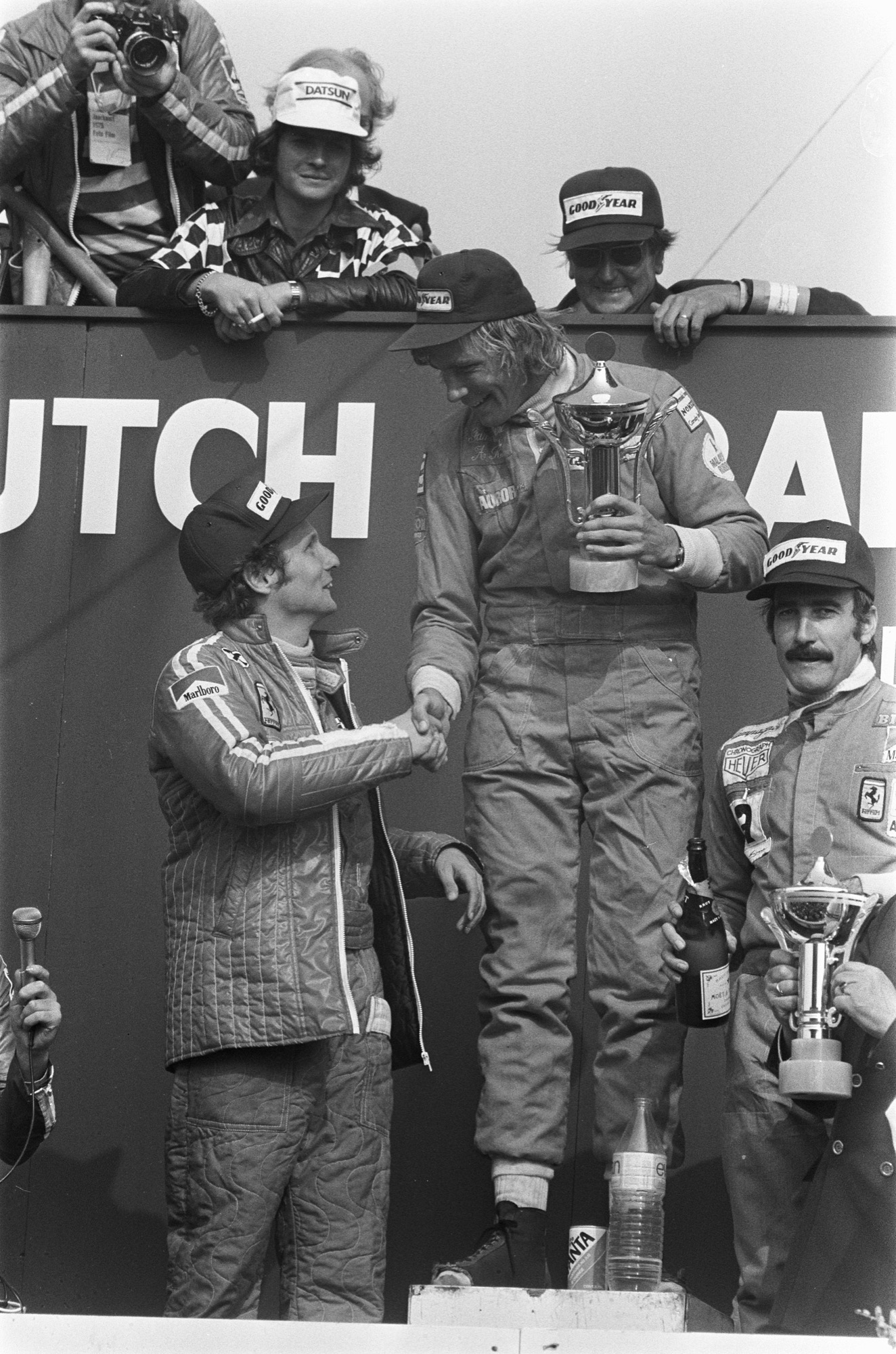
Did Lauda race at Crystal Palace in 1970?
No. Rush opens with the two meeting in a Formula Three race at Crystal Palace, but the race it draws on, the 1970 Daily Express Trophy final, was a fight for second between Hunt and David Morgan; after a last-lap crash Hunt knocked Morgan to the ground. Lauda’s McNamara was not there, Jalopnik pointed out in April 2012 from photographs of the shoot, which also showed Hunt’s Lotus 59 in green instead of its period red. The two did race each other that year: Hunt beat Lauda to fourth at Magny-Cours, round five of the French F3 championship.
The drivers’ vote at the Nürburgring
In Rush, Lauda calls a drivers’ meeting to cancel the German Grand Prix and Hunt speaks against him. Lauda did lead the push for a boycott of the 14-mile Nordschleife; “a driver vote was duly held, but the majority chose to grin and bear it and go ahead with the race,” Matt Bishop wrote in Motor Sport in August 2026. Pirelli’s history of the race names Hunt among the loudest opponents of Lauda’s earlier proposal to move the race to Hockenheim. Hunt did not like the circuit either. After taking pole he said: “I’m frightened, I don’t mind telling you, and I’m glad to see the finish line every lap.”
Why Lauda stopped at Fuji
Rush frames Lauda’s withdrawal from the Japanese Grand Prix around his wife Marlene. Lauda gave the weather as his reason: “I thought it was too dangerous because of the rain. We were delayed for about two hours, but when we started there was just as much water as before. Given that choice again, I’d do the same thing,” he told Motor Sport in 2013. Goodwood’s history of Hunt’s 1976 season adds that his burns had left him unable to blink.
The real 1976 season against the film
Hunt won six Grands Prix to Lauda’s five in 1976 and took the title by 69 points to 68, in a season decided in appeal courts as well as on the track. The table gives the results as they finally stood, from Formula One’s official 1976 results and its records for Hunt and Lauda.
| Date | Grand Prix | Winner | Hunt (McLaren) | Lauda (Ferrari) |
|---|---|---|---|---|
| 25 Jan | Brazil | Lauda | Retired | 1st |
| 6 Mar | South Africa | Lauda | 2nd | 1st |
| 28 Mar | USA West, Long Beach | Regazzoni | Retired | 2nd |
| 2 May | Spain | Hunt | 1st | 2nd |
| 16 May | Belgium | Lauda | Retired | 1st |
| 30 May | Monaco | Lauda | Retired | 1st |
| 13 Jun | Sweden | Scheckter | 5th | 3rd |
| 4 Jul | France | Hunt | 1st | Retired |
| 18 Jul | Britain, Brands Hatch | Lauda | Disqualified | 1st |
| 1 Aug | Germany, Nürburgring | Hunt | 1st | Retired (crash) |
| 15 Aug | Austria | Watson | 4th | Did not race |
| 29 Aug | Netherlands | Hunt | 1st | Did not race |
| 12 Sep | Italy, Monza | Peterson | Retired | 4th |
| 3 Oct | Canada | Hunt | 1st | 8th |
| 10 Oct | USA East, Watkins Glen | Hunt | 1st | 3rd |
| 24 Oct | Japan, Fuji | Andretti | 3rd | Retired |
| Final points | Hunt champion | 69 | 68 | |
Spain and Brands Hatch: wins decided in court
Hunt won at Jarama on 2 May, and half an hour later the stewards disqualified him because his McLaren was 1.8cm wider than the rules allowed. The Spanish federation rejected McLaren’s appeal; the FIA International Court of Appeal in Paris reinstated the win on 5 July and fined McLaren $3,000. Writing in Motor Sport in April 2026, Matt Bishop argued that the disqualification should have stood, and that Lauda would then have been champion.
At Brands Hatch on 18 July a first-corner collision stopped the race. Hunt had abandoned his damaged car on an access road instead of completing the lap, and the stewards let him take the restart only after a crowd of booing spectators made its feelings known. He won, and Ferrari appealed; two months later he was disqualified and Lauda, second on the road, was given the win, as James Elson recounts in Motor Sport. Hunt heard the news just before the Canadian Grand Prix, Goodwood records.
The Nürburgring crash
Lauda crashed on the second lap of the German Grand Prix on 1 August, at Bergwerk. Rain before the start had put 25 of the 26 cars on wet tyres, Nigel Roebuck recalled in Motor Sport, November 2006. Lauda had stopped for dry tyres and, with them still cold, lost control, as Ferrari’s own history of the 1976 Italian Grand Prix records. His Ferrari hit the bank and bounced back into the road on fire; the catch-fencing had pulled his helmet off. Brett Lunger and Harald Ertl could not avoid the wreck, and they, Arturo Merzario and Guy Edwards pulled him out. Merzario reached into the flames to undo the seat belt buckle. “Thank God he eventually lost consciousness, it was only when he relaxed that I could free the buckle,” he told Roebuck.
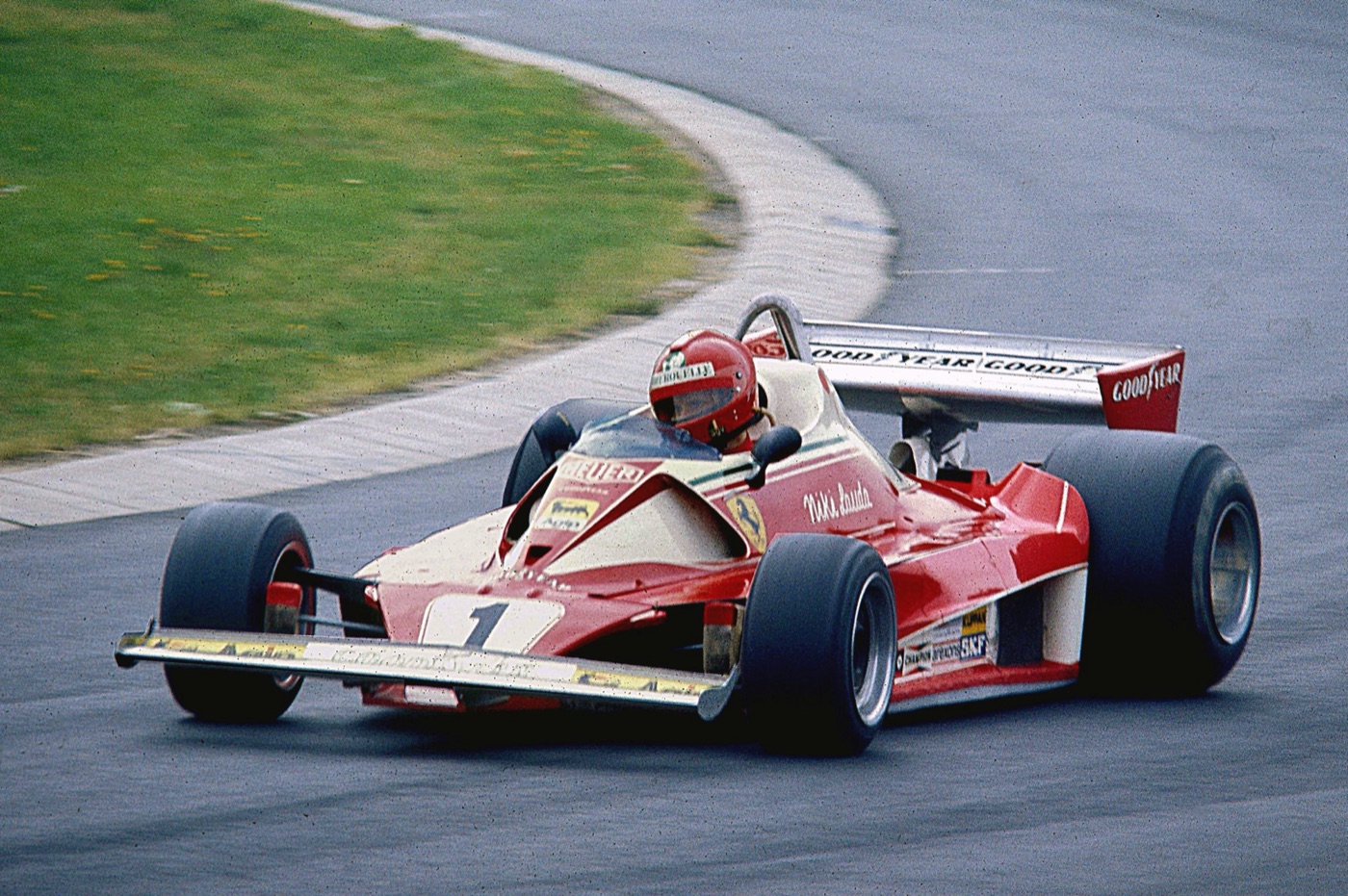
Lauda was taken to the university clinic in Mannheim with burns to his head and lungs damaged by toxic fumes. On the Tuesday he was given the last rites. Hunt won the restarted race, and he is the last driver to win a Grand Prix on the Nordschleife.
Monza, 42 days later
Lauda missed Austria and the Netherlands, where Hunt finished fourth and first. He raced again at Monza on 12 September, 42 days after the crash, wrote David Tremayne in Formula1.com’s best-drives series, April 2019. He frightened himself in wet practice on the Friday, qualified fifth, ahead of both team-mates, and finished fourth. “Niki had no right to be driving there, because he was nowhere near healed,” Jackie Stewart told Roebuck. “It was the most courageous thing I have ever witnessed in sport.” Hunt started near the back after a fuel check on his McLaren and retired.
Fuji: decided by one point
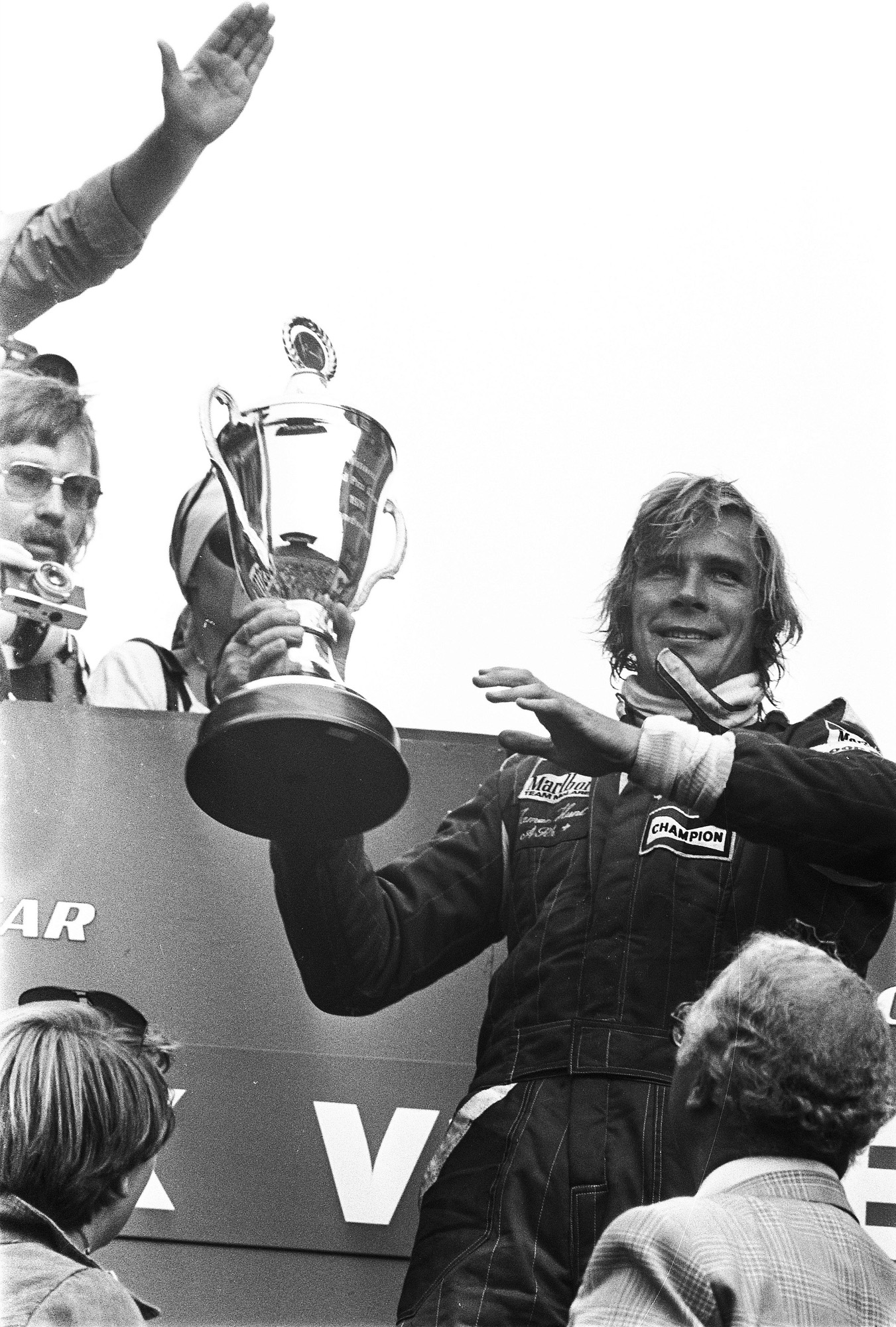
The first Japanese Grand Prix, at Fuji on 24 October, started with Lauda on 68 points and Hunt on 65. It was run in torrential rain and mist. Lauda pulled in after two laps. Hunt led for most of the race until a puncture and a late tyre stop dropped him down the order, and he climbed back to third behind Mario Andretti and Patrick Depailler, enough for the title by one point, according to the official race result. McLaren’s team manager Alastair Caldwell had arranged a private test at Fuji beforehand, which left McLaren more familiar with the circuit than its rivals, Goodwood notes.
What happened to Hunt and Lauda after 1976
Lauda won the title back for Ferrari in 1977 and then left for Brabham, wrote David Tremayne for Formula1.com. He stopped racing, started an airline, came back with McLaren and ended 1984 as a three-time world champion, Pirelli’s history records. Hunt stayed at McLaren for 1977 and 1978, moved to Walter Wolf’s team for 1979 and retired a few races into that season. He then became a BBC television commentator until his death in 1993, according to McLaren’s heritage profile of Hunt. Lauda died in 2019, and his funeral was held in Vienna that May, Sky Sports reported.
What did Niki Lauda think of Rush?
Lauda approved of Rush. “The movie’s target was to educate the audience about what happened and it has been done in exactly the right way,” he told Simon Arron in 2013. “Today, almost nobody knows who I was, or who James Hunt was, so they had to make it this way. It’s a movie, rather than a documentary, but I was surprised how well Ron Howard managed to put it all together.”
He first saw the final cut at a private screening with about 150 people, who fell silent from the crash onwards. The hospital scenes affected him: “I’ve watched the movie’s hospital scenes and thought, ‘F***, I really was in bad shape’. When you’re the one lying there, fighting for your life, you don’t think you’re in bad shape, so the movie stirred some emotions I didn’t feel at the time.” Seeing Brühl play him made him think “I might have been too aggressive in the past.” He praised Brühl’s accent, which Brühl had learned in Vienna. Motor Sport reported that Rush also had the approval of Hunt’s family.
Release, box office and awards
Rush had its premiere in Leicester Square, London, on 2 September 2013, a SkiddMark report of 28 August announced. It opened in a few American cinemas on 20 September and took about $98 million worldwide against a $38 million budget, according to The Numbers.
The SRT Viper that wore the Rush name
Chrysler’s SRT brand promoted the film in America. The No. 91 SRT Viper GTS-R ran in the American Le Mans Series at the Grand Prix of Baltimore on 31 August 2013 with the Rush title on its roof, bonnet and front wings, and paraded ahead of the pace car for the weekend’s IndyCar and Indy Lights races, Chrysler’s media blog reported on 29 August 2013. Marc Goossens and Dominik Farnbacher drove it, fresh from a GT class win at Road America. A SkiddMark report of 28 August 2013 pointed out that the Rush trailer has no Viper in it.
How much did Rush make?
Rush opened in five American theaters and was showing in 2,308 at its widest, The Numbers records. The two main box-office trackers differ by about $5 million on the worldwide total, because their counts of the international takings differ. Britain was the biggest market outside North America.
| Market | Gross (US dollars) |
|---|---|
| United States and Canada | $26,947,624 |
| United Kingdom | $16,131,221 |
| Italy | $8,694,638 |
| Japan | $5,930,446 |
| Germany | $5,586,824 |
| Austria | $4,343,982 |
| Australia | $3,957,222 |
| Worldwide (Box Office Mojo) | $93,328,577 |
| Worldwide (The Numbers) | $98,159,204 |
| Production budget (The Numbers) | $38,000,000 |
Awards
At the British Academy Film Awards in February 2014 Dan Hanley and Mike Hill won the BAFTA for editing, and Rush was also nominated for Outstanding British Film, for sound, and for Brühl as supporting actor, according to the BFI’s list of the 2014 winners and nominees. At the 2014 Golden Globes it had two nominations, best motion picture drama and Brühl as supporting actor, the Golden Globes record shows.
Reviews of Rush
Critics liked Rush: 89% of the 235 reviews counted by Rotten Tomatoes are positive, and its summary calls the film “a finely crafted sports drama with exhilarating race sequences and strong performances from Chris Hemsworth and Daniel Brühl”. Wendy Ide of The Times wrote that “Howard creates a persuasive sense of the time and place”.
Peter Bradshaw made it his film of the week in The Guardian on 12 September 2013, calling it “very entertaining and well-made”. His reservation was the script: “Hunt/Lauda does not have the same resonance as Frost/Nixon.” He liked that Rush “refuses to decide which of the two was the winner”.
Simon Taylor, who had seen an early cut, expected purists to object to the invented feud, but called Rush “a wonderful evocation of what F1 was like in 1976: not over-dramatised, not over-simplified, but just as I remember it”. Morgan was happiest with the racing: “It’s very difficult to make any kind of sports movie in which the actual sporting activity appears even remotely convincing, but I do think they’ve managed to pull that off.” Howard reckoned he had got “80-85 per cent” of what he had hoped for.
Questions
How long is the film Rush?
Rush runs for 123 minutes, according to The Numbers. It opened in British cinemas on 13 September 2013 and in a few American cinemas on 20 September.
Who won the 1976 Formula One world championship?
James Hunt won it for McLaren with 69 points to Niki Lauda’s 68, after finishing third at Fuji on 24 October 1976. Jody Scheckter was third in the championship with 49 points, according to Formula1.com.
How long after his crash did Niki Lauda race again?
Lauda crashed at the Nürburgring on 1 August 1976 and raced again at Monza on 12 September, 42 days later, finishing fourth. He missed only the Austrian and Dutch Grands Prix.
Who pulled Niki Lauda out of the burning Ferrari?
Four drivers who stopped at the scene: Arturo Merzario, Guy Edwards, Brett Lunger and Harald Ertl. Merzario reached into the fire to undo Lauda’s seat belt buckle, as he told Motor Sport in 2006.
Was James Hunt’s real McLaren used in Rush?
Yes. Motor Sport reported in September 2013 that the cars filmed included Hunt’s championship-winning McLaren M23, chassis M23-8, alongside two M23 replicas built for the close racing scenes.
Is Rush based on a book?
No. Peter Morgan wrote an original screenplay after meeting Niki Lauda in Ibiza and talking to people who knew Hunt, including Alexander Hesketh, Bubbles Horsley and Alastair Caldwell.
Did Ferrari replace Niki Lauda while he was in hospital?
Ferrari signed Carlos Reutemann as Clay Regazzoni’s team-mate while Lauda was recovering. Lauda returned anyway, and at Monza all three Ferraris raced, with Lauda qualifying fastest of them.
Who plays Stirling Moss in Rush?
Alistair Petrie plays Stirling Moss, according to The Numbers’ cast list. Augusto Dall’Ara plays Enzo Ferrari and Christian McKay plays Lord Hesketh.
Sources
- Motor Sport, “Making a drama”, September 2013: Morgan’s and Howard’s accounts, the shoot, locations, the real and replica cars, Brühl and Howard on set.
- Motor Sport, “The movie stirred some emotions I didn’t feel at the time”, with a review of the film, September 2013: Lauda’s verdict, Fuji, Blackbushe, the friendship.
- Motor Sport, “Modelling is a Rush job”, June 2012: replica builders, the Mirage BRMs and their cost.
- McLaren, “The story of Rush”: the script’s origin, Greengrass and Howard, casting, the Hunt family, filming.
- McLaren, heritage profile of James Hunt: Hunt’s career after 1976 and his BBC commentary.
- BBFC, “Rush”, archived March 2022: the 15 certificate and its reasons.
- RaceFans (F1 Fanatic), Ron Howard interview, 15 September 2013: casting Brühl and Hemsworth, historic car owners.
- The Location Guide, “Ron Howard films Formula One drama Rush on UK racing tracks”, 13 September 2013: Brands Hatch and Cadwell Park.
- Jalopnik, “Is Ron Howard’s Rush taking artistic liberties with racing history?”, 27 April 2012: the 1970 Crystal Palace race and Magny-Cours.
- Formula1.com, 1976 race results, 1976 drivers’ standings, and the season records for James Hunt and Niki Lauda: the season table and points.
- Formula1.com, 1976 Japanese Grand Prix race result: the Fuji finishing order.
- Formula1.com, “F1’s best drives: Lauda’s barely believable Monza comeback”, April 2019: 42 days, Reutemann, the result, Lauda’s 1977 title.
- Formula1.com, 1975 race results: Hunt’s 1975 Dutch Grand Prix win.
- Ferrari, “1000 GP: Italian 1976”: the crash on slicks, the rescue, Monza.
- Motor Sport, “Legends”, November 2006: the crash, rescue, last rites, Monza, Stewart’s quote.
- Motor Sport, “A frightened James Hunt’s brilliant win”, August 2026: the drivers’ vote and Hunt’s pole quote.
- Motor Sport, “The other F1 title-changing error”, April 2026: the Spanish disqualification and appeal.
- Motor Sport, “James Hunt’s brilliant win that never was”, July 2020: the British Grand Prix and Ferrari’s appeal.
- Goodwood Road & Racing, “James Hunt’s 1976 championship season”, October 2025: Canada, Fuji, Lauda’s burns.
- Pirelli, “Nürburgring in flames”, July 2016: Lauda’s Hockenheim proposal and Hunt’s opposition; Lauda after 1976.
- Sky Sports, “Niki Lauda and James Hunt far closer than what was portrayed”, 30 May 2019: Freddie Hunt’s account.
- Sky Sports, “James Hunt: the man, the myths, the legends”: Hunt’s remark to Burton and the settlement.
- Dictionary of Welsh Biography, “Burton, Richard”: the date of Burton’s marriage to Suzy Hunt.
- Paul Fraser Collectibles, “Niki Lauda Ferrari replica brings $44,000 in Rush props auction”, July 2014: the Prop Store sale.
- PA via Yahoo News, “Title-winning Formula 1 car replica from Rush tipped to fetch up to £80,000”, October 2022: the M23 replica sale.
- Silodrome, “Used in the F1 movie Rush: a 1976 McLaren M23 replica stunt car”, November 2022: the replica’s engine.
- Chrysler (Stellantis) media blog, “SRT Viper race car gets a Rush for Grand Prix of Baltimore weekend”, 29 August 2013: the Viper tie-in.
- The Numbers, “Rush (2013)”: budget, worldwide gross, release dates, running time, cast.
- Box Office Mojo, “Rush (2013)”: gross by market.
- BFI, “BAFTAs 2014: the winners in full”, February 2014: the BAFTA win and nominations.
- Golden Globes, “Rush”: the two 2014 nominations.
- Rotten Tomatoes, “Rush”: review score, consensus, Wendy Ide’s review.
- The Guardian, “Rush review”, 12 September 2013: the review quoted.
- SkiddMark, “VIDEO: Official trailer for Ron Howard’s new film, RUSH.”, 8 April 2013; “Chrysler’s SRT Viper to promote the film ‘RUSH’”, 28 August 2013: the trailer date, the casting reaction, the Viper tie-in and the London premiere date.