Silverstone Circuit: history, layouts, corners and visiting
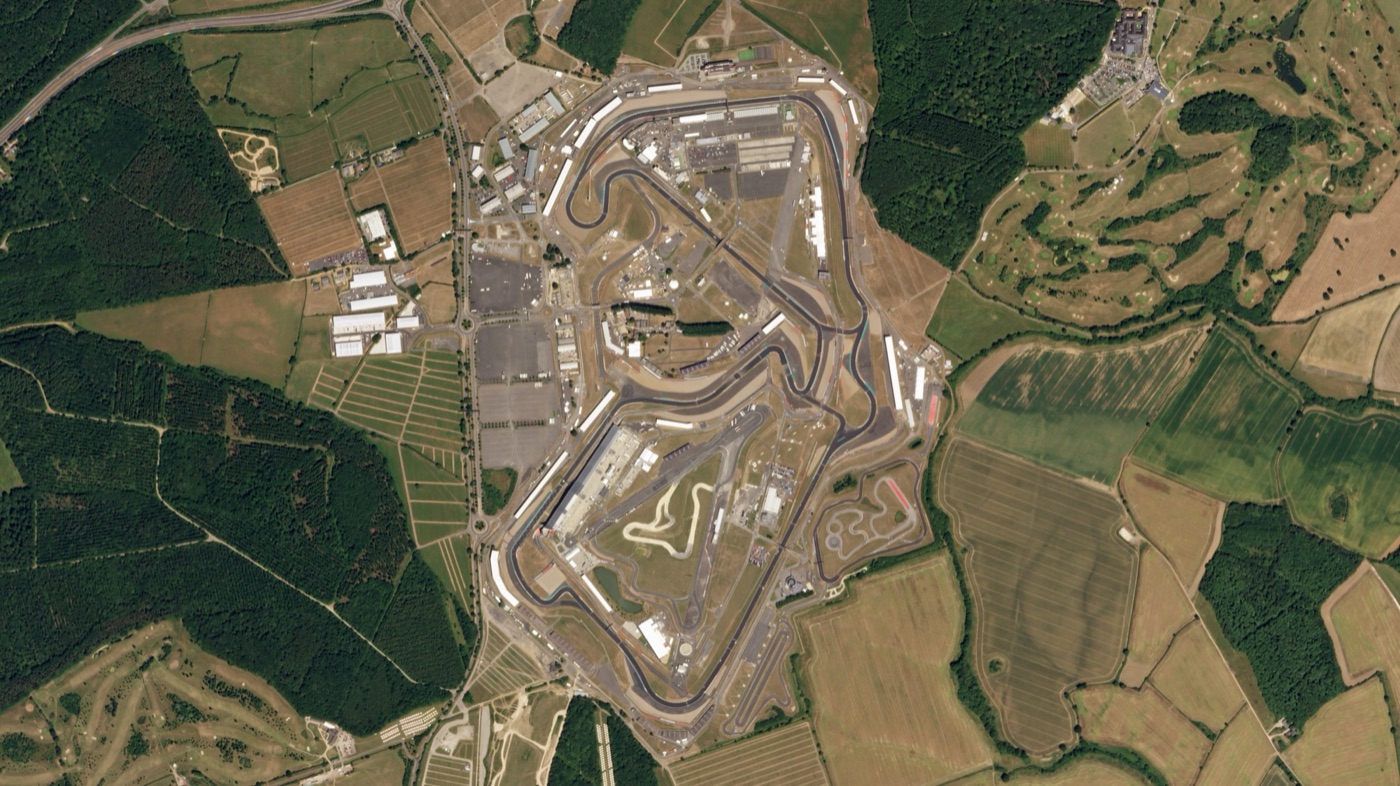
Silverstone Circuit is the motor racing circuit near Towcester in Northamptonshire, England, laid out on the runways and perimeter road of RAF Silverstone, a Royal Air Force bomber base of the Second World War. It held the first round of the Formula 1 World Championship on 13 May 1950, has hosted the British Grand Prix every year since 1987, and its Grand Prix circuit today is 5.891 km (3.660 miles) long with 18 corners. In 2026, 564,000 people came to Silverstone Circuit over the four days of the Grand Prix.
SkiddMark reported the opening of the present “Arena” layout in April 2010, when Damon Hill and the Duke of York opened the new section in front of 500 guests.
Where is Silverstone Circuit and who owns it?
Silverstone Circuit is at Towcester, Northamptonshire NN12 8TN, between the villages of Silverstone and Whittlebury, and it is owned by the British Racing Drivers’ Club (BRDC). The BRDC’s own history says the club took over the lease from the Royal Automobile Club (RAC) in 1952 and bought the freehold from the Ministry of Defence in 1971. Its wholly owned company, Silverstone Circuits Limited, formed in 1966, runs the commercial side and promotes the British Grand Prix, MotoGP and national championships including the British Touring Car Championship (BTCC), British GT, British Superbikes and GB3.
The club began in 1928 as dinner parties for the Bentley Boys, with 25 members; Silverstone’s page on the BRDC now gives some 850 members and names David Coulthard as president. Stuart Pringle is Silverstone’s chief executive, as Formula 1’s 2024 announcement of the contract to 2034 names him. The Northamptonshire Historic Environment Record notes that the wartime control tower survived as a BRDC office in 2002.
Formula 1’s 2026 circuit guide lists Mercedes, Aston Martin, Red Bull, Haas, Alpine and Cadillac as teams based within an hour of the circuit, and the village of Silverstone itself houses the Aston Martin and Cadillac bases.
History of Silverstone Circuit
Silverstone Circuit began as an airfield the RAC leased for a year in 1948 and became the permanent home of the British Grand Prix in 1987, with a near miss in 2008–09 when the race was promised to Donington Park.
RAF Silverstone and the 1948 Grand Prix
RAF Silverstone opened in 1943, and its three runways, laid out in the usual wartime triangle, still lie inside the outline of the track, according to the Northamptonshire record. Vickers Wellington bombers flew from it, and the Wellington Straight is built on one of their runways. After the war Britain had no major circuit: Donington Park was a military supply dump and Brooklands had been cut apart. The first racing came before the RAC. In 1947, according to PreWarCar’s history of the Frazer Nash Car Club, eleven of the club’s owners laid out a temporary track on the disused airfield that is now Silverstone Circuit and held their own event in secret, until a sheep wandered onto the track and the racing ended, fatally for the sheep; the day became known as the Mutton Grand Prix. Murray Walker later said it was these Frazer Nash enthusiasts’ impromptu races that drew the RAC to Silverstone. The RAC approached the Air Ministry in 1948, arranged a lease, and gave a farmer, James Wilson Brown, about two months to build a Grand Prix circuit.
Murray Walker, then 24, went to that first race in his mother’s Morris Minor. Speaking to Motor Sport in August 2018, he described the course as “a sort of distorted figure of eight” on which drivers charged towards each other down the same runway “with a closing speed approaching 300mph”, and a paddock pass that cost 30 shillings. Silverstone’s own history puts the crowd on 2 October 1948 at about 100,000; Luigi Villoresi won in a Maserati from Alberto Ascari, with Bob Gerard’s ERA third. The start and finish were then between Abbey and Woodcote.
The first World Championship race in 1950
On 13 May 1950 Silverstone held the first race of the new Formula One World Championship, run on the perimeter road alone, and Giuseppe Farina won it in an Alfa Romeo 158. King George VI attended, the only time a reigning monarch has been to a British motor race, according to Silverstone. The 1950 and 1951 lap was 4.649 km, and the 1950 race distance was 325.430 km, according to the StatsF1 record of every Grand Prix at Silverstone.
The BRDC years on the old perimeter circuit
Sources disagree on when the BRDC took over the lease: Silverstone’s timeline gives 1951, the BRDC and the county record give 1952. For the 1952 race the start line moved to the straight between Woodcote and Copse, and the lap became 4.711 km. From 1955 the Grand Prix alternated with Aintree, which held it five times up to 1962, and later with Brands Hatch.
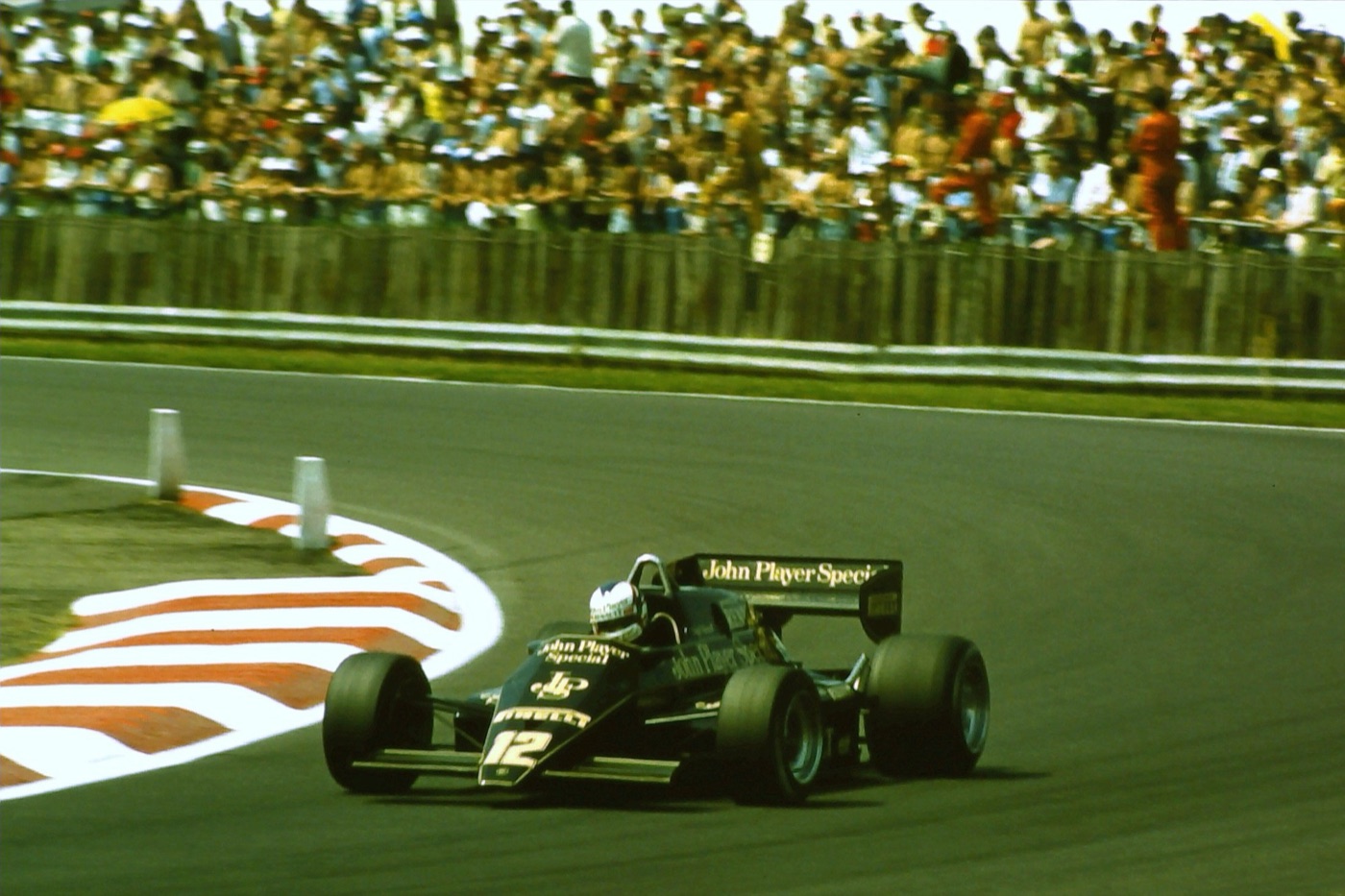
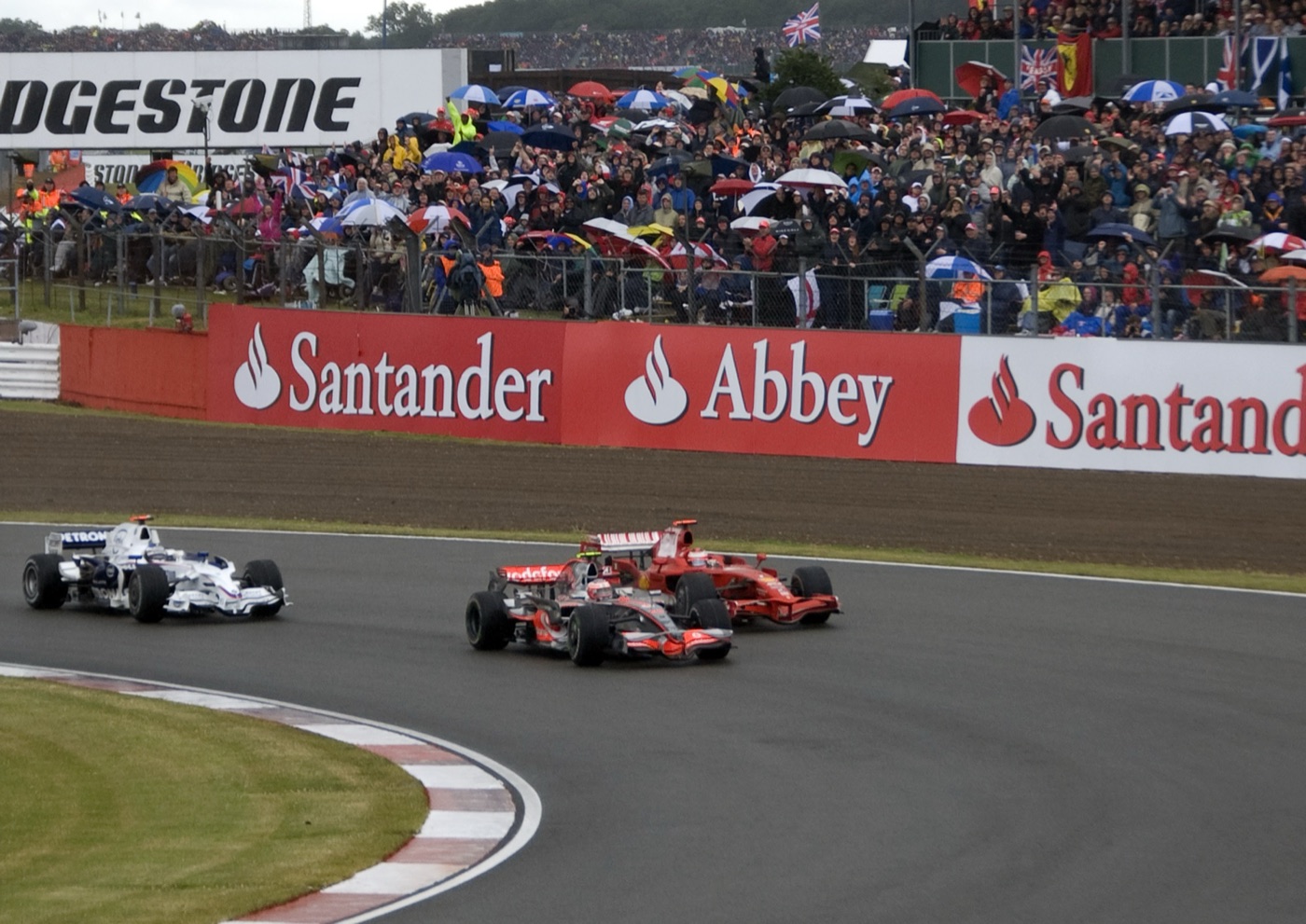
The old circuit was all fast corners, and Woodcote was the fastest. At the end of the first lap of the 1973 Grand Prix Jody Scheckter’s McLaren spun there into the pit wall and set off a nine-car pile-up; Andrea de Adamich was the only driver hurt, as Scheckter told Motor Sport in July 2023. Silverstone says a chicane went in at Woodcote before the 1975 race to slow the cars, at a corner where Ronnie Peterson had slid his Lotus through at about 150mph. It did not slow them much: in qualifying in 1985 Keke Rosberg lapped the 2.9 miles in 1min 05.591sec, 160.9mph, with a slow puncture and in light drizzle, as Damien Smith recalled in Motor Sport’s history of Bridge corner. A new left-right before Woodcote, the start of Luffield, came in for 1987, the year the Grand Prix settled at Silverstone for good and Nigel Mansell beat Nelson Piquet with a pass into Stowe.
The 1991 redesign and the 1994 safety changes
On 9 January 1991 the BRDC unveiled a new Silverstone, five months after work began. Motor Sport’s account has BRDC chairman Tom Walkinshaw and Bernie Ecclestone cutting the ribbon, and lists what changed: Maggotts, Becketts and Chapel became a left-right-left-right-left sequence in place of a single right-hander, Vale was added between Stowe and Club, and a slower complex of Priory, Brooklands and Luffield took over the end of the lap, entered through the new fast right-hander at Bridge. Martin Brundle said of Bridge at the launch: “that’s where I’m going to buy a ticket for when I come and watch!” Motor Sport gives the new lap as 3.202 miles; StatsF1 lists it as 5.226 km (3.247 miles).
After the deaths of Ayrton Senna and Roland Ratzenberger at Imola in 1994, and a testing crash that left Pedro Lamy’s Lotus in the pedestrian tunnel under the bridge, a chicane went in at Abbey for the 1994 Grand Prix. StatsF1 records changes at Copse, Stowe, Abbey and Priory that year (5.057 km), a new Stowe in 1996 (5.072 km), and new Copse, Priory and Luffield corners for 1997 (5.140 km).
How Silverstone nearly lost the British Grand Prix
In July 2008 Donington Ventures Leisure Ltd won a 17-year contract to run the British Grand Prix from 2010, and then lost it when it failed to raise the £135 million its redevelopment needed. SkiddMark followed the story through the autumn of 2009. Donington’s chief executive Simon Gillett said, “if we had the money we would have the 17-year agreement”, while Silverstone’s managing director, Richard Phillips, told BBC Radio Northampton: “We’ve been planning for more than a year, we’ll finish the track works in March and start on the new pits ready for 2011.”
The deal came on 7 December 2009, two days before Ecclestone’s deadline. As SkiddMark reported that day, Silverstone agreed to pay just over £300 million to hold the race for 17 years, against £370 million to 2026 under the terms first offered, and Ecclestone, Formula One Management’s president, called the negotiation “a long and tiring nonsense”. That contract has since been replaced: in February 2024 Formula 1 announced a 10-year extension that keeps the race at Silverstone from 2025 to 2034 inclusive.
The Arena layout of 2010 and the Wing
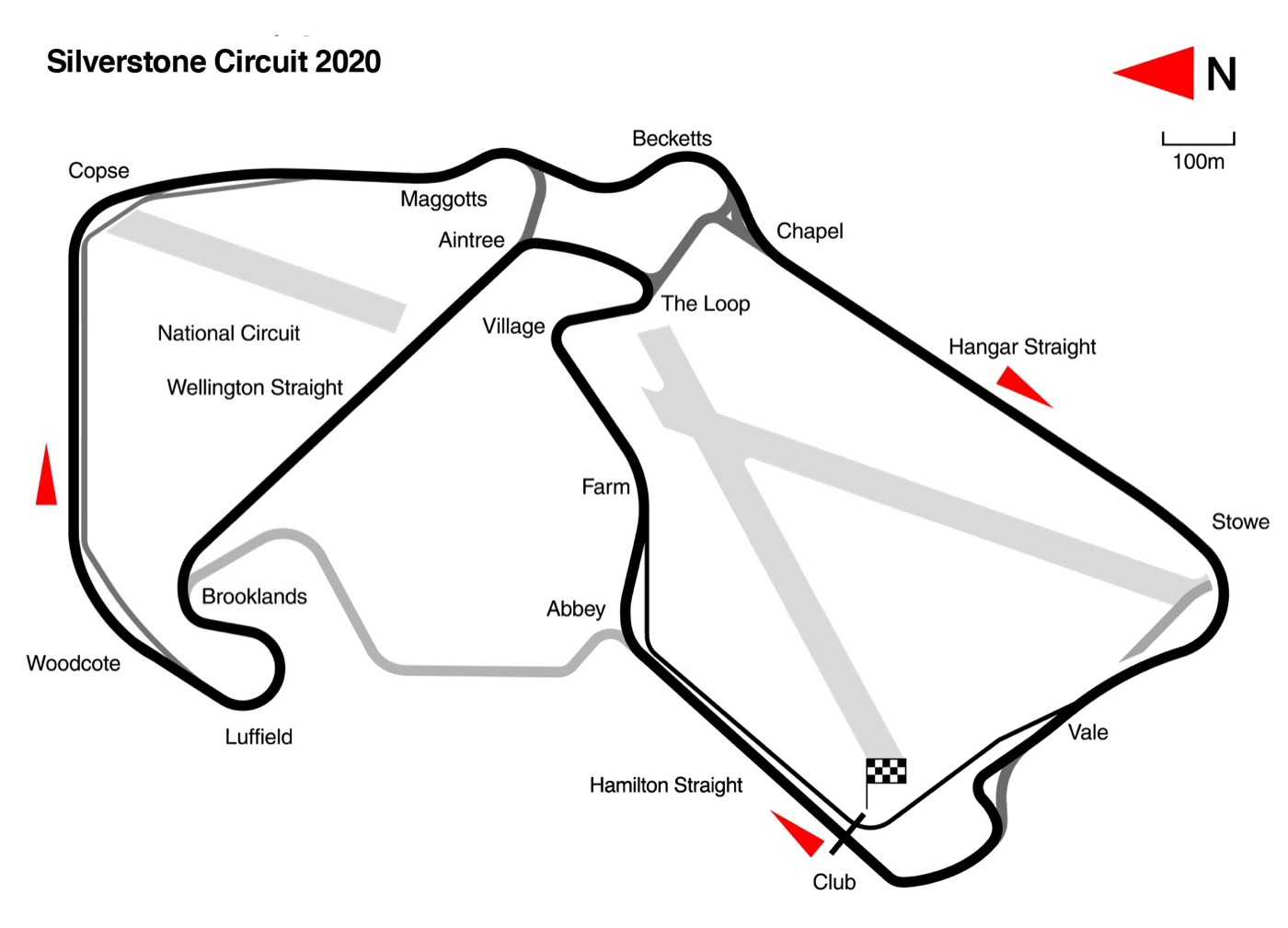
The present Grand Prix layout began as a MotoGP project. Autosport reported on 7 December 2009 that Silverstone was in the middle of a £40 million revamp with a new “Arena” section, named for the views it would give spectators, and had applied to the FIA for homologation. On 11 February 2010 Autosport confirmed that Formula One Management had approved it for that summer’s Grand Prix. The new track leaves the old one at Abbey, runs through an S-bend into the Arena and back down the National circuit’s straight, and rejoins at Brooklands; it added 760 metres and was expected to add four seconds to an F1 lap. “Some will miss not seeing modern day F1 cars accelerating through Bridge,” Phillips said, “but we have to move with the times.”
SkiddMark reported the opening on the day, in late April 2010. The lap grew from 3.19 to 3.66 miles: the cars took a re-profiled Club, then peeled right at Abbey through a quick kink into the new section, joined the Wellington Straight and rejoined the old Grand Prix circuit at Brooklands. BRDC president Damon Hill and the Duke of York opened it in front of 500 guests; Hill then took the Duke for a sideways lap, David Coulthard ran a Red Bull F1 car against the motorcycle-racing father and son Ron and Leon Haslam, and Sir Jackie Stewart declared the track open for motorbikes. FIA GT1 raced on it that weekend, followed by MotoGP on 18–20 June, Formula One on 9–11 July and World Superbikes on 31 July and 1 August. For the GT1 weekend Silverstone let ticket holders cycle the new circuit free each evening, and charged anyone else £5.
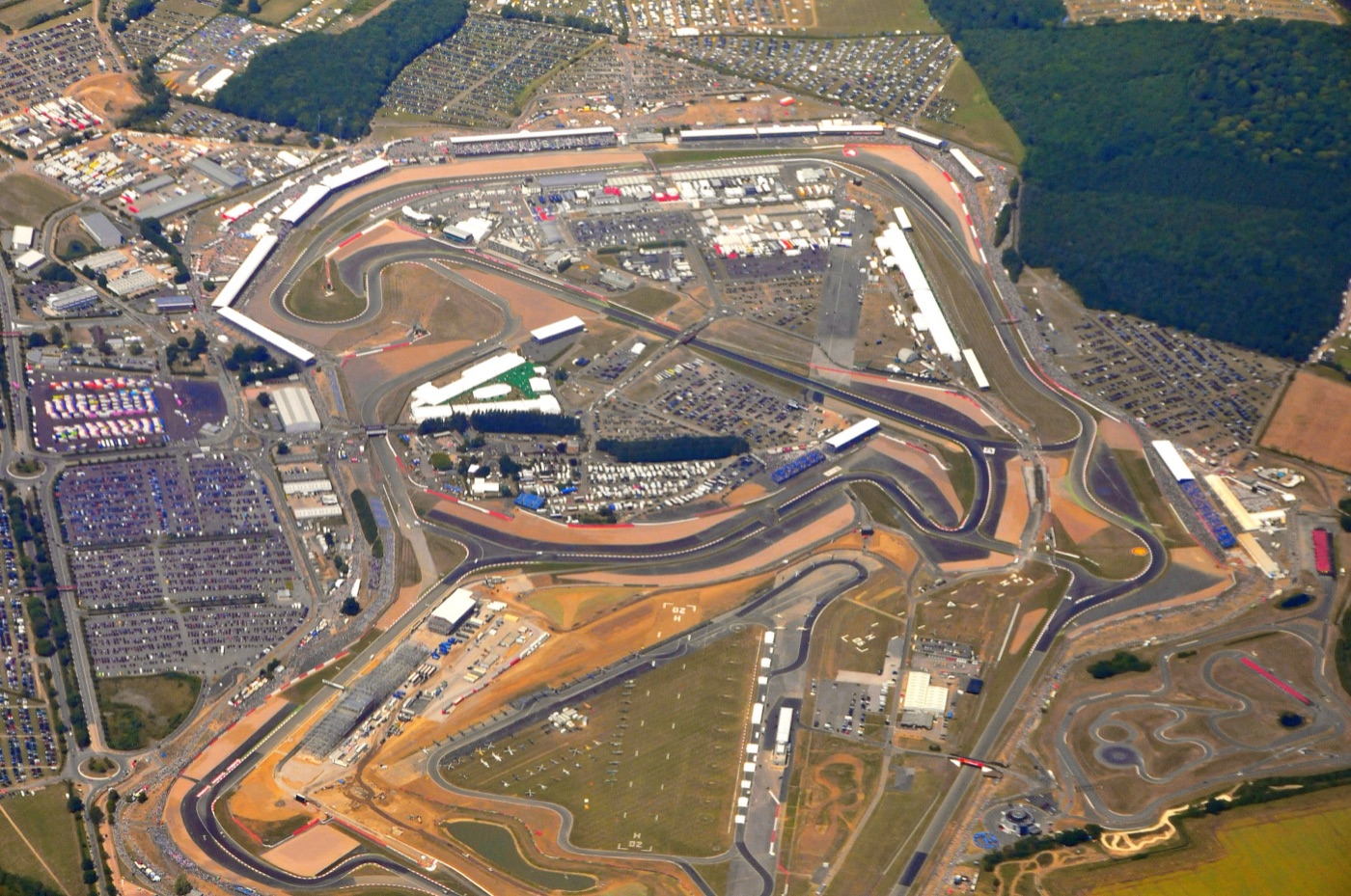
Mark Webber won that first Arena Grand Prix for Red Bull. Motor Sport’s Damien Smith later called the loss of Bridge, a corner that had lasted only 19 years, “the biggest loss” of all Silverstone’s changes; the old track through Bridge and Priory is still there, kerbs included, under the bridge beyond Abbey.
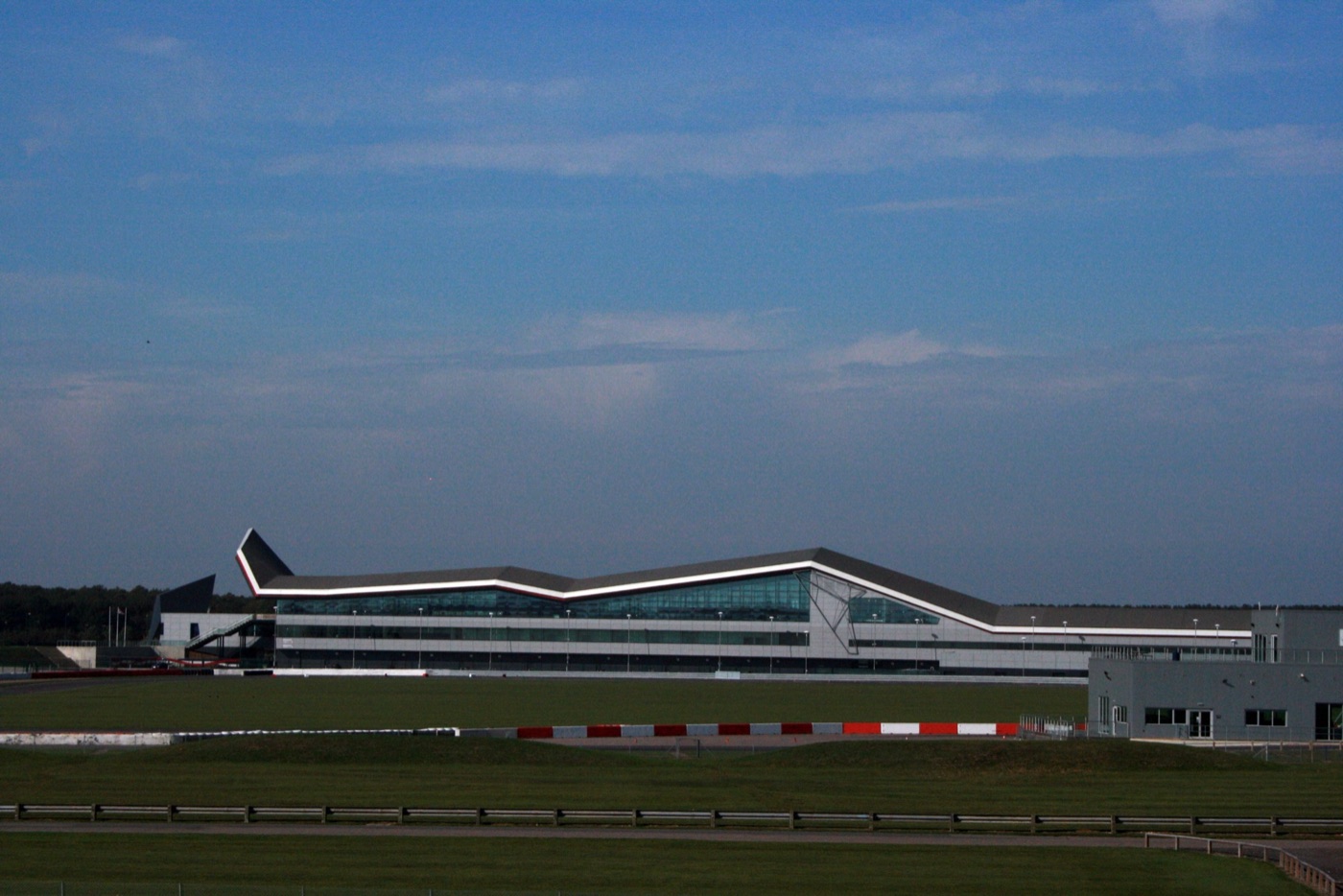
Stage two was a new pit complex between Club and Abbey. In December 2010 SkiddMark reported its name, the Silverstone Wing, picked from more than 4,000 suggestions sent in by the public, ten of which proposed “The Wing”; Phillips said “flight” and “velocity” had been themes of the design brief, a nod to the airfield. Autosport covered the unveiling on 17 May 2011: a 16,500 square-metre building, 30 per cent larger than the old pits, costing £27 million and still unfinished. “Other places were putting up palaces,” said Hill, “but now we have kept Silverstone at the forefront of the world.” From 2011 the start line moved to the straight in front of it, which was renamed the Hamilton Straight in December 2020; Formula 1’s report quotes Coulthard saying it was the first part of the circuit named after any individual.
Record crowds at the British Grand Prix
SkiddMark reported that 40mm of rain on the Thursday and Friday flooded the campsites and car parks, about 10,000 ticket holders could not get in and were refunded at a cost of around £1 million, and the race-day crowd was still a record 127,000. Friday attendance had grown from about 18,000 in 2001 to more than 80,000. The crowds have kept growing: Formula 1 gave 480,000 across the 2023 weekend, with more than 60,000 camping; Silverstone counted 500,000 in 2025; and in 2026 it counted 564,000 over four days, which it calls the biggest Formula One event ever held.
Silverstone Circuit layouts by year
The Grand Prix lap at Silverstone Circuit has changed length ten times since 1950, from 4.649 km on the perimeter road to 5.891 km on today’s Arena circuit; the table counts every World Championship race, including the 70th Anniversary Grand Prix of August 2020.
| Years | What changed | Lap length | F1 races | Fastest F1 race lap on the layout |
|---|---|---|---|---|
| 1950–1951 | Perimeter road only; pits between Abbey and Woodcote | 4.649 km | 2 | 1:44.0, Giuseppe Farina, 1951 |
| 1952–1973 | Start line moved to the straight between Woodcote and Copse | 4.711 km | 12 | 1:18.6, James Hunt, 1973 |
| 1975–1985 | Chicane at Woodcote | 4.719 km | 6 | 1:09.886, Alain Prost, 1985 |
| 1987–1990 | New left-right before Woodcote, the first Luffield (4.780 km from 1989) | 4.778 km | 4 | 1:09.832, Nigel Mansell, 1987 |
| 1991–1993 | Maggotts, Becketts and Chapel esses; Vale; Bridge, Priory, Brooklands and Luffield | 5.226 km | 3 | 1:22.515, Damon Hill, 1993 |
| 1994–1995 | Abbey chicane; slower Copse, Stowe and Priory | 5.057 km | 2 | 1:27.100, Damon Hill, 1994 |
| 1996 | Stowe re-profiled | 5.072 km | 1 | 1:29.288, Jacques Villeneuve, 1996 |
| 1997–2009 | New Copse, Priory and Luffield (5.141 km from 2002) | 5.140 km | 13 | 1:18.739, Michael Schumacher, 2004 |
| 2010 | Arena section from Abbey to Brooklands; Bridge and Priory dropped | 5.891 km | 1 | 1:30.874, Fernando Alonso, 2010 |
| 2011–2026 | Start line moved to the Wing, between Club and Abbey | 5.891 km | 17 | 1:27.097, Max Verstappen, 2020 |
Source: StatsF1, every World Championship Grand Prix at Silverstone (lap lengths, race counts and the fastest race lap of each race); no Grand Prix was held at Silverstone in 1974 or 1986, when the race went to Brands Hatch. StatsF1 gives 5.891 km for 2010 as well; Autosport’s 760 metres added to the 5.141 km lap would make the 2010 Arena lap, with the old start line, about 5.90 km.
How long is Silverstone Circuit today?
The Grand Prix circuit is 5.891 km per Formula 1’s figures, or 3.660 miles (5.890 km) on Silverstone’s testing page, and an F1 race is 52 laps, 306.198 km. The same page lists the two shorter layouts used for national racing and track days: the National circuit, 1.640 miles (2.639 km), on which the Wellington Straight leads into Brooklands, and the International circuit, 1.85 miles (2.97 km). On the infield is the small Stowe circuit, which Silverstone offers for supercar development and shakedowns. In November 2009 SkiddMark reported the Stowe Complex, a 1.15-mile multi-surface track with a three-lane wet handling pad, as the first phase of a £7 million track programme on what was then an 800-acre site.
Silverstone corners and what they are named after
Silverstone’s corners have names, which drivers and engineers use in place of numbers, and most come from the land around the airfield or from the RAC, which ran the first races. The table follows Formula 1’s explainer on the corner names, in lap order.
| Turn | Name | Named after |
|---|---|---|
| 1 | Abbey | The remains of Luffield Abbey, a medieval monastery found nearby |
| 2 | Farm | The farm beside the original straight; a fast curve since 2010 |
| 3 | Village | Silverstone village |
| 4 | The Loop | Its shape; the slowest corner on the lap |
| 5 | Aintree | The Liverpool racecourse that held the British Grand Prix five times between 1955 and 1962 |
| – | Wellington Straight | The Vickers Wellington bombers that used the runway it was built on |
| 6 | Brooklands | The Surrey track that held the first British Grands Prix in 1926 and 1927 |
| 7 | Luffield | Luffield Abbey again |
| 8 | Woodcote | Woodcote Park, the RAC’s country club in Surrey |
| 9 | Copse | Chapel Copse and Cheese Copse, small woods beside the corner |
| 10–14 | Maggotts, Becketts, Chapel | Maggots Moor; a medieval chapel to Thomas Becket, demolished in 1943 to build the airfield |
| – | Hangar Straight | Two of the airfield’s largest hangars |
| 15 | Stowe | Stowe School nearby; some believe its former pupils were among the first to suggest racing on the airfield |
| 16 | Vale | Uncertain: a small dip, or Aylesbury Vale, the district this part of the circuit sits in |
| 17–18 | Club | The RAC’s London clubhouse |
What is a lap of Silverstone like?
At the 2018 British Grand Prix Lewis Hamilton compared a flat-out lap to flying a fighter jet. Jolyon Palmer, the former Renault driver, told Formula 1 that Copse, Maggotts and Becketts are where drivers “feel g-force on your body that is pretty rare in Formula 1”, that Abbey is flat out, and that Brooklands, a heavy braking zone into a tight left, is “maybe the hardest corner on the circuit”. Under the 2026 rules there are four Straight Mode zones, where the cars open their front and rear wings to cut drag: the start-finish straight, between Turns 5 and 6, between Turns 7 and 9, and the Hangar Straight between Turns 14 and 15.
Lap records at Silverstone
The Silverstone lap record is 1min 27.097sec, set by Max Verstappen in a Red Bull at the 2020 British Grand Prix, an average of 243.494 km/h. Formula 1’s circuit guide says only Monza and Jeddah have faster lap records among the circuits in use. The fastest qualifying lap on the layout is Lewis Hamilton’s pole for that same race, 1min 24.303sec, per StatsF1. On the old 4.719 km circuit the fastest race lap was Alain Prost’s 1min 09.886sec in 1985.
British Grand Prix winners at Silverstone
Lewis Hamilton has won the most World Championship races at Silverstone, nine (2008, 2014 to 2017, 2019, 2020, 2021 and 2024), ahead of Alain Prost with five and Jim Clark, Nigel Mansell and Michael Schumacher with three each, from 61 World Championship races there between 1950 and 2026, by our count of StatsF1’s results. Silverstone says Hamilton’s third place in 2026 was his 16th podium there, the most by any driver at a single circuit.
| Date | Race | Winner | Pole position |
|---|---|---|---|
| 11 July 2010 | British GP | Mark Webber | Sebastian Vettel |
| 10 July 2011 | British GP | Fernando Alonso | Mark Webber |
| 8 July 2012 | British GP | Mark Webber | Fernando Alonso |
| 30 June 2013 | British GP | Nico Rosberg | Lewis Hamilton |
| 6 July 2014 | British GP | Lewis Hamilton | Nico Rosberg |
| 5 July 2015 | British GP | Lewis Hamilton | Lewis Hamilton |
| 10 July 2016 | British GP | Lewis Hamilton | Lewis Hamilton |
| 16 July 2017 | British GP | Lewis Hamilton | Lewis Hamilton |
| 8 July 2018 | British GP | Sebastian Vettel | Lewis Hamilton |
| 14 July 2019 | British GP | Lewis Hamilton | Valtteri Bottas |
| 2 August 2020 | British GP | Lewis Hamilton | Lewis Hamilton |
| 9 August 2020 | 70th Anniversary GP | Max Verstappen | Valtteri Bottas |
| 18 July 2021 | British GP | Lewis Hamilton | Max Verstappen |
| 3 July 2022 | British GP | Carlos Sainz | Carlos Sainz |
| 9 July 2023 | British GP | Max Verstappen | Max Verstappen |
| 7 July 2024 | British GP | Lewis Hamilton | George Russell |
| 6 July 2025 | British GP | Lando Norris | Max Verstappen |
| 5 July 2026 | British GP | Charles Leclerc | Kimi Antonelli |
Source: StatsF1; 2026 confirmed by Formula 1’s official result.
The 2026 race finished behind the safety car after Verstappen went off at Stowe on lap 47 (lap 48 in Silverstone’s report). Silverstone’s race report says Ferrari’s Charles Leclerc took his first Silverstone win from George Russell and Hamilton, after pole-sitter Antonelli’s Mercedes lost a wheel shield and dropped out of the points.
MotoGP at Silverstone
The British motorcycle Grand Prix first came to Silverstone in 1977, when the round moved from the Isle of Man TT course, and stayed for ten years before going to Donington Park, as Crash.net’s history of those races records; Pat Hennen won the first 500cc race for Suzuki. In 1979 Barry Sheene finished 0.03 seconds behind Kenny Roberts, and Sheene’s Suzuki was on show when the Silverstone Museum opened in 2019. MotoGP came back in 2010, on the layout built for it.
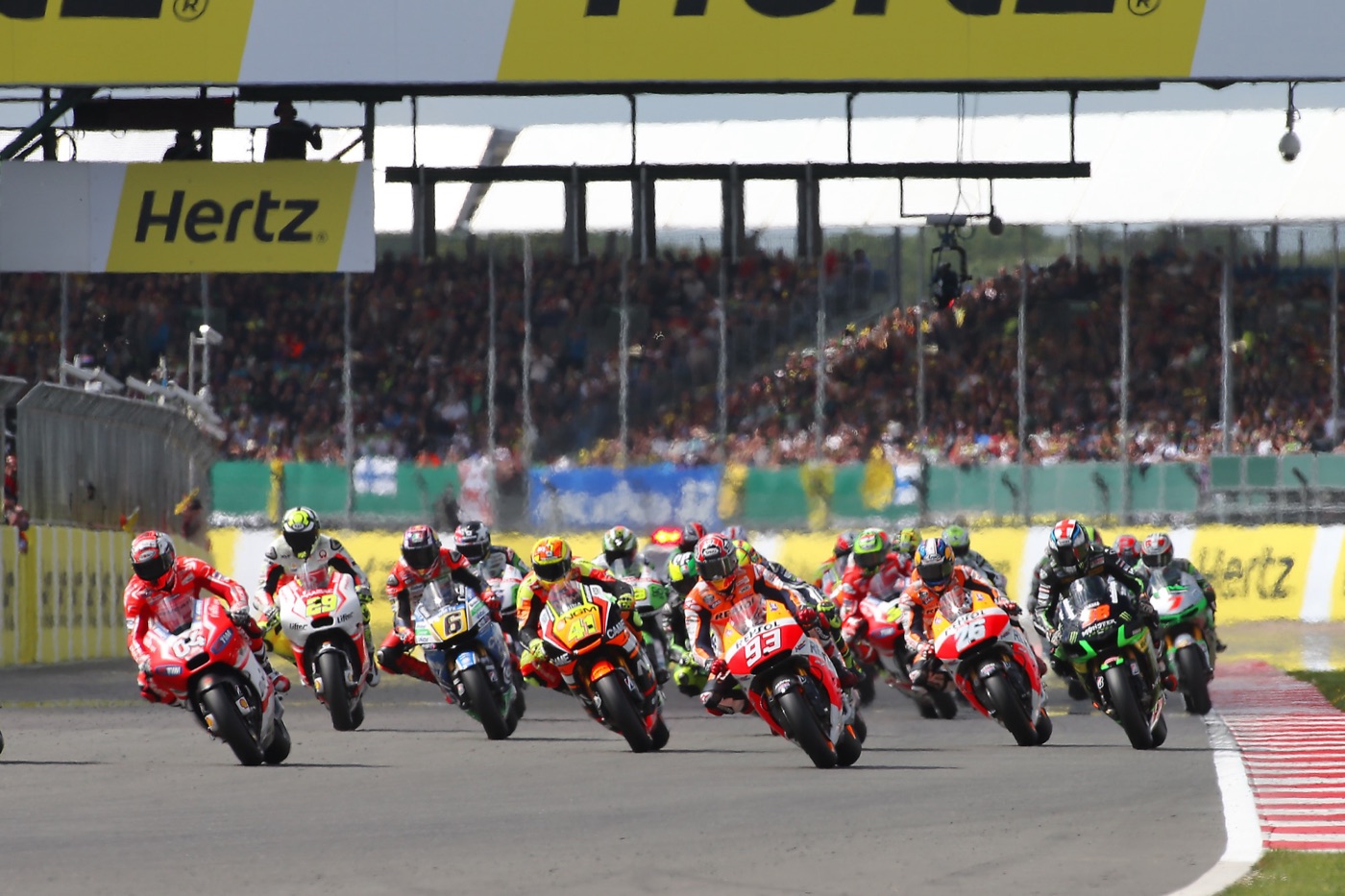
In 2018 the race never happened. The track had been resurfaced in February that year, and when rain came on the Saturday, standing water made the riders aquaplane at Stowe; Tito Rabat broke his right femur in three places when a fallen bike hit him in the gravel, and the Sunday was called off, as Motor Sport reported from the aftermath. Silverstone and Aggregate Industries, the resurfacing contractor, began a joint investigation.
On 9 August 2026 Raúl Fernández won for Trackhouse Aprilia from Jorge Martín and Marco Bezzecchi, leading from the first corner. MotoGP’s report notes he was the 12th different winner in the last 12 British Grands Prix at the circuit.
The next MotoGP race at Silverstone Circuit is on 13–15 August 2027, according to Silverstone’s events calendar.
Other races at Silverstone
Away from Formula One and MotoGP, Silverstone’s motor racing calendar is mostly national championships, with a few international motorsport meetings. The FIA World Endurance Championship raced there from 2012 to 2019 and returns for the 6 Hours of Silverstone on 23–25 April 2027, the third round of a nine-race season, Silverstone announced after the calendar was published on 12 June 2026.
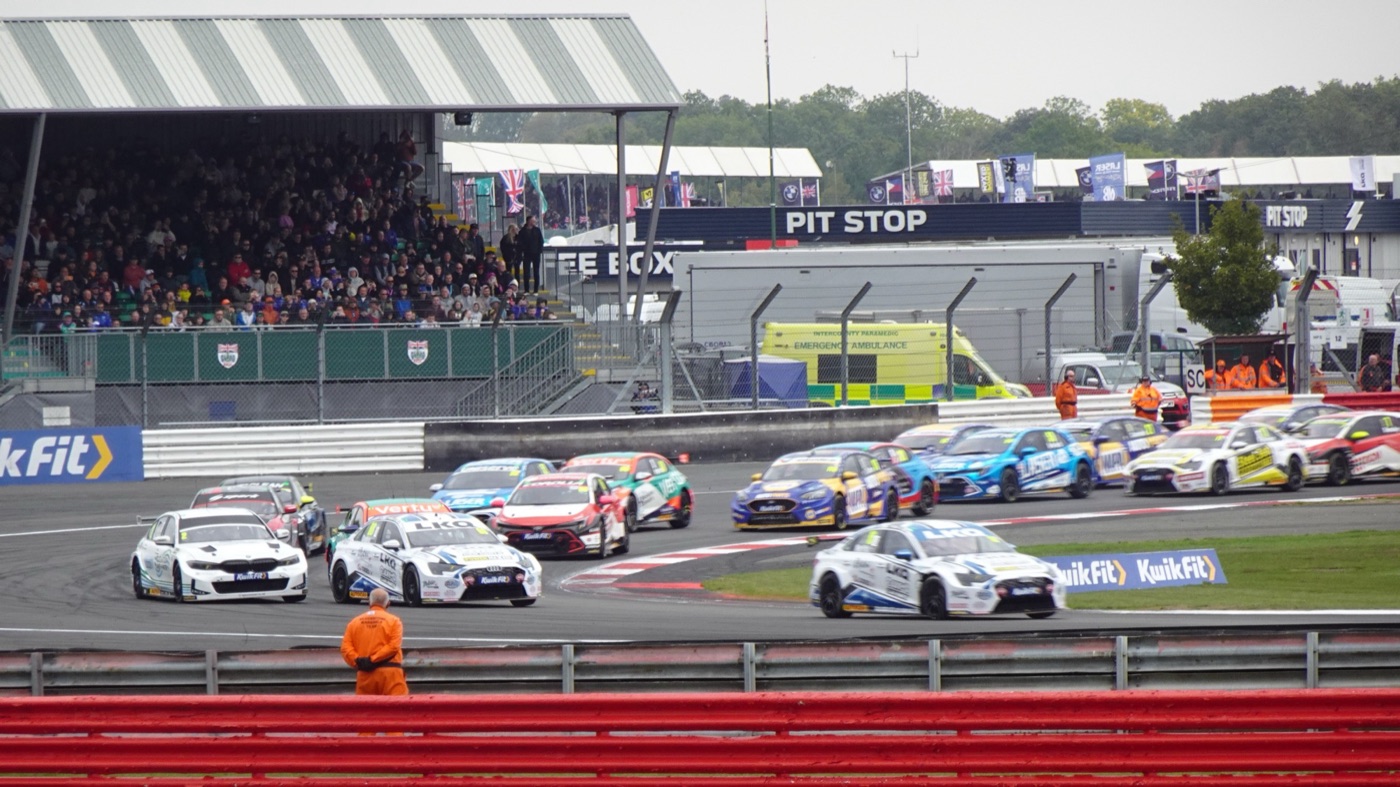
The big historic meeting changed in 2026. Autosport reports that the BRDC Classic, run by the club with Motor Racing Legends at the end of July, replaced the Silverstone Classic and Silverstone Festival, an event that dated from 1990 and had grown into the circuit’s second-biggest racing weekend after MotoGP. Its August slot went to CarFest, which has no racing. The new meeting ran 21 races for 12 groups of cars, all from the old National paddock.
Visiting Silverstone Circuit
Away from race weekends Silverstone Circuit runs track days, driving experiences, karting and its museum; the busiest weekend is the British Grand Prix, which in 2027 runs from 1 to 4 July.
Getting to Silverstone
For the Grand Prix, Silverstone’s travel page lists shuttle buses from Milton Keynes (50 minutes), Northampton (40), Banbury (50), Oxford Parkway (50) and Coventry (80) stations, at £8 a person a day return when booked before 31 March 2027, plus park and ride from Sixfields, Hinton and Bicester with a £10 vehicle pass. National Express and Megabus run coaches to the Luffield entrance, there is no drop-off at the circuit, motorcycle parking is free, and helicopters shuttle from Turweston Aerodrome, 15 minutes each way.
British Grand Prix tickets
For 2027 Silverstone sells General Admission for single days or the weekend, General Admission Plus standing areas, more than 20 grandstands and six enclosures, all including the evening concerts and entry to the museum, according to its 2027 ticket guide. The Landostand, a grandstand for Lando Norris’s fans, seats more than 16,000 and sold out in 2026; a George Russell Grandstand at Farm Curve is new for 2027, and the weekend includes a sprint race.
Silverstone Museum
Silverstone Museum is in a restored wartime RAF hangar near Luffield. Motorcycle News reported that it opened to the public on 25 October 2019 after a seven-year project, with a £9.1 million National Lottery Heritage Fund grant to the charity Silverstone Heritage Ltd, in a 4,000 square-metre space. It has a lap of the track in a 4D cinema with Murray Walker’s commentary, a section on the corner names, and cars and bikes on loan, among them Sheene’s 1979 Suzuki and Maverick Viñales’s 2016 race-winning Suzuki. The museum’s own site now adds a simulator suite and a mixed-reality show on Alberto Ascari.
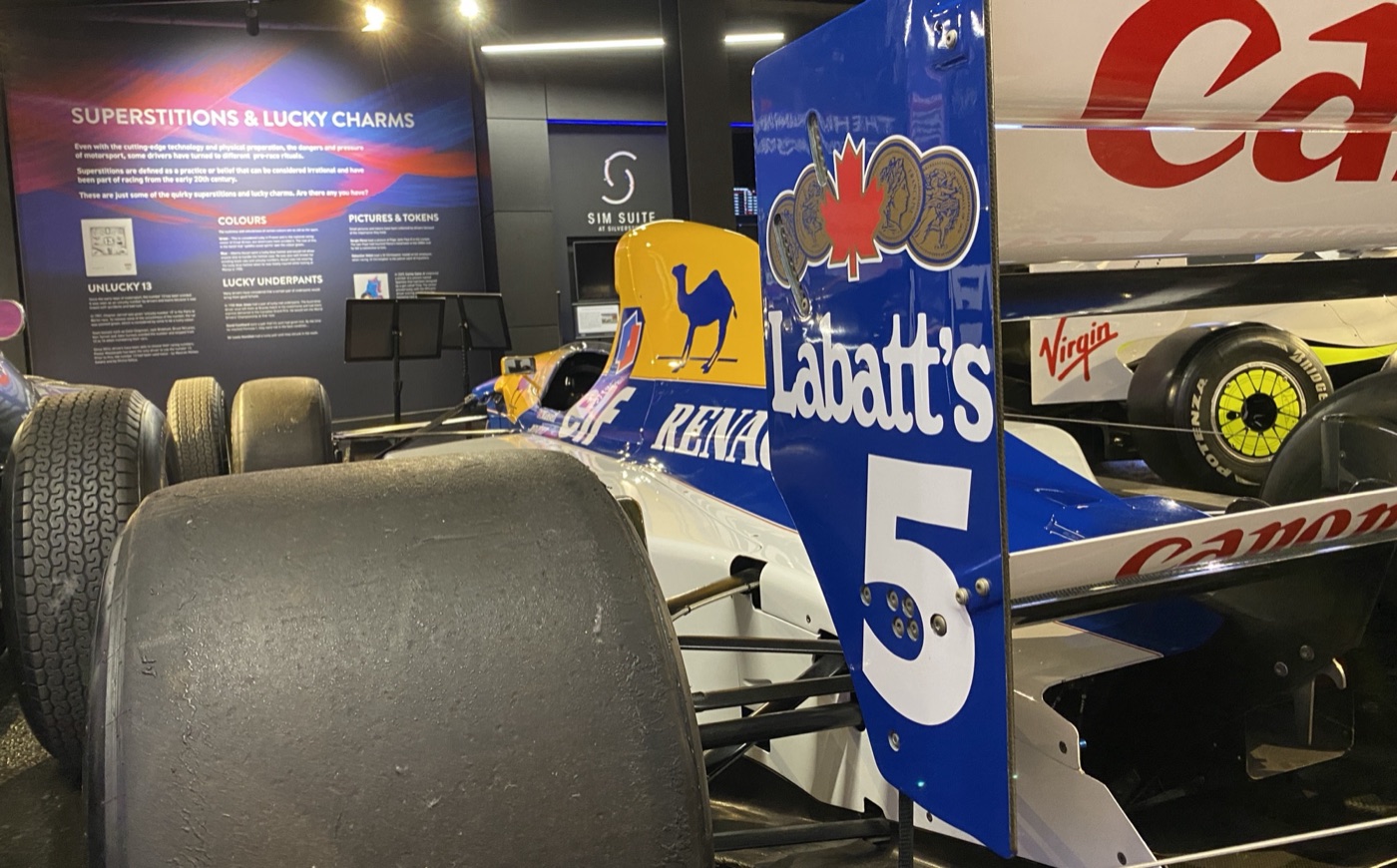
Track days and driving at Silverstone
Silverstone says anyone “from hobbyists to racers” can take their own car on the circuit at a track day; Silverstone’s car track day calendar showed National circuit days from £314 in November 2026, run to a 102 dB(A) noise limit. Silverstone’s driving experiences start at £249, and there is an outdoor kart track, Kart Silverstone.
Questions
Was Silverstone the first Formula 1 race?
It held the first World Championship race: on 13 May 1950 Silverstone ran the first round of the Formula One World Championship, won by Giuseppe Farina in an Alfa Romeo 158, and Formula 1 calls the British Grand Prix the oldest fixture in the championship.
What was the first race at Silverstone?
An unofficial one: in 1947 Frazer Nash Car Club owners raced on the disused airfield until a sheep strayed onto the track, and the day became known as the Mutton Grand Prix. The first organised race was the RAC’s Grand Prix of 2 October 1948, won at Silverstone Circuit by Luigi Villoresi in a Maserati.
How many corners does Silverstone have?
The Grand Prix circuit has 18, numbered from Abbey (Turn 1) to Club (Turns 17 and 18), though drivers and engineers use the names.
Why is it called the Hamilton Straight?
The BRDC renamed the International Pit Straight after Lewis Hamilton in December 2020, after his seventh world title; it was the first part of the circuit named after a person.
When is MotoGP at Silverstone in 2027?
On 13–15 August 2027, according to Silverstone’s events calendar. The 2026 race was on 9 August and was won by Raúl Fernández.
Can you visit Silverstone Museum without a race ticket?
Yes. Silverstone Museum sells its own tickets, and when it opened in 2019 it was open every day of the year except Christmas Day; a British Grand Prix ticket also includes entry.
Sources
- British Racing Drivers’ Club, “History”: the club’s founding in 1928, the lease in 1952, the freehold in 1971, Silverstone Circuits Limited and the events it promotes.
- Silverstone, “British Racing Drivers’ Club”: about 850 members and the president.
- Northamptonshire Historic Environment Record, “8630/2 Silverstone Motor Racing Circuit”: RAF Silverstone, the RAC lease of 1948, James Wilson Brown, the Grand Prix every year since 1987, the control tower.
- Silverstone, “Our History”: the 1948 race and crowd, King George VI in 1950, the BRDC in 1951, the Woodcote chicane of 1975, Mansell in 1987.
- Motor Sport, “Silverstone’s first race: the 1948 British Grand Prix”, August 2018: Murray Walker’s memories of the 1948 race.
- PreWarCar, “Frazer Nash Car Club Centenary: The Chain Gang comes of age”, September 2022: the 1947 Mutton Grand Prix.
- Motor Sport, Damien Smith, “‘Cars were crashing all around’: Jody Scheckter on 1973 British GP nine-car pile-up”, July 2023: the 1973 accident at Woodcote.
- Motor Sport, Damien Smith, “A Bridge to the past: Silverstone’s lost great corner”, July 2020: Rosberg’s 1985 lap, the 1991 launch, Bridge corner, the 1994 Abbey chicane.
- StatsF1, “Silverstone”: lap length, winner, pole and fastest lap of every World Championship race at Silverstone, 1950–2026.
- Formula 1, “Circuit guide: everything you need to know about Silverstone”, July 2026: the lap record, the first Grand Prix, Palmer’s description, Straight Mode zones, nearby teams.
- Formula 1, “Explained: how every Silverstone corner got its name”, July 2026: the corner table.
- Formula 1, “British Grand Prix to enter ninth decade with new 10-year deal through 2034”, February 2024: the contract to 2034, the 2023 crowd.
- Formula 1, “Silverstone renames pit straight in honour of seven-time champion Hamilton”, December 2020: the Hamilton Straight.
- Formula 1, “British Grand Prix 2026: race result”: the 2026 result.
- Autosport, “Silverstone plans new British GP layout”, 7 December 2009: the £40 million revamp and the Arena homologation.
- Autosport, “Silverstone to use new track for 2010 GP”, 11 February 2010: the Arena route, 760 metres, four seconds, Phillips on Bridge.
- Autosport, “Silverstone unveils new ‘wing’ complex”, 17 May 2011: the Wing’s size, cost and opening.
- Silverstone, “The 2025 British Grand Prix in numbers”: the 2023–2025 crowds.
- Silverstone, “2026 British Grand Prix in numbers”: the 564,000 crowd, the Landostand, Hamilton’s 16 podiums.
- Silverstone, “2026 British Grand Prix F1 results”: how the 2026 race was won.
- Silverstone, “Testing”: lengths of the Grand Prix, National and International circuits.
- Crash.net, “Ten years of grand prix racing at Silverstone”: the motorcycle Grands Prix of 1977–1986.
- Motor Sport, “Silverstone: the aftermath”, September 2018: the cancelled 2018 MotoGP race.
- MotoGP, “Flawless Fernandez flies to victory at Silverstone”, 9 August 2026: the 2026 MotoGP race.
- Silverstone, “WEC 2027 calendar: Silverstone return confirmed”, June 2026: the 6 Hours of Silverstone in 2027.
- Autosport, “How Silverstone has proved that bigger isn’t always better”, 2026: the BRDC Classic.
- Silverstone, “Events”: the 2027 MotoGP date.
- Silverstone, “Getting to the British Grand Prix”: buses, park and ride, coaches, helicopters.
- Silverstone, “Formula 1 British Grand Prix 2027 tickets explained”: dates and ticket types for 2027.
- Motorcycle News, “Why you should visit Silverstone’s Experience Centre”, October 2019: the museum’s opening, funding and exhibits.
- Silverstone Museum: the simulator suite and the Ascari show.
- Silverstone, “Car track days”: track day prices and format.
- SkiddMark, “Silverstone launches new Grand Prix circuit”, April 2010, with “Silverstone invites fans to cycle the new Grand Prix circuit”, April 2010: the opening of the Arena layout.
- SkiddMark, “Silverstone unveils new driving experience and test complex”, November 2009; “Gillett won’t give up fight for British GP”, 2009; “Silverstone secures British Grand Prix”, 7 December 2009; “Silverstone’s new building is named ‘The Silverstone Wing’”, December 2010; “Silverstone makes provision for another sell-out British Grand Prix in 2013”, December 2012.
This article was written in October 2026 to replace SkiddMark’s report of April 2010 on the opening of Silverstone’s new Grand Prix circuit, whose facts it keeps.