Stirling Moss: career, cars, results and rivals
Stirling Moss (1929–2020) was a British racing driver who won 16 of his 66 Formula One World Championship Grands Prix between 1951 and 1961 and finished second in the championship four times, but never won the title. He also won the 1955 Mille Miglia for Mercedes-Benz, with the journalist Denis Jenkinson beside him, in a time nobody ever beat, and seven RAC Tourist Trophies. A crash at Goodwood on 23 April 1962 ended his professional career at 32. He was knighted in 2000 and died at home in London on 12 April 2020, aged 90.
Early life and first races
Moss was born in London on 17 September 1929, the son of Alfred Moss, a dentist, according to the birth-register entry summarised by Grace’s Guide. Mercedes-Benz’s release on his death says that both his parents, Alfred and Aileen, competed in the 1920s and 1930s, and that his younger sister, Pat, later raced and rallied in the 1950s and 1960s. Alfred had driven a Barber-Warnock Fronty-Ford to 16th place in the 1924 Indianapolis 500, covering 177 of the 200 laps (ChampCarStats’s 1924 result).
Stirling was educated at Haileybury and in 1945 began training in the hotel trade with Associated British Hotels (Grace’s Guide). Speaking to Motor Sport’s Simon Taylor in 2009, he remembered working as a night porter and in the kitchens before he started racing seriously.
The Cooper 500 and the 1948 season
His first competitions came in 1948 in a 500 cc single-seater built by Charles and John Cooper, who “gave Stirling his first drive”, as Motor Sport put it in February 2000. He finished fourth first time out, won his second event, at Brighton, and won 12 of the 15 competitions he entered that year, by Mercedes-Benz’s count. In 1949 he took on a manager to handle his business, at a time when most drivers still negotiated their own fees.
The 1950 Tourist Trophy
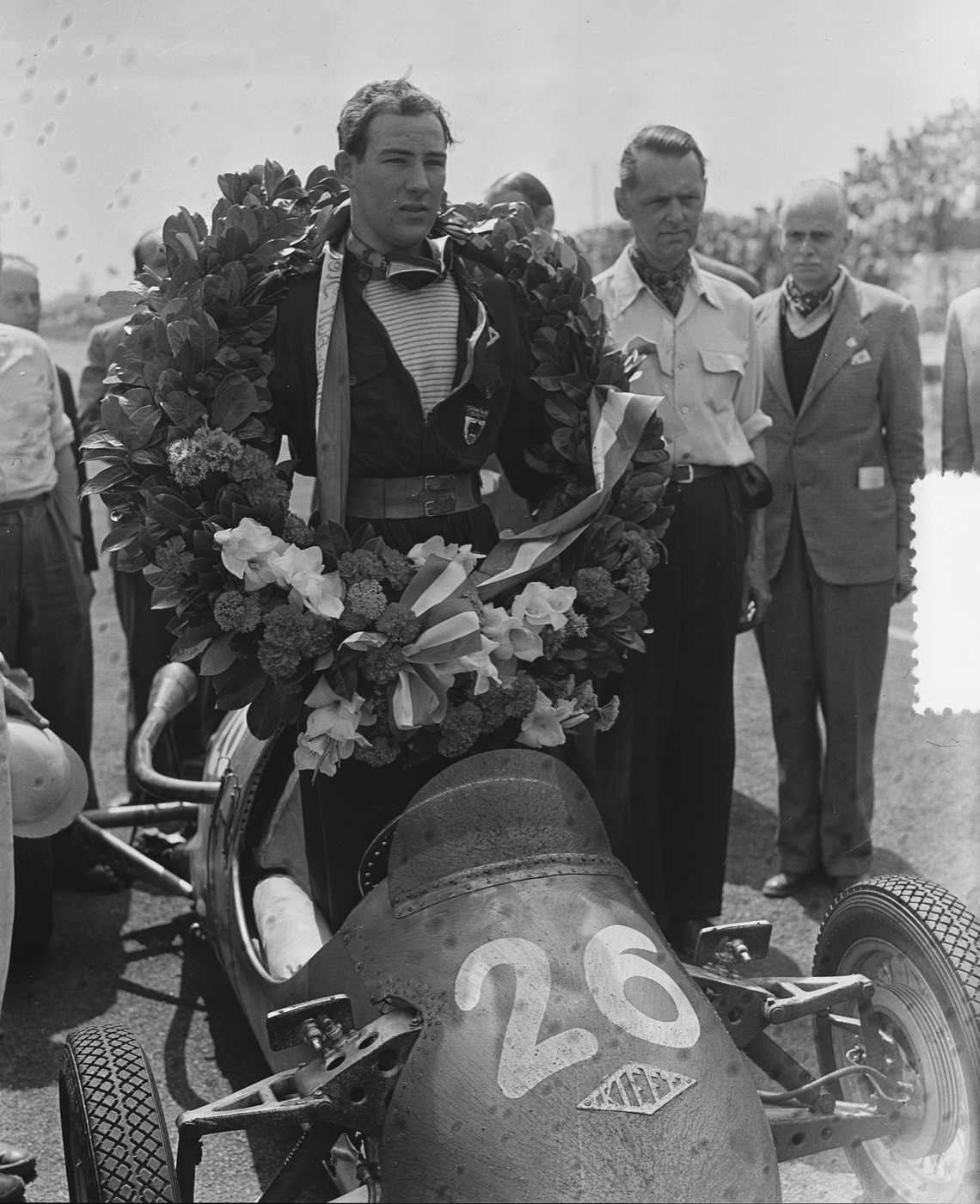
The first big win came the day before his 21st birthday. On 16 September 1950 he won the RAC Tourist Trophy in a Jaguar XK120 entered by Tommy Wisdom (Racing Sports Cars’ record of his results). By then he was a professional driver for H. W. Motors, and his 1950 season in its HWM, with the Tourist Trophy and the 500 cc race at Monaco in a Cooper, won him the Road Racing Gold Star and the Seaman Trophy as the most successful driver of the year (Grace’s Guide). He won the Tourist Trophy again in 1951, in a works Jaguar C-type.
Formula One career, team by team
Moss started 66 World Championship Grands Prix from 1951 to 1961 and won 16 of them (Formula 1’s report of his death). He won them for the works Mercedes-Benz, Maserati and Vanwall teams and in Coopers and Lotuses entered by Rob Walker’s private team (Reuters, via The Globe and Mail). His World Championship debut came in 1951. He scored no championship points in 1951, 1952 or 1953; his first, 4.1 points for 13th place, came in a Maserati in 1954.
| Season | Car | Wins | Position | Points | Champion (points) |
|---|---|---|---|---|---|
| 1954 | Maserati | 0 | 13th | 4.1 | Juan Manuel Fangio (42) |
| 1955 | Mercedes-Benz | 1 | 2nd | 23 | Juan Manuel Fangio (40) |
| 1956 | Maserati | 2 | 2nd | 27 | Juan Manuel Fangio (30) |
| 1957 | Vanwall | 3 | 2nd | 25 | Juan Manuel Fangio (40) |
| 1958 | Vanwall; Cooper-Climax | 4 | 2nd | 41 | Mike Hawthorn (42) |
| 1959 | Cooper-Climax | 2 | 3rd | 25.5 | Jack Brabham (31) |
| 1960 | Lotus-Climax | 2 | 3rd | 19 | Jack Brabham (43) |
| 1961 | Lotus-Climax | 2 | 3rd | 21 | Phil Hill (34) |
1951–1954: from no points to a Maserati 250F
In 1954, with what David Tremayne called “huge reluctance”, he decided to “go foreign” and bought a Maserati 250F, and he kept his number in the phone book so that anyone who objected could ring him to argue about it (Tremayne’s obituary for Formula 1). The Maserati brought his first points, and Mercedes-Benz signed him for 1955 (the Mercedes-Benz Classic archive).
Mercedes-Benz and Fangio, 1955
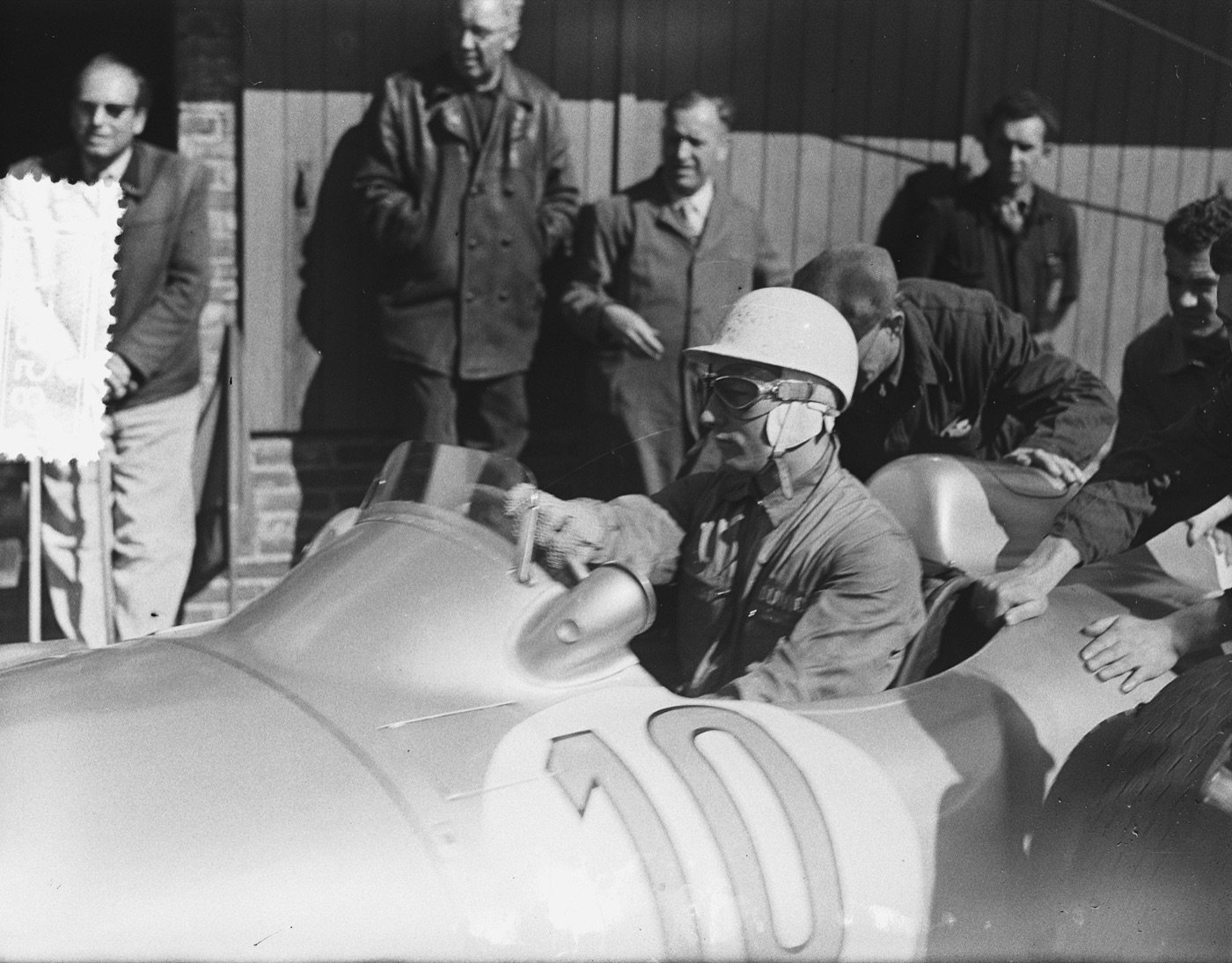
At Mercedes-Benz Moss was team-mate to Juan Manuel Fangio in both the W 196 R Grand Prix car and the 300 SLR sports car. He was second to Fangio in the Belgian and Dutch Grands Prix, and on 16 July 1955, at Aintree, he became the first British driver to win the British Grand Prix (Mercedes-Benz, 2020). Formula 1’s result shows how close it was: Moss beat Fangio by 0.2 seconds, with Karl Kling and Piero Taruffi third and fourth, so Mercedes-Benz took the first four places. Moss believed Fangio might have let him win at home; Fangio never said so (Andrew Benson’s obituary for BBC Sport). Mercedes-Benz withdrew from racing at the end of the season, and Moss was runner-up to Fangio in the championship.
Maserati again, 1956
Back at Maserati, Moss won the Monaco Grand Prix on 13 May 1956 and the Italian Grand Prix at Monza on 2 September, and was second again to Fangio, now at Ferrari, by 27 points to 30 (Formula 1 results archive).
Vanwall, 1957–1958
In 1957 Moss joined Vanwall, a British team. At Aintree on 20 July he shared the winning Vanwall with Tony Brooks in the British Grand Prix, and Formula 1’s result lists both men as winners. He won at Pescara on 18 August and the Italian Grand Prix on 8 September, and was second to Fangio for the third year running. In 1958 he won the opening race, in Argentina, in Rob Walker’s rear-engined Cooper, then won for Vanwall in the Dutch, Portuguese and Moroccan Grands Prix. Motor Sport wrote in 2000 that the 2-litre Cooper T43 beat the Ferraris in Argentina by running 200 miles without stopping for fuel or tyres.
Rob Walker’s Cooper and Lotus, 1959–1961
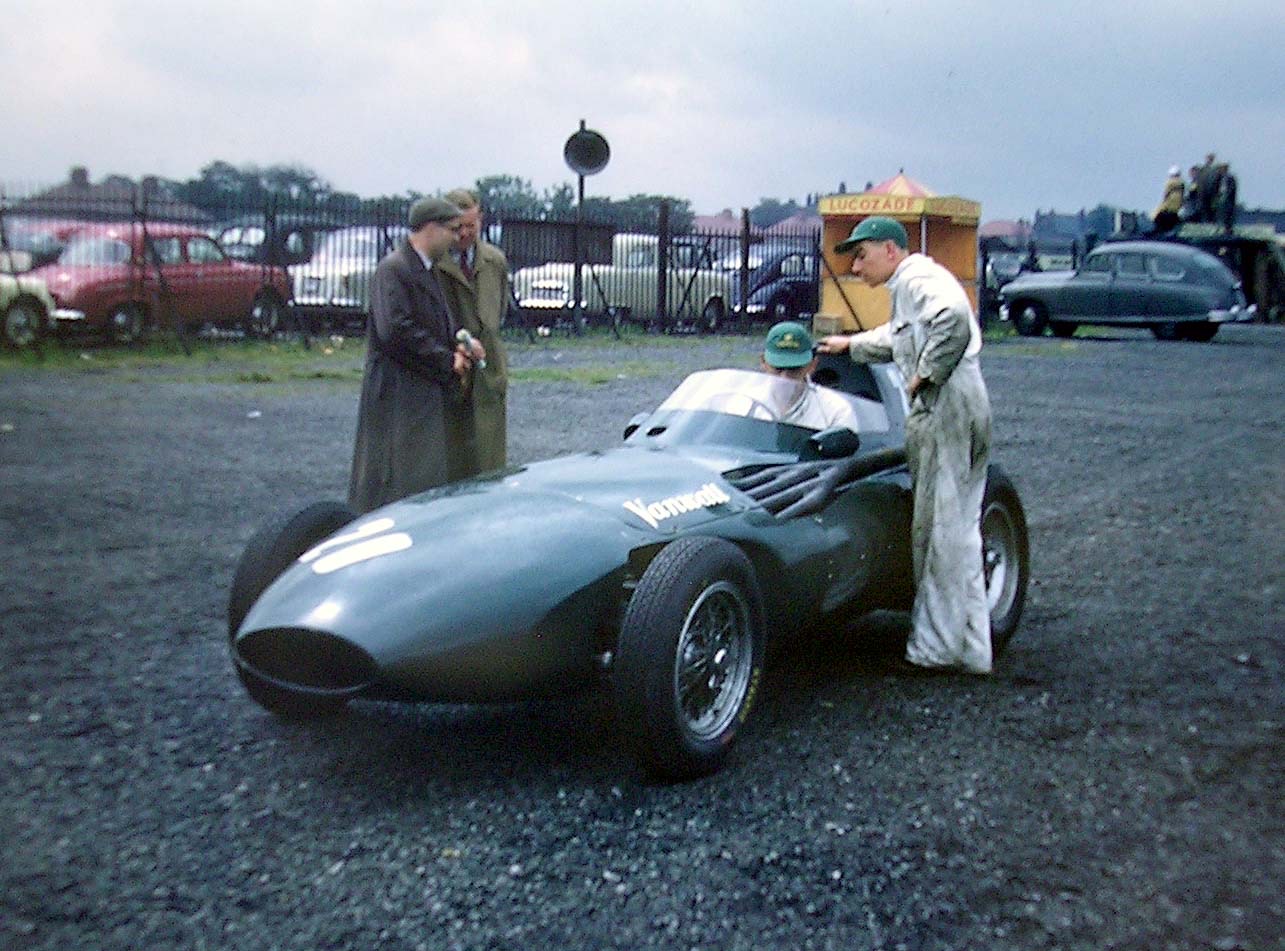
Moss spent his last three Formula One seasons with Rob Walker, a private entrant. Seven of his 16 Grand Prix wins came in Walker’s cars, among them the first Grand Prix wins for Cooper, Coventry-Climax and Lotus, Motor Sport noted in 2000. In 1959 the Walker Cooper finished only three of the nine races; Moss won two of them, in Portugal and Italy, and the car failed again while he led the final round at Sebring from pole position (BBC Sport).
In 1960 he gave Lotus its first Grand Prix win, at Monaco on 29 May, in Walker’s Lotus. At the Belgian Grand Prix meeting at Spa he crashed and broke his legs, his back and his nose, and was racing again within seven weeks (Tremayne). He won the last race of the season, the United States Grand Prix, on 20 November.
Monaco and the Nürburgring, 1961
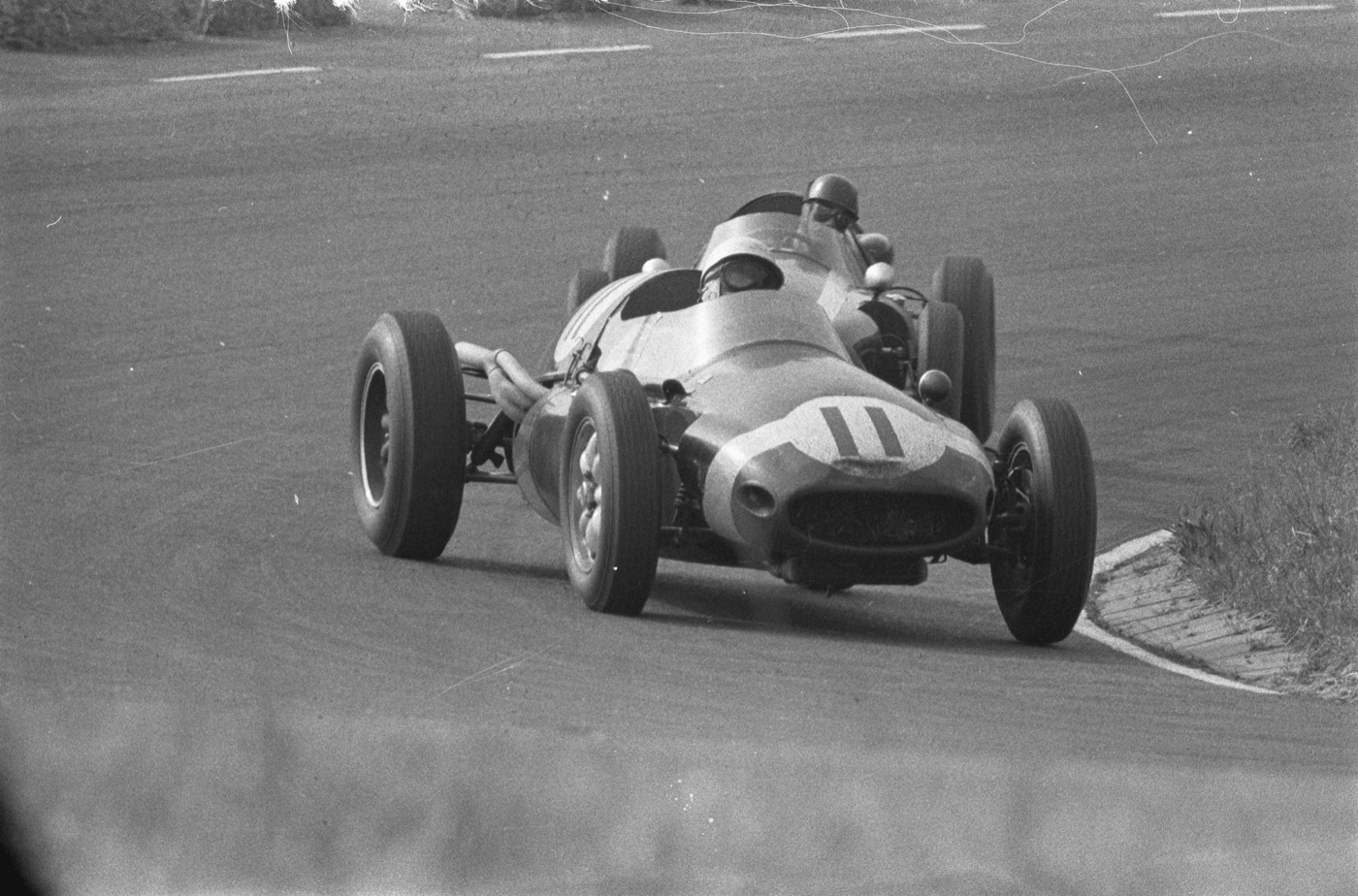
In 1961 Moss’s Climax-engined Lotus was under-powered against the Ferraris (BBC Sport). At Monaco on 14 May he won the 100-lap race by 3.6 seconds from Richie Ginther’s Ferrari, with Phil Hill’s Ferrari third (Formula 1 results archive). Reuters reported that he regarded it as his greatest Formula One race. On 6 August he won the German Grand Prix at the Nürburgring by 21.4 seconds from Wolfgang von Trips’s Ferrari; Benson writes that a gamble on rain tyres after a shower before the start paid off when it rained again in the race. It was his 16th and last Grand Prix win.
Asked at Goodwood about his early Formula One years in cars with less power than the Italian ones, Moss gave a short answer, which SkiddMark published in April 2020: “It’s all in the braking. If they can beat you on the straight, then you have to beat them in and out of the corners.” Then he laughed: “Or get yourself a better car!”
Stirling Moss’s 16 Grand Prix wins
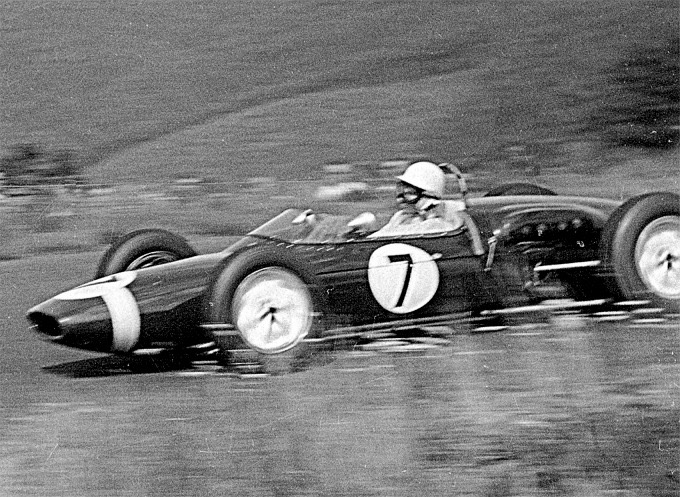
Moss won 16 World Championship Grands Prix in seven seasons, three of them at Monaco and two at Aintree, in five different makes of car.
| Date | Grand Prix | Car |
|---|---|---|
| 16 July 1955 | British (Aintree) | Mercedes-Benz |
| 13 May 1956 | Monaco | Maserati |
| 2 September 1956 | Italian | Maserati |
| 20 July 1957 | British (Aintree), shared with Tony Brooks | Vanwall |
| 18 August 1957 | Pescara | Vanwall |
| 8 September 1957 | Italian | Vanwall |
| 19 January 1958 | Argentine | Cooper-Climax (Rob Walker) |
| 26 May 1958 | Dutch | Vanwall |
| 24 August 1958 | Portuguese | Vanwall |
| 19 October 1958 | Moroccan | Vanwall |
| 23 August 1959 | Portuguese | Cooper-Climax (Rob Walker) |
| 13 September 1959 | Italian | Cooper-Climax (Rob Walker) |
| 29 May 1960 | Monaco | Lotus-Climax (Rob Walker) |
| 20 November 1960 | United States | Lotus-Climax (Rob Walker) |
| 14 May 1961 | Monaco | Lotus-Climax (Rob Walker) |
| 6 August 1961 | German | Lotus-Climax (Rob Walker) |
Why did Stirling Moss never win the world championship?
Moss never won the title because he was second to Fangio from 1955 to 1957, lost 1958 to Mike Hawthorn by one point after speaking up for him, and spent 1959 to 1961 in private cars that broke down or lacked power. Benson’s BBC obituary gives three reasons: poor reliability in 1958 and 1959, his loyalty to English private teams, Rob Walker’s above all, and a racer’s habit of putting the win before everything else.
1958: Portugal, Hawthorn and one point
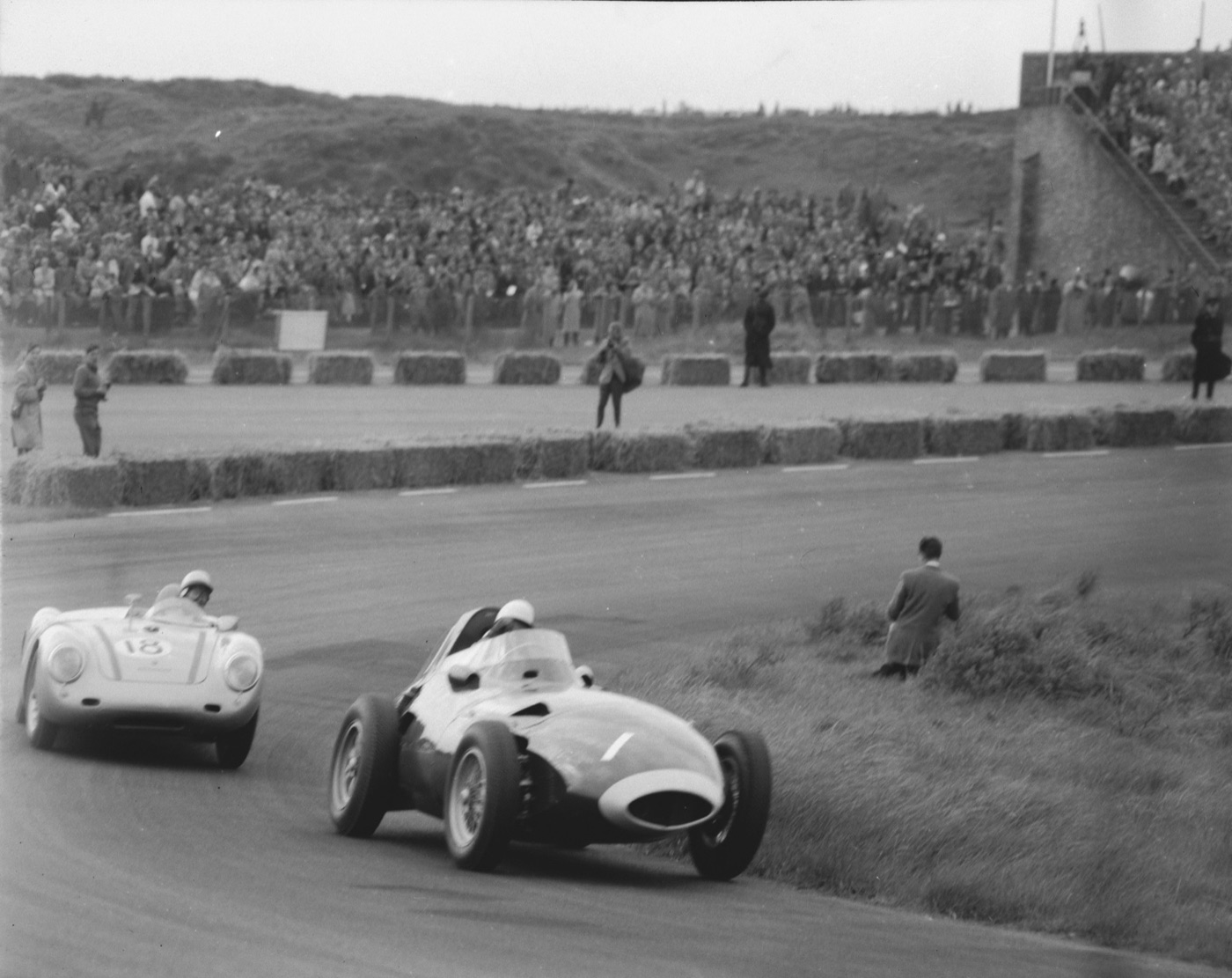
Moss won four Grands Prix in 1958 and Hawthorn, in a Ferrari, won one. Only a driver’s best six results counted, so Hawthorn’s 49 points from nine finishes became 42; Moss finished six times and scored 41 (Tremayne). At the Portuguese Grand Prix Hawthorn spun on the last lap, bump-started his Ferrari, briefly against the direction of the circuit, and faced exclusion. Moss went to the stewards in his defence:
“To me, Mike shouldn’t have been disqualified. I just felt that it was quite wrong that he should be disqualified. And I put forward the idea that he was still on the track, albeit the escape road, which they accepted. And it turned out that it lost me the title.”
Hawthorn kept his second place. At the last round, in Morocco, Moss won and needed Hawthorn to finish lower than second; Phil Hill let his Ferrari team-mate through to second place near the end (BBC Sport).
What Moss said about it
Moss told Tremayne that 1958 changed his attitude: “I really believed that year that I ought to be the champion.” Later he argued that the title would have spoiled the story: “I’ve never won a World Championship, and it would now, I think, be detrimental to have won one… I’m the man that people say, ‘Gosh, he should have won.’”
The 1955 Mille Miglia with Denis Jenkinson
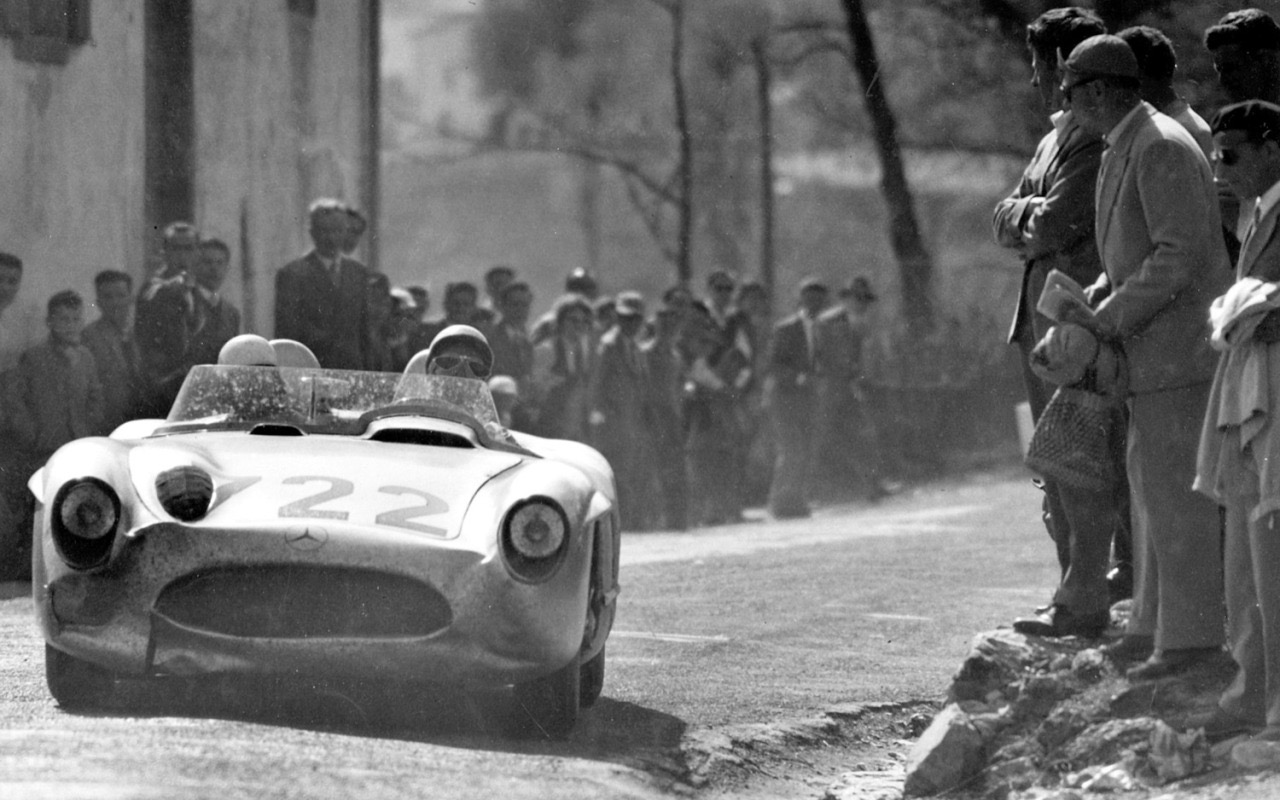
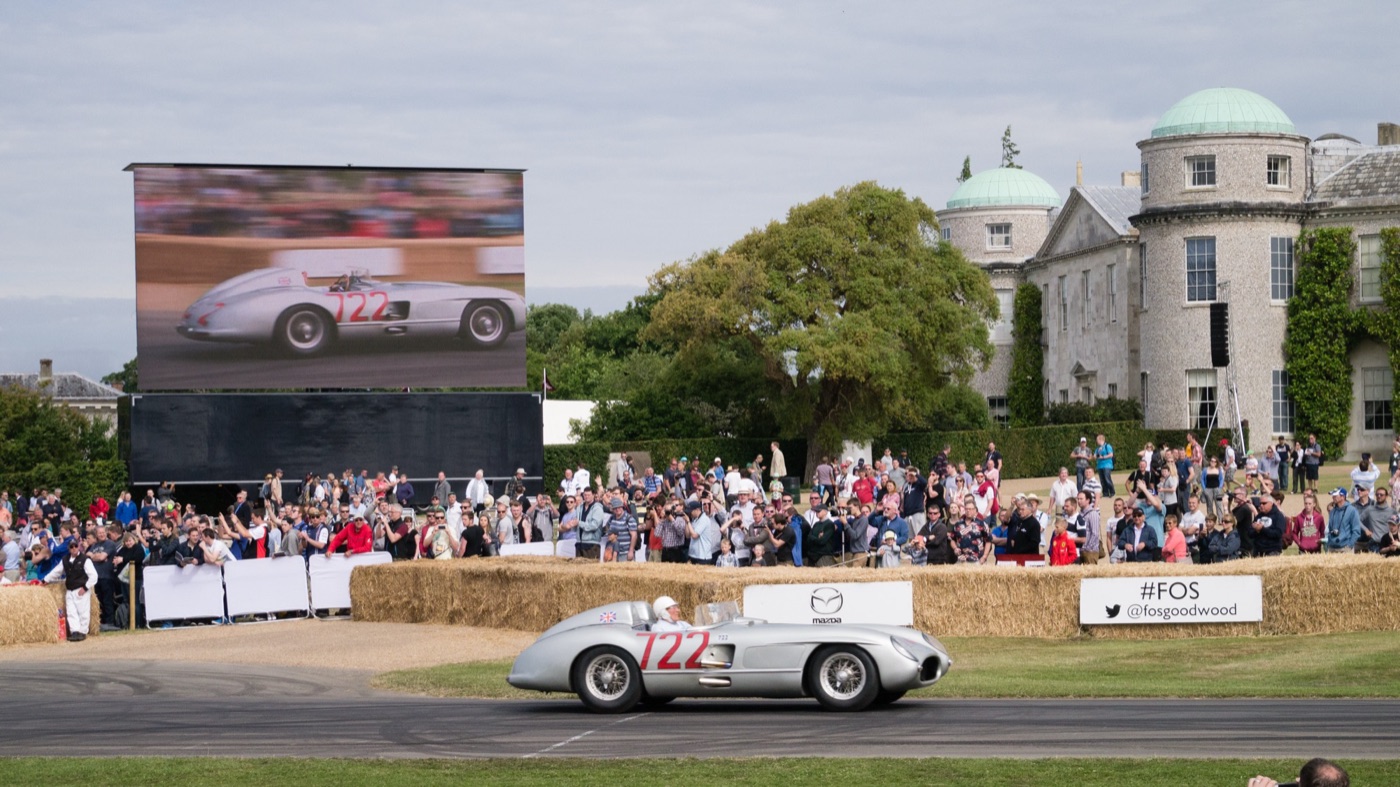
Moss won the 1955 Mille Miglia on 1 May in a Mercedes-Benz 300 SLR, covering 1,000 miles (1,597 km) of Italian public roads from Brescia and back in 10 hours, 7 minutes and 48 seconds, an average of 157.65 km/h (about 98 mph). Mercedes-Benz records that the time was never beaten in the race’s later runnings. He started at 7.22 a.m., which is why the car carried the number 722, and 520 other cars took part (Mercedes-Benz, 2020).
Beside him sat the journalist Denis Jenkinson, reading pace notes from a paper scroll, which let Moss race on level terms with drivers who knew the route much better than he did. They beat their team-mate Fangio by nearly half an hour (BBC Sport). A Motor Sport editorial in June 1955 began: “Come along Britain! Mercédès-Benz, with the aid of two Englishmen, have won Italy’s Mille Miglia.” Moss later called it “indeed my greatest victory” and said that only Mercedes-Benz could have built a car capable of that speed.
It was his fourth Mille Miglia. Racing Sports Cars’ records show he retired from the 1951, 1952 and 1953 races in Jaguars, and from the 1956 and 1957 races in Maseratis, with Jenkinson again beside him. The car is now in the Mercedes-Benz Classic collection, and in 2015, 60 years after the win, Moss was reunited with it on the original route.
Sports cars, rallies and speed records
In sports cars Moss won seven Tourist Trophies, the 1954 Sebring 12 Hours, the 1955 Targa Florio and three Nürburgring 1000 km races in a row, but never the Le Mans 24 Hours. Tremayne wrote that when Moss was in a sports car, the only thing that beat him was unreliability.
Did Stirling Moss ever win Le Mans?
No. In 1955 he shared a Mercedes-Benz 300 SLR with Fangio, which did not finish, and his best Le Mans results were two second places: in 1953 in a works Jaguar C-type with Peter Walker, and in 1956 in an Aston Martin DB3S with Peter Collins (Racing Sports Cars). In 1959, Andrew Frankel wrote in Motor Sport in 2018, Moss accepted Aston Martin’s John Wyer’s request to drive flat out to break the Ferraris. His own car retired, and the Aston Martin of Carroll Shelby and Roy Salvadori won; Wyer said it was “impossible to over-estimate the part played by Moss in our success at Le Mans”. Frankel adds that Moss hated Le Mans, because he did not regard races in which a car had to be nursed as proper racing.
The Tourist Trophy: seven wins
Moss won the RAC Tourist Trophy seven times in 12 years, in four makes of car. The last four were at Goodwood, from 1958 to 1961 (Goodwood’s history of motor racing’s Sports Personality winners).
| Year | Car | Co-driver |
|---|---|---|
| 1950 | Jaguar XK120 | none |
| 1951 | Jaguar C-type | none |
| 1955 | Mercedes-Benz 300 SLR | John Fitch |
| 1958 | Aston Martin DBR1 | Tony Brooks |
| 1959 | Aston Martin DBR1 | Carroll Shelby and Jack Fairman |
| 1960 | Ferrari 250 GT | none |
| 1961 | Ferrari 250 GT | none |
Sebring 1954 and the Nürburgring 1000 km
At Sebring in March 1954 Moss and Bill Lloyd shared Briggs Cunningham’s 1,452 cc OSCA, which was running second by late afternoon despite a slipping clutch. With one hour left the leading Lancia of Piero Taruffi and Robert Manzon seized its engine, and the little OSCA won on distance as well as on index of performance; Motor Sport’s April 1954 report called it “one of the greatest surprises in many years of racing”. He won the Nürburgring 1000 km in 1958 in an Aston Martin DBR1 with Jack Brabham, in 1959 in a DBR1 with Jack Fairman and in 1960 in a Maserati Tipo 61 with Dan Gurney, and the 1955 Targa Florio in a 300 SLR with Peter Collins (Racing Sports Cars).
Aston Martin and the 1959 sports car title
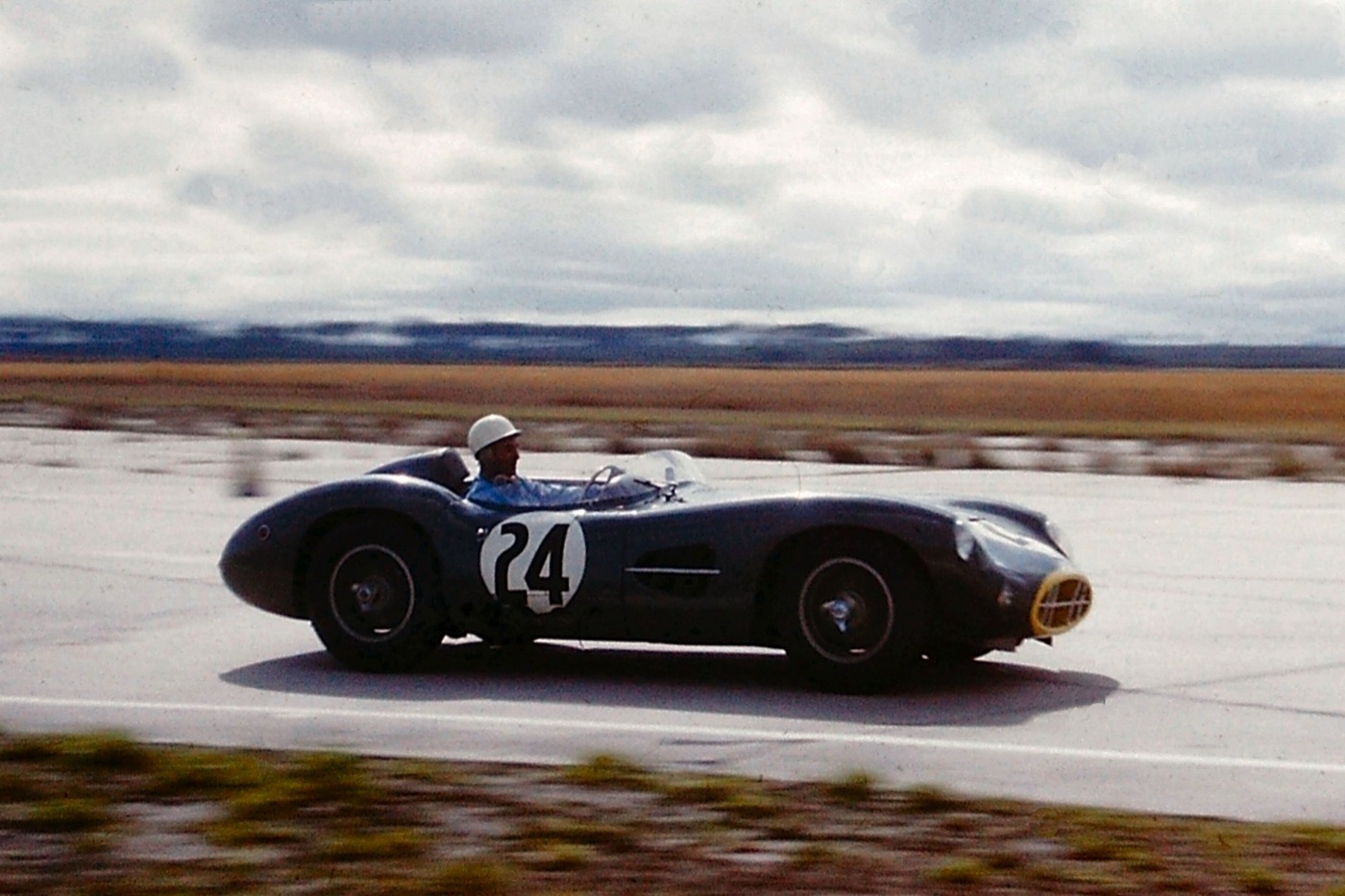
Aston Martin had planned to enter only Le Mans in 1959. Frankel tells how Moss persuaded Wyer to lend him a DBR1 for the Nürburgring 1000 km by offering to pay for the trip himself in return for the prize money, and won it. At the Tourist Trophy at Goodwood a fire in the pits put his car out, so he took over the sister car of Shelby and Fairman and won, which gave Aston Martin the World Sportscar Championship.
Rallies and record cars
Moss finished second in the 1952 Monte Carlo Rally in a Sunbeam-Talbot (Grace’s Guide). In 1957 he set International Class F speed records at the Bonneville Salt Flats in Utah in MG’s streamlined EX181, including 245.64 mph over the measured kilometre with its supercharged 1,489 cc engine. He went back in September 1959, fresh from the Italian Grand Prix at Monza, but rain flooded the salt and he had to leave to race at Oulton Park, so the reserve driver, Phil Hill, took the car out (the MG Car Club’s history of the 1959 attempt).
How many races did Stirling Moss win?
Moss won about 212 races, by the BBC’s count: 212 of the 529 he entered across all categories from 1948 to 1962. Mercedes-Benz’s 2020 count is different: 495 events in 84 different models of car, 366 finishes and 222 wins. In World Championship Grands Prix he won 16 of 66 starts, started 16 times from pole position and 37 times from the front row, and set 20 fastest laps (Tremayne). In 1961 the BBC named him its Sports Personality of the Year; he had been second in 1957 (Goodwood).
Rivals and team-mates
Moss’s great rival was Fangio, his team-mate at Mercedes-Benz in 1955 and the champion in three of the four years Moss finished second; the others who ran him closest were Mike Hawthorn and, briefly, Jim Clark.
Juan Manuel Fangio
Moss always said that Fangio was the better driver. Benson points out that the record supports him: Fangio won five world titles and 24 of his 51 Grands Prix, and at Mercedes-Benz in 1955 he won four races to Moss’s one. In the 300 SLR sports car, Tremayne wrote, Moss “had the Argentine’s measure”.
Mike Hawthorn
Hawthorn was Britain’s first world champion, in 1958, and a friend. Moss told Tremayne: “Mike drinks, and he runs around, and he does everything that I would like to do, and still I’ve been punished for not doing it. What the hell, I’m going to go out and enjoy myself.”
Jim Clark
Their careers overlapped only briefly. In 2009 Moss told Simon Taylor that when he raced Clark, the Scot “hadn’t reached his maturity: when I beat him, he was no faster than Innes [Ireland], but he got much faster than Innes later” (Motor Sport, “Life after racing”).
Tony Brooks and Peter Collins
Two British drivers shared some of his biggest wins. Brooks started the Vanwall that Moss drove to win the 1957 British Grand Prix and shared the winning Aston Martin at the 1958 Tourist Trophy; Collins co-drove the 300 SLR that won the 1955 Targa Florio and the Aston Martin that was second at Le Mans in 1956.
The Goodwood crash of 1962
On Easter Monday, 23 April 1962, Moss crashed a Lotus-Climax into an earth bank on the approach to St Mary’s corner at Goodwood, during the non-championship Glover Trophy, and never raced professionally again (Simon Taylor, Motor Sport). Mercedes-Benz’s 2020 release dates the accident to 30 April.
What happened at St Mary’s
The car was an old Lotus 18 chassis with 21 bodywork, owned by Rob Walker and run in the pale green of the British Racing Partnership. A pit stop to fix a jamming gear selector had left Moss two laps behind Graham Hill’s leading BRM, but he was chasing the lap record. With seven laps to go he came up behind Hill to unlap himself, and as Hill moved left for the corner, the Lotus ran on to the left-hand verge at about 115 mph and into the bank. Theories ranged from a jammed throttle or a steering failure to Moss misreading Hill’s wave to the marshal; the brakes worked and the car was in fourth gear, and Moss himself remembered nothing of it (Taylor).
His injuries
Marshals and helpers took 45 minutes to cut him out of the car. The left side of his brain was badly bruised, his left eye socket was crushed and he had a broken leg and a broken arm; he did not properly regain consciousness for 38 days, and when he did he was partly paralysed and could not speak (Taylor). The BBC gives a coma of a month and partial paralysis of his left side for six months. He left the Atkinson Morley hospital in Wimbledon on 20 July 1962, nearly 13 weeks after the crash.
Why did Stirling Moss retire?
He retired because the driving no longer came by instinct. On 1 May 1963 he tested a British Racing Partnership Lotus 19 on an empty Goodwood, lapped at competitive times and decided there and then:
“My times were quite reasonable, I was on the pace. But I found that I had to do everything in the car consciously. I’d approach a corner and think, ‘I’ve got to get over to the edge of the road here, I’d better brake now, this is where I should get back on the power.’ It all had to be worked out, nothing was automatic any more.”
He later thought he had decided too soon: “If I’d waited two or three years I think my faculties would have come back,” he told Taylor, “but once I’d said I was out, I was out.” Before the crash he had agreed with Enzo Ferrari to race a dark blue Ferrari with a white noseband in 1962, run by Walker with Ferrari’s support.
Life after racing
Moss earned his living after 1963 from his name, his appearances and property, and he raced again in saloon cars and historic events until 2011. He had little saved: in 1961, his last full year, he grossed £32,700, paid his own expenses, was taxed on £8,000 and netted about £3,200, he told Taylor. An insurance policy meant to pay £30,000 if he could no longer race was paid only at the last minute before a court case. After his racing career his main business was a portfolio of rental properties (the British Racing Drivers’ Club), run from the house in Shepherd Street, Mayfair, where he lived for more than 40 years.
He stayed in the phone book and answered every letter. In 2009 he said he still received three or four fan letters a day and called himself “the international prostitute. You get me there and pay me, and I’ll do the job.” For years some police officers who stopped speeding motorists asked them, “Who do you think you are, Stirling Moss?” (Tremayne).
Saloon cars and historic racing
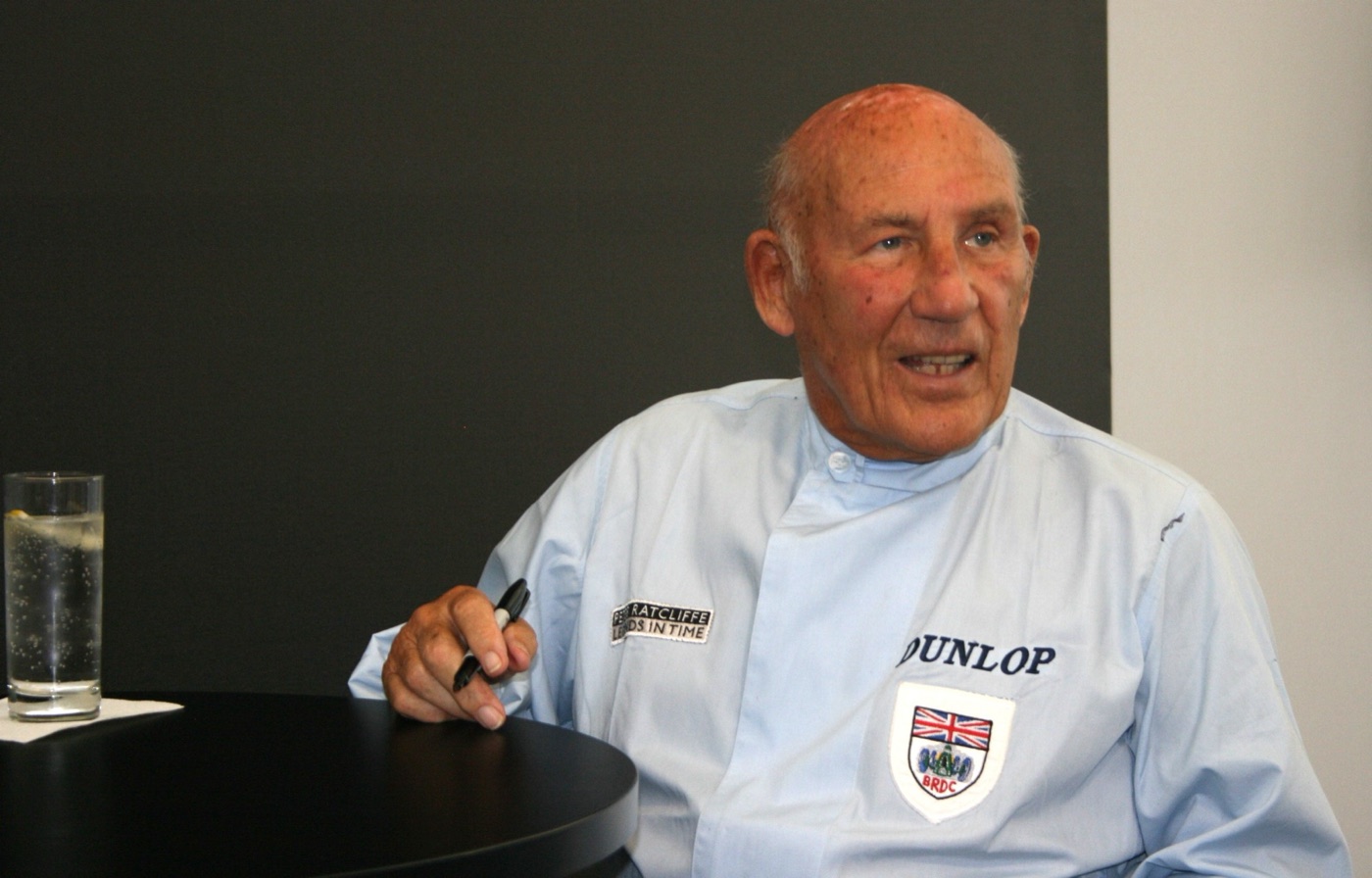
In 1980 and 1981 he drove an Audi in the British Saloon Car Championship. “Worst decision I ever made in my life,” he told Taylor; he had never raced on slicks and was shocked by the contact. Historic racing suited him better. He raced a C-type Jaguar, an Elva-BMW, a Chevron and his own 1,500 cc OSCA, and won special permission from the FIA to race in his old helmet and overalls.
Le Mans Legends 2011: the last competitive laps
Moss stopped racing at the age of 81, at Le Mans, in June 2011. He had entered his own 1961 Porsche RS 61, repaired after a frightening incident at Laguna Seca in 2010, for the Le Mans Legend race, to share with Ian Nuthall. Practice and qualifying on the Thursday gave him his last competitive laps, and at a private party on the Friday he announced his retirement: “This afternoon I scared myself and I have always said that if I felt I was not up to it, or that I was getting in the way of fellow competitors, then I would retire.” Nuthall raced the car alone and finished 23rd, and Moss presented the trophies (Hagerty’s report).
Knighthood and honours
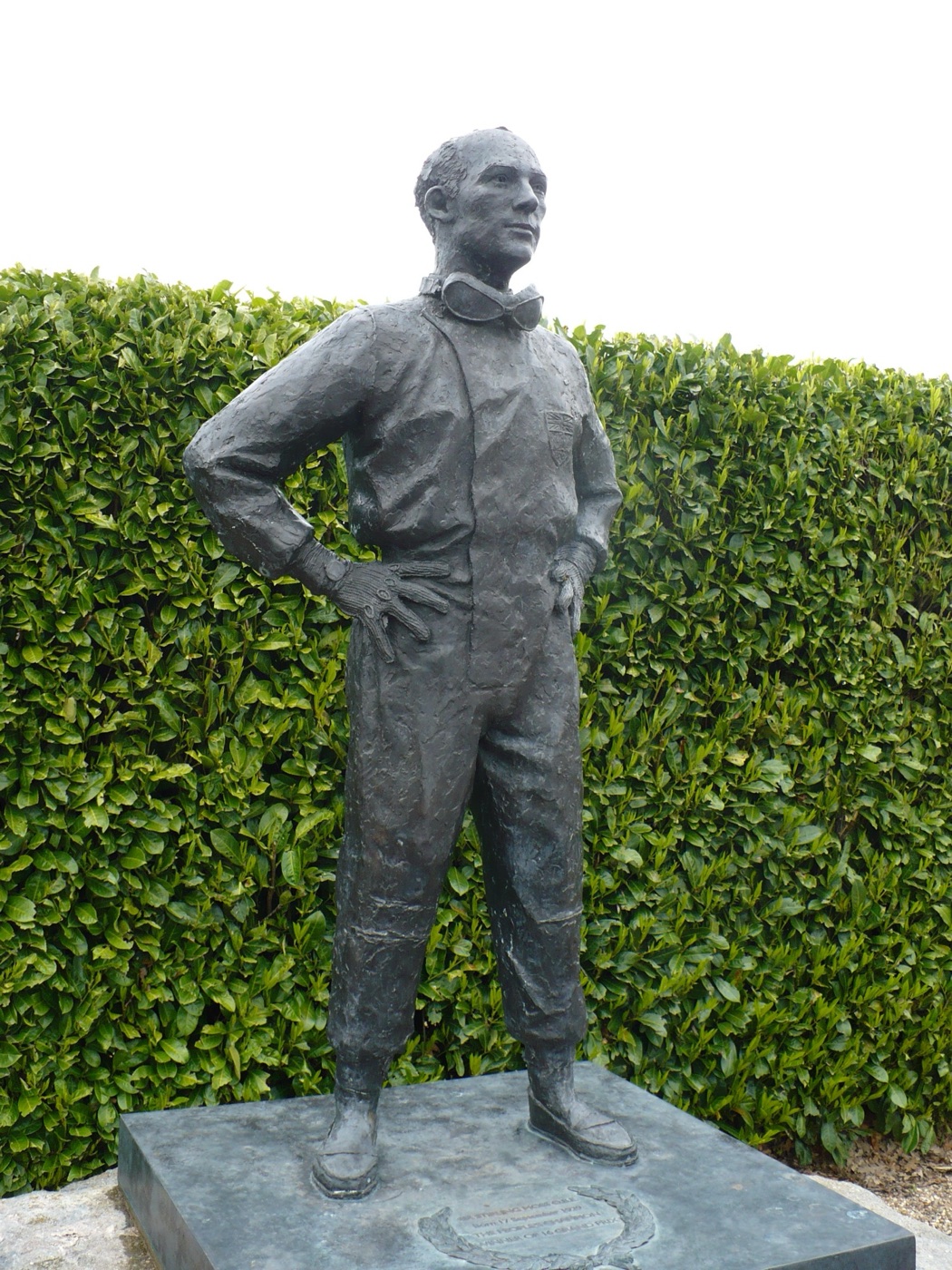
Moss was appointed OBE in 1959 and made a Knight Bachelor in 2000 (Mercedes-Benz, 2020). Announcing the knighthood in the New Year Honours, Motor Sport called him the first Briton honoured for his motor racing achievements, and Rob Walker said a group including a fan, John Draper, had campaigned for it for four or five years. In 2020 Goodwood renamed the Revival meeting’s Kinrara Trophy, a race for closed GT cars from before 1963, the Stirling Moss Memorial Trophy (Goodwood’s list of winners).
The last years
In March 2010 he fell three storeys down a lift shaft at his London home and broke both ankles and four bones in his feet (Reuters). He fell ill with a chest infection in Singapore at the end of 2016 and spent 134 days in hospital (Reuters; the British Racing Drivers’ Club dates the illness to 2017), and he retired from public life in January 2018 (Formula 1).
How did Stirling Moss die?
Moss died after a long illness in the early hours of Easter Sunday, 12 April 2020, at his home in Mayfair, aged 90, with his wife beside him (Goodwood’s announcement). Lady Moss told the Daily Mail: “He died as he lived, looking wonderful.” Mercedes said that “the sporting world lost not only a true icon and a legend, but a gentleman”, and Ferrari called him “a formidable opponent” (Reuters).
Family
His wife from 1980 was Susie, born Susie Paine in Hong Kong, whose father worked for the Rootes Group; Moss had known her since she was five. She ran his diary, travelled with him and answered his post, and she died on 18 March 2023, aged 69. The British Racing Drivers’ Club’s notice names her son Elliot and her stepdaughter Allison, Moss’s daughter.
Questions
How old was Stirling Moss when he died?
He was 90. Moss was born in London on 17 September 1929 and died at his home in Mayfair on 12 April 2020.
Why did Moss’s Mille Miglia car carry the number 722?
Mille Miglia start numbers gave each car’s starting time. Moss and Jenkinson left Brescia at 7.22 a.m. on 1 May 1955, so their 300 SLR was No. 722.
How many times did Stirling Moss win the British Grand Prix?
Twice, both at Aintree: in 1955 in a Mercedes-Benz, the first win by a British driver, and in 1957 in a Vanwall he shared with Tony Brooks.
How many times did Stirling Moss win at Monaco?
Three times: in 1956 in a Maserati, and in 1960 and 1961 in Rob Walker’s Lotus-Climax.
Was Pat Moss related to Stirling Moss?
Yes. Pat Moss was his younger sister, and she raced and rallied in the 1950s and 1960s.
Did Stirling Moss ever drive a Ferrari?
Yes, though never for the works team in a championship Grand Prix. He won the 1960 and 1961 Tourist Trophies in a Ferrari 250 GT and the 1958 Cuban Grand Prix in a Ferrari 335 S, and before his 1962 crash he had agreed to race a Walker-run Ferrari in Formula One that year.
What does “Who do you think you are, Stirling Moss?” mean?
It was what some police officers asked speeding motorists for years after Moss’s career, as Formula 1’s obituary of him records.
Where did Stirling Moss live?
In London all his life. In 2009 he had lived in Shepherd Street, Mayfair, for more than 40 years, and he told Motor Sport he would never live abroad for tax reasons.
Sources
- David Tremayne, “The king that was never crowned: Sir Stirling Moss remembered”, Formula 1, 12 April 2020: 66 starts, 16 wins, poles, front rows and fastest laps; the 1954 Maserati; Spa 1960; the 1958 points and Portugal; Moss’s words on the title and Hawthorn; the phrase used by police.
- “F1 legend Sir Stirling Moss dies, aged 90”, Formula 1, 12 April 2020: Grand Prix career 1951–61 and teams; retirement from public life in January 2018.
- Formula 1 results archive, drivers’ standings 1951–1961: the season table.
- Formula 1 results archive, race results 1955–1961, with the race pages for the 1955 and 1957 British, 1961 Monaco and 1961 German Grands Prix: the wins table, margins and finishing orders.
- Andrew Benson, “Sir Stirling Moss: F1 legend ‘still resonates in motorsport world’”, BBC Sport, 12 April 2020: 212 wins from 529 races; reasons for the missing title; 1955 Aintree; 1958 Morocco; 1959 reliability; 1961 Nürburgring; the Mille Miglia margin; the Goodwood coma.
- “Mercedes-Benz racing driver Sir Stirling Moss has passed away at the age of 90”, Mercedes-Benz press release, April 2020: family; 1948 season; 1949 manager; 1955 results and Mille Miglia time, speed and start number; 495 events, 222 wins; OBE and knighthood; the 2015 reunion with No. 722.
- “Stirling Moss”, Mercedes-Benz Classic archive: signing for 1955 and the team’s withdrawal.
- Simon Taylor, “Chapter 6: life after racing”, Motor Sport special issue on Stirling Moss (interview of 2009): the Goodwood crash, injuries and recovery; the 1963 test and retirement; the Ferrari plan for 1962; earnings, insurance and work after racing; saloon cars and historic racing; Clark.
- “‘Sir Stirling’: Moss knighted in New Year’s Honours list”, Motor Sport, February 2000, p. 4: the knighthood campaign; Cooper’s first drive; Walker’s seven wins and three makers’ firsts; Argentina 1958.
- “Surprise victory in Sebring 12-hour race”, Motor Sport, April 1954, p. 30: the OSCA win with Bill Lloyd.
- Motor Sport, June 1955 issue (archive page): the issue’s opening words on the Mille Miglia win.
- Andrew Frankel, “Stirling Moss: a retirement well earned”, Motor Sport, 22 January 2018: Le Mans 1959; the 1959 sports car championship; illness in Singapore.
- “All results of Stirling Moss”, Racing Sports Cars: Tourist Trophy, Le Mans, Mille Miglia, Sebring, Targa Florio, Nürburgring and 1958 Cuban Grand Prix results.
- “Sir Stirling Moss retires from racing”, Hagerty UK (Classic Driver report), 20 June 2011: the Le Mans Legend retirement, quote and result.
- “Sir Stirling Moss dies aged 90”, Goodwood Road & Racing, April 2020: the date, place and Lady Moss’s words.
- “Super six: motorsport’s BBC SPOTY winners”, Goodwood Road & Racing: Sports Personality of the Year 1961 and second place in 1957; the 1958–61 Tourist Trophies at Goodwood.
- “Previous winners of the Stirling Moss Memorial Trophy”, Goodwood Road & Racing: the renaming of the Kinrara Trophy in 2020.
- “Bonneville swan song”, MG Car Club: Moss’s 1957 Class F records and speed in EX181; the 1959 attempt.
- “Notice of death: Lady Susie Moss (1953–2023)”, British Racing Drivers’ Club, 22 March 2023: family, the property business and the illness in Singapore.
- Reuters, “British great Stirling Moss dies at 90 after long illness”, The Globe and Mail, 12 April 2020: his World Championship wins with Mercedes-Benz, Maserati, Vanwall and Walker’s Coopers and Lotuses; Monaco 1961 as his greatest race; the lift-shaft fall; 134 days in hospital; tributes.
- “Stirling Moss”, Grace’s Guide to British Industrial History: date and place of birth; school; hotel training; HWM, the Gold Star and the Seaman Trophy; 1952 Monte Carlo Rally.
- “1924 International 500 Mile Sweepstakes”, ChampCarStats: Alfred Moss’s 16th place.
- “The Greatest Sportsman: the remarkable Sir Stirling Moss”, SkiddMark, 12 April 2020: Moss on braking.