TVR: history, the Wheeler years, the models and what TVRs cost today
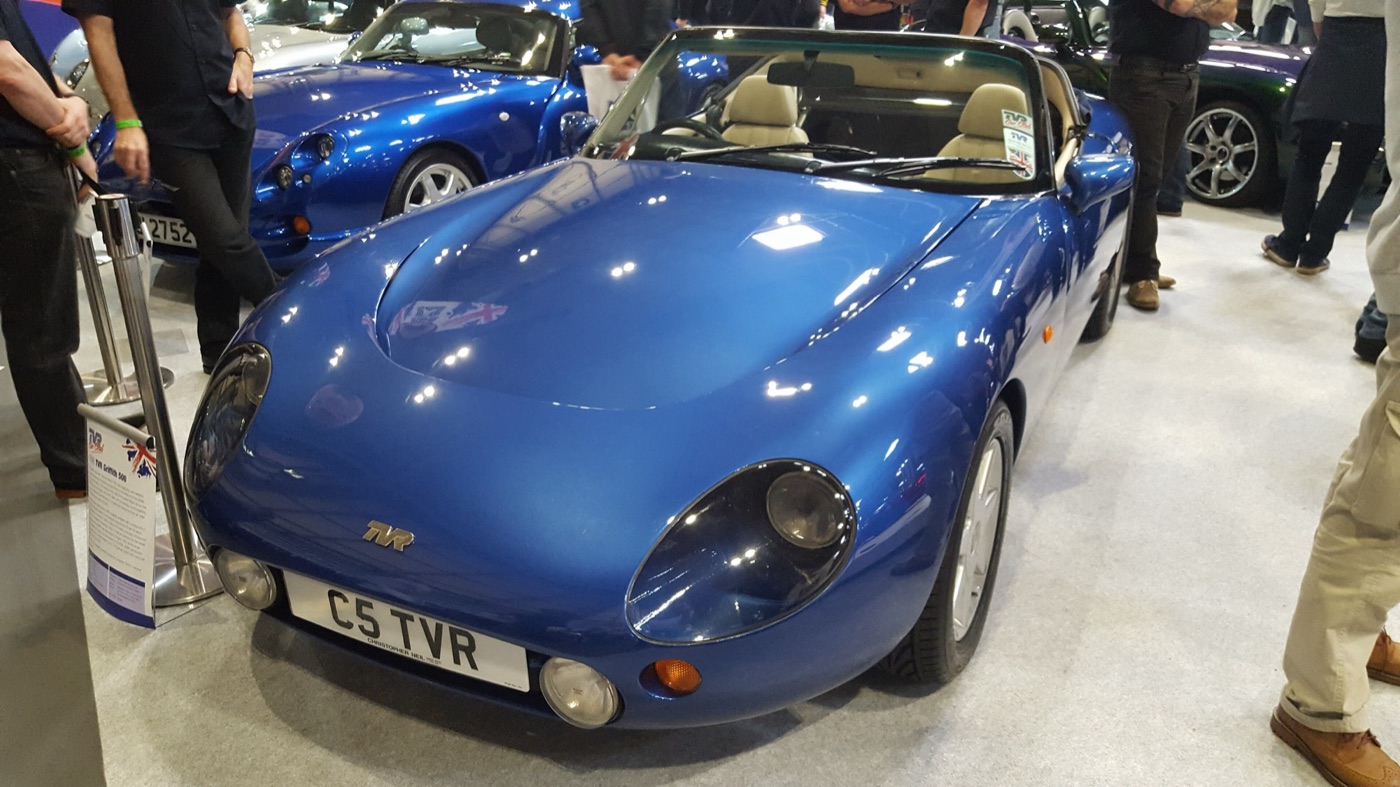
TVR is a British sports car manufacturer, founded in Blackpool, Lancashire, by Trevor Wilkinson in 1947 and named after his first name, TreVoR. It last built cars at Blackpool in 2006, and since 12 November 2025 TVR Automotive, the company behind the brand, has been controlled by Charge Holdings, which says its first aim is to deliver the new TVR Griffith shown in 2017.
TVR’s best-known years were 1981 to 2004, when the Sheffield chemical engineer Peter Wheeler owned it: TVR built the Griffith, Chimaera, Cerbera, Tuscan, Tamora and Sagaris sports cars, raced at Le Mans and made its own V8 and straight-six engines. Half the Chimaeras sold at auction for sterling since July 2023 made less than £9,600, and PistonHeads put the cheapest Sagaris at £70,000 in October 2023.
TVR before Peter Wheeler
Before 1981 TVR passed from its founder, Trevor Wilkinson, to Keith Aitchison and Bryan Hopton and then to Arthur and Martin Lilley, and it built every car in Blackpool.
What does TVR stand for?
TVR stands for Trevor Wilkinson’s first name with the vowels taken out. The TVR Car Club’s history dates the start to 1947, when Wilkinson set up Trevcar Motors in Blackpool, which TVR’s own history describes as a small car repair business; he built his first car in 1949 with a multi-tubular chassis and Morris Eight parts. TVR’s own heritage pages say that first car, TVR Number One, was crashed and broken for parts within a year.
Trevor Wilkinson and the Grantura
The car that set TVR’s pattern was the Grantura, a fastback coupé introduced in 1958 at the suggestion of Ray Saidel, who raced and sold TVRs in the United States. It ran through four marks to 1967; the MGA engine was standard on the Mk II, other engines were fitted to order, and in 1961 a Mk II cost £1,298 including tax, according to the club’s Grantura history. Money ran short: by 1960 control had passed from Wilkinson to Keith Aitchison and Bryan Hopton, and Wilkinson left the company in 1962. The maker’s heritage site gives the formula he left behind as a light body on a tubular chassis, with the engine in front driving the rear wheels.
The Lilleys, the Griffith V8 and Bristol Avenue
In 1964 Jack Griffith’s workshop in New York put a Ford 289 V8 (4,727 cc) into a Grantura Mk III, and TVR’s David Hives redesigned the chassis to take it. The club’s Griffith history says cars left Blackpool without engine or gearbox and were finished at Griffith’s works in Syosset, New York, until a dock strike on the US east coast in January 1965 cut off supply and both companies collapsed. Arthur Lilley and his son Martin bought what was left in November 1965 and renamed it TVR Engineering; Martin had raced a Griffith 400 himself.
The Lilleys renamed the Griffith the Tuscan V8 in 1967, and most went to the United States with left-hand drive. The Vixen of 1967 put a Ford Cortina GT engine in the Grantura’s chassis, and its S2 of 1968 sold 438 in two years and was the first TVR with its body bolted to the chassis. The 3.0-litre V6 Tuscan of 1969 failed US emission rules, so most stayed in Britain.
At the end of 1970 TVR moved from its Hoo Hill works to a former kitchen-equipment factory on Bristol Avenue, Bispham, where it stayed until 2006. Its M Series, shown in 1971, put the Vixen and the wide-bodied Tuscan on a new chassis as the 1600M, the 2500M (with the Triumph six, already certified for US emission rules) and the Ford V6 3000M; the hatchback Taimar followed in 1976 and the 3000S, TVR’s first production convertible, in 1978, with turbocharged versions of all three.
| Model | Built | Engine | Number built |
|---|---|---|---|
| Grantura Mk I to Mk IV, 1800S | 1958–67 | MG four standard on the Mk II; others to order | about 796 |
| Griffith 200 and 400 | 1964–67 | Ford 289 V8, 4,727 cc | about 300 |
| Tuscan V8 | 1967–71 | Ford V8 | about 72 |
| Vixen S1 to S4, 1300, 2500 | 1967–73 | Ford fours; Triumph 1.3 four and 2.5 six | 1,143 |
| Tuscan V6 | 1969–71 | Ford Essex V6, 2,994 cc | 101 |
| M Series: 1600M, 2500M, 3000M, Taimar, 3000S and Turbos | 1972–80 | Ford 1.6 four, Triumph 2.5 six, Ford 3.0 V6 | about 2,475 |
| Tasmin and 280i (V6) | 1980–88 | Ford 2.8 V6 | 1,167 |
| Tasmin 200 | 1981–84 | Ford 2.0 four | 61 |
The Tasmin wedge and the 1981 rescue
In 1980 the Lilleys launched the Tasmin, an angular wedge with a Ford 2.8-litre V6, at the Geneva motor show. The club’s history says it “nearly bankrupted TVR for a third time”. Rising costs, US emission rules and the British recession of the early 1980s left Martin Lilley short of money, and at the end of 1981 he sold control to one of his customers, Peter Wheeler. TVR’s own history and the club both give late 1981; CAR’s 2009 obituary called him chairman from 1980, and a 2020 University of Birmingham appeal for memories of him says 1982.
Who was Peter Wheeler?
Peter Wheeler was born in Sheffield on 29 February 1944 and went to grammar school there, according to Jonathan Glancey’s obituary in the Guardian. He graduated in chemical engineering from the University of Birmingham in 1966; the university’s 2020 appeal records that he then worked in the onshore and offshore oil industry. The Guardian says his fortune came from supplying specialised components to the North Sea oil industry.
He was a TVR customer before he was its owner. The club says he ran a Taimar Turbo, had it serviced at the factory, got to know the staff and bought one of the first Tasmins in 1980; TVR’s own history says the chemical engineer and businessman had a good relationship with the factory.
He kept racing after he sold TVR, in a TVR 5000M, a lightweight Aston Martin DB4 and, from October 2008, a 1964 TVR 5000 (Motor Sport). He died on 11 June 2009, aged 65. CAR and SkiddMark, reporting his death on 12 June 2009, said it followed a short illness; the Guardian called it a long one.
TVR under Peter Wheeler: from the wedge to the Griffith
Under Wheeler’s ownership and management, TVR went from a near-bankrupt maker of Ford-engined wedges to a company building close to 2,000 cars a year by the end of the 1990s, almost all of them with Rover-based or TVR-designed V8s and sixes. Graham Bell’s history of TVR for PistonHeads (2003) gives that figure, which was double the output of the early 1990s.
The Rover V8 wedges
Wheeler’s first move was an engine. In 1983 TVR put the 190 bhp, 3,528 cc fuel-injected Rover V8 from the SD1 Vitesse into the Tasmin, which became the Tasmin 350i. Wheeler chose the British engine, according to the club, because TVR was trying to break into the Middle East market, where Ford’s American connection was expected to hurt sales. The 350i became TVR’s best seller, according to the club’s wedge history. Bigger engines followed: the 3.9-litre 390SE of 1984, with 275 bhp, then the 420SEAC (Special Equipment, Aramid Composite) of 1986 and the 450SEAC of 1988. In 1985 shipping costs, new US laws and the exchange rate made TVR pull out of the American market, Bell says.
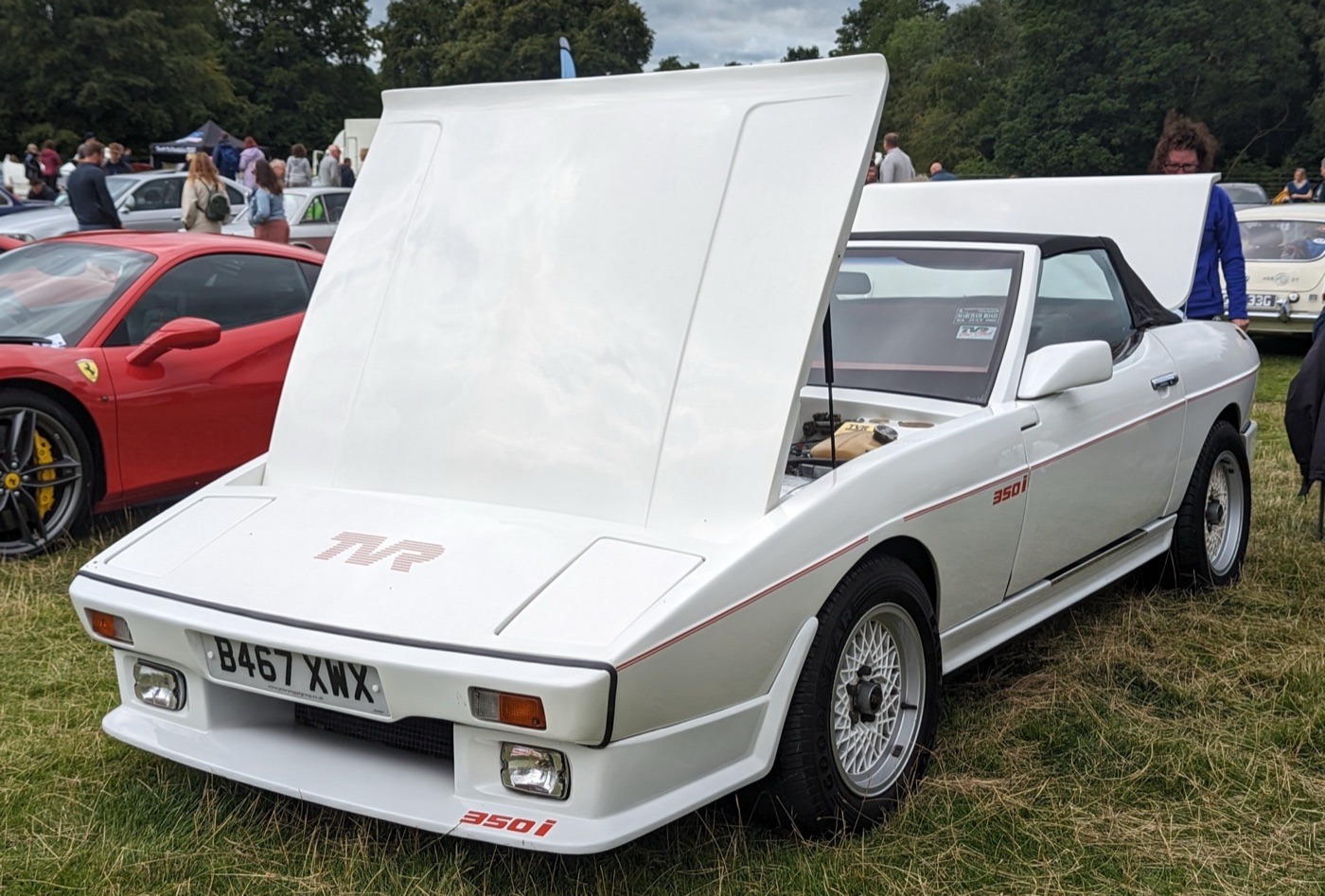
The S Series brings back the curves
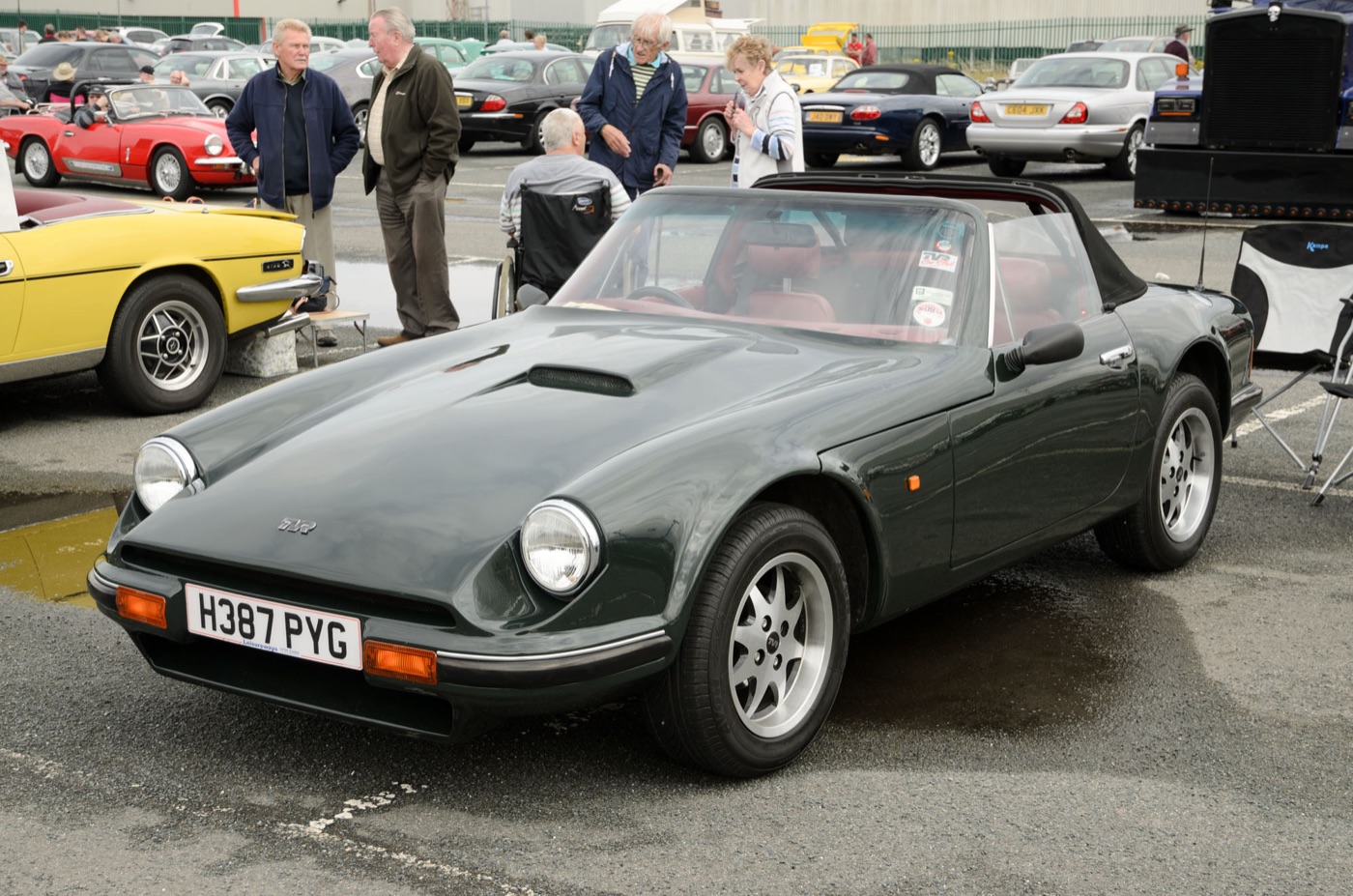
The wedges kept getting dearer, and TVR needed a cheaper car. The S Series, shown at the 1986 Birmingham motor show as a design study, took 62 orders there and over 120 before it went on sale in August 1987, according to the club’s S Series page. It looked like the Lilleys’ 3000S but shared only the door handles with it, used the Tasmin’s 160 bhp Ford 2.8 V6, weighed 900 kg and cost £12,995 when the 350i started at £17,995. The S3 of 1990 had longer doors and a new body, and the V8S of 1991 put the 240 bhp 4.0-litre Rover V8 in the same car.
The Griffith at the 1990 motor show
At the 1989 motor show Wheeler showed the Speed Eight, a rounded-off wedge. A year later he showed it again beside a new curved roadster that revived the Griffith name, and let the orders decide: the club counts 32 advance orders for the Speed Eight and more than ten times that for the Griffith, and Bell says TVR left the show with 330 firm orders. Earlier in 1990 TVR had bought the Coventry engine tuners NCK Racing and renamed them TVR Power, so it could build bigger Rover engines itself.
The show car’s chassis, from the S Series, could not take the power, so the production Griffith used one developed from the Tuscan racing car, and deliveries began early in 1992 with 240 bhp 4.0-litre and 280 bhp 4.3-litre engines. By then Land Rover supplied the Rover V8 to specialists such as TVR and Morgan in the 3.9-litre form used in the Range Rover, and TVR enlarged it to 4.3 litres. Jeremy Walton tested a 4.3 for Motor Sport in August 1992: it cost £27,207, reached 60 mph in 4.7 seconds and 158 mph, and he wrote that the car rode and steered the way it did “because that is the way chairman Peter Wheeler likes it”. The 340 bhp, 4,988 cc Griffith 500 followed in 1993, and the last 100 cars, built in 2001–02, were the 500 SE, according to the club’s Griffith history.
The TVR Chimaera, the best seller
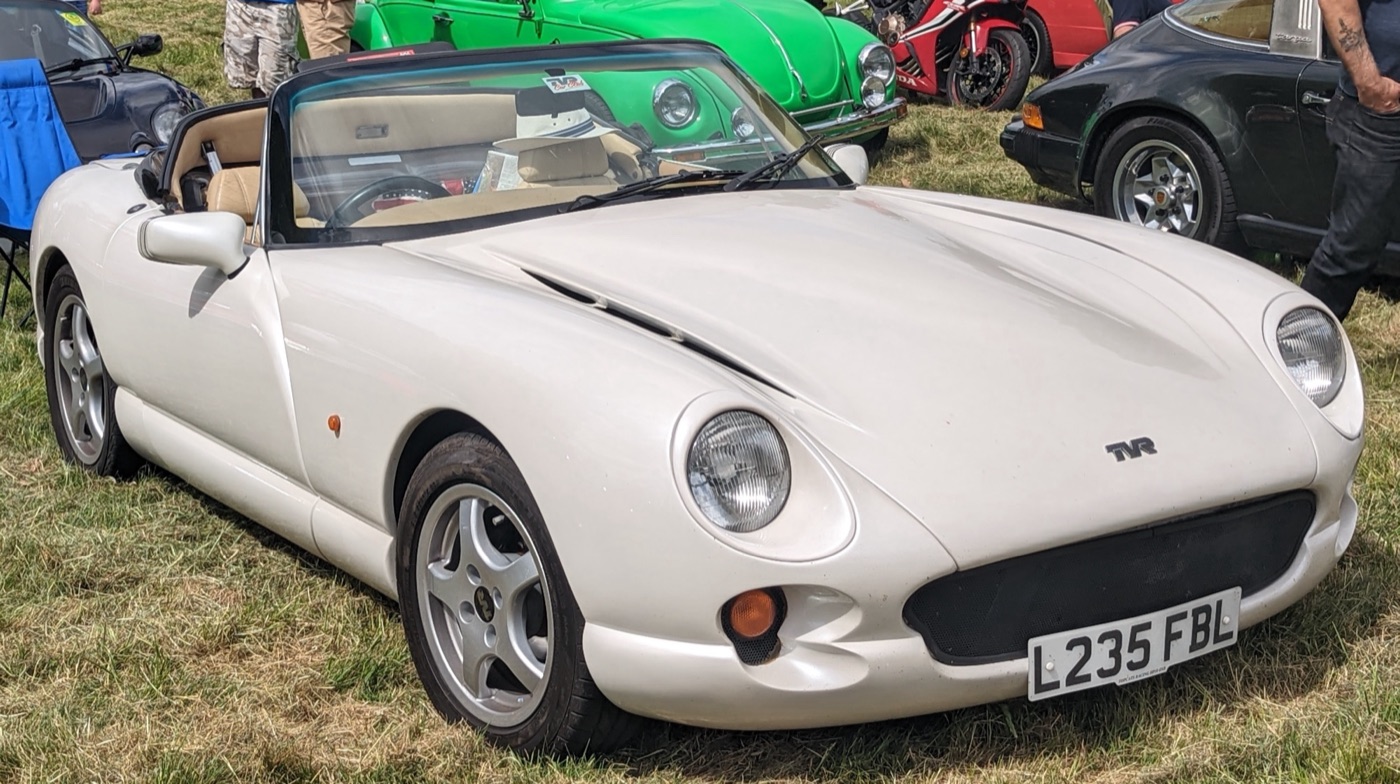
The TVR Chimaera of 1992–93 put the Griffith’s chassis and engines under a longer body with a bigger boot and softer suspension, for buyers who wanted to tour. Wheeler designed it with John Ravenscroft, and Hagerty’s buying guide repeats the story that Wheeler’s German Pointer, Ned, bit a chunk out of the styling buck where the front indicator now sits; the Guardian adds that Wheeler cut a matching chunk from the other side. Engines ran from the 240 bhp 4.0 to the 340 bhp 5.0, and in January 1995 Motor Sport listed the Chimaera 4.0 at £27,850. It was TVR’s best-selling model: Hagerty says more than 6,000 were sold between 1992 and the last 450 in 2003, and Auto Express’s buying guide says about 5,200. Bell credits the Chimaera with taking TVR past 1,000 cars a year at a profit.
TVR at its peak
The Guardian puts the high point in 1998, when TVR built 40 cars a week, turned over £50 million and made a profit of £2.6 million. That year it also opened a factory at Port Klang, near Kuala Lumpur in Malaysia, which built only Chimaeras, most of them for Australia, Japan and South Africa.
TVR’s own engines: AJP8, Speed Six and Speed 12
Wheeler’s TVR designed and built two engines of its own, the AJP8 V8 and the Speed Six straight six; Ben Samuelson, who ran TVR’s marketing and PR from 1993, told CAR that many had believed this “impossible for a small car manufacturer”. The AJP8 is named after its designers’ initials: the engineer Al Melling, TVR’s John Ravenscroft and Peter Wheeler.
Why did TVR build its own engines?
The Rover V8 was reaching its limit in the Tuscan racing cars at about 450 bhp, and Wheeler was, in the words of Motor Sport’s 2020 history of the Tuscan Challenge, “dead against having a German engine in his cars”. Malcolm McKay’s Cerbera buyer’s guide for Classic & Sports Car (2025) ties the decision to BMW’s purchase of Rover, TVR’s engine supplier.
The AJP8 V8 and the TVR Cerbera
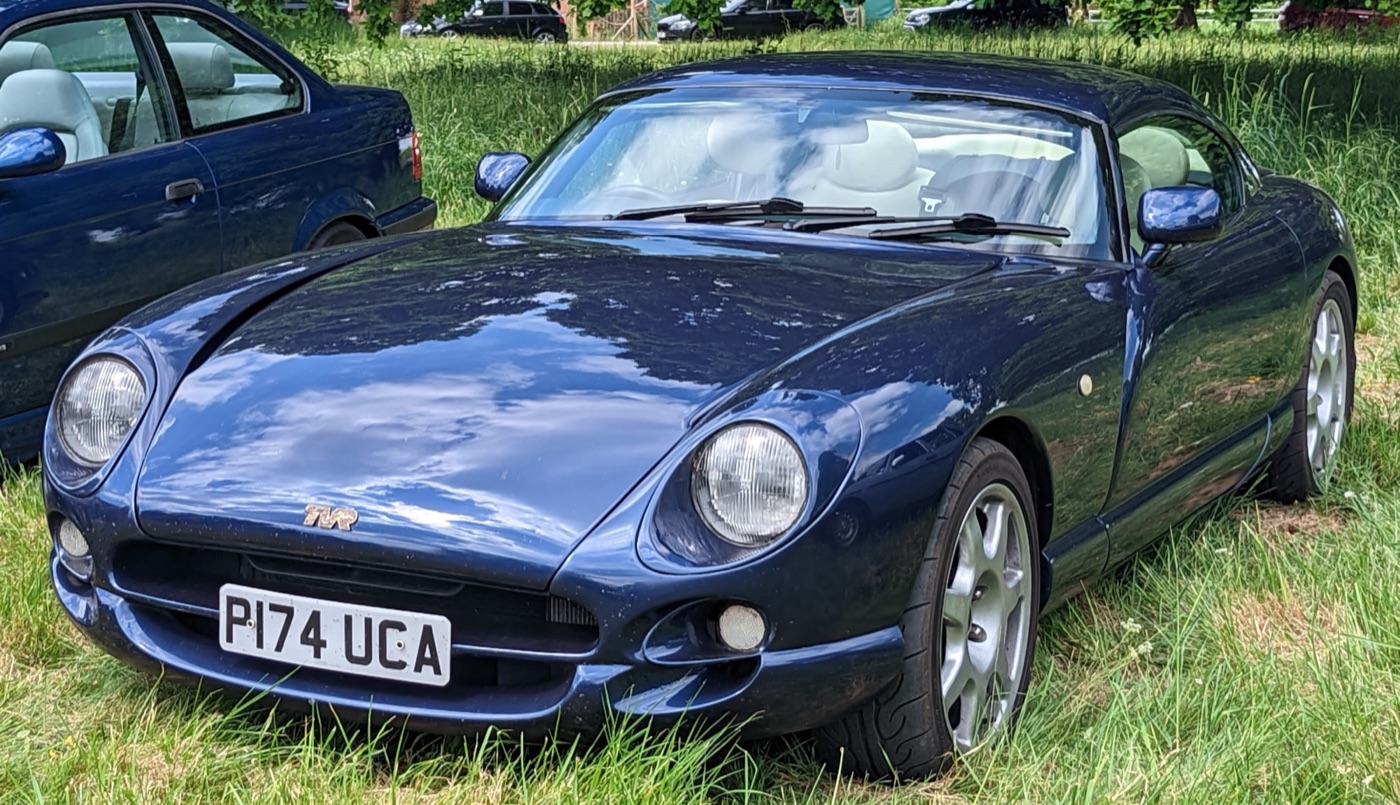
The AJP8 is an all-alloy V8 with a flat-plane crankshaft. It was shown at the 1992 British Motor Show, raced first in the Tuscan Challenge cars, where it gave 536 bhp, and reached the road in the TVR Cerbera. The Cerbera was revealed at the 1993 London Motorfair, went on sale in 1996 and was, as PistonHeads’ Cerbera guide puts it, Wheeler’s first fixed-head coupé and his first model with rear seats (“sort of”), built, the club says, to keep customers who had sold their Griffith or Chimaera when they started a family. The 4.2 gave 360 bhp and the 4.5 of 1997 gave 420 bhp. C&SC counts 1,490 Cerberas sold between 1996 and 2006.
The Speed Six
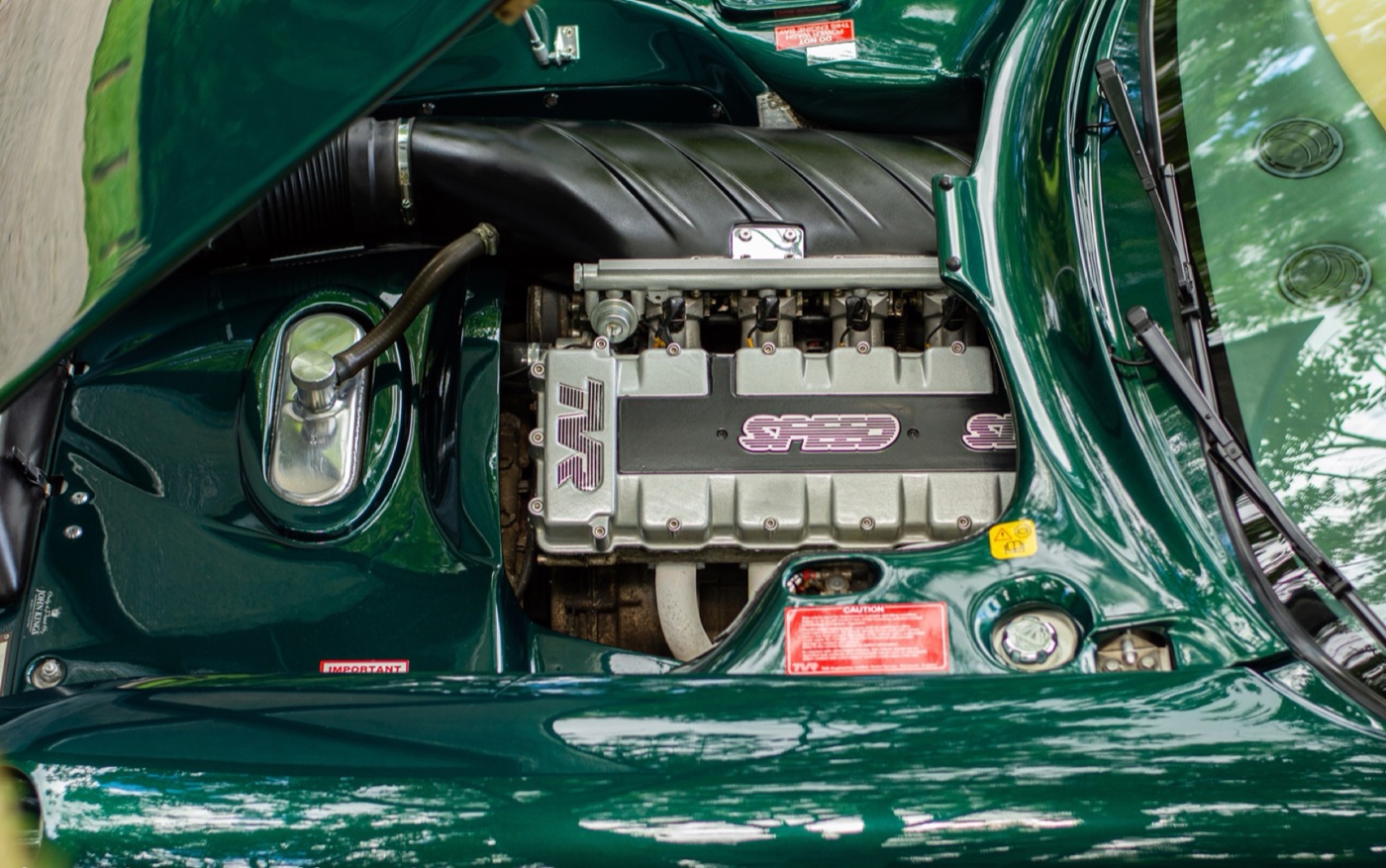
The Speed Six is a 24-valve twin-cam straight six with a dry sump, designed by Al Melling and built by TVR. The maker’s history describes it as one bank of the Speed 12’s V12. It appeared in the Cerbera in 1999 and then powered every new TVR: the Tuscan, Tamora, T350 and Sagaris, in 3.6-litre (350 bhp) and 4.0-litre (360 to 406 bhp) forms. Paul Horrell, testing the first Tuscan for CAR in 2000, admitted he had expected the cost of developing and homologating the AJP8 to “kill TVR”, and found the company doing it a second time.
The Speed 12
The Speed 12 began, as Richard Porter tells it in evo, with an argument between Wheeler and Ravenscroft about cylinder heads, and with Wheeler wanting a car for GT1 racing after the McLaren F1’s success there. Shown at the NEC in October 1996 as Project 7/12, it had a 7.7-litre V12 made of two Speed Six banks on one crankshaft, and TVR claimed 660 bhp. By the time it ran, at Snetterton in 1998, big-budget GT1 cars from Porsche and Mercedes had made the class look hopeless for TVR, and Wheeler dropped the GT1 plan.
A road version followed, with about 800 bhp and a planned price of £188,000 according to the club’s Speed 12 page. Evo says Wheeler took the one road car home for the evening and, as the legend has it, cancelled the project the next day, a story it calls “folklore” but “rooted in truth”. “I knew within 300 yards that it was a silly idea,” he later said. “Over 900bhp in a road car weighing just over a ton is plainly ridiculous.” Evo adds that the car was also so wide, with so little steering lock, that it could not get round a mini roundabout in one go, and that no off-the-shelf tyres suited it. The road car was cancelled and deposits were returned. In 2003 TVR advertised the one road car, W112 BHG, on condition that Wheeler interviewed the buyer first.
TVR Tuscan, Tamora, T350, Typhon and Sagaris
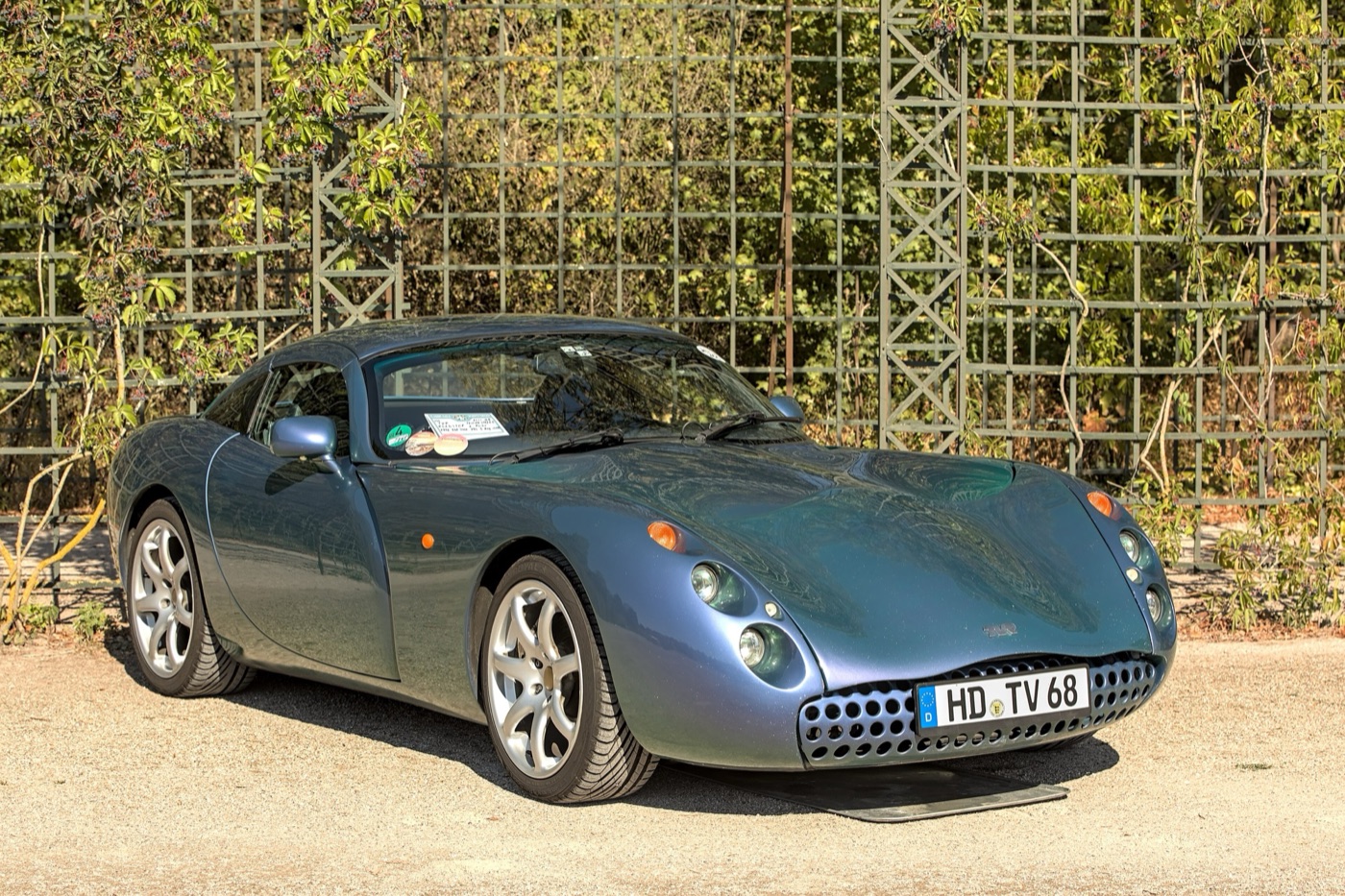
The last Wheeler cars all used the Speed Six. The TVR Tuscan began as a Griffith Speed Six that customers ordered in 1997; Horrell reported that Wheeler then wanted “a very fast GT car that could be used every day”, so it became a front-engined, rear-wheel drive coupé with a removable roof. CAR’s 2000 test car cost £39,750, weighed 1,100 kg and was quoted at 180 mph and 4.2 seconds to 60 mph. The Tamora, shown at the 2000 Birmingham motor show as the Chimaera’s successor, cost almost as much as a Tuscan and sold in small numbers; the T350 coupé and targa of 2002 were built on it.
The Sagaris was first shown at the MPH03 show at the end of 2003 as an endurance-racing version of the T350C, but went on sale only in 2005, under Smolensky, at just under £50,000. PistonHeads’ Sagaris guide gives 406 bhp and 1,078 kg, and production stopped in 2006. The Tuscan R, shown in 2000 as a road version of TVR’s racer, became the T400R race car and the Typhon road car: the club’s Typhon page says the first 50 sold out at the 2002 show at £75,000, but only three or four Typhons were built. A restyled Tuscan Mk II and a Tuscan convertible followed at the 2004 Motor Show.
TVR models of the Wheeler years
Wheeler’s TVR launched about a dozen model families in 22 years. The table gives the main ones with their engines and, where a club, magazine or factory count exists, how many were built. For the cars of the 2000s the club says no factory records survive.
| Model | Built | Engine | Power | Number built |
|---|---|---|---|---|
| 350i (Tasmin 350i) | 1983–89 | Rover V8, 3,528 cc | 190 bhp | 955 |
| 390SE and 420SE | 1984–88 | Rover-based V8, 3.9 and 4.2 litres | 275 bhp (390SE) | 103 |
| 420SEAC and 450SEAC | 1986–89 | Rover-based V8, 4.2 and 4.5 litres | 300 and 324 bhp | 18 of each |
| 400SE and 450SE | 1988–91 | Rover-based V8, 4.0 and 4.4 litres | 275 and 320 bhp | 242 and 35 |
| S, S2, S3, S4C | 1987–94 | Ford V6, 2.8 and 2.9 litres | 160–168 bhp | about 2,210 |
| V8S | 1991–94 | Rover V8, 4.0 litres | 240 bhp | about 436 |
| Griffith | 1992–2002 | Rover V8, 4.0 to 5.0 litres | 240–340 bhp | 2,582 |
| Chimaera | 1993–2003 | Rover V8, 4.0 to 5.0 litres | 240–340 bhp | about 5,200 to over 6,000 |
| Cerbera | 1996–2003 (C&SC: sold to 2006) | AJP8 V8 4.2 and 4.5; Speed Six 4.0 | 350–420 bhp | 1,490 |
| Tuscan Speed Six | 2000–06 | Speed Six, 3.6 and 4.0 litres | 350–400 bhp | no figure published |
| Tamora | 2002–06 | Speed Six, 3.6 litres | 350 bhp | 300–400 (estimate) |
| T350C and T350T | 2002–06 | Speed Six, 3.6 litres | 350 bhp | about 390 and 70 (estimate) |
| Tuscan R, T400R and Typhon | 2000–06 | Speed Six, 4.0 and 4.2 litres | 400–550 bhp | 3 or 4 Typhons (estimate) |
| Sagaris | 2005–06 | Speed Six, 4.0 litres | 406 bhp | 211 |
| Cerbera Speed 12 | 2000 (road car) | V12, 7.7 litres | about 800 bhp (claimed) | 1 road car |
How were Wheeler-era TVRs designed and built?
They were designed and built almost entirely in Blackpool, on a steel tubular backbone chassis with a hand-laid glassfibre body. The Guardian says the seats, wiring looms, circuit boards, chassis, bodies and engines were all designed and made in house, and the club put the share made in house at over 85% in the 2000s. Wheeler himself only ever owned British cars, the Guardian adds. Wheeler styled the cars with his own staff instead of outside design studios: the Griffith and Chimaera with John Ravenscroft, and the later cars with a team that Graham Browne led as chief designer from 1998 to 2005, according to evo’s 2022 visit to the old factory site.
Why do TVRs have no ABS or airbags?
Because Wheeler believed his cars were safer without them. In an April 2004 interview with PistonHeads he said “the only purpose of ABS is to allow steering in wet conditions”, and that an airbag in a convertible could push the driver’s head up into danger in a roll. “If someone crashes one of my cars and it’s their fault then I can live with myself,” he said. “If we were to put an airbag in one of our cars and it ended up killing someone, I couldn’t live with that.” His answer was a strong chassis, roll cages or a windscreen frame built into the chassis, and curved glassfibre panels. “A curved panel is stronger than a flat panel,” he said, which was why TVRs had none that were flat.
TVR, which as a small-volume maker did not have to crash-test, put a Tuscan Speed Six through an offset impact test, repaired it and crashed it again. The Guardian quotes his line that TVRs were “relatively safe upside-down, proven by customers”. For traction control, Hagerty notes, the cars had a long-travel accelerator.
TVR in motor racing under Wheeler
Motor Sport’s 2020 history says Wheeler started the Tuscan Challenge to show what a V8 TVR could do and so boost interest in the V8 S; from that one-make series TVR went on to British GT and, in 2003 and 2004, Le Mans.
The Tuscan Challenge
TVR revived the Tuscan name for a racing car shown at the 1988 British Motor Show, and the one-make Tuscan Challenge began in 1989. To fill the grid, Wheeler sold the first cars for £16,000 plus VAT to drivers who promised to start at least six of the 12 races, and billed another £16,000 to those who did not, according to the club’s Tuscan racer page and Motor Sport. The cars began with 4.5-litre Rover V8s of over 400 bhp and moved to the 536 bhp AJP8; Motor Sport calls it the fastest race series in Britain in that form, with television coverage as a support race to the British Touring Car Championship. Wheeler raced in it himself. Smolensky withdrew factory support before the 2005 season.
British GT and the Speed 12
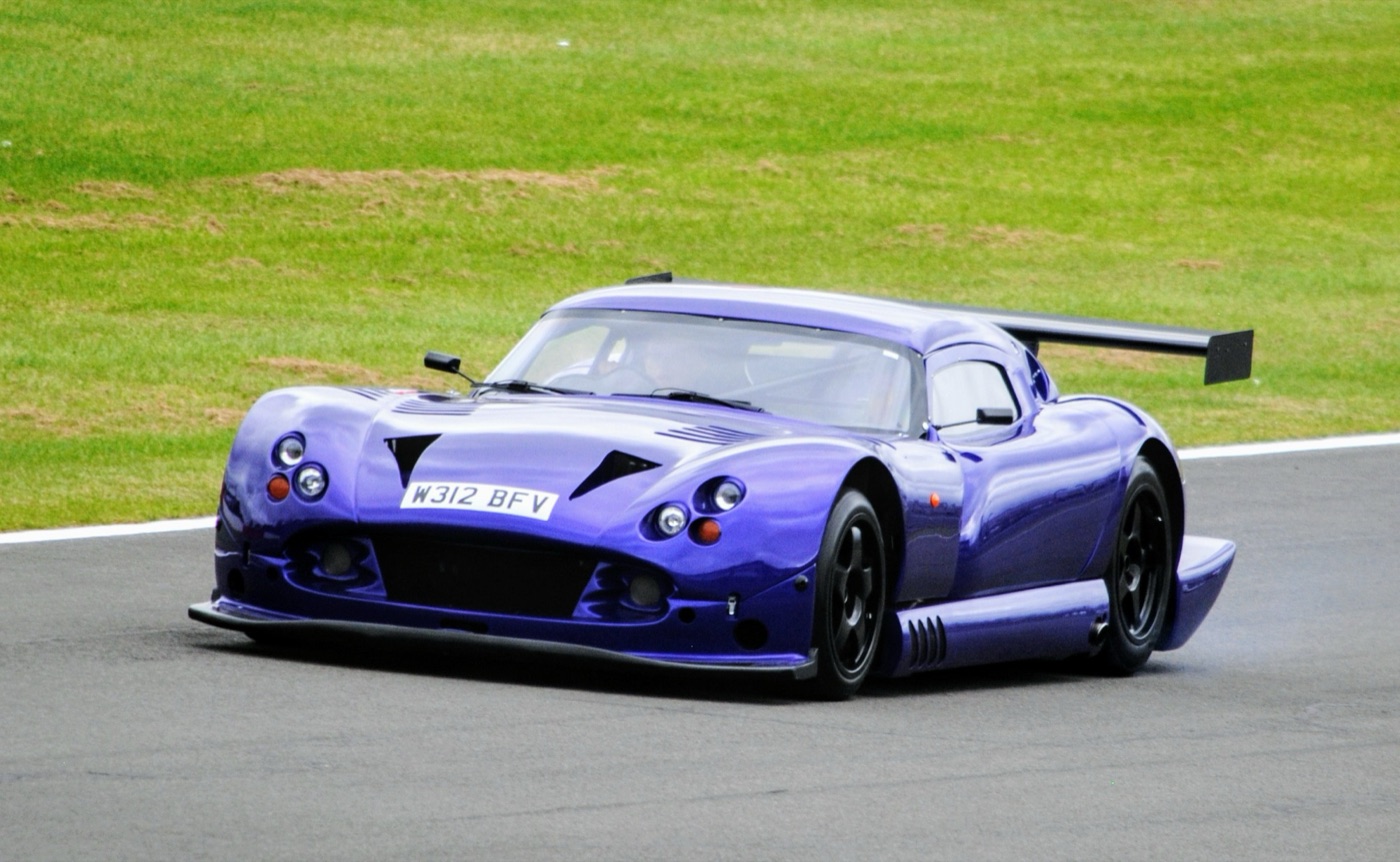
TVR ran a works Cerbera in the British GT Championship, and then the Speed 12 in the GT2 class: evo records a win at Silverstone in the rain in 2000 and two wins in 2001. The club says the Speed 12 also entered a few FIA GT rounds.
Did TVR race at Le Mans?
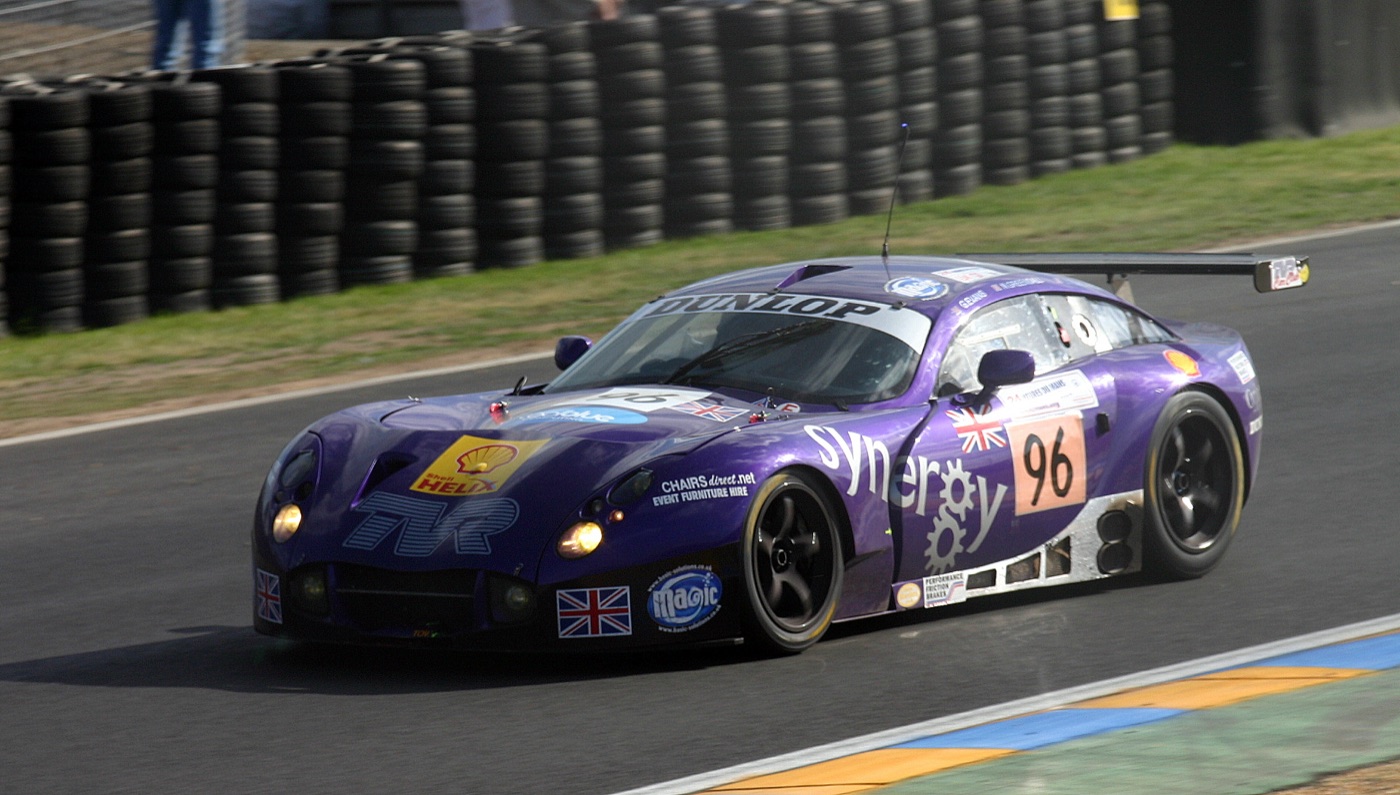
Yes. In June 2003 TVR went back to Le Mans for the first time in 41 years, the club says, with two DeWalt-sponsored Tuscan T400Rs. Both retired, one after an accident on lap 11 and the other with gearbox failure after 93 laps, according to the race results. In 2004, a month before Wheeler sold the company, Chamberlain-Synergy Motorsport ran two T400Rs and both finished, 21st and 22nd overall, eighth and ninth in the GT class.
Why did Peter Wheeler sell TVR?
The Guardian says he sold “when times got that bit too hard for what was still, for all its fame, a specialist manufacturer”. On 27 July 2004 BBC News reported the sale of TVR, which then employed 400 people at Bispham, to Nikolay Smolensky, a 24-year-old former chairman of the Russian bank OVK and son of the banker Alexander Smolensky; Wheeler was to stay on as a senior consultant. The BBC report gave no price; the Guardian gives a reputed £15 million. The sale did not include the Bristol Avenue factory, which Wheeler leased to the new owner, according to evo.
What happened to TVR after Wheeler?
TVR stopped building cars in Blackpool at Christmas 2006, less than two and a half years after the sale, and no production TVR has been built since. Smolensky’s TVR worked on quality (the club calls the 2005–06 cars “the best engineered TVRs ever”), hired Ricardo to make the Speed Six meet Euro 5 emission rules, and planned a new factory near Blackpool airport. Sales fell during 2006. In October 2006 TVR said assembly would move abroad, and the company was split into parts, with manufacturing in a new company, Blackpool Automotive.
The Blackpool factory closes
Blackpool Automotive went into administration over Christmas 2006, and CAR reported on 2 January 2007 that about 250 staff were at home waiting to learn their fate while the parent company planned final assembly at Bertone in Italy; the club calls the reports of outsourcing conjecture that was never confirmed. Smolensky bought the business back from the administrators in February 2007 for, the club says, a fraction of what he had paid, and a Sagaris 2 was shown to invited guests near Blackpool in 2008 but never built.
Les Edgar and the new Griffith
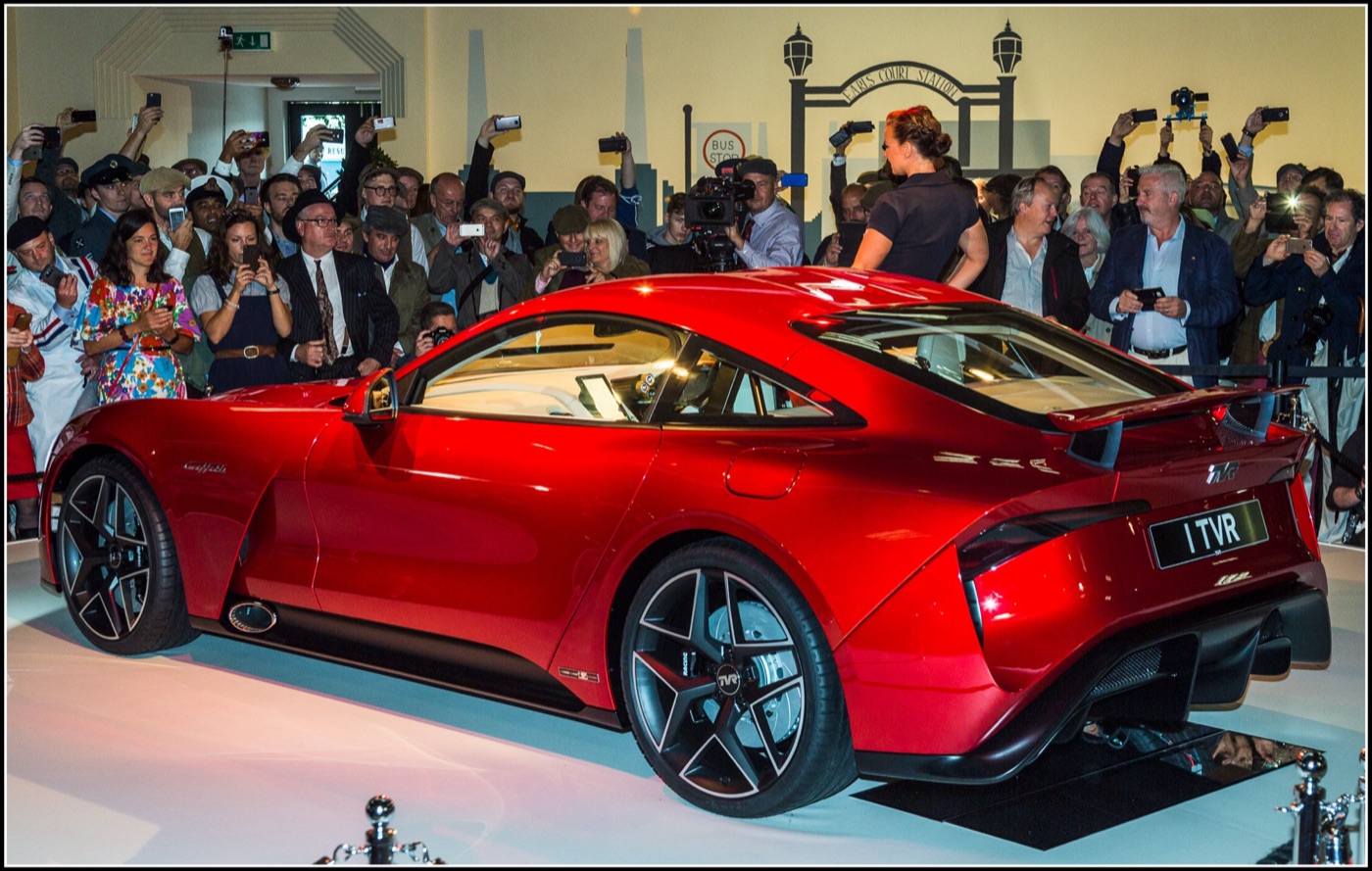
In 2013 a consortium led by Les Edgar, a Surrey businessman who had made his money in computer games and had taken Aston Martin back to Le Mans, bought the brand, its rights and its remaining assets; it was announced on 6 June 2013, and evo reported the sale on 10 June. The new company set up TVR Parts for existing cars and a network of heritage partners, many of them former TVR dealers, then had Gordon Murray Design and Cosworth engineer a new Griffith. TVR began taking £5,000 deposits on 7 July 2015, with a reduced deposit for TVR Car Club members in the club’s 50th year, and the car was unveiled at the Goodwood Revival event on 8 September 2017, with a 5.0-litre Ford V8, a manual gearbox and a chassis built with Murray’s iStream Carbon technology. evo’s account of the revival says the first 500 First Edition cars were priced at £90,000.
No customer had received one by November 2025. The Welsh Government made an investment in 2016 that gave it a 3% stake, with a £2 million loan since repaid, and agreed to buy and refit a factory at Ebbw Vale. In December 2023 Autocar reported that TVR’s exclusive rights to the site had lapsed, and TVR named Thruxton circuit in Hampshire as the home of its first brand centre, which evo reported in November 2025 had not opened; the same Autocar report recorded TVR’s plans, after an investment by the lithium company Ensorcia, for an electric Griffith, an electric saloon and an SUV. In 2023 Forseven bought Gordon Murray Technologies and with it the rights to iStream, leaving TVR without a platform, and chief executive Jim Berriman resigned as a director in May 2025, evo reports.
Who owns TVR now?
Charge Holdings Ltd has controlled TVR Automotive Ltd, the company Les Edgar’s consortium formed on 12 April 2013, since 12 November 2025, holding more than 50% but less than 75% of its shares, according to the Companies House register; Ensorcia Automotive, which had held 25–50% since June 2023, ceased to be a controller the same day. Charge’s chief executive, Paul Abercrombie, joined the board that day, and Edgar, a director since 2013, is still one.
Charge Holdings, the company behind Charge Cars’ electric Ford Mustang, announced the merger on 13 November 2025, with delivering the V8 Griffith as its first aim and electrified models later. Auto Express quotes Abercrombie saying more details would follow in early 2026. As of 28 October 2026 no delivery of the new Griffith had been reported.
What happened to the Bristol Avenue factory?
After 2006 the buildings were let as units, several of them to former TVR staff; three of them built Wheeler’s 5000M race car there, which evo calls the last TVR built at Bristol Avenue. In 2022 evo reported that Wheeler’s widow, Vicky, had commissioned a weathering-steel statue of Wheeler and Ned, drawn by Graham Browne, for the middle of a new industrial estate on the site called the Wheeler Hub. Hagerty reported in February 2025 that the old factory had been demolished, and quoted planning documents placing “a TVR car statue on a plinth” between two of the new buildings.
What does a TVR cost today?
All but one of the 79 TVRs that OUTLAW 8’s records of classic car sales show sold at auction for sterling between July 2023 and October 2026 went for less than £40,000; the Sagaris, the Speed 12 and race-ready 1960s Griffiths cost far more. The sale prices, as the auction sites reported them:
| Model | Sales | Median | Lowest to highest |
|---|---|---|---|
| Chimaera | 23 | £9,600 | £3,751 to £18,305 |
| Griffith (1990s) | 13 | £17,750 | £8,500 to £43,313 |
| Tuscan Speed Six | 12 | £20,907 | £16,000 to £28,875 |
| S Series | 9 | £8,500 | £4,793 to £12,000 |
| Tasmin and 350i | 5 | £7,100 | £4,000 to £9,100 |
| Cerbera | 4 | £11,825 | £4,633 to £15,500 |
| M Series | 4 | £12,600 | £7,200 to £26,650 |
| Grantura | 3 | £20,500 | £6,300 to £32,249 |
| T350 | 3 | £35,250 | £17,500 to £37,251 |
Price guides put good cars higher. Hagerty’s Chimaera guide (March 2022) found tidy higher-mileage cars around £12,000, the 4.5-litre cars nudging £15,000, about £20,000 for one in excellent condition and up to £30,000 for a collector-quality 500. James Agger of James Agger Autosport told Autocar in January 2020 that “you can get a reasonable Tuscan for £25,000 but most are around £30,000”, with the best between £38,000 and £52,000. Classic & Sports Car’s 2025 guide gives a Cerbera 4.5 at £15,000 needing restoration, £26,000 average and £37,500 for a show car. PistonHeads put the entry price for a Sagaris at £70,000 in October 2023, against £35,000 in 2013, and in 2021 put race-ready Griffith 200s at £85,000 to £100,000. The one Cerbera Speed 12 road car sold through Silverstone Auctions in May 2023 for £601,500, evo reports.
TVR Parts was set up after the 2013 sale to supply genuine parts for existing cars, and Agger says “all parts are available and everything is repairable”. Autocar priced a major 12,000-mile Tuscan service with tappet adjustment at about £650 and a specialist Speed Six rebuild at about £5,500 in 2020, and PistonHeads’ Cerbera guide suggested setting aside £3,000 a year for running costs.
Are Wheeler-era TVRs reliable?
Agger’s advice to Autocar was to “forget age, colour and engine”: “how it’s been maintained and who has done what are all you should care about.”
Chassis
Every Wheeler-era TVR has a steel backbone chassis under a glassfibre body that does not rust. The chassis does. Hagerty’s advice is to check the outriggers under the cabin first, then the central spine and the suspension mounts, and McKay notes that proper chassis repairs usually mean lifting the body off. Autocar’s Tuscan guide (2020) warns that engine heat blisters the chassis coating.
Engines
The Rover V8’s faults are well known, and specialists can rebuild one to any specification, Hagerty says; the usual ones are timing-cover oil leaks, camshaft wear, head gaskets or slipped cylinder liners, and piston slap on the 5.0. The AJP8 and Speed Six were new designs, and McKay writes that “almost all 4.2s and ‘sixes’ will have been rebuilt by now”. On the Speed Six, the club’s technical pages say some early engines had finger followers made from sub-standard material by a sub-contractor, all since rebuilt, and that revving a cold engine past 4,000 rpm starves the top end of oil. Hagerty’s 2025 report on the factory adds that electrics were the usual worry for owners of new TVRs.
Questions
How much did Peter Wheeler sell TVR for?
The price was not made public when the sale to Nikolay Smolensky was announced on 27 July 2004. The Guardian’s obituary of Wheeler gives a reputed £15 million.
When did Peter Wheeler die?
Peter Wheeler died on 11 June 2009, aged 65. He was born in Sheffield on 29 February 1944.
Where were TVRs made?
In Blackpool, Lancashire: at Hoo Hill, Layton, until the end of 1970, then at Bristol Avenue, Bispham, until production stopped at Christmas 2006. From 1998 a factory at Port Klang in Malaysia also built Chimaeras.
What is the best-selling TVR?
The Chimaera, built from 1993 to 2003. Hagerty puts sales at more than 6,000 and Auto Express at about 5,200.
What does AJP stand for on a TVR engine?
The initials of the three men who designed TVR’s V8: the engineer Al Melling, TVR’s John Ravenscroft and the owner, Peter Wheeler.
Why does the TVR Chimaera have a notch in its front bumper?
The story told by the Guardian and Hagerty is that Wheeler’s German Pointer, Ned, bit a piece out of the styling model, and Wheeler kept the shape and cut a matching piece from the other side. The recess holds the front indicator.
Did Peter Wheeler race TVRs?
Yes. He raced in TVR’s own Tuscan Challenge and, after selling the company, in a TVR 5000M, a 1964 TVR 5000 and a lightweight Aston Martin DB4.
Sources
- TVR Car Club, “A brief history of TVR”: Wilkinson, the Lilleys, Wheeler’s purchase, the Speed Eight and Griffith orders, Port Klang, the Smolensky years, the 2006 receivership.
- TVR Automotive, “TVR Heritage”, read October 2026: the early cars, the Grantura, the Lilleys, Bristol Avenue, Wheeler’s purchase, the Speed Six, the 2013 sale.
- TVR Car Club model pages: Grantura, Griffith 200/400, Tuscan V8 and V6, Vixen, M Series, Tuscan R, T400R and Typhon, Tasmin and wedges (production figures from Graham Robson), S Series, Griffith (yearly production), Speed 12, Tuscan racer, Tamora, T350, Cerbera (power outputs) and Tuscan technical FAQ (finger followers).
- Jonathan Glancey, “Peter Wheeler”, The Guardian, 2 July 2009: birth, education, in-house manufacture, the 1998 figures, the sale price, safety views, Ned.
- CAR, “Ex-TVR chairman Peter Wheeler (1944–2009)”, 12 June 2009: date of death, Ben Samuelson’s quotes.
- SkiddMark, “Obituary: Peter Wheeler 1944–2009”, 12 June 2009 (Wayback Machine copy): report of his death after a short illness.
- University of Birmingham, “Do you remember Peter Robert Wheeler?”, 2020: his 1966 degree and work in the oil industry.
- Graham Bell, “The TVR Story Part 2”, PistonHeads, 14 July 2003: the 350i, the end of US exports, Griffith orders, TVR Power, production figures.
- PistonHeads, “Exclusive: the Wheeler interview”, 18 April 2004: Wheeler on ABS, airbags and crash testing.
- Jeremy Walton, “Blackpool Rocker”, Motor Sport, August 1992, p. 48: Griffith 4.3 road test.
- Simon Arron, “Classic mistake”, Motor Sport, January 1995, p. 46: Chimaera 4.0 list price.
- Motor Sport, “Rare TVR in UK race debut”, January 2009, p. 108: Wheeler’s TVR 5000 at Brands Hatch.
- Motor Sport, “Race car buying guide: TVR Tuscan Challenge”, March 2020, p. 128: the series, the AJP8, Wheeler as a driver.
- Companies House, TVR Automotive Ltd (company 08486313): persons with significant control, officers and company overview, read 28 October 2026: Charge Holdings’ control and the directors.
- OUTLAW 8 auction records, TVRs sold at auction for sterling between July 2023 and October 2026 (79 sales, query of 28 October 2026): the sale-price table.
- Alisdair Suttie, “Buying Guide: TVR Chimaera (1992–2003)”, Hagerty UK, 16 March 2022: design, sales, prices, chassis and engine checks.
- Auto Express, “TVR Chimaera: buying guide and review (1992–2003)”: production of about 5,200.
- Tony Middlehurst, “TVR Cerbera: PH used buying guide”, PistonHeads, 31 January 2021: the Cerbera as Wheeler’s first coupé with rear seats; Griffith 200 prices; running costs.
- Malcolm McKay, “Buyer’s guide: TVR Cerbera”, Classic & Sports Car, 9 July 2025: the AJP8 decision, production, price guide, engine rebuilds, chassis repair.
- Paul Horrell, “Psycho logical: TVR Tuscan tested”, CAR, 2000 (archive): Tuscan origins, price and figures.
- John Evans, “Used car buying guide: TVR Tuscan”, Autocar, 27 January 2020: Speed Six versions, James Agger’s prices and advice, running costs, chassis checks.
- Richard Porter, “TVR Cerbera Speed 12: dead on arrival”, evo, 27 August 2025: Speed 12 history, racing wins, Wheeler’s quotes, the 2023 sale.
- Tony Middlehurst, “TVR Sagaris: PH used buying guide”, PistonHeads, 29 October 2023: Sagaris dates, power, weight, production, prices in 2013 and 2023.
- Racing Sports Cars, Le Mans 24 Hours results, 2003 and 2004.
- BBC News, “Russian buys up British car firm”, 27 July 2004: the sale to Smolensky.
- Tim Pollard, “TVR goes off the rails”, CAR, 2 January 2007: Blackpool Automotive’s administration.
- evo, “TVR sold to UK businessman”, 10 June 2013.
- evo, “Life after TVR’s Peter Wheeler”, 8 April 2022: the factory lease, the Wheeler Hub, the statue, the 5000M, Graham Browne.
- Autocar, “TVR loses rights to Welsh factory”, 22 December 2023: Ebbw Vale, Thruxton, the Welsh Government stake.
- evo, “Signs of life for TVR: could latest merger save the ‘new’ Griffith?”, updated 13 November 2025: the 2013–25 revival, iStream, Thruxton, Charge Holdings.
- Auto Express, “New TVR Griffith lives!”, updated 13 November 2025: the Charge Holdings merger.
- Hagerty, “End of an era as TVR factory is flattened”, 3 February 2025: demolition, the planned statue, reliability.