Volkswagen Type 2: the VW camper van’s history, models and values
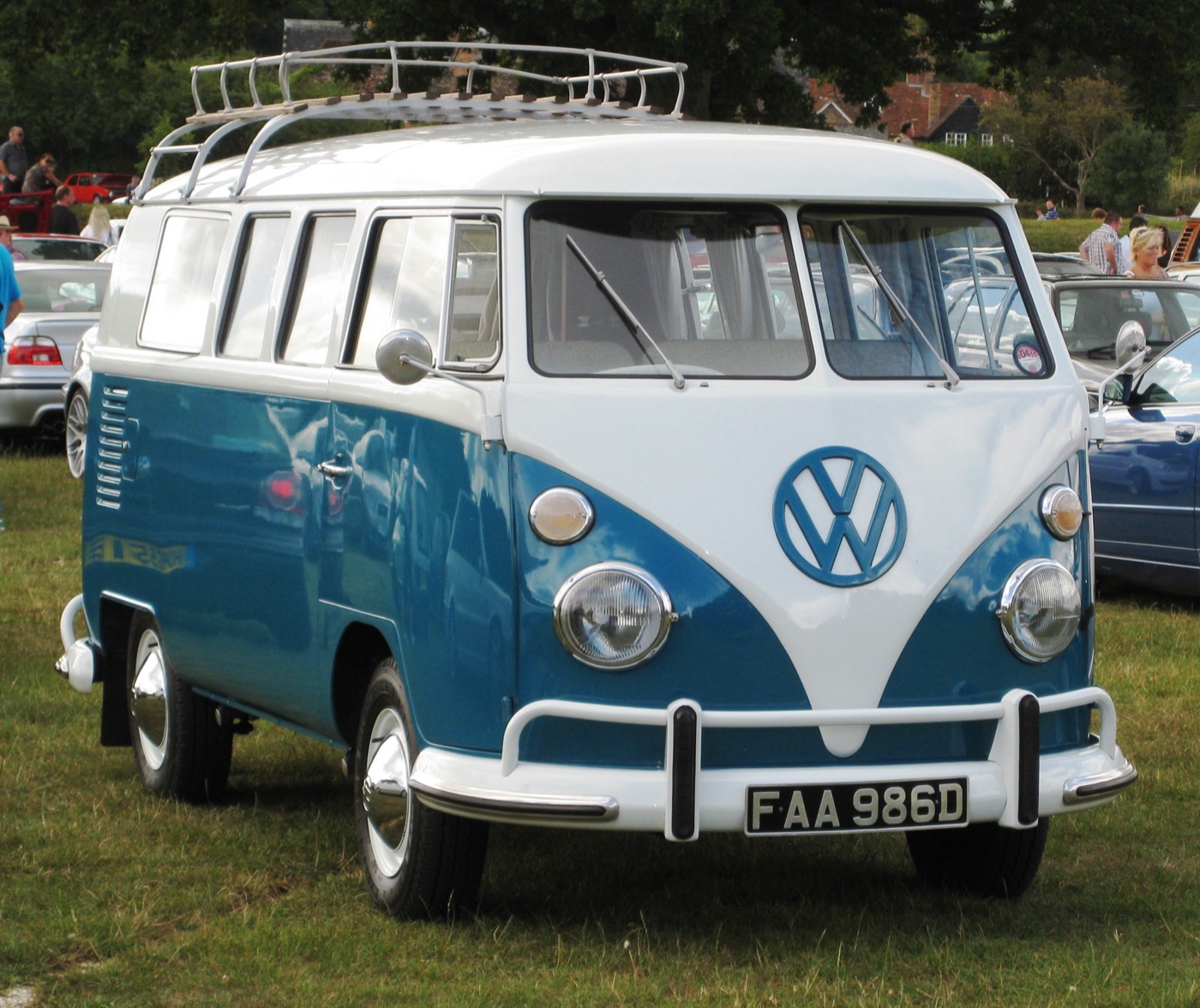
The Volkswagen Type 2 is the van Volkswagen (VW) built on Beetle mechanicals from 8 March 1950: the Transporter, Kombi, Microbus or Bulli, known to most of Britain as the VW camper van or campervan. Its first two generations are the classic ones, the split-screen T1 built in Germany until 1967 and the bay-window T2 that replaced it, and Brazil kept making the T2 until December 2013, when rules requiring airbags and anti-lock brakes ended a 56-year run there. At auction a customised split-screen Samba has made $302,500 and a restored one $291,500, and in the two years to October 2026 a bay-window T2 sold in Britain for a median of £10,000.
Volkswagen Type 2 generations at a glance
Volkswagen counts the Type 2 by generation, T1 to T3 for the rear-engined vans, and the names below are the ones owners use. The T numbers came later: the factory simply called the van the Type 2 because it followed the Beetle, the Type 1, and Volkswagen Commercial Vehicles’ 70th-anniversary release of 2020 says it only “made sense to differentiate between the T1 and T2” once the second generation arrived.
| Generation | Nicknames | Built | Main plants | Engine at launch |
|---|---|---|---|---|
| T1 | Split screen, Splittie, Barndoor, Samba (De Luxe bus) | 1950–1967 in Germany; to 1975 in Brazil | Wolfsburg, then Hanover from 1956; São Bernardo do Campo from 1957 | 1,131 cc air-cooled flat four, 25 PS |
| T2 | Bay window, Bay, Early Bay, Late Bay | 1967–1979 in Germany; to 1996 in Mexico; to 2013 in Brazil | Hanover; Puebla; São Bernardo do Campo | 1.6-litre air-cooled flat four (1.4-litre water-cooled flex-fuel in the last Brazilian vans) |
| T3 | T25 (UK) | 1979–1992 in Germany; to 2002 in South Africa | Hanover; Graz; South Africa | Air-cooled flat four, 50–70 PS |
Where the Type 2 came from: Ben Pon’s 1947 sketch
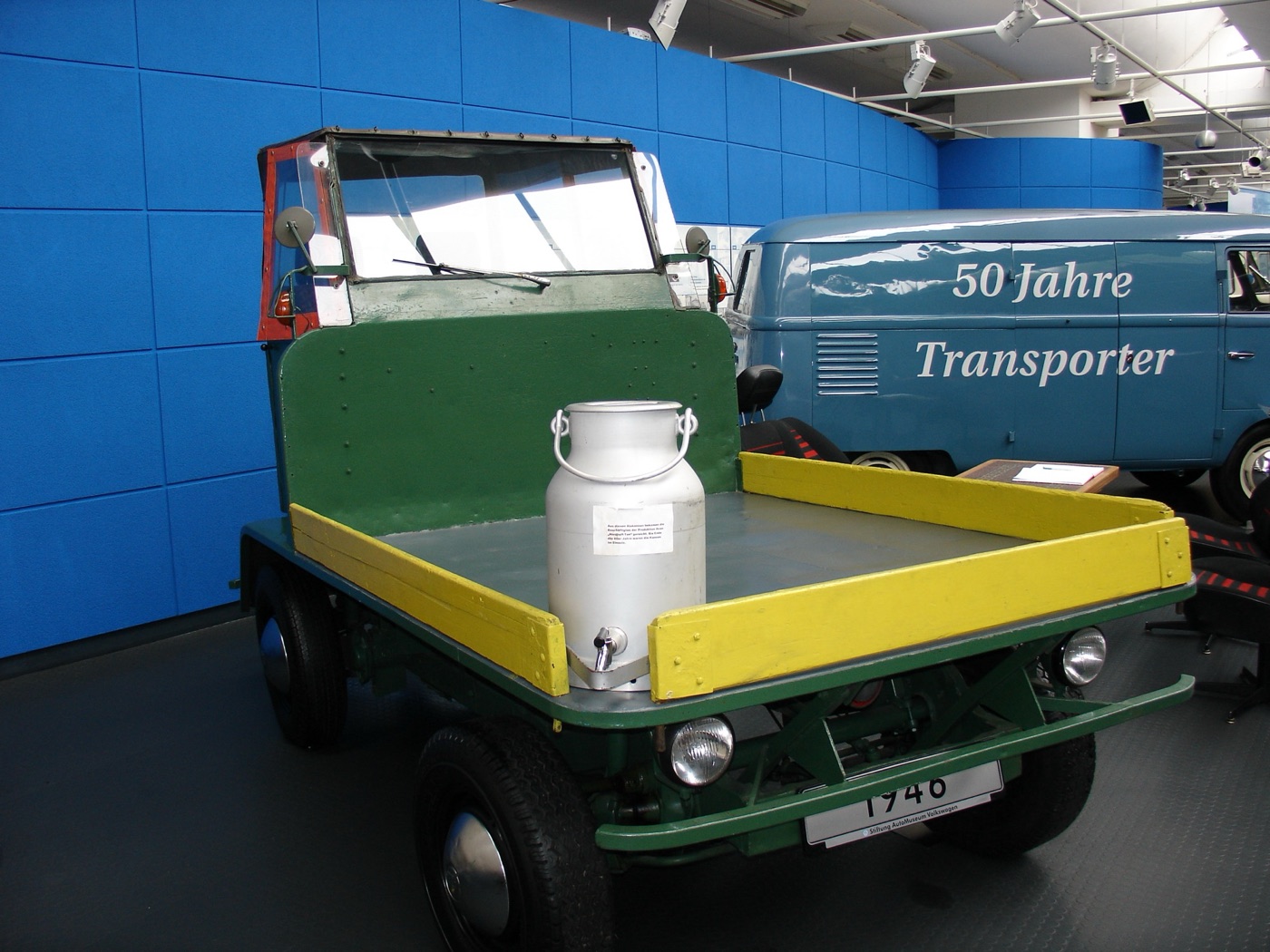
The Type 2 began with a drawing in a diary. Ben Pon, the Dutch businessman who became Volkswagen’s importer in the Netherlands, saw a crude factory parts carrier called the Plattenwagen on a visit to Wolfsburg in 1946, and in April 1947 he sketched in his diary a boxy van built on Beetle mechanicals, according to Volkswagen’s 65th-anniversary release of March 2015 and Autoblog’s 2020 history of the Plattenwagen.
The Plattenwagen was the work of Major Ivan Hirst, the British Army officer running the bombed Wolfsburg plant after the war. When the army asked for its borrowed forklifts back, Hirst recalled in words Autoblog quotes, “I took a Kübelwagen or a Käfer chassis, put a flat board over one end of it, put the driver’s seat over the engine, added a steering wheel, and that became the Plattenwagen.” Volkswagen had no spare capacity for a van in 1947, and Pon’s idea waited, though the production design, Autoblog notes, looked a lot like his drawing.
Two years later Volkswagen’s managing director, Heinz Nordhoff, showed four prototypes: two panel vans, a Kombi and a minibus, one of them destined for the Cologne perfume maker 4711. Volkswagen revealed a hand-built panel van to the press on 11 November 1949. The engineers kept the Beetle’s engine and running gear but dropped its central-tube chassis for a unitary body on a ladder frame, and the engine was the 1,131 cc flat four giving 25 PS at 3,300 rpm.
Production began on 8 March 1950 in Hall 1 at Wolfsburg, at ten vans a day. By the end of 1950 Volkswagen had built 8,001 Transporters, priced from 5,850 Deutschmarks, and the 100,000th followed in 1954, when Wolfsburg was making 80 a day and could make no more alongside the Beetle. Work on a dedicated plant at Stöcken in Hanover started in March 1955, and the first Hanover-built vans left the line in March 1956.
The nickname Bulli came early too. Volkswagen tried to register the name as a trademark in 1949, found another company already held the rights (for a snow groomer, by Volkswagen’s 2025 account) and only secured “Bulli” in 2007.
The T1 split screen, 1950–1967
The T1 is the first Type 2, named for its two-piece split windscreen and the V-shaped panel on its nose. It was 4.10 metres long, carried up to 750 kg (Volkswagen’s 2015 and 2020 figure) in a 4.5 cubic metre load bay and, with the 25 PS engine, reached 80 km/h; later 44 PS engines took it to 105 km/h, according to the Volkswagen Commercial Vehicles release for the van’s 75th birthday, March 2025. Volkswagen built its millionth T1 at Hanover on 2 October 1962.
Panel van, Kombi, Microbus and pickup
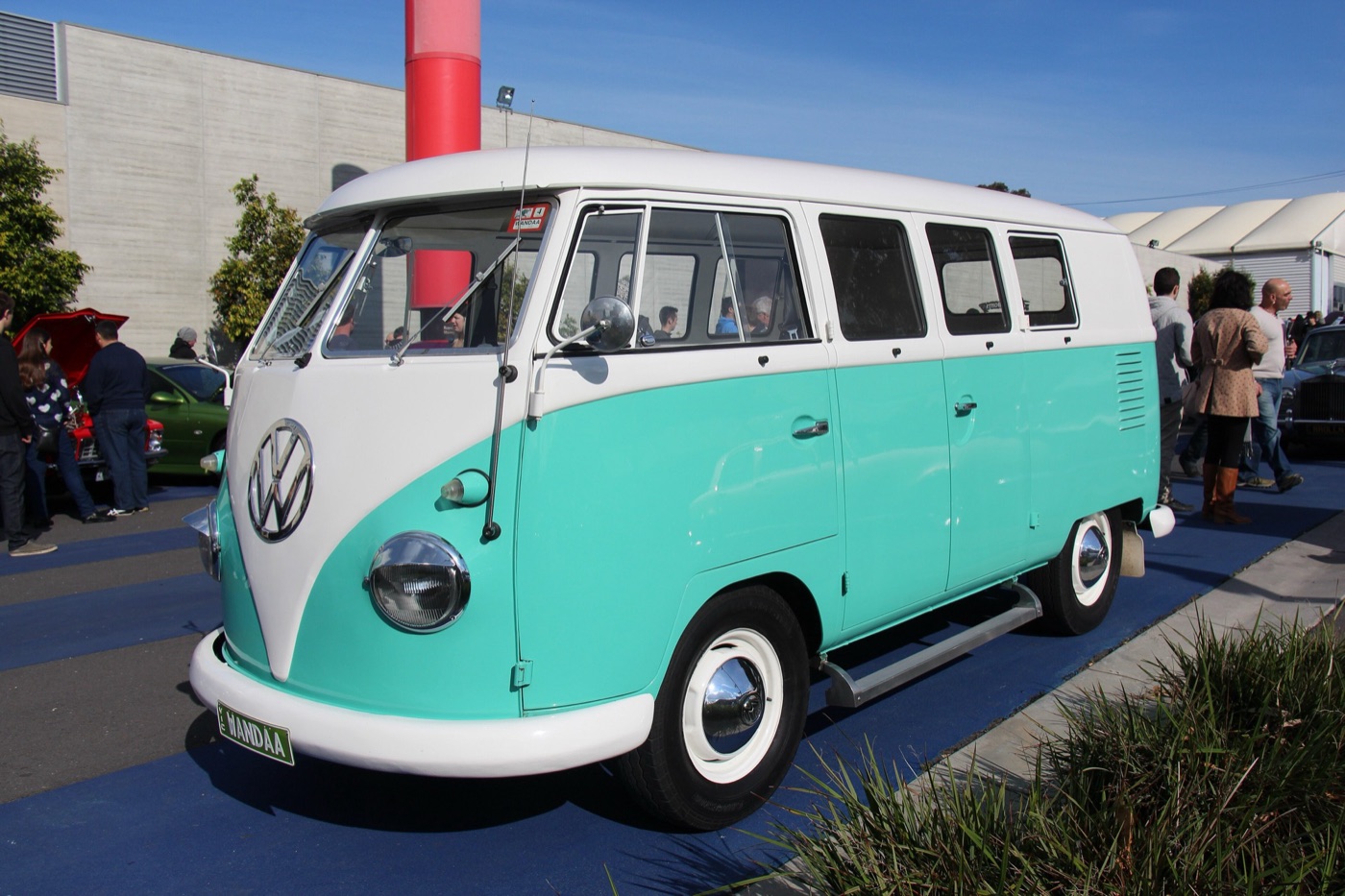
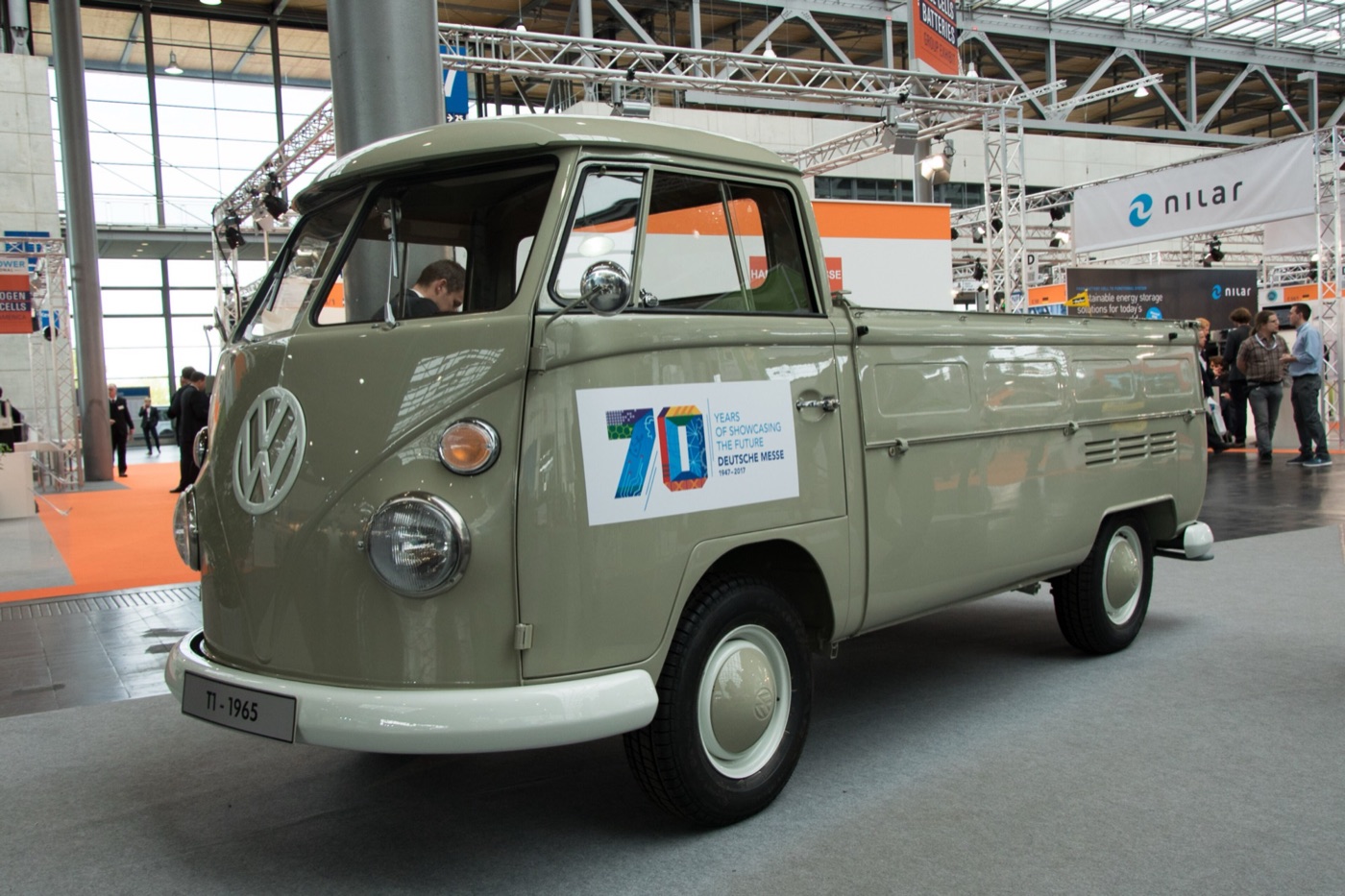
The first T1 was a panel van with no windows in the load area. The Kombi, with side windows and removable seats, followed in April 1950, then the eight-seat Microbus, and the pickup arrived in 1952. Belgium assembled the T1 too: 16,560 left D’Ieteren’s Forest plant in Brussels between 1954 and 1962.
The Samba: the 21- and 23-window De Luxe bus
The Samba was Volkswagen’s luxury bus, shown at the first post-war Frankfurt motor show in 1951 and sold in Germany as the “Sonderausführung”, the special version. Volkswagen’s history of the Samba, April 2021, lists what the extra 3,000 or so Deutschmarks bought: two-tone paint, aluminium trim strips, skylights in the roof edge, a folding fabric sunroof and a trimmed, chromed interior. In the United States it was the Microbus De Luxe.
Volkswagen does not know where the nickname came from. It offers three candidates: an abbreviation of Sonnendach-Ausführung mit besonderem Armaturenbrett (sunroof version with a special dashboard), of Sonder-Ausführung mit besonderer Ausstattung (special version with special equipment), or simply the dance. The name was printed on official Dutch price lists in 1954. Series production ran from 27 June 1951 to July 1967, and Volkswagen built nearly 100,000. The oldest known Samba belongs to a collector in the Rhineland, who still has the invoice: 9,025 Deutschmarks, when the average German annual wage was 3,579.
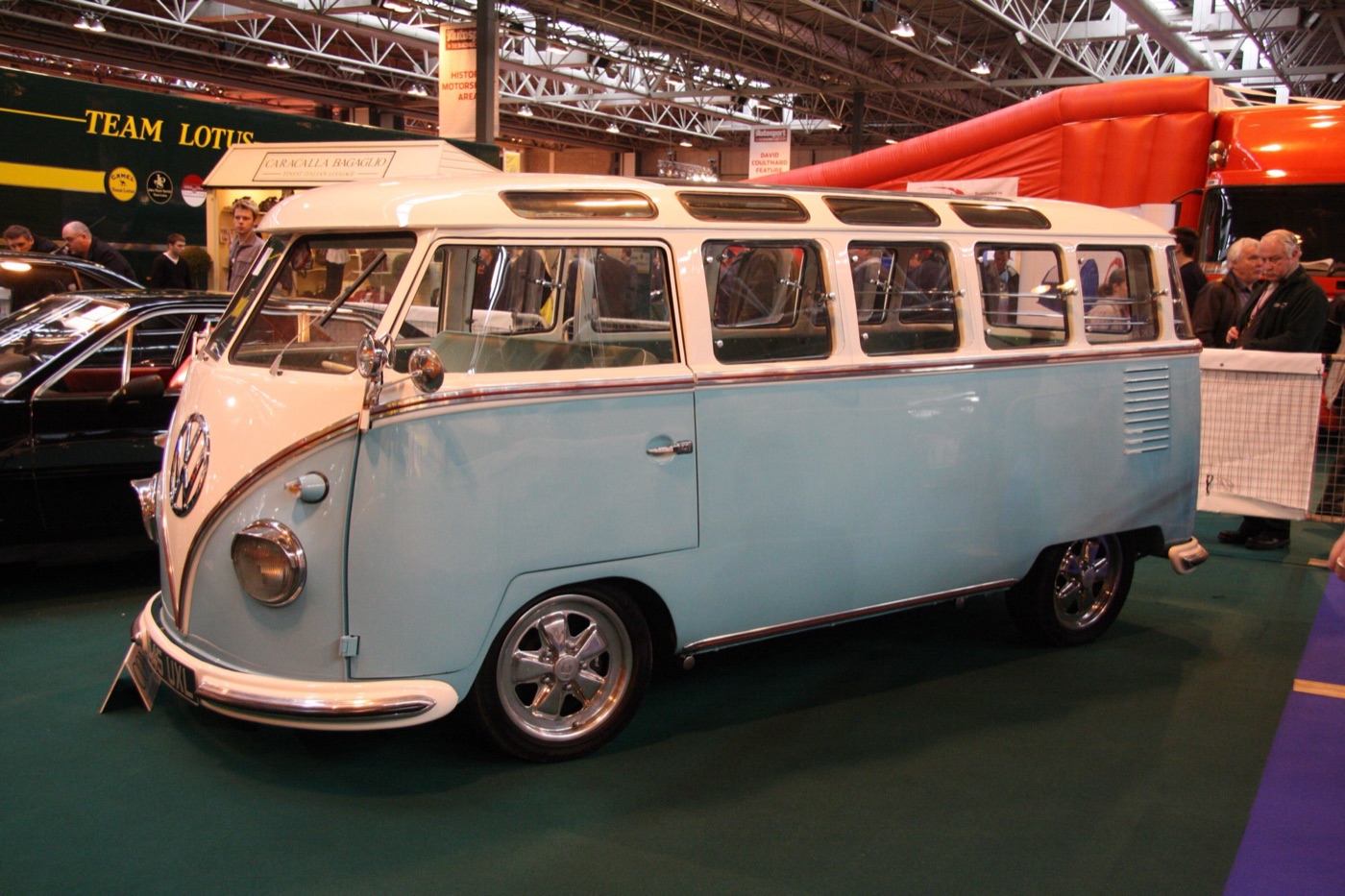
Owners count the windows. In the Just Kampers split-screen buyers’ guide, the Kombi and standard Microbus are 11-window buses and the De Luxe has more; the 21- and 23-window De Luxes are the Sambas. The 23-window lost its curved rear corner windows when Volkswagen widened the tailgate for the 1964 model year, which made it a 21-window and ended German 15-window production.
The T2 bay window, 1967–1979
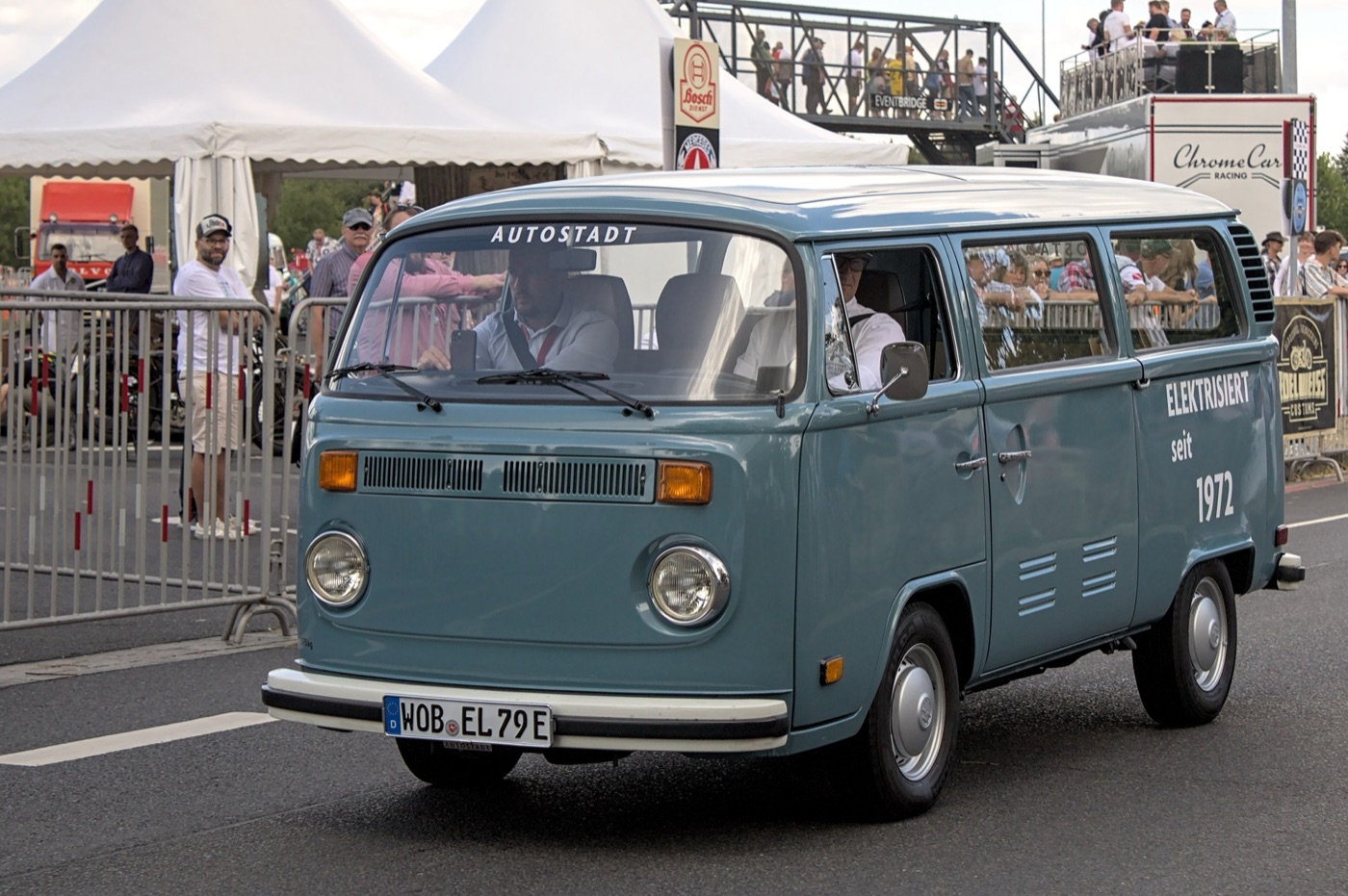
The T2 replaced the T1 in July 1967 and is called the bay window for its single, curved windscreen. Volkswagen’s 2025 release lists the other changes: horizontal lines across the nose in place of the T1’s V, bigger side windows, a sliding side door as standard, better brakes and running gear, and a body 20 cm longer on the same 2.40-metre wheelbase. About 2.2 million T2s were built in Germany by 1979, when the T3 replaced it, by Volkswagen’s 2025 count (2.14 million at Hanover in its 2020 count), and the 4.5 millionth Transporter of all generations left the line in 1978.
Early bay, crossover and late bay
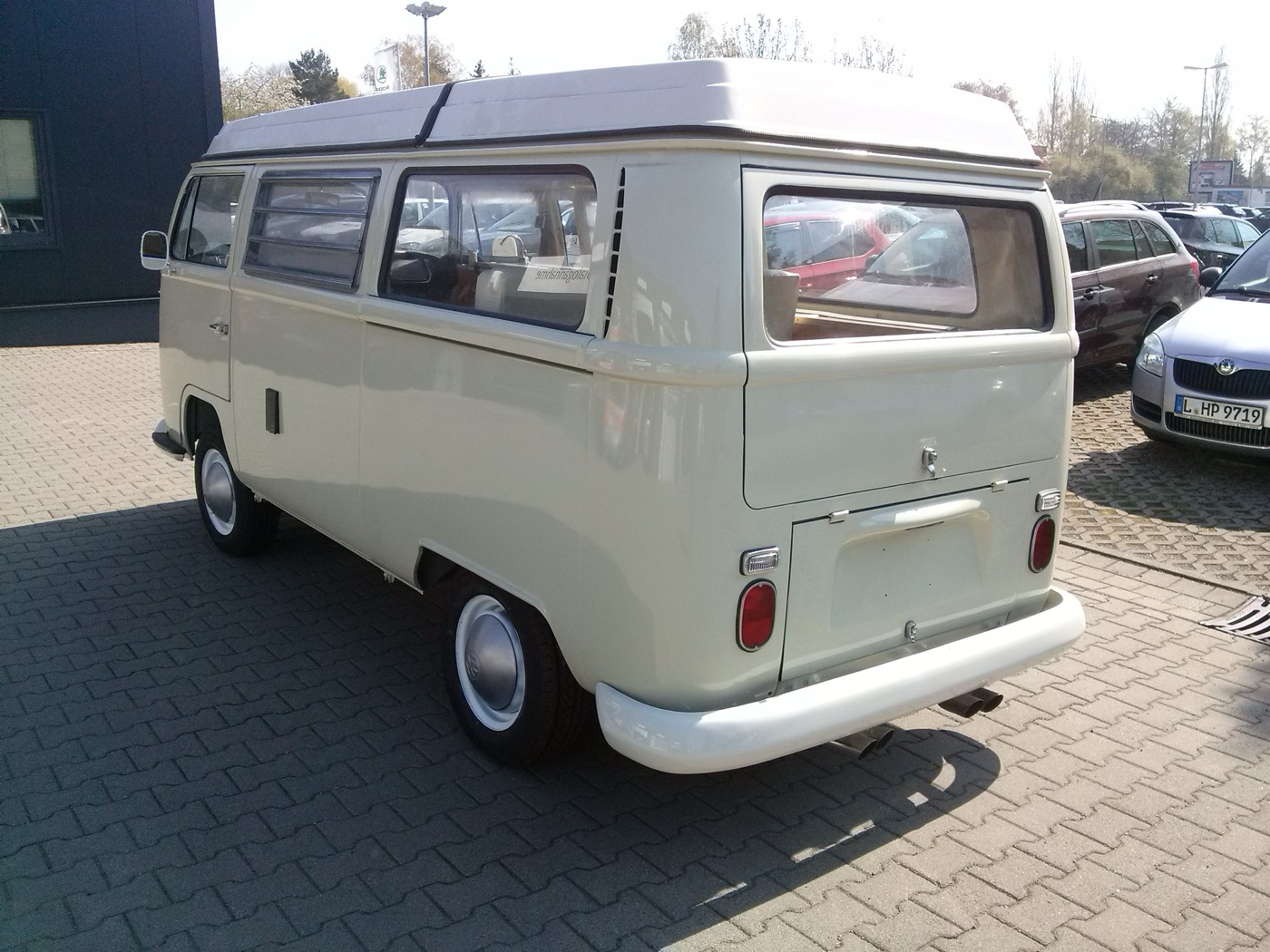
Bay enthusiasts split the T2 into early and late vans, and the Just Kampers bay-window buyers’ guide gives the dividing lines. Early bays, built from 1967 for the 1968 model year until 1970, have rounded wraparound bumpers with a cab step, low front indicators, small round rear lights, half-moon air vents and drum brakes on 5 × 205 mm wheels. The 1972 model year was a one-year crossover. Late bays, from the 1973 model year, have square bumpers, indicators set high beside the nose vent, tall rectangular rear lights, flared rear arches and vented wheels for front disc brakes. Heritage Parts Centre’s bay-window buying guide dates the front discs to late 1970 and calls the early “lowlight” bays the most collectable.
Bay-window engines
The T2 launched with a 1.6-litre flat four of 47 PS, raised to 50 PS in 1970; from 1971 a bigger engine was always on the list, first a 1.7-litre of 66 PS (62 PS with the automatic), then a 1.8-litre of 68 PS from 1973 to 1975 and a 2.0-litre of 70 PS from 1975, according to pkw.de’s guide to the VW T2. With the 2.0-litre the T2 reached 133 km/h. Heritage Parts Centre notes the bigger engines were optional in Europe but standard in the United States from 1973, some with fuel injection.
The electric T2 of 1972
Volkswagen built a battery-electric T2 in 1972, first as a concept and then as a small series with several bodies. Volkswagen’s account of it, May 2022, gives the figures: the first prototype, a pickup, weighed 2.2 tonnes, of which the 21.6 kWh battery was 880 kg, and the range was about 85 km. In 1978 seven electric T2s ran a fleet trial in Berlin, swapping flat batteries for charged ones in five minutes at a station in the Tiergarten, and the vans recovered energy under braking.
Split screen or bay window: what is the difference?
The split screen is the first generation (T1, German production 1950–1967) and the bay window the second (T2, from 1967).
| T1 split screen | T2 bay window | |
|---|---|---|
| German production | March 1950 – July 1967 | July 1967 – 1979 |
| Windscreen | Two flat panes | One curved pane |
| Side door | Hinged doors; a sliding door became an option | Sliding door as standard |
| Length | 4.10 m | About 4.30 m |
| Front brakes | Drums | Drums, then discs from late 1970 |
| Engines | 25 to 44 PS | 1.6 to 2.0 litres, 47 to 70 PS; automatic available |
| UK auction median | £21,750 (12 sales) | £10,000 (34 sales) |
Just Kampers argues the bay is “a much more user-friendly machine than the Split”, roomier and quieter with bigger engines and better brakes, down to wipers that clear the screen and side windows that open fully. Its split-screen guide notes that the big-money splits are bought for collections, and that the more windows a split has, the more it costs.
The Westfalia camper and other conversions
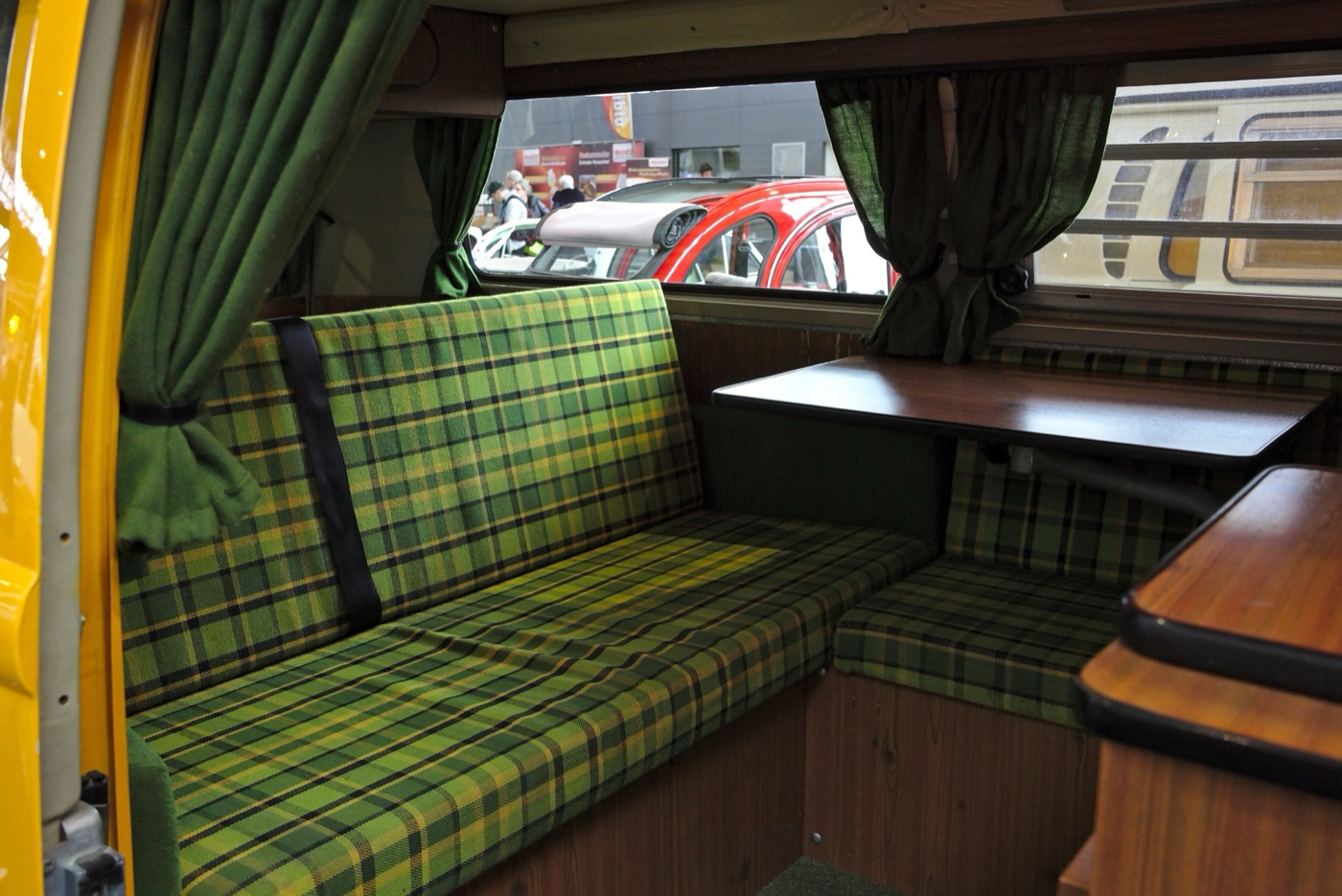
Volkswagen did not build the classic camper itself: the first Type 2 campers were conversions, and Westfalia made the best known. Westfalia’s own company history says the first came in 1951, when a British officer asked for a VW van he could sleep and work in, and the result was the “Camping Box”, a kit that went into series production. Volkswagen’s 2015 release says a bus with the Camping Box (a wardrobe, a sink, a bed and a stove) was shown at the Berlin motor show in 1951.
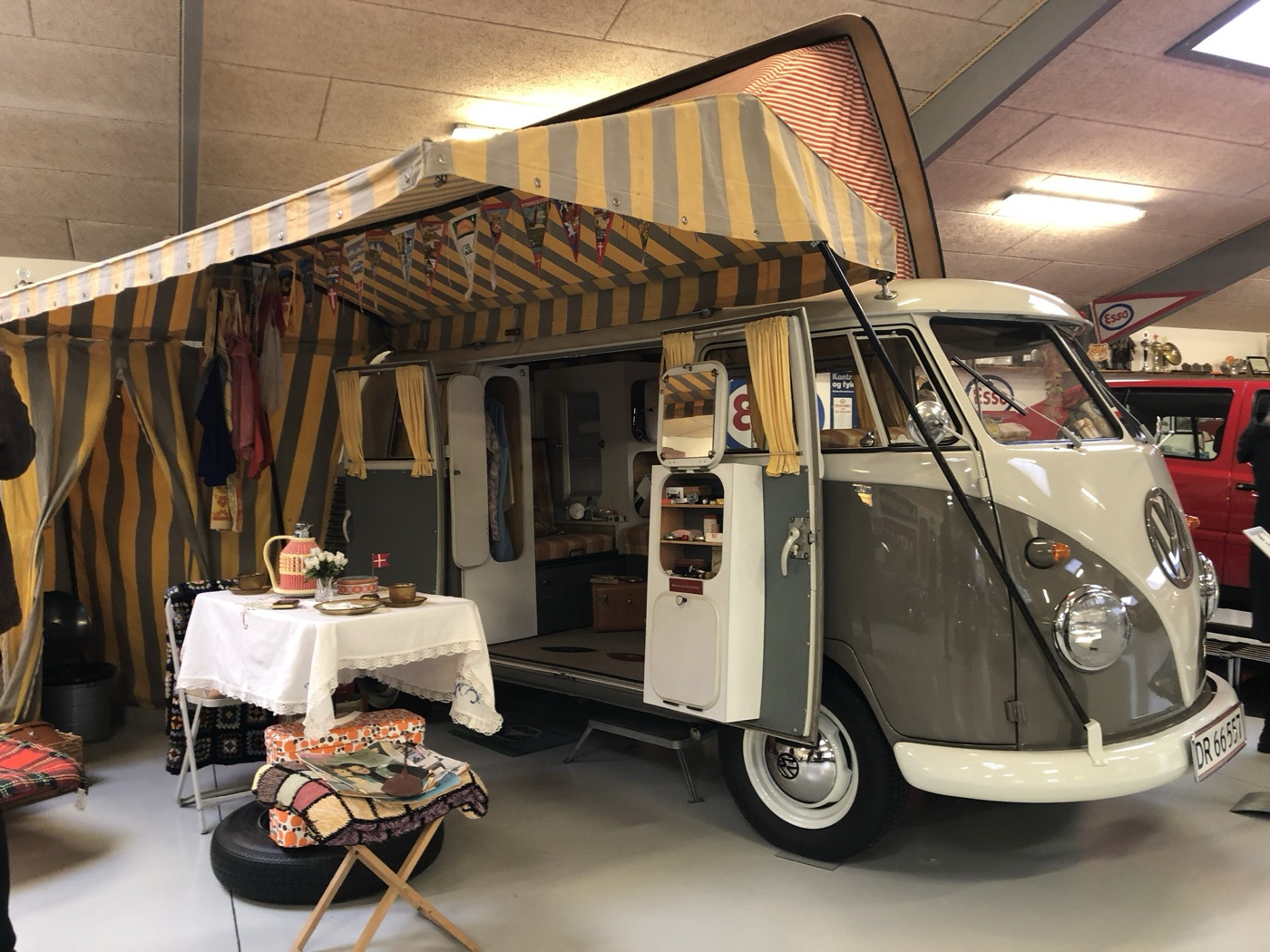
Westfalia’s camper layouts carried SO type numbers. The SO 34, Westfalia says, had a bench backrest that turned through 180 degrees and was the first van to use white and grey thermoformed panels in place of wood, and its insulation sold it in the United States. The T2 Westfalia gained an elevating roof; pkw.de gives the Helsinki as one such bay-window camper.
In Britain, Heritage Parts Centre names Danbury, Viking and Westfalia among the converters, and Devon and Dormobile campers turn up repeatedly in OUTLAW 8’s British auction records. Volkswagen’s first camper built in-house was the T3 California of 1988, which sold 5,000 in its first twelve months. SkiddMark reported in September 2013, the California’s 25th anniversary year, that about 100,000 Californias had been built.
The Kombi in Brazil and the end of production in 2013
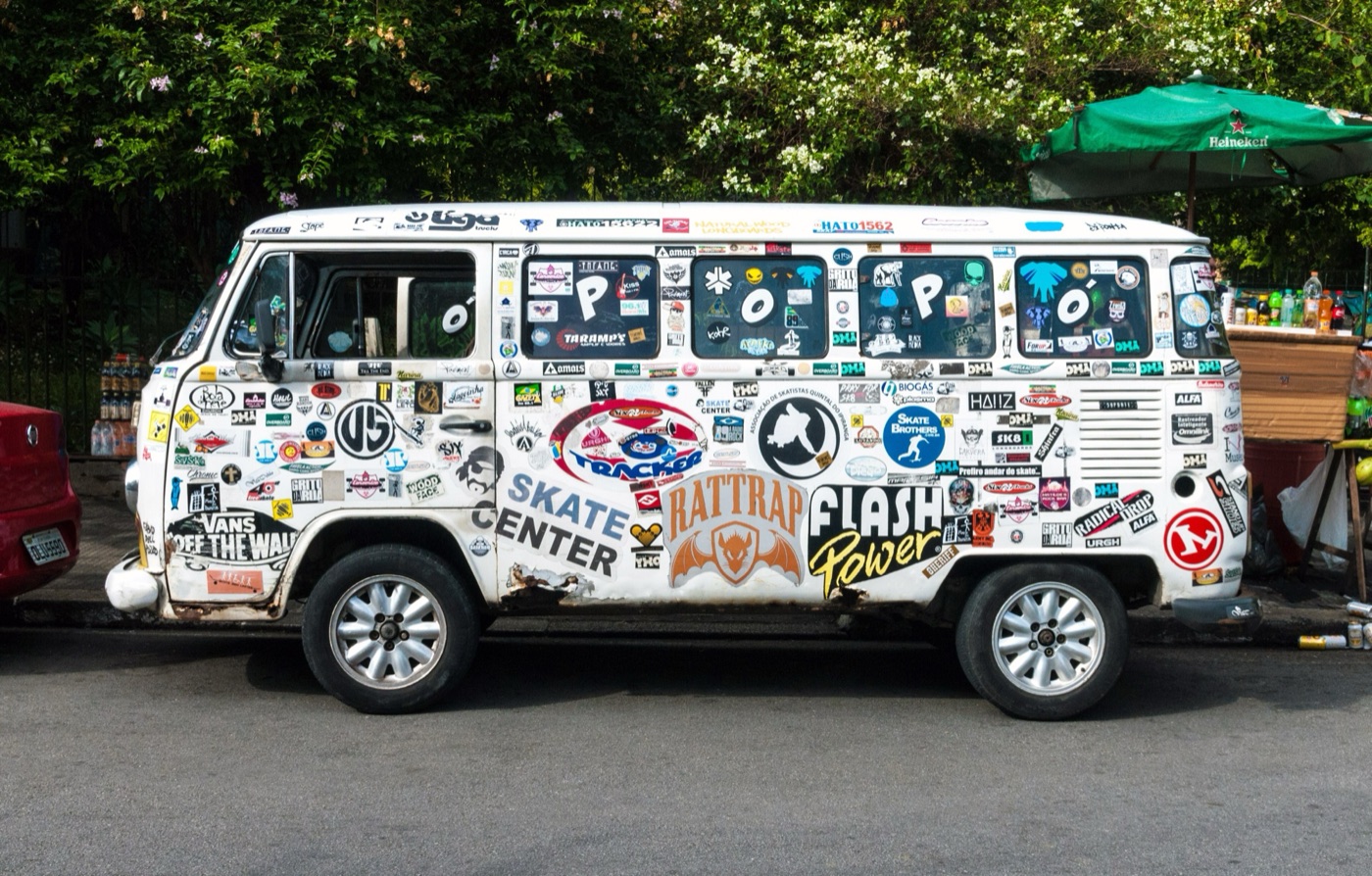
Volkswagen stopped making the Type 2 in December 2013, in Brazil, the last country still building the T2. Kombi assembly there began in 1953 in a warehouse in São Paulo from German kits, and regular production started at the Anchieta plant in São Bernardo do Campo in September 1957 (on 2 September, by Volkswagen do Brasil’s count) with about half its parts made locally, so the Kombi was the first Volkswagen manufactured in Brazil, ahead of the Beetle. WardsAuto reported in August 2013 that more than 1.55 million Kombis had been built there by July 2013, exported from the 1970s to more than 100 countries.
The Brazilian van changed slowly. The T1 was built until 1975; a mix of T1 and the European T2 followed, and Brazil switched to the T2 in 1997, Wards says. Volkswagen’s 2025 release counts 355,000 of these late Brazilian T2s, the “T2c”, by 2013.
Why the Kombi ended: airbags and ABS
Brazil’s new safety regulations required anti-lock brakes and front airbags on every new vehicle built in the country from 1 January 2014, and fitting them to the Kombi would have meant a complete redesign. Marcos Teixeira, Volkswagen’s engineering manager at the plant, told NPR in December 2013 that this was not feasible. NPR found an assembly line with no robots, where the vans were mostly put together by hand, and spoke to Sansão Cardoso, who had worked there since 1967: he had seen some of the first Kombis and was now seeing the last.
The Kombi Last Edition
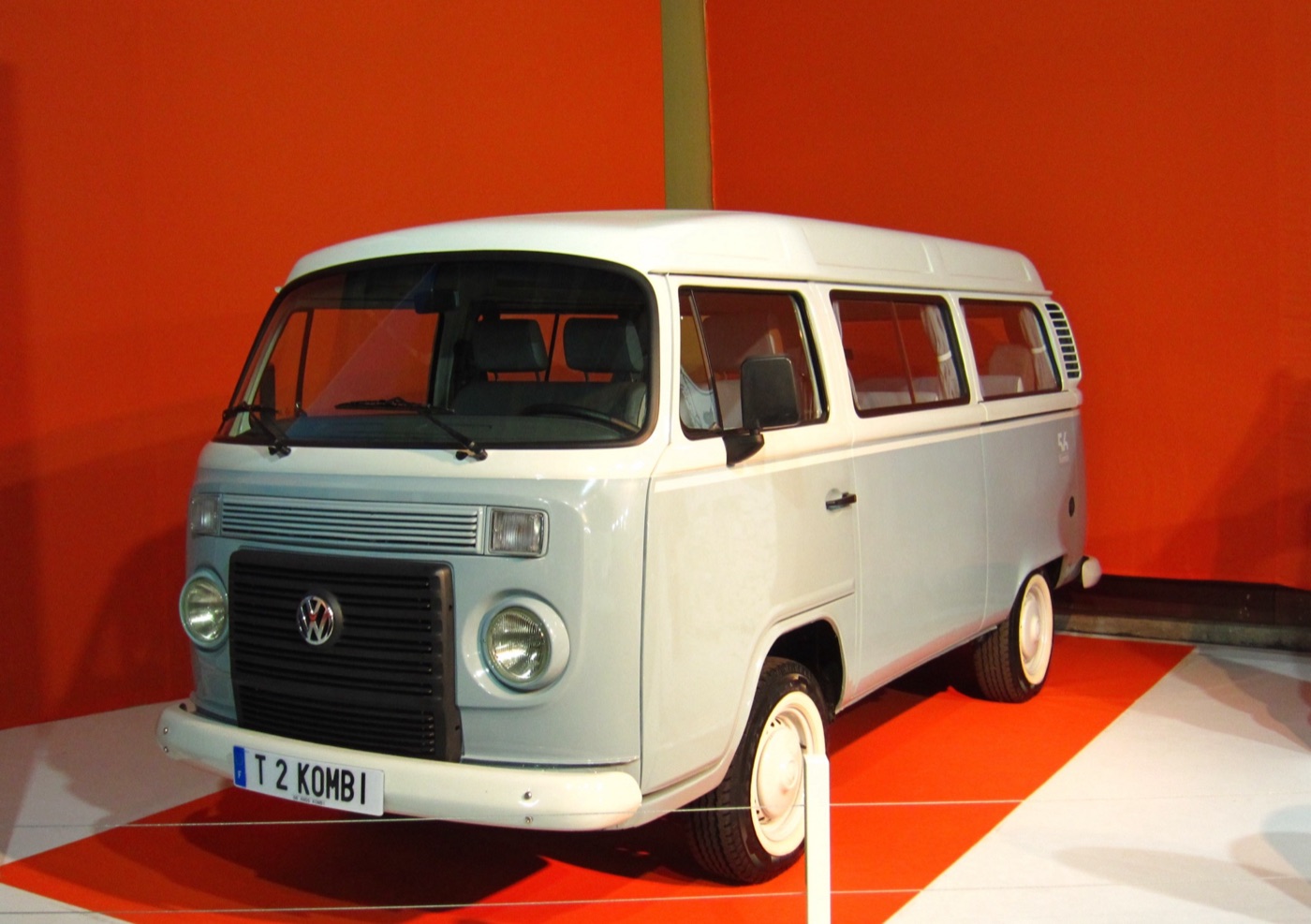
To mark the end, Volkswagen do Brasil announced the “56 Anos Kombi Last Edition” in August 2013: 600 numbered vans for Brazil only at 85,000 reais (€27,605), in blue and white with whitewall tyres, curtains, a numbered plaque on the dashboard and a certificate of authenticity. Its engine was the EA111 1.4-litre Total Flex, giving 78 PS on E20 petrol and 80 PS on ethanol at 4,800 rpm and 123 or 125 Nm at 3,500 rpm, driving the rear wheels through a four-speed manual gearbox on 185 R14C tyres. Demand doubled the run to 1,200, NPR and The Local reported, and the last van was due off the line on 20 December 2013.
A SkiddMark report of the announcement in September 2013, when the edition was still 600 vans, gave the engine as 77 bhp, or 79 bhp on ethanol, noted that the four-speed manual “should provide a refreshing contrast to today’s 9-speed auto boxes”, and called the Kombi “scarily unsafe by today’s Euro NCAP standards”. It also reported that more than 10 million Type 2s had been made since the first in Germany, 1.5 million of them in Brazil. The very last Kombi was shipped to Volkswagen’s commercial vehicles collection in Hanover at the request of the company’s head office, Autocosmos reported in January 2014.
How many Volkswagen Type 2s were made?
German production of the T1 was almost 1.5 million by Heritage Parts Centre’s count, against Volkswagen’s overall T1 total of 1.8 to 1.9 million; Germany built about 2.2 million T2s, and Brazil more than 1.55 million Kombis. Volkswagen’s own figures move from one release to the next.
| What | Number | Source |
|---|---|---|
| T1 built in the first year, 1950 | 8,001 | Volkswagen, 2015 |
| Millionth T1, Hanover | 2 October 1962 | Volkswagen, 2025 |
| T1 in total by July 1967 | More than 1.8 million (about 1.9 million in the 2020 release) | Volkswagen, 2025 and 2020 |
| T1 in German production | Almost 1.5 million | Heritage Parts Centre |
| Samba (Sonderausführung), 1951–1967 | Nearly 100,000 | Volkswagen, 2021 |
| T1 assembled in Belgium, 1954–1962 | 16,560 | Volkswagen, 2015 |
| T2 built in Germany, 1967–1979 | About 2.2 million (2.14 million at Hanover in the 2020 release) | Volkswagen, 2025 and 2020 |
| Kombis built in Brazil, September 1957 – July 2013 | More than 1.55 million | WardsAuto, 2013 |
| Late Brazilian T2 (T2c) to 2013 | 355,000 | Volkswagen, 2025 |
| Kombi Last Edition, 2013 | 1,200 (600 planned) | NPR, 2013 |
| Every Transporter generation, 1950 to date | More than 12.5 million (more than 13 million in the 2020 release) | Volkswagen, 2025 and 2020 |
The hippie van: Woodstock and the counterculture
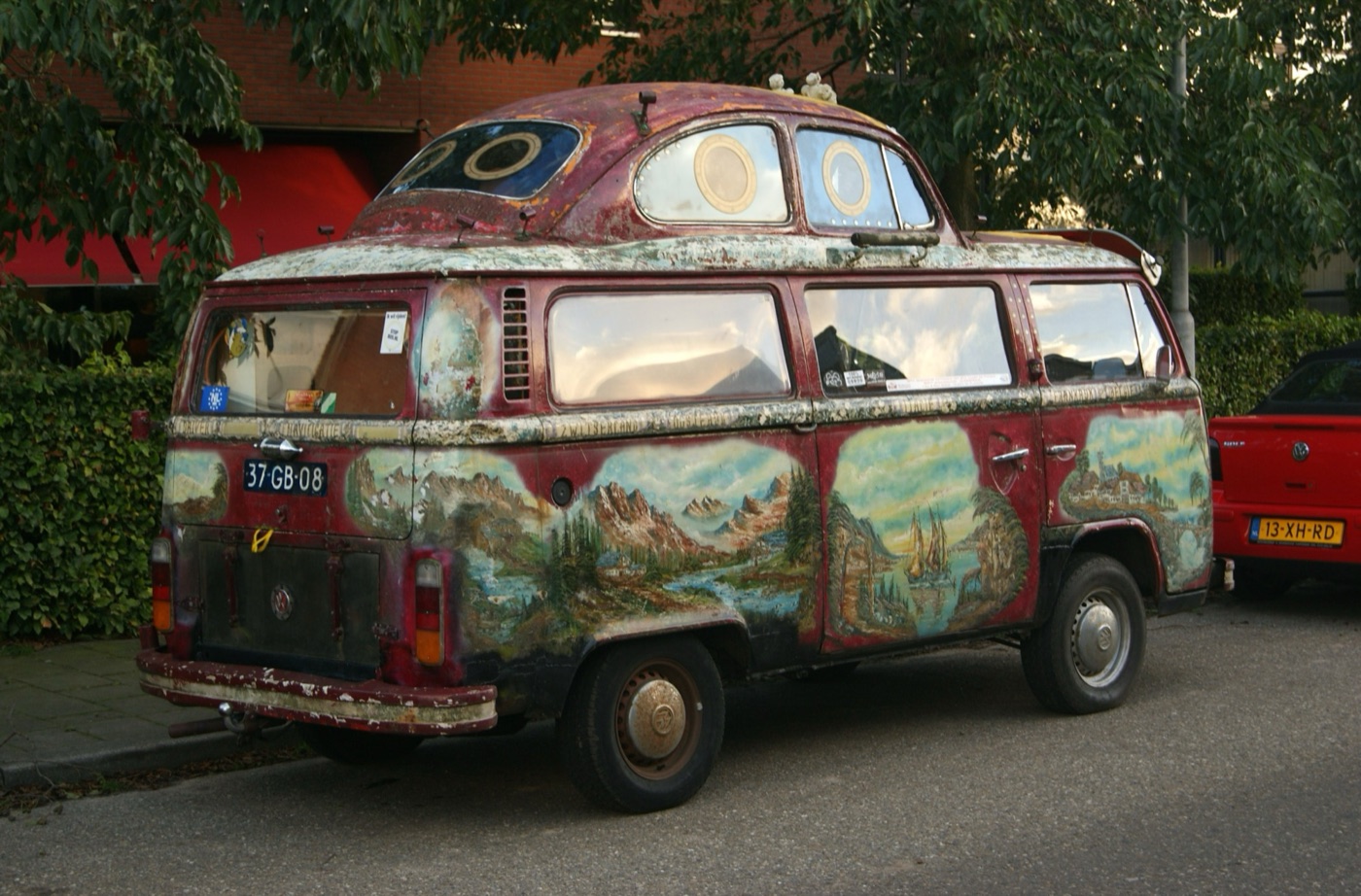
The Type 2 became the hippie van, bought by hippies and surfers in the United States in the late 1960s, and Volkswagen itself points to one bus from Woodstock in August 1969. According to a Volkswagen of America release of February 2019, the artist Bob Hieronimus painted a 1963 bus in 1968 for its owner, who used it to take his band to the festival; the bus became known as Light. An Associated Press photograph of it at Woodstock ran in newspapers across the country and the bus appeared on the official Woodstock album sleeve.
The original was never found. Hieronimus and the Canadian documentary maker John Wesley Chisholm bought the same model of bus with money raised on Kickstarter, repainted it with a team of five artists over six weeks, and showed the replica at the O.C.T.O. Winter Meet in Long Beach, California, on 16 February 2019.
A 2013 SkiddMark report reproduced a 1963 Volkswagen of America advertisement and called it “embarrassingly chauvinistic”. In West Germany the same vans were working trucks: Volkswagen’s 2015 release lists scrap and rubble, cement and bricks, bread rolls and floor polish among the loads of the economic miracle. In 2020 Generation X made 57 per cent of Hagerty’s US insurance quotes for 1950–67 buses while making up 32 per cent of the market.
How much is a Volkswagen Type 2 worth?
A bay-window T2 that sold at a British auction in the two years to October 2026 fetched a median of £10,000 and a split-screen T1 £21,750, while American buyers paid a median of $21,550 and $42,000 respectively. These are OUTLAW 8’s auction records: sold lots only, with project vehicles and engine swaps (V6, V8, Porsche and Subaru engines) left out.
| Model | Market | Sales | Median | Range |
|---|---|---|---|---|
| T1 split screen, 1950–1967, every body | UK | 12 | £21,750 | £15,750–£30,375 |
| T2 bay window, 1968–1979, every body | UK | 34 | £10,000 | £5,200–£16,400 |
| T1 split screen, 1950–1967, every body | US | 61 | $42,000 | $22,000–$92,000 |
| T1 Samba (lots named as a Samba or a 21- or 23-window bus) | US | 18 | $81,200 | $40,000–$102,268 |
| T2 bay window, 1968–1979, every body | US | 75 | $21,550 | $12,325–$39,600 |
The top of the market is far higher. In March 2020 Hagerty’s price guide valued a 1951 23-window Samba at $198,000 in concours condition, $111,000 in excellent, $60,600 in good and $39,000 in fair; a 21-window in excellent condition was worth about 16 per cent less than a 23-window, and a 15-window 42 per cent less than a 21-window. Hagerty’s valuation editor Andrew Newton put the rule as “More windows, more money. And the older, the better.” Volkswagen’s 2021 Samba history gives $302,500 at Barrett-Jackson in 2017 as the highest price yet paid for a Samba. Hagerty adds that this was a customised 1965 21-window De Luxe sold at Scottsdale, and that the record for an unmodified Type 2 was $291,500, for a restored 1961 23-window De Luxe at Barrett-Jackson’s Palm Beach sale the same year.
Buying a Volkswagen Type 2: what to check
Rust decides what a Type 2 is worth, because bodywork costs far more to put right than the engine or gearbox. Both Just Kampers and Heritage Parts Centre tell buyers to pay for the soundest body they can find, and Just Kampers suggests a left-hand-drive import from a dry climate as the best chance of one.
Bodywork and rust
Specialists call it “the bottom six inches”: sills, floors, chassis rails, outriggers, wheel arches, the front valance and the bottoms of the doors, engine lid and tailgate. Heritage Parts Centre puts a sill repair on a bay at around £600 or more once the inner sill, jacking point, welding and paint are counted, and warns that the sliding-door side is the harder one. Check the base of the windscreen, the roof gutters and the seals of any elevating roof, because leaks there rot the floors from inside. On a split, Just Kampers adds that opening Safari windscreens “always leak” and that a leaking battery eats the battery tray in the rear corner. Just Kampers also prefers an original, unrestored bus to a freshly painted one, since filler and patched panels hide under new paint.
Engine, transmission, suspension and brakes
On a bay’s air-cooled engine, Heritage Parts Centre looks for oil pressure of 50–60 psi cold and about 20 psi warm at idle, oil leaks from the rear main seal and pushrod tubes, and end float at the crankshaft pulley, which means a rebuild if you can see the pulley move. It budgets at least £800 for a professional rebuild of the four-speed manual transmission. The bay’s front suspension is a twin beam with upper and lower arms, telescopic dampers and an anti-roll bar, and the rear has trailing arms on torsion bars. Bays had drum brakes all round until late 1970, and kits to fit front discs and a brake servo are sold. Many vans now run other engines: OUTLAW 8’s British records include splits and bays with Subaru, V6 and Porsche 911 power. Just Kampers adds that splits built outside Germany, such as the South African “Fleetline” of 1975, are frowned on by purists.
Tax and MOT in the UK
Every T1 and every German-built T2 is old enough for Britain’s historic-vehicle rules. GOV.UK says a vehicle built before 1 January 1986 can stop paying vehicle tax from 1 April 2026, on application, and one built or first registered more than 40 years ago needs no annual MOT if it has had no substantial changes, such as a replaced chassis, body, axles or engine. A van with a swapped engine may lose the MOT exemption, and a late Brazilian Kombi is too young for either.
What came after the T2: the T3, later Transporters and the ID. Buzz
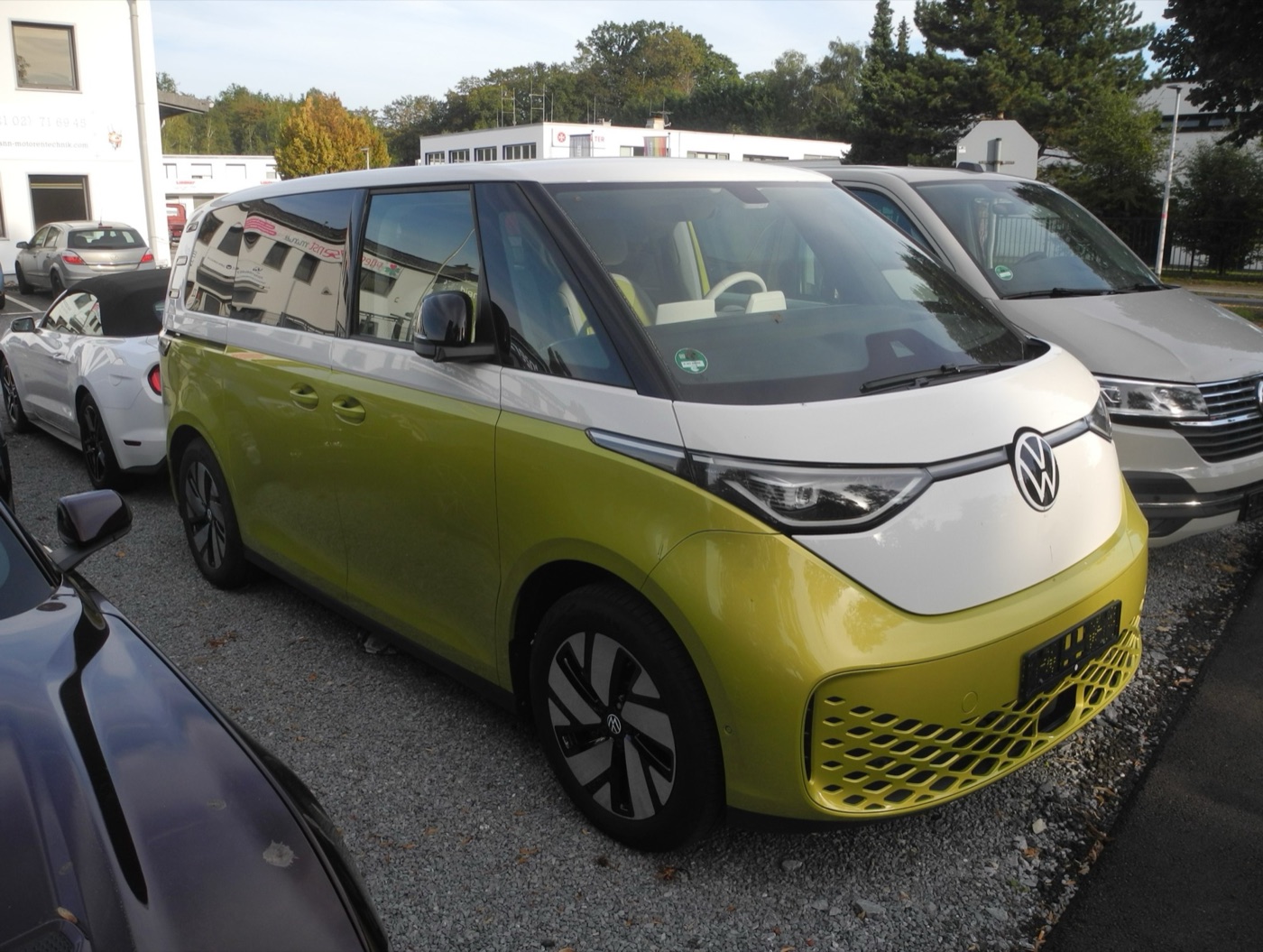
The T3 of 1979 was the last rear-engined Transporter in Europe, and since 2022 the electric ID. Buzz has put the motor back at the rear. Volkswagen’s 2025 release sets out the line: the T3 launched with air-cooled engines of 50 to 70 PS, gained a water-cooled diesel in 1981 and water-cooled flat fours of 60 and 78 PS in 1982, later reaching 112 PS, and added syncro four-wheel drive in 1985. Graz built the last European T3s in 1992 and South Africa built it until 2002. The T4 of August 1990 moved the engine to the front and drove the front wheels. The T5 followed in 2003, with about two million built by 2015, and the T6 and T6.1 ran from 2015 to 2024.
Volkswagen unveiled the production ID. Buzz on 9 March 2022. Its electric motor sits at the back and drives the rear wheels, as the engines of the first three generations did; from 2024 it gives 210 kW (286 PS) with a 79 kWh battery, and the four-wheel-drive ID. Buzz GTX 250 kW (340 PS).
Questions
Why is the VW bus called the Type 2?
Because it was Volkswagen’s second model. The Beetle was the Type 1, and when series production of the van began on 8 March 1950 Volkswagen called it the Type 2 internally; the T1 and T2 names for its generations came later.
What does Kombi mean?
Kombi is short for the German Kombinationsfahrzeug, a combination vehicle: a van with side windows and removable seats, so it could carry goods or people. Volkswagen added the Kombi to the range in April 1950, a month after the panel van.
What is a Bulli?
Bulli is the German nickname for the Volkswagen bus. Volkswagen tried to register the name in 1949, found another company already held it, and only gained the trademark in 2007.
How fast is a split-screen VW camper?
With its original 25 PS engine the T1 reached 80 km/h (50 mph); the later 44 PS engine took it to 105 km/h (65 mph), according to Volkswagen. A bay-window T2 with the 2.0-litre engine reached 133 km/h (83 mph).
How many windows does a VW Samba have?
A Samba has 23 windows if it was built before the 1964 model year and 21 after, when a wider tailgate removed the two curved rear corner windows. The extra windows are skylights along the edge of the roof.
Where is the last Volkswagen Kombi now?
The last Kombi built in Brazil, at the end of 2013, was shipped to Germany at the request of Volkswagen’s head office for its commercial vehicles collection in Hanover, where the Transporter has been built since 1956.
Sources
- Volkswagen Commercial Vehicles, “Launched 70 years ago in March: Bulli has world’s longest production run for a transporter”, 6 March 2020: the 1949 press reveal, the Bulli trademark, T1 and T2 totals, the Last Edition, the T3 and the California.
- Volkswagen Commercial Vehicles, “75 years of the VW Bus”, 8 March 2025 (as published by Automotive World): T1 dimensions and performance, the millionth T1, T2 changes and totals, Mexican and Brazilian production, the T3 and the ID. Buzz.
- Volkswagen Commercial Vehicles, “Happy birthday, Bulli ! La production de ce véhicule-culte de Volkswagen a démarré il y a 65 ans”, 13 March 2015: Pon’s sketch, Nordhoff’s prototypes, the first year’s output and price, the Camping Box at Berlin, Hanover and Belgian assembly.
- Volkswagen Commercial Vehicles, “Les 70 ans du « Samba »”, 27 April 2021: the Samba’s launch, equipment, name, production and record price.
- Volkswagen Commercial Vehicles, “Renaissance d’une idée géniale : du Bulli T2 électrique à l’ID. Buzz”, 1 May 2022: the 1972 electric T2 and the 1978 Berlin trial.
- Volkswagen Commercial Vehicles, “Volkswagen do Brazil commercialise le « Kombi Last Edition » sur son marché intérieur”, 27 August 2013: the Last Edition’s price, equipment and engine, and the 2 September 1957 start.
- Volkswagen of America, “Peace, love and Volkswagen: the iconic Light bus rides again”, 19 February 2019: the Woodstock bus and its replica.
- Ronan Glon, “How the Beetle-based Plattenwagen spawned the original Volkswagen Bus”, Autoblog, 8 August 2020: Ivan Hirst’s Plattenwagen and Pon’s visit.
- Westfalia, company history: the 1951 Camping Box and the SO 34.
- WardsAuto, “Volkswagen Brazil phasing out Kombi van after 60 years”, 27 August 2013: Brazilian assembly from 1953, production and exports.
- NPR, “It’s the end of the road for VW’s iconic van”, 11 December 2013: the safety rules, the factory and the 1,200 Last Editions.
- The Local, “VW ends production of iconic camper van”, 20 December 2013: the last day of production and the doubled edition.
- Autocosmos, “La última Volkswagen Kombi de Brasil se va para Alemania”, 30 January 2014: the last Kombi’s move to Hanover.
- Hagerty, “1950–67 Volkswagen bus values continue to impress”, 18 March 2020: price-guide values, record sales and buyer ages.
- pkw.de, “VW T2” model guide: bay-window engines, top speed and the Westfalia Helsinki.
- Heritage Parts Centre, “VW Type 2 Bay buying guide”: early and late bays, disc brakes, rust, engine and gearbox checks, repair costs and British converters.
- Just Kampers, “VW Bay Window buyers’ guide” and “VW Split Screen buyer’s guide”: model-year changes, window counts, rust and Fleetlines.
- GOV.UK, “Historic (classic) vehicles: MOT and vehicle tax”: the tax and MOT exemptions.
- OUTLAW 8’s auction records, read 27 October 2026: the sold prices in the tables and the conversions named in the buying section (Car & Classic, Iconic Auctioneers, Bring a Trailer, Mecum, Barrett-Jackson, Hagerty).
- SkiddMark, “Volkswagen kills the Camper Van and with it the dreams of a generation of hippies”, 24 September 2013: the Last Edition as first announced, the production claims and the 1963 advertisement.