Volvo V40: history, engines, Polestar, safety and buying guide
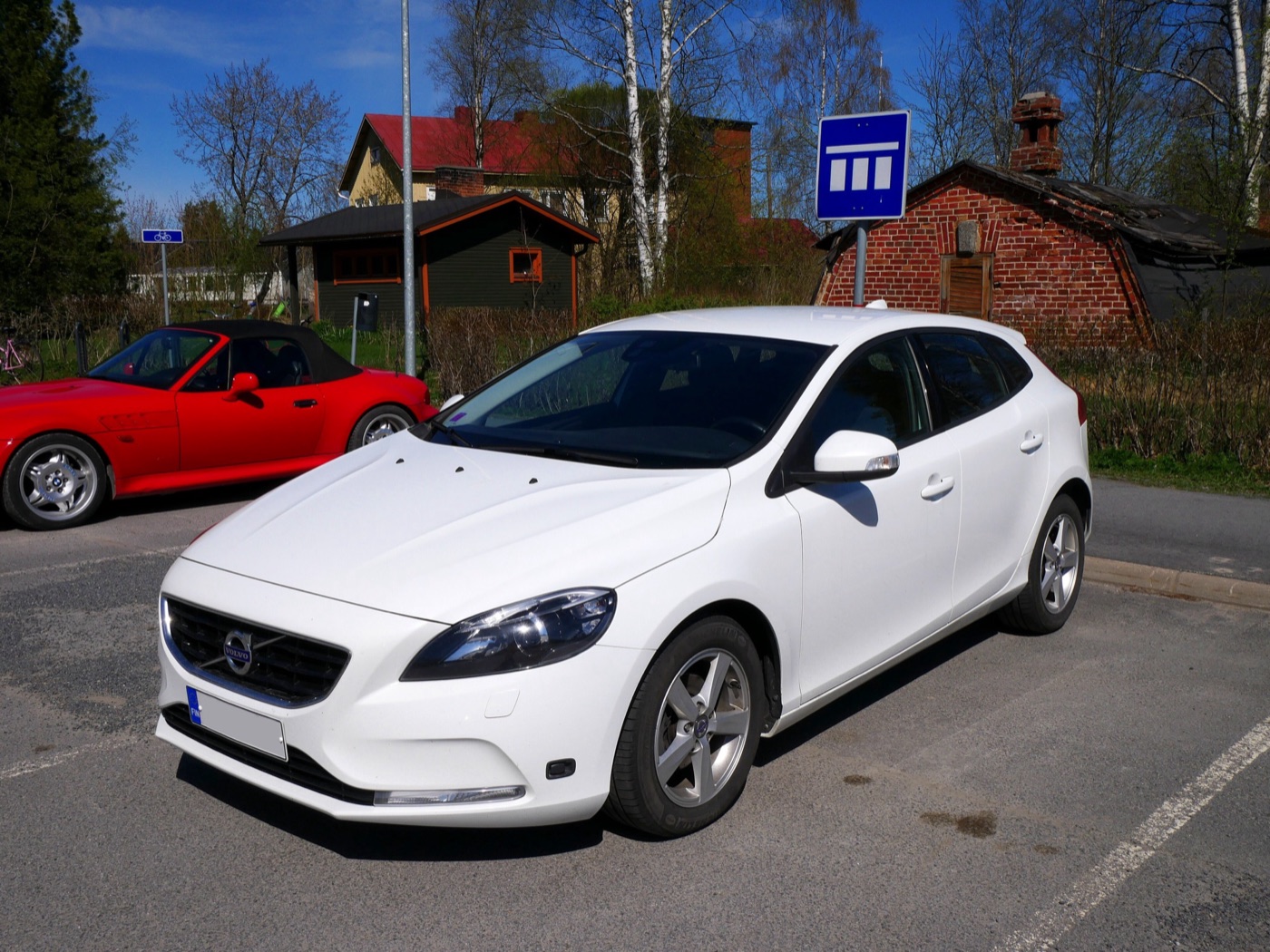
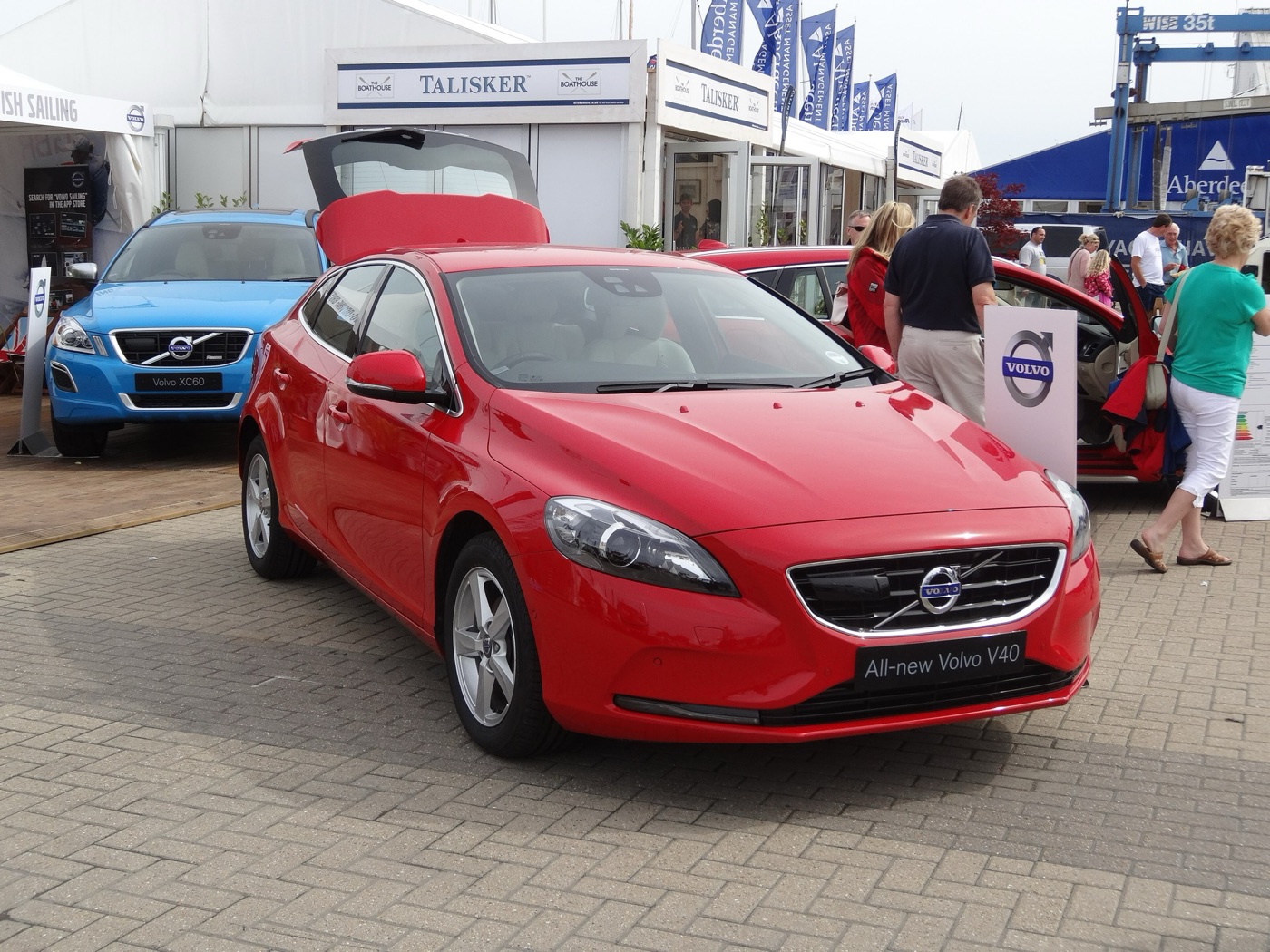
The Volvo V40 is the five-door, five-seat hatchback that Volvo built at its Ghent plant in Belgium from May 2012 to July 2019, the company's first five-door premium hatchback and the car that replaced the S40 saloon and V50 estate. It shared its platform with the Ford Focus, was the first car with an airbag for pedestrians, and set a record overall score in Euro NCAP's 2012 crash tests. Volvo Car Gent built 667,530 of them.
Most V40s sold in the UK were diesels, led by the D2. The range ran from a 115 hp 1.6 diesel to a 254 hp five-cylinder T5, with R-Design and Cross Country versions and, from 2013, Polestar tuning sold through Volvo dealers. Used V40s now cost from under £3,000 for a high-mileage early car to about £16,000 for a late, high-spec 2019 one. Every engine has a timing belt, and the known faults include rattles from the centre console and hesitant changes from the early Powershift automatic.
History of the Volvo V40
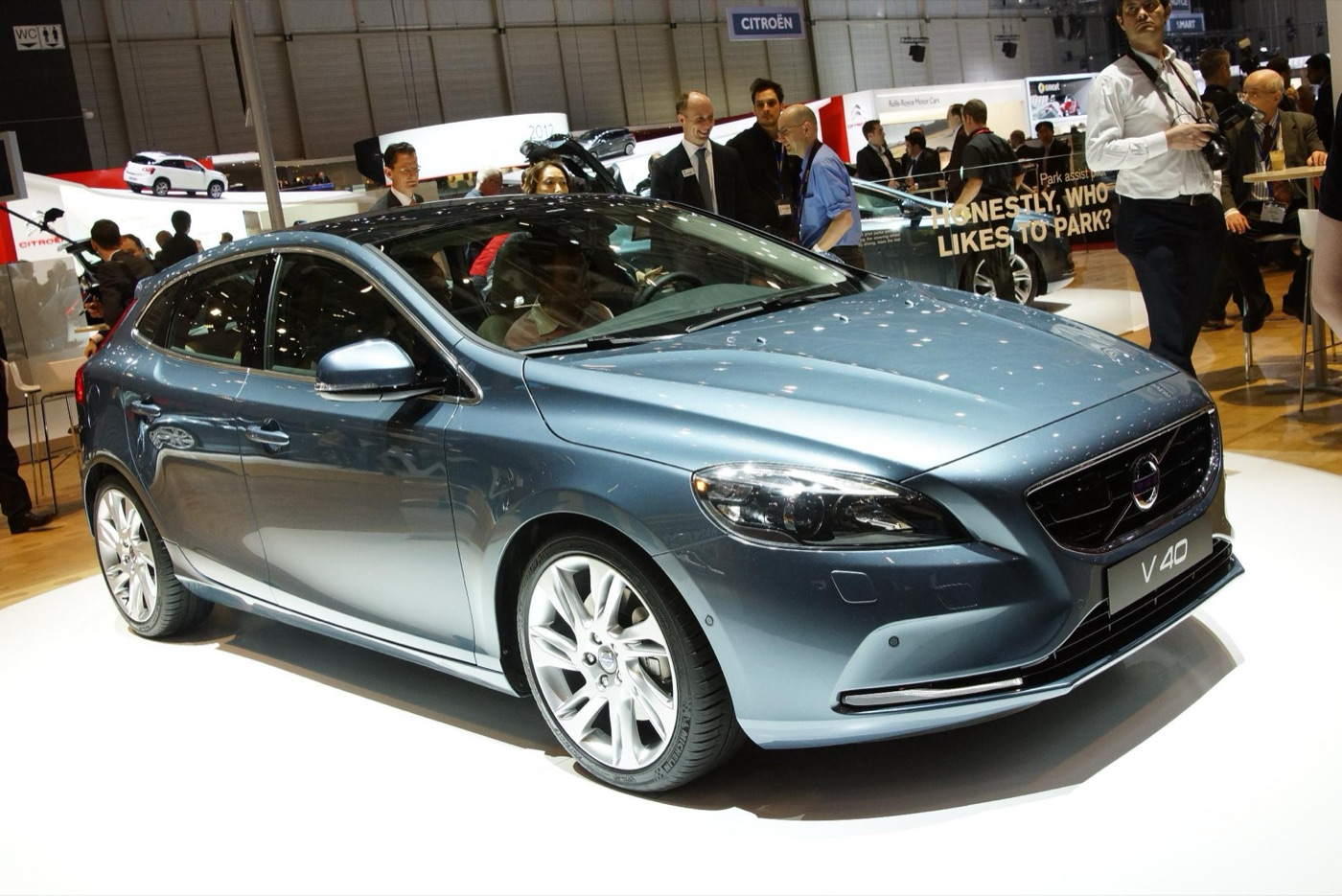
The V40 was designed while Ford owned Volvo, revealed under Geely's ownership in March 2012, built from 14 May 2012 and dropped in July 2019 without a direct successor.
The V40 name before 2012
Volvo first used the V40 name from 1995 to 2004 for the estate version of the S40, a different car. The Volvo Owners' Club production tables, taken from Volvo Car Corporation figures, count 577,701 of those estates. Used-car guides such as Auto Express's call the 2012 hatchback the V40 Mk2 to tell the two apart.
Development under Ford and Geely
Ford sold Volvo Cars to China's Zhejiang Geely Holding for $1.8 billion in 2010, a 2013 SkiddMark report noted. Steve Cropley's Autocar report from Geneva said the car had been designed while Ford still owned Volvo and had been "embraced" by Stefan Jacoby, the chief executive Geely appointed. Volvo planned to sell 90,000 a year, about 85 per cent of them in Europe, AutoRAI recorded from Volvo's launch forecast. A 2012 SkiddMark road test called it Volvo's first all-new model since the Geely takeover.
Geneva reveal and UK launch
Jacoby revealed the V40 at the Geneva Motor Show on 6 March 2012. "The all-new V40 will change the balance of power in the C-segment," he said in Volvo's Geneva press release, which also named the pedestrian airbag as the stand-out new feature. Volvo Car UK's price release of 12 April 2012 set prices from £19,745 on the road for a D2 ES, in ES, SE and SE Lux trim, with Bluetooth, City Safety and the pedestrian airbag standard on every car. UK deliveries began in September 2012. The R-Design and the Cross Country followed in January 2013, priced from £22,295 and £22,595 in Volvo Car UK's release of 9 October 2012.
Drive-E engines from 2014
From May 2014 Volvo began fitting its own four-cylinder Drive-E engines, and by summer 2015 they had replaced every Ford and five-cylinder engine in the range. Volvo Car UK's release of 27 March 2014 introduced the first two in the V40: a 190 hp D4 diesel emitting 99 g/km of CO2 with a manual gearbox, and a 245 hp T5 petrol with an eight-speed automatic as standard. A 2014 SkiddMark report put the cost of the Drive-E programme at $11 billion and said a 302 hp T6 and a 227 hp D5 were on the way; neither reached the V40, whose most powerful Drive-E engine in Volvo's 2017 owner's manual is the 245 hp T5.
The 2016 facelift
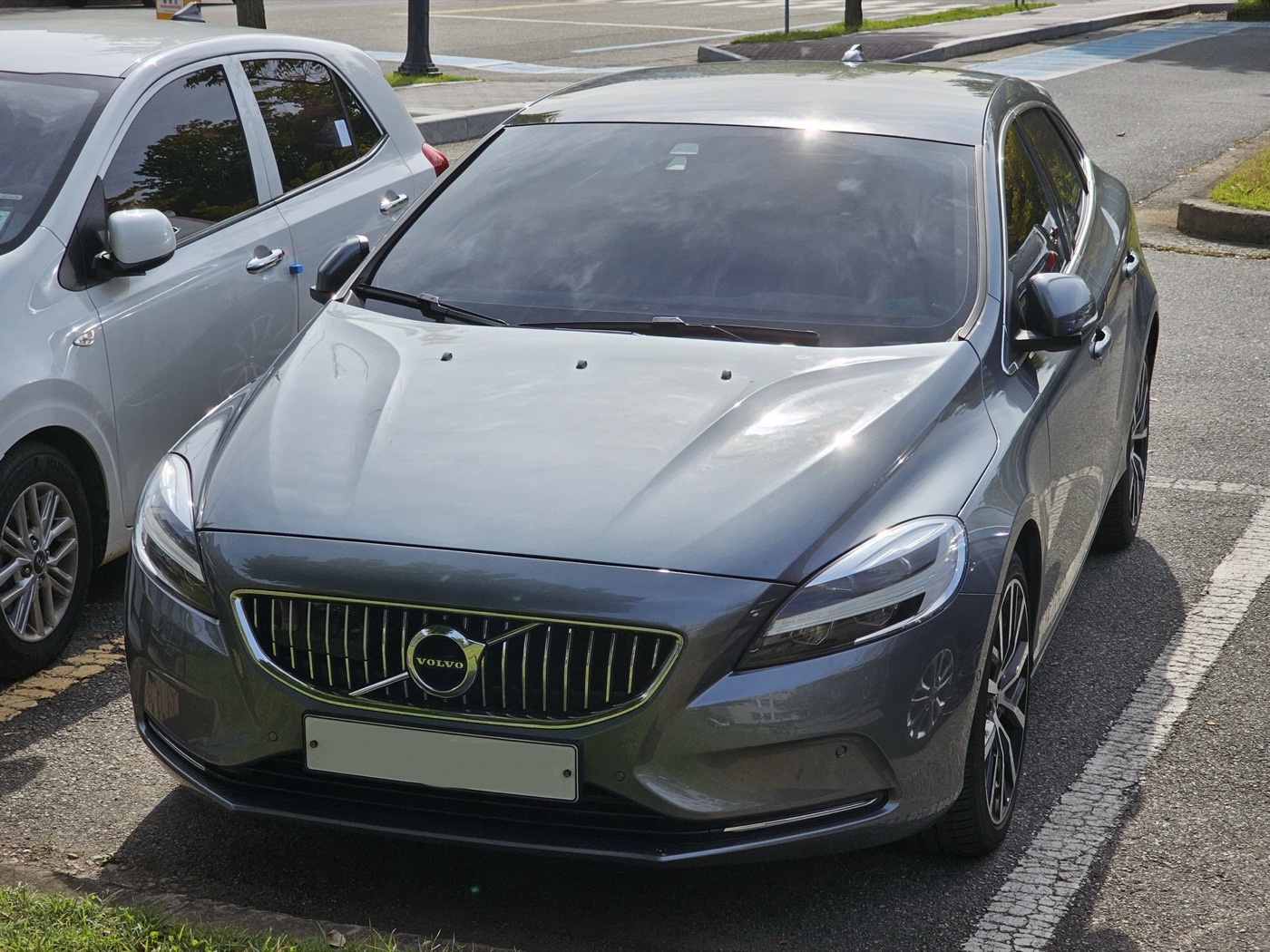
Volvo showed the facelifted V40 on 24 February 2016, for the 2017 model year. Its press release listed "Thor's Hammer" LED headlights shared with the 90 Series cars, a new grille with the updated Iron Mark badge, five new colours (Amazon Blue, Denim Blue, Bursting Blue, Mussel Blue and Luminous Sand), eight new wheel designs, City Weave upholstery and a black headlining option. The D2 manual's CO2 output fell to 89 g/km. "The V40 is the best-selling Volvo model in Europe and the second-most popular Volvo model globally," said Björn Annwall, Volvo's senior vice president for sales, marketing and customer service. UK trims became Momentum, Inscription, R-Design and R-Design Pro.
When did Volvo stop making the V40?
The last V40 left the line at Volvo Car Gent on Thursday 18 July 2019, as car number 667,530, AutoRAI reported, and Volvo Car Gent thanked the staff who had built it for seven years. After that a new V40 could only be bought from dealer stock. Volvo was studying a successor but said it would not take the V40's traditional form, and Ghent's lines went on building the XC40 crossover.
Design and engineering
The V40 sits on the platform of the Ford Focus, with the Swedish company's own styling, interior, steering, spring and damper settings.
Platform shared with the Ford Focus
Autocar's 2012 Geneva report said Volvo had re-rated the Focus's electric power steering and revised every spring and damper setting, and that the V40 was about four centimetres shorter than the car it replaced, but lower and wider. The front suspension uses MacPherson struts and the rear is fully independent. Autotrader traced the styling's rising shoulder line to the Volvo P1800 and the black glass tailgate to the C30, and noted the lowest nose in the class, which the pedestrian airbag made possible. Until 2015 the petrol T3 and T4 used Ford's 1.6-litre turbocharged four, and the D3, D4 and T5 used Volvo's own five-cylinders; the T5's 2.5 is the engine Ford also used in the Focus ST, Autocar's used buying guide notes.
Chassis tuned on British roads
Volvo did about 90 per cent of the V40's damper tuning in Britain, on B-roads chosen for their bumps, camber changes and corners, according to the technical section of Volvo Car UK's Cross Country release of 24 January 2013. The rear dampers are monotube units that do compression and rebound damping through one valve, which Volvo said makes them respond more quickly. Buyers could choose a three-mode adjustable steering assistance. The Sport chassis option lowered the car by 10 mm on 17-inch wheels.
Interior and boot
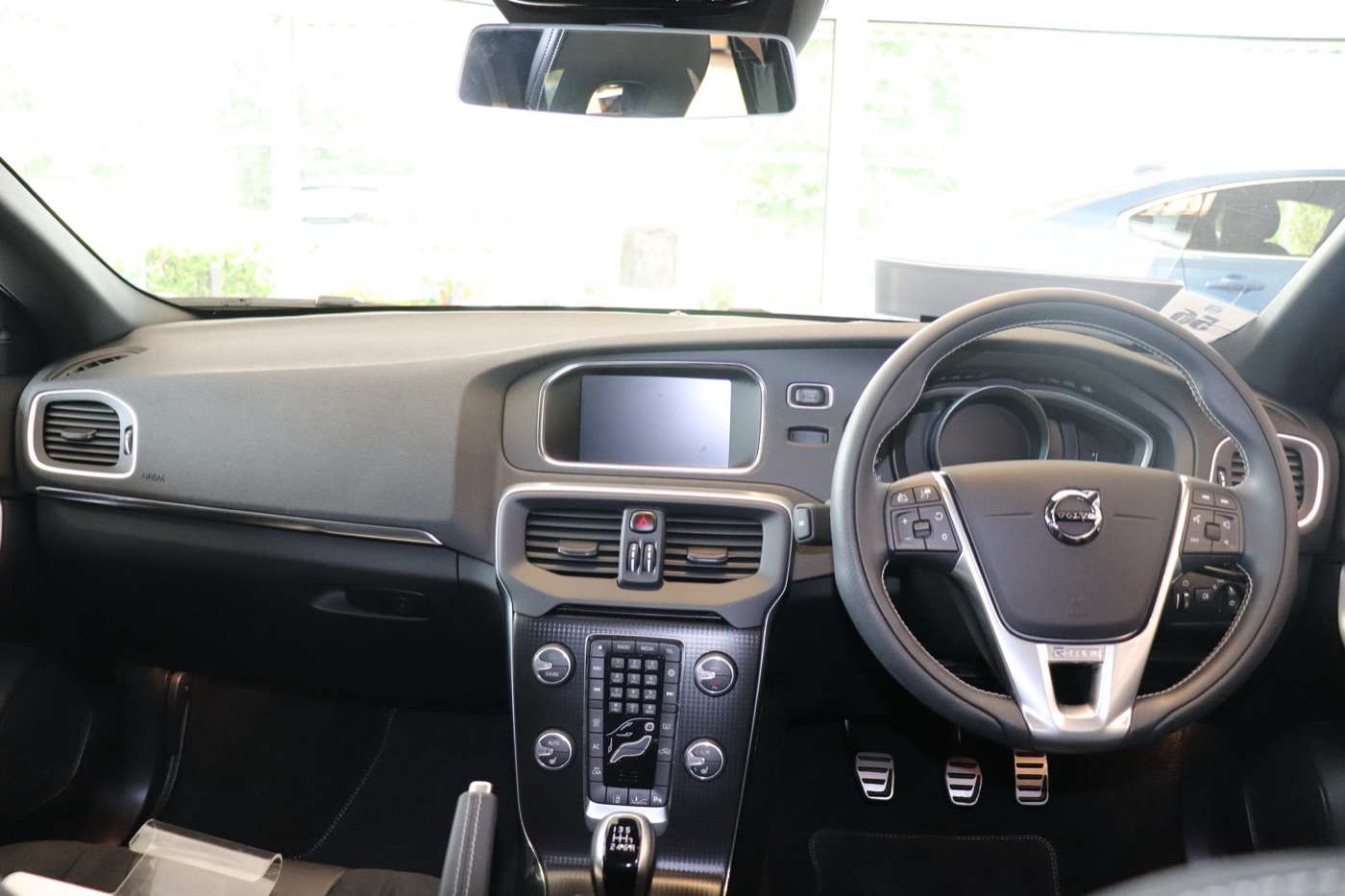
The cabin has a "floating" centre console with an open space behind it, a digital TFT instrument display, a frameless rear-view mirror and an illuminated gear knob. A full-length glass roof was an option. The boot holds 335 litres with the rear seats up and 1,032 litres with them folded, fractionally smaller than the Audi A3's and BMW 1 Series's, Autotrader found. The dashboard has a great many small, similar buttons, which What Car? and Autotrader both found confusing, while What Car? and Carwow both singled out the seats for comfort. Visibility to the rear is poor because of the small back window and thick rear pillars, so parking sensors or a camera are worth having.
Safety: pedestrian airbag and Euro NCAP
The V40 was the first car with an external airbag to protect pedestrians, fitted as standard to every version, and in 2012 it gained the highest overall score Euro NCAP had recorded.
How the Volvo pedestrian airbag works
Seven sensors in the front bumper send signals to a control unit, which deploys the airbag when it registers what it reads as a human leg, at speeds between 20 and 50 km/h (about 12 to 31 mph), according to Volvo Car UK's technical release of 23 May 2012. Pyrotechnic charges in the bonnet hinges pull out a pin to free the back of the bonnet, and the inflating airbag lifts it by 10 centimetres, leaving room for the panel to deform. The U-shaped bag covers the windscreen wiper recess, about a third of the windscreen and the lower A-pillars, in a few hundredths of a second. "The airbag has two functions. Firstly, it raises the bonnet to create distance, and secondly it cushions the impact around the hard parts of the area near the windscreen," said Thomas Broberg, Volvo's senior technical adviser for safety.
The system won BusinessCar's "Best Car Safety System" award in September 2012 and the 2013 Global NCAP Innovation Award, which Volvo safety specialist Lotta Jakobsson collected in Seoul, according to Volvo's release of 30 May 2013. The same release gave the reason for it: 14 per cent of road deaths in Europe and 25 per cent in China are pedestrians.
Euro NCAP score for the Volvo V40
Euro NCAP awarded the V40 five stars in August 2012 with a record 98 per cent for adult occupants and a record 88 per cent for pedestrians, according to Euro NCAP's datasheet for the V40. Euro NCAP's secretary general, Michiel van Ratingen, said the car was "setting a new standard", GoAuto reported. Euro NCAP then named it Best in Class among small family cars of 2012, with "the highest combined score of any car previously tested by Euro NCAP"; Fleet World reported the Opel Mokka as runner-up.
| Area | Volvo V40 | Audi A3 |
|---|---|---|
| Adult occupant | 98% | 95% |
| Child occupant | 75% | 87% |
| Pedestrian | 88% | 74% |
| Safety assist | 100% | 86% |
Child protection was the one area without a record. The Australian programme ANCAP also gave the V40 five stars, calling it "the stand-out performer in today's rating", Volvo Car UK said in April 2013.
City Safety and driver aids
City Safety, the low-speed automatic braking system, was standard on every V40 and in this car first worked at up to 50 km/h (31 mph). Options included Pedestrian Detection with full auto brake, Lane Keeping Aid, blind-spot monitoring and Park Assist Pilot, which steers the car into a parallel space. Volvo Car UK said in January 2013 that standard City Safety had earned the V40 lower insurance group ratings from Thatcham.
Volvo V40 engines and specifications
Volvo launched the V40 with three petrol and three diesel engines, all turbocharged and mounted across the car, and replaced every Ford and five-cylinder engine with its own Drive-E four-cylinders between 2014 and 2015.
Ford and five-cylinder engines, 2012 to 2015
| Badge | Engine | Power | Torque | 0–60 mph |
|---|---|---|---|---|
| T3 | 1.6 four (Ford) | 150 hp | 240 Nm | 8.8 sec* |
| T4 | 1.6 four (Ford) | 180 hp | 240 Nm | 7.7 sec |
| T5 | 2.5 five | 254 hp | 360 Nm** | 6.0 sec (Cross Country AWD) |
| D2 | 1.6 four | 115 hp | 270 Nm | 11.2 sec |
| D3 | 2.0 five | 150 hp | 350 Nm | 9.1 sec |
| D4 | 2.0 five | 177 hp | 400 Nm | 8.2 sec |
* 0–62 mph, from Autocar. ** 40 Nm less than the D4, a 2013 SkiddMark first drive noted. A 120 hp T2 1.6 joined the British range in spring 2013. The 1.6 D2 was the one diesel engine with four cylinders, at 94 g/km of CO2 and 78.5 mpg, and Carbuyer found the cheaper versions sold well to company fleets.
Drive-E engines, 2014 to 2019
| Badge | Engine | Power | Torque |
|---|---|---|---|
| T2 | 2.0 four (manual) or 1.5 four (automatic) | 122 hp | 220 Nm |
| T3 | 2.0 four (manual) or 1.5 four (automatic) | 152 hp | 250 Nm |
| T4 | 2.0 four | 190 hp | 300 Nm |
| T5 | 2.0 four | 245 hp | 350 Nm |
| D2 | 2.0 four | 120 hp | 280 Nm |
| D3 | 2.0 four | 150 hp | 320 Nm |
| D4 | 2.0 four, twin turbo | 190 hp | 400 Nm |
The 1.5-litre petrol in the automatic T2 and T3 is the 2.0 with a shorter stroke (70.9 mm against 93.2 mm) and the same 82 mm bore. By 2018 Volvo Car UK sold only the T2, T3, D2 and D3, Parkers recorded, so a used T4, T5 or D4 is the faster choice.
Gearboxes
Every V40 had a six-speed manual as standard except the T5, which was automatic only. Automatics came in three kinds: the six-speed Powershift dual-clutch on early D2 and T4 cars, a six-speed Geartronic on the five-cylinder engines and on the Drive-E D2, D3, T4 and 1.5 petrols, and from 2014 an eight-speed Geartronic on the Drive-E T5 and D4, according to Volvo's 2017 owner's manual. Reviewers criticised the Powershift for hesitant changes and preferred the eight-speed to the six.
How fast is the Volvo V40?
The fastest V40 is the T5. Volvo quoted 0–60 mph in 6.0 seconds and 146 mph for the five-cylinder T5 AWD Cross Country. For the front-drive Drive-E T5, evo gave 0–62 mph in 6.4 seconds and 149 mph. A 2012 SkiddMark test of the 175 bhp Volvo V40 D4 quoted 7.9 seconds to 60 mph, against 9.2 seconds for the Mercedes A 200 CDI, and found the D4 77 kg heavier than a Golf GTD or BMW 120d; Volvo's own figure for the manual D4 was 8.2 seconds.
Volvo V40 dimensions
The V40 is 4,369 mm long (4,370 mm from 2016), 1,802 mm wide without mirrors and 1,445 mm high (1,420 mm in the 2017 manual), on a 2,647 mm wheelbase, according to Volvo's MY13 and MY17 owner's manuals. The roof load limit is 75 kg.
R-Design, Cross Country and special editions
Volvo built three versions of the V40 body: the standard hatchback, the sportier R-Design and the raised Cross Country, plus limited editions such as the 343-car V40 Carbon.
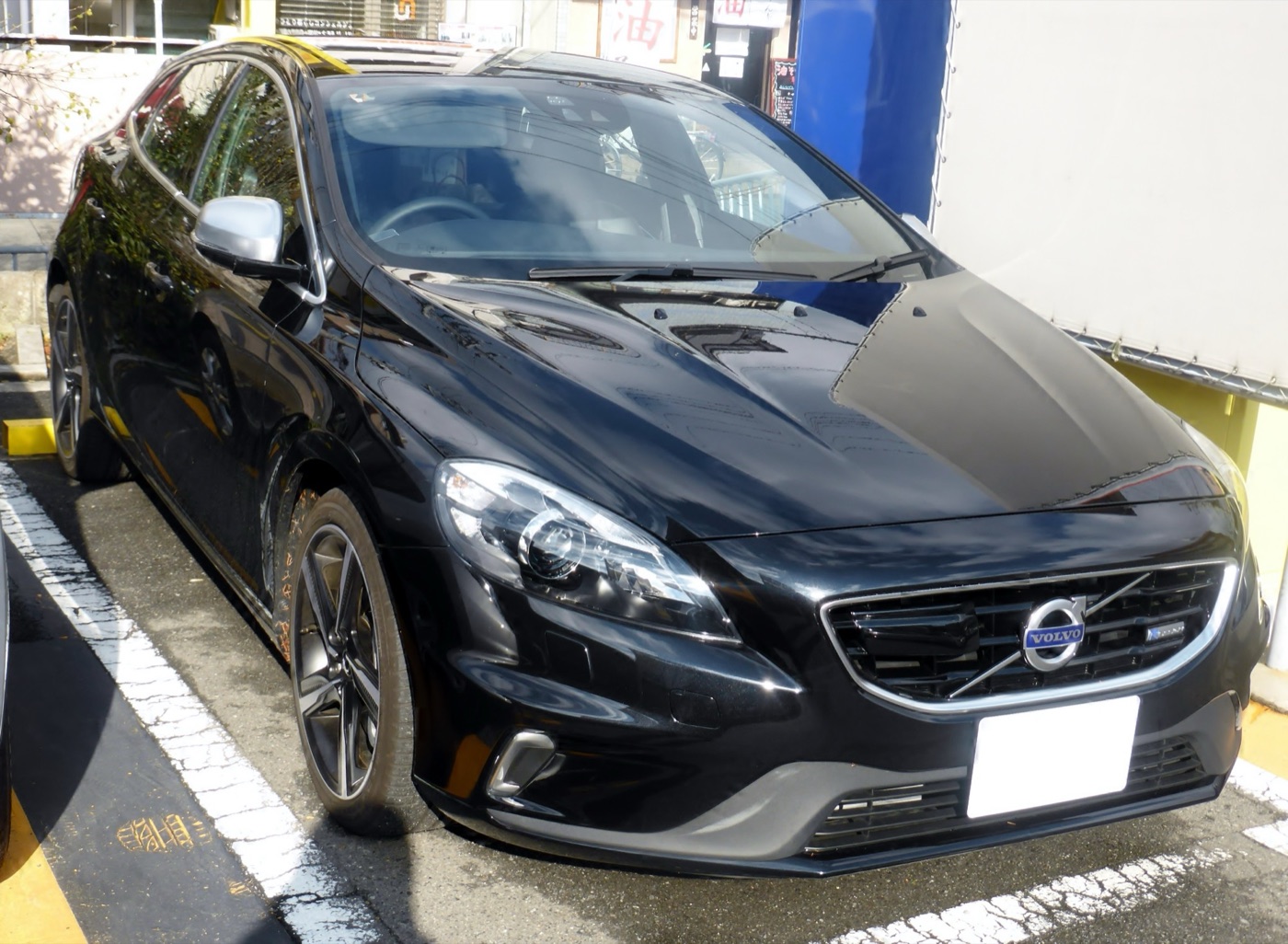
Volvo V40 R-Design
The R-Design had a re-profiled front bumper with vertical LED daytime running lights, a rear diffuser, silk-metal trim, 17-inch Ixion alloy wheels, nubuck sports seats, a sports steering wheel and pedals, and a blue-themed TFT display. Rebel Blue was its launch colour. Prices ran from £22,295 for a D2 to £31,390 for a T5 Geartronic R-Design Lux Nav. On a D4 or T4 the R-Design cost £450 more than an SE Lux, a 2013 SkiddMark first drive recorded. It was developed with Robert Dahlgren, Polestar's touring car driver, and has sports suspension: firmer springs and dampers, with 25 mm piston rods at the front, thicker anti-roll bars and an optional 10 mm lower ride height.
Volvo V40 Cross Country
The V40 Cross Country's ride height is up to 40 mm greater than the hatchback's, depending on engine and wheels, thanks to aluminium front spindles 20 mm longer and modified rear links. It has black bumper inserts, a front skid plate, roof rails and black mirror covers. Production began in November 2012, Volvo Car UK expected it to take 11 per cent of British V40 sales, and the T5 version was the only V40 with four-wheel drive, a BorgWarner fifth-generation system with Hill Descent Control. Prices started at £22,595 for a D2 SE and reached £33,875 for the T5 AWD Cross Country Lux Nav.
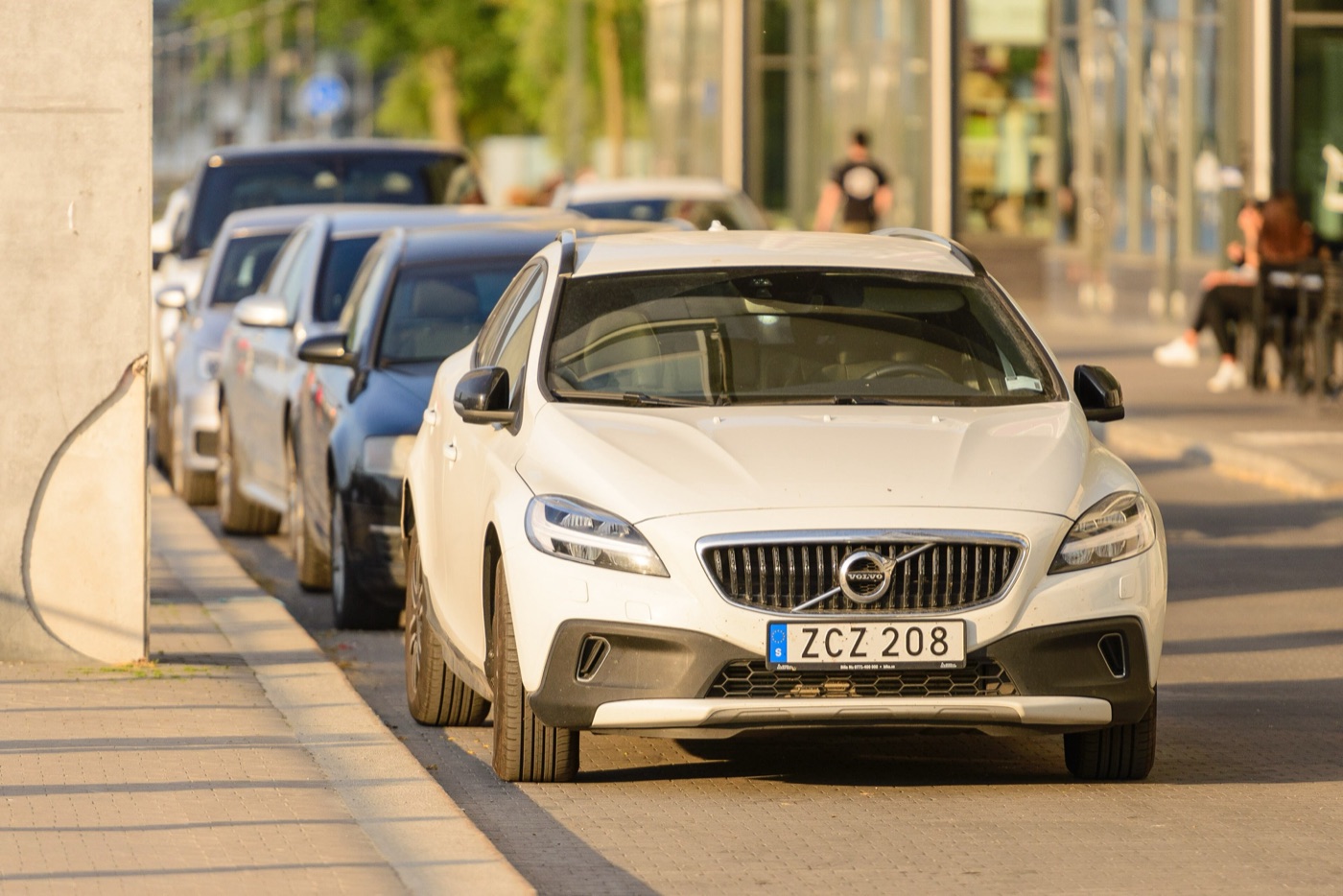
Volvo's figures count 143,712 Cross Country sales worldwide. A V40 Cross Country appeared in the ITV detective series Midsomer Murders, Autocar's used buying guide notes.
Trim levels
British V40s were sold as ES, SE and SE Lux from 2012, with R-Design, R-Design Lux and the Cross Country SE and Lux added in 2013. ES cars had climate control, Bluetooth, DAB, City Safety and 16-inch wheels; SE added cruise control and folding mirrors; SE Lux added leather, xenon headlights and 17-inch wheels. "Nav" versions had a 7-inch screen with navigation. After the 2016 facelift the trims became Momentum, Inscription, R-Design and R-Design Pro, the last on 18-inch wheels. R-Design Edition models were on sale in 2019.
V40 Carbon
Volvo and Polestar made 343 V40 Carbon editions in 2015, for Finland, France, Japan, the Netherlands and Sweden only, with carbon trim, 19-inch wheels and red seatbelts, Volvo said in a release quoted by Autoblog. It was the first car with Polestar's new-generation optimisation: 253 hp and 400 Nm for the T5, 200 hp and 440 Nm for the D4.
Polestar and the Volvo V40
Polestar's work on the V40 was software optimisation, sold through Volvo dealers from 2013, and from 2016 a kit of Performance Parts; in 2017 CAR magazine described a V40 T5 R-Design with the full kit as "the smallest Polestar-fettled car available".
Polestar optimisation for the T4
In January 2013 Polestar released a software upgrade for the 1.6 T4 that raised output from 180 hp and 240 Nm to 200 hp and 285 Nm and cut 0–100 km/h from 7.7 to 7.4 seconds, with no change to the official economy of 5.5 litres per 100 km, a 2013 SkiddMark report recorded from Polestar's figures. It cost about £480 including VAT on a T4 that started at £24,930, and it was fitted at a dealer without affecting the warranty. "Volvo V40 is one of Volvo's most fun cars to drive with a really good chassis," Robert Dahlgren, who helped develop it, said in Polestar's announcement, as SkiddMark reported in January 2013.
Drive-E T5 and D4 optimisation
Polestar's optimisation for the Drive-E engines, first offered on the V40 Carbon in 2015, gave its biggest gains in the middle of the rev range: up to 25 hp and 50 Nm for the T5 and 16 hp and 40 Nm for the D4, according to the Volvo release Autoblog quoted. It also sharpened throttle response and changed the automatic's shift timing.
Polestar Performance Parts
The Polestar Performance Parts kit for the V40 T5 cost £4,725 in 2016, evo reported: a remap, a 2.5-inch stainless exhaust, a performance air intake, springs and dampers 15 to 25 per cent stiffer than the Sport chassis and 10 mm lower, and 19-inch Polestar wheels on 235/35 Pirelli P Zeros. Power rose by 8 hp to 250 hp and torque by 37 lb ft to 295 lb ft. evo found the brakes faded and the steering disappointing; CAR magazine's 2017 test found the ride "fidgety" and averaged 22 mpg against a claimed 39 mpg, on a T5 R-Design Pro that cost £36,740 with the full kit.
How many Volvo V40s were made?
Volvo Car Gent built 667,530 second-generation V40s from 2012 to 2019, the last on 18 July 2019; Volvo's retail sales figures, as published by the Volvo Owners' Club, count 525,413 V40 hatchbacks and 143,712 Cross Countries.
| Year | V40 hatchback, worldwide | V40 Cross Country, worldwide | UK first registrations, all V40s |
|---|---|---|---|
| 2012 | 22,202 | 244 | 2,696 |
| 2013 | 78,307 | 21,604 | 12,681 |
| 2014 | 84,771 | 26,093 | 17,899 |
| 2015 | 83,357 | 23,274 | 17,142 |
| 2016 | 80,099 | 21,281 | 16,535 |
| 2017 | 73,824 | 21,546 | 14,302 |
| 2018 | 60,461 | 17,126 | 13,495 |
| 2019 | 39,561 | 11,981 | 8,371 |
| 2020 on | 2,856 | 569 | 498 |
| Total | 525,438 | 143,718 | 103,619 |
The club's own totals, 525,413 hatchbacks and 143,712 Cross Countries, stop at 2020; the table adds the 25 hatchbacks it lists for 2021 and 2022 and six Cross Countries in 2021. Sales peaked in 2014, when Britain registered 17,899, about one in six of the 110,864 V40s sold worldwide that year; Volvo Car UK had expected "just over 14,000" for 2013. In the Netherlands the V40 was the best-selling car of July 2013, helped by the 14 per cent company-car tax band of the D2, AutoRAI recorded.
How many Volvo V40s are left in the UK?
DVLA figures for the first quarter of 2026 (released 15 August 2026, via How Rare Is My Car) count 94,070 Volvo V40s taxed and 4,650 on SORN in Britain. These totals include the 1995–2004 estate. The number on the road peaked at 111,158 in the third quarter of 2019. Of all V40s registered in Britain, the most common versions are the D2 R-Design (7,518) and the T2 R-Design (4,783), and blue is the most common colour, on 21,827 cars.
Volvo V40 reliability and common problems
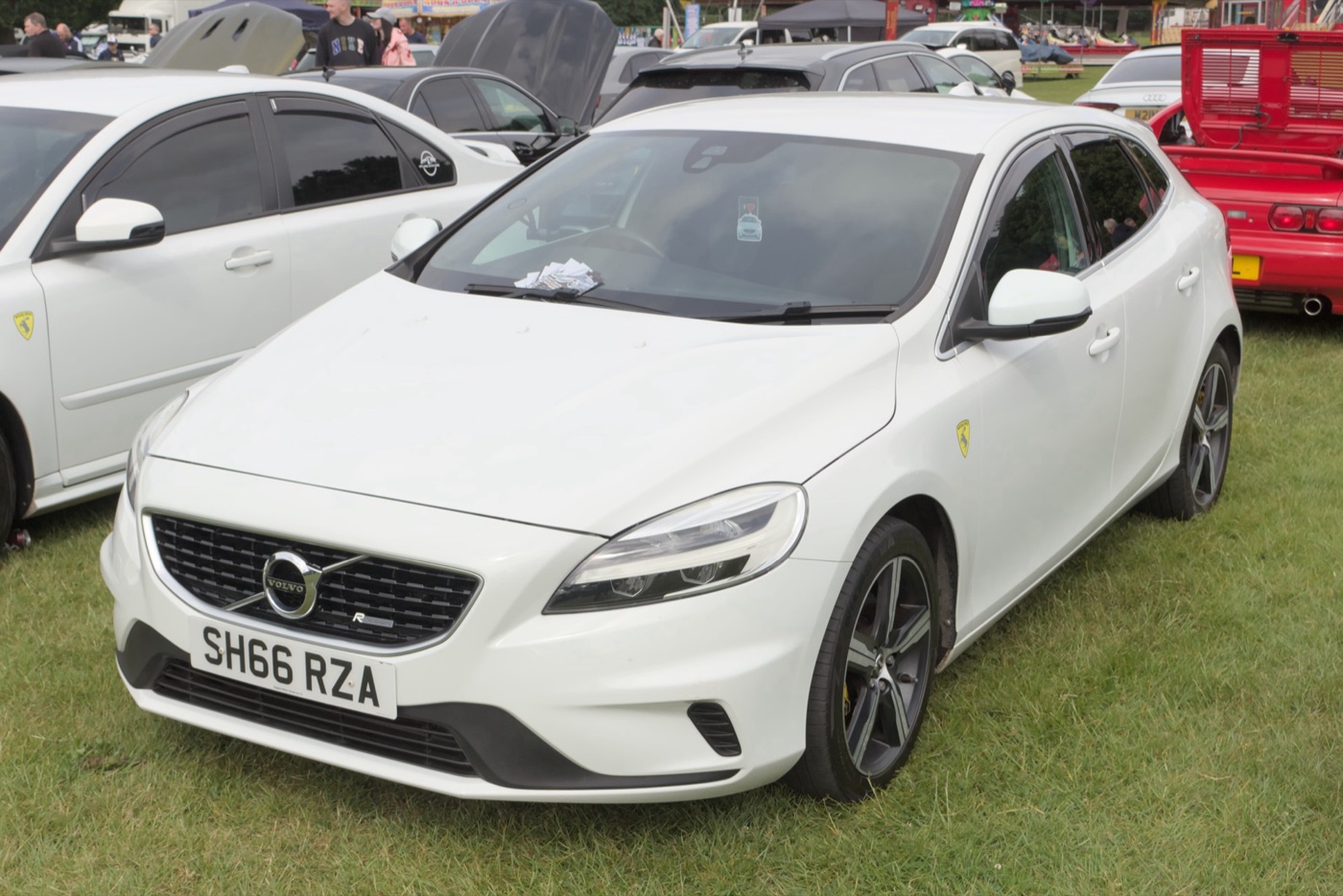
The V40 has a good record for reliability, with What Car?'s owner survey calling it "a highly dependable option" as an older used family car, and its faults are mostly small: an EGR valve on the D4, rattles, peeling wheel lacquer and some door locks.
Common problems
Autocar's used buying guide lists poor running and rising fuel consumption on the 2.0 D4 diesel, which may mean a faulty EGR valve; clutch trouble on some later six-speed manuals and a creaking clutch pedal; hesitant changes from the early Ford Powershift automatic; lacquer peeling from the diamond-cut alloy wheels of R-Design cars; troublesome rear door locks on pre-2015 cars; electric mirrors that refuse to fold; paint that chips easily; and rattles from the centre console, for which Volvo issued dealers a fix. Auto Express adds central locking failures and heated rear windows that stop working. Carbuyer and Auto Express both report the DAB radio losing signal in areas with good coverage, then switching to FM.
Volvo V40 recalls
Auto Express counted four British recalls by 2018: March 2014, for rear lights failing, a software fault that Carbuyer said affected 1,492 cars built between November 2013 and March 2014; June 2016, for 123 cars whose driver's airbag could fail; October 2016, for coolant and oil leaks that could cause overheating; and January 2017, for further airbag faults.
Servicing and the timing belt
Every V40 needs a service once a year, at up to 18,000 miles, or 12,500 miles for the 1.6 D2. Every engine has a timing belt, due at between six years or 87,500 miles and eight years or 144,000 miles, depending on its schedule. Auto Express put minor services at about £200, major ones at £320 to £350 and the service that includes a new belt at about £900, with brake fluid (about £80) every two years. Short-journey drivers are better off with a petrol, What Car? advises, because a diesel's particulate filter needs longer runs.
Running costs: fuel economy, CO2 emissions and insurance
Insurance groups run from 17 for the cheapest V40 to 35 for the T5 automatic, according to Carbuyer. Official economy ranged from 78.5 mpg for the 1.6 D2 to about 34 mpg for the five-cylinder T5, whose 189 to 194 g/km of CO2 puts it in a high tax band; cars first registered from April 2017 pay the flat standard rate whatever their CO2. Carbuyer found fewer than one in ten used V40s was a petrol and about a quarter had an automatic gearbox, though Autocar's later guide found almost as many petrols for sale as diesels.
Volvo V40 prices today
A used V40 costs from under £3,000 for a high-mileage early car to about £16,000 for a late, high-spec 2019 one, What Car? found. The 20 V40s on the first page of PistonHeads' classifieds on 28 October 2026 were priced from £2,995 to £9,595.
The cheapest in that sample was a 2013 1.6 D2 R-Design at £2,995 and the dearest a 2019 T2 R-Design Edition at £9,595; a 2015 Drive-E T5 R-Design automatic was £7,990 and a 2018 D4 R-Design £7,998. What Car? puts a realistic budget for an early D2 SE at £4,000, a facelifted car at £7,000 or more and a 2017 or 2018 car above £9,000; later 2019 V40s start from around £10,000 for a T2 Momentum, rising to about £16,000. Autocar found tidy, low-mileage top-spec cars at about £12,000. The Cross Country sells for a little more than the hatchback, Carbuyer says.
Which Volvo V40 to buy
What Car? recommends the 1.6 D2 for pre-2015 cars and the 2.0 D2 for later ones, and the T3 petrol for mostly short journeys; Auto Express prefers the eight-speed automatic to the six-speed. The 2013 SkiddMark first drive picked the D4 R-Design. For performance, the Drive-E T5 of 2014 onwards is quicker and far more economical than the 2.5 five-cylinder (47.9 mpg against about 34 mpg officially).
Rivals: Volvo V40 vs Audi A3, BMW 1 Series and VW Golf
The V40's rivals were the German premium hatchbacks it was built to take on, the Audi A3 Sportback, BMW 1 Series and Mercedes A-Class, plus the Volkswagen Golf and the Ford Focus that shares its platform. Carbuyer called Volvo a "near-premium" brand, its V40 priced well below a 1 Series or A3 while looking and feeling more special than a Focus.
Against the Audi A3, the V40 had the record crash-test score and, Autocar found, a price about £1,000 lower with more equipment; the A3 had the bigger boot and the more upmarket cabin in What Car?'s view, and Carbuyer noted it was available with four-wheel drive. The BMW 1 Series was the driver's choice for its rear-wheel drive, but its transmission tunnel cuts rear space. The Mercedes A-Class of 2012 was slower: the 2012 SkiddMark test quoted 7.9 seconds to 60 mph for the D4 against 9.2 seconds for the A 200 CDI, and said the V40 was good enough to "topple" the A-Class and nearly a match for the 1 Series in quality. The Volkswagen Golf is the closest in character, Auto Express said. Carbuyer suggested the Mazda3 and SEAT Leon for buyers who do not need a premium badge.
Volvo V40 reviews: what the press said
UK reviewers praised the V40's looks, safety, seats and cabin, and criticised its small boot, firm ride on large wheels, fussy dashboard buttons and, on the T5, its gearbox and steering.
"By the law of averages, it was bound to stumble across a winning recipe at some point: the launch of the five-door V40 hatch is it," Top Gear's review said. A 2012 SkiddMark road test, after driving a D4 at Goodwood, called its driving dynamics "a revelation compared to anything Volvo has produced in the past (S60/V60 excepted)" and scored it 9 out of 10 on its own "Ronseal Index" of how well a car meets expectations. SkiddMark's January 2013 first drive scored the T5 R-Design's steering 4 out of 10 against 7 for the D4 R-Design, faulting its recalibrated variable-weight steering and a six-speed Geartronic with a "discernible thump" on each upshift; it named the D4 R-Design its pick of the range. Autocar's road test of the D3 found the steering light and accurate, if not communicative, the ride heavy-handed with the Sport pack, and the diesels slow to respond below 1,500 rpm. What Car? summed it up as "not the best of its type to drive", with "a fine interior and lots of safety kit", and Autocar's used guide put its loyal following down to its "sleek looks, deep quality" and "not German" heritage. Carwow found R-Design cars on larger wheels "firm and jarring over broken UK roads", while What Car? said the R-Design rides no worse than other versions and has "fabulously comfortable" seats.
Owners were less consistent. In Auto Express's Driver Power survey the V40 came 19th in 2014, 15th in 2015 and 78th of 150 in 2016, with owners marking it down for ride and practicality, Carbuyer recorded.
Questions
Is the Volvo V40 a good car?
Reviewers rated it highly for safety, seats, looks and cabin quality and marked it down for a small boot (335 litres) and a firm ride on large wheels. What Car?'s owner survey found it a reliable used buy, and in 2012 it gained the best overall Euro NCAP score then recorded.
Is the Volvo V40 based on the Ford Focus?
Yes. It uses the Ford Focus platform with Volvo's own steering, spring and damper settings, and until 2015 the T3 and T4 used Ford's 1.6 petrol engine. Volvo's own Drive-E engines replaced the Ford and five-cylinder units in 2014 and 2015.
Does the Volvo V40 have a timing belt or chain?
A timing belt, on every engine. Depending on the engine's schedule it is due at between six years or 87,500 miles and eight years or 144,000 miles, and the service that includes it costs about £900, Auto Express reported.
Is the Volvo V40 four-wheel drive?
Only the V40 Cross Country T5, which has a BorgWarner fifth-generation four-wheel-drive system and Hill Descent Control. Every other V40, including the T5 hatchback, drives its front wheels.
What replaced the Volvo V40?
No direct successor. Volvo stopped making the V40 in July 2019 and said any successor would not take its traditional hatchback form, and Ghent went on building the XC40 crossover.
What is the difference between the Volvo V40 and V40 Cross Country?
The Cross Country rides up to 40 mm higher, with black bumper inserts, a skid plate and roof rails, and in T5 form it has four-wheel drive. At launch it shared the hatchback's body, cabin and engines apart from the T3.
Sources
- Volvo Car Corporation, "Stefan Jacoby reveals the all-new Volvo V40 in Geneva", 6 March 2012: reveal, Jacoby quotes, City Safety to 50 km/h, Ghent production from May 2012.
- Volvo Car UK, "Volvo Car UK announces pricing of the all-new Volvo V40", 12 April 2012: £19,745 launch price, trims, D2 figures, first deliveries.
- Volvo Car UK, "Volvo's safety world first set to help further reduce the 1.3 million people killed on roads", 23 May 2012: how the pedestrian airbag works, Broberg quote.
- Volvo Car UK, "Four in a row for Volvo at the BusinessCar Techies!", 1 September 2012: airbag award.
- Volvo Car UK, "All-new Volvo V40 R-Design and Cross Country pricing announced", 9 October 2012: R-Design and Cross Country equipment and prices.
- Volvo Car UK, "All-new Volvo V40 Cross Country", 24 January 2013: ride height, chassis changes, UK damper tuning, engine and performance figures, UK sales forecast, insurance.
- Volvo Car UK, "Global safety rating results confirm Volvo Cars' safety leadership", 2 April 2013: Euro NCAP Best in Class, ANCAP rating.
- Volvo Car Group, "Volvo Cars' pioneering work on pedestrian protection wins Global NCAP Innovation Award", 30 May 2013: award, pedestrian death figures.
- Volvo Car UK, "Volvo Cars introduces its new Drive-E powertrain to the V40", 27 March 2014: Drive-E D4 and T5 figures and timing.
- Volvo Car Group, "Volvo Cars gives the new face of Volvo to the V40", 24 February 2016: facelift changes, colours, Annwall quote.
- Volvo Car Corporation, V40 owner's manual, model year 2013 (German edition), pp. 392 and 396: dimensions and 2012–15 engine outputs.
- Volvo Car Corporation, V40 owner's manual, model year 2017 (UK edition), pp. 383–388: dimensions, gearboxes, Drive-E engine outputs, roof load.
- Volvo Owners' Club, "Volvo V40 production statistics", from Volvo Car Corporation data, read 28 October 2026: sales by year, first-generation total.
- AutoRAI, "Einde van een succesnummer: Volvo V40", July 2019: last car, production number, start date, sales forecast, Dutch sales.
- Autocar, Steve Cropley, "Geneva motor show 2012: new Volvo V40", March 2012: Ford platform, chassis changes, Ghent volume.
- Euro NCAP, Volvo V40 datasheet, 2012: V40 scores.
- Euro NCAP, Audi A3 datasheet, 2012: A3 scores.
- Euro NCAP, "Euro NCAP is announcing 2012 top choices for safety": Best in Class.
- GoAuto, "Volvo V40 awarded record crash-test scores", 30 August 2012: van Ratingen quote.
- Fleet World, "Euro NCAP announces Best in Class cars for 2012": Best in Class and runner-up.
- Autoblog, "Volvo V40 Carbon edition by Polestar official", 22 May 2015, quoting Volvo's release: Carbon numbers, markets and outputs, mid-range gains.
- evo, "Volvo V40 T5 with Polestar Performance Parts review", 2016: kit contents, prices, outputs, T5 performance.
- CAR magazine, Jake Groves, "Volvo V40 T5 R-Design Pro Polestar (2017) review": price with the kit, ride, test economy.
- Top Gear, "Volvo V40 review": verdict quote.
- How Rare Is My Car, "How many Volvo V40 were made?" and "How many Volvo V40 are left?", DVLA statistics updated 15 August 2026, read 28 October 2026: UK registrations and survivors.
- PistonHeads classifieds, Volvo V40 listings, first page of 20 cars, read 28 October 2026: asking prices.
- Autocar, "Used car buying guide: Volvo V40": common faults, Midsomer Murders, used prices, D3 road test.
- Auto Express, "Used Volvo V40 review": recalls, servicing costs, trims, rivals, faults.
- Carbuyer, "Used Volvo V40 buying guide": UK launch dates, insurance groups, recall count, Driver Power results, faults.
- What Car?, Mark Pearson, "Used Volvo V40 2012–2019 review": prices, reliability survey, economy, engine choice.
- Parkers, "Volvo V40 hatchback (2012–2019) review": 2018 engine range.
- Carwow, "Volvo V40 review": boot space, ride on R-Design.
- Autotrader, "Volvo V40 hatchback (2012) expert review": styling, buttons, boot compared with rivals.
- SkiddMark, "The DNA Inside: Volvo Cars", 26 August 2012: D4 test at Goodwood, price, weight, 0–60 mph, verdict.
- SkiddMark, "First Drive Review: Volvo V40 T5 & D4 R-Design", January 2013: T5 and D4 R-Design test, prices, R-Design chassis, scores.
- SkiddMark, "Polestar boosts the appeal of Volvo's V40 T4", 23 January 2013: Polestar T4 figures, price, Dahlgren quote, Geely purchase price.
- SkiddMark, "The era of the Volvo hot hatch is near..", 2 April 2014: Drive-E investment, planned T6 and D5, T5 performance.