Volvo V60 Polestar and S60 Polestar: history, specs and production
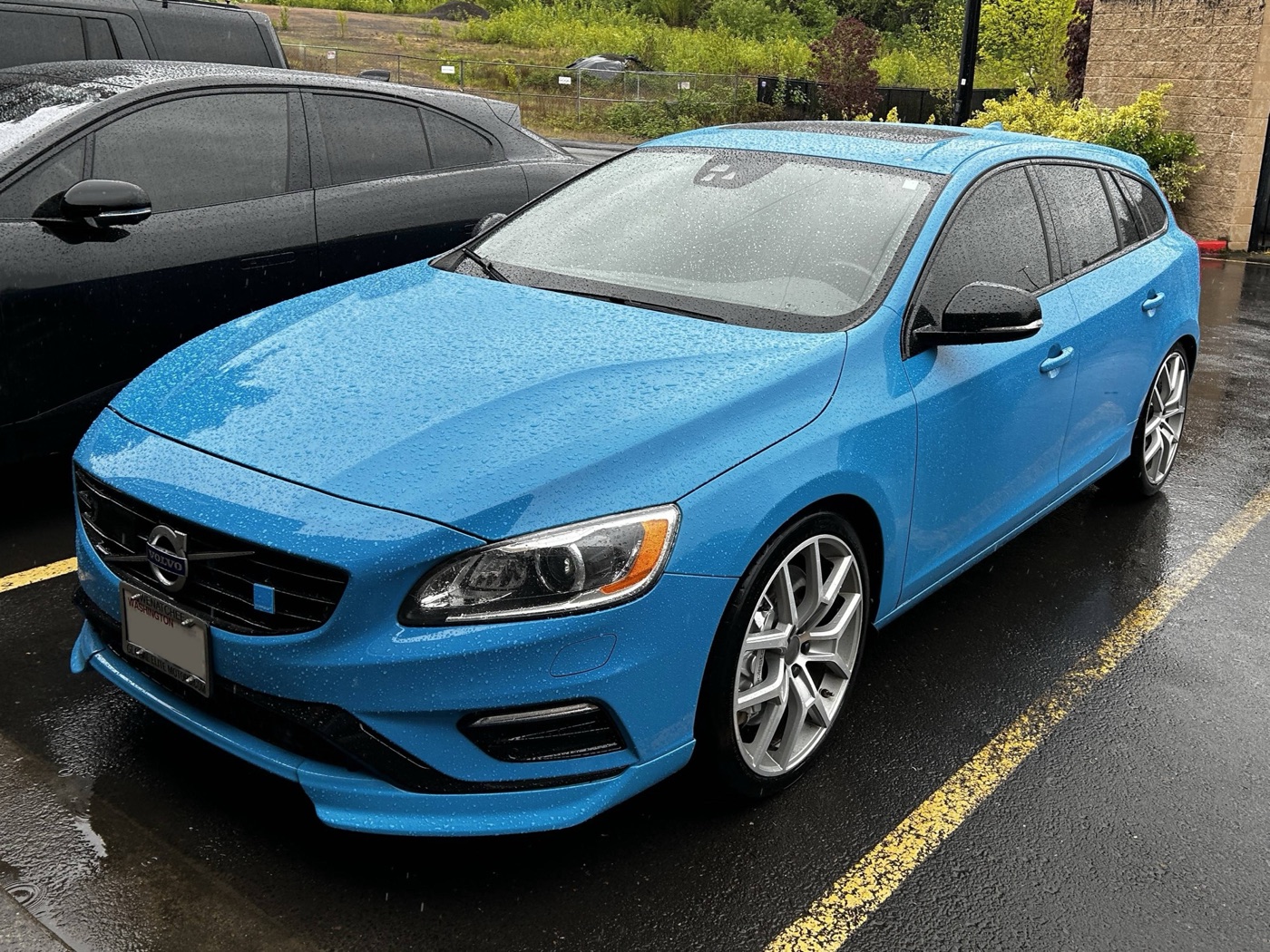
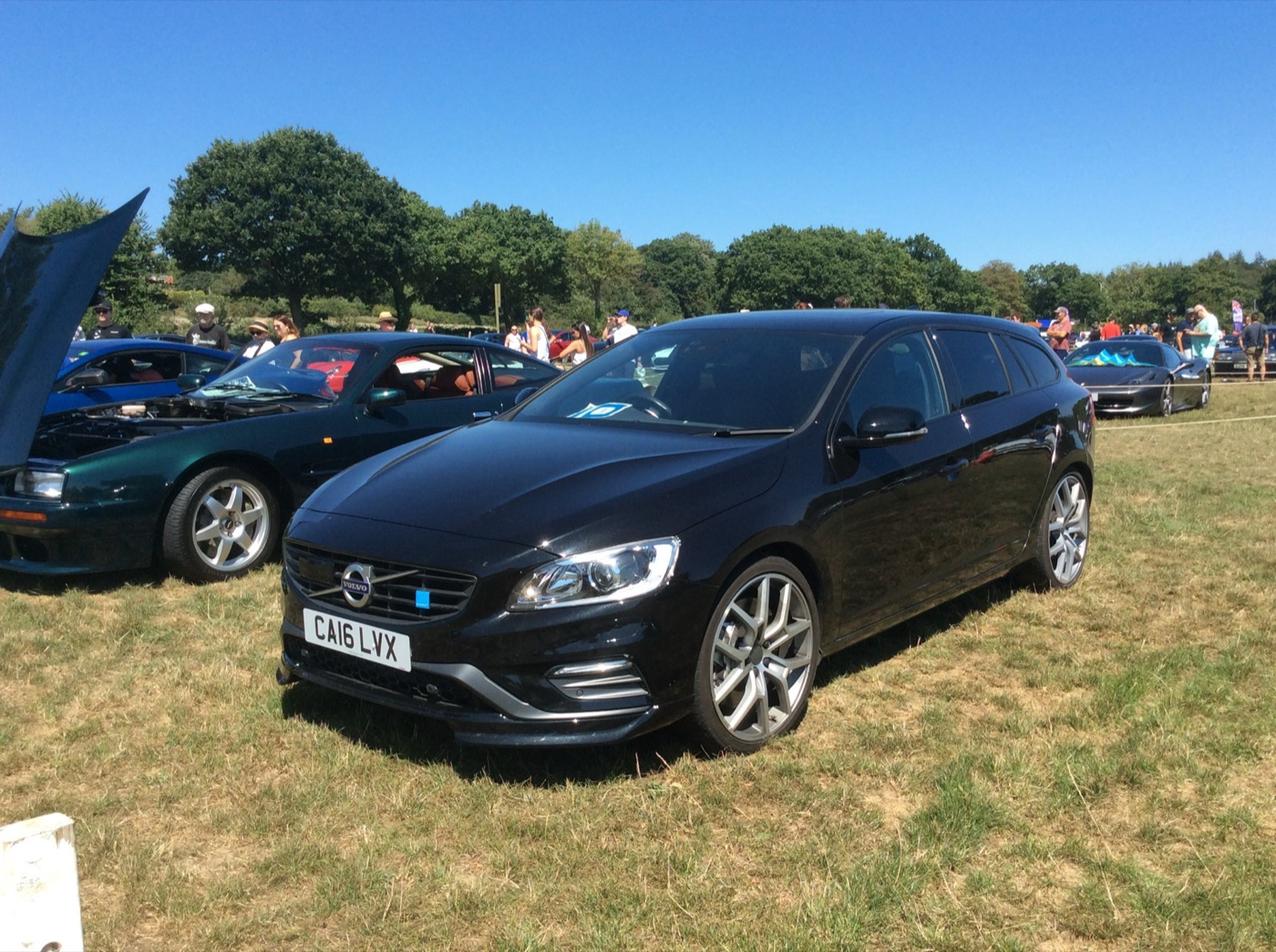
The Volvo V60 Polestar is the fast estate that Polestar, Volvo's racing partner, engineered and Volvo built from 2014 to 2018, sold alongside an S60 Polestar saloon. Production began at Volvo's Torslanda plant in Gothenburg in June 2014. Until 2016 the car had a 3.0-litre turbocharged straight six of 350 hp (345 bhp). From 2016 it had a 2.0-litre four with both a turbocharger and a supercharger, of 367 hp. Both drove all four wheels through an automatic gearbox, on Öhlins dampers and six-piston Brembo front brakes. A UK buyer of the 3.0 chose only the colour; on the 2.0 a sunroof was the one option.
Volvo planned 750 S60 and V60 Polestars for the world in 2014. The UK took only the estate and was allocated 125 of those cars, at £49,775 each. DVLA records show 151 of the 3.0 estates first registered in the UK from 2014 to 2016, and 147 still on record in 2026. For the 2.0 car Volvo planned up to 1,500 a year, for 47 countries. PistonHeads called the 3.0 the last six-cylinder performance Volvo, and the Polestar-badged Volvos that followed from 2018 were plug-in hybrids.
History of the Volvo V60 Polestar
The V60 Polestar was the first production car from Polestar, a Swedish racing team that had run Volvos since 1996, and it grew out of two concept cars and a 50-car trial in Australia. Volvo bought the road-car side of Polestar in 2015, while the car was on sale.
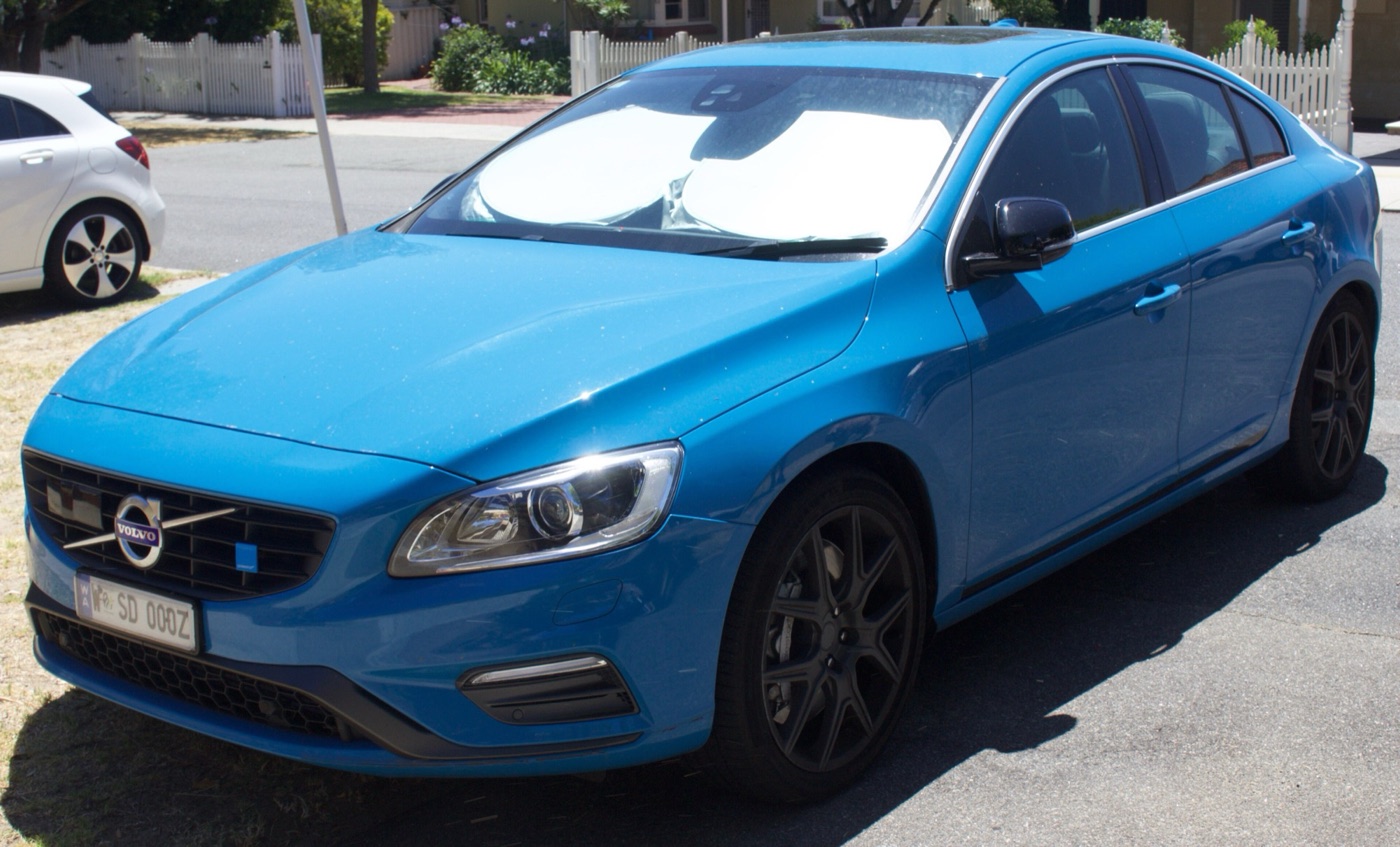
Polestar and Volvo before the production car
Polestar began as a motorsport team in 1996 and started selling performance products for Volvos in 2009, according to the "About Polestar" note in Volvo's April 2016 V60 Polestar release. Its first road products were software upgrades sold through Volvo dealers. On the T6 engine of the S60 and XC60 R-Design, the "Polestar Optimisation" raised output from 304 hp and 440 Nm to 329 hp and 480 Nm, Volvo said in the release that introduced the S60 Polestar Concept. A 2014 SkiddMark first drive described these as the Volvo equivalent of Audi's S line and BMW's M Sport cars, and described Polestar as an independent company of 35 people.
The S60 Polestar Concept of 2012 had the same 3.0-litre six tuned to 508 hp and 575 Nm, with a lowered and widened body and Öhlins dampers. The 2014 SkiddMark report listed its Garrett 3171 turbocharger, strengthened connecting rods, modified cylinder head and 3.5-inch stainless exhaust. The report said Polestar judged the concept a little "too exciting" (and costly) for series production. Polestar's own question at the start of the project, in 2009, was "what would happen if a race team got to design their own road car?", the 2014 SkiddMark report said.
The S60 Polestar for Australia
The first Polestar production car was an S60 saloon for Australia only. Volvo's April 2013 release called it a pilot project, with a 350 bhp (257 kW) six, a six-speed automatic with launch control, 0–100 km/h in 4.9 seconds and first deliveries in late June 2013. GoAuto reported in June 2013 that only 50 had been commissioned, at A$109,950 plus on-road costs, and that any further cars depended on how Australia received them. PistonHeads, in April 2014, gave the Australian run as 100 cars, against the 50 that GoAuto reported commissioned at launch.
The 3.0-litre S60 and V60 Polestar launch
Volvo and Polestar showed the S60 and V60 Polestar on 26 November 2013, for sale in 2014 in Canada, the Netherlands, Japan, Sweden, Switzerland, the UK and the USA. Volvo Car UK's debut release said the UK would take the estate only. Christian Dahl, Polestar's chief executive, linked the estate to "the heritage of fast Volvo estates like the racing 850 BTCC". The 2014 SkiddMark report noted that Rickard Rydell and Jan Lammers raced that 850 estate in the British Touring Car Championship (BTCC) in the 1990s.
The first cars left the Torslanda factory in Gothenburg in June 2014. Volvo's production release of 24 June 2014 said 750 S60 and V60 Polestars would be built that year. The UK would receive the most of any country, 125. Polestar was also the first independent partner ever brought into the plant's production process. Henrik Fries, the car's technical project manager, called them "the first ever complete production cars from Polestar".
More countries, and Volvo buys Polestar
In February 2015 Volvo announced a second run of 750 cars after the first had "substantially" exceeded expectations. The first run had gone to customers in eight countries in 2014. Bahrain, Kuwait, Lebanon, Oman, Qatar and the United Arab Emirates took the total to 13. In July 2015 Volvo bought 100 per cent of Polestar, meaning Polestar Performance AB and the Polestar trademarks. The racing team stayed with Dahl and became Cyan Racing. Volvo forecast 1,000 to 1,500 Polestar cars a year in the medium term.
The 2.0-litre Drive-E car
On 1 April 2016 Volvo replaced the six with a four. The 2.0-litre Drive-E engine, turbocharged and supercharged, made 367 hp, and Volvo called the V60 Polestar "the quickest car it has ever made". Volvo's April 2016 release also raised the number of countries from 13 to 47 and said production would double from 750 cars a year to up to 1,500. First UK deliveries were due in the fourth quarter of 2016, again of the estate only.
Model year 2018 and the end of production
The last version, the model year 2018 car, was shown in August 2017 with a carbon-fibre front splitter, side sills and door mirror casings, gloss-black wheels and a new colour, Bursting Blue Metallic. Volvo's release limited it to 1,500 S60 and V60 cars, each with a unique number on the tread plate, and said Polestar would become a separate electric performance brand. PistonHeads gives 2018 as the final model year, and in June 2018 Volvo moved the Polestar name to its Polestar Engineered plug-in hybrids.
Design and engineering
Polestar started from the V60 T6 AWD R-Design and changed the engine, gearbox calibration, four-wheel drive, suspension, brakes, wheels, aerodynamics and cabin. Volvo counted more than 250 components changed against the standard car by model year 2018.
The 3.0-litre six (2014 to 2016)
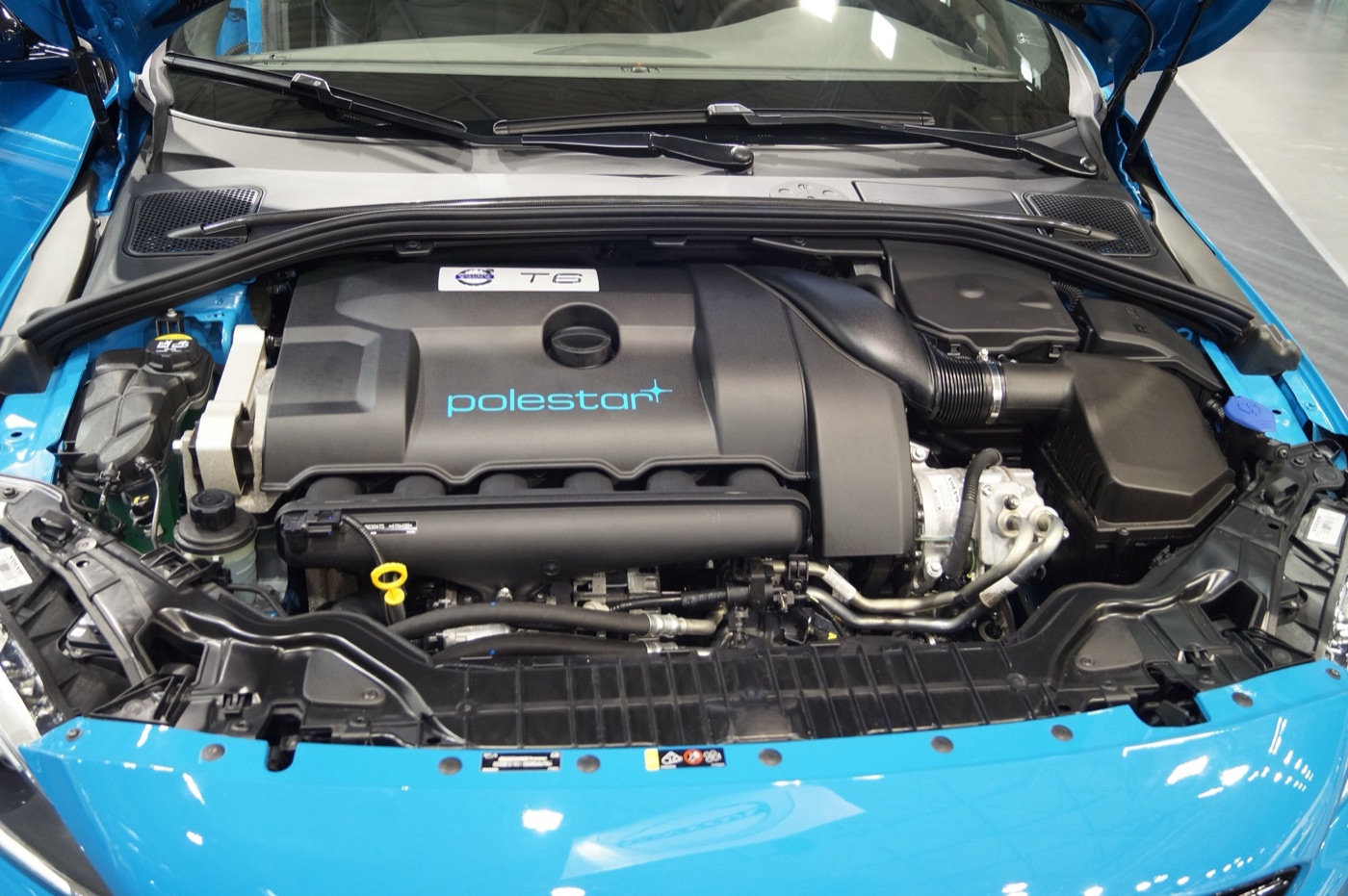
The first engine was Volvo's 2,953 cc T6 straight six, mounted across the car, with a new twin-scroll BorgWarner turbocharger, a larger intercooler and a 2.5-inch stainless exhaust with twin 3.5-inch tailpipes. Volvo Car UK's May 2014 specification rated it at 258 kW (350 hp DIN, 345 hp SAE) at 5,250 rpm, against 304 hp for the standard T6. Torque was 500 Nm (369 lb ft) from 3,000 to 4,750 rpm. The 2014 SkiddMark first drive gave the turbo's maximum boost as 1.2 bar, and said a valve sent the exhaust past the silencer above 4,000 rpm. PistonHeads, in its 2022 buying guide, traced the engine to Ford's Bridgend plant in Wales, where production of the all-aluminium six began in 2006.
The 2.0-litre twincharged four (2016 to 2018)
The second engine was the 1,969 cc Drive-E four from the standard T6, with a bigger turbocharger, new connecting rods and camshafts, a larger air intake, a higher-capacity fuel pump and a 3.0-inch active exhaust. Volvo's 2016 specification gave 270 kW (367 hp DIN, 362 hp SAE) at 6,000 rpm, 470 Nm (347 lb ft) from 3,100 to 5,100 rpm, a 7,000 rpm limit and 2.0 bar of boost. The engine shared its base with the S60 Polestar TC1 touring car, and the car was 24 kg lighter over the front axle and 20 kg lighter overall than the six-cylinder version.
Transmission and all-wheel drive
The 3.0 car used a six-speed Aisin AWF21 torque-converter automatic with paddles. Polestar recalibrated it for faster shifts and added launch control and a curve-hold function that stops it changing gear in mid-corner. In Sport mode, PistonHeads found in 2014, it held on to the revs and changed gear "in a fraction of a second". The 2014 SkiddMark report explained the launch control: brake held, throttle floored, and the revs drop again if the brake is not released within five seconds. Polestar also recalibrated the Haldex all-wheel drive, which Volvo's documents also call the BorgWarner system, to send more torque to the rear. The effect is strongest with the stability control switched off; on track that way, PistonHeads found, there was "even a whiff of tail-end action". The 2.0 car moved to an eight-speed Geartronic automatic. evo, reviewing the 2.0, noted that the system sent at most 50 per cent of the torque to the rear wheels.
Suspension, brakes, wheels and tyres
Springs were 80 per cent stiffer than the S60 and V60 T6 R-Design's. On the 2.0 V60 they are rated at 60 N/mm front and 72 N/mm rear (67 N/mm on the S60). Top mounts and tie-blade bushes were stiffer, and a carbon-fibre-reinforced strut brace joined the front suspension towers. The Öhlins dampers had a dual-flow valve (DFV) and were adjustable by hand. The 2014 SkiddMark report counted 20 settings on a knob at the top of each damper, set to the middle at the factory; the rear pair could be reached only on a ramp. PistonHeads' 2014 road test added 15 per cent stiffer anti-roll bars and a ride height 3 mm lower.
Front brakes were 371 × 32 mm ventilated, floating Brembo discs with Polestar/Brembo six-piston calipers; the rear kept 302 × 22 mm ventilated discs. The 2014 SkiddMark report named the pads as HP1000 at the front and HP2000 at the rear. Wheels were Polestar 20 × 8-inch rims on 245/35 ZR20 Michelin Pilot Super Sport tyres, and the 2.0 car added lighter wheels, Polestar-calibrated electric power steering and slotted front discs.
Aerodynamics, interior and equipment
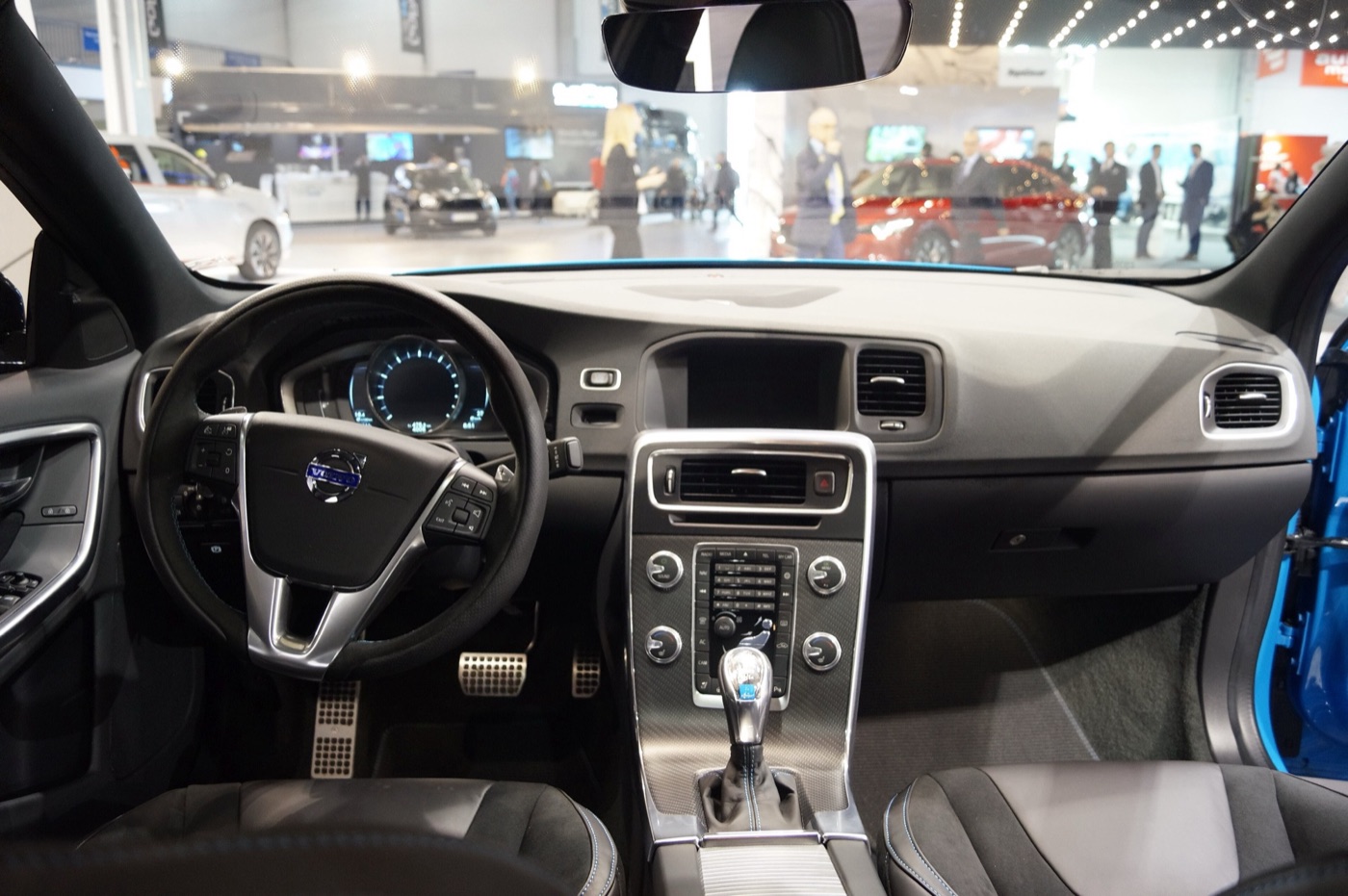
Volvo tested the front splitter corners, rear spoiler and diffuser in its wind tunnel. The grille is solid black, and the mirror covers and window surrounds gloss black. Inside were seats in charcoal leather and nubuck (a suede-like leather) with blue stitching. The steering wheel had leather on the outer rim and nubuck on the inner, and there was carbon-fibre trim on the centre console and Polestar mats, pedals and sill plates. In the UK the 3.0 started as the V60 R-Design Lux Nav with every factory option added, including the Driver Support pack, Harman Kardon sound, a sunroof and Volvo On Call. On the 2.0, a sunroof was "the only optional extra", Volvo's 2016 release says. Volvo's March 2016 safety car release gave the V60 Polestar a five-star Euro NCAP safety rating. The four colours were Rebel Blue, Black Sapphire Metallic, Bright Silver Metallic and Ice White; the 2016 specification lists Onyx Black in place of Black Sapphire.
Volvo V60 Polestar specs and performance
The 2.0-litre V60 Polestar has more power, less torque and less weight than the 3.0-litre car, and Volvo rated it 0.2 seconds quicker to 62 mph. The table gives Volvo's UK figures for the V60 estate. The 3.0's economy and CO2 figures come from Volvo's February 2015 release.
| V60 Polestar 3.0 (2014–2016) | V60 Polestar 2.0 (2016–2018) | |
|---|---|---|
| Engine | 2,953 cc straight six, turbocharged | 1,969 cc four, turbocharged and supercharged |
| Power | 258 kW, 350 hp DIN (345 hp SAE) at 5,250 rpm | 270 kW, 367 hp DIN (362 hp SAE) at 6,000 rpm |
| Torque | 500 Nm (369 lb ft) at 3,000–4,750 rpm | 470 Nm (347 lb ft) at 3,100–5,100 rpm |
| Gearbox | Six-speed automatic (AWF21) | Eight-speed Geartronic automatic |
| Drive | Four-wheel drive | Four-wheel drive |
| 0–62 mph | 5.0 sec | 4.8 sec |
| 0–124 mph | 17.8 sec | 17.4 sec |
| Top speed | 155 mph, limited | 155 mph, limited |
| Kerb weight | 1,834 kg | 1,796 kg |
| Front brakes | 371 × 32 mm, six-piston Brembo | 371 × 32 mm slotted, six-piston Brembo |
| Tyres | 245/35 ZR20 Michelin Pilot Super Sport | 245/35 ZR20 Michelin Pilot Super Sport |
| Combined economy | 27.7 mpg (10.2 l/100 km) | 34.9 mpg (8.1 l/100 km) |
| CO2 | 237 g/km | 186 g/km |
How fast is the Volvo V60 Polestar?
Both versions are limited to 155 mph (250 km/h). Volvo's acceleration figures for the 3.0 moved during its life. The November 2013 debut release gave 0–62 mph in 4.9 seconds, and the May 2014 UK specification 5.0 seconds. Volvo North America later quoted 0–60 mph in 4.8 seconds for the V60 and 4.7 for the S60. Volvo rates the 2.0 V60 at 4.8 seconds to 62 mph and 4.5 seconds to 60 mph, and the 2.0 S60 at 4.7 and 4.4. The 2014 SkiddMark first drive quoted 0–60 mph in 4.8 seconds and 0–120 mph in 16.7 seconds for the 3.0 V60.
How much does a V60 Polestar weigh?
Volvo's published weights also changed. The November 2013 debut figures were 1,822 kg for the V60 and 1,752 kg for the S60, and the May 2014 UK specification gave 1,834 kg for the V60, "same as V60 T6 R-Design". For the 2.0, Volvo's 2016 specification gives 1,796 kg for the V60 and 1,751 kg for the S60, while evo's review of the 2.0 V60 used 1,721 kg.
S60 Polestar or V60 Polestar: the differences
The S60 Polestar is the saloon and the V60 Polestar the estate; they share the engines, gearboxes, brakes and wheels, and differ in body, weight, rear spring rate and where they were sold. The UK took only the V60, in both the 3.0 and 2.0 generations, so every UK-supplied car is an estate.
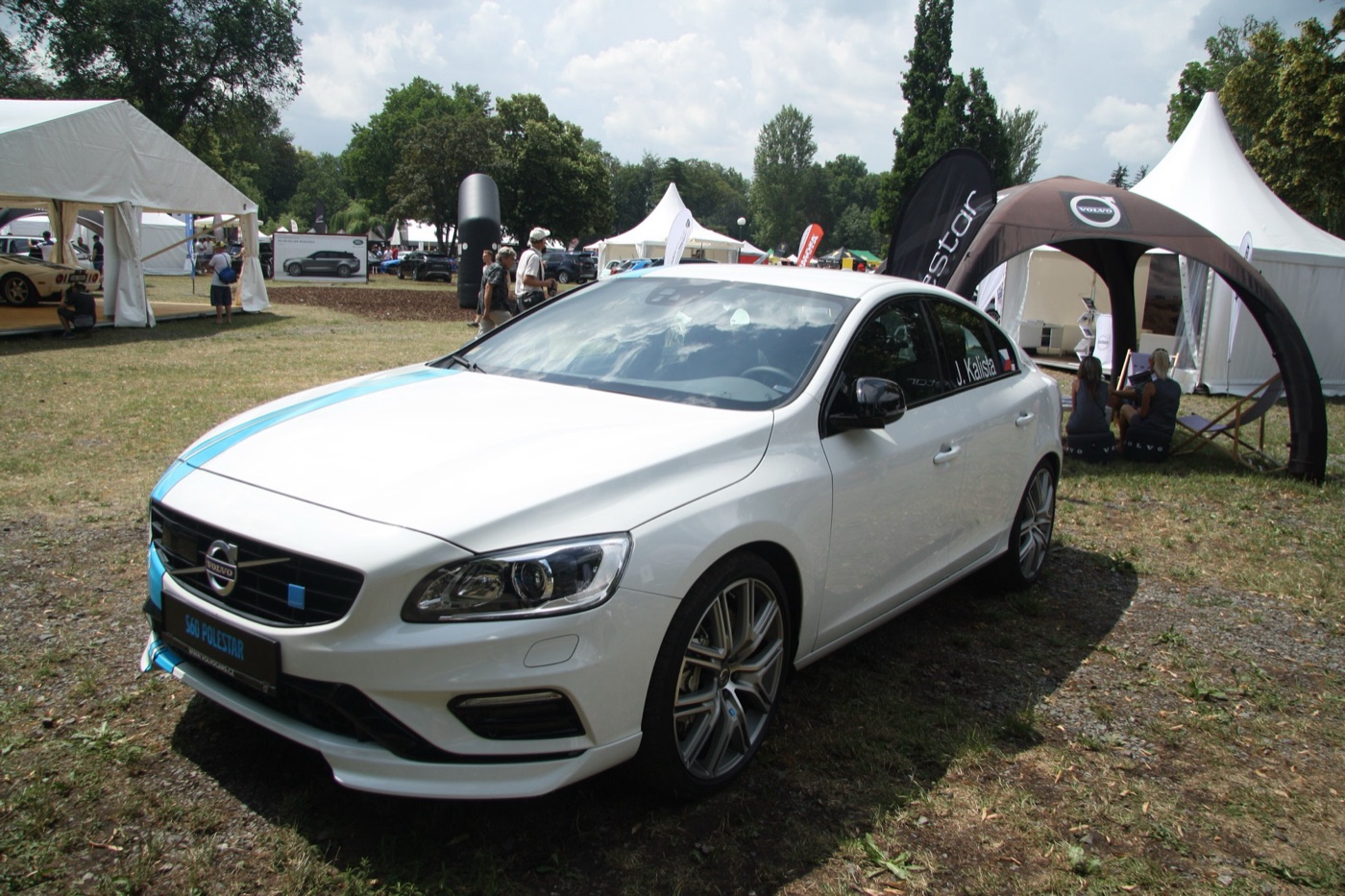
The saloon is lighter and slightly quicker: 1,751 kg against 1,796 kg in 2.0 form, and 0–120 mph in 14.6 seconds against 15.8 seconds, by Volvo's 2016 figures. Its rear springs are 67 N/mm against the estate's 72 N/mm. In the US, Volvo split its allocations between the two: 80 V60s and 40 S60s for the 2015 model year, according to AutoGuide, and about 60 per cent V60s for 2016. A 2015 V60 sold on Bring a Trailer in 2024 was described as number 23 of a reported 80 imported for its model year.
Polestar in competition
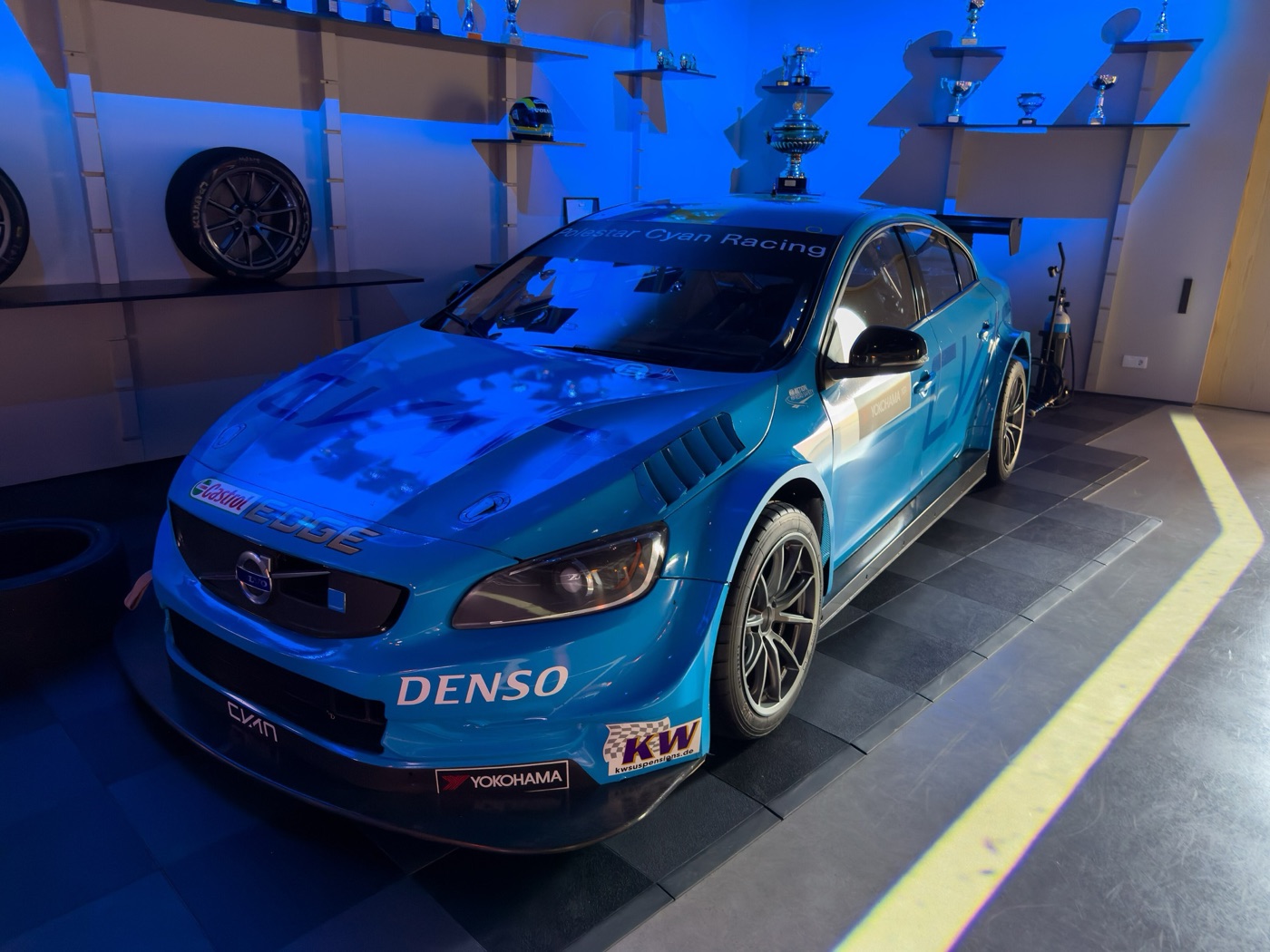
Polestar raced the S60, not the road cars. The 2.0 car shared its engine and base chassis with the S60 Polestar TC1, with which Polestar Cyan Racing entered the FIA World Touring Car Championship (WTCC) in 2016. In 2017 Thed Björk won the drivers' title in an S60 and Volvo Polestar the manufacturers' title, as the FIA's 2017 prize-giving report records. Björk said that becoming "the first ever Swedish racing world champion" was something he had dreamt about since he started racing.
The V60 Polestar as WTCC safety car
From the season opener at Paul Ricard in April 2016, a V60 Polestar with a roll cage and rescue equipment was the WTCC's official safety car, under a long-term agreement announced in Volvo's March 2016 release.
The S60 Polestar Nürburgring lap
In May 2016, in a private test after the WTCC round at the Nürburgring, Cyan Racing lapped the Nordschleife in 7 min 51.11 sec in an S60 Polestar road car. At the time that was a record for a four-door road car. Polestar revealed it a year later, in the build-up to the 2017 WTCC round at the circuit. Autocar noted that the time had not been verified independently. By then the Honda Civic Type R and Alfa Romeo Giulia Quadrifoglio had beaten it. evo reported that the car ran on Michelin Pilot Sport Cup 2 tyres with a roll cage.
How many Volvo V60 Polestars were made?
Volvo announced production volumes, not a final count: 750 S60 and V60 Polestars for 2014, 750 for 2015, up to 1,500 a year from 2016 and 1,500 numbered cars for model year 2018. Every figure covers both the saloon and the estate. Of the first 750, 125 V60s went to the UK, the largest share of any country.
| Run | Engine | Announced volume | Countries | UK | USA |
|---|---|---|---|---|---|
| Australia, 2013 | 3.0 six | 50 S60s | 1 | None | None |
| 2014 (model year 2015) | 3.0 six | 750 | 7 announced, 8 delivered | 125 V60s allocated | 120 (80 V60, 40 S60) |
| 2015 (model year 2016) | 3.0 six | 750 | 13 | V60 only | 265 (Volvo); 274 (Car and Driver) |
| 2016 on (model year 2017) | 2.0 four | Up to 1,500 a year (Volvo Canada: over 1,000) | 47 | V60 only | Not published |
| Model year 2018 | 2.0 four | 1,500, numbered | 47 | V60 only | Not published |
How many V60 Polestars are left in the UK?
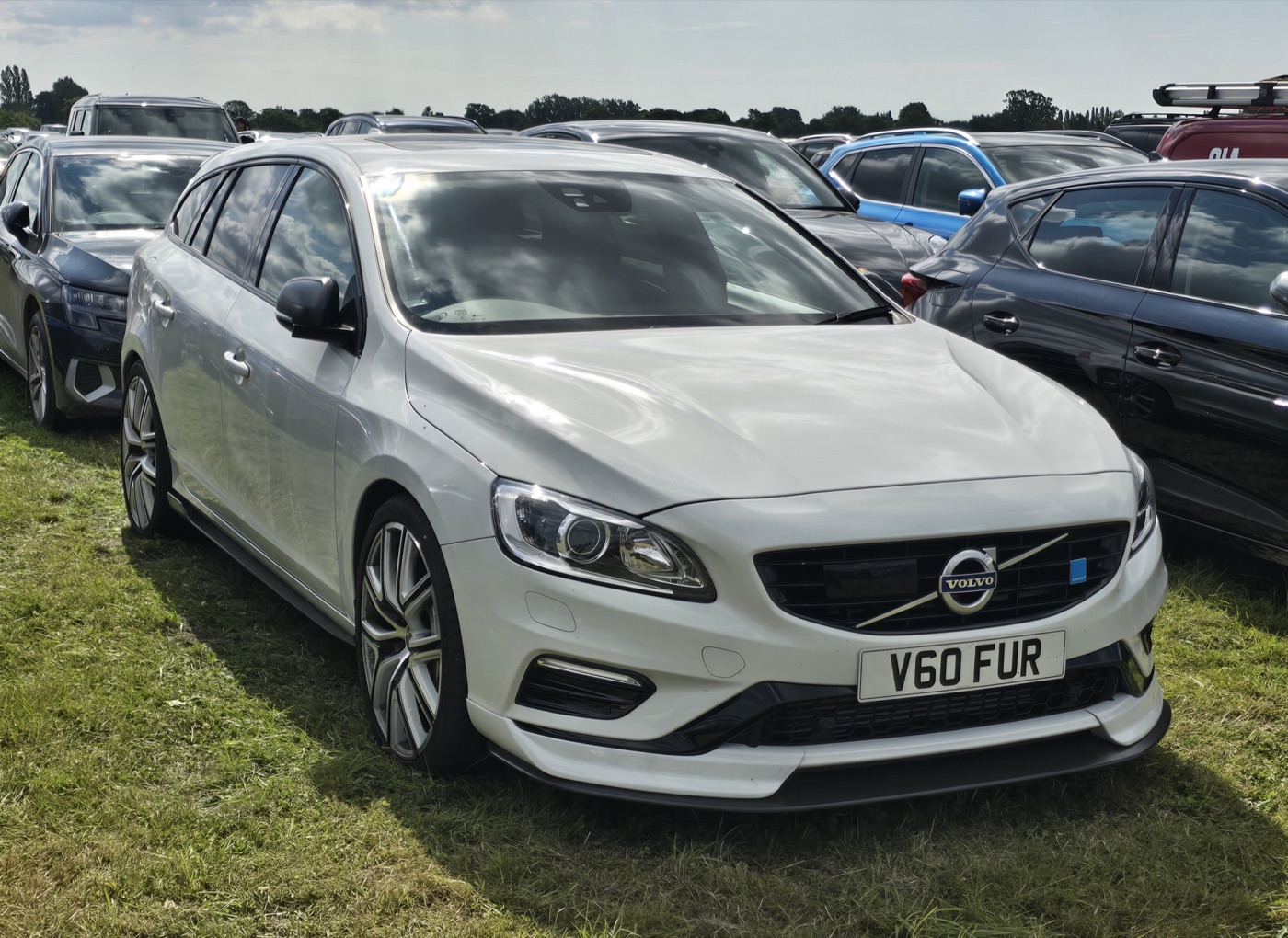
DVLA licensing data lists 147 of the 3.0 cars on UK records in the first quarter of 2026: 135 taxed and 12 declared off the road (SORN). The figures come from How Rare Is My Car's analysis of DVLA statistics, updated 15 August 2026, where the 3.0 is recorded as the "V60 Polestar AWD Auto". The same data shows 151 first registered in the UK: 32 in 2014, 84 in 2015 and 35 in 2016. UK supply therefore went past the first run's allocation of 125. The UK total peaked at 149 at the end of 2016 and stops rising there. The 2.0 cars are recorded separately, as the "V60 Polestar T6 AWD Auto": 87 were first registered in the UK from 2016 to 2018, and 86 were on record in 2026, 85 of them taxed. PistonHeads' June 2022 guide estimated fewer than 80 3.0 cars on UK roads in 2021; the DVLA total for the end of 2021 was 134.
Which markets got the S60 and V60 Polestar?
The 3.0 car went to Australia, Canada, Japan, the Netherlands, Sweden, Switzerland, the UK and the USA in 2014, and to Bahrain, Kuwait, Lebanon, Oman, Qatar and the UAE from 2015. Volvo's 2016 list of 47 markets for the 2.0 car added most of Europe, China, India, Mexico, New Zealand, South Africa, South Korea, Argentina, Chile, Colombia and Peru.
Prices new and values today
The V60 Polestar cost £49,775 on the road in the UK in 2014, with no options except the colour; evo gave the 2.0 car's price as £49,665. The 2014 SkiddMark first drive quoted £49,995 and called it about £10,000 less than a similarly specified Audi RS 4. In Australia the 2013 S60 Polestar was A$109,950 before on-road costs.
A used 3.0 V60 Polestar was advertised in the UK for between £13,990 and £24,500 in 2026. PistonHeads adverts read in October 2026 included a 2015 V60 3.0 with 111,000 miles at £13,990, last serviced in June 2026. Another was a 2015 Rebel Blue V60 3.0, with one owner from new and 73,077 miles, at £24,500. Both are asking prices, and both adverts had closed by 28 October 2026. A 2015 S60 Polestar imported from Japan, with 66,000 miles, was advertised at £18,500, so saloons now reach the UK as private imports.
Prices had fallen before that. In June 2022 PistonHeads put the entry price at about £23,000 for a 3.0 and £27,500 for a 2.0, down from £25,000 for a 3.0 a year earlier. It also wrote that discounts had brought new cars below £45,000. In the US, a 2015 V60 Polestar with 71,000 miles sold on Bring a Trailer for $26,500 on 19 July 2024.
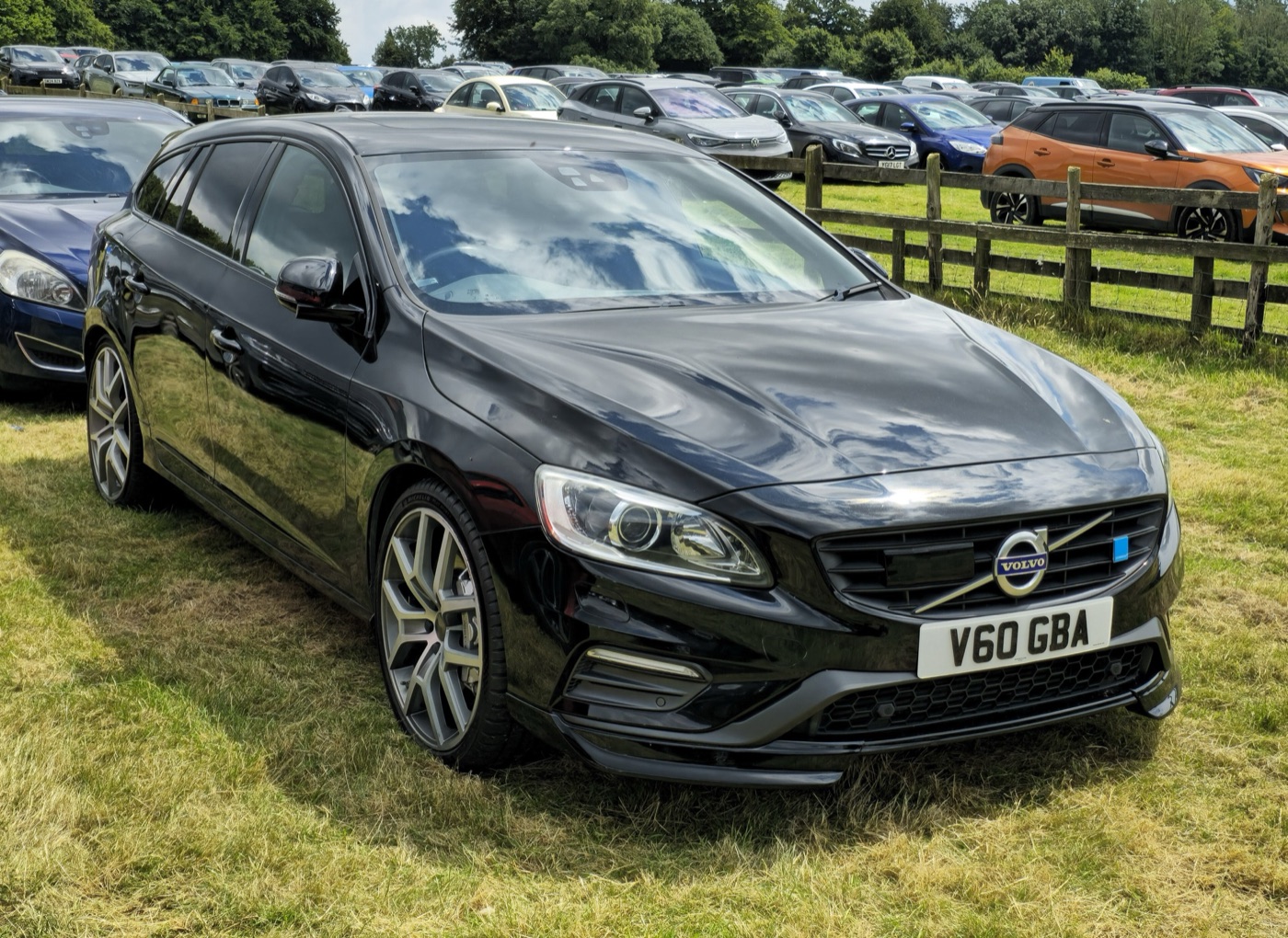
Owning a V60 Polestar
The V60 Polestar kept the standard V60's "original service program", as Volvo's 2013 debut release put it. The running costs that reviewers and owners report are fuel, tax, insurance and the Polestar-specific dampers, brakes and tyres.
Running costs
The 3.0 car's official 27.7 mpg was optimistic, evo wrote, and PistonHeads quoted one city-based owner averaging 17 to 18 mpg over 18,000 miles. The 2.0's official figure is 34.9 mpg. evo put the 2.0 V60 in insurance group 43 and gave its annual road tax as £270 (band J) against £295 (band K) for the six. PistonHeads found that the Polestars tended to be excluded from Volvo's fixed-price servicing offers.
Known faults and recalls
PistonHeads' 2022 guide listed fuel hoses that degraded on some V60s built between April 2015 and March 2016. It also listed a recall for air left in the cooling system on V60s built from 2014 to 2017. A second recall covered the strength of the seat belt's steel fixing cable on V60s made between June 2010 and August 2018. For 2.0 cars it named faulty airbags and a connectivity module, fixed by software, on V60s built between December 2017 and October 2018. Owners have also reported failing speakers, freezing infotainment screens, unreliable reversing cameras and parking sensors, loose trim and failed air-conditioning condensers, the guide says. The nubuck inner rim of the steering wheel wears, and the electronic parking brake could be unreliable on slopes.
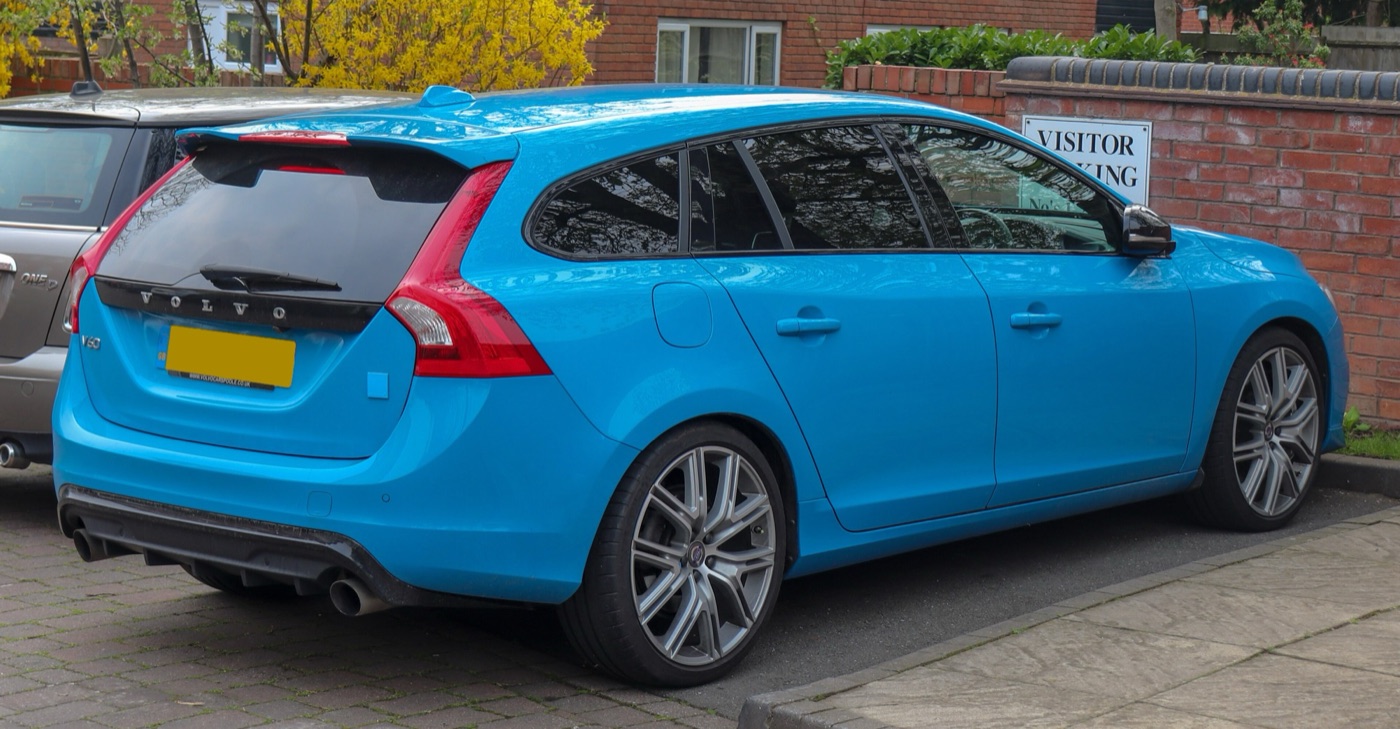
Dampers, brakes and practicality
The Öhlins dampers have no electronic adjustment, so changing the setting at the rear means a ramp or a dealer, as the 2014 SkiddMark report found. Boot space is 430 litres with the rear seats up, evo and PistonHeads note; evo found that it did not match its main rivals. The same evo review found the 2.0's ride "always on the firm side", with very heavy steering. PistonHeads called the 3.0's ride on British roads "quite jiggly at lower speeds", blaming the 35-profile tyres as well as the dampers.
What to check when buying a V60 Polestar
Start with the recall work listed above for the car's build date. On 3.0 cars built from April 2015 to March 2016, a Volvo dealer should be able to say whether the car was affected by the fuel hose problem, PistonHeads advises. Ask for a full service history, since PistonHeads found the Polestars tended to fall outside Volvo's fixed-price servicing offers. Look at the nubuck on the inner rim of the steering wheel and for kerbed 20-inch wheels, which evo thought "painfully prone to kerbing". Check whether the engine has been tuned. PistonHeads wrote in 2022 that 400 hp or more was "easily achievable with a remap" on the 3.0, and a "Stage 2" 2015 V60 offered at a PistonHeads auction had 414 bhp.
Rivals
The V60 Polestar's rivals were fast four-wheel-drive and rear-drive estates from Audi, BMW and Mercedes. City AM wrote in 2014 that it was not intended to rival BMW's M3 or Mercedes' C63 AMG. evo set the 2.0 car against the Mercedes-AMG C43 Estate at £45,660, the Audi S4 Avant at £45,400 and the BMW 340i M Sport Touring at £41,635. The 2014 SkiddMark first drive compared the 3.0 car with the 444 bhp Audi RS 4 Avant: 500 Nm against 430 Nm, and 1,834 kg against 1,795 kg. PistonHeads' 2022 guide reported one UK test in which the 3.0 V60 lapped faster than an Alpina D3 Bi-Turbo estate.
Reception
Reviewers praised the brakes, grip, traction and the six's exhaust, and criticised the price, the firm ride and the six-speed gearbox. Hans Bååth, Polestar's managing director, described the car to PistonHeads in April 2014 as "boring but intelligent". Chris Rees found the exhaust note "more like a six-cylinder BMW M3 of yore, with a bit of turbo whoosh on top". CAR praised the 3.0 car's "balance and poise", called it "an exceptional motorway car" and found that the gearbox "can't quite keep up". The 2014 SkiddMark first drive, on the road and on track at Dunsfold, found the low-speed ride "nothing special" and its stability through fast corners "in a whole different league to most cars".
evo wrote that the 2.0 car had "lost some character" with the smaller engine, and gave this verdict: "a neat handler, has great brakes, and looks fantastic, but it's expensive and doesn't have the performance of similarly-priced cars". In December 2016 its engine won a 2017 Wards 10 Best Engines award. The WardsAuto editors cited 184 hp per litre, "a threshold never before seen in our competition", according to Volvo's release on the award.
What replaced the V60 Polestar?
The plug-in hybrid V60 Polestar Engineered replaced it. Volvo announced Polestar Engineered in June 2018 for the T8 Twin Engine versions of the new S60, then the V60 and XC60. It brought Öhlins dual-flow-valve dampers, Brembo monobloc calipers painted gold and an engine calibration that raised the S60 T8 from 400 hp to 415 hp. Polestar itself was split off in 2017 as a separate brand for electric performance cars, PistonHeads records. Volvo had announced the plan that August.
Questions
Is the Volvo V60 Polestar rare?
Yes. Volvo planned 750 S60 and V60 Polestars worldwide for 2014 and again for 2015, and allocated the UK 125 V60s from the first run. DVLA data shows 151 3.0 cars first registered in the UK from 2014 to 2016, and 147 on record in 2026.
Is the V60 Polestar a 3.0 or a 2.0?
Both. Cars built from 2014 to 2016 have a 3.0-litre turbocharged straight six of 350 hp; cars from late 2016 to 2018 have a 2.0-litre four-cylinder engine, turbocharged and supercharged, of 367 hp.
Was the S60 Polestar sold in the UK?
No. Volvo Car UK sold only the V60 Polestar estate, in both the 3.0 and 2.0 versions; the S60 Polestar saloon went to other markets, including Australia, Canada, Japan and the USA.
What engine is in the 2.0 V60 Polestar?
A 1,969 cc Drive-E four-cylinder engine with a turbocharger and a supercharger, new connecting rods and camshafts and a larger air intake, rated at 270 kW (367 hp) and 470 Nm. It won a 2017 Wards 10 Best Engines award.
Can you adjust the Öhlins dampers on a V60 Polestar?
Yes, by hand. Each damper has a knob with 20 settings and leaves the factory on a middle setting; the rear dampers are hard to reach without a ramp.
What colours did the V60 Polestar come in?
Rebel Blue, Black Sapphire Metallic (Onyx Black in the 2016 specification), Bright Silver Metallic and Ice White. Model year 2018 cars added Bursting Blue Metallic.
Is a V60 Polestar four-wheel drive?
Yes. Every S60 and V60 Polestar has four-wheel drive, a Haldex (BorgWarner) system recalibrated by Polestar to send more torque to the rear wheels.
Sources
- Volvo Car UK, "World debut for a new Volvo V60, engineered by Polestar", 26 November 2013: launch markets, UK V60 only, debut figures and quotes.
- Volvo Car UK, "The new Volvo V60 Polestar: overview", May 2014: 750 cars, 125 for the UK, £49,775, colours, equipment.
- Volvo Car UK, "The new Volvo V60 Polestar: technical specifications", May 2014: 3.0 specification and weight.
- Volvo Car UK, "Volvo Cars starts production of the new Volvo V60 Polestar", 24 June 2014: Torslanda production, 750 cars, UK share.
- Volvo Car Group, "Sales of the Volvo S60 and V60 Polestar expand to 13 countries", 23 February 2015: second run of 750, new markets, 3.0 economy and CO2.
- Volvo Car UK, "Volvo Cars buys 100 per cent of Polestar", July 2015: the purchase and the 2015 sales forecast.
- Volvo Cars of North America, "Volvo Cars will bring 265 Polestar vehicles and new colors for US in 2016", 16 July 2015, reprinted by Conceptcarz: US allocation and 0–60 mph times.
- AutoGuide, "2016 Volvo S60, V60 Polestar US allocation revealed", June 2015: US allocations of 120 and 274.
- Volvo Car UK, "New 367 horsepower Volvo V60 Polestar now available", 1 April 2016: 2.0 engine, 47 markets, up to 1,500 a year, specification.
- Volvo Car Canada, "Volvo Car Corporation introduces new Polestar powertrain", 1 April 2016: "over 1000 units globally".
- Volvo Cars Italy, "E' ora disponibile la nuova Volvo S60 e V60 Polestar con motore da 367 CV", 1 April 2016: S60 and V60 performance, weights, spring rates and market list.
- Volvo Car Group, "The Volvo V60 Polestar becomes safest ever WTCC safety car", March 2016.
- Volvo Car UK, "Polestar wins Wards 10 Best Engines award for V60 Polestar", 12 December 2016.
- Volvo Car UK, "The updated Volvo V60 Polestar with carbon fibre aerodynamic enhancements", 28 August 2017: model year 2018 changes, 1,500 numbered cars.
- Volvo Car UK, "Volvo Cars and Polestar launch new Polestar Engineered electrified performance offer", 13 June 2018.
- Volvo Car UK, "Volvo S60 Polestar Concept with 508 hp": concept figures and the Polestar Optimisation outputs.
- Volvo Car UK, "Introducing the world-first production version of the Volvo S60 Polestar", 17 April 2013: the Australian car.
- GoAuto, "Driven: Volvo S60 Polestar blasts in at $109,950", 18 June 2013: 50 cars and the Australian price.
- FIA, "WTCC winners crowned at FIA Prize Giving", December 2017: 2017 drivers' and manufacturers' titles.
- Autocar, "Volvo S60 Polestar claims 'secret' Nurburgring record", May 2017: lap time, test date, verification.
- evo, "Volvo announces secret S60 Polestar Nurburgring lap time", May 2017: tyres and roll cage.
- Bring a Trailer, 2015 Volvo V60 Polestar, lot 155,013, 19 July 2024: sale price, US import count.
- How Rare Is My Car, "How many Volvo V60 Polestar AWD Auto are left?", DVLA statistics updated 15 August 2026, read 28 October 2026: UK first registrations and survivors of the 3.0, and the "V60 Polestar T6 AWD Auto" page for the 2.0.
- PistonHeads classifieds, 2015 V60 Polestar 3.0, £13,990, 2015 V60 Polestar 3.0, £24,500, 2015 S60 Polestar import, £18,500 and 2015 V60 Polestar Stage 2 auction, read 28 October 2026: asking prices and the tuned car.
- evo, "Volvo V60 Polestar review (2014–2016)": 2.0 price, weight, economy, tax, insurance, rivals and verdict.
- PistonHeads, Tony Middlehurst, "Volvo V60 Polestar: PH used buying guide", 26 June 2022: UK registrations, used prices, faults and recalls.
- PistonHeads, Chris Rees, "Volvo V60 Polestar review", 17 April 2014: Bååth quote, suspension details, Australian count.
- CAR magazine, "Volvo V60 Polestar (2014) review": driving impressions.
- SkiddMark, "First Drive Review: Volvo V60 Polestar", 19 May 2014: Polestar's staff, concept engine, boost pressure, exhaust valve, brake pads, damper settings, launch control, UK price, Dunsfold drive.