Walter Röhrl: two world rally titles, Audi, Pikes Peak and Porsche
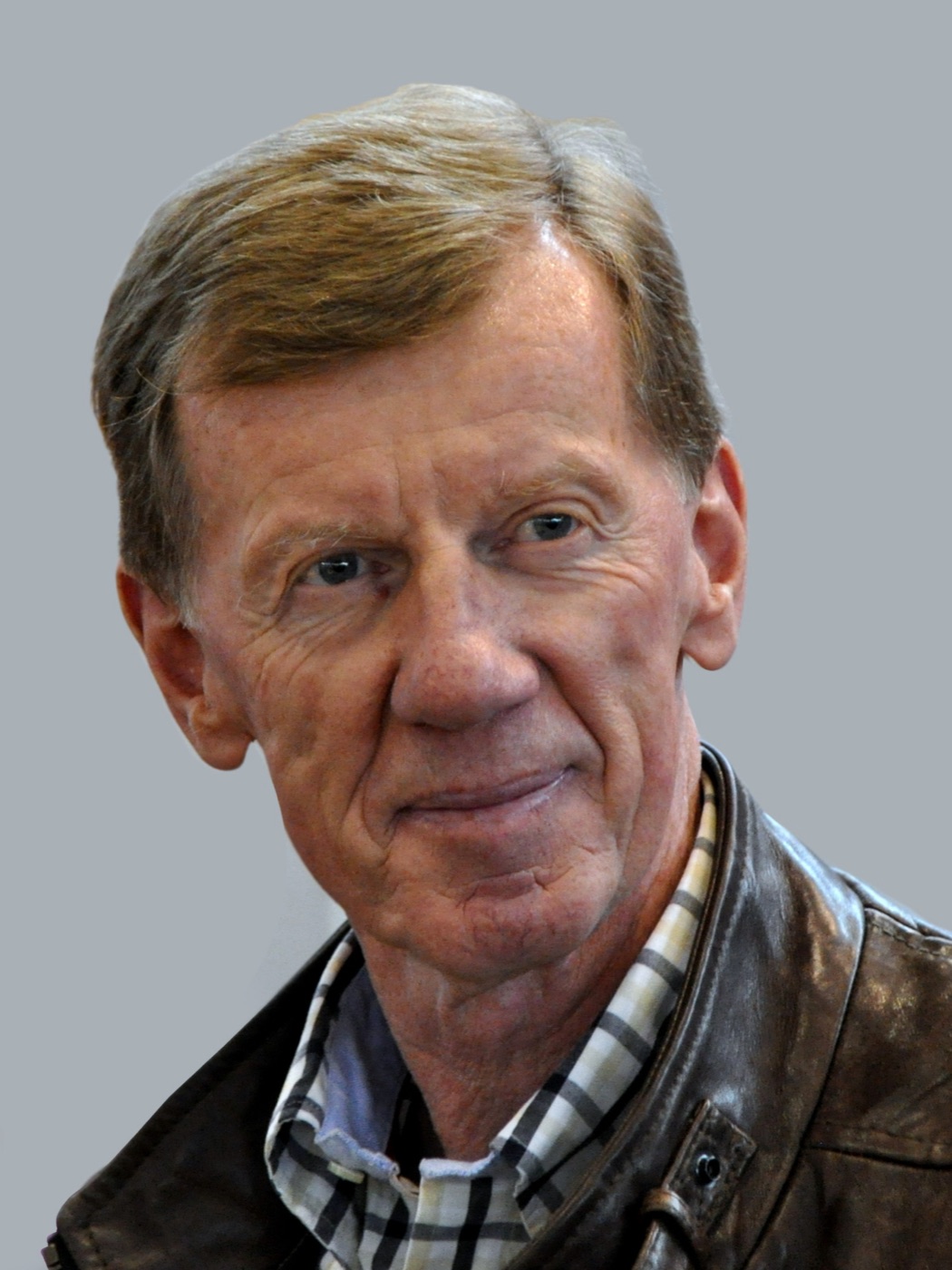
Walter Röhrl (born 7 March 1947 in Regensburg, Bavaria) is the German rally driver who won the World Rally Championship in 1980 with Fiat and in 1982 with Opel, and the Monte Carlo Rally four times in four different makes of car. He won 14 of his 75 world championship rallies between 1973 and 1987, the last of them for Audi, and in 1987 drove an Audi Sport Quattro S1 to a record 10 minutes 47.85 seconds at the Pikes Peak hill climb in Colorado. Since 1993 he has been a development driver and brand ambassador for Porsche.
Rally Finland’s announcement of his induction into the Rally Hall of Fame in 2011 called him rallying’s first multiple world champion and the most successful German rally driver.
Early life in Regensburg
Röhrl grew up in Regensburg, the son of a stonemason. He left school for a job in the administration of the Catholic diocese, where, according to the juwra.com world rally database, he had worked for eight years by 1968 while also training as a ski instructor. An elder brother had been killed in a road accident a couple of years before, and juwra records that Röhrl started rallying in secret from his parents.
He is 1.96 metres tall, which gave him the press nickname “der Lange” (the tall one), and lives in Sankt Englmar in the Bavarian Forest, according to Porsche’s profile of its brand ambassador. The first car he owned was a 75 PS Porsche 356 B coupé, which he bought without an engine.
First rallies and the Ford Capri
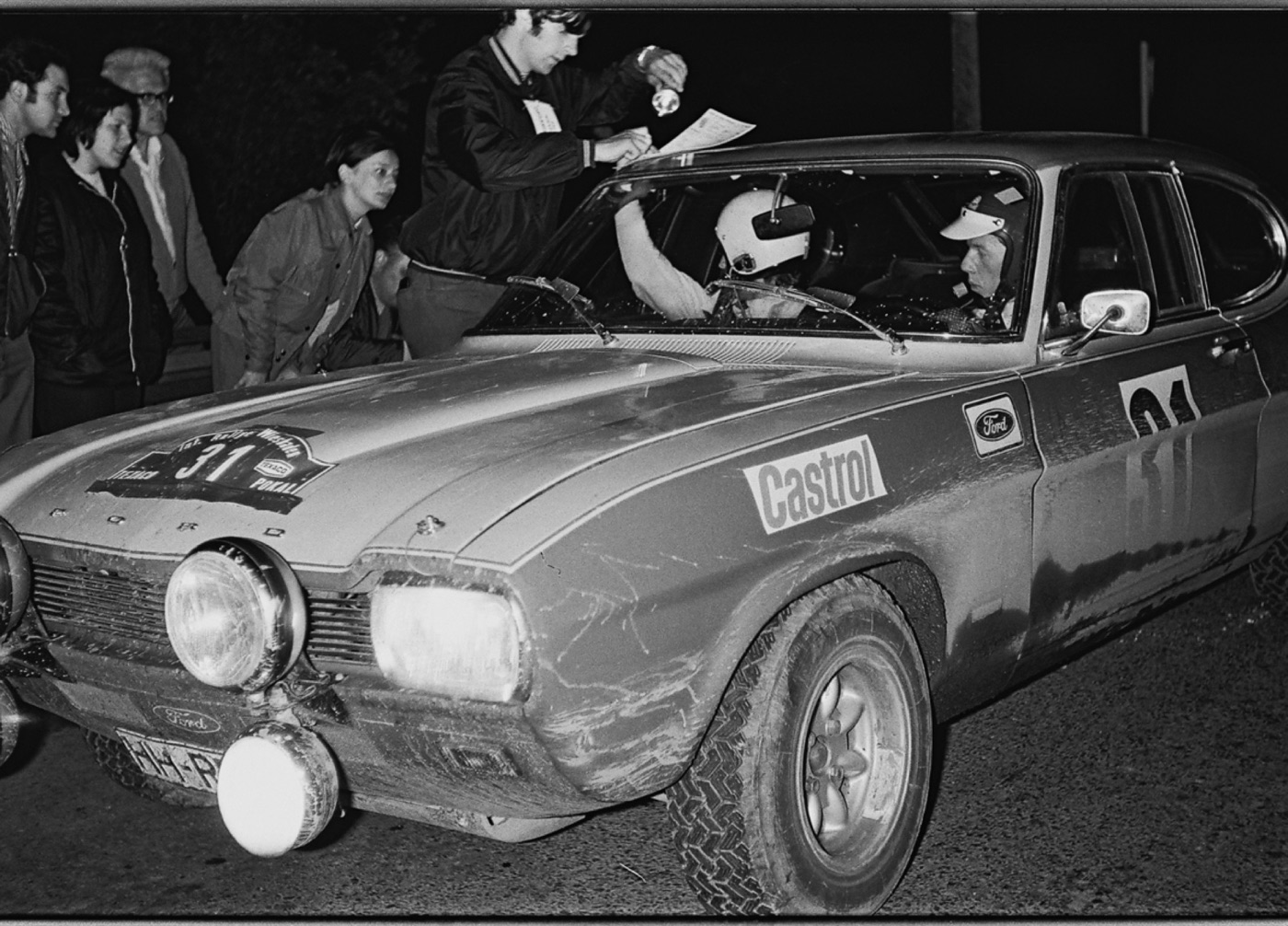
His first rally was the 1968 Rally Bavaria, in a Fiat 850 (Porsche’s career table). After a handful of private outings he was taken on by Ford Germany for national championship events in 1971, and in a Group 1 and Group 2 Ford Capri he won two rallies outright and finished on the podium three more times (juwra). One of the wins was the 1971 Rallye Wiesbaden with Herbert Marecek beside him.
Opel and the 1974 European championship
Röhrl became an Opel works driver in 1973, starting his first world championship rally on that year’s Monte Carlo in an Opel Commodore and finishing 45th (juwra). With Jochen Berger as co-driver he won the 1974 European Rally Championship in an Opel Ascona and took his first world championship win on the 1975 Acropolis Rally, also in an Ascona.
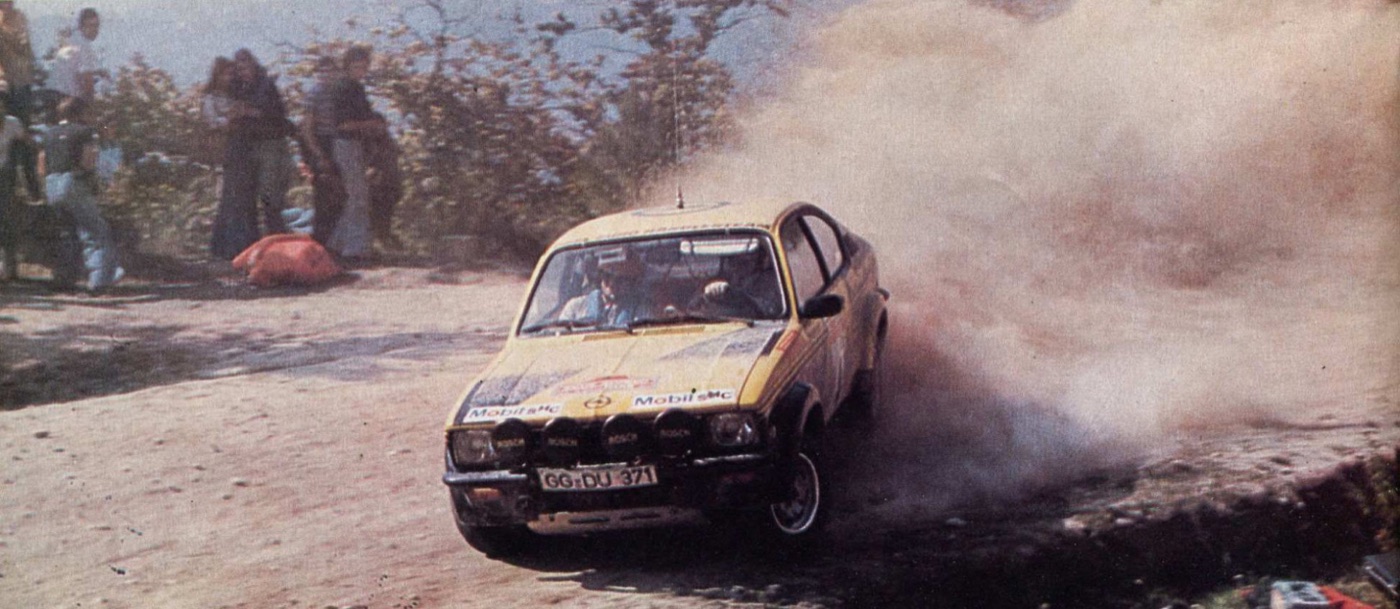
The Opel Kadett GT/E that followed was, he told Motor Sport in August 1999, “the worst car I ever drove”. “We never made the car reliable,” he said. With the 16-valve engine fitted, the team had to go back to the old crossflow engine to look after the transmission, which left “maybe 160–170bhp”, against the 270bhp of the Lancia Stratos. Of his 15 world championship starts in Opels from 1975 to 1977, juwra lists two finishes: the 1975 Acropolis win and fourth on the 1976 Monte Carlo. He also won the 1976 24 Hours of Ypres, a European championship round, in a Kadett.
World champion with Fiat in 1980
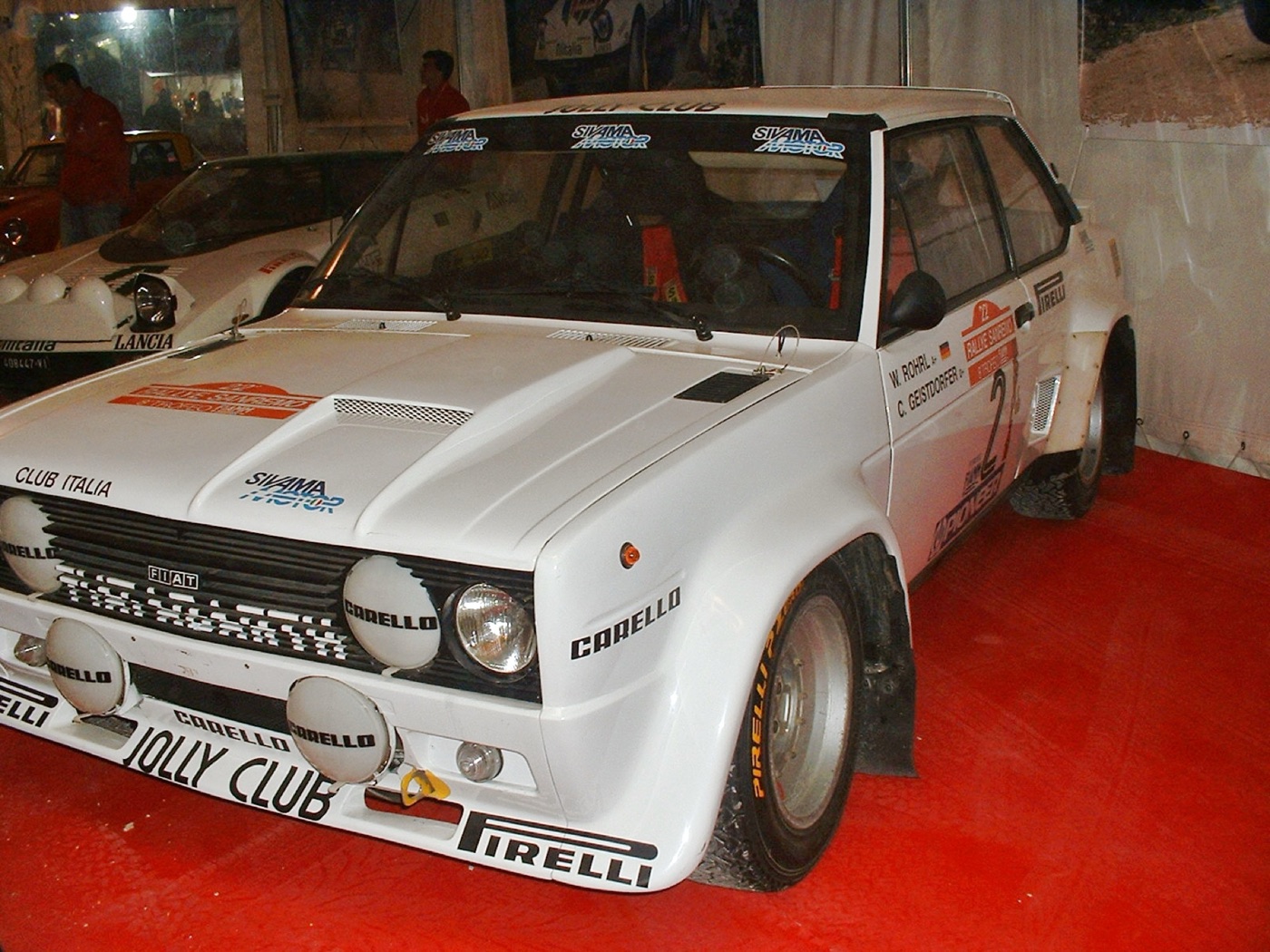
Röhrl won his first world title in his third full season with Fiat, in the Fiat 131 Abarth with Christian Geistdörfer, who went on to read the notes for him on 53 world championship rallies. John Davenport, in Motor Sport’s December 2002 profile, dates his first outing in a 131 to the 1977 San Martino di Castrozza Rally; his first world championship start in one was the 1977 Critérium du Québec, where the engine failed (juwra). In 1978 he won the Acropolis and the Critérium du Québec.
In 1980 he won the Monte Carlo, Portugal, Argentina and San Remo rallies and was second in New Zealand and Corsica, finishing on the podium on six of his seven starts that year (juwra). The drivers’ championship had begun only in 1979, so he was the second driver to hold it (Davenport).
The Mercedes deal and the Porsche year of 1981
For 1981 Röhrl signed a five-year contract with Mercedes-Benz, which planned to rally a 500SL and, from 1983, a mid-engined four-wheel-drive car with “maybe 600hp”, as he described it to Davenport. Mercedes cancelled the programme before the season began. He had turned down Audi to go to Mercedes, and Audi’s sporting manager Walter Treser criticised him in the press. Answering Motor Sport’s readers in September 2005, he said: “when I went back to the World Championship in 1982 my principal motivation was to beat the Audis.”
The Porsche 924 GTS and Le Mans
With no works rally drive left, he joined Porsche for a season in the German championship in a turbocharged Porsche 924 Carrera GTS, prepared by Konrad Schmidt’s team. He won four of the five German rallies he started, but took out an Austrian licence so as not to take points from Porsche’s main contender, Manfred Hero (Davenport). The same year he shared the Porsche System 944 LM with Jürgen Barth at the Le Mans 24 Hours and finished seventh overall and first in the GTP over 3.0 litres class, according to the racingsportscars.com results for the 1981 race, and won the Silverstone Six Hours with Harald Grohs and Dieter Schornstein in a private Porsche 935 (Davenport).
Walter Röhrl’s Porsche 911 SC on the 1981 San Remo Rally
Röhrl’s only world championship start of 1981 was the San Remo Rally in a Group 4 Porsche 911 SC prepared at Porsche under Roland Kussmaul, and it ended in retirement while he was second. He led for eight stages and set fastest time on every tarmac stage, then ran two minutes or so behind Michèle Mouton’s Audi Quattro on the gravel until the transmission broke on the penultimate loose stage (Davenport). juwra lists the cause as the gearbox, Auto Motor und Sport as a broken driveshaft.
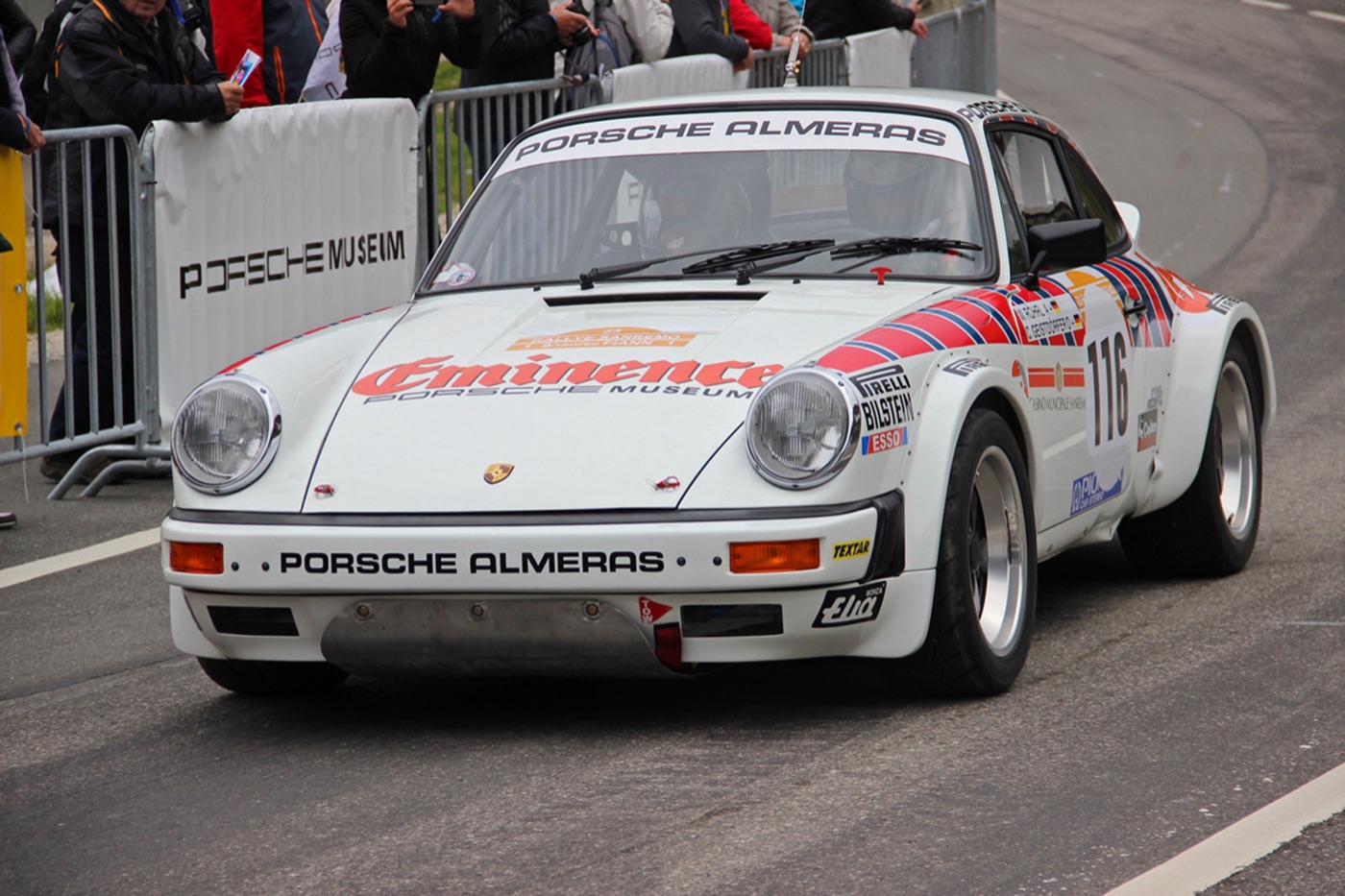
“It was clear that when we came back to the asphalt I would easily have gone ahead,” he told Davenport. “We had fantastic Pirellis, and the engine gave 286bhp, with power from 2000 to 8000rpm.” Speaking to Porsche’s newsroom at the 2016 Rossfeld hill climb, he called it “the best rally Porsche I have ever driven”.
The car was modelled on a privately built Group 4 911 SC that Porsche engineer Dieter Röscheisen had rallied in Germany in 1980 with sponsorship from the roll-cage maker Heigo, according to the same Auto Motor und Sport article. The San Remo car itself is in Porsche’s company collection.
Second world title with Opel in 1982
Röhrl won the 1982 drivers’ title for the Rothmans Opel team in the rear-wheel-drive Opel Ascona 400, against Michèle Mouton in the four-wheel-drive Audi Quattro. He won the Monte Carlo Rally, was second on the Safari, Acropolis and Brazil rallies and third in Sweden, New Zealand and San Remo, then settled the title by winning the Ivory Coast Rally, where whichever of the two won would be champion (Davenport). Mouton crashed out of that event (juwra).
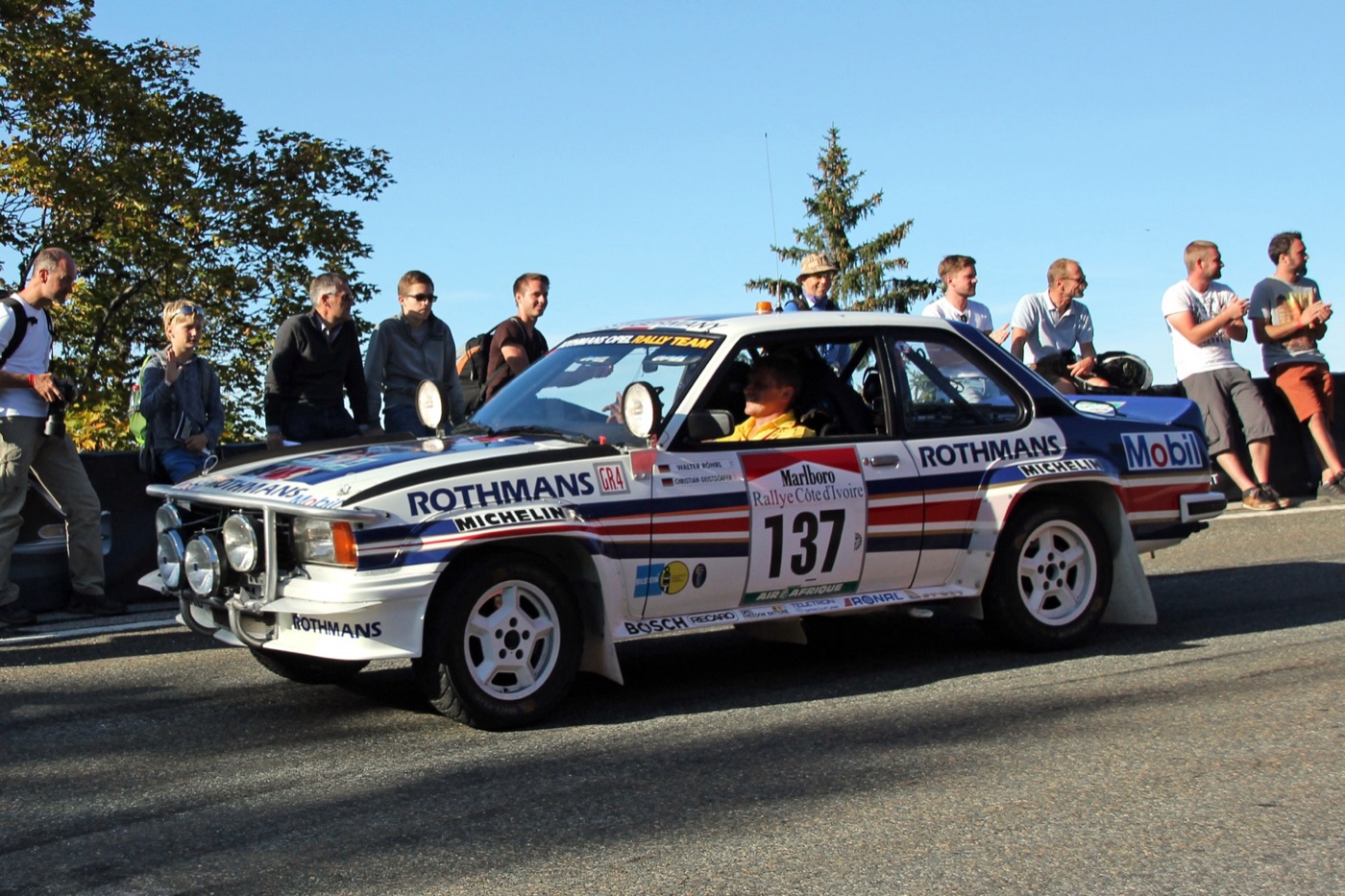
A remark he made that season, that “a monkey in a Quattro” could climb a hairpin gravel road faster than his Opel, was reported as an insult to Mouton. In 2005 he told Motor Sport that he had meant the car’s traction: “She deserved her victories: it was only my good luck that I beat her to the title.”
Why did Opel drop Walter Röhrl?
Opel’s team manager Tony Fall dropped Röhrl before the 1982 RAC Rally, the last round, after he refused to attend a Rothmans promotional dinner in York on the eve of the event. Röhrl wanted a night’s sleep; Fall sent for Jochi Kleint to replace him, and Röhrl had no RAC drive and no contract for 1983 (Davenport). The quarrel had begun in January, when Röhrl, a non-smoker, turned down three days of filming for the sponsor in the week before the Monte Carlo Rally and went cross-country skiing instead.
The Lancia 037 in 1983
In 1983 Röhrl drove the rear-wheel-drive Lancia Rally 037 for the Martini Lancia team, won the Monte Carlo, Acropolis and New Zealand rallies, and finished second in the championship to Hannu Mikkola. He started only six rounds and was on the podium in all six (juwra). He refused to enter another: “In 1983 I was lying second in the World Championship by three points, from six rallies. Everybody said you must do one rally more. But I said no, I don’t want to be champion,” he told Motor Sport in June 2010.
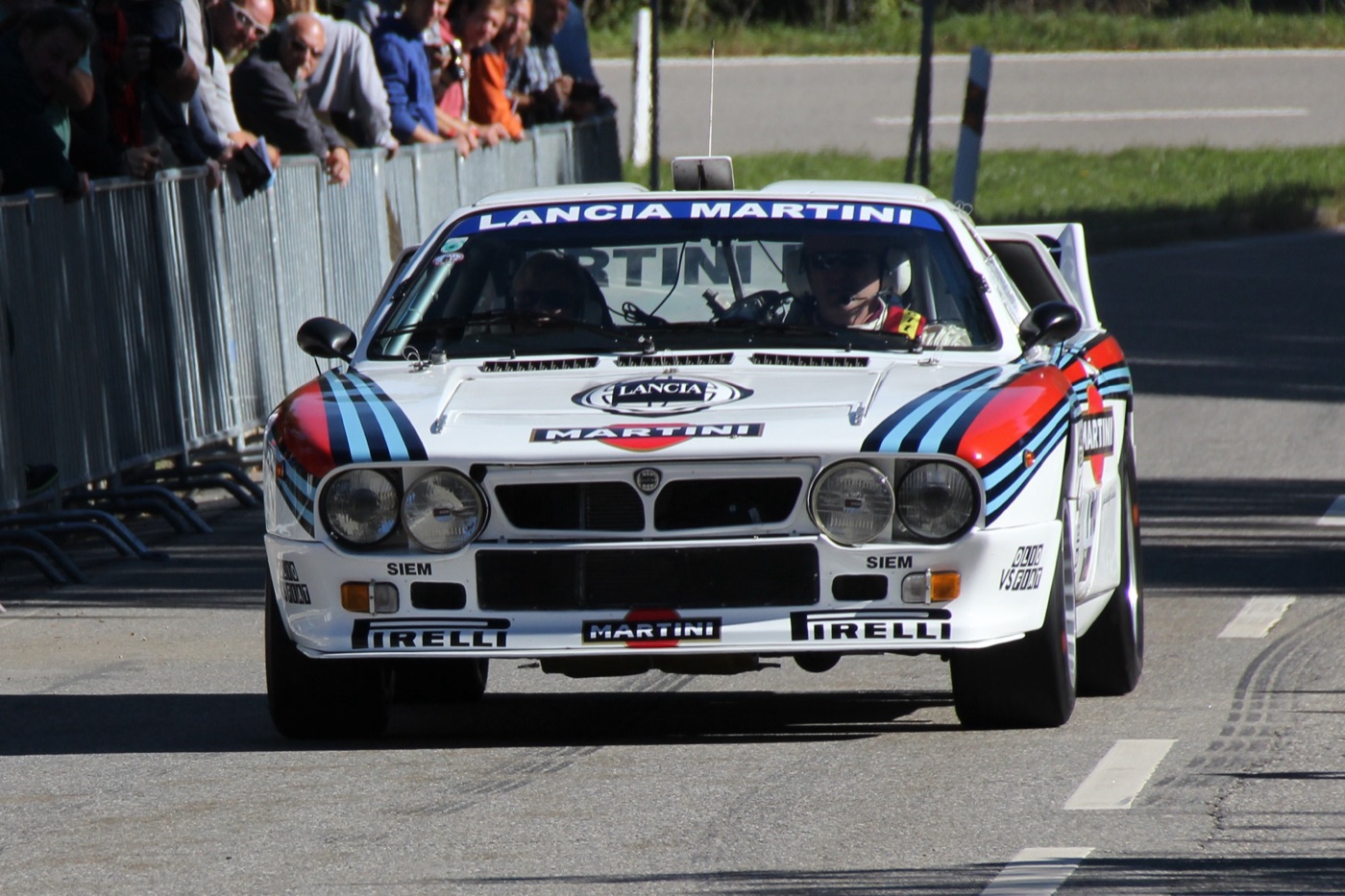
From a driver’s point of view the 037 was his favourite: “It was a car made for my style of driving. I don’t like to steer. I believe the only secret in driving is to steer as little as possible” (Motor Sport, 2005). Lancia’s team manager Cesare Fiorio, asked by Motor Sport in 2000 to name the greatest rally driver, chose Röhrl for “his versatility plus his skill in endurance racing”.
Walter Röhrl’s Audi years
Röhrl joined Audi for 1984 and stayed until his last world championship rally, the 1987 Acropolis, winning two rounds for the team: the 1984 Monte Carlo and the 1985 Sanremo. He drove Audis on 19 of his 75 starts (juwra).
Monte Carlo 1984 in the Quattro A2
He won the 1984 Monte Carlo on his first rally for Audi, in a Quattro A2, beating his team-mate Stig Blomqvist by more than a minute. Blomqvist was “one of the main reasons I signed the contract,” he told Motor Sport in 2010: “Stig was the only one I’d never competed against in the same car.” He had to teach himself left-foot braking to cure the Quattro’s understeer, and found he was losing time on the first two stages because the team was changing the other cars’ tyres after he had left service.
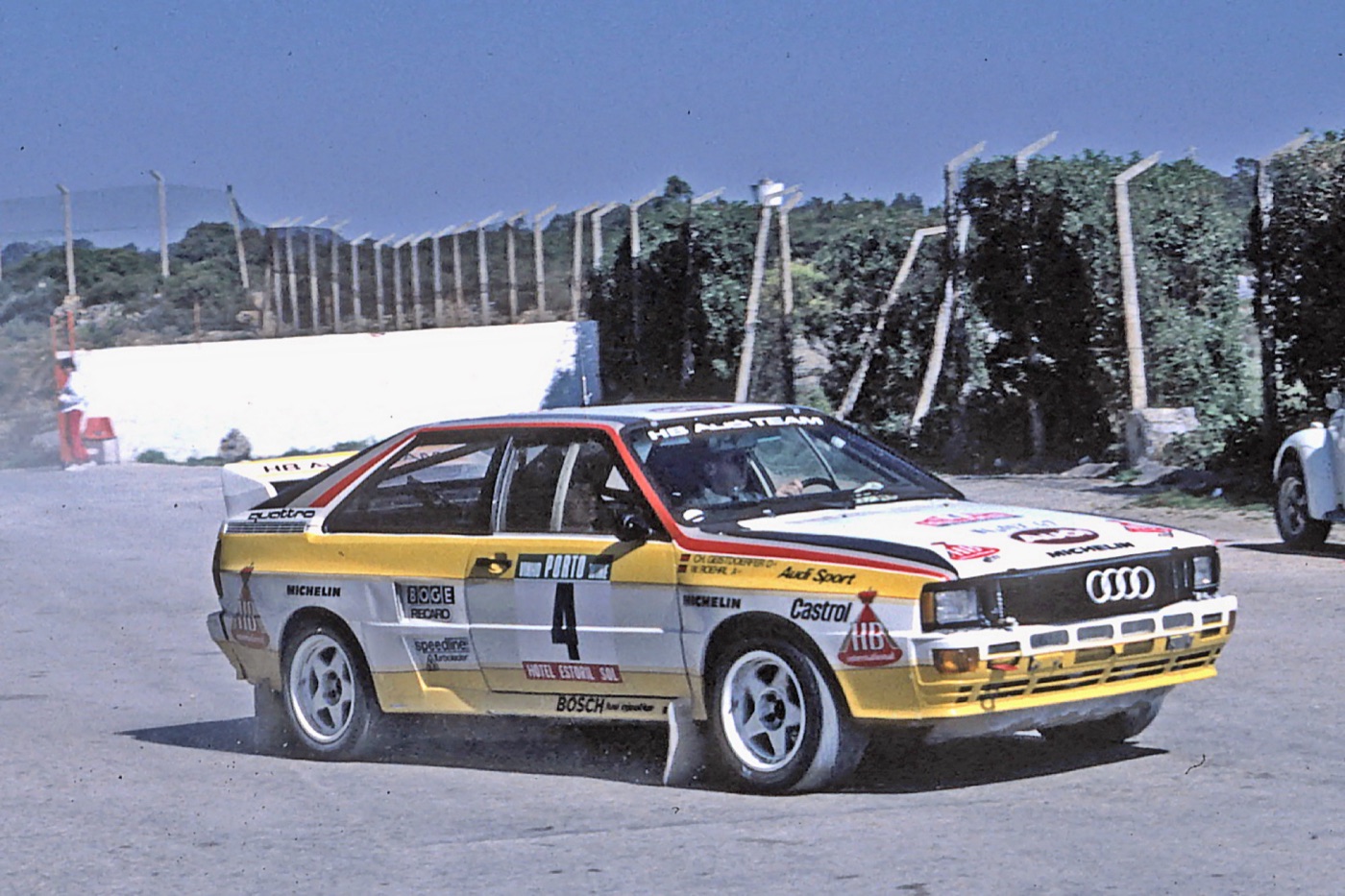
On that 1984 Rally Portugal, after a puncture had cost him his own chance, he offered to stop on a stage so that Mikkola could run in clean air in his fight with Markku Alén’s Lancia 037. Mikkola won by 27 seconds (juwra).
Sport Quattro S1 and the 1985 Sanremo win
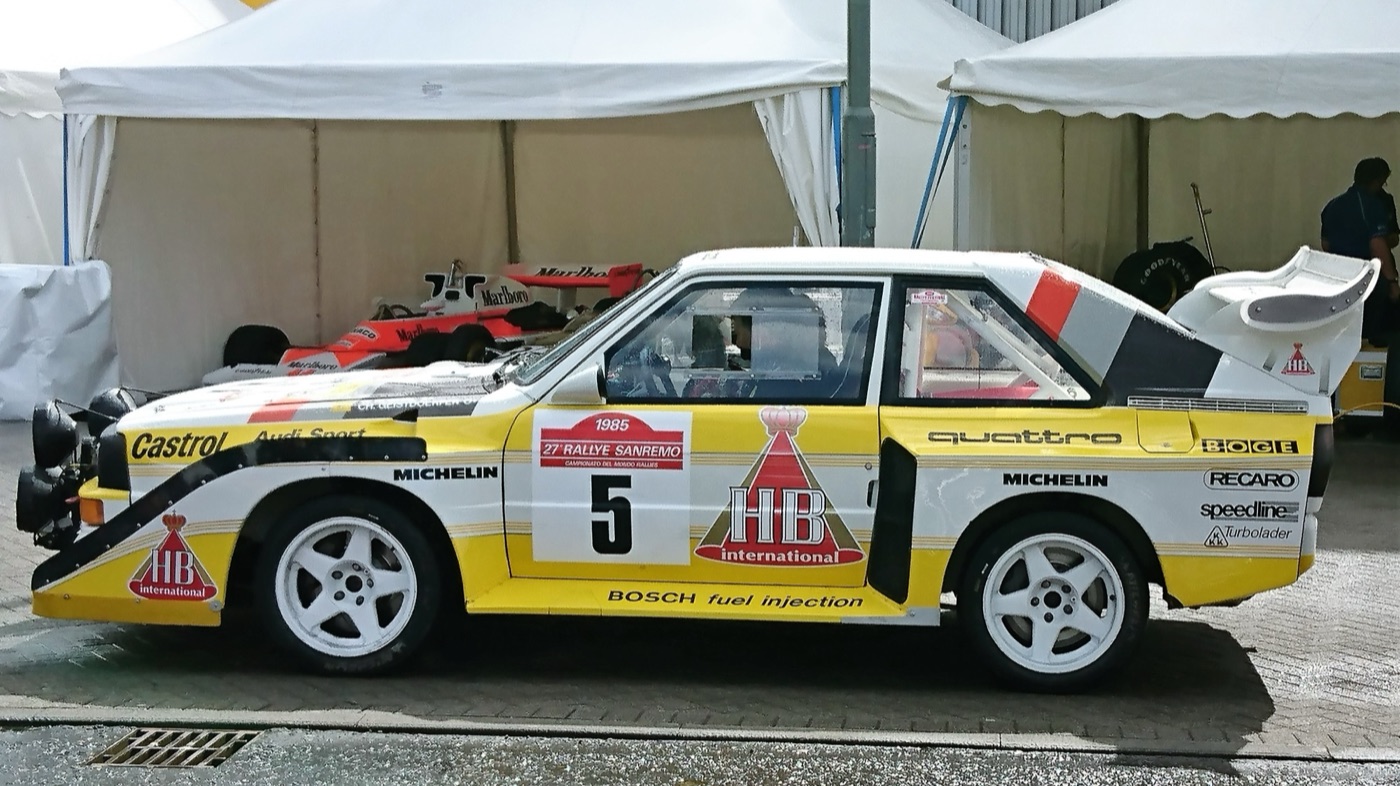
The short-wheelbase Audi Sport Quattro of 1984 was “massively nervous” and he called it dangerous after crashing it on that year’s San Remo Rally (Motor Sport, 1999). The 1985 S1 Evolution 2, with weight moved rearwards and new wings, was “much better”, and he won the 1985 Sanremo Rally in it by 6 minutes 29 seconds, according to Audi’s 2020 press release of quattro facts and figures. Timo Salonen’s Peugeot 205 T16 was second (Motor Sport, 1999). It was the only world championship win for the S1 Evolution 2 (Motor Sport, 1999). On the RAC Rally, the last round of 1985, his car had a pneumatically shifted double-clutch gearbox, an early forerunner of Audi’s S tronic (Audi).
Portugal 1986 and the end of Group B
Röhrl’s last Group B season lasted two rallies: fourth on the Monte Carlo, then withdrawal from the 1986 Rally Portugal after Joaquim Santos’s Ford RS200 went off the road into the crowd (juwra; Motor Sport, April 1986). He started no more world championship rallies that year, and the FIA banned Group B at the end of 1986. In the Group A Audi 200 quattro in 1987 he was third on the Monte Carlo and second on the Safari before his career in the world championship ended with engine failure on the Acropolis.
Walter Röhrl at Pikes Peak in 1987
Röhrl won the 1987 Pikes Peak International Hill Climb in an Audi Sport Quattro S1 in 10 minutes 47.85 seconds, a course record and the first run under 11 minutes. The previous record, 11:09.22, had been set by Bobby Unser in an Audi the year before, and Mouton had won in 1985 in 11:25.39, according to the Pikes Peak hill climb’s list of winners by year.
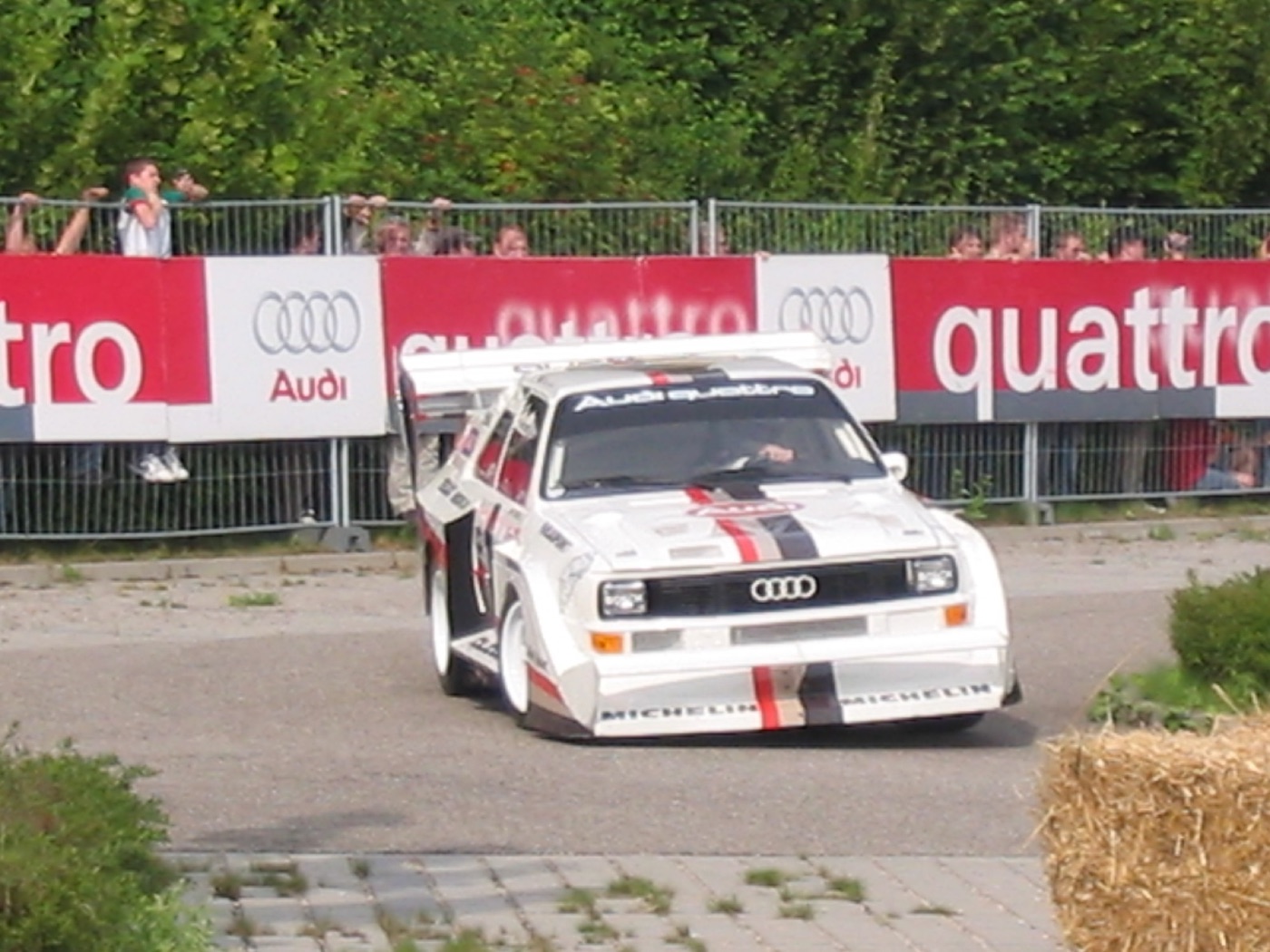
The course was just under 20 kilometres with 156 bends and 1,439 metres of climb, according to Audi’s photo archive, which gives the car’s 2.1-litre turbocharged five-cylinder 440 kW (598 hp) at 8,000rpm. At the fastest point Röhrl was timed at 196 km/h (Audi, 2020). “It was a new world in every way for me,” he told Motor Sport in 2005. “What I did was to drive it with my wife Monika and we made pace notes, which I then memorised. Not the road, you understand, the notes. Ari Vatanen had seen the road maybe 50 times and still could not be sure of the corners.” Vatanen took the record in 1988 by 0.63 seconds, in 10:47.22 in a Peugeot 405 Turbo (PPIHC).
Circuit racing: Trans-Am, IMSA and the DTM
After rallying, Röhrl raced Audis in America and Germany from 1988 to 1992. In the 1988 Trans-Am series the Audi 200 quattro won eight races, two of them Röhrl’s, while Hurley Haywood took the drivers’ title and Audi the makes’ title, according to Audi’s motorsport history. He called the 200 “the nicest race car I drove… powerful with 630bhp” and recalled lapping the whole field except Scott Pruett at Niagara Falls (Motor Sport, 2005).
In 1989 Audi moved to the IMSA GTO class with a tube-framed Audi 90 of up to 720 hp, and in 1990 to the DTM with the four-wheel-drive Audi V8 quattro. Röhrl drove a V8 alongside Hans-Joachim Stuck in 1990 and was part of the Audi 1-2-3, with Stuck and Frank Jelinski, at the season finale that gave Stuck the title (Audi). He returned to Le Mans in 1993 in a Porsche 911 Turbo S LM with Stuck and Haywood; it retired after 79 laps (racingsportscars.com, 1993).
Walter Röhrl’s WRC results
Röhrl started 75 World Rally Championship events from 1973 to 1987 and won 14, with 31 podiums, 33 retirements and 439 stage wins (juwra). Thirteen of his starts were on the Monte Carlo Rally, more than any other event. The 75 starts were in cars from five marques, Opel (30), Fiat (19), Audi (19), Lancia (6) and Porsche (1), and he won rallies for four of them.
| Season | Team | Car | Starts | Wins | Podiums | Drivers’ championship |
|---|---|---|---|---|---|---|
| 1973 | Opel | Commodore, Ascona | 3 | 0 | 0 | no drivers’ title |
| 1974 | Opel | Ascona | 2 | 0 | 0 | no drivers’ title |
| 1975 | Opel | Ascona, Kadett GT/E | 6 | 1 | 1 | no drivers’ title |
| 1976 | Opel | Kadett GT/E | 6 | 0 | 0 | no drivers’ title |
| 1977 | Opel, Fiat | Kadett GT/E, 131 Abarth | 5 | 0 | 0 | no drivers’ title |
| 1978 | Fiat | 131 Abarth | 6 | 2 | 2 | no drivers’ title |
| 1979 | Fiat | 131 Abarth | 4 | 0 | 1 | 9th |
| 1980 | Fiat | 131 Abarth | 7 | 4 | 6 | 1st |
| 1981 | Porsche | 911 SC | 1 | 0 | 0 | not classified |
| 1982 | Opel | Ascona 400 | 10 | 2 | 8 | 1st |
| 1983 | Lancia | Rally 037 | 6 | 3 | 6 | 2nd |
| 1984 | Audi | Quattro A2, Sport Quattro | 6 | 1 | 1 | 11th |
| 1985 | Audi | Sport Quattro, S1 E2 | 8 | 1 | 4 | 3rd |
| 1986 | Audi | Sport Quattro S1 E2 | 2 | 0 | 0 | 22nd |
| 1987 | Audi | 200 quattro | 3 | 0 | 2 | 11th |
Source: juwra.com, Walter Röhrl’s driver page and list of WRC starts, which gives every round. The drivers’ championship began in 1979; in 1977 and 1978 the FIA Cup for Drivers was run instead (Davenport). The 1981 911 SC was built at Porsche and entered for the San Remo Rally only.
Walter Röhrl’s 14 World Rally Championship wins
Christian Geistdörfer was his co-driver for 13 of the 14 wins; Jochen Berger sat beside him on the first.
| No. | Rally | Year | Car |
|---|---|---|---|
| 1 | Acropolis Rally | 1975 | Opel Ascona |
| 2 | Acropolis Rally | 1978 | Fiat 131 Abarth |
| 3 | Critérium du Québec | 1978 | Fiat 131 Abarth |
| 4 | Monte Carlo Rally | 1980 | Fiat 131 Abarth |
| 5 | Rally Portugal | 1980 | Fiat 131 Abarth |
| 6 | Rally Argentina | 1980 | Fiat 131 Abarth |
| 7 | Sanremo Rally | 1980 | Fiat 131 Abarth |
| 8 | Monte Carlo Rally | 1982 | Opel Ascona 400 |
| 9 | Ivory Coast Rally | 1982 | Opel Ascona 400 |
| 10 | Monte Carlo Rally | 1983 | Lancia Rally 037 |
| 11 | Acropolis Rally | 1983 | Lancia Rally 037 |
| 12 | Rally New Zealand | 1983 | Lancia Rally 037 |
| 13 | Monte Carlo Rally | 1984 | Audi Quattro A2 |
| 14 | Sanremo Rally | 1985 | Audi Sport Quattro S1 E2 |
Source: juwra.com, list of Walter Röhrl’s WRC starts.
How many times did Walter Röhrl win the Monte Carlo Rally?
Röhrl won the Monte Carlo Rally four times, in 1980 (Fiat 131 Abarth), 1982 (Opel Ascona 400), 1983 (Lancia Rally 037) and 1984 (Audi Quattro A2), each in a different make of car, which earned him the nickname “Montemeister” (juwra). He was second in 1985. “When I was young, I dreamt of winning Monte Carlo once, I never dreamt of being World Champion,” he told Motor Sport in 2005.
Development driver at Porsche
Porsche signed Röhrl as a development driver and representative at the start of 1993, on one condition: that he would make sure the then chairman, Wendelin Wiedeking, “was always told the unvarnished truth about new developments”, according to Porsche’s press release marking his 25th year in 2018. He had already worked on the 959 and on the all-wheel drive of the 964 Carrera 4 in the 1980s, and since 1993 on the Carrera GT, the 918 Spyder, every 911 and GT version and the Panamera.
Testing on the Nordschleife
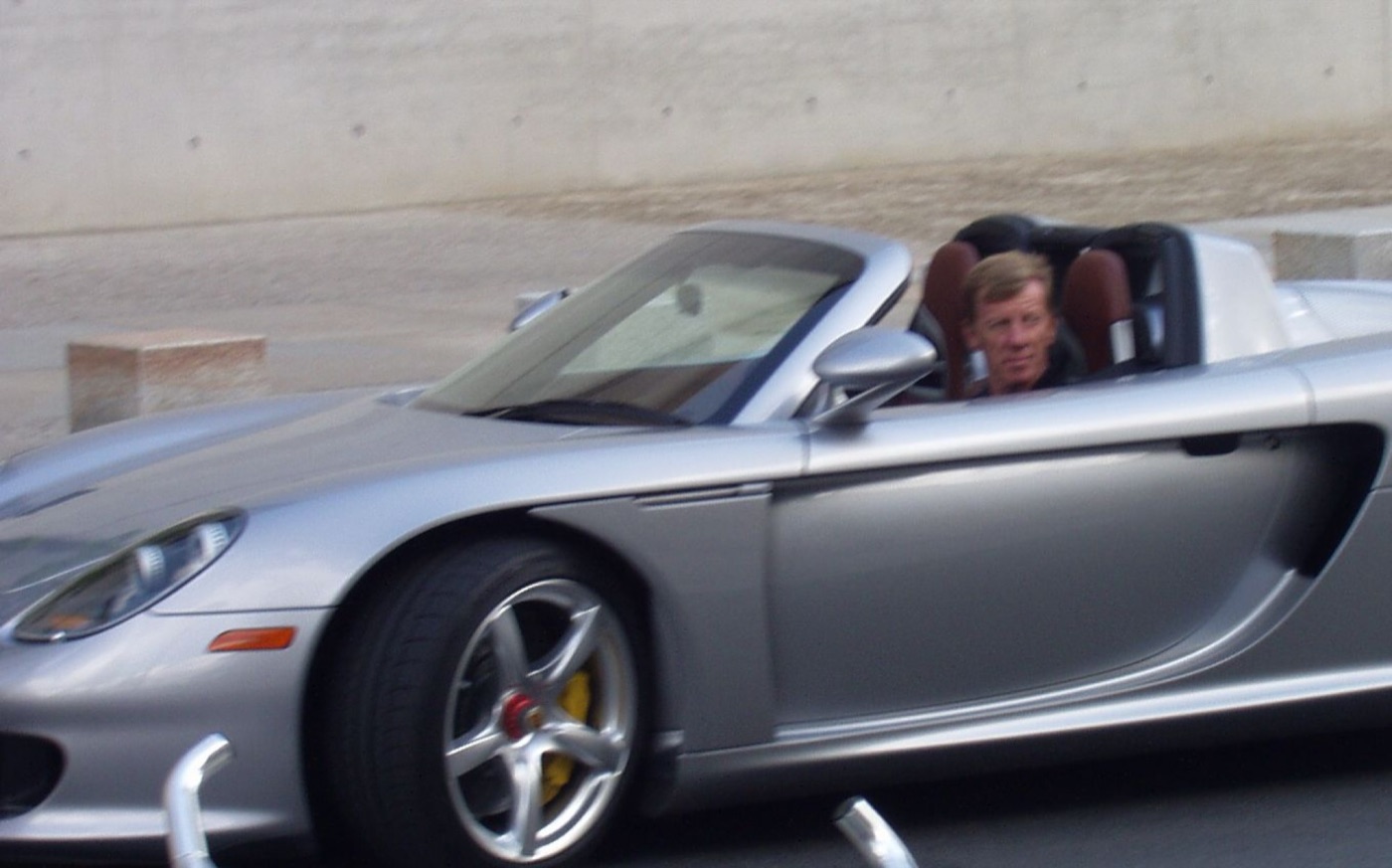
Since 1993 Röhrl has tested every standard Porsche on the Nürburgring Nordschleife, Porsche said in material SkiddMark published in January 2010. After four years on the Carrera GT, he told Motor Sport in 2005, “I’ve found for the first time that the Nordschleife is not always fun. The GT is too fast.” In 2010 he said he had reached 317 km/h at Pflanzgarten in a standard 911 GT2, against 285 km/h in a race car there. Porsche’s chairman Oliver Blume quoted his favourite Röhrl line in 2018: “a garage without a Porsche 911 is just a dark hole.”
The Nürburgring 24 Hours in a 911 GT3 RS
Röhrl was entered for the 2010 Nürburgring 24 Hours in a road-going Porsche 911 GT3 RS, his first start in the race since 1993, but withdrew with a back injury. “No other road-going 911 has ever been as close to a race car as this current GT3 RS,” he said when the entry was announced in December 2009, as SkiddMark reported at the time. Simon Patrick took his place alongside Chris Harris, Roland Asch and Horst von Saurma, according to AUSmotive in April 2010.
Historic rallies and the 911 SC at Targa Tasmania
In April 2011 Röhrl and Geistdörfer drove the San Remo 911 SC again, 30 years on, on Targa Tasmania, a five-day event of 38 competitive stages totalling more than 500 kilometres, SkiddMark reported in April 2011. It was his third Targa Tasmania, after 1997 and 2000, and the car had not been raced for 25 years (SkiddMark, 2011). The Porsche Museum restored it between 2008 and 2011 (Porsche, 2016). “We only entered that 911 SC in one rally, the San Remo. It was a last-minute thing. Some engineers at Porsche helped prepare this car for me because I was without a drive,” he told Speedcafe before the event. The museum also sent the 1969 Targa Florio-winning 908/02, driven by its curator Klaus Bischof, and a 718 RS 60 driven by the journalist Bernd Ostmann.
In November 2009, aged 62, he and Peter Göbel won the Costa Brava Rally, a round of the FIA European Rally Championship for Historic Cars based at Lloret de Mar, in a 1981 Porsche 911 RSR, beating a field that included Jean Ragnotti’s Alpine A110 and three Group 4 Lancia Stratos, SkiddMark reported. In 2016 the Rossfeld hill climb at Berchtesgaden took the racing cars of Walter Röhrl as its theme, with his Opel Ascona 400, Fiat 131 and Porsches on the road (Porsche).
Driving style and character
Röhrl drove with as little steering as he could and prepared alone. “If we had a special stage and there was a delay, everybody would get out of the cars and talk together. I would sit in the car, Christian would be reading his notes, and I never talked to anyone,” he told Motor Sport in 2010. After the 1980 title he had wanted to stop: “I don’t do it for money, I do it just for me.” He named Hannu Mikkola as his idol and Timo Mäkinen as a driver he admired.
In 1980 a German newspaper swapped him with the Formula One champion Emerson Fittipaldi: Röhrl got to within five seconds of Fittipaldi’s time in his car at Silverstone, then was 30 seconds faster in five kilometres of forest in the Fiat 131 (Motor Sport, 2005). Niki Lauda called him a “genius on wheels” (Porsche).
Halls of fame and honours
Röhrl was inducted into the Rally Hall of Fame in Finland with Hannu Mikkola in 2011, joining Erik Carlsson, Paddy Hopkirk, Rauno Aaltonen and Timo Mäkinen, according to Rally Finland’s announcement of February 2011. In 2016 he joined Germany’s Hall of Fame des deutschen Sports, and on 30 January 2019 the FIA inducted him into its hall of fame in Paris, one of the first rally drivers and world champions from outside Formula One to be included (Porsche). In Motor Sport’s poll of 20 journalists, team managers and drivers in April 2000 he was voted the third-greatest rally driver of the 20th century, behind Mikkola and Tommi Mäkinen.
Questions
How old is Walter Röhrl?
Walter Röhrl was born in Regensburg on 7 March 1947, so he is 79 (as of October 2026). He won his second world title in 1982, aged 35.
How tall is Walter Röhrl?
Porsche gives his height as 1.96 metres (6ft 5in). The German press called him “der Lange”, the tall one, and he has said the Formula One car he tried in 1980 left his head well above the roll bar.
Who was Walter Röhrl’s co-driver?
Christian Geistdörfer sat beside him on 53 of his 75 world championship rallies, including both title seasons and 13 of his 14 wins. Jochen Berger was his co-driver at Opel from 1973, including his first win, on the 1975 Acropolis.
Where does Walter Röhrl live?
He lives in Sankt Englmar in the Bavarian Forest, not far from Regensburg, where he was born. Cycling and skiing are his hobbies, according to Porsche.
What was Walter Röhrl’s first car?
A used Porsche 356 B coupé with 75 PS, which he bought without an engine. Porsche says a 911 has been in his private collection ever since.
Did Walter Röhrl ever drive a Formula One car?
Once, in 1980, when a German newspaper had him swap cars with Emerson Fittipaldi. He did about 10 laps of Silverstone in Fittipaldi’s car and got to within five seconds of his time, then took Fittipaldi through a forest stage in his Fiat 131.
Did Walter Röhrl race at Le Mans?
Twice. In 1981 he and Jürgen Barth finished seventh overall and won their class in a Porsche 944 LM, and in 1993 he shared a Porsche 911 Turbo S LM with Hans-Joachim Stuck and Hurley Haywood, which retired after an accident.
Sources
- juwra.com, “Walter’s WRC starts” and its driver page, checked October 2026: every WRC start, co-driver, car and result, season totals, stage wins, early career.
- Motor Sport, John Davenport, “Walter Röhrl’s roller coaster”, December 2002: Fiat years, Mercedes contract, 1981 Porsche season and San Remo, 1982 title and the Opel split.
- Motor Sport, “In the hot seat: Walter Röhrl”, September 2005: Monte Carlo, Trans-Am, Pikes Peak pace notes, the 037, the Mouton remark, Fittipaldi.
- Motor Sport, Damien Smith, “Röhrl back in the years”, June 2010: 1983 season, Monte Carlo 1984, the Quattro, Porsche testing.
- Motor Sport, “The worst car I ever drove”, August 1999: Opel Kadett GT/E, Sport Quattro, 1974 European title.
- Motor Sport, “The greatest rally driver of all time”, April 2000: panel vote and Cesare Fiorio’s comment.
- Motor Sport, “Disastrous Portuguese Rally”, April 1986: the 1986 Rally Portugal withdrawals.
- Porsche Newsroom, brand ambassador profile of Walter Röhrl: personal details, career table, first car, development work.
- Porsche Newsroom, “Walter Röhrl celebrates his silver anniversary”, 19 January 2018: the 1993 contract and the models he worked on.
- Porsche Newsroom, Rossfeld Race Berchtesgaden, 2016: the 911 SC San Remo quote and its restoration.
- Auto Motor und Sport, “Porsche 911 3.0 SC Heigo Gruppe 4 (1980)”: the Heigo car and the San Remo 911.
- Audi MediaCenter, “40 Jahre, 40 Zahlen, 40 Bilder”, 2020 (archived): Sanremo 1985 margin, RAC gearbox, Pikes Peak speed.
- Audi, photo archive, Audi Sport quattro S1 (E2), 1987: Pikes Peak time, course and engine figures.
- Audi, motorsport history, “quattro circuit racing”: Trans-Am, IMSA and DTM.
- Pikes Peak International Hill Climb, race winners by year (archived 2013): 1985–88 winners and times.
- racingsportscars.com, Le Mans 24 Hours 1981 results and 1993 results: his two Le Mans starts.
- Neste Oil Rally Finland, “New inductees to Rally Hall of Fame”, February 2011 (archived).
- Hall of Fame des deutschen Sports, members list, 2016 (archived).
- AUSmotive, “Injury forces Walter Röhrl out of Nürburgring 24 hour”, 25 April 2010.
- Speedcafe, “Double world rally champ for Targa Tas”, 2011: Röhrl’s quotes on the 911 SC.
- SkiddMark reports of November 2009, December 2009, January 2010 and April 2011: the 2009 Costa Brava Rally, the 2010 Nürburgring entry and Porsche’s note on his Nordschleife testing, and Targa Tasmania 2011.