Zimmer Motorcars: the rise and demise of the Golden Spirit
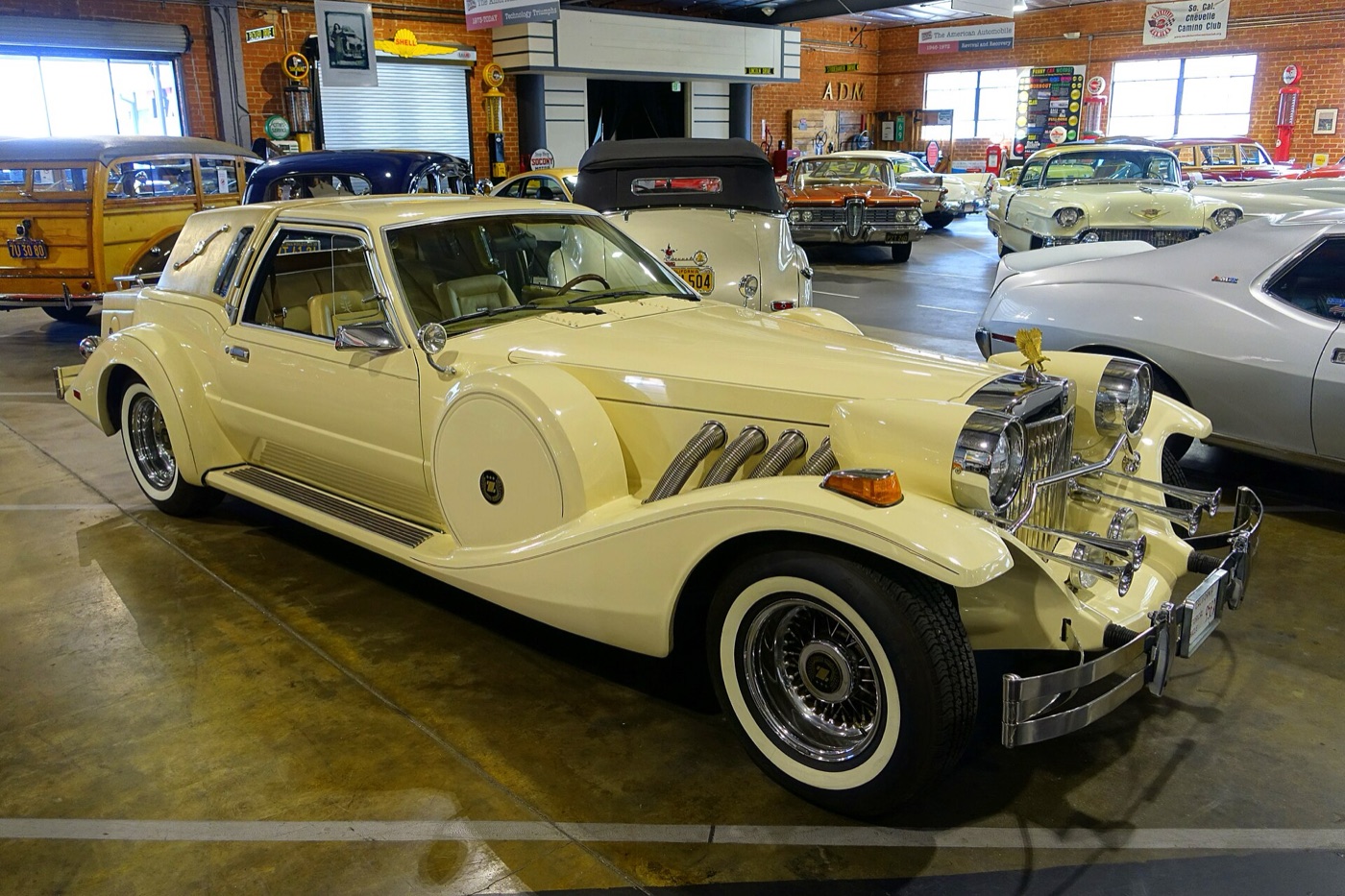
Picture a brand-new Ford Mustang, driven off a dealer’s forecourt in 1981. A few weeks later it has lost everything but its roof, doors and passenger cell, gained more than three feet of chassis ahead of the windscreen, and come back wearing sweeping glassfibre wings, chrome exhaust pipes bursting from the bonnet sides, four trumpet horns and a gold-plated eagle on the radiator. It now costs $55,900. This was the Zimmer Golden Spirit, and for most of the 1980s it was one of the least likely success stories in American car making.
It was also built twice, by two different men called Zimmer who were not related, and the second of them is the reason the story did not end in 1988.
A mobile-home maker buys an Excalibur
Paul H. Zimmer ran Zimmer Homes, a maker of mobile homes and recreational vehicles in Pompano Beach, Florida, whose shares traded on the American Stock Exchange under the ticker ZIM. In about 1976 he bought a $22,000 Excalibur roadster, the Wisconsin-built neoclassic that dressed modern American running gear in 1930s Mercedes clothes, and was astonished by the attention it drew from everyone who saw it. He sold it, but not before deciding, as he later told Forbes: “God, we can do that.”
He sketched a car of his own, borrowing from the Duesenberg, Mercedes, Cord, Cadillac and Packard, and his company’s engineers turned the sketch into a running car. A subsidiary, Zimmer Motor Cars Corporation, was set up to build it, with his son Bob (Robert P. Zimmer) running it. The Golden Spirit was announced in November 1980, at $45,900, and shown at the Miami Auto Show that month. By March 1981, with cars coming down the line, the price was $55,900.
How to build a Golden Spirit
Every two-door Golden Spirit began as a new Fox-body Mustang, bought straight off a Ford dealer’s lot. Zimmer’s workers cut it back by hand to the roof, the doors and the passenger cell, lengthened the frame ahead of the cabin to a 142-inch wheelbase, and clothed it in glassfibre panels laid by hand in the company’s own moulds. Paint ran to 11 coats of lacquer in 1981 and 14 by 1982, and the pinstriping was done by hand. Automotive News put the work at 680 hours a car in 1982.
Underneath, it stayed a Ford. The 1981 and 1982 cars used Mustang’s 4.2-litre V8; from 1983 it was the 5.0-litre, and by 1984 it came with fuel injection and a four-speed automatic with overdrive. Nobody bought a Golden Spirit for the way it went.
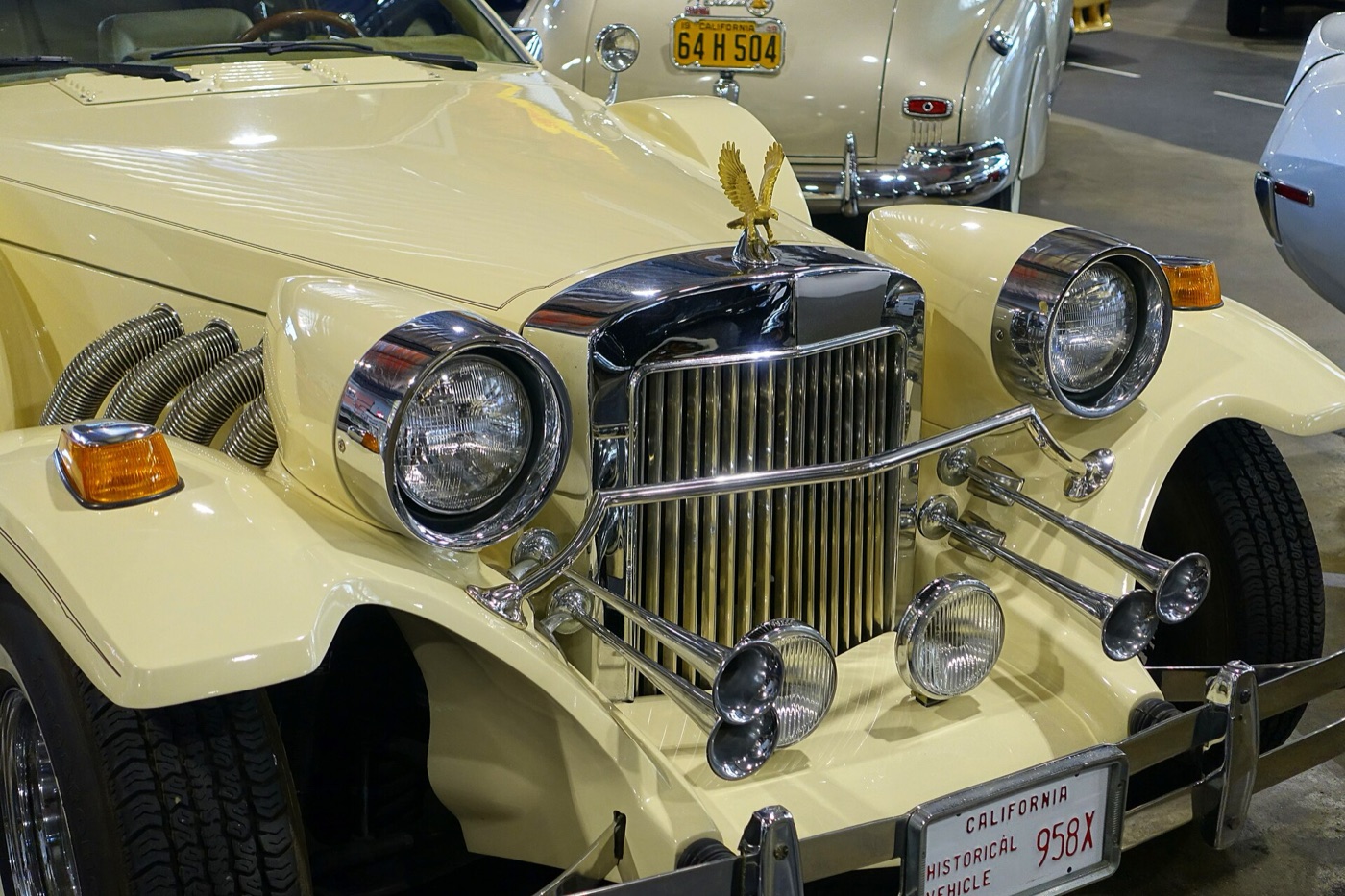
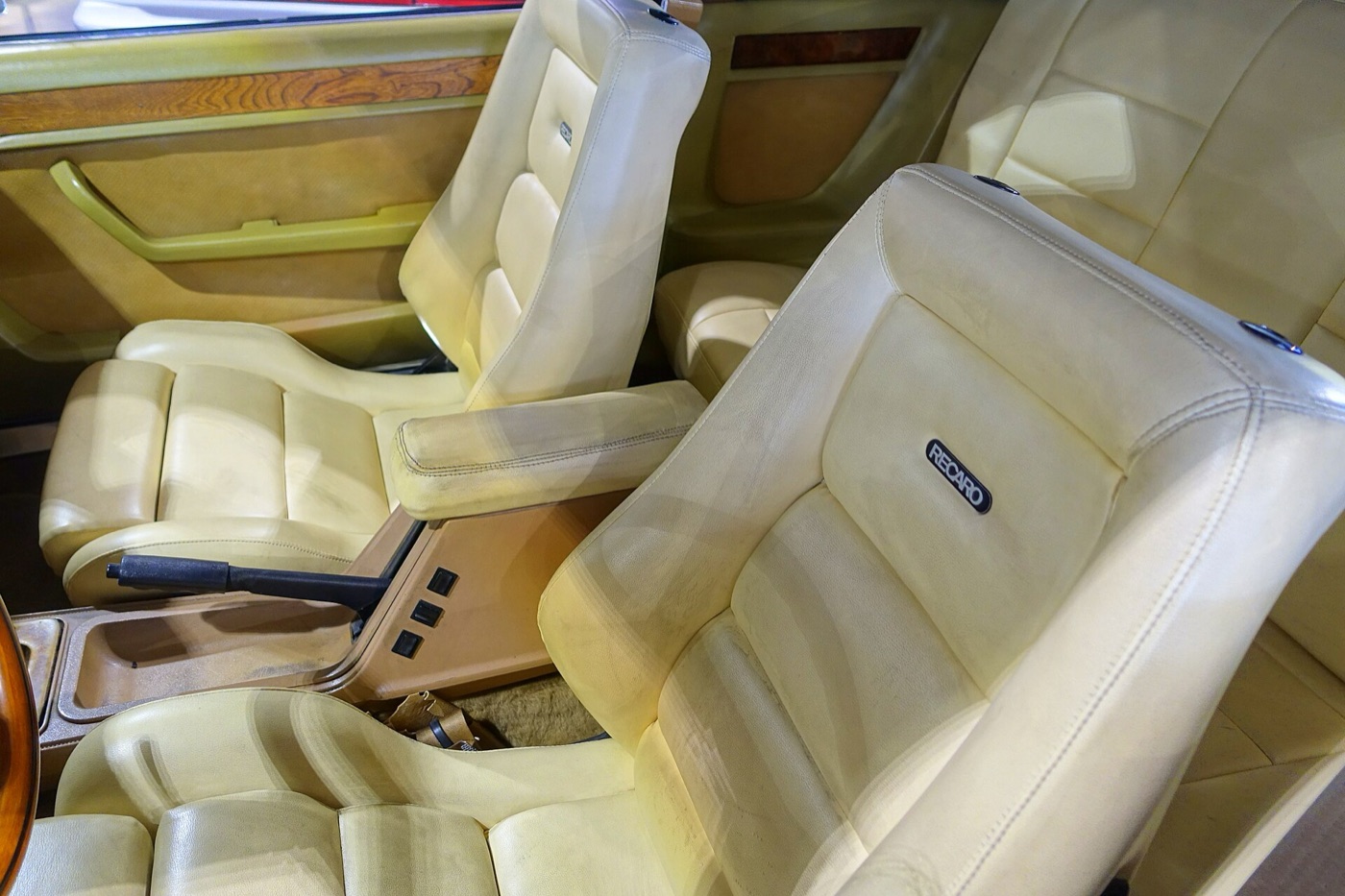
They bought it for the details. A 24-carat gold-plated eagle stood on the radiator. Four chrome air horns blew from a foot switch. There were teak running boards, etched-glass wind wings, Recaro seats with inflatable lumbar cushions, a gold-plated Nardi steering wheel, burl walnut, sheepskin carpet, a tool kit in a fitted leather case and, in the coupés, crystal bud vases. Quality control was personal: in 1982 every car was driven 100 miles by the head of quality control, who dictated his comments on to tape, and every tenth car did 500.
The egomobile years
Forbes headed its 1983 story on the company “The egomobile”. The business press treated Zimmer as a success story. The dealer network grew from 17 in March 1981 to about 75 by 1983, and the range grew with it: a Formal coupé with a painted roof, a T-roof option in 1982, a true convertible in 1983, a Personal Limousine at about $85,000 at the end of 1983 and, later, a four-door sedan. Paul Zimmer told Forbes that the limousine was for people used to arriving at the theatre in an ordinary limousine, “but it’s a little more of an ego trip.”
The customers were as colourful as the cars. Liberace had one: in 1982 Bob Zimmer told UPI that the pianist owned a beige car and was buying a blue one. Liberace’s 1981 Golden Spirit, fitted with candelabra and a dash plaque saying it had been built especially for him, was offered in the 1988 auction of the Liberace Collection and was on show at the Imperial Palace Auto Collection in Las Vegas from at least 1992. Prices kept climbing: $62,500 in 1983, $71,950 on the list of December 1986. The limousine was dropped in 1986, because it took too long to build.
The QuickSilver: a Fiero in a dinner jacket
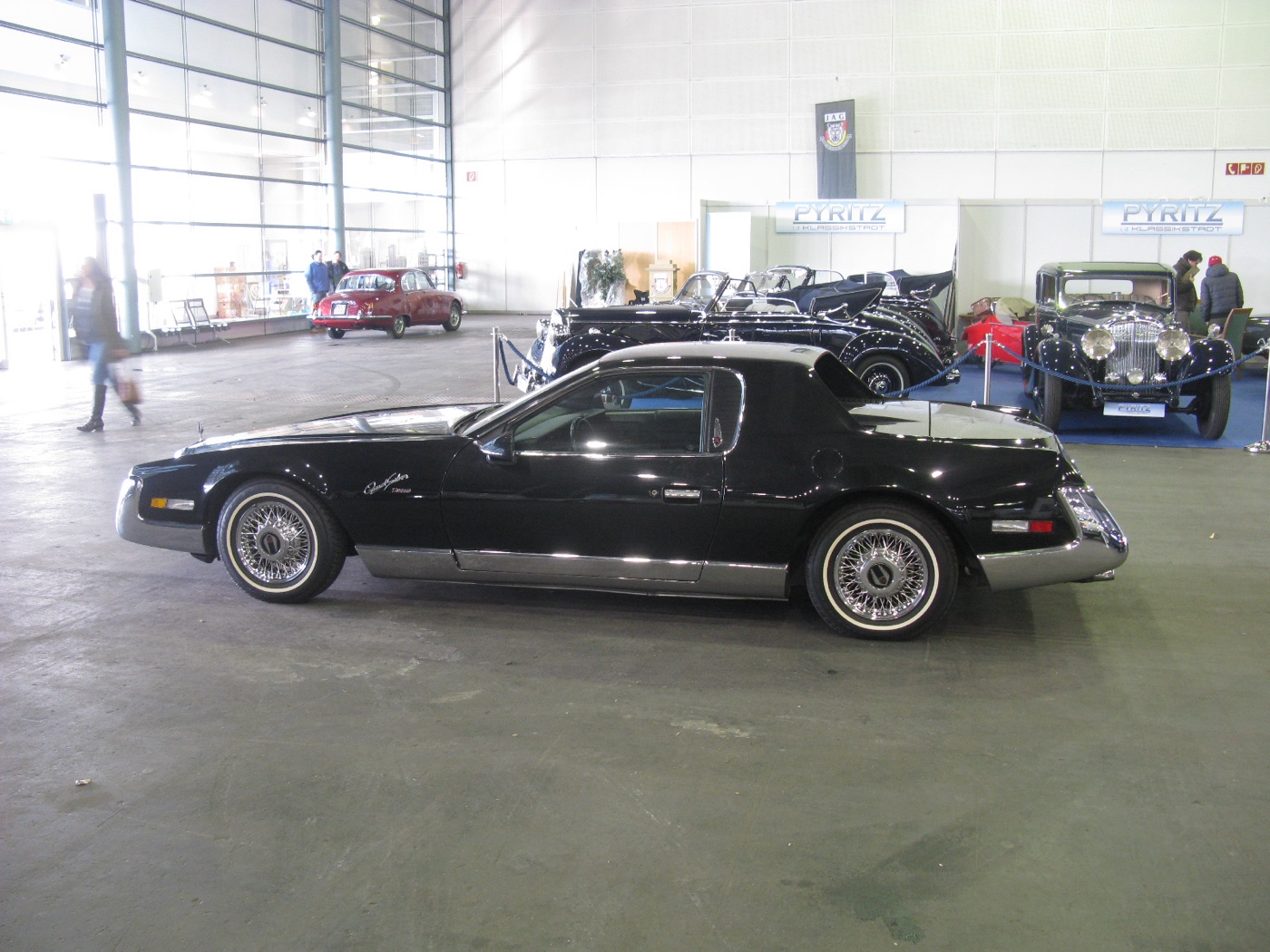
In 1986 Zimmer tried something modern. The QuickSilver was drawn by D. A. “Don” Johnson, a former General Motors stylist. It was built on Pontiac’s mid-engined Fiero, stretched 16 inches ahead of the cabin and 13 inches at the tail, with power rack-and-pinion steering adapted from a Merkur. It went on sale in April 1986 at $44,950, and Zimmer talked of building 300 that year and 1,000 the next.
In Car and Driver’s road test of April 1987, Patrick Bedard liked the way it drove (“The car simply doesn’t feel like a Fiero”), but the numbers fell short. Zimmer claimed 0–60 mph in 8.3 seconds, a top speed of 121 mph and a kerb weight of 2,920 lb. The magazine measured 9.7 seconds, 112 mph and 3,233 lb. In the end about 150 QuickSilvers were built, a long way short of 1,300.
The fall
It was not the cars that sank Zimmer. The parent company’s mobile-home, motor-home and motor-coach businesses began losing money in the mid-1980s, as the market for manufactured housing slumped. Zimmer Corporation, as Zimmer Homes had been renamed in 1982, lost $5.7 million in 1985, $7.9 million in 1986 and more than $9.9 million in 1987, and sold its Black Fin Yachts business along the way. On 10 May 1988 it filed for Chapter 11 bankruptcy protection, and the Pompano Beach car plant closed the same day. That October Paul Zimmer said he would step down as chairman at the start of 1989. The company came out of bankruptcy in July 1989 as a van converter with a single plant in Cordele, Georgia. It built no more cars.
How many Golden Spirits there were is still argued over. The figure usually quoted is 1,500, but it comes from the revival company’s marketing a decade later. The Zimmer production plates that survive run from number 126, dated March 1981, to number 1349, from 1988. Since the numbering seems to have begun near 100, that points to about 1,250 cars in the numbered series, perhaps 1,300 with the separately numbered convertibles and the few four-doors.
Enter the other Mr Zimmer
That would have been the end, but for Art Zimmer. He was no relation to Paul. He had grown up on a farm near Hamilton, in upstate New York, and had built a career in Syracuse out of real estate, maple candy, ski shows and, from 1984 to 2010, the alternative weekly the Syracuse New Times, which he owned and published. By his company’s account, he spotted a Zimmer outside a Syracuse car dealership in 1995, bought a 1987 coupé in March 1996, and that September started a free owners’ club, which claimed more than 700 members by 2002.
In the summer of 1997 he went further and founded the Zimmer Neo-Classic Motor Car Company. According to his company there was nothing left to buy, because everything in the old plant had been seized and thrown away, so he started again with new moulds. A notice of his 2015 memoir put his motive more simply: he liked the name.
The company said the first new Zimmer was finished in November 1998, and that only two coupés were built in the first model year. They were built on newer cars: two-door coupés and convertibles on new Mustangs, then four-door sedans from 2001 and four-door convertibles from 2002 on new Lincoln Town Cars. Most were hand-built at Sam’s Auto Body in Syracuse. Art Zimmer reckoned in 2009 that the company built between five or six and about a dozen cars a year. They were not cheap: a coupé listed at $79,900 in 1999 and $124,900 by 2011, and the four-door convertible at $194,900. A 2009 blog on Boston.com called the Lincoln-based four-doors “the fanciest, rarest, and most expensive Town Cars on the planet.”
Art Zimmer sold them like a showman. The company website carried a song, “Art Zimmer’s Golden Spirit”, with words by Phil Klein, and sheet music. In 2001 the company said that Shaquille O’Neal had bought a red Golden Spirit, although no independent report confirming it has been found. When he was not selling cars, Zimmer was writing and staging Cruizin’ Thru the ’50s, a musical revue that ran at the New York State Fairgrounds for the best part of a decade.
From 2012 the Zimmer trademarks belonged to Heyman Motors of Closter, New Jersey. By 2016 its website was pricing Cadillac CTS-based four-doors and 2016 Mustang-based coupés at up to $397,600, but no evidence has been found that any were built. The website went quiet that year, and the last Zimmer trademark lapsed in 2022.
Ego trips
Looking back in 2022, Art Zimmer filed the car company, along with his press-club awards, under “ego trips”. Paul Zimmer had used almost the same words about his limousine’s buyers nearly 40 years earlier. That is perhaps the fairest summary of the whole Zimmer story: two businessmen, unrelated, who built the most extravagant cars they could imagine, aimed them at buyers who wanted to be looked at, and never once apologised for the gold eagle.
The full story of both companies, including every model and how to tell a Pompano Beach car from a Syracuse one, is being put together on an independent site, zimmermotorcars.com.
Sources and picture credits
- The period press and Zimmer’s own papers, most of them read in the scans held by the Zimmer Registry (zimmerregistry.com): Miami Herald, 26 November 1980; Fort Lauderdale News and Sun-Sentinel, 22 March 1981; UPI, 17 October 1982; Forbes, “The egomobile”, 26 September 1983; Zimmer’s specification sheet of May 1984, a 1986 QuickSilver window sticker and the 1987 press kit; Monrovia News-Post, 20 April 1986; Sun-Sentinel, 30 April 1986; Venture, July 1986; Car and Driver, “QuickSilver!”, April 1987; Miami Herald, 20 September 1987, 11 May 1988, 6 October 1988 and 17 October 1988; Sun-Sentinel, 18 July 1989; Collectible Automobile, August 1993.
- Automotive News, 28 June 1982 and 10 March 1986, read in the Internet Archive’s text of its microfiche; Palm Beach Post, 19 and 25 May 1987.
- The Zimmer Registry’s record of surviving production plates, for the production estimate, and its research on the engines by year; the catalogue of the 1988 Liberace Collection sale, and Las Vegas museum directories and guidebooks from 1992 onwards, for Liberace’s car.
- The Zimmer Neo-Classic Motor Car Company’s website, 1998–2016, as archived by the Internet Archive’s Wayback Machine; the archived website of Sam’s Auto Body, Syracuse; and the US Patent and Trademark Office’s records of the ZIMMER and ZIMMER GOLDEN SPIRIT marks.
- Interviews and profiles of Art Zimmer: Boston.com blog, 2009; The Evening Sun (Norwich, New York), 18 September 2015; CNY 55-Plus, 17 November 2022.
- Lead photo and the nose and interior photos: “Zimmer Golden Spirit – Automobile Driving Museum – El Segundo, CA” by Daderot, Wikimedia Commons, released into the public domain (CC0).
- “Zimmer Quicksilver” by nakhon100, Wikimedia Commons, licensed CC BY 2.0 (creativecommons.org/licenses/by/2.0).
This article was written for SkiddMark in October 2026 from the period press and the companies’ own records.