Nissan GT-R R35: every model year, specs, faults and values
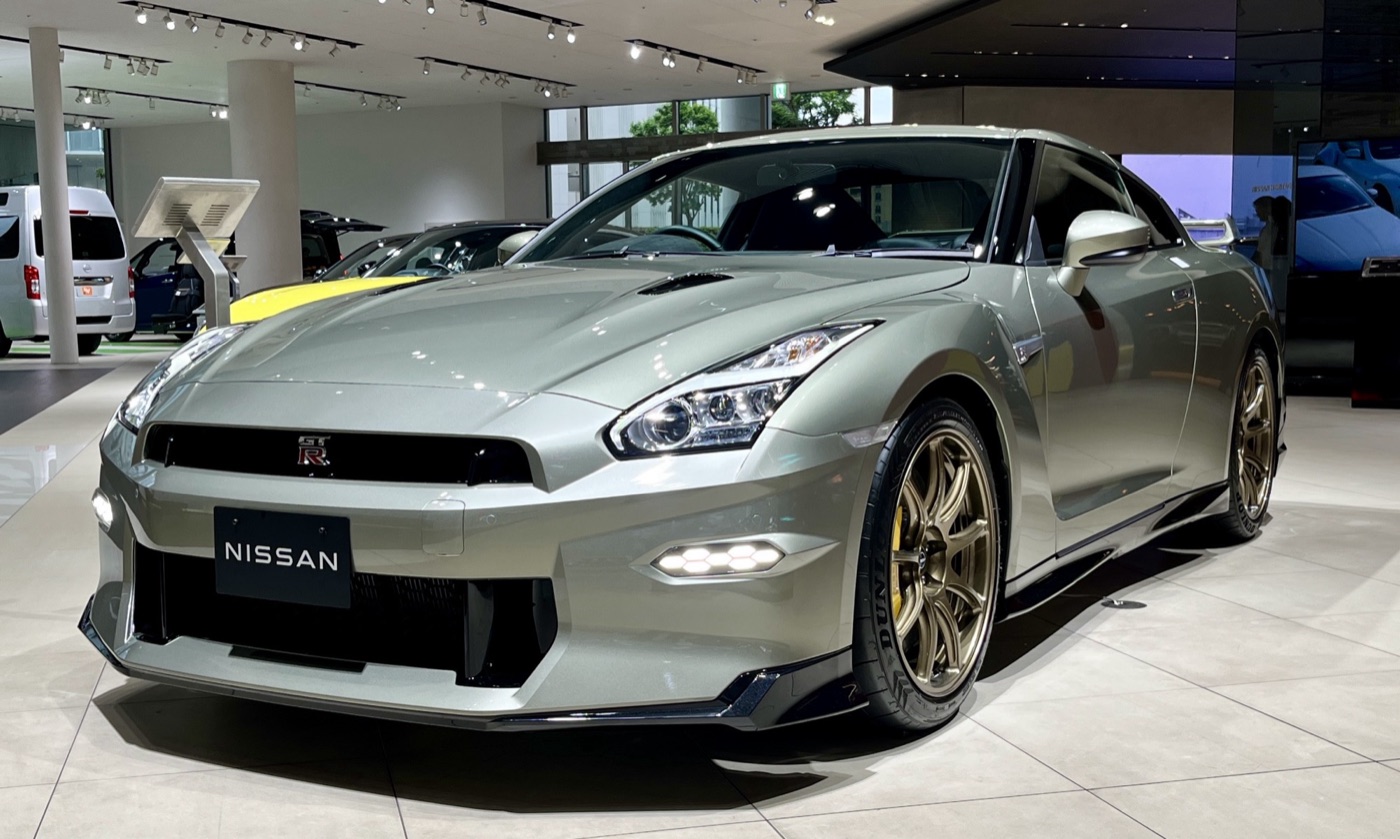
The Nissan GT-R R35 is the four-wheel-drive supercar, a 2+2 coupé with a twin-turbo V6, that Nissan built at Tochigi in Japan from 2007 to 26 August 2025, the first GT-R sold without the Skyline name. About 48,000 units were made. Power rose from 480 PS at launch to 570 PS from the 2017 model year, and 600 PS in the GT-R Nismo, while the car kept the same basic body and its hand-built 3.8-litre engine for all 18 years.
Nissan gave the R35 GT-R upgrades almost every year instead of one big mid-life update, so the first thing a buyer needs is a map of the model years: what each one changed, what it cost and what it is worth now. In Britain the GT-R went on sale in March 2009 at £52,900 and was withdrawn in March 2022, when new drive-by noise rules came in; at the end of June 2026, 2,827 were registered here.
History of the Nissan GT-R R35
The R35 took the GT-R name from the Skyline range and made it a model of its own, which Nissan described as “a true GT ‘Grand Tourer’ with a comfortable ride” and “world-class performance”. Nissan showed it as a concept, the GT-R Proto, at the 2005 Tokyo Motor Show and unveiled the production car at the same show two years later, according to Nissan UK’s 2017 press pack. Development was led by Kazutoshi Mizuno, whom SkiddMark called the GT-R’s project chief and “the father of GT-R”.
From the Nissan Skyline GT-R to the R35
The first Skyline GT-R, the PGC10 saloon, appeared at the 1968 Tokyo Motor Show, and the R32 of 1989 brought the twin-turbo straight six and four-wheel drive that the next two generations, the R33 and R34, kept until 2002. PistonHeads’ 2023 buying guide dates the split from the Skyline to 2002. The R35 kept the four round tail lights and the “Godzilla” nickname, but, unlike its predecessors, replaced the straight six with a V6 and moved the gearbox to the back of the car.
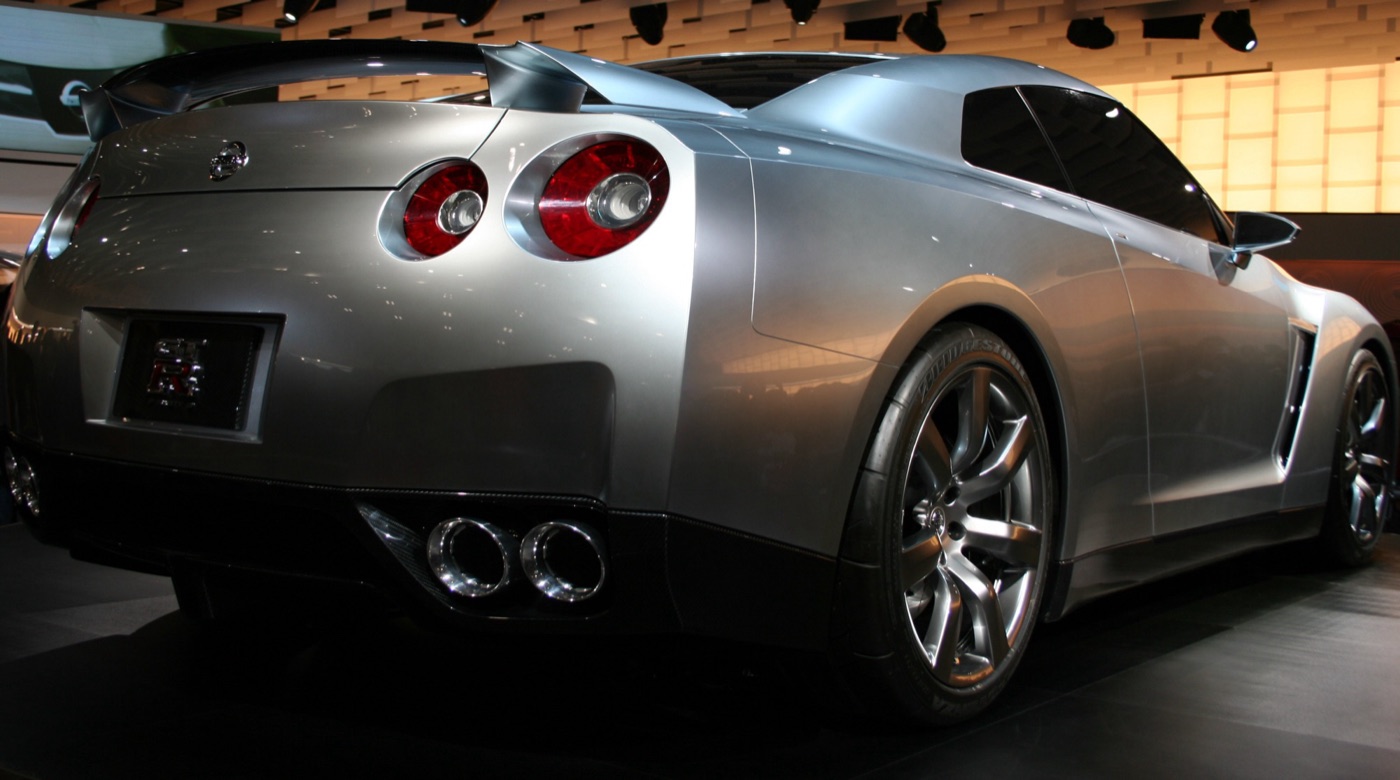
Launch at the 2007 Tokyo Motor Show
Nissan announced the GT-R on 24 October 2007 and put it on sale across Japan on 6 December, mainly through its new High Performance Centres. Nissan’s Japanese launch release priced the three versions at ¥7,770,000 (GT-R), ¥7,927,500 (Black edition) and ¥8,347,500 (Premium edition), with three years of free checks on the engine, gearbox and alignment. The GT-R went on sale in North America on 7 July 2008, Nissan said later that year.
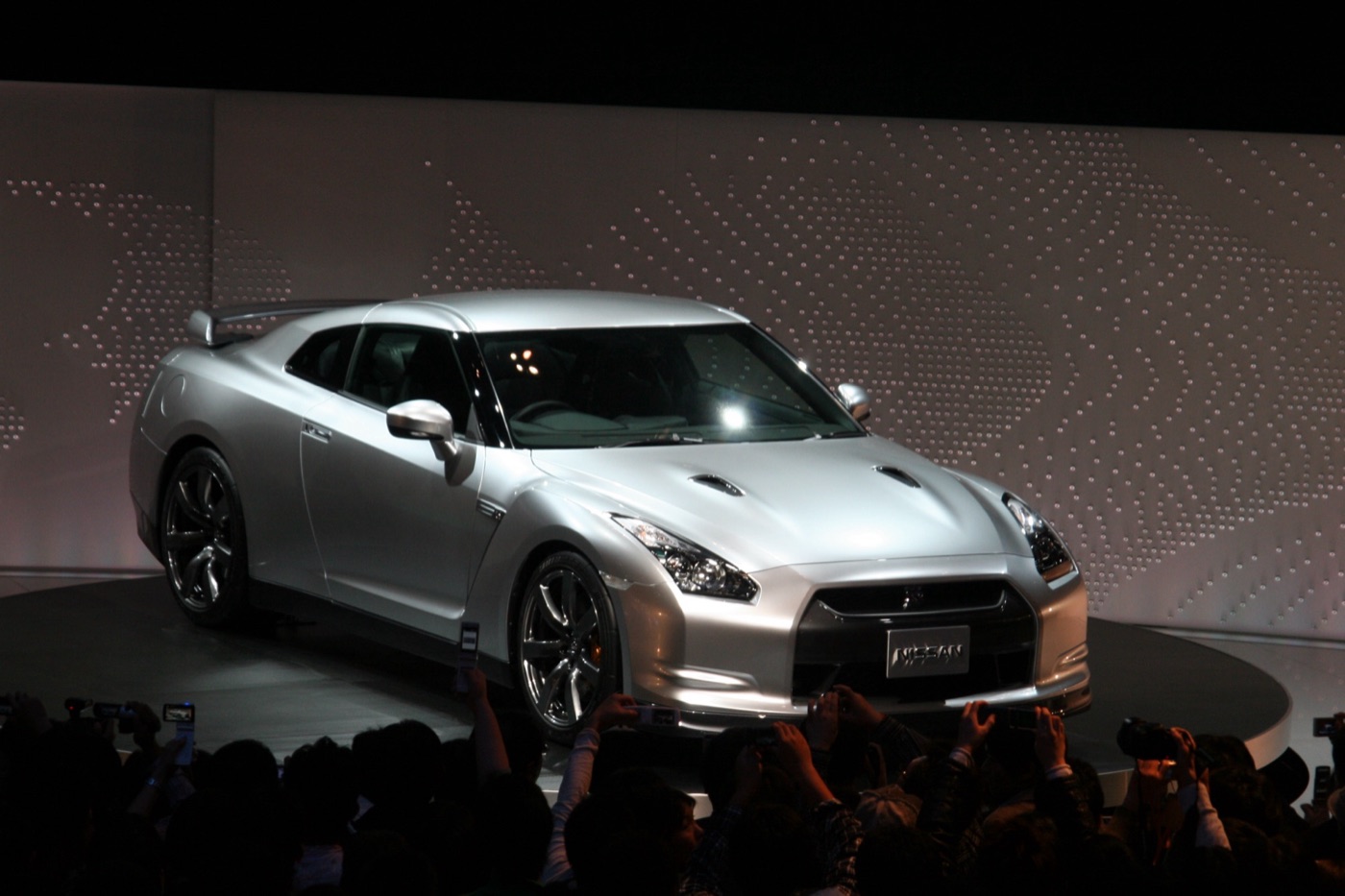
The GT-R in Britain
British order books opened on 2 April 2008, and Nissan UK reported nearly 700 deposits in the first 48 hours, for a car priced from £52,900 on the road in three trims (base, Premium Edition and Black Edition). It could only be bought from, and serviced by, one of 10 Nissan High Performance Centres, and the first British deliveries were due in March 2009.
A Nissan UK spokesperson told Carscoops in March 2022 that European GT-R production would end that month because of the new EU and UK drive-by noise regulations, 13 years after the car arrived in Europe.
When did the Nissan GT-R R35 stop production?
The last R35 left the Tochigi line on 26 August 2025, a Premium edition T-spec in Midnight Purple for a customer in Japan, the final market still taking the car. Nissan’s announcement put total production at about 48,000 and said a core team of nine master craftsmen, the takumi, had assembled every engine by hand at its Yokohama plant. North American production was to end in October 2024 with two limited runs, the T-spec Takumi Edition at $151,090 and the Skyline Edition at $131,090, fewer than 200 cars between them, Nissan USA said in June 2024.
Is there a successor to the GT-R R35?
Not yet on sale or shown. At the end of production Nissan’s president and CEO, Ivan Espinosa, said “it’s our goal for the GT-R nameplate to one day make a return”, that “the GT-R badge is not something that can be applied to just any vehicle” and that Nissan did not yet have “a precise plan finalized”. In April 2026 he told Motor1: “Yes, we will be working, we are actually working, on GT-R. Not many details I can share today, but the GT-R will come.” As of October 2026 Nissan has given no date, engine or specification for an R36.
GT-R R35 model years: what changed each year
Each model year brought updates to power, suspension, transmission software or trim levels, and the facelifts that changed the look came for 2011 (new bumpers and LED daytime lights), 2014 (new headlights), 2017 and 2024. Nissan in Japan and Europe named a model year after the year it went on sale in; from the 530 PS car of October 2010, Nissan USA named each car a year later, so that car was the “2011” GT-R in Britain and the “2012” GT-R in America.
| Model year | Introduced | Power | Torque | 0–62mph (Nissan) | UK price from |
|---|---|---|---|---|---|
| 2007/08 (launch) | Dec 2007, Japan | 480 PS (473bhp) | 588 Nm | 3.6 sec | £52,900 (orders, 2008) |
| 2009 (Europe) | Mar 2009, Europe | 485 PS (479bhp) | 588 Nm | – | – |
| 2011 | Oct 2010 | 530 PS (523bhp) | 612 Nm | 3.0 sec | £69,950 |
| 2012 | Nov 2011 | 550 PS (542bhp) | 632 Nm | 2.8 sec | – |
| 2013 | Nov 2012 | 550 PS (542bhp) | 632 Nm | 2.7 sec | – |
| 2014 | Nov 2013 | 550 PS (542bhp) | 632 Nm | – | – |
| 2017 | Mar 2016, New York | 570 PS (562bhp) | 637 Nm | – | £79,995 |
| 2020 | Aug 2019, UK orders | 570 PS (562bhp) | 637 Nm | – | £83,995 |
| 2024 | Jan 2023, Japan | 570 PS (562bhp) | 633 Nm | – | Not sold in the UK |
Sources: Nissan’s launch, model-year and end-of-production releases, including the figures SkiddMark carried in October 2010, November 2011 and November 2012; Autocar (the 479bhp European car of 2009). The 2024 torque is Nissan USA’s 467 lb ft.
2007 to 2010: 480 and 485 PS
The first cars had 480 PS at 6,400rpm and 588 Nm from 3,200 to 5,200rpm. The European cars delivered from March 2009 had 479bhp, Autocar’s 2017 guide says; for the same car, which it called the 2010 model, Nissan USA’s press kit quoted new gearbox software to smooth clutch engagement, revised suspension and standard side and curtain airbags. In November 2009 European cars got new spring and damper rates, extra cooling ducts for the exhaust and gearbox, and Euro 5 compliance, with CO2 down to 295g/km. SkiddMark’s report of the changes noted that some American owners had cracked first gear, partly through overuse of launch control, and that Nissan had removed launch control in response.
2011: the first facelift
The 2011 car, shown in October 2010, got its extra power from revised mapping and valve timing, larger inlets and a new exhaust. The new front bumper with LED daytime lights raised front downforce by about 10 per cent and the drag coefficient fell from 0.27 to 0.26; the American release for the same car added new RAYS forged wheels and carbon-fibre interior trim.
2012: asymmetric suspension
For 2012 the extra power came from an intake manifold on each cylinder head, a larger intercooler duct, a more compact underfloor catalyst and sodium-filled exhaust valves. Right-hand-drive cars got asymmetric suspension, with a stiffer spring on the front left, to balance the weight of the driver and the front propshaft on the right. A track-focused Track Pack followed for Britain and Japan (see Track Pack and Track Edition, below).
2013: more mid-range torque and a new cabin
Nissan unveiled the 2013 GT-R at Sugo in north-east Japan on 2 November 2012, for sale in Japan that month and elsewhere from January 2013. SkiddMark’s report was built around a 12-minute Nissan video in which Mizuno set out the changes. New high-output injectors and a relief valve for the turbocharger bypass gave more torque between 4,000 and 6,000rpm without raising peak power; the roll centre was lowered and new cam bolts fitted to the front suspension for more accurate camber; and the driveshafts’ torque capacity to the hub bearings was raised for track use.
Mizuno’s case was refinement at speed as much as lap times: “How do we design a car to endure a flat tire at 300 kph that can make it to the repair shop?” Development driver Toshio Suzuki said the changes drew on the 2012 Nürburgring 24 Hours, where two GT-Rs on road-car parts finished 30th and 99th and won the SP8T class.
The interior got the most visible work. SkiddMark wrote at the time that the cabin materials “were only marginally a step up from far cheaper Nissans and certainly no match for its rivals at BMW and Porsche”; for 2013 the Premium Edition gained hand-stitched semi-aniline leather front seats and an Amber Red and black option. In Japan it cost from ¥8,757,000 (Pure edition) to ¥15,168,300 (Egoist), including tax.
2014: new lights and the Nismo
The 2014 car kept 550 PS but got recalibrated suspension, LED headlights and new front and rear styling, and it was the base for the first GT-R Nismo (see below).
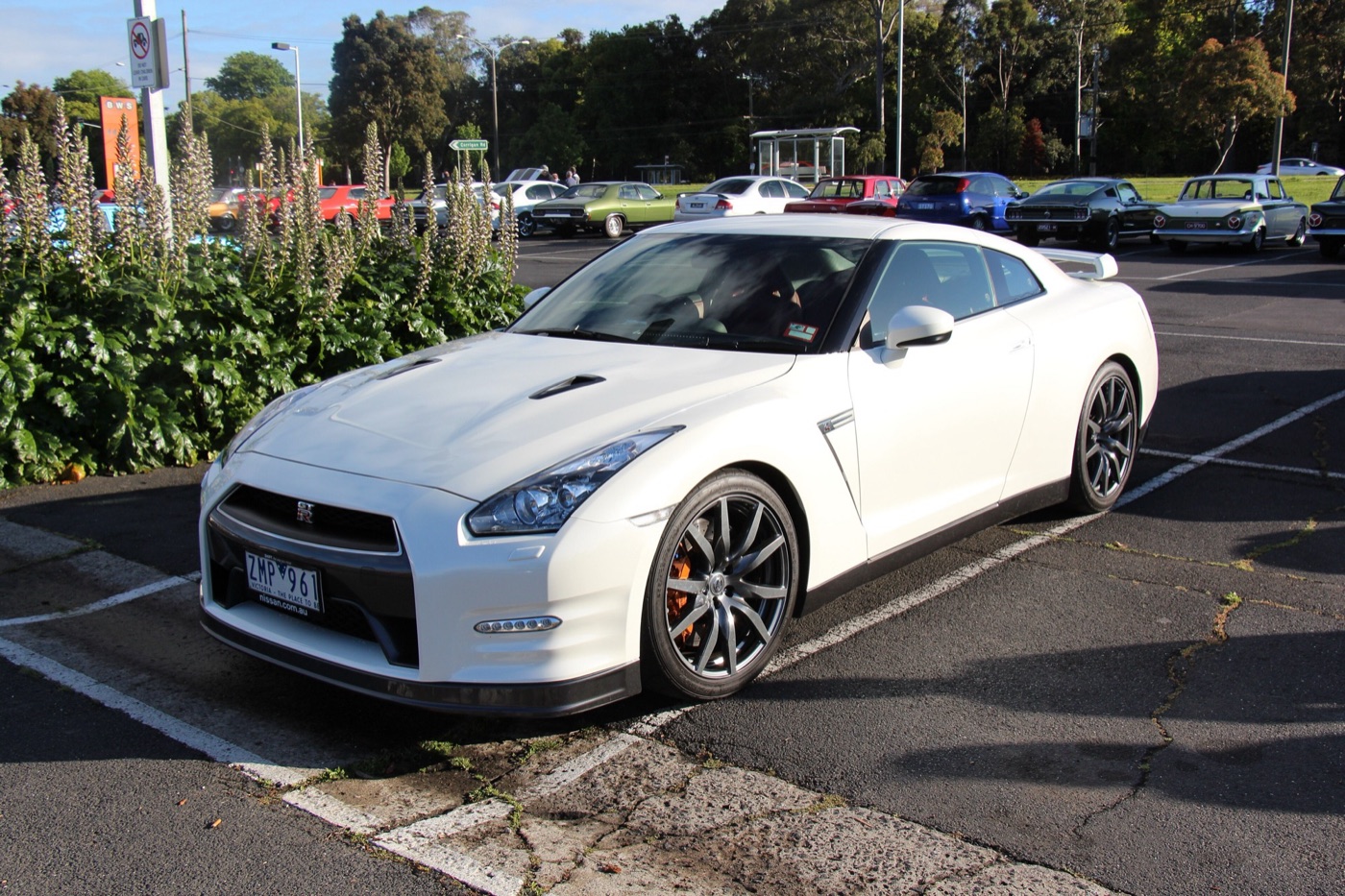
2017: the biggest update
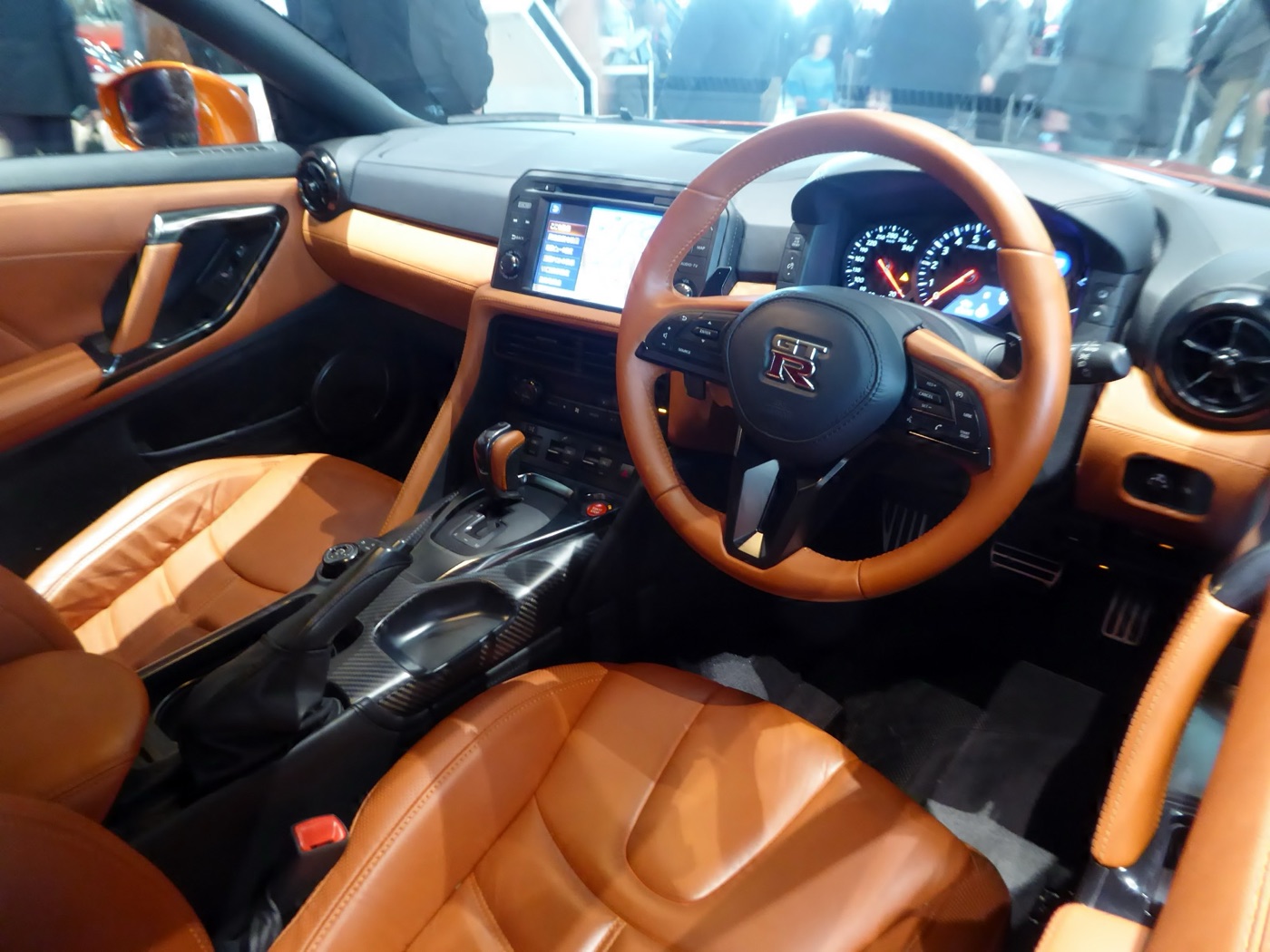
Shown at the New York motor show in March 2016, the 2017 GT-R was, in Nissan’s words, the most significant change since 2007. It had a larger grille, a reinforced bonnet, 570 PS at 6,800rpm, a titanium exhaust, a dashboard wrapped in Nappa leather, paddles on the steering wheel and an 8-inch touchscreen that cut the switches from 27 to 11. In Britain it cost from £79,995 (Pure), £81,995 (Recaro) and £82,495 (Prestige), with a Track Edition engineered by Nismo at £91,995.
2020: new turbochargers
The 2020 car went on order in Britain in August 2019. Nissan UK said new turbochargers with an abradable seal were 5 per cent more efficient, gearshifts in R mode were 0.15 seconds quicker and a new brake booster shortened pedal travel. Bayside Blue, last offered on the R34, came back.
2022 to 2025: T-spec and the final facelift
After Europe, the GT-R lived on in Japan and the US. The 2022 Japanese range added two T-spec editions, 100 cars in all, sold by lottery. In January 2023 Nissan showed the 2024 model, with a new grille, revised aerodynamics, less noise and vibration and, on the Nismo, a mechanical limited-slip differential in the front final drive. The 2025 cars, with weight-balanced engine parts from the Nismo Special Edition on two grades, cost from ¥14,443,000 for the Pure Edition, almost twice the 2007 launch price of ¥7,770,000, to ¥30,613,000 for the Nismo Special Edition.
Design and engineering
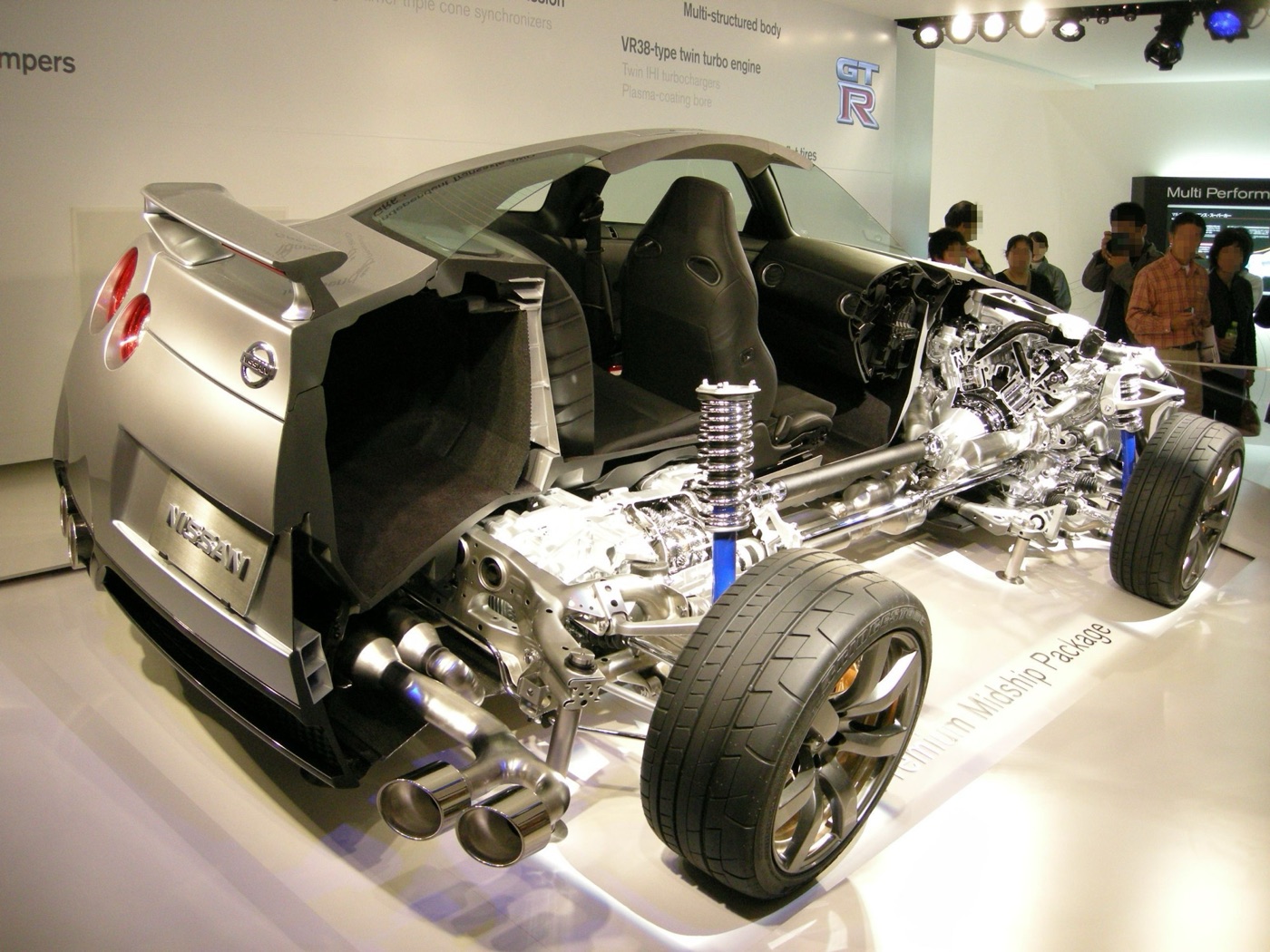
Nissan’s engineers built the R35 on what they called the Premium Midship platform: the engine is at the front, and the gearbox, transfer case and final drive sit together at the back to spread the weight. Nissan called the result the world’s first independent rear transaxle four-wheel-drive system, ATTESA E-TS. The body mixes steel, aluminium and carbon fibre, and Nissan’s aerodynamic targets were downforce, low drag and cooling together; the 2011 car reached a drag coefficient of 0.26.
The VR38DETT engine
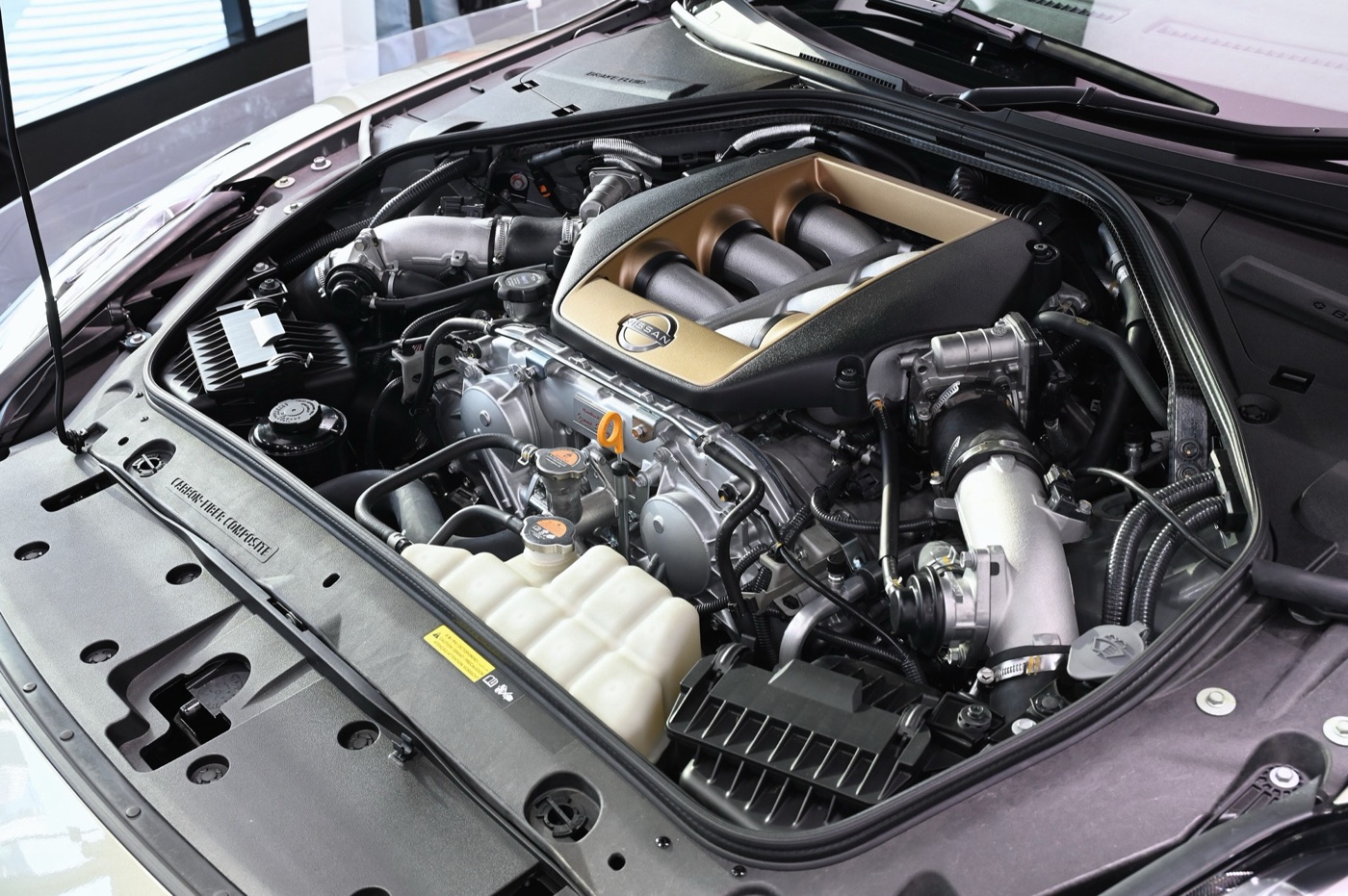
The engine is a 3.8-litre (95.5 × 88.4mm) twin-turbo V6 with an aluminium block, plasma-sprayed bores in place of iron liners, IHI turbochargers and a 9.0:1 compression ratio. Each engine was assembled from start to finish by a single takumi at Nissan’s Yokohama plant, and carries a plaque with that craftsman’s name; the 2025 engines got aluminium plaques. Ian Litchfield, whose company tunes GT-Rs, told Autocar in January 2017 that “the GT-R’s engine is so strong we warrant it at 750bhp without any internal strengthening.”
Transmission and drivetrain
Every R35 GT-R has the GR6 six-speed dual-clutch transmission; there was never a manual. In normal driving the ATTESA E-TS all-wheel-drive system sends all the torque to the rear wheels and can move up to half of it to the front, according to speed, cornering force, steering angle, wheelspin and yaw. The driver chooses between three settings for the gearbox, the stability control and the Bilstein DampTronic dampers: Normal, Comfort and R.
Cabin and practicality
The GT-R is a 2+2: the rear seats are fixed and suit children, and the boot holds 315 litres, which PistonHeads points out is up to three times the space in an Audi R8 or Porsche 911. Its multi-function display, which Nissan USA called video game-inspired, shows eleven pages of readings and can record a drive.
Nissan GT-R R35 specification and performance
The final GT-R Premium weighed 1,785kg and had 570 PS, according to Nissan USA’s 2024 press kit.
| GT-R Premium | GT-R Nismo | |
|---|---|---|
| Engine | VR38DETT 3.8-litre V6, twin IHI turbochargers, 95.5 × 88.4mm, 9.0:1 | |
| Power | 570 PS (US rating 565hp) at 6,800rpm | 600 PS (US rating 600hp) at 6,800rpm |
| Torque | 633 Nm (467 lb ft) at 3,300–5,800rpm | 652 Nm (481 lb ft) at 3,600–5,600rpm |
| Rev limit | 7,100rpm | |
| Gearbox | Six-speed dual-clutch, rear transaxle, ATTESA E-TS four-wheel drive | |
| Length | 4,709mm | 4,689mm |
| Width / height | 1,895mm / 1,369mm | |
| Wheelbase | 2,779mm | |
| Kerb weight | 1,785kg (55/45) | 1,754kg (54/46) |
| Drag coefficient | 0.26 | |
| Fuel tank | 74 litres | |
| US EPA economy | 16 city / 22 highway / 18 combined (US mpg) | |
How fast is the GT-R R35?
Nissan’s acceleration claim fell to 0–62mph in 2.8 seconds for the 2012 car, with 196mph, with 24.0mpg and 275g/km. Autocar’s 2017 guide puts the first European cars at 3.5 seconds and 193mph. Jethro Bovingdon, who ran a GT-R for SkiddMark’s June 2009 feature “Getting to know the GT-R”, told readers he averaged about 17.5mpg, “£150,000 performance for £60k”.
What is the GT-R R35 like to drive?
Bovingdon, comparing it with the four-wheel-steer R33 GT-R in 2009, found the R35 “much more homogeneous front-to-rear and doesn’t require ‘learning’ any odd characteristics to really unlock its potential … it’s a bit of a spaceship compared to an old GT-R.” When SkiddMark drove the first GT-R back to back with Porsche’s “Gen2” 911, it wrote in November 2011, “the porker had the legs (just)”, but there was little to fault apart from the brakes. On handling, PistonHeads says the 911’s steering would probably feel sweeter, but the GT-R holds a line as well and its four-wheel drive gives “staggering levels of grip”; from 2017 the ride was more compliant, and the Track Edition is more engaging but less relaxing than the standard car.
Nürburgring lap times and other records
Nissan published a Nordschleife lap for almost every new GT-R, and the times fell from 7:38 in 2007 to 7:08.679 for the Nismo in 2013. Mizuno said in Nissan’s 2012 video: “Every time the GT-R evolves, lap times are measured at the Nürburgring and the result is made public. That policy will never change for GT-R.”
| Date | Car | Driver | Time |
|---|---|---|---|
| September 2007 | Production GT-R, slightly damp on two corners | Toshio Suzuki | 7:38 |
| April 2008 | Base GT-R on Japanese-market tyres | Toshio Suzuki | 7:29 |
| 2009 | GT-R | – | 7:26 |
| 2011 model year | GT-R | – | 7:24 |
| 2012 model year | GT-R | – | 7:21 |
| October 2012 | 2013 GT-R | – | 7:18.6 (Nissan’s 2014 material: 7:19.10) |
| September 2013 | GT-R Nismo with track options | Michael Krumm | 7:08.679 |
Porsche’s dispute over the 7:29
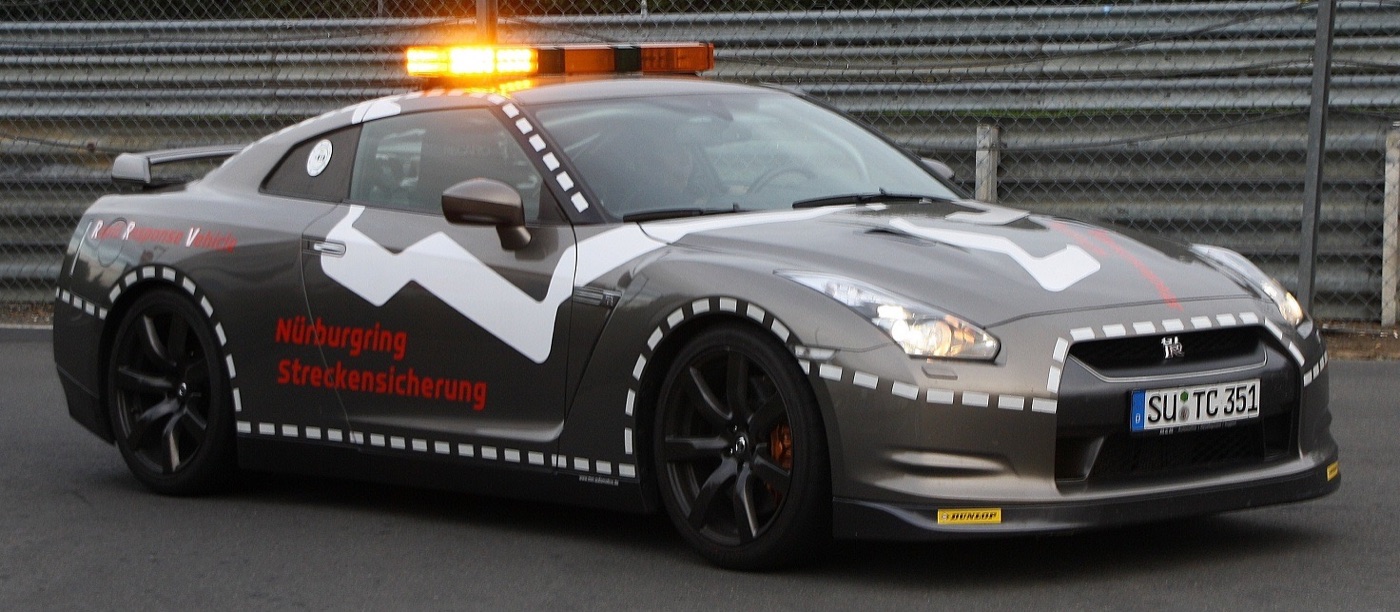
The April 2008 lap started a row with Porsche. August Achleitner, in charge of the 911, said Porsche had bought a GT-R in America and lapped it at 7:54 on the same day that a 911 Turbo did 7:38 and a GT2 7:34, and Autocar quoted him in September 2008: “For us, it’s not clear how this time is possible … We imagine with this Nissan used other tyres.” Nissan said the car was a base-specification GT-R on standard Japanese-market tyres. Mizuno returned to it in 2012: “The tyres are exactly the same as what customers use for driving in the city.”
The Nismo’s 7:08.679
The Nismo lap was set on a Monday afternoon in September 2013, and announced in November, by a team of four, Sébastien Buemi, Michael Krumm, Armin Hahne and Tetsuya Tanaka, with Nissan’s test driver Hiroyoshi Kato (“over 5000 laps of the ’Ring”) checking the surface first. Krumm did 7:10 and then 7:08.679 at 4.48pm, 12 minutes before the Nordschleife closed and five minutes before it rained. As SkiddMark noted at the time, the Porsche 918 Spyder had gone round in 6:57 that September, so the Nismo was the second-fastest road car on the circuit.
Drift, ice and Tsukuba records
In 2016 Masato Kawabata set the Guinness World Records title for the fastest drift, 304.96km/h at a 30-degree angle, in a specially tuned 2016 GT-R at Fujairah airport in the UAE, Nissan UK said. In 2013 Roman Rusinov and Andrey Leontjev drove a standard GT-R at 184mph across the frozen Lake Baikal for a Russian ice speed record. At Tsukuba, Tsugio Matsuda set production-car lap records in Nismos in 2019 (59.361 seconds) and 2024 (59.078).
GT-R R35 variants and special editions
Nissan sold the GT-R in several variants: comfort trims (Pure, Black Edition, Premium Edition, Recaro and Prestige in Britain), track versions (SpecV, Track Pack, Track Edition and the Nismo) and anniversary and one-off editions.
SpecV
The SpecV of 2009 was a lighter two-seat GT-R with Recaro carbon-backed seats, carbon-ceramic brakes developed with Brembo, a titanium exhaust, Nismo forged wheels, carbon spoiler, grille and brake ducts, and a high-gear boost function for more mid-range torque, which together saved 60kg. Europe got 40 cars, ordered by 22 January 2010, at £124,900 in Britain, more than twice the price of a standard GT-R, sold only through Middlehurst Motorsport in St Helens, SkiddMark reported.
Track Pack and Track Edition
The 2012 Track Pack, for Britain and Japan, cost £84,450: no rear seats, RAYS six-spoke wheels saving 10kg, extra brake ducts that Nissan said cut front disc temperatures by up to 100°C on track, stiffer springs and high-friction cloth seats. In 2013 it was £86,610, and the US got an equivalent, the Track Edition, at $115,710. From 2016 the Track Edition engineered by Nismo sat between the Prestige and the Nismo, with bespoke Bilstein dampers, a lighter anti-roll bar, wider front bumper and Nismo wheels.
GT-R Nismo
The Nismo version, on sale in Japan from February 2014, had the GT3 racing car’s larger turbochargers, 600 PS (591bhp) and 652 Nm, ignition timing controlled cylinder by cylinder, a body bonded with adhesive as well as spot welds, Dunlop tyres made for it and aero that added 100kg of downforce at 186mph without raising the 0.26 drag coefficient. SkiddMark expected a British price of about £130,000 in November 2013; PistonHeads gives £120,000 at its 2014 debut and £180,000 by 2021. Later Nismos also had carbon-ceramic brakes, with 410mm front discs, and a carbon-fibre roof.
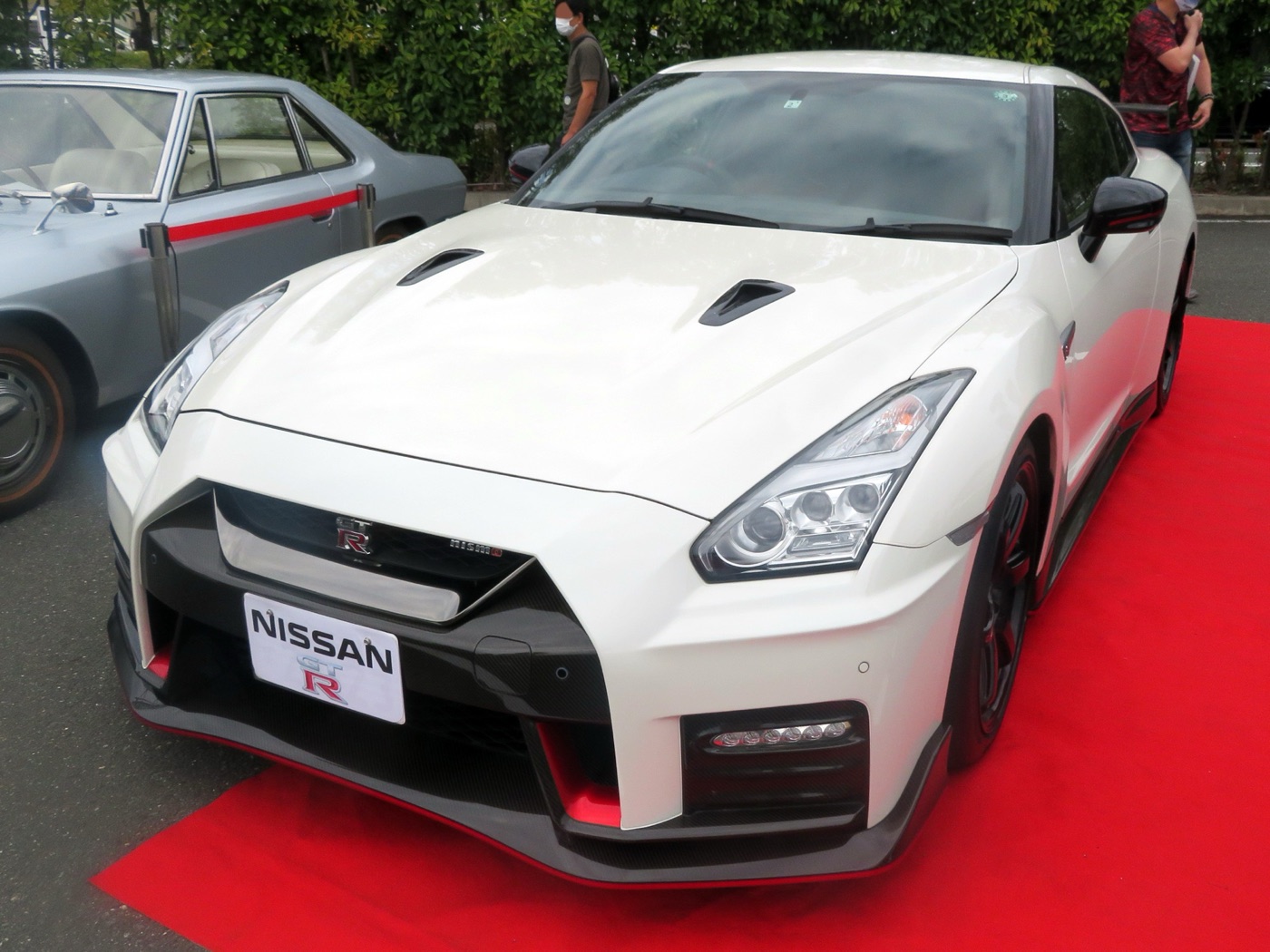
Egoist, 50th Anniversary, T-spec and one-offs
The Egoist of 2011 was a made-to-order trim; SkiddMark wrote in 2012 that its interior missed the mark. The 50th Anniversary edition of 2019 cost £92,995 in Britain, in Bayside Blue with white stripes. The T-spec, from 2021, had carbon-ceramic brakes and, in 2024 form, Nismo-tuned stability control and wider front wings. A gold 2013 GT-R signed by Usain Bolt sold for $187,100 in a 2012 charity auction, and the GT-R50 by Italdesign, with a Nismo-tuned 720 PS engine, was limited to 50 cars, with deliveries from late 2020.
The Nissan GT-R R35 in motorsport
Racing versions of the R35, developed by Nissan’s motorsport arm, Nismo, won five GT500 titles in Japan’s Super GT, the 2011 FIA GT1 drivers’ championship and the 2015 Bathurst 12 Hour. The racing cars shared the shape and badge more than the hardware: the first GT500 car had a 4.5-litre V8, and the GT1 car a 5.5-litre V8 driving the rear wheels.
Super GT
The GT500 GT-R won seven of nine races in its first season, 2008, when Satoshi Motoyama and Benoît Tréluyer took the drivers’ title in the Xanavi Nismo car. MOLA’s Masataka Yanagida and Ronnie Quintarelli won in 2011 and 2012, and Nismo’s Tsugio Matsuda and Quintarelli in 2014 and 2015, Dailysportscar recorded when the car retired after 2021.
FIA GT1
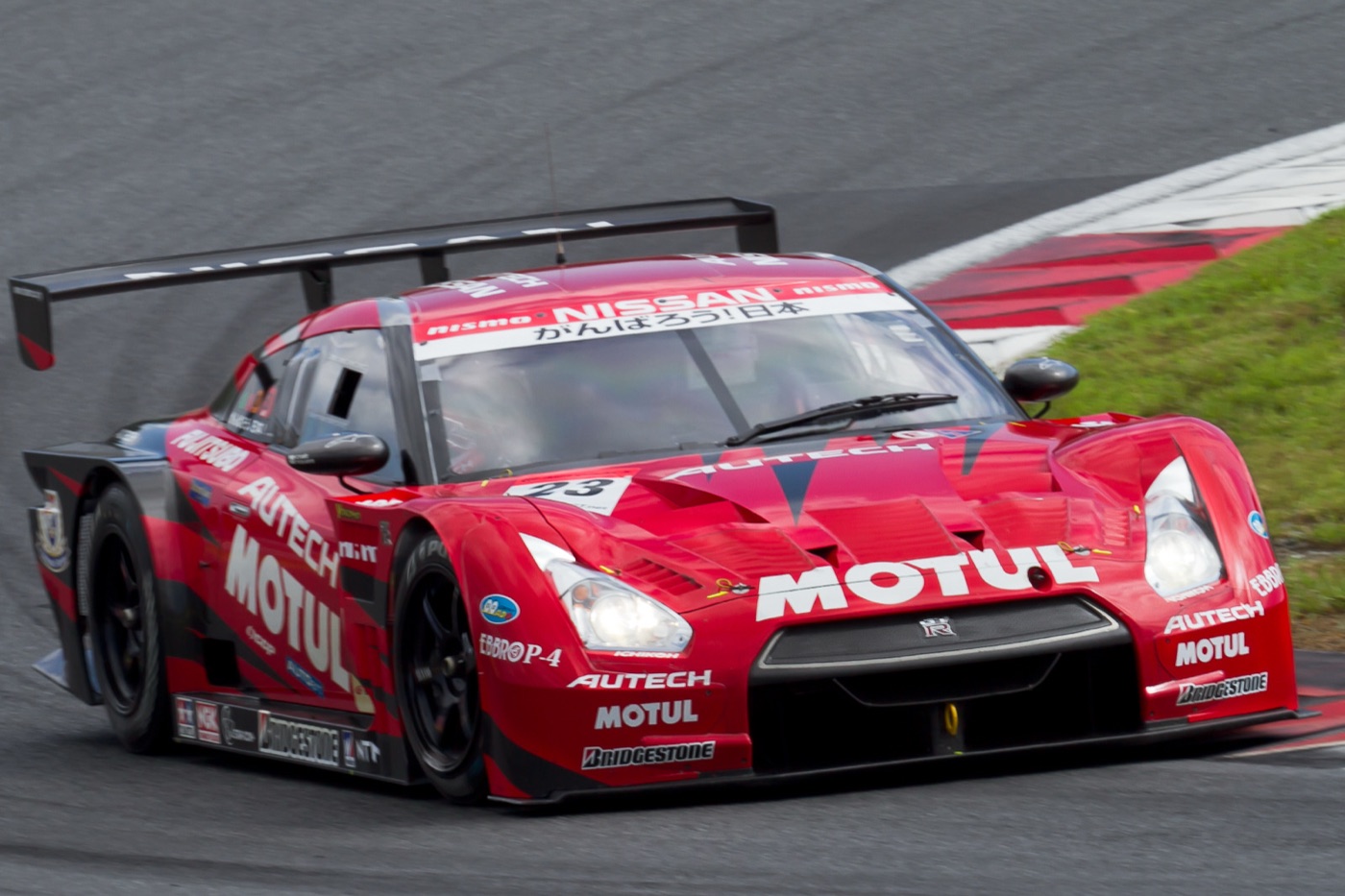
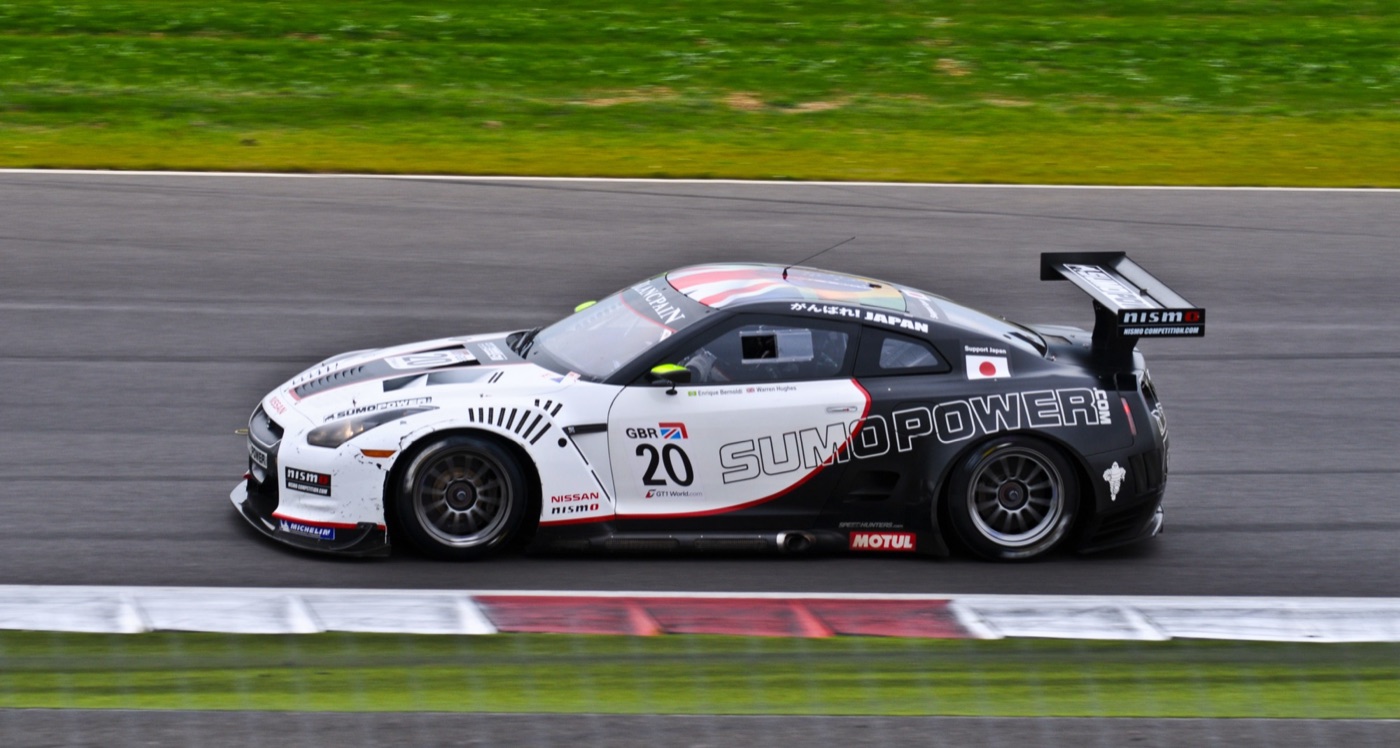
Sumo Power GT and Swiss Racing Team each ran two GT-Rs in the first FIA GT1 World Championship in 2010. In 2011 Lucas Luhr and Michael Krumm won four races in JR Motorsports’ No. 23 car and clinched the drivers’ title at San Luis in Argentina, Autosport reported. Luhr said in Nissan’s release: “Some of the tracks this year suited the GT-R perfectly and we managed to capitalise.”
GT3, GT Academy and the Bathurst win
The GT-R Nismo GT3 carried Nissan’s GT Academy drivers, gamers turned racers. Before the 2012 Spa 24 Hours, Jann Mardenborough, the 2011 GT Academy winner, who had never been to Spa, was sixth fastest of 66 cars in first practice in RJN’s No. 35 car, shared with Alex Buncombe, Chris Ward and Lucas Ordóñez, in round four of the Blancpain Endurance Series. SkiddMark quoted him before the race: “The GT-R should go well at Spa; it likes the high-speed stuff as it’s so well planted at the rear. It’s an easy car to drive fast.”
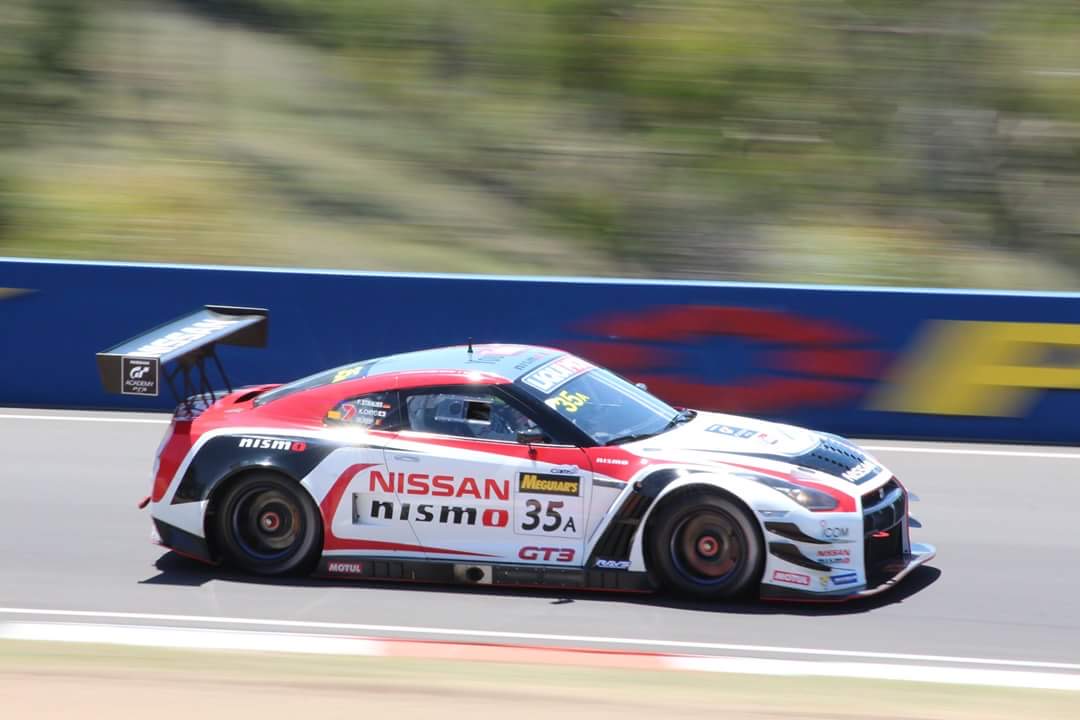
The biggest GT3 win came at the 2015 Bathurst 12 Hour. On the final restart Katsumasa Chiyo passed Laurens Vanthoor’s Audi and then the leading Bentley, and won by 2.4 seconds with Wolfgang Reip and Florian Strauss after 269 laps, Motorsport.com reported.
How many Nissan GT-R R35s were made?
Nissan built about 48,000 R35s in 18 years, all at its Tochigi factory, for Japan, Europe, the US and other markets. In Britain, the Department for Transport’s vehicle licensing table VEH0120 counted 2,827 at the end of June 2026: 2,093 licensed for the road and 734 declared off the road (SORN). The number has barely moved since 2019, and more go on SORN each winter.
| End of | Licensed | SORN | Total |
|---|---|---|---|
| 2014 | 1,822 | 157 | 1,979 |
| 2016 | 2,059 | 235 | 2,294 |
| 2018 | 2,334 | 381 | 2,715 |
| 2020 | 2,275 | 589 | 2,864 |
| 2022 | 2,037 | 751 | 2,788 |
| 2024 | 1,829 | 946 | 2,775 |
| 2025 | 1,796 | 1,007 | 2,803 |
| June 2026 | 2,093 | 734 | 2,827 |
By the model names in the same table, the commonest GT-Rs in Britain in June 2026 were the Black Edition (798, licensed and SORN), Premium Edition (779), Recaro (397), early cars listed simply as “GT-R V6” (389) and Prestige (301). There were 62 Track Editions, 54 Nismos, 22 Recaro Editions, 17 50th Anniversary cars, four 45th Anniversary cars, three Pures and one SpecV.
Nissan GT-R R35 prices and values today
In the year to 26 October 2026 a standard R35 GT-R sold at American auctions for $64,000 to $163,000, and a Nismo for $208,000 to $320,999. Ian Litchfield told Autocar in 2017: “Each time Nissan launches a new one, it gives used ones an extra boost.”
| Model years | Sales | Median | Lowest | Highest |
|---|---|---|---|---|
| 2009–2010 | 4 | $70,000 | $64,000 | $107,250 |
| 2013–2016 | 8 | $86,000 | $66,000 | $105,420 |
| 2017–2021 | 6 | $118,000 | $82,611 | $163,000 |
| Nismo, 2016–2023 | 4 | $268,000 | $208,000 | $320,999 |
The dearest was a 2023 Nismo on Bring a Trailer; no 2011 or 2012 cars sold in the year. In Britain the one recorded auction sale in the same year was a 2009 Black Edition at Iconic Auctioneers in July 2026, for £54,000. In March 2023 PistonHeads found 2016-on cars from about £70,000 for 40,000 to 55,000 miles, and Autocar’s January 2017 guide priced 2009 cars from £35,000.
Which GT-R R35 should you buy?
The cheapest way in is a 2009 or 2010 car, which has six-monthly servicing and the faults the buying guides tie to early cars (gearbox solenoids and selectors, weeping dampers). The 2012 to 2016 cars have 550 PS and annual servicing, and the 2017-on cars have the leather dashboard, more compliant suspension and 570 PS, at a price. Many cars have been tuned: PistonHeads lists Litchfield kits from a 590hp Stage 1 at just over £1,300 to a 750hp Stage 5 at £16,000.
Ownership: reliability, known faults and running costs
The R35 GT-R’s engine “has acquired legendary status” for its strength, PistonHeads says, but the car has known faults, set out by Autocar’s John Evans in his 2009–2015 buying guide and Tony Middlehurst in PistonHeads’ 2016-on guide. “Appetite for tyres and brakes is ferocious,” Autocar says.
Known faults
Autocar lists gearbox selector problems on 2008 Japanese cars, a rattle from the bellhousing caused by flywheel-shaft bearings (PistonHeads says it is usually harmless and has not been a problem on post-2016 cars), timing chains that stretch and are a £2,000 engine-out job at about 70,000 miles, weeping dampers on older cars, soft paint that chips easily and a bonnet with a single-use pedestrian-protection system that can cost £10,000 to replace. PistonHeads adds faulty transmission solenoids on early cars, clutch baskets that fail on tuned or often-launched cars, front discs that crack under hard use and cost up to £3,000 a set, and condensation in the headlamps.
A Nissan High Performance Centre could read a car’s ECU for about £55, Autocar said, which shows how many launch-control starts it has done. Autocar also notes recalls on early cars for the steering lock and failed instrument lighting; the DVSA’s current file lists one British GT-R recall, R/2021/188, for front steering knuckles that could deform, covering two cars built between August and October 2020.
Servicing and running costs
Maintenance intervals changed with the models: early cars need a service every six months or 6,000 miles (before 2012, Autocar says; before 2011, says PistonHeads), and later cars every 12 months or 9,000 miles; Autocar says the transaxle fluid needs changing every 18 months or 18,000 miles. In 2023 PistonHeads gave typical independent prices of £315 for a year-one service, £440 for years two and four, £700 for year three (with new differential and gearbox fluids) and just over £1,000 for year five. Autocar gave the annual road tax in 2017 as £515 for every model.
Rivals: the Porsche 911 Turbo and others
The GT-R’s usual rival was the Porsche 911 Turbo. In 2013 SkiddMark set the US Track Edition’s $115,710 against $130,400 for a 911 GT3 and $51,995 for the new Corvette Stingray. PistonHeads lists the 2016-on car’s natural rivals as the Porsche 911 Turbo S, Mercedes-AMG GT, Aston Martin V8 Vantage and Audi R8 Plus.
Reception and awards
The GT-R won evo’s Car of the Year for 2008, deciding the final in France on Mont Ventoux, and Car of the Year Japan’s Most Advanced Technology Award for 2008–2009. Nissan South Africa’s 2019 history of the GT-R quotes Jeremy Clarkson calling it “one of the very, very best cars in the world”. In 2019 it was used sports car of the year at Car Dealer Magazine’s Used Car Awards. The cabin materials drew the criticism, and Nissan named interior refinement as one of the five areas of the 2017 update.
Questions
Is the Nissan GT-R R35 a Skyline?
No. The R35 was the first GT-R sold without the Skyline name; the last Skyline GT-R was the R34, built until 2002.
Why is the GT-R called Godzilla?
The name began with the R32 Skyline GT-R in Australia. PistonHeads dates it to 1989, when an Australian car magazine gave it; Nissan’s own history ties it to the Australian media during the R32’s Australian Touring Car Championship wins of 1991 and 1992. The R35 inherited it.
Can you buy a new Nissan GT-R in the UK?
No. European production ended in March 2022 because of new drive-by noise rules, and the last R35 of all was built for Japan on 26 August 2025.
How much horsepower does the GT-R R35 have?
480 PS (473bhp) at launch in 2007, rising to 570 PS (562bhp) from the 2017 model year; the GT-R Nismo has 600 PS.
Does the Nissan GT-R R35 have a manual gearbox?
No. Every R35 has a six-speed dual-clutch gearbox mounted at the rear axle as part of the four-wheel-drive transaxle.
Who builds the GT-R engine?
Each VR38DETT was assembled by one of a team of nine takumi, master craftsmen, at Nissan’s Yokohama plant, and carries a plate with the builder’s name.
Is the GT-R R35 a four-seater?
It is a 2+2: the fixed rear seats suit children, and the boot holds 315 litres.
Will there be a Nissan GT-R R36?
Nissan says a new GT-R is in development but has shown nothing. Its chief executive, Ivan Espinosa, told Motor1 in April 2026 that Nissan is “actually working” on the GT-R; as of October 2026 there is no date, engine or specification.
Sources
- Nissan, “Nissan bids fond farewell to R35 GT-R as final vehicle rolls off the line”, 26 August 2025: end of production, 48,000 cars, takumi, power history, lap times, Tsukuba, racing record.
- Nissan, Japanese launch release for the GT-R, 24 October 2007: launch and on-sale dates, Japanese prices, 480 PS and 588 Nm, aftersales.
- Nissan UK, “Nissan GT-R going even faster than expected”, April 2008: UK order book, 700 deposits, £52,900, 10 High Performance Centres, 1,000 a month.
- Nissan, “GT-R wins Car of the Year Japan’s Most Advanced Technology Award”, 12 November 2008: award; Japanese and North American launch dates.
- Nissan USA, 2010 Nissan GT-R press kit: 2010 changes, 485hp, assembly at Tochigi and engines at Yokohama.
- Nissan USA, “2012 Nissan GT-R features more horsepower …”, 17 November 2010: the 530 PS car: aero, Cd 0.26, wheels, trim.
- Nissan, “2017 Nissan GT-R makes world debut at New York International Auto Show”, 23 March 2016: 2017 changes.
- Nissan UK, “2017 Nissan GT-R: Press Pack”, 26 May 2016: UK 2017 prices, 570 PS, four-wheel drive, GT-R history and racing titles.
- Nissan UK, “Nissan reveals full specs and pricing for thrilling new GT-R Track Edition”, 26 September 2016: Track Edition, 637 Nm.
- Nissan UK, “Launch control: MY20 Nissan GT-R is ready for take-off”, 30 August 2019: 2020 changes and UK price.
- Nissan UK, “Nissan confirms UK pricing for exclusive GT-R 50th Anniversary edition”, 1 July 2019: 50th Anniversary price and colour.
- Nissan UK, Car Dealer Magazine Used Car Awards release, 26 November 2019: used-car award.
- Nissan UK, “Nissan GT-R breaks the Guinness World Records title for fastest drift”, 7 April 2016: drift record.
- Nissan UK, “Nissan GT-R50 by Italdesign deliveries to begin in late 2020”, 5 December 2019: GT-R50: 50 cars, 720 PS.
- Nissan, “New Japan-market Nissan GT-R unveiled”, 14 September 2021: T-spec, 100 cars by lot.
- Nissan, 2024 Japan-market GT-R release, 13 January 2023: 2024 facelift, front limited-slip differential.
- Nissan, “Nissan GT-R 2025 models launch in Japan”, 14 March 2024: 2025 changes and Japanese prices.
- Nissan USA, 2024 Nissan GT-R press kit: specification table.
- Nissan USA, “Nissan sunsets R35 generation GT-R with T-spec Takumi and Skyline limited editions”, 14 June 2024: end of North American production.
- Nissan South Africa, “Nissan celebrates its heritage with a look back on the history of the legendary GT-R”, 19 September 2019: Clarkson quote, Skyline history.
- Nissan, FIA GT1 San Luis release, 7 November 2011: 2011 GT1 drivers’ title, Luhr and Krumm quotes.
- Autosport, “Luhr and Krumm claim GT1 title”, November 2011: GT1 title.
- Motorsport.com, “Godzilla storms to thrilling Bathurst victory”, February 2015: Bathurst 12 Hour result.
- Dailysportscar, “2021 goodbyes: Nissan GT-R Nismo GT500”, 5 January 2022: Super GT titles and drivers.
- Autocar, “Porsche says Nissan cheating”, 30 September 2008: Porsche’s lap times and Achleitner’s quote.
- John Evans, Autocar, “Nissan GT-R (2009-2015): used buying guide”, 30 January 2017: faults, servicing, Ian Litchfield, prices, road tax.
- Tony Middlehurst, PistonHeads, “Nissan GT-R (2016-on): PH Used Buying Guide”, 5 March 2023: faults, servicing costs, prices, rivals, tuning, boot space.
- Carscoops, “Godzilla is dead in Europe as Nissan is axing GT-R over noise regulations”, March 2022: Nissan UK statement on the end of European production.
- evo, “evo Car of the Year: every winner since 1998”: 2008 win.
- Department for Transport, vehicle licensing statistics table VEH0120 (UK), read 27 October 2026: UK registrations by year and model.
- DVSA, vehicle recalls file, downloaded 27 October 2026: recall R/2021/188.
- Jeff Perez, Motor1, “Nissan CEO confirms new GT-R development”, 14 April 2026: Espinosa on the next GT-R.
- Bring a Trailer, Nissan GT-R results, read 27 October 2026: US sale prices, with Cars & Bids, Mecum and RM Sotheby’s from OUTLAW 8’s auction records.
- SkiddMark’s own reports, 2008–2014: the GT-R against the GT2 at the Nürburgring (November 2008); Getting to know the GT-R, with Jethro Bovingdon (June 2009); Nissan GT-R receives a nip-and-tuck (November 2009); the SpecV on sale in Europe (December 2009); the GT-R in FIA GT1 (January 2010); the 2011 GT-R (October 2010); the 2012 GT-R and its Track Pack (November and December 2011, April 2012); Spa 24 Hours: the road car against the GT3 car and the British GT round at Snetterton (July and August 2012); the Bolt Gold GT-R (October to December 2012); the Russian ice speed record and the 2014 Track Edition (April and May 2013); the Nismo’s 7:08.679 (November 2013); the Nismo on sale in Japan (February 2014).
This article was written in October 2026 to replace SkiddMark’s original report of 2 November 2012, “Nissan explains the philosophy behind its 2013 GT-R in a revealing new video”, with every figure checked against Nissan’s own releases. Registrations, recalls and sale prices checked 27 October 2026.