Pagani Huayra: history, every version, specs and values
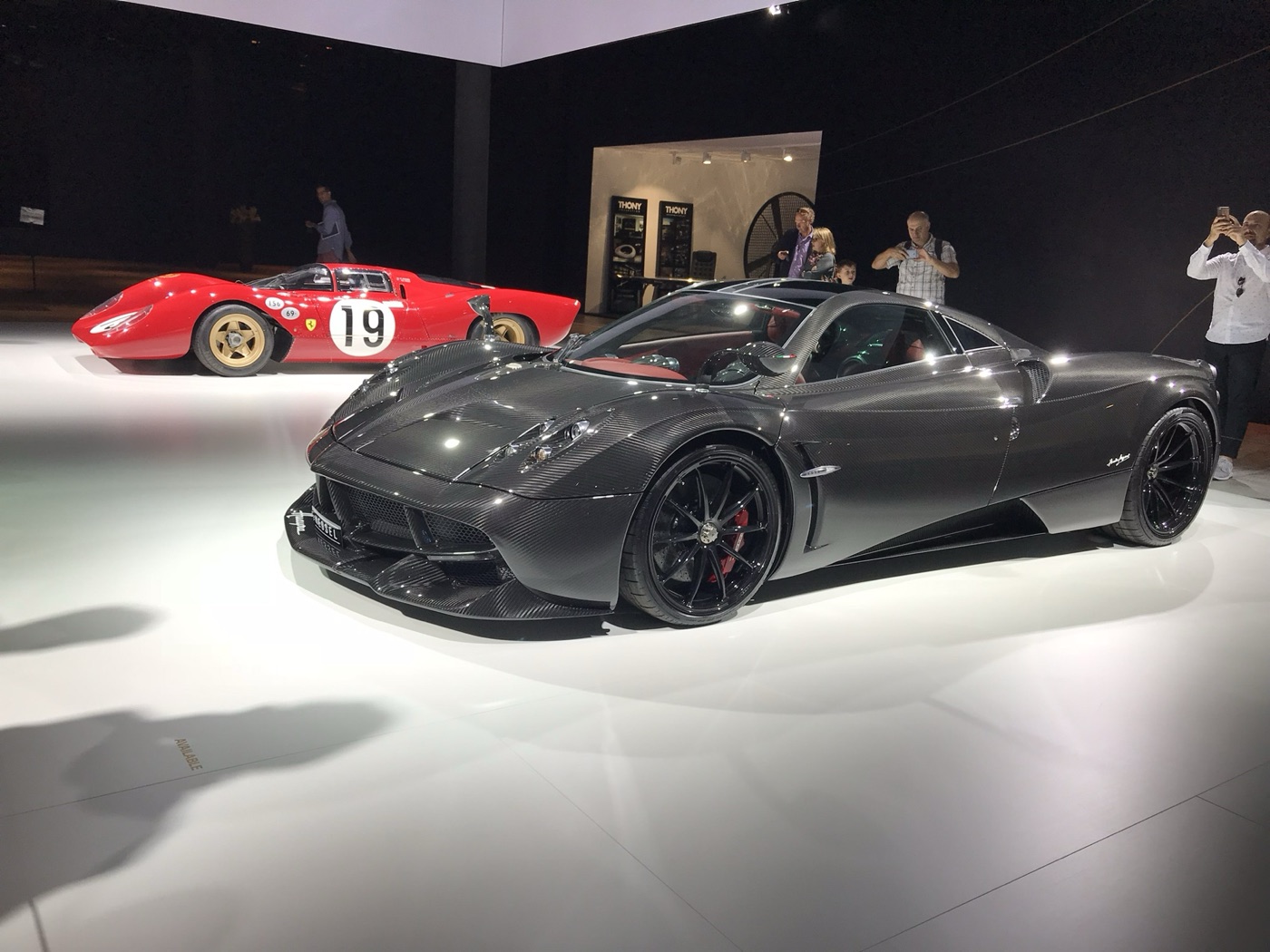
The Pagani Huayra is the mid-engined hypercar that Pagani Automobili of San Cesario sul Panaro, near Modena, revealed in January 2011 as the successor to the Zonda. It has a carbo-titanium monocoque, active aerodynamics and a 6.0-litre twin-turbo V12 built for it by Mercedes-AMG: 730hp and 1,350kg in the first coupé, which was limited to 100 cars. More than a dozen versions have followed, from the Huayra BC and Roadster to the 900hp track-only Huayra R Evo, and the cars now sell for more than $3 million.
The name comes from Huayra Tata, an Andean god of wind. The announced production runs of all its versions add up to about 325 cars, and in 2013 a coupé lapped the BBC Top Gear test track in 1min 13.8sec, the fastest time a production car had set there.
History of the Pagani Huayra
Horacio Pagani began the concept in 2003, and the car was revealed in January 2011 "after seven years of hard work". In his own account of the project on Pagani's website, he wrote that the C9, as it was code-named, started in the year the Zonda S Roadster came out, when the Bugatti Veyron, Porsche Carrera GT, Ferrari Enzo and Mercedes SLR McLaren were raising the bar for supercars.
The C9 project, 2003 to 2010
Pagani thought the Zonda, designed in the early 1990s, was out of date, so the new car was to be different "in form, dimension, dynamics and technology". He wanted it longer than the Zonda, with a track 70mm wider and the cabin moved 40mm further back. The team worked through eight scale models, two full-size models and hundreds of drawings over five years of styling work. Pagani's theme was air, and above all wind: "a jet turbine, the silence of a glider".
The Zonda kept selling while the C9 was developed, and the track-only Zonda R, shown at Geneva in 2009, became a test bed for it. Pagani called it "a key laboratory for the Huayra", for materials, safety and engineering ideas.
The C9 test mule crash near Stuttgart
In March 2010 a C9 prototype was badly damaged during road testing in Germany. The crash, on the B14 near Stuttgart, was reported by SkiddMark from pictures supplied by GTSpirit, which showed a car that was written off. The cause was not known. At the time the C9 was expected on sale in 2011 at about £750,000, with a 6.0-litre V12 of about 700hp and a top speed of 225mph.
Leaked pictures and the 2011 launch
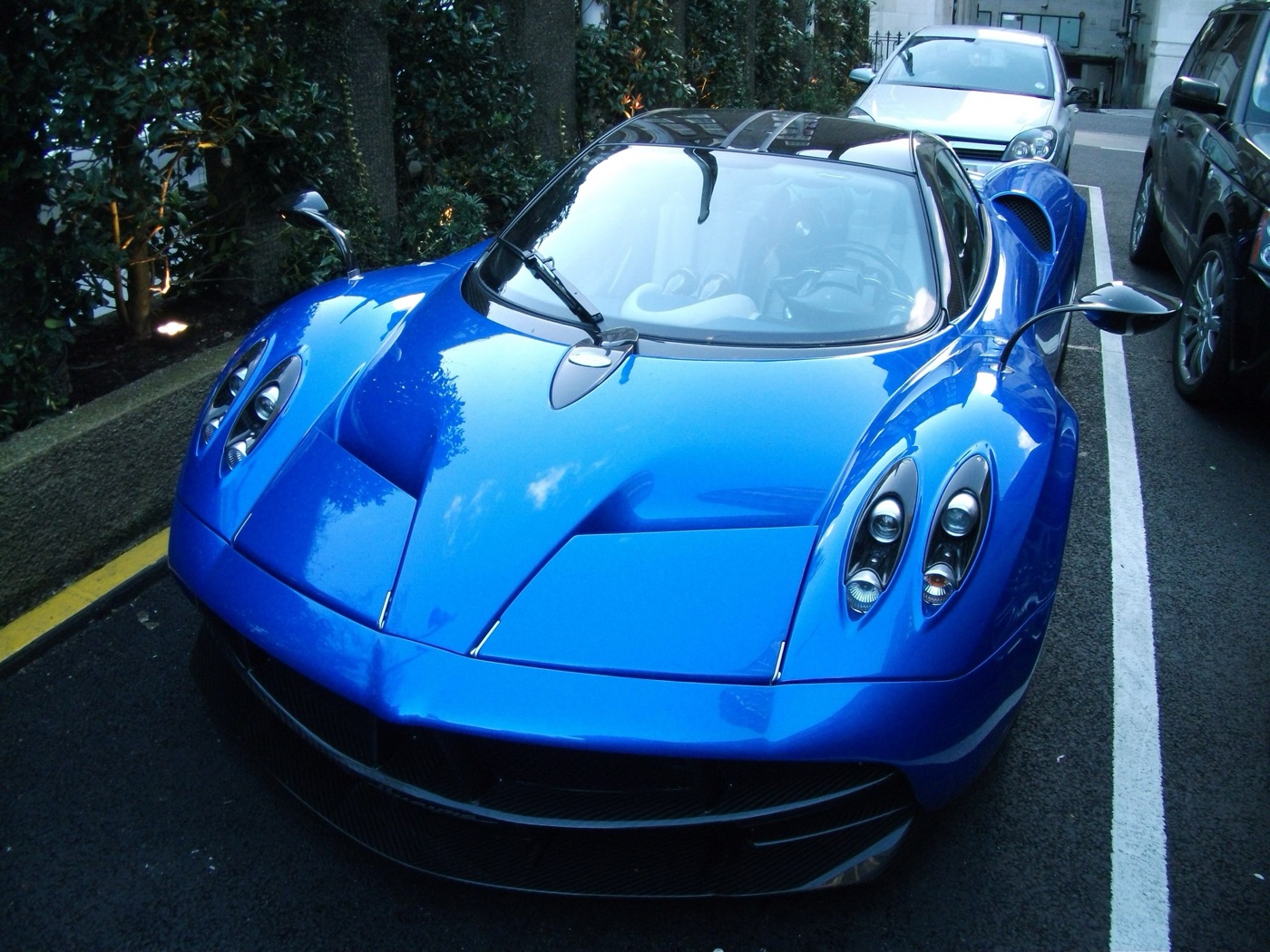
Pagani had been releasing teaser videos for weeks when, on Friday 21 January 2011, a magazine spread showing the car leaked online, followed by an official photograph and more pages from the Spanish edition of CAR magazine. Reaction across the internet was mixed, SkiddMark reported. According to the leaked magazine text, Pagani would build up to 20 cars a year at about €1 million (then about £850,000) each, with a 690bhp Mercedes-powered V12 and a claimed 250mph.
Pagani put out its own pictures and a press release on 25 January 2011, which Autoblog translated the same day. The car was shown to guests and journalists at Pirelli's headquarters in Milan on 18 February 2011, with speakers from Pirelli and AMG, and then on stand 1151 at the Geneva Motor Show in March, as Pagani's news pages record. Its first showing in the United States was a preview at the Art Center College of Design in Pasadena on 4 August 2011.
What does Huayra mean?
Huayra comes from Huayra Tata, the god of wind in the legends of the Aymara people of the Andes. Pagani's 2011 release said the god lived in the hills and valleys around Lake Titicaca and could raise the lake's waters and turn them into rain.
Sold out, and the last coupé
The coupé sold out in February 2015. GTSpirit reported that the run was limited to 100 cars under Pagani's agreement with engine supplier AMG, and that the new factory could build about 45 cars a year. Deliveries to the United States had started in the second half of 2014.
The 100th and last coupé, named L'Ultimo, was finished in 2018. Top Gear reported that it was painted after Lewis Hamilton's Mercedes-AMG Formula 1 car, in exposed carbon with Petronas green, and carried the parts of the Tempesta aero pack and a 789bhp engine.
The successor: Pagani Utopia
The Huayra's replacement, the Utopia, was unveiled at Italy's National Science and Technology Museum in Milan on 13 September 2022, in what Pagani's release called the third chapter in the brand's history. Huayra versions have kept coming since: the Imola Roadster, the R Evo Roadster, the Epitome, the Codalunga Speedster and the Huayra 70.
Design and engineering
The Huayra is built around a carbo-titanium monocoque with steel subframes front and rear, a mid-mounted twin-turbo V12 and rear-wheel drive. Horacio Pagani put the parts count at more than 10,000 if the engine and gearbox are counted part by part; at the Milan launch he spoke of 4,000.
Carbo-titanium monocoque
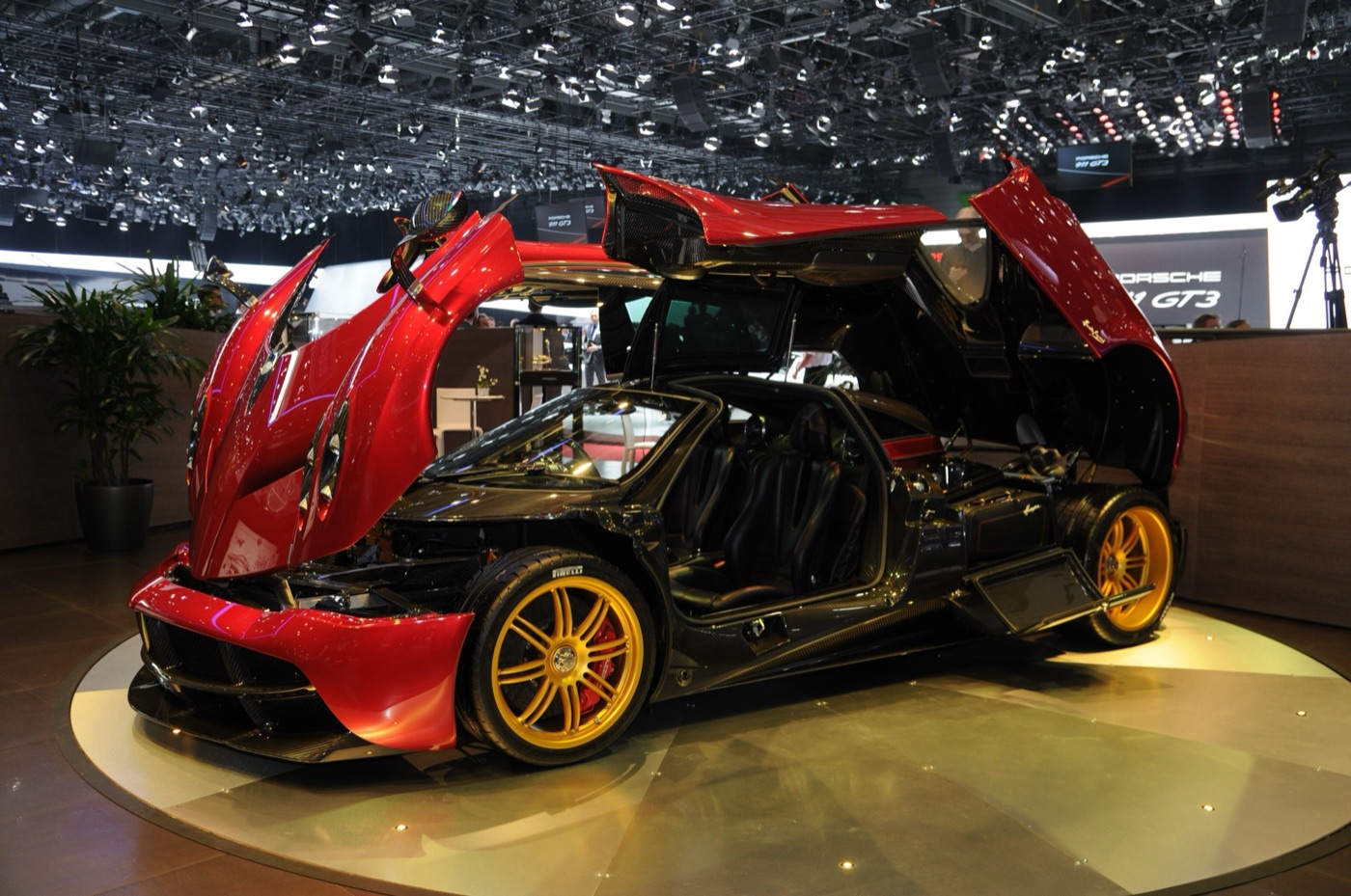
The central monocoque is made of carbo-titanium, a composite of carbon fibre and titanium, using materials and methods first tested on the Zonda R. To save weight, the pipes for the cooling and air-conditioning systems run inside the monocoque, so no separate parts are needed. The gullwing doors take in a large part of the roof. The result was a dry weight of 1,350kg, which Pagani said made the Huayra the lightest car in its segment.
Active aerodynamics
The Huayra was the first Pagani with active aerodynamics: four flaps, two at the front and two at the rear, and a front suspension that changes the ride height. Horacio Pagani said that "the whole car is shaped as a wing", so the front was made high to shorten the upper surface and counter lift. The flaps are run by their own control unit, which takes data from the ABS and engine computers. RM Sotheby's catalogue gives the drag coefficient as variable between 0.31 and 0.37.
The Mercedes-AMG M158 twin-turbo V12
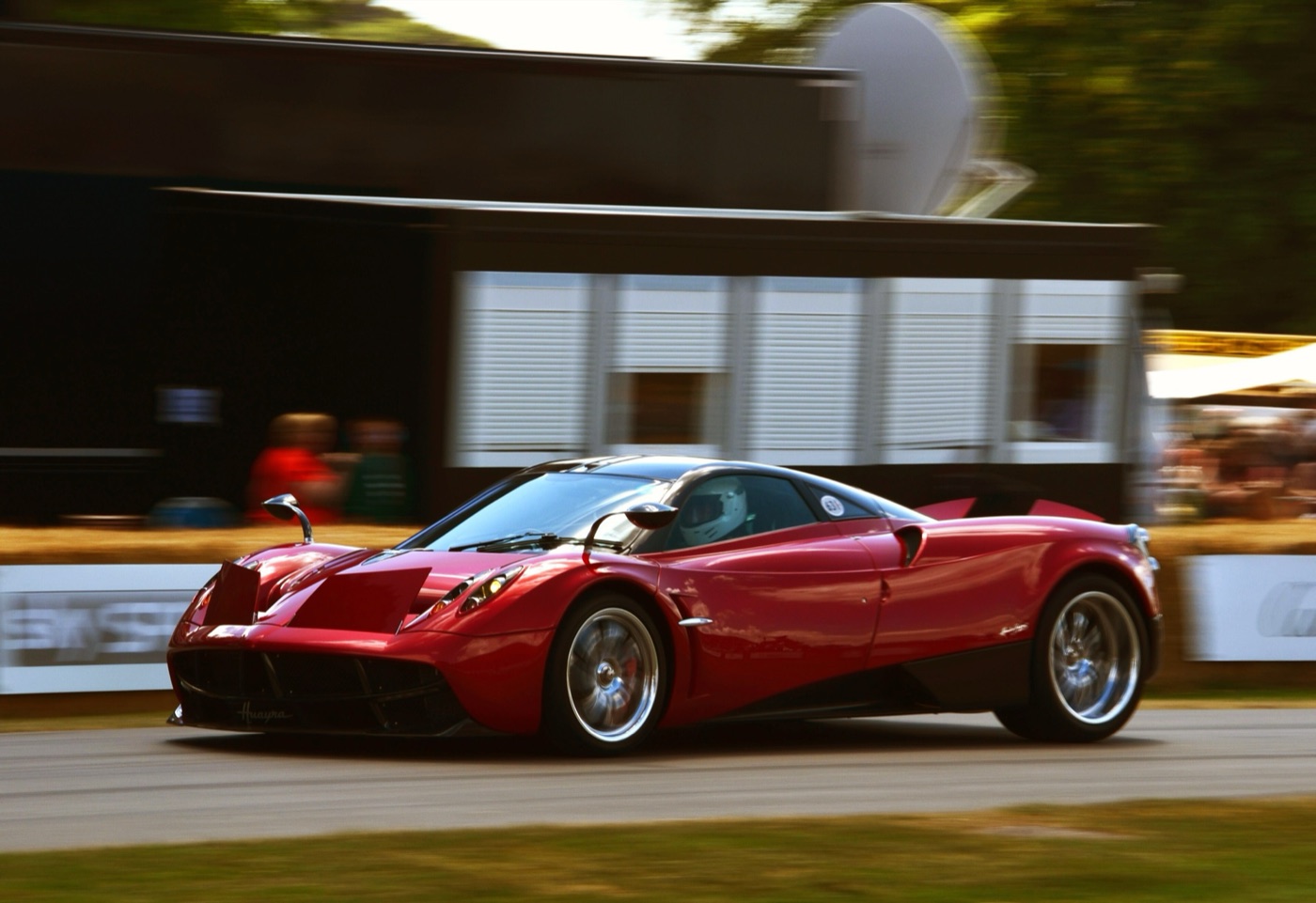
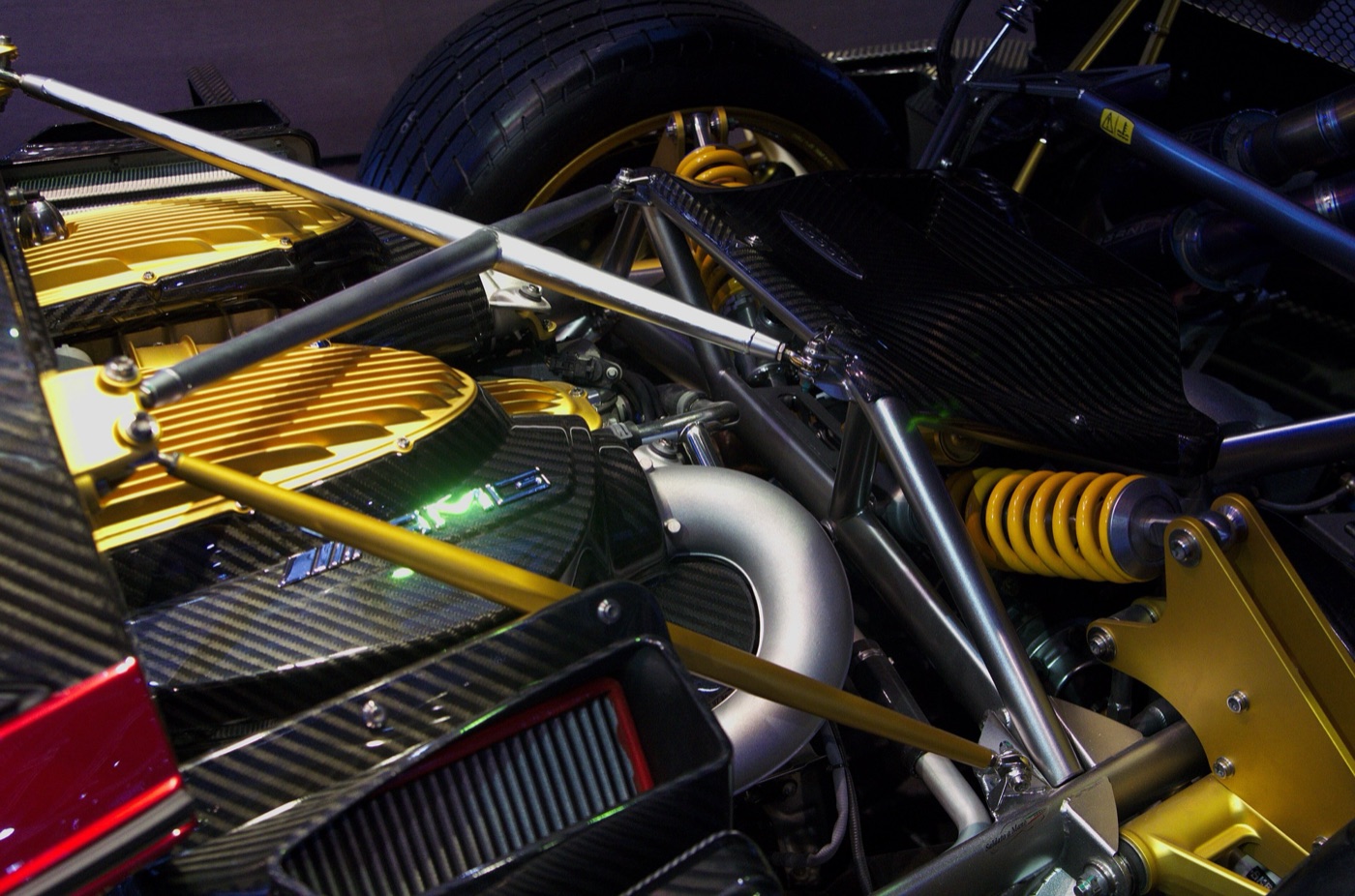
Mercedes-AMG built the M158 engine for the Huayra: a 5,980cc 60-degree V12 with two turbochargers. Pagani asked for a linear delivery with no lag, because lag could create safety problems or keep the electronic aids working all the time, and Horacio Pagani described the feeling he wanted as "the brute force of an airplane taking off". The engine met the EU5 and LEV2 emissions rules at launch. MHG-Fahrzeugtechnik made the titanium exhaust, with Inconel silencers, and the whole system weighs less than 10kg.
Why a single-clutch gearbox?
The power goes to the rear wheels through a seven-speed sequential gearbox, mounted across the car, with a single twin-plate clutch. Pagani's engineers rejected an oil-bath dual-clutch gearbox because it would have added more than 70kg, more than the gain from quicker shifts was worth; the whole transmission weighs 96kg. The gearbox is made by Xtrac, a British firm, and later Huayras kept the single-clutch layout.
Brakes, tyres and suspension
Pirelli developed a P Zero tyre for the car. The BC and Roadster have Brembo carbon-ceramic discs of 380mm at all four corners, with six-piston callipers at the front and four-piston at the rear, and double wishbones all round. The coupé's wishbones were already forged from Avional aluminium alloy, tested at length on the Zonda R. The BC added parts in HiForg, another forged aluminium alloy, which New Atlas reported cut the suspension's weight by 25 per cent.
Interior
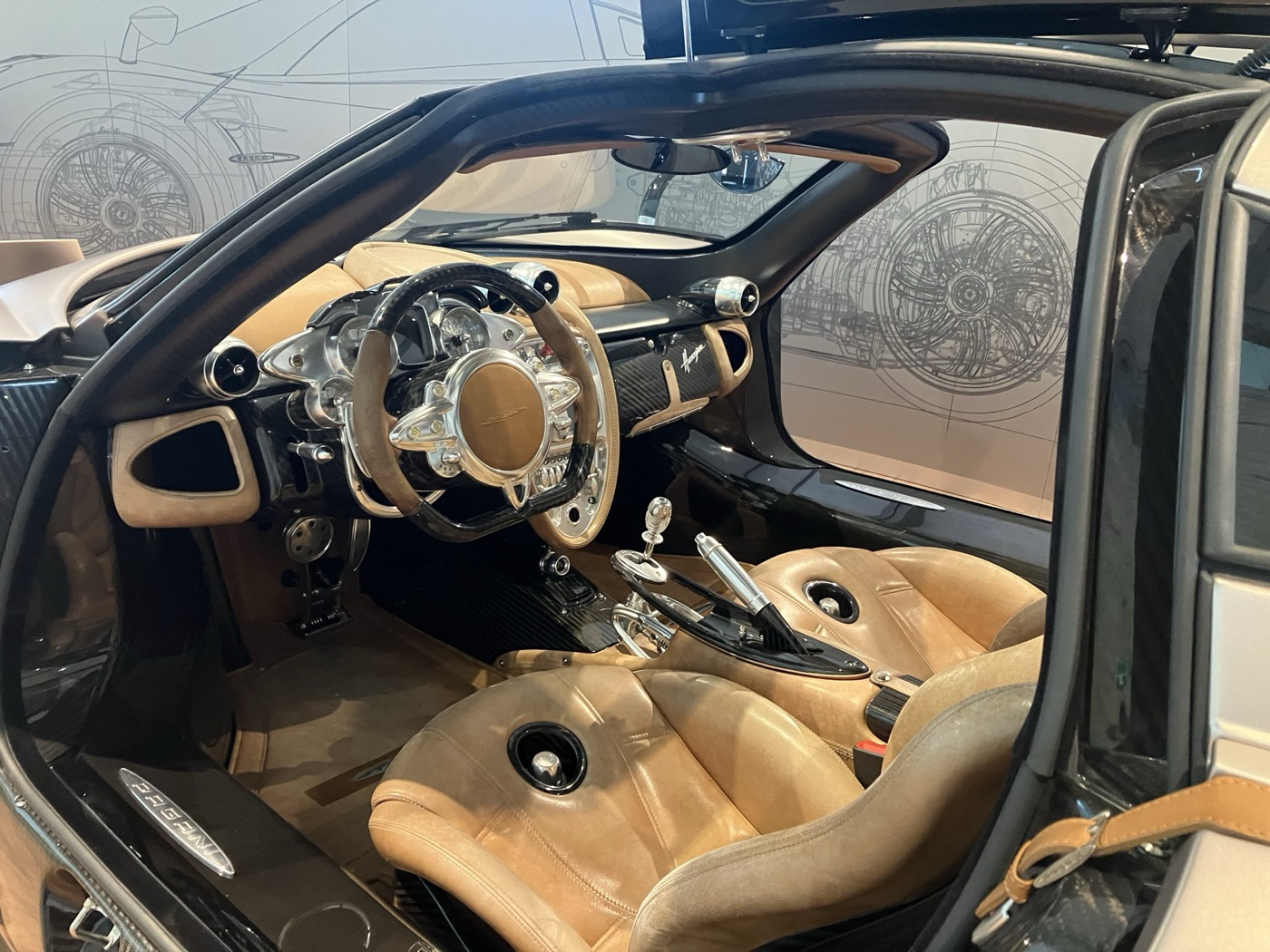
The cabin is carbon fibre, leather and machined aluminium, with exposed linkage for the gear lever and round instruments set in a metal binnacle. Top Gear's Richard Hammond said that inside it "looks like a Victorian's idea of the 23rd Century. And the detail is beyond obsessive."
Pagani Huayra specifications and performance
The first Huayra coupé has 730hp (544kW) at 5,800rpm and 1,000Nm from 2,600 to 4,200rpm, for a dry weight of 1,350kg split 44 per cent front and 56 per cent rear. Pagani gives its length as 4,605mm, its body width as 2,036mm (2,356mm across the mirrors) and its height as 1,169mm. The track-only Huayra R weighs 300kg less, at 1,050kg, with a naturally aspirated V12 in place of the turbocharged one.
| Version | Engine | Power | Torque | Dry weight |
|---|---|---|---|---|
| Huayra coupé | AMG M158 twin-turbo V12 | 730hp at 5,800rpm | 1,000Nm at 2,600–4,200rpm | 1,350kg |
| Huayra BC | AMG twin-turbo V12 | 764hp at 6,200rpm | 1,000Nm at 4,000rpm | 1,218kg |
| Huayra Roadster | AMG twin-turbo V12 | 764hp at 5,500rpm | 1,000Nm at 2,300–4,300rpm | 1,280kg |
| Huayra Roadster BC | Pagani V12, twin-turbo, built by AMG | 590kW (802hp) at 5,900rpm | 1,050Nm at 2,000–5,600rpm | 1,250kg |
| Imola | AMG twin-turbo V12 | 827hp | 1,100Nm | 1,246kg |
| Huayra Tricolore | Pagani V12, twin-turbo, built by AMG | 840hp at 5,900rpm | 1,100Nm at 2,000–5,600rpm | 1,270kg |
| Huayra R (track only) | Pagani V12-R, naturally aspirated, designed with HWA | 850hp at 8,250rpm | 750Nm at 5,500–8,300rpm | 1,050kg |
| Huayra Codalunga | Pagani V12, twin-turbo | 840hp at 5,900rpm | 1,100Nm at 2,000–5,600rpm | 1,280kg |
| Imola Roadster | Pagani V12, twin-turbo, built by AMG | 850hp at 5,600rpm | 1,100Nm at 3,600–5,600rpm | 1,260kg |
| Huayra R Evo Roadster (track only) | Pagani V12-R Evo, naturally aspirated | 900hp at 8,750rpm | 770Nm at 5,800–8,200rpm | 1,060kg |
| Huayra Epitome | Pagani V12, twin-turbo, built by AMG | 864hp at 6,000rpm | 1,100Nm | not published |
| Huayra Codalunga Speedster | Pagani V12, twin-turbo, developed with AMG | 864hp at 6,000rpm | 1,100Nm from 2,800rpm | 1,270kg |
Source: each model's page and launch release on pagani.com, read October 2026. Pagani quotes power in metric horsepower (CV); the Roadster BC is given in kilowatts only.
How fast is the Pagani Huayra?
Pagani's own pages give no acceleration or top speed for the original coupé. At launch the company claimed a top speed of more than 230mph, Fox News reported in January 2011, and GTSpirit gave 0–60mph in 3.2 seconds and 230mph (370km/h) in 2015. For the later road cars Pagani quotes 350km/h (217mph), electronically limited, for the Imola Roadster and the Codalunga Speedster, and 350km/h for the track-only R Evo Roadster.
The Top Gear lap record
On BBC Top Gear in 2013 the Stig lapped the show's test track in 1min 13.8sec in a Huayra on Pirelli P Zero Corsa tyres, the fastest time a production car had set there. Pagani's announcement pointed out that this was only three seconds slower than the track-only Zonda R. Hammond's verdict on the programme was "do it, do it, do it!"
Fuel consumption
The US Environmental Protection Agency rates the 2016 Huayra coupé at 11mpg in town, 17mpg on the highway and 13mpg combined (US gallons), on premium petrol, in its fueleconomy.gov listing. That is about 16mpg combined in imperial gallons.
Every Pagani Huayra version
Pagani has built the Huayra as a coupé, a roadster, lighter BC versions of each, two track-only R cars and a string of small series and one-offs.
Huayra BC
The BC, shown at Geneva in March 2016, was named after Benny Caiola, Pagani's first customer, to whom Horacio Pagani dedicated it "from my heart", according to the BC's page on Pagani's website. Pagani built it for track days as well as the road, after the Zonda R and Zonda Cinque. Top Gear drove a prototype in Sicily and reported a new Xtrac gearbox that halved shift times from 150 to 75 milliseconds, a 2.9kg titanium exhaust that was 7.1kg lighter than the standard one, aerodynamics worked out with Dallara, and a new carbon fibre Pagani said was 50 per cent lighter and 20 per cent stronger. In all the BC is 132kg lighter than the coupé. Top Gear gave its engine as 789bhp; Pagani's model page now lists 764hp.
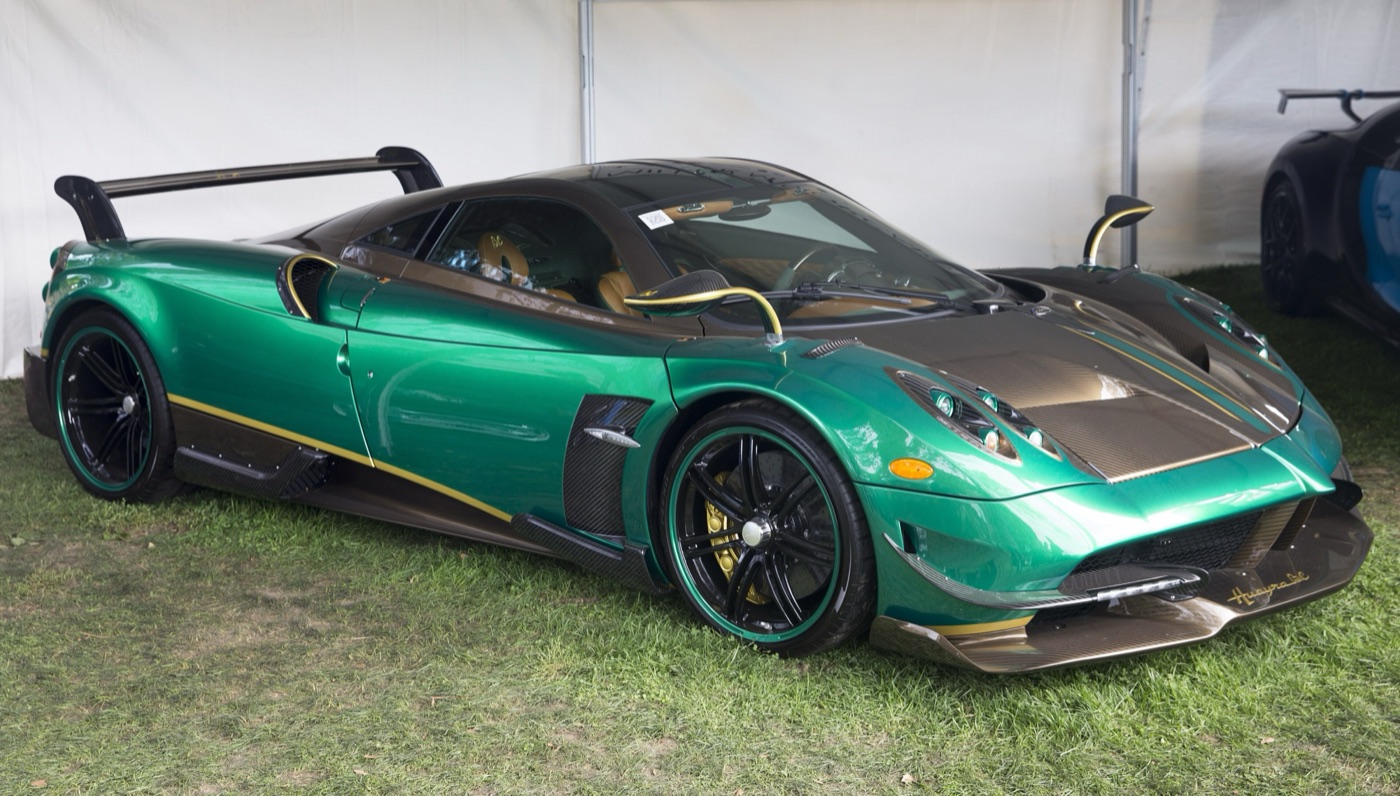
In 2021 Pagani added the Pacchetto Tempesta for the BC: a new splitter and air intake, a rear wing with a central fin, a six-pipe exhaust, new suspension and a "Soft Driving" mode. Pagani's release for the Huayra's tenth anniversary gave it 827hp and 1,100Nm, an increase of more than 8 per cent.
Huayra Roadster
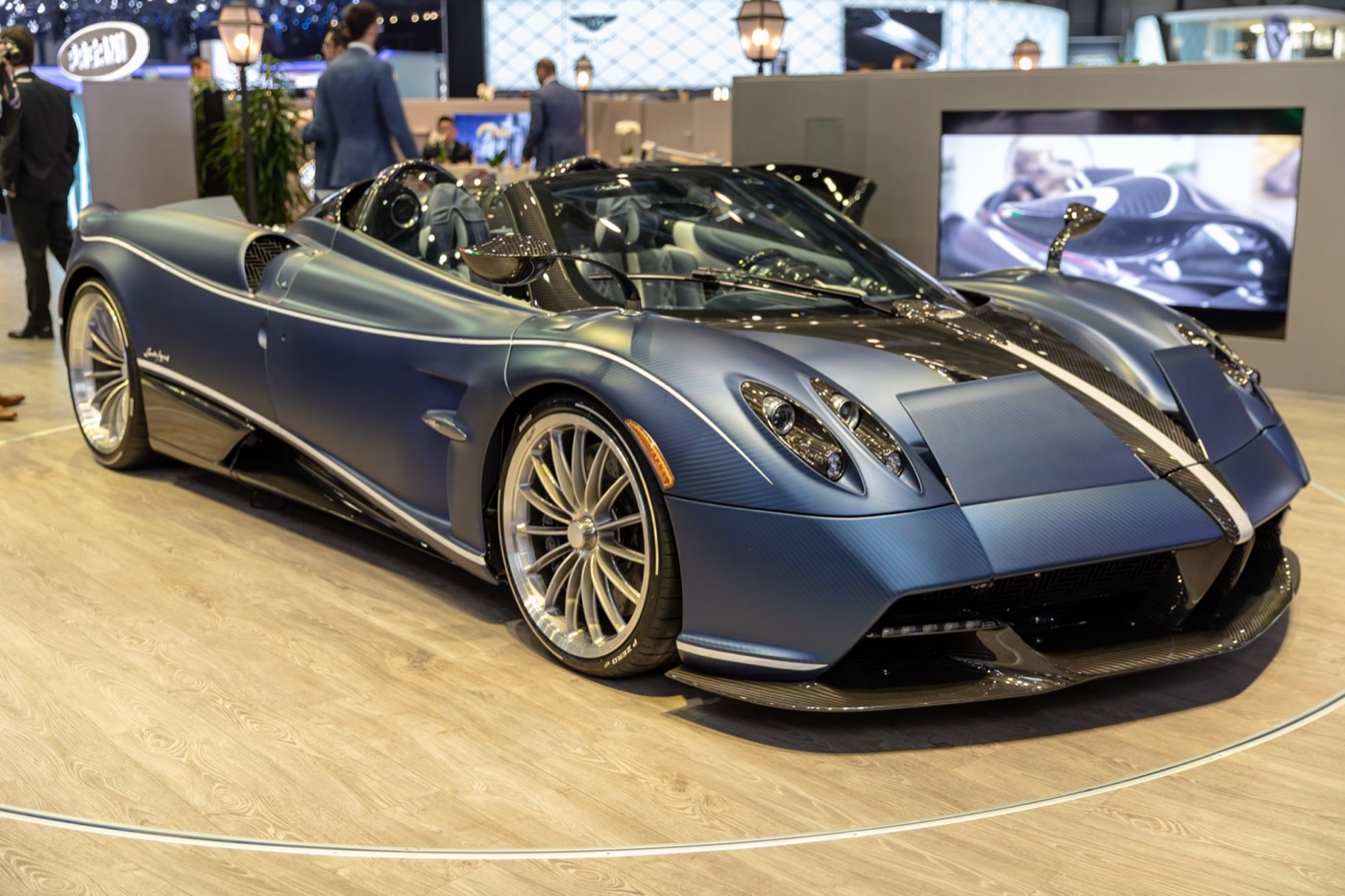
The Roadster was revealed in February 2017 and shown at Geneva that March. Work had started in 2010 on a coupé with a removable roof panel, but the design was thrown out in 2013 and started again from a clean sheet, as Goodwood reported at the reveal. The Roadster has conventional doors, a removable roof of carbon and glass and a fabric cover for emergencies. Its monocoque is 52 per cent stiffer than the coupé's, and at 1,280kg it is lighter: "the first, from a technical point of view, was to make a roadster that would be lighter than the coupé," Horacio Pagani said of his targets on the Roadster's page, calling it "the most complicated project we have ever undertaken".
Huayra Roadster BC
The Roadster BC was revealed on 31 July 2019 and shown in public at Monterey Car Week that August, two years after a customer's request started it. Pagani's launch details give a new Pagani V12, built by AMG, with more than 800hp and 1,050Nm from 2,000rpm, a dry weight of 1,250kg and a downforce target of 500kg at 280km/h (174mph). Its titanium exhaust has two extra outlets from the catalytic converters that blow the diffuser for more downforce, a first for Pagani. In September 2020 the car lapped Spa-Francorchamps in 2min 23.081sec in damp conditions, which Pagani called a record for road cars homologated worldwide. In 2022 Horacio Pagani won the Compasso d'Oro, Italy's oldest design award, for the Roadster BC in the "Design for mobility" category.
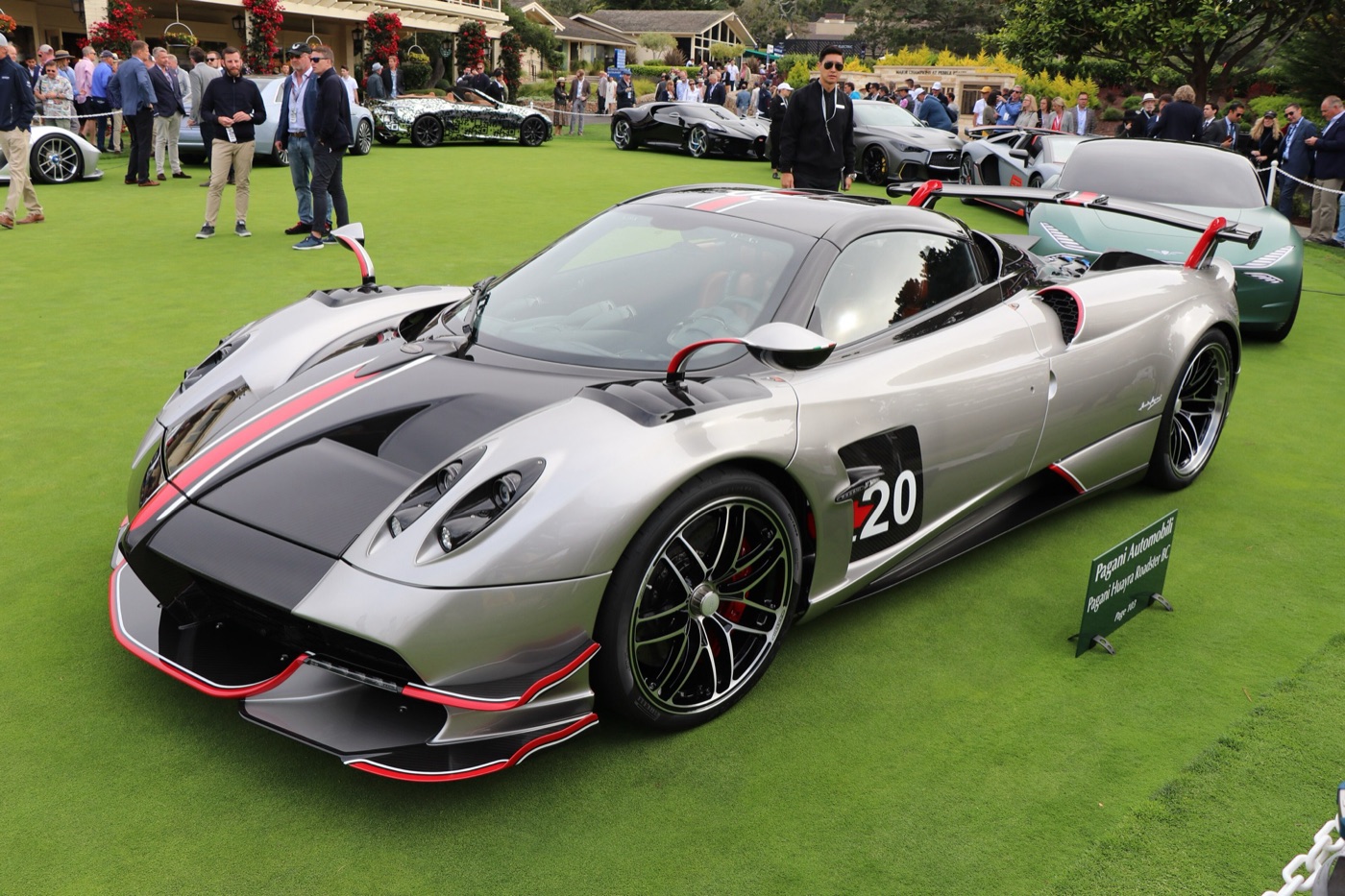
Pagani Imola
The Imola, revealed in February 2020, is a road car named after the circuit where it covered more than 16,000km at racing speed, which Pagani likened to three Le Mans 24 Hours. It has 827hp, a large fixed rear wing, diffuser and fin, and a dry weight of 1,246kg. Five were built, and Top Gear reported that each owner paid €5 million plus taxes. Even its paint, called Acquarello Light, saves 5kg. "We can't say that it's an elegant car," Horacio Pagani said.
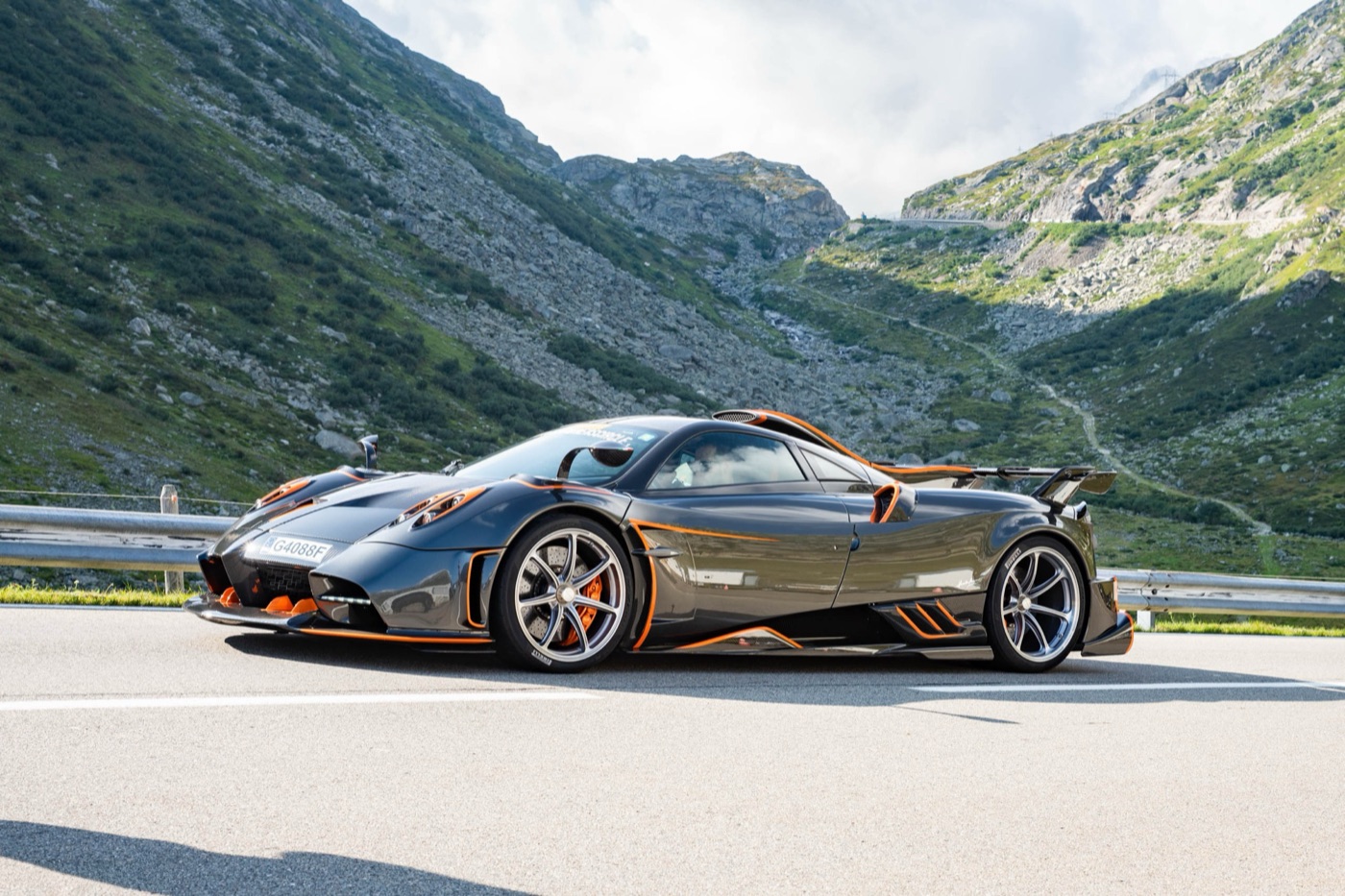
Huayra Tricolore
The Tricolore, revealed on 16 December 2020, marks the 60th anniversary of the Frecce Tricolori, the Italian Air Force's display team. Pagani had done the same in 2010 with the Zonda Tricolore. Pagani limits it to three cars, each numbered after one of the team's three leading aircraft, at €5.5 million plus VAT each, with 840hp and a tri-disc clutch 4kg lighter than the previous two-disc unit.
Huayra R
The Huayra R, revealed on 18 March 2021, is a track-only car and the successor to the Zonda R. It has a naturally aspirated 6.0-litre V12 of its own, the V12-R, designed from the ground up with HWA, and a six-speed sequential gearbox. Pagani limits it to 30 cars at a base price of €2.6 million plus tax. Owners drive them at Pagani's Arte in Pista track events, with Pagani's engineers, mechanics and professional driving coaches.
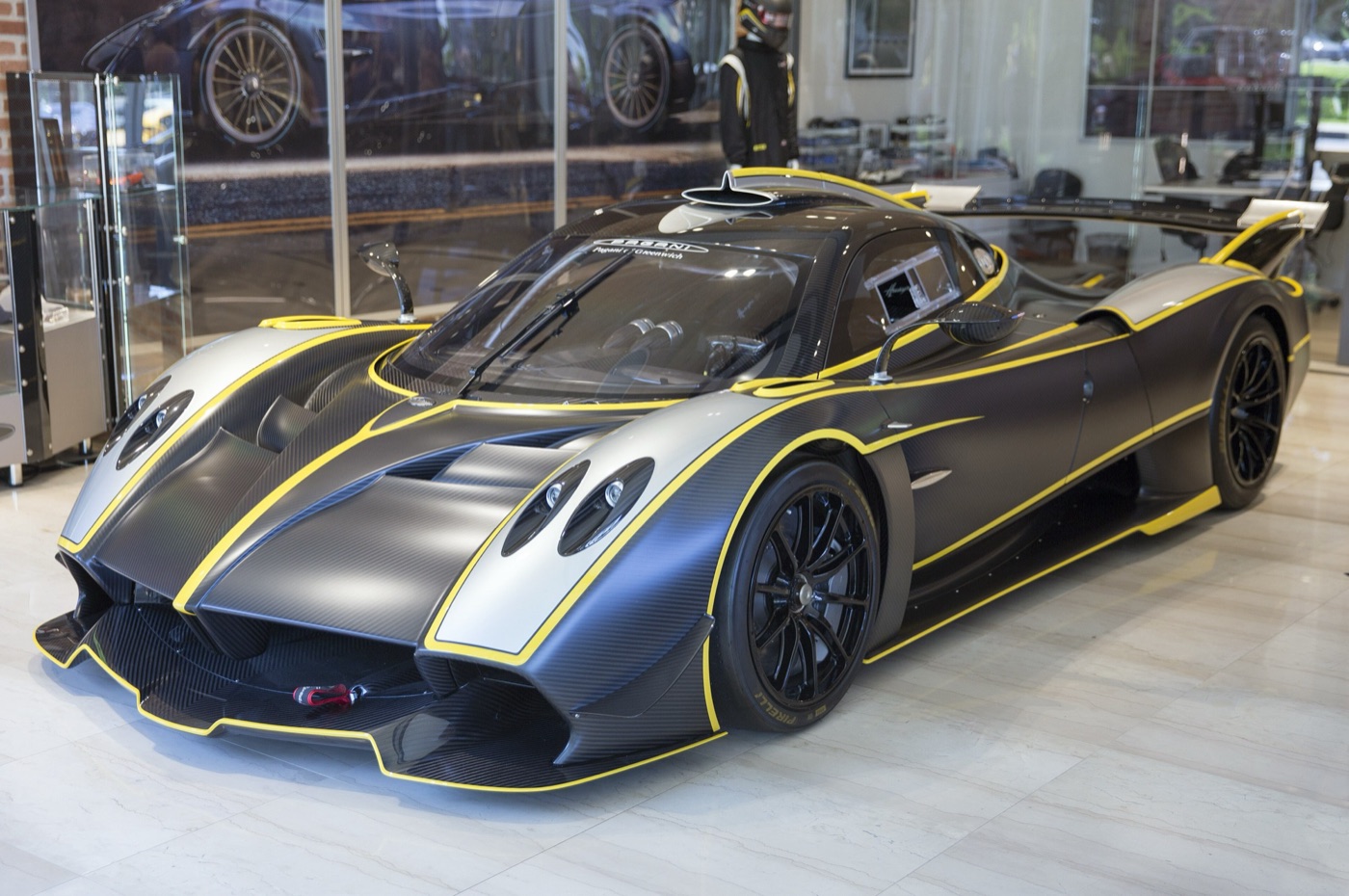
Huayra R Evo Roadster
The R Evo Roadster, revealed on 8 February 2024, is a longer, open version of the Huayra R for the Arte in Pista owners. Horacio Pagani said the idea came to him at an IndyCar race in Nashville, watching the cars' Aeroscreens. Pagani gives the V12-R Evo 900hp at 8,750rpm and a 9,200rpm limit; the tail is 190mm longer and the splitter 101mm longer, for 45 per cent more downforce. At 320km/h (199mph), in its lowered set-up, it makes more downforce than it weighs, and Pagani says it can match the pace of current LMP2 racing cars. Pagani has not said how many it will build.
Huayra Codalunga
The Codalunga ("long tail") was revealed on 16 June 2022 and shown in public at the Goodwood Festival of Speed that month. Two collectors asked for a long-tail Huayra in 2018, and the styling took two years with the customers. Pagani limits it to five cars, all sold before the reveal, at prices from €7 million, with 840hp and a 4.4kg titanium exhaust. Pagani says it won the design award at the Concorso d'Eleganza Villa d'Este in 2023.
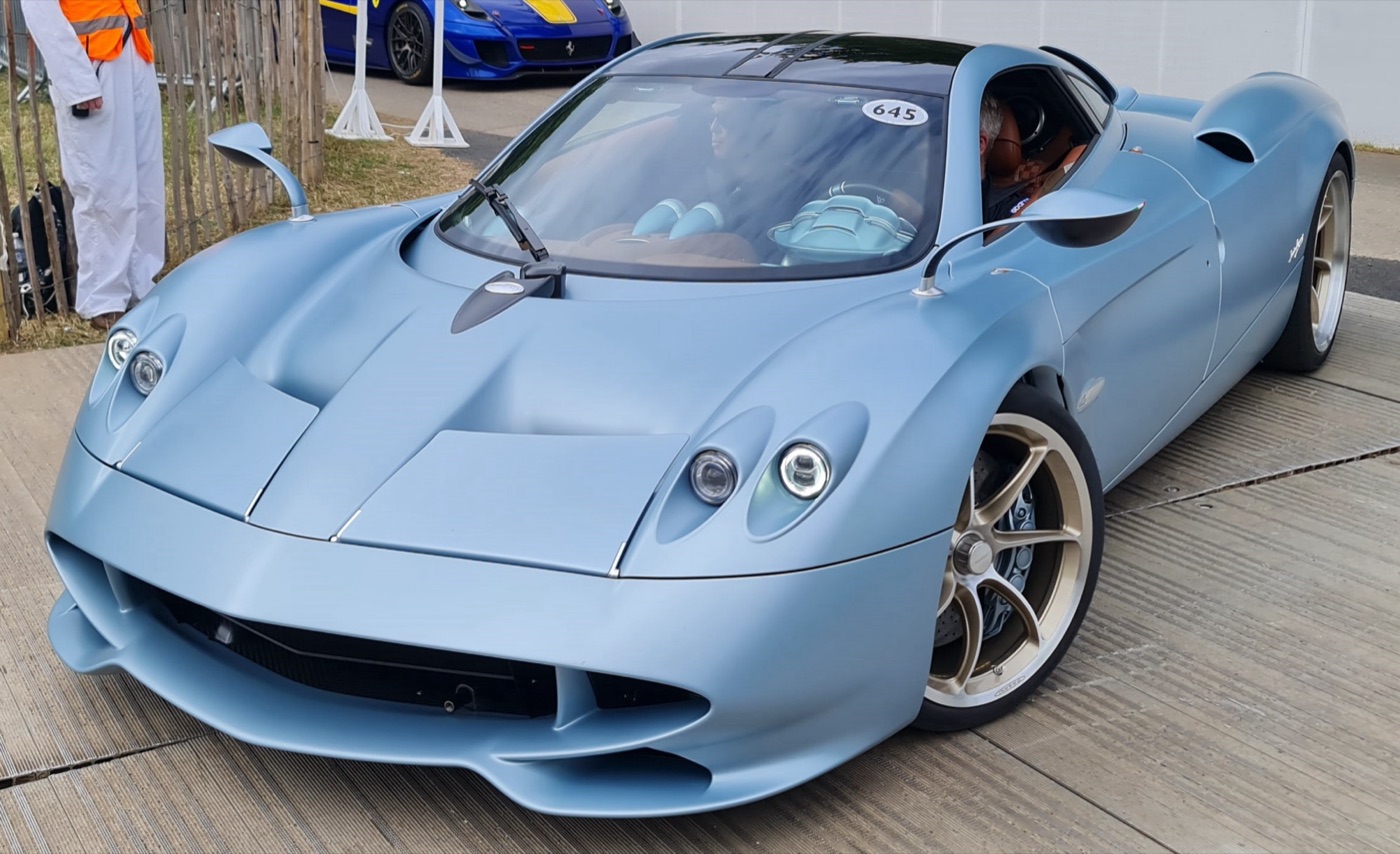
Imola Roadster
The Imola Roadster, revealed on 23 November 2023, is an open version of the Imola with styling taken from the Huayra R and Roadster BC. Pagani limits it to eight cars, homologated worldwide, with 850hp and a dry weight of 1,260kg, 14kg more than the coupé. It was first shown in public at Goodwood in July 2024.
Huayra Codalunga Speedster
The Codalunga Speedster, revealed on 8 July 2025, is an open Codalunga with a new monocoque, lower windscreen and side windows, conventional doors and a hard top with a clear polycarbonate section. Pagani limits it to ten cars, with deliveries from 2026, and offers its seven-speed Xtrac gearbox as an automated manual or a manual. Each embroidered piece of its seat fabric has more than 450,000 stitches done by hand.
One-offs and few-offs
Pagani has also built Huayras to single customers' designs, the later ones through Grandi Complicazioni.
Huayra Lampo
The Lampo of December 2017 is a coupé finished by Lapo Elkann's Garage Italia Customs in the colours of the 1954 Fiat Turbina, a gas-turbine concept car, Top Gear reported.
Huayra NC
The NC is a one-off coupé built by Pagani's special projects team with changes to the structure, bodywork and mechanicals, and was shown in Milan in June 2022, according to Pagani's release for the Milano Monza Motor Show.
Huayra Epitome
The Epitome, revealed on 2 July 2024 and shown at Goodwood that month, was the first Huayra with a manual gearbox. Pagani gives it 864hp, a rev limit raised to 6,700rpm, new bumpers and a wing built into the rear deck.
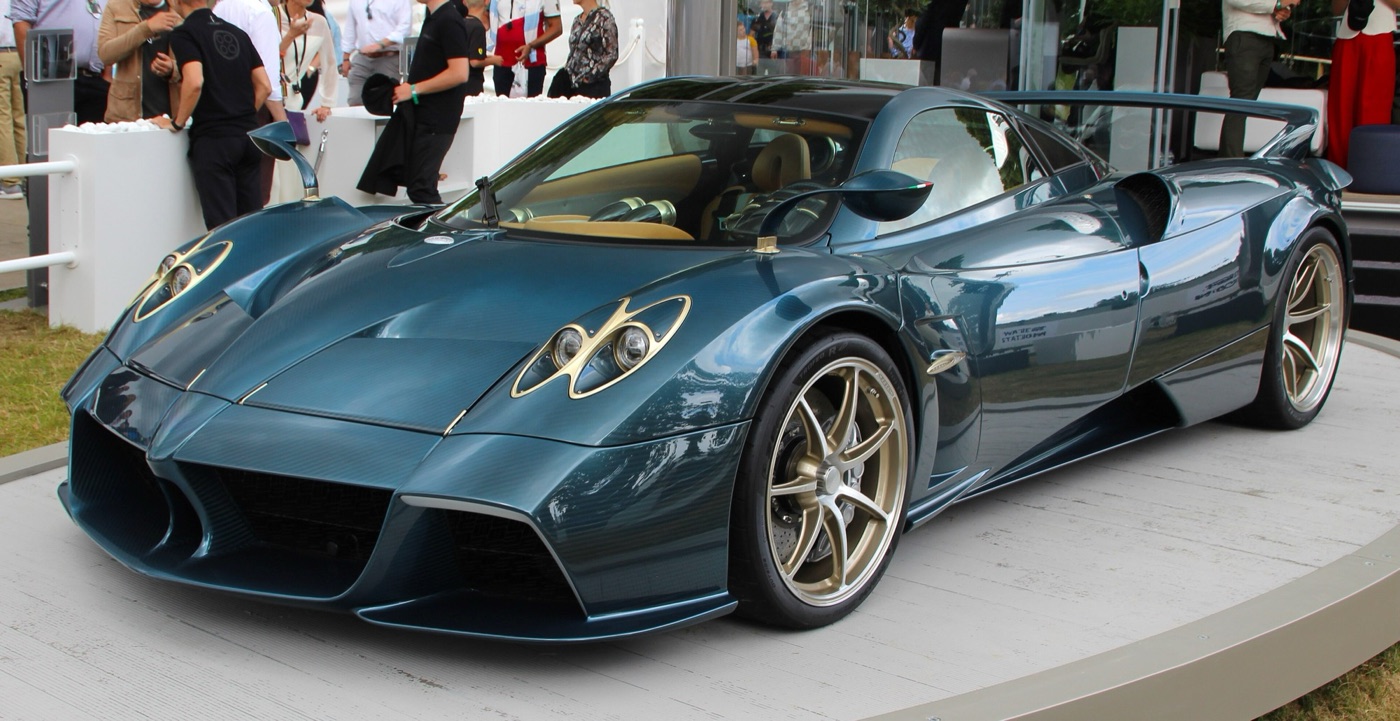
Huayra 70
Three Huayra 70s mark Horacio Pagani's 70th birthday. The first, the Huayra 70 Trionfo, appeared in January 2026, when Motor1 reported that only its doors and window frames are carried over from the Huayra and that, by its owner's account, it has 834hp and a seven-speed manual. The second, the Huayra 70 Derecho in Pearl Orange and blue, made its debut at the Goodwood Festival of Speed in July 2026, Pagani announced.
How many Pagani Huayras were made?
Pagani built 100 Huayra coupés and 100 Huayra Roadsters, and the limited series after them add about 125 more announced cars. Pagani publishes a number for every series except the BC and the R Evo Roadster; Top Gear reported in 2016 that all 20 BCs were sold. Goodwood counted fewer than 500 Paganis of all models built since 1999 when it reported the 2024 Festival of Speed.
| Version | Revealed | Number built or planned | Price new |
|---|---|---|---|
| Huayra coupé | January 2011 | 100 | about €1 million (2011 reports); $1.4 million in the US |
| Huayra BC | February 2016 | 20 announced | €2.3 million |
| Huayra Roadster | February 2017 | 100 | €2.28 million plus VAT |
| Huayra Roadster BC | July 2019 | 40 | €3,085,000 plus VAT |
| Imola | February 2020 | 5 | €5 million plus taxes |
| Huayra Tricolore | December 2020 | 3 | €5.5 million plus VAT |
| Huayra R | March 2021 | 30 | €2.6 million plus tax |
| Huayra Codalunga | June 2022 | 5 | from €7 million |
| Imola Roadster | November 2023 | 8 | not published |
| Huayra R Evo Roadster | February 2024 | not published | not published |
| Huayra Epitome | July 2024 | 1 | not published |
| Huayra Codalunga Speedster | July 2025 | 10 | not published |
| Huayra 70 | January 2026 | 3 | not published |
Sources: Pagani's releases and model pages for each series; GTSpirit (2015) for the coupé run; Top Gear for the BC (2016) and Imola (2020); CAR (2017) for the Roadster's price; SkiddMark (2011) and Fox News (2011) for the coupé's price. The total of about 325 is the sum of the announced runs; the Lampo, L'Ultimo and NC are counted within the 100 coupés.
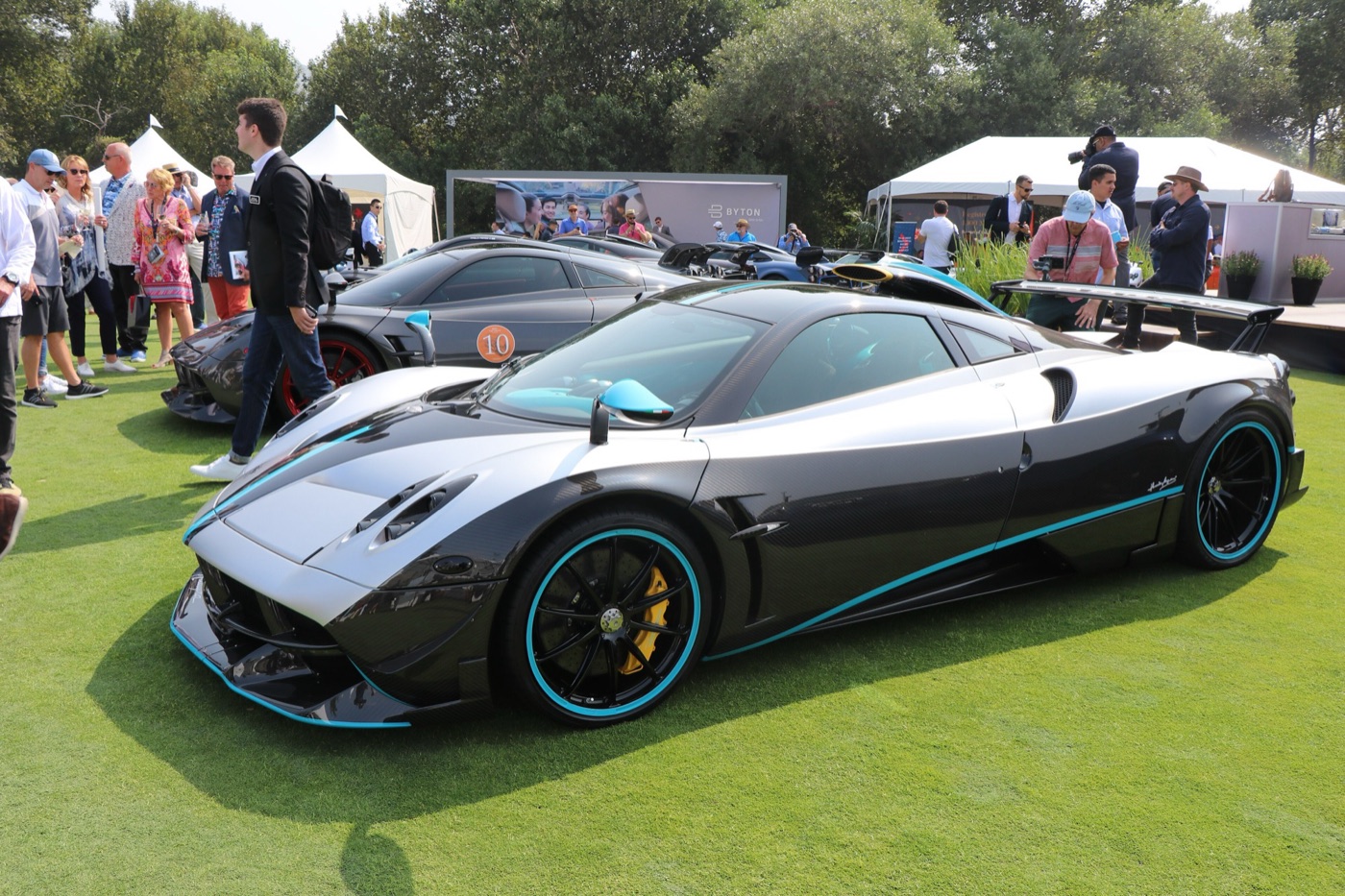
Pagani Huayra price and values
A Huayra coupé cost about €1 million new in 2011, and the best now sell for more than $3 million at auction.
How much did a Pagani Huayra cost new?
The magazine pages leaked in January 2011 gave about €1 million, and Fox News quoted $1.4 million for the US. Top Gear put the British price at around £800,000 when its magazine named the Huayra its Hypercar of the Year, which it said in 2018 was more than three times the price of a Lamborghini Aventador. Options add to that: the Roadster sold in 2026 had a window-sticker price of €2,604,110 against a base of €2.28 million.
How much is a Pagani Huayra worth today?
Three public auction results show where values have gone:
- August 2020: a 2014 coupé, the 56th of the 100, sold for $1,848,000 in an online sale, RM Sotheby's announced.
- 2026: Huayra Roadster number 39, with one owner and 312 miles, sold for $3,415,000 as lot 179 at RM Sotheby's Miami auction.
- April 2026: a 2016 coupé sold for $3,190,000 at Barrett-Jackson's Palm Beach auction, the highest price in that sale's history, according to Barrett-Jackson's results, published by Old Cars Weekly.
Owning a Pagani Huayra
A Huayra is serviced by Pagani's own dealers and workshops. In Britain that means Pagani of Manchester at Wilmslow in Cheshire, opened with the Sytner Group in June 2023, according to Pagani's release, which says the first Pagani was delivered in the UK almost 25 years earlier.
Recalls
The US safety agency NHTSA lists two recalls for the Huayra. In 2016 Pagani recalled model-year 2014–2016 coupés built between 21 April 2014 and 29 July 2016 because the driver's airbag might not stay secured to the steering wheel when it went off; dealers changed the fasteners (campaign 16V588000). In 2018 it recalled every 2017 Huayra BC and Roadster because the battery management software might leave too little power to start the car or keep it idling; dealers replaced the battery (campaign 18V175000).
Servicing and certification
Since October 2020 Pagani has offered L.E.O. ("Learn, Evaluate, Operate"), a control unit that sends a car's data to Pagani for remote diagnosis and predictive maintenance, with an app for owners, Pagani announced. Its Rinascimento programme restores older cars, and Pagani Puro, launched in December 2021, certifies that a car is authentic, according to Pagani. Top Gear noted one built-in precaution on the BC: if the temperature drops below nine degrees, the electronic aids switch back on even if the driver has turned them off.
Pagani Huayra vs the Lamborghini Aventador and other hypercars
The Huayra's nearest new rival in 2011 was the Lamborghini Aventador LP 700-4. The Aventador has a 6.5-litre naturally aspirated V12 with 700hp and 690Nm, four-wheel drive and a dry weight of 1,575kg, according to Lamborghini's technical specification. The Huayra has 30hp more, 310Nm more torque and 225kg less weight, and drives only its rear wheels.
When Horacio Pagani began the C9 in 2003, the cars he measured it against were the Bugatti Veyron, Porsche Carrera GT, Ferrari Enzo and Mercedes SLR McLaren. A decade later McLaren and Ferrari had moved to hybrid flagships, the McLaren P1 and LaFerrari; Pagani considered doing the same for the BC but chose to cut weight instead, New Atlas reported in February 2016.
Reviews and awards
The Huayra won three of Europe's main car-of-the-year awards in 2012: Top Gear magazine's Hypercar of the Year, CAR magazine's Performance Car of the Year and evo's Car of the Year, as Pagani recorded in its news pages. For Top Gear, Hammond said "there was only ever one contender". CAR called it "mesmerically good: monster engine, mad drama, yet it rides well and is easy to drive". evo wrote that "the Huayra will make you feel insanely good about life".
Top Gear's first drive of the BC found it more supple than expected, with sharper steering than the coupé and "brutal" performance. Its one reservation was the turbocharged engine's noise, "complete with twittering turbos", after the unblown V12 of the Zonda. The magazine explained that AMG had promised Pagani emissions-compliant V12s until 2023, and that the price of that supply, and of selling in the United States, was turbocharging.
Questions
Where is the Pagani Huayra built?
Every Huayra is built by hand by Pagani Automobili at San Cesario sul Panaro, near Modena in Italy. Its V12 engines come from Mercedes-AMG in Germany, apart from the naturally aspirated V12-R of the track-only Huayra R, which Pagani designed with HWA.
Is the Pagani Huayra road legal?
Yes. The coupé was the first Pagani homologated for sale worldwide, including the United States. The Huayra R and Huayra R Evo Roadster are the exceptions: they are track-only cars for Pagani's Arte in Pista events.
Does any Pagani Huayra have a manual gearbox?
The one-off Huayra Epitome of 2024 was the first, with a seven-speed manual made by Xtrac. The Huayra Codalunga Speedster of 2025 offers the same choice, and the Huayra 70 Trionfo has one too, by its owner's account. The series-built Huayras have a seven-speed automated manual or, on the R cars, a six-speed sequential.
How much horsepower does a Pagani Huayra have?
The original coupé has 730hp. Later road versions range from 764hp (BC and Roadster) to 864hp (Epitome and Codalunga Speedster), and the track-only Huayra R Evo Roadster has 900hp, the most of any Pagani.
What does BC stand for in Huayra BC?
BC is the initials of Benny Caiola, the American collector who was Pagani's first customer and a friend of Horacio Pagani. Top Gear noted that the United States, Caiola's home, had become Pagani's biggest market by the time the BC was revealed in 2016.
How much does a Pagani Huayra R cost?
Pagani announced the Huayra R in March 2021 at a base price of €2.6 million plus tax, for 30 cars. Owners take part in Pagani's Arte in Pista track programme, with the factory's engineers and mechanics at each event.
Sources
- Pagani Automobili, Huayra model page with Horacio Pagani's account of the C9 project, read October 2026: history, dimensions and engine. Pagani Automobili, Huayra BC model page, read October 2026: BC specification and dedication.
- Pagani Automobili, Huayra Roadster model page, read October 2026: specification and Horacio Pagani's quotes.
- Pagani Automobili, "World premiere Pagani Huayra", 18 February 2011, with the news items on Geneva 2011, the US preview release of 5 August 2011, the 2012 awards and the Top Gear lap: launch dates, awards and quotes.
- Autoblog, "Pagani Huayra makes its official web debut", 25 January 2011, with the translated press release: name, monocoque, engine, gearbox and exhaust.
- Fox News, "Italy's $1.4 million Pagani Huayra supercar", 28 January 2011: US price and claimed top speed.
- GTSpirit, "Pagani Huayra sold out", 11 February 2015: 100-car limit, factory capacity, US deliveries, performance figures.
- Pagani Automobili, "The Pagani Huayra is the fastest road car ever at the BBC Top Gear test track", 2013: lap time and Hammond's quotes.
- Top Gear, Huayra BC first drive, February 2016: BC details, price, numbers and verdict.
- New Atlas, "Pagani Huayra BC", February 2016: hybrid decision and weight.
- Top Gear, "Lewis Hamilton inspired L'Ultimo is the final coupe", 2 May 2018: last coupé and UK price.
- Goodwood Road & Racing, "Stunning €2.28m Pagani Huayra Roadster revealed", February 2017: Roadster development and stiffness.
- CAR magazine, "Pagani Huayra Roadster blows into Geneva 2017", March 2017: Roadster price and weight.
- Pagani Automobili, Huayra Roadster BC release, 31 July 2019, with the Spa lap release of 18 September 2020 and the Compasso d'Oro release of 20 June 2022.
- Pagani Automobili, Pagani Imola release, 14 February 2020, and Top Gear, "The Pagani Imola ain't pretty", February 2020: Imola testing, numbers and price.
- Pagani Automobili releases: Huayra Tricolore (16 December 2020), Huayra R (18 March 2021), tenth anniversary and Pacchetto Tempesta (5 August 2021), Huayra Codalunga (16 June 2022), Imola Roadster (23 November 2023), Huayra R Evo Roadster (8 February 2024), Huayra Epitome (2 July 2024), Huayra Codalunga Speedster (8 July 2025) and Huayra 70 Derecho (7 July 2026): specification, numbers and prices of each series.
- Pagani Automobili, Pagani Utopia unveiling, 13 September 2022: the successor.
- Pagani Automobili, MIMO 2022 release, 8 June 2022: Huayra NC.
- Top Gear, "Revealed: the one-off Pagani Huayra Lampo", 14 December 2017.
- Motor1, "The Pagani Huayra is back to celebrate Horacio's 70th anniversary", 28 January 2026: Huayra 70 Trionfo.
- US EPA, 2016 Pagani Huayra Coupe, fueleconomy.gov: fuel consumption.
- NHTSA, recalls for the Pagani Huayra, campaigns 16V588000 (2016) and 18V175000 (2018).
- RM Sotheby's, "Pagani Huayra achieves $1.85 million", 14 August 2020, and lot 179, 2017 Pagani Huayra Roadster, Miami 2026: auction results, drag coefficient, options price.
- Old Cars Weekly, Barrett-Jackson Palm Beach 2026 results, April 2026: the $3.19 million sale.
- Pagani Automobili, Pagani of Manchester, 8 June 2023; Pagani L.E.O., 21 October 2020; Pagani Puro, 20 December 2021: ownership and servicing.
- Automobili Lamborghini, Aventador LP 700-4 technical specifications, archived May 2013: rival figures.
- Goodwood Road & Racing, "Pagani Epitome is a one-off Huayra with a manual", July 2024: Goodwood showings and the count of Paganis built.
- SkiddMark, "Pagani C9 test mule written off on Stuttgart Autobahn" (March 2010) and "First pictures of Pagani's Huayra leaked ahead of launch" (January 2011).