Porsche 911 generations: every 911 from the 901 to the 992
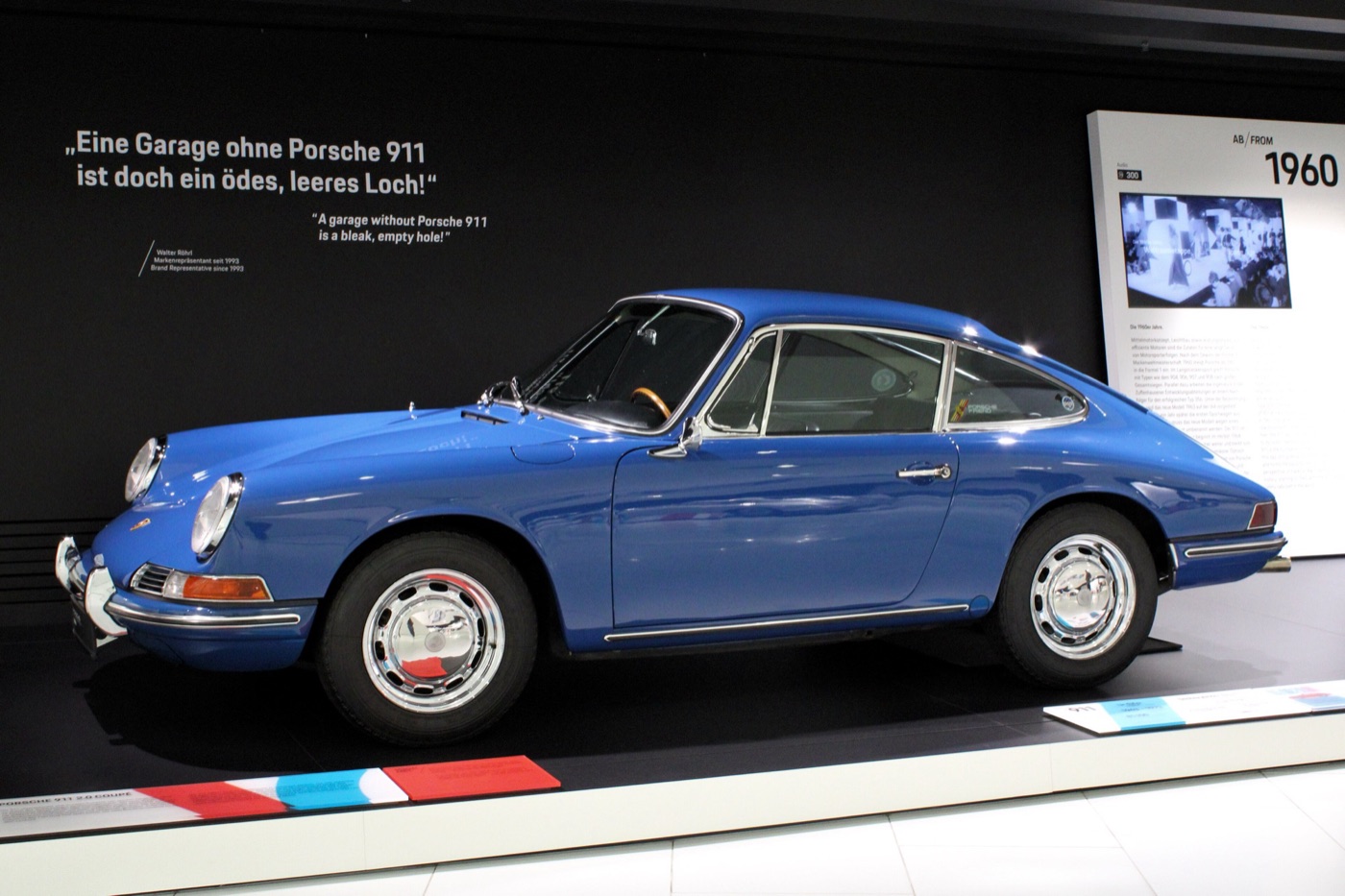
There have been eight Porsche 911 generations since the car was shown at the 1963 Frankfurt Motor Show as the 901: the original 911, the G-Series, the 964, the 993, the 996, the 997, the 991 and the current 992. Each is known by Porsche’s internal type number, and each kept the rear-mounted six-cylinder boxer engine, which was air-cooled until 1998 and has been water-cooled since. Porsche built its one-millionth 911 in May 2017, and the Porsche 911 had its best year yet in 2025, with 51,583 delivered.
How many Porsche 911 generations are there?
Porsche counts eight generations of the 911, and the table below gives each one’s years, engines, outputs and production as Porsche’s own “60 Years Porsche 911” press kit records them. The years are Porsche’s: they run from a generation’s first showing to the last financial year it was built, which is why neighbouring generations overlap. Within each generation enthusiasts split the cars by their mid-life update, so a 997 built from autumn 2008 is a “997.2” and a 991 from 2015 a “991.2”.
| Generation | Years | Engines | Cooling | Output | Built |
|---|---|---|---|---|---|
| Original 911 (901) | 1963–1973 | 2.0 to 2.7 litres | Air | 110–210 PS | 81,100 (plus 30,895 four-cylinder 912s) |
| G-Series | 1973–1989 | 2.7 to 3.3 litres | Air | 150–300 PS | 196,397 |
| 964 | 1988–1994 | 3.3 to 3.8 litres | Air | 250–381 PS | 63,762 |
| 993 | 1993–1998 | 3.6 to 3.8 litres | Air | 272–450 PS | 68,881 |
| 996 | 1997–2005 | 3.4 to 3.6 litres | Water | 300–462 PS | 175,262 |
| 997 | 2004–2012 | 3.6 to 3.8 litres | Water | 325–620 PS | 213,004 |
| 991 | 2011–2019 | 3.0 to 4.0 litres | Water | 350–700 PS | 233,540 |
| 992 | since 2018 | 3.0 to 4.0 litres | Water | 385–711 PS | 96,603 by the end of 2022 |
First-generation Porsche 911: the 901, 1963–1973
The first 911 was the 356’s successor, an entirely new car with a low silhouette, a six-cylinder engine mounted at the rear and, in Porsche’s words, “an agile suspension set-up”. Its shape came from Ferdinand Alexander Porsche, Ferry Porsche’s eldest son, who modelled the first plasticine model of a successor to the 356 and became head of the Porsche design studio in 1962, as SkiddMark’s obituary of April 2012 recorded from Porsche’s statement. Porsche calls these cars the “Ur-Elfer”, the original eleven.
Why the 901 became the 911
Porsche showed the car at the IAA in Frankfurt in September 1963 as the type 901. Peugeot held the French trademark on three-digit model numbers with a zero in the middle, so Porsche renamed the car 911 for its launch in 1964, says Porsche’s history of the first generation. Production began on 14 September 1964, at a base price of 21,900 Deutschmarks.
Engines, the 912 and the Targa
The first air-cooled flat-six was a 2.0-litre engine of 130 PS, good for 210 km/h. Porsche’s engine history lists the 2.0-litre six at 110, 130, 140 and 160 PS over the years, then 2.2 litres from 1969 and 2.4 litres from 1971. The 911 S of 1966 had 160 PS. With the 911 T, E and S variants, Porsche became the first German maker to meet the US EPA’s emissions standards. A 1.6-litre four-cylinder 912 of 90 PS joined in 1965 for 356 customers; the Targa, with its stainless steel roll-over bar, arrived in autumn 1965; and from 1967 a four-speed Sportomatic semi-automatic gearbox was offered. By Porsche’s count it built 81,100 first-generation 911s and 30,895 912s up to the 1973 financial year.
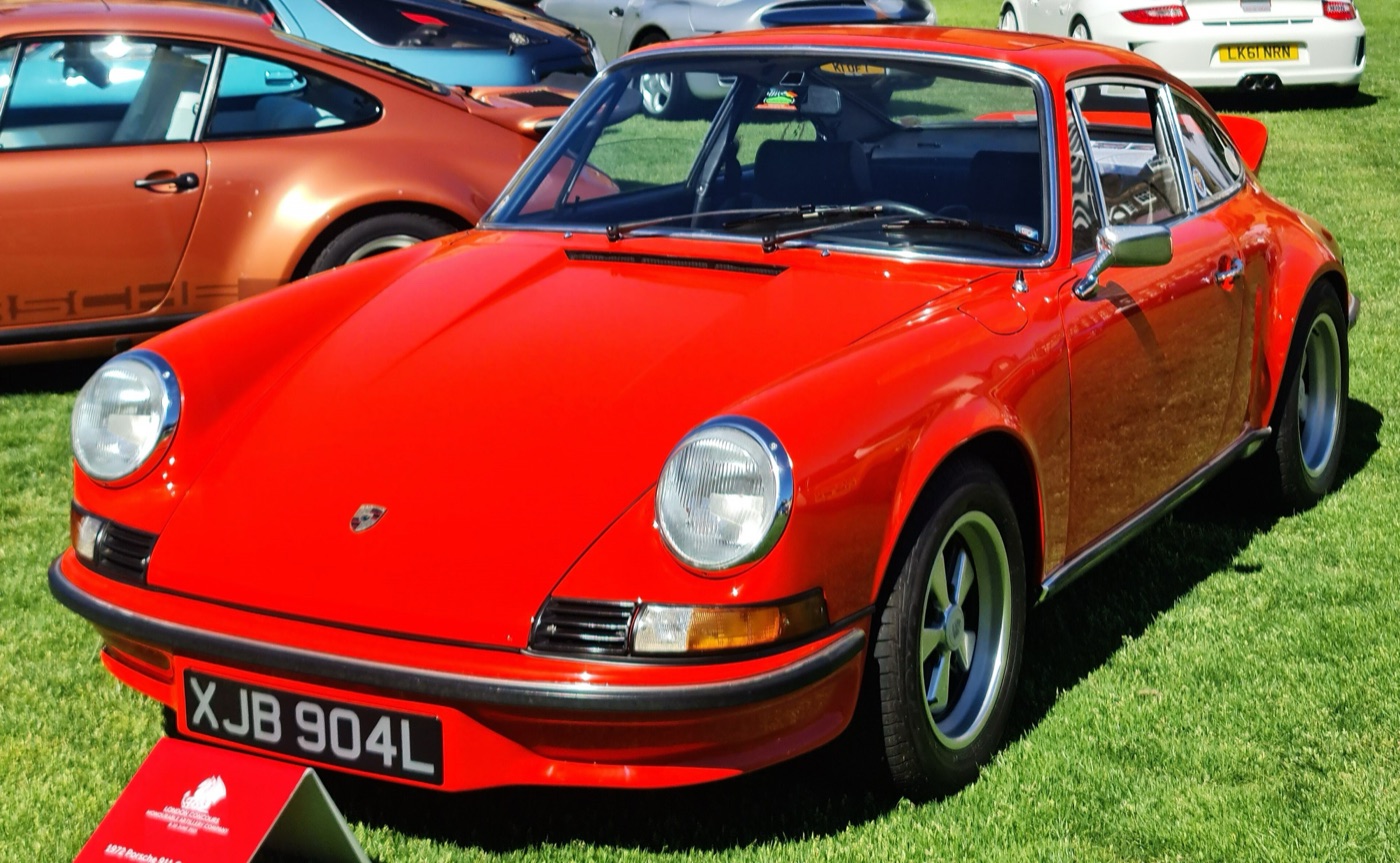
Porsche 911 Carrera RS 2.7
The 911 Carrera RS 2.7 of 1972 had 210 PS and weighed 960 kg in Sport form. Its ducktail was, Porsche says, “the first rear spoiler to be fitted as standard on a production vehicle”, and the car sold out at once. SkiddMark’s 2009 report on the 911 Sport Classic found the RS still shaping new 911s 37 years later: the Sport Classic’s ducktail and double-bubble roof copied it, on a 408 PS 3.8-litre car limited to 250 examples at £140,049.
Second-generation Porsche 911: the G-Series, 1973–1989
The G-Series was the first full revision of the 911, put into production in August 1973 for the 1974 model year and built until the 1989 financial year, the longest run of any generation. Porsche’s G-Series history puts production at 196,397.
Impact bumpers and the 2.7-litre engine
The most visible change was the bumpers. To meet US crash rules they had plastic bellows-style ends and could absorb impacts at up to 5 mph (about 8 km/h) without damage to the body, and the car grew to 4,291 mm long. Seats with built-in headrests and automatic seat belts became standard. Every G-Series car had at least the 2.7-litre engine that had been reserved for the Carrera RS, with Bosch K-Jetronic injection and 150 or 210 PS; the 150 PS coupé of 1974 cost 26,980 Deutschmarks. The launch fell in the 1973 oil crisis, and the 911 also faced competition inside Porsche from the 924, 944 and 928.
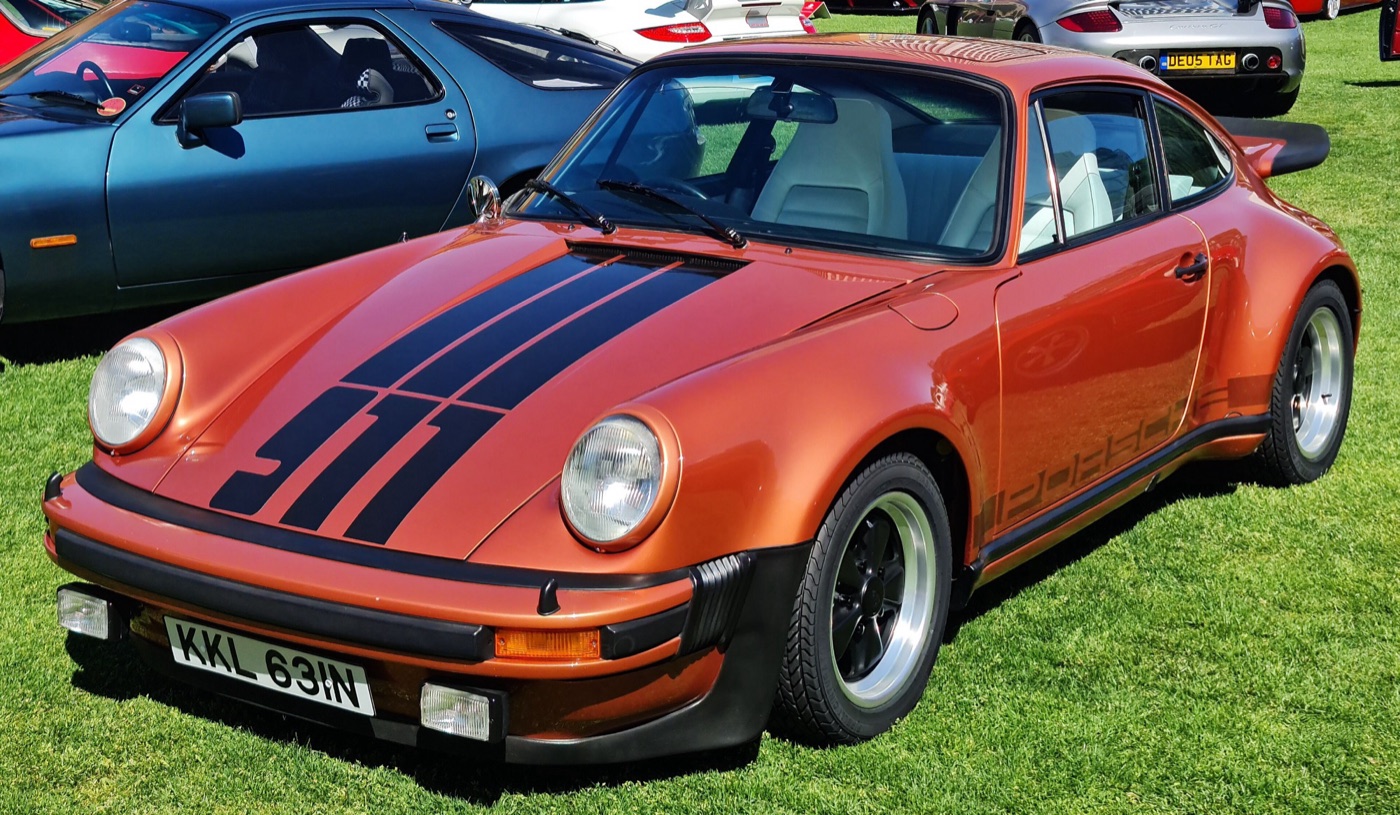
The 911 Turbo (930)
The 911 Turbo, type 930, was shown in 1974 and went on sale in 1975 with a turbocharged 3.0-litre engine of 260 PS, a wide rear end and a rear spoiler. From 1977, Porsche’s G-Series engine history says, it had 3.3 litres and an intercooler for 300 PS.
The 911 SC and Carrera 3.2
The normally aspirated cars grew to 3.0 litres (from 1975, with 200 PS) and then 3.2 litres and 231 PS after the 1983 summer break, the engine of the Carrera 3.2. Porsche lists the Cabriolet, which joined the coupé and Targa from 1983, and the Speedster among the G-Series’ notable versions. The 3.0-litre 911 SC also went rallying: in 1981 Walter Röhrl and Christian Geistdörfer took a rear-wheel-drive SC to the San Remo Rally and were close to beating the four-wheel-drive Audi Quattros before a driveshaft broke. “We were not supposed to be competitive in the San Remo because the stages were very difficult and the all-wheel drive cars had much better grip and more power than our Porsche 911 SC,” Röhrl said in 2011, when SkiddMark reported the restored car’s return at the Targa Tasmania.
Third-generation Porsche 911: the 964, 1988–1994
The 964 kept the G-Series’ shape but almost 85 per cent of its parts were new, according to Porsche’s 964 history. Moulded bumpers and new sill covers changed its look, and a drag coefficient of 0.32 made it the most aerodynamic 911 up to then. Power steering, ABS, a stronger heater, central locking and electrically adjustable seats came as standard, and coil springs and MacPherson struts replaced the torsion bars. The new 3.6-litre engine, with twin-plug ignition, knock control and a catalytic converter, gave 250 PS and up to 260 km/h in the naturally aspirated versions, with or without all-wheel drive. A rear spoiler, patented by Porsche, rises above 80 km/h for downforce and engine cooling. Porsche built 63,762 964s.
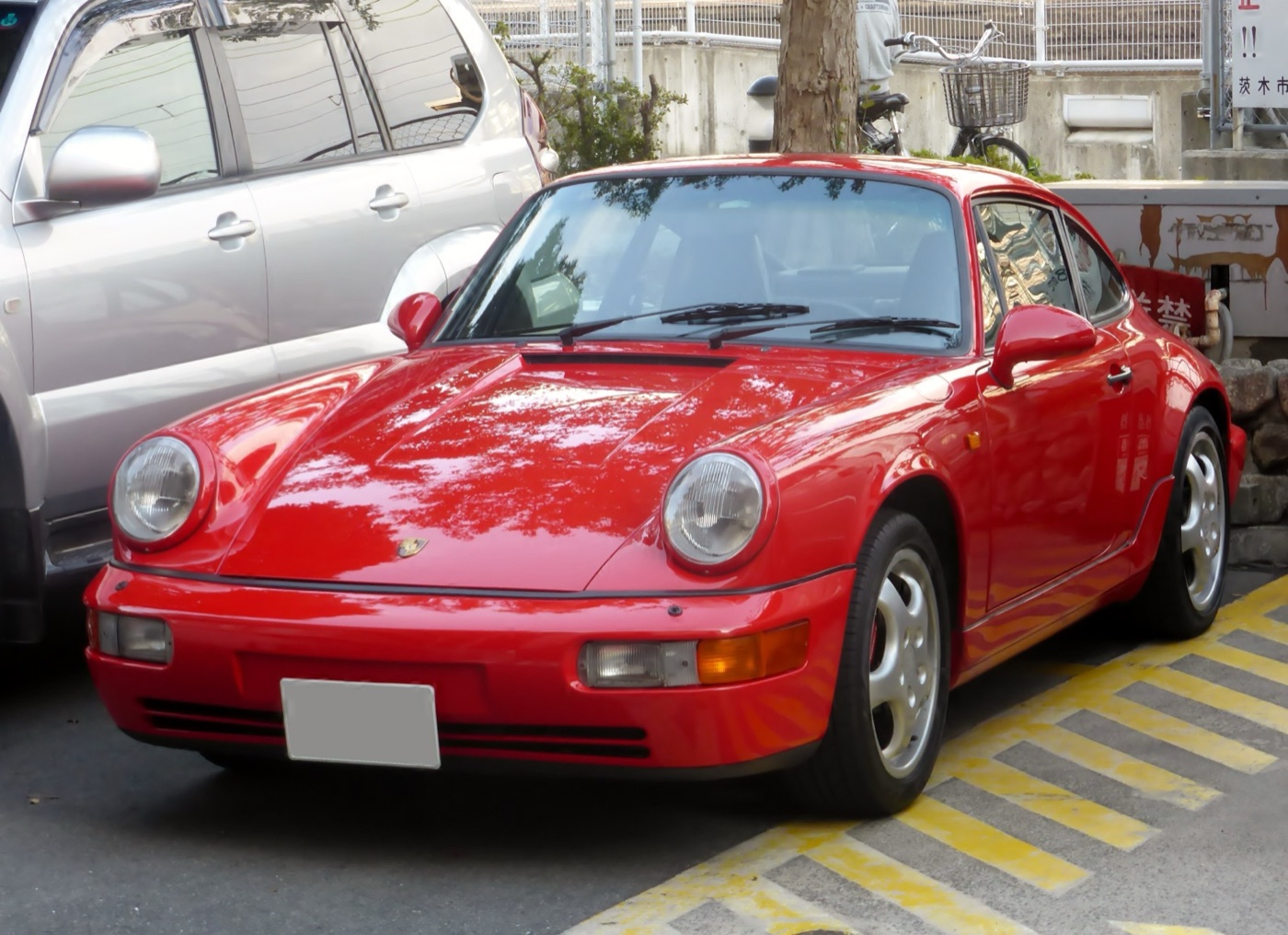
Carrera 4: the first 911 with four-wheel drive
The 964 offered all-wheel drive from the outset. The Carrera 4 used the electronically controlled drive system Porsche had developed for the 959 and cost 114,500 Deutschmarks in August 1988; the rear-wheel-drive Carrera 2 followed a year later at 103,500 Deutschmarks. From 1990 the Tiptronic automatic gearbox was offered, the first of its kind in a Porsche.
964 Turbo and Carrera RS 3.8
The Turbo returned in 1990 with a 3.3-litre engine of 320 PS, and from the 1993 model year it had 3.6 litres and 360 PS, says Porsche’s 964 engine history. The Turbo S Coupé reached 381 PS. The Porsche 911 Carrera RS name came back too, and the Carrera RS 3.8 of 1993 had a 3.8-litre normally aspirated engine of 300 PS.
Fourth-generation Porsche 911: the 993, 1993–1998
The 993, shown at the IAA in autumn 1993 and built to 1998, was the last 911 with an air-cooled engine. Porsche spent about 400 million Deutschmarks and four years on it, at a time when the 911 had to carry the company while the 924, 944 and 968 were phased out, says Porsche’s 993 history. The headlights lay flatter in lower, wider wings, the bumpers were integrated, and the roof line was almost the only panel carried over. Multi-link rear suspension improved the ride and handling. A 1994 Carrera Coupé cost 125,760 Deutschmarks, and 68,881 993s were built.
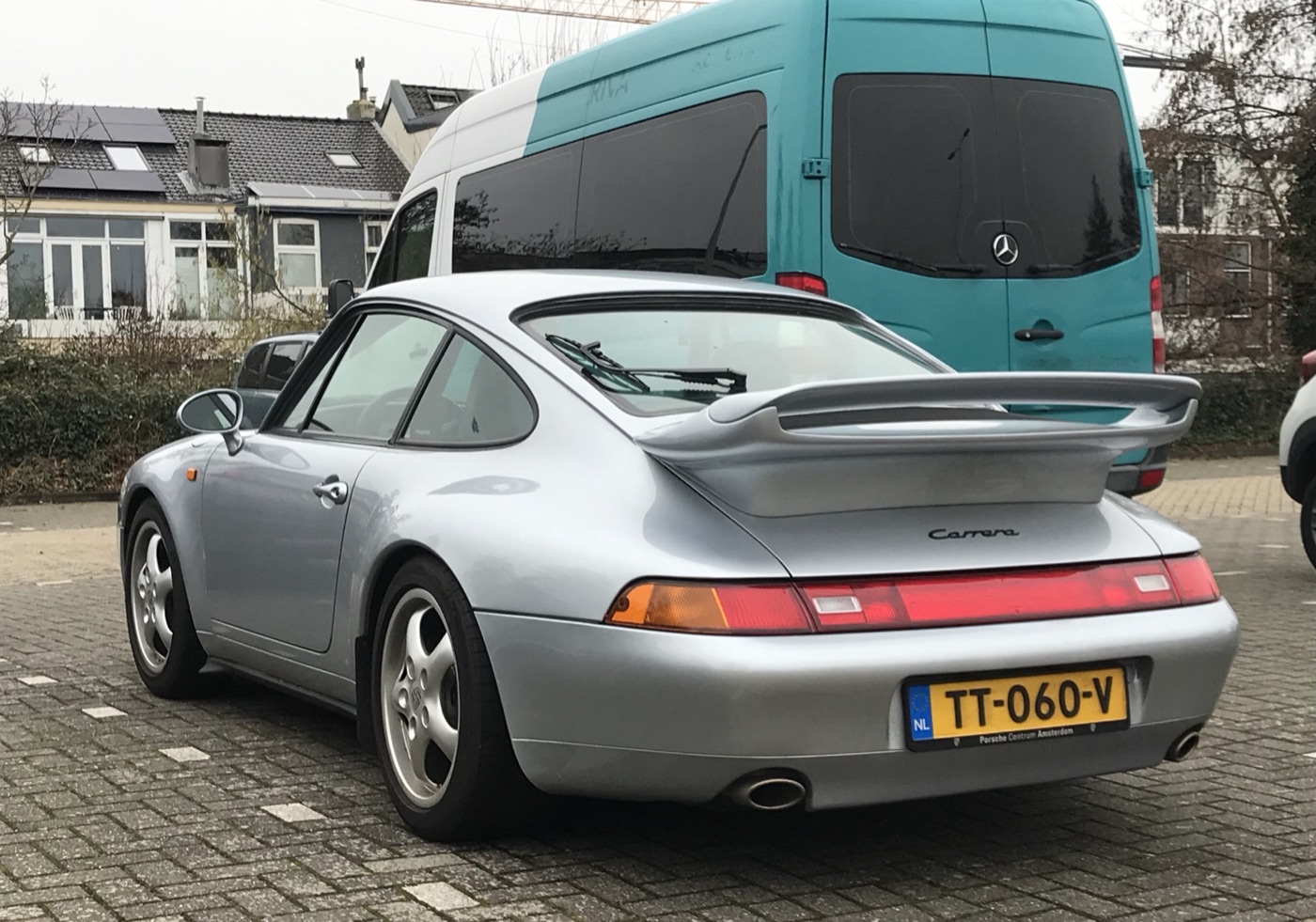
The Carrera began at 272 PS from its 3.6-litre engine and rose to 285 PS from 1995, with an optional 3.8 litres and 300 PS. A six-speed gearbox was fitted to a 911 for the first time. The 911 GT2, based on the Turbo, was new to the range, and the Turbo S version of 1998 had 450 PS, according to Porsche’s 993 engine history.
Fifth-generation Porsche 911: the 996, 1997–2005
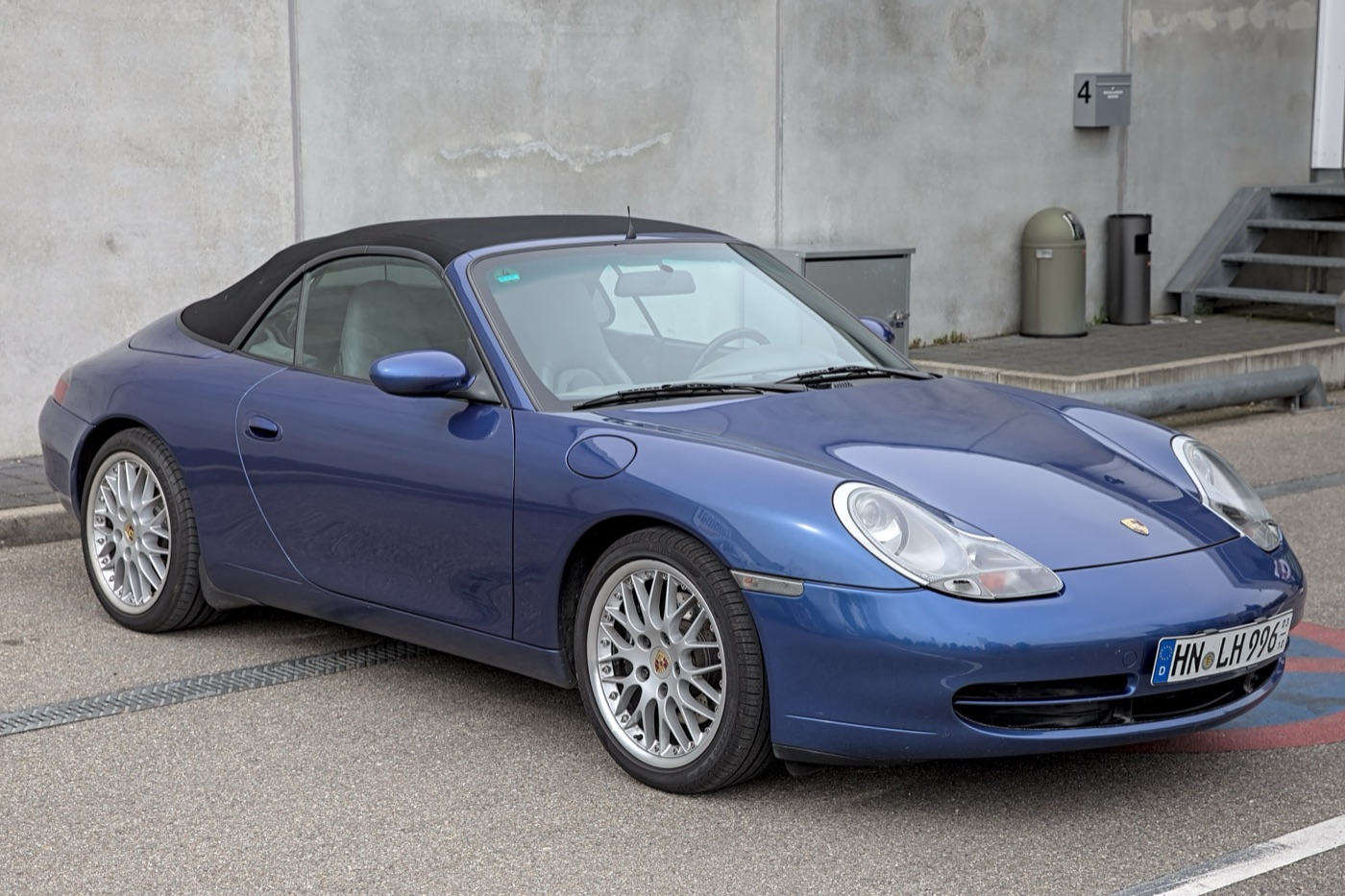
The 996 of 1997 was the first series 911 with a water-cooled engine, and almost everything else was new as well: the body was 18.5 cm longer and 3 cm wider, and about 50 kg lighter than the 993’s. Apart from the name and the engine layout, Porsche’s 996 history lists only the bonnet crest, wheel hub covers, steering wheel and airbags as carried over. The 996 was developed alongside the Boxster on a new platform and shared parts with it; with the 2002 update it took the Turbo’s headlights, rounded off at the bottom, to set it apart from the Boxster. Porsche built 175,262 996s.
Why Porsche moved to water cooling
New exhaust rules meant Porsche needed four-valve technology, which could be cooled reliably in every condition only with water. The four-valve 3.4-litre engine gave 300 PS; after the 2002 update the engine grew to 3.6 litres and 320 PS. The 996 Turbo of 2000 had two turbochargers and 420 PS and was the first series Porsche to pass 300 km/h, and the GT2 reached 462 PS, says Porsche’s 996 engine history.
The first 911 GT3
The first GT3 came out of the 996 in 1999, with a 360 PS normally aspirated engine, developed by the rally champion Walter Röhrl with the racing engineer Roland Kussmaul. “A milestone for me. A racing car for the road,” Röhrl says in Porsche’s history of the 996. The GT3 RS of 2004 had 381 PS and was built to qualify the car for racing.
The 40th anniversary 911
The “40 Years of Porsche 911” model of 2003 had 345 PS from its 3.6-litre engine. One of them lived in a SkiddMark writer’s household: “I should know, we have a 40th anniversary 911 in our household,” the magazine’s 2013 report on the 50 Years Edition began, describing a car “painted uniquely in GT Silver metallic” with a 340 bhp engine.
Sixth-generation Porsche 911: the 997, 2004–2012
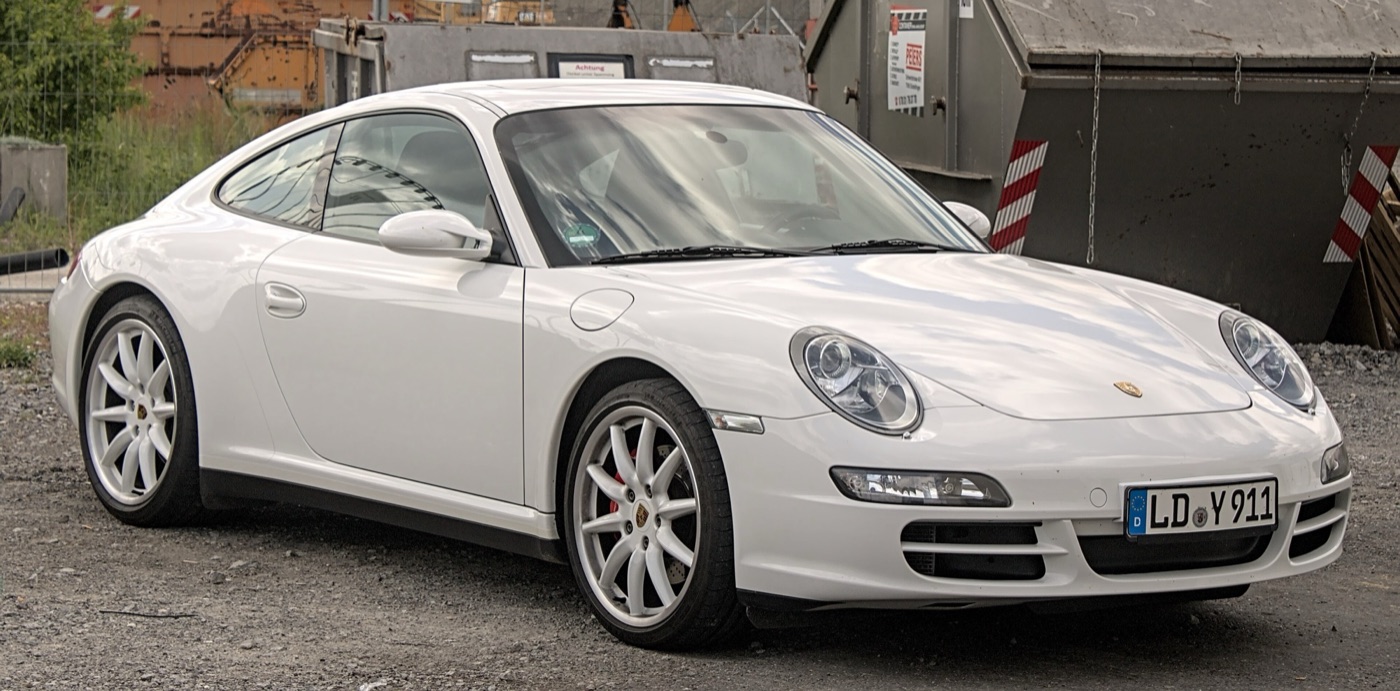
The 997, presented as the Carrera and Carrera S in July 2004, brought back oval clear-glass headlights and kept only the roof of the 996’s visible panels, says Porsche’s 997 history. The Carrera S had Porsche Active Suspension Management (PASM) as standard, the underbody was clad for lower drag, and a Sport Chrono package changed throttle, engine, stability control and damper settings at a button. A 2005 Carrera Coupé cost €75,200, and 213,004 997s were built to the 2012 financial year.
997.1 and 997.2: direct injection and PDK
The first 997 Carrera had a 3.6-litre engine of 325 PS and the Carrera S a new 3.8-litre of 355 PS, the first time since 1977 that the 911 came with two normally aspirated engine sizes. The 2006 Turbo was the first petrol production car with variable turbine geometry, according to Porsche’s 997 engine history. The autumn 2008 update, the 997.2, brought direct injection and the optional PDK dual-clutch gearbox, raising the Carrera to 345 PS and the Carrera S to 385 PS. The Carrera GTS of 2010 had 408 PS; the 3.8-litre Turbo had 500 PS and the Turbo S 530 PS.
GT2 RS, GT3 RS 4.0 and the limited editions
Porsche widened the range of 997 variants, and their outputs spread further than in any 911 before, topped by the GT2 RS of 2010 with 620 PS. Steve Davies, who had driven the first 997 GT2, wrote that “the way the GT2 launched itself down the road with barely abated thrust from its twin-turbo flat six engine is still a memory that I treasure”; Porsche quoted a Nordschleife lap of 7 minutes 18 seconds for the GT2 RS and a road weight of 1,370 kg, 70 kg less than the GT2. The GT3 RS 4.0 of 2011 was limited to 600 cars at £128,466, with 500 PS from the largest 911 engine yet and a crankshaft taken from the GT3 RSR racing car. Porsche Exclusive also built the 911 Sport Classic (250 cars) and a 911 Speedster limited to 356 cars, the first Speedster since the 964’s of 1994.
Seventh-generation Porsche 911: the 991, 2011–2019
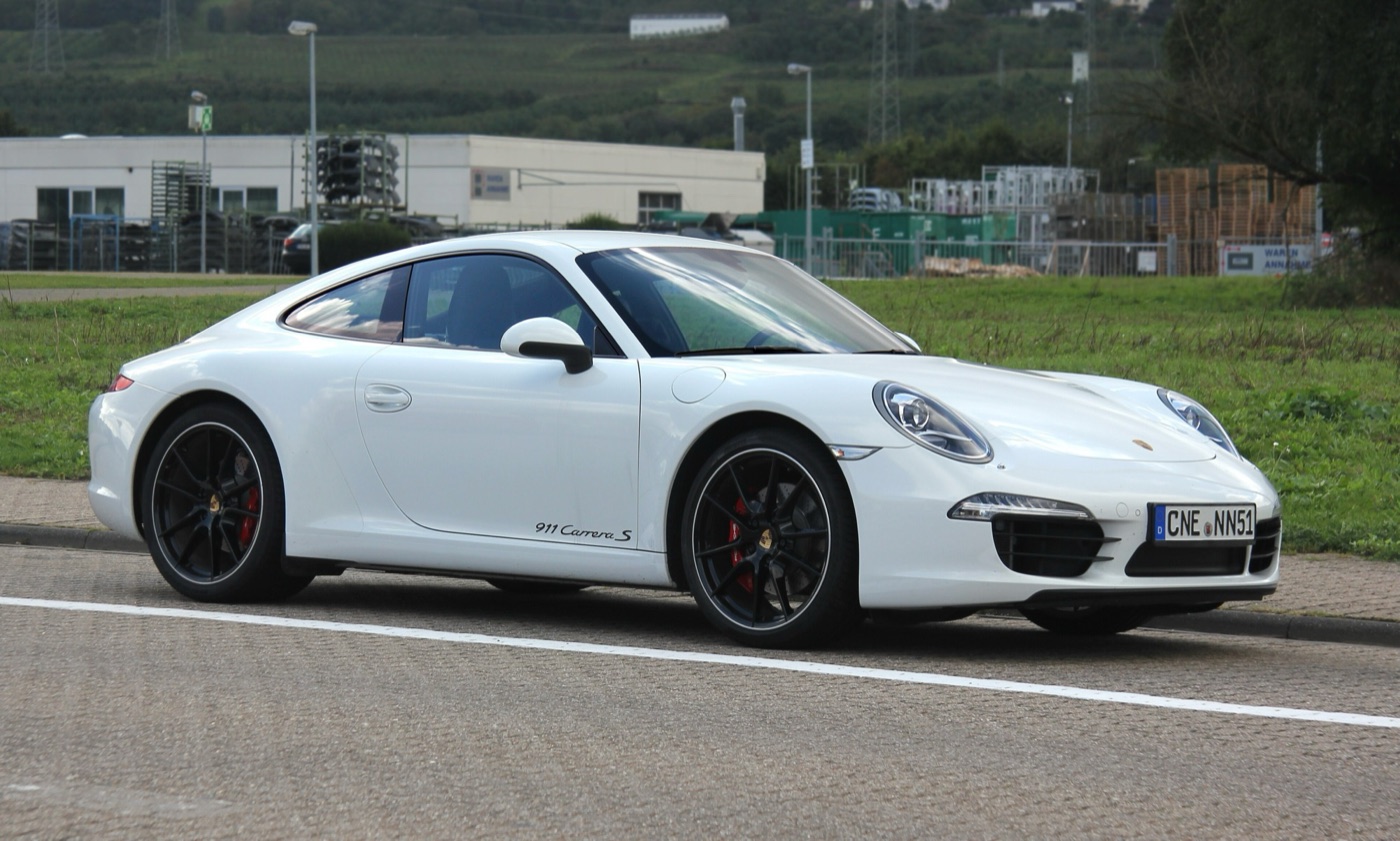
Porsche calls the 991 “a big technical jump in the history of the 911”: a wheelbase 10 cm longer, a wider track and a new aluminium and steel body 80 kg lighter than the 997’s, with almost 90 per cent of the components new or redesigned, says Porsche’s 991 history. Its interior, with a centre console rising to the dashboard, took its lead from the Carrera GT. SkiddMark’s report on the first official pictures, in August 2011, put it this way: “The 991’s styling is evolutionary but significant changes have been applied under the skin.” A 2012 Carrera Coupé cost €88,037. With 233,540 built, the 991 is the most numerous 911 generation.
991.1: smaller engine, seven-speed manual
The base Carrera moved down to a 3.4-litre engine yet gained power, to 350 PS, while the Carrera S kept 3.8 litres and had 400 PS. SkiddMark’s report on the launch in August 2011 picked out the figures that rivals would study: 34 mpg and 194 g/km of CO2 for the Carrera with PDK, the first Porsche sports car under 200 g/km, and the world’s first seven-speed manual gearbox. The 991 also moved to electric power steering.
991.2: turbocharged Carreras
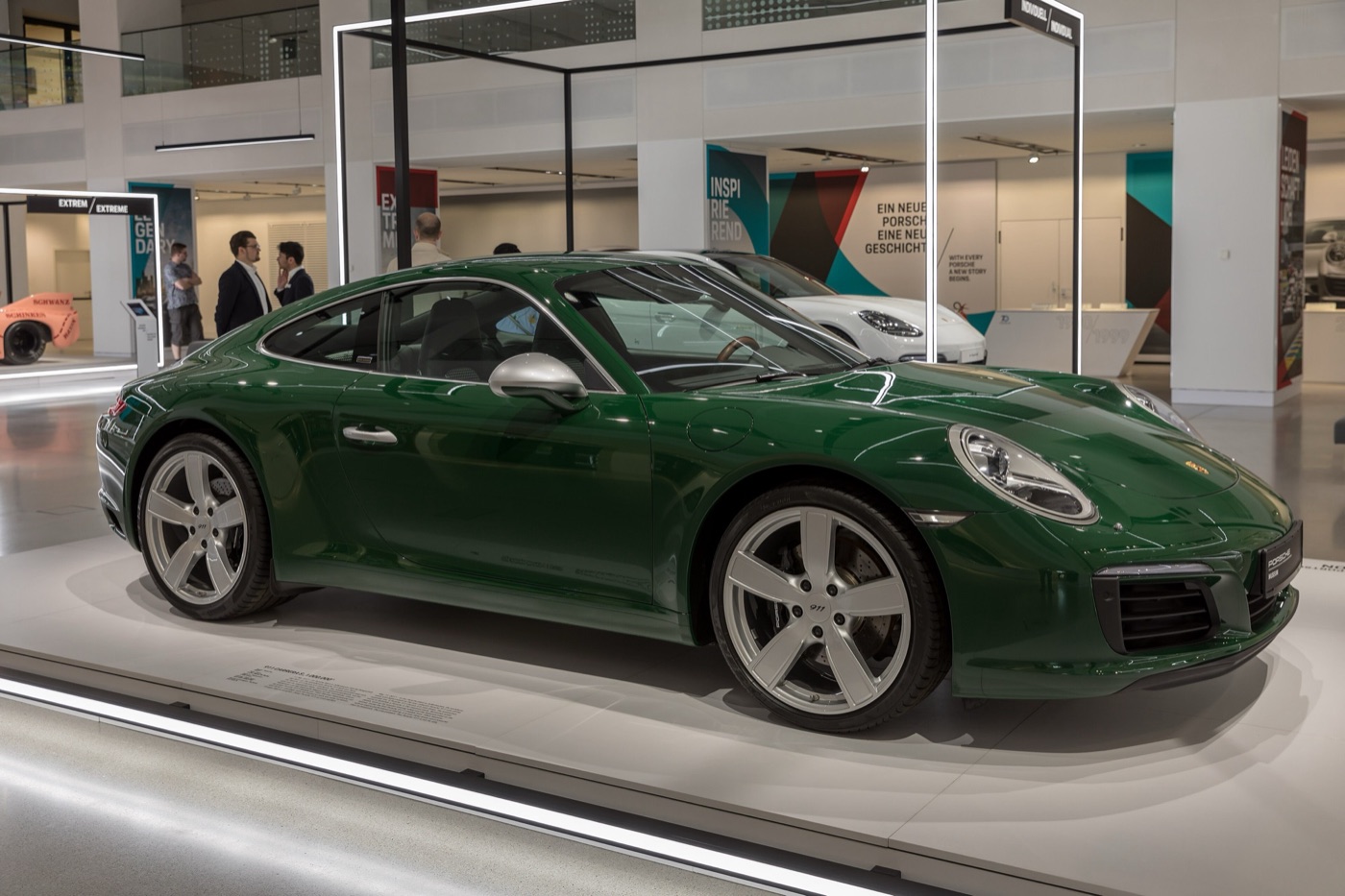
From the 2015 model update every Carrera had a 3.0-litre twin-turbo engine of 370 to 450 PS depending on the model variant. The smaller turbocharged engines raised performance, by 20 PS in base form, and a Carrera S with PDK and Sport Plus reached 100 km/h in under four seconds for the first time, says Porsche’s 991 engine history. The one-millionth 911, an Irish Green Carrera S, left the Zuffenhausen line on 11 May 2017.
991 GT3, GT3 RS and GT2 RS
The 991 GT3, which SkiddMark reported from its Geneva unveiling in March 2013, was the first GT3 without a manual gearbox and the first Porsche with active rear-wheel steering, its 3.8-litre engine revving to 9,000 rpm. The later GT3 RS had a 4.0-litre engine of 520 PS, and the 991 GT2 RS had 700 PS and a top speed of 340 km/h, the fastest series 911 Porsche had built.
Eighth-generation Porsche 911: the 992, since 2018
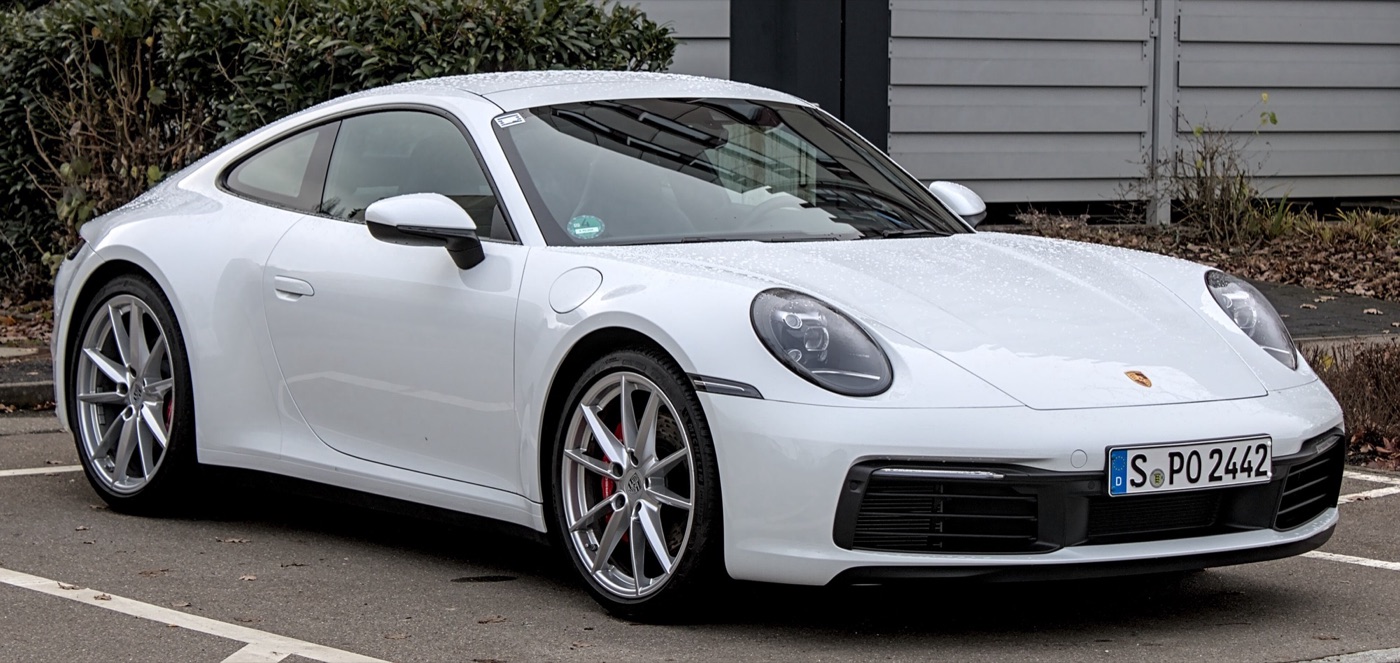
The 992 was presented in November 2018 with a digital cockpit in which only the central rev counter stayed analogue, beside a 10.9-inch touchscreen. “The eighth generation of the 911 is more powerful, more emotive and more efficient than its predecessor,” Porsche’s chief executive Oliver Blume said at its presentation, according to Porsche’s 992 history. Its eight-speed dual-clutch transmission (PDK) was built with room for an electric motor, and 96,603 had been built by the end of 2022.
992.1
The first 992 Carrera, Carrera 4 and Carrera T had a 3.0-litre twin-turbo engine of 385 PS, the S models 450 PS, and the GTS and the 911 Dakar had 480 PS, says Porsche’s 992 engine history. A 3.8-litre twin-turbo powered the Turbo (580 PS), Turbo S (650 PS) and Sport Classic (550 PS), and the GT3 (510 PS) and GT3 RS (525 PS) kept a normally aspirated 4.0-litre engine.
992.2 and the T-Hybrid
The updated 992 of 2024 brought the first road-legal hybrid 911, the Carrera GTS. Its T-Hybrid system, as Porsche’s launch release describes it, has a new 3.6-litre engine of 485 PS, an electric motor inside a single turbocharger that spins it up and recovers up to 11 kW, and a second motor in the PDK gearbox, with a 1.9 kWh, 400-volt battery. System output is 541 PS, 0–100 km/h takes 3.0 seconds and the car is 50 kg heavier than the GTS it replaced. The Carrera kept a 3.0-litre twin-turbo, now with 394 PS, and for the first time a 911 had a start button, to the left of the steering wheel. In September 2025 the 911 Turbo S followed with two electric turbochargers, 711 PS and acceleration from 0 to 100 km/h in 2.5 seconds, the most powerful production Porsche 911, priced from €271,000. A test car lapped the Nordschleife in 7 minutes 3.92 seconds, about 14 seconds faster than the previous Turbo S.
The Porsche 911 in motorsport
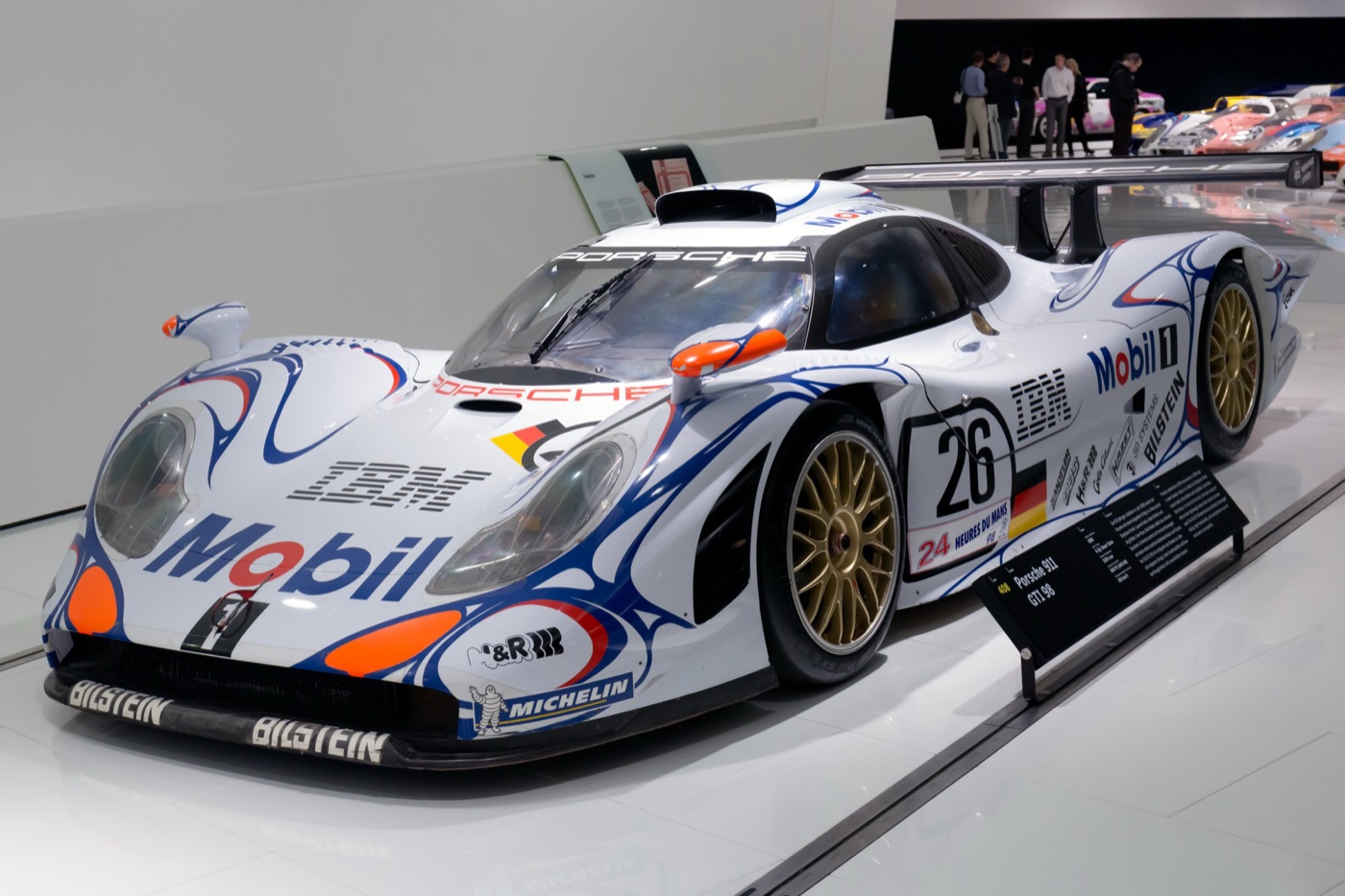
The 911 won its first big prize on the 1968 Monte Carlo Rally, where Vic Elford and David Stone finished 76 seconds ahead in a 911 T, says Porsche’s history of the event. Elford had asked for the car himself: “I told him I wanted to rally a 911, because I thought it would be sensational,” he told Motor Sport in June 2007. Thirty years later the 911 GT1 ’98 won the 1998 Le Mans 24 Hours, Porsche’s 16th outright win there; the winning car is in the Porsche Museum, according to Porsche’s own account.
The one-make 911 is a racing series of its own. When SkiddMark’s Steve Hindle went to a VLN meeting at the Nürburgring in October 2011, 14 of the top 20 finishers from a 168-car entry were 911s, and Porsche counted more than 2,200 911 GT3 Cup cars sold since 1998 for 20 one-make championships. His verdict on the 997 Cup car, in “Too fast, too sterile”, was that “the wider track, grippier rubber and more effective aero all combine to compensate and deliver a car that forgives all but the wildest of moments”.
How many Porsche 911s have been built?
More than 1.1 million: Porsche’s generation totals add up to 1,128,549 cars to the end of 2022, and 51,583 more were delivered in 2025 alone. The one-millionth was built on 11 May 2017, 54 years after production started, and Porsche’s release on the millionth car says every 911 is built at Zuffenhausen, on the same assembly line as Porsche’s other two-door sports cars, the 718 Boxster and Cayman. SkiddMark reported a total of more than 820,000 in June 2013. The 2025 figure was a record for the 911, while Porsche’s total deliveries fell 10 per cent, according to Porsche’s 2025 delivery figures.
What each 911 generation sells for today
At British auctions over the two years to October 2026, the dearest generation with ten or more sales was the original 911, at a median of £58,500 (the three 992s sold went for £90,123 to £107,100), and the 996 the cheapest, at £17,150. In the United States, where far more 911s come up for auction, the 996 was again the cheapest generation at $36,911 and the 992 the dearest at $247,000. The medians cover every variant sold, from base Carreras to GT3 RSs, so a generation’s figure moves with the mix of cars that came up for sale.
| Generation | UK sales | UK median | US sales | US median |
|---|---|---|---|---|
| Original 911 | 17 | £58,500 | 85 | $98,560 |
| G-Series | 32 | £45,000 | 322 | $75,500 |
| 964 | 7 | £33,000–£75,375 | 108 | $121,911 |
| 993 | 18 | £47,600 | 138 | $130,000 |
| 996 | 56 | £17,150 | 460 | $36,911 |
| 997 | 44 | £23,750 | 377 | $70,000 |
| 991 | 4 | £43,503–£75,000 | 410 | $118,911 |
| 992 | 3 | £90,123–£107,100 | 289 | $247,000 |
The spread inside each generation is wide. A tenth of the American 993s went for under $63,911 and a tenth for over $343,500; in Britain the middle 80 per cent of 996s sold for between £10,500 and £36,000.
Which 911 generations have IMS bearing problems?
The intermediate shaft (IMS) bearing affects the 996 and the 997 built before 2009, according to the attorney John Draneas in Sports Car Market’s “Legal Files” column of 1 February 2014: Porsche modified the bearing in mid-2005 and did away with the intermediate shaft altogether in 2009. An American class action, Eisen v. Porsche Cars North America, covered most 2001–05 911s other than the Turbo, GT2 and GT3, 57,929 Porsches in all with the Boxsters, built between 1 January 2001 and 31 December 2005; cars built before 2001 were left outside it. The plaintiffs’ lawyer, Stephen M. Harris, put the bearing’s failure rate at “around 10%” and said Porsche had already repaired about 3,100 cars at a cost of over $20 million. A failed bearing can let the cam timing slip so that pistons hit valves, and the repair is often a replacement engine. The settlement repaid owners on a sliding scale by mileage, up to 10 years or 130,000 miles.
Fifty years of the 911: the 2013 celebrations
For the 911’s fiftieth birthday in 2013 Porsche published a photograph of the 991 beside its predecessors, the first time, SkiddMark noted on 8 February 2013, that the company had shown the latest car’s added girth so plainly. The celebrations began at the Porsche Museum in Stuttgart from 7 to 10 March 2013 with four exhibits: an early 911 Turbo Coupé, a 911 Cabriolet study from 1981, a 1997 road-going 911 GT1 and the pre-series Type 754 T7. An original 1967 911 went on a world tour to five continents, with stops at Pebble Beach, in China, at Goodwood, in Paris and in Australia. The museum ran a special 911 exhibition from 4 June to 29 September 2013, and its own publishing house produced an anniversary book, “911 × 911”.
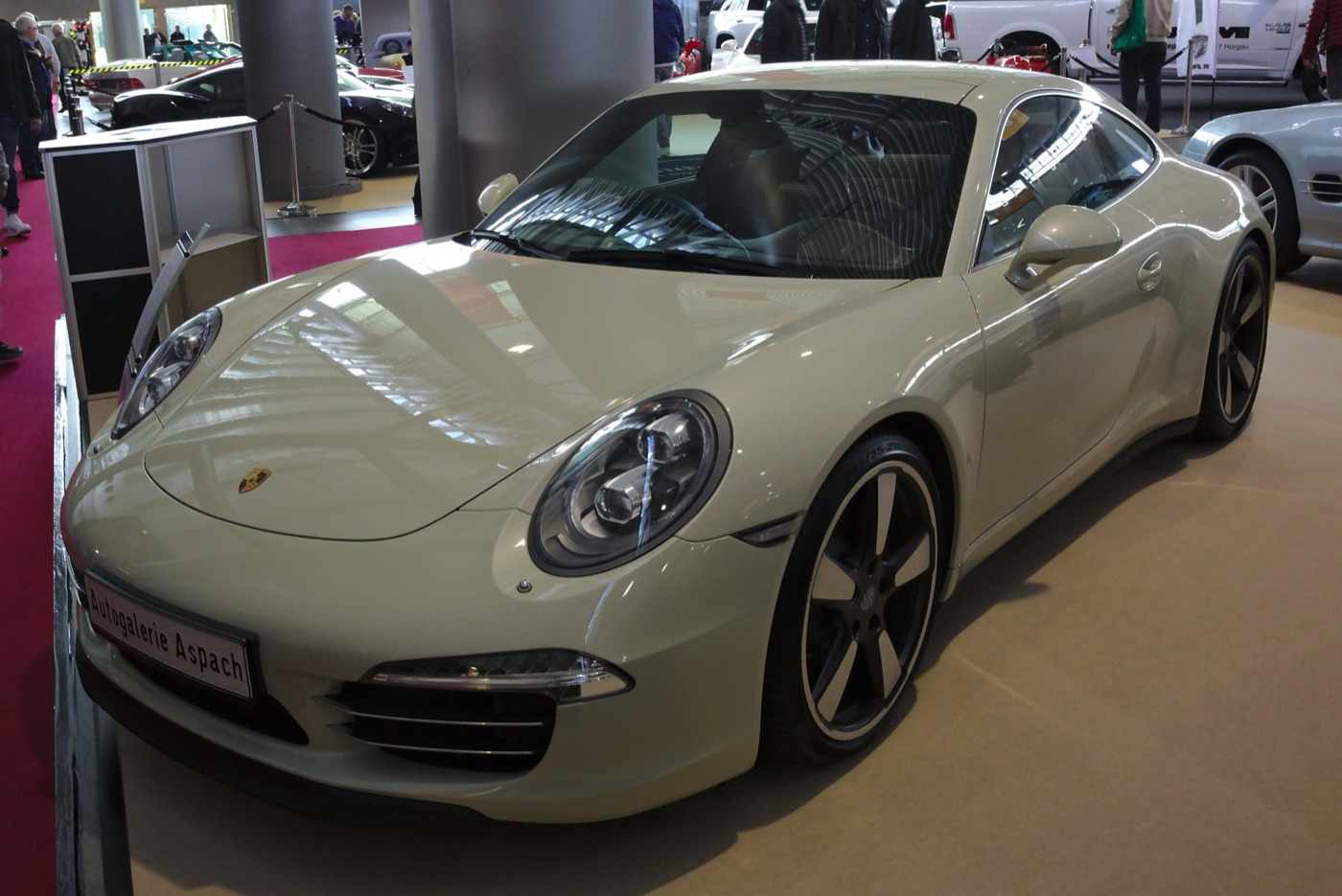
The anniversary car, shown at the Frankfurt Motor Show in September 2013 where the 901 had appeared in 1963, was the 911 50 Years Edition: a 991 Carrera S with the 44 mm wider Carrera 4 body, 20-inch wheels styled on the original Fuchs design and seat centres in a 1960s Pepita pattern. Production was limited to 1,963 cars, and the British price was £92,257, about £9,000 more than a Carrera S. A year earlier Porsche had marked 60 years of Porsche clubs with the 911 Club Coupe in Brewster Green, 13 cars, 12 of them allotted to club members by prize draw.
Questions
Which Porsche 911 generations are air-cooled?
The first four: the original 911, the G-Series, the 964 and the 993. Every 911 since the 996 of 1997 has a water-cooled engine, and Porsche calls the 993 the last air-cooled six-cylinder boxer.
What does 991.2 or 997.2 mean?
It is enthusiasts’ shorthand for a generation after its mid-life update. The 997.2 of autumn 2008 brought direct injection and the PDK gearbox; the 991.2 of 2015 brought 3.0-litre twin-turbo engines to the Carreras.
Who designed the original Porsche 911?
Ferdinand Alexander Porsche, Ferry Porsche’s eldest son, who modelled the first plasticine model of a successor to the 356 and became head of the Porsche design studio in 1962. He died in Salzburg in April 2012, aged 76.
Which 911 generation sold the most?
The 991: Porsche built 233,540 of them between 2011 and 2019, more than any other 911 generation. The 997 comes next with 213,004.
When did every 911 Carrera become turbocharged?
With the 991’s 2015 model update, when the Carreras moved to a 3.0-litre twin-turbo engine of 370 to 450 PS. The 991 GT3 RS kept a naturally aspirated 4.0-litre engine of 520 PS.
Did the Porsche 911 ever have a seven-speed manual gearbox?
Yes. The 991 of 2011 introduced a seven-speed manual, which Porsche called the first of its kind in the world.
Is there a hybrid Porsche 911?
Yes. The 911 Carrera GTS of 2024 has a T-Hybrid system with an electric turbocharger and a motor in the gearbox, for 541 PS in all, and the 2025 911 Turbo S uses two electric turbochargers for 711 PS.
Sources
- Porsche Newsroom, “60 Years Porsche 911” press kit, 2023: the generation pages and engine pages for each of the eight generations (years, outputs, prices, production totals, design and technical changes).
- Porsche Newsroom, “New Porsche 911: T-Hybrid for significantly enhanced performance”, 2024: the 992.2 Carrera GTS and Carrera.
- Porsche AG investor relations, “The superior all-rounder among sports cars: Porsche 911 Turbo S”, 7 September 2025: output, Nordschleife time and price.
- Porsche Newsroom, “Porsche milestone: One-millionth 911 rolls off the production line”, May 2017: the millionth car and Zuffenhausen.
- Porsche Newsroom, “Porsche delivers 279,449 sports cars to customers in 2025”, January 2026: 911 deliveries in 2025.
- Porsche Newsroom, “Sur les traces du « Monte »”, 2024: Elford and Stone’s 1968 Monte Carlo win.
- Motor Sport, “Lunch with… Vic Elford”, June 2007: Elford’s request for a 911.
- Porsche Newsroom, “Le Mans-winning 911 GT1 ’98 in action”: the 1998 Le Mans win.
- John Draneas, “Lawsuit Has a Bearing on Porsche Owners”, Sports Car Market, 1 February 2014: the IMS bearing class action.
- OUTLAW 8’s auction records, read 27 October 2026: the sold prices by generation (Car & Classic, Iconic Auctioneers, Bring a Trailer, PCARMARKET, Cars & Bids and others).
- SkiddMark’s own reports, 2009–2013: the 911 Sport Classic (September 2009), the GT2 RS (May 2010), the 911 Speedster (September 2010), the GT3 RS 4.0 (April 2011), Walter Röhrl and the 911 SC (April 2011), the 991’s launch (August 2011), the GT3 Cup at the VLN (October 2011), the obituary of F.A. Porsche (April 2012), the 911 Club Coupe (May 2012), the 991 GT3 (March 2013) and the 50 Years Edition (June 2013).
This article was written in October 2026 to replace SkiddMark’s “Fifty years of the 911: And my, hasn’t it grown..!” of 8 February 2013, whose account of the fiftieth-anniversary plans it keeps.